Eclipse

In 1999, I had my first chance to witness a solar eclipse. That was in Bonn, Germany, and only a partial eclipse. It was very partial, because the sky was cloudy.

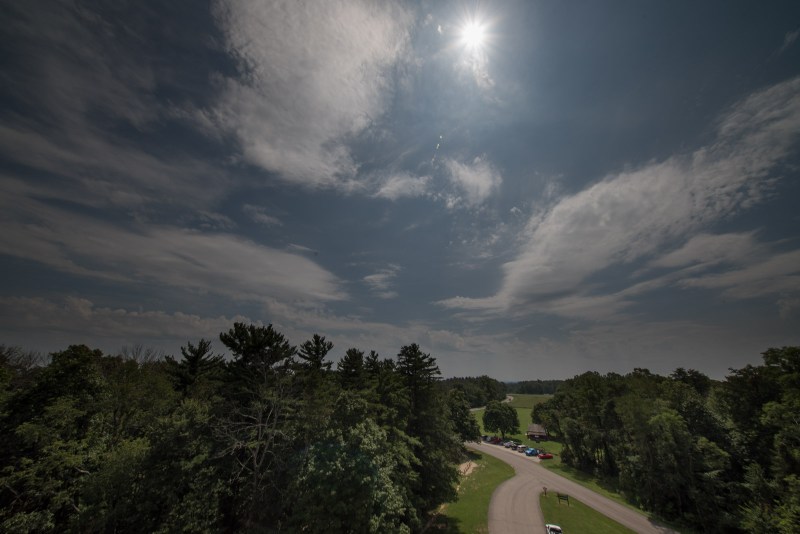
Now, in 2017, I didn’t feel like driving for three hours to get stuck in a traffic jam. So instead I contented myself with another partial eclipse and went to Brown County State Park.
DSC 6631

The view from the fire tower was a little eery because the sky was significantly darker. Capturing the eclipse with a wide angle lens is a little silly, but safe for eye and camera.
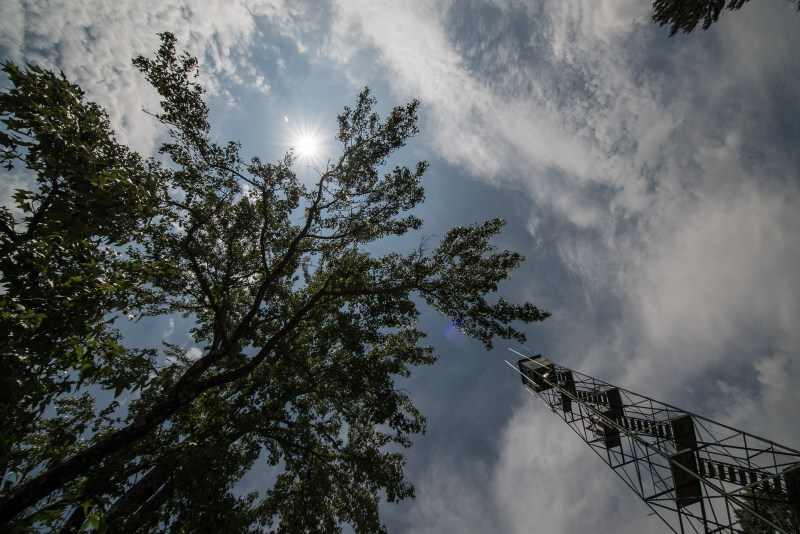
DSC 6637

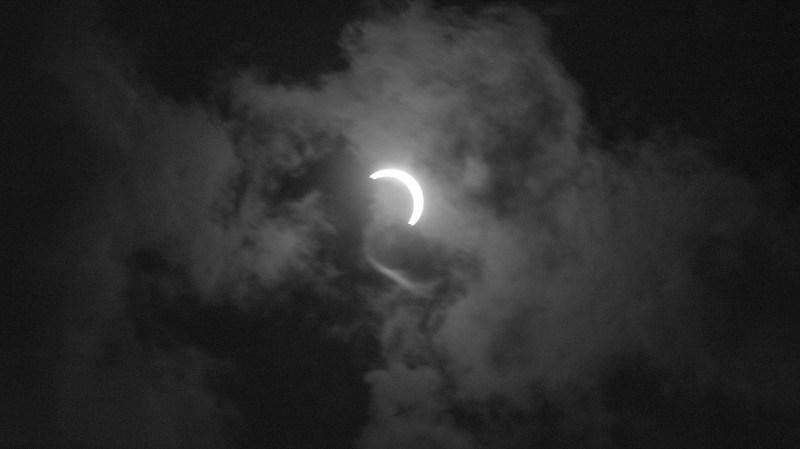
Using a tele lens is danegerous, never look through the camera at the sun even with a strong neutral density filter. I used a 10 stop filter on a 300mm lens. This turned out not be quite enough to darken the sun, but one can now at least see the eclipse (and it didn’t fry my camera).
DSC 6659

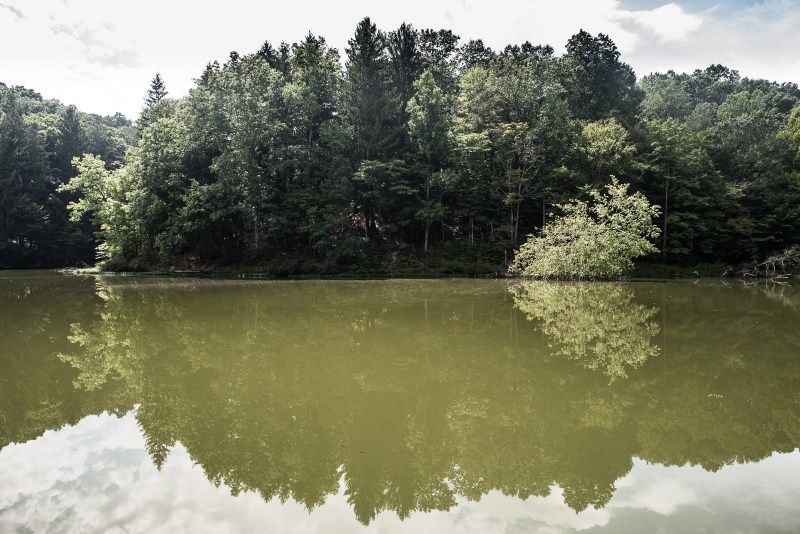
My main interest, however, was how my favorite lakefront at Strahl Lake that I have photographed (too?) many times would look like during the eclipse.
DSC 6660

Playing with circular images

After successfully transforming rectangular images into circular ones it is time to do something with them. We have seen already that the one can deform them by shifting one point somewhere else. This is very much like rotating a globe.
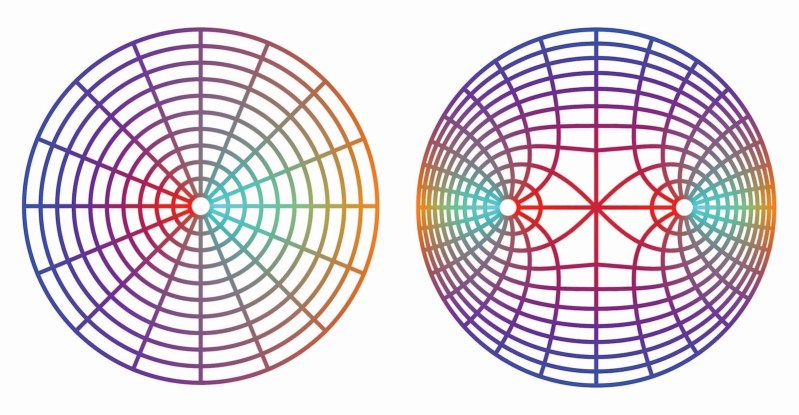
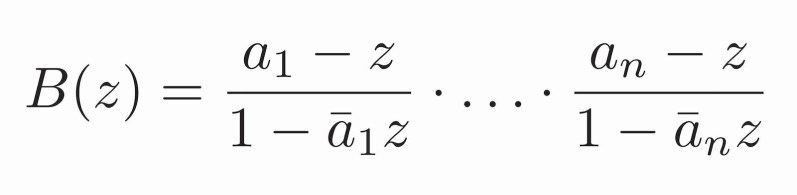
But besides these angle preserving symmetries of the disk there are other maps from the disk to itself that also preserve angles but are not anymore 1:1. These are the Blaschke products, written in complex notation as follows.

Product 01

Let’s look at a simple example with just two factors, and choose the a-parameters to be 1/2 and -1/2. Then B(z) maps the double spiderweb on the right to the standard spiderweb on the left:

Blascke2 01

In other words, by taking preimages (or better, by using B(z) to pull back an image…), we can create multiple copies of a circular image within a circular image. The a-parameters designate the locations of the “centers” of the multiple spiderwebs where the strands converge.

Flower1

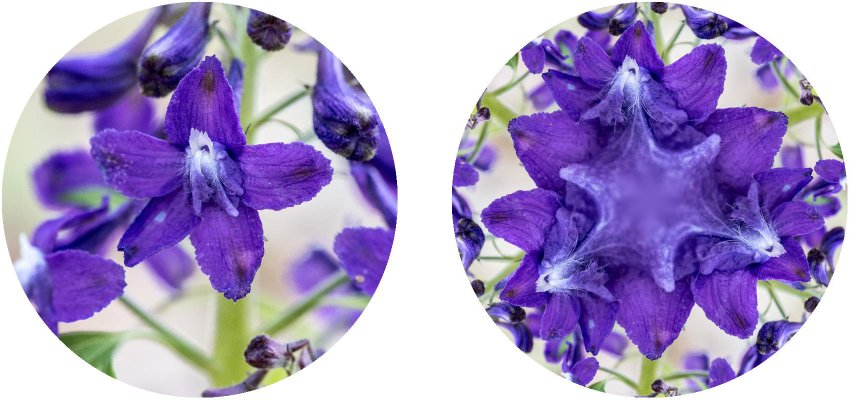
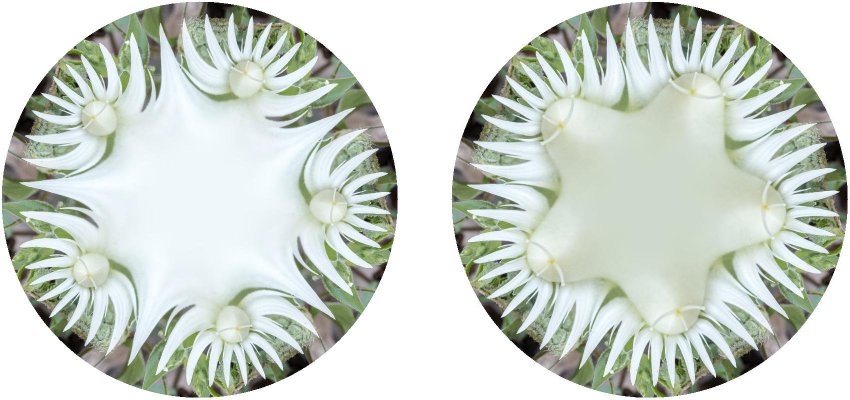
For instance, above is a circular image of a Spring wild flower, and to the left its 3-fold mutation. Below are 5-fold mutations with two different choices for the a-parameter.

Flower2

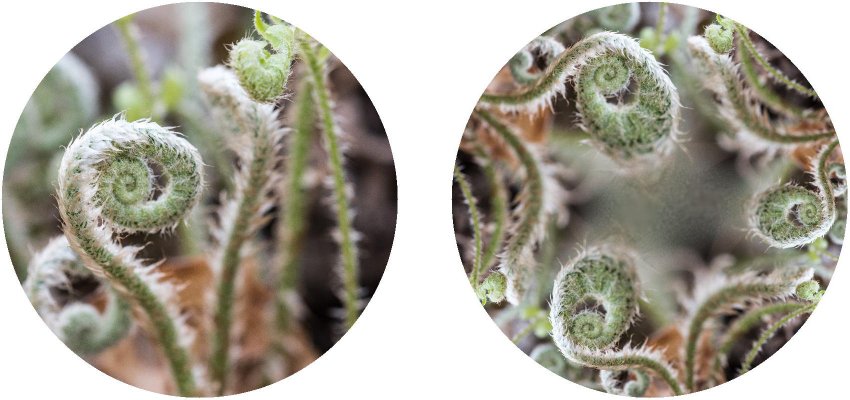
These images resemble kaleidoscopes, but are improved, because the copies of the original image fit together more evenly (smoothly, and not just by reflection). One can also make the result less symmetrical by choosing the a-parameters less symmetrical. Below the copies of the ferns are places at 120 degree angles but differently far out,

Ferns

and here we have a large copy of the original budding trillium at the bottom with two smaller copies to the left and right.

Flower3

Now I need to find somebody who writes an app that implements all this…

Verticality

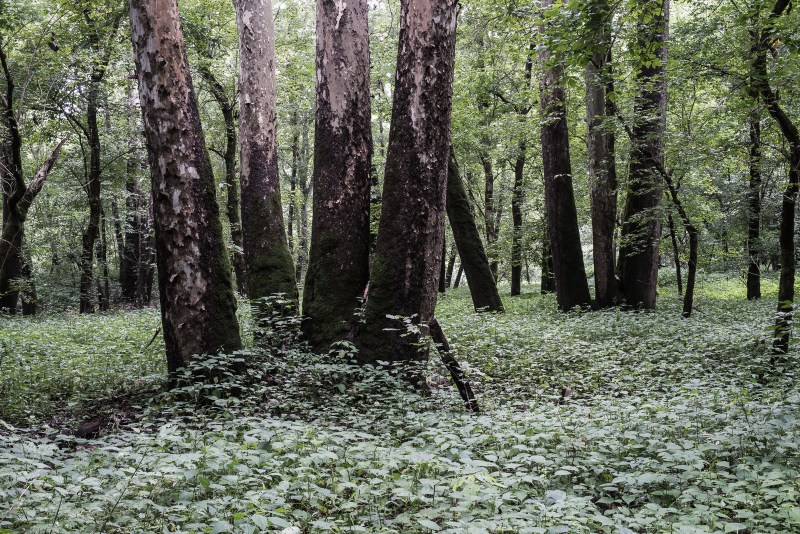
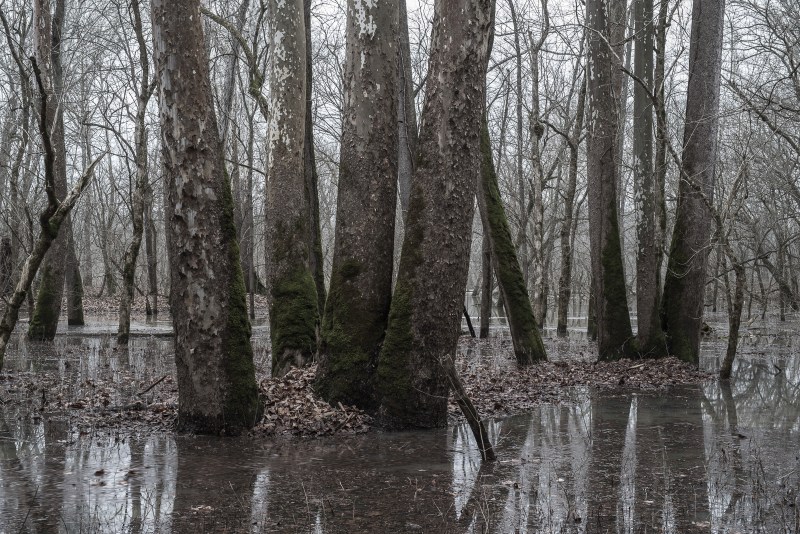
Near where McCormick’s Creek merges into the White River, the area becomes quite swampy and is often flooded. There are two views from a boardwalk trail through this swamp that have caught my attention. The first is a quadruplet of sycamore trees in the foreground.

DSC 4908

Clearly the weeds are about to conquer the world, you might think. Of course, the sycamores know better.

DSC 9061

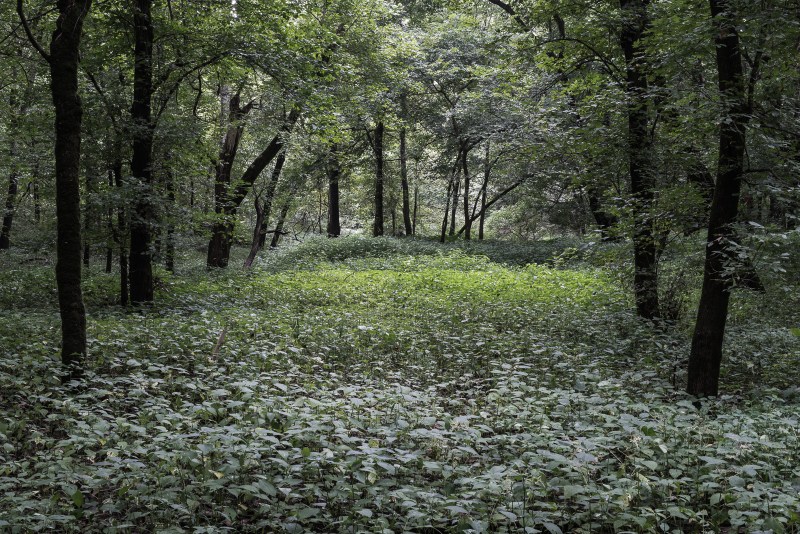
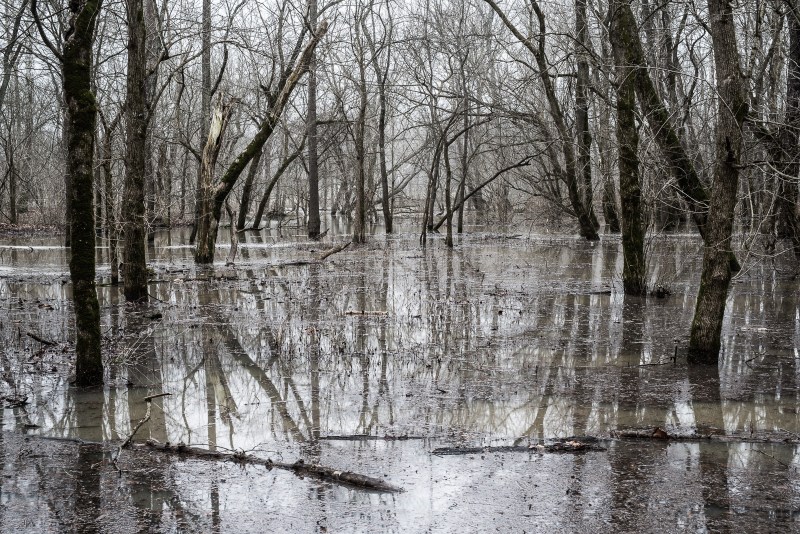
The other spot is a hundred yards further down the board walk, where the view opens up into a stage like space where we wait in vain for a performance to begin.

DSC 4910

But it is us who are lacking the patience: The performance is happening, all the time, mostly without us.

DSC 9060

The Spider

When I was in third grade, my father brought home a beautiful 2 volume edition of Edgar Allan Poe’s short stories, illustrated by Alfred Kubin.

DSC 0203

The genre name Horror Story describes very unsatisfactorily what Poe accomplishes. The conventional horror story utilizes a simple scheme: It wins our trust by first presenting a plausible scenario, and then abuses this trust in order to get away with less plausible events.

DSC 0209

In Poe’s best stories, this is not the case. The horror story is happening in the protagonist’s mind, and we become afraid that this same horror might as well infest our own brains.

DSC 0226

There are a few European stories that achieve the same effect, and one of them is Hanns Heinz Ewers’ story The Spider, from 1915. In it, the tenant of a small apartment starts to play a game with a woman in a window across the street: They make movements with their hands, which the other is supposed to copy. The narrator, whose diary we read, is at first surprised how quickly his neighbor can repeat his own movements, until he realizes that he is in fact, against his own will, only repeating the movements of the neighbor.

DSC 0236

This realization comes too late, obviously. No good horror story can end well. The same is true for Hanns Heinz Ewers himself, unfortunately. Despite having understood the machinations of manipulation, he fell under the spell of  a much larger spider, even though he didn’t share their racial ideology, had conflicting sexual preferences, and his books were banned.

DSC 0228

Pate Hollow Trail

Here are some early morning impressions from hiking the Pate Hollow Trail north of the Painetown State Recreation Area. The mood for the hike is set right at the beginning, thanks to the Little People who built this tree house.

DSC 0142

Nothing can go wrong after seeing it. The trail takes about three hours to hike and mostly follows the ridges. You get the usual fare of broken wood, that I always find photogenic.

DSC 0136

The other highlights of the hike are the views of Lake Monroe.

DSC 0167

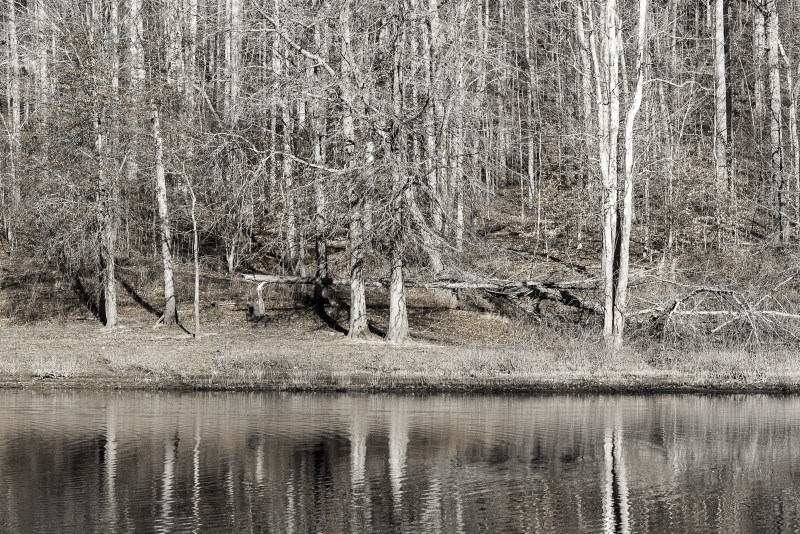
Nothing dramatic, but a little blue is very welcome. When the trail touches down to the lake front, you can meditate either about structural simplicity of the opposite shore

DSC 0153

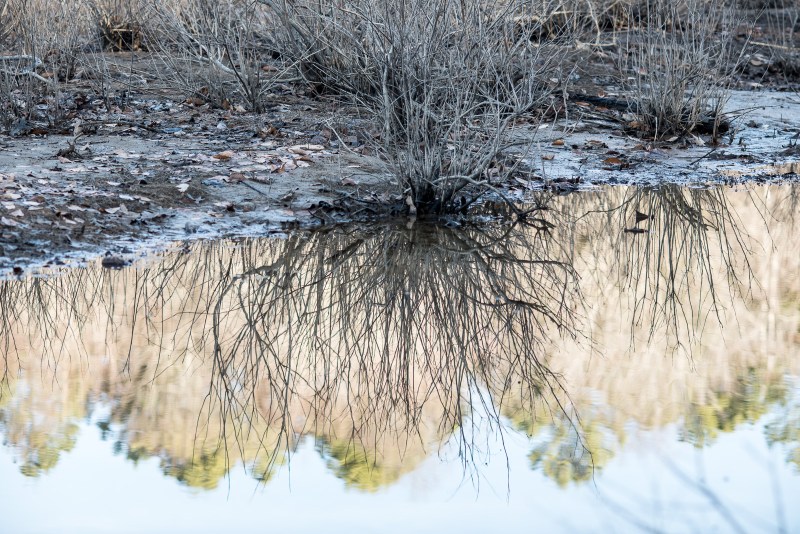
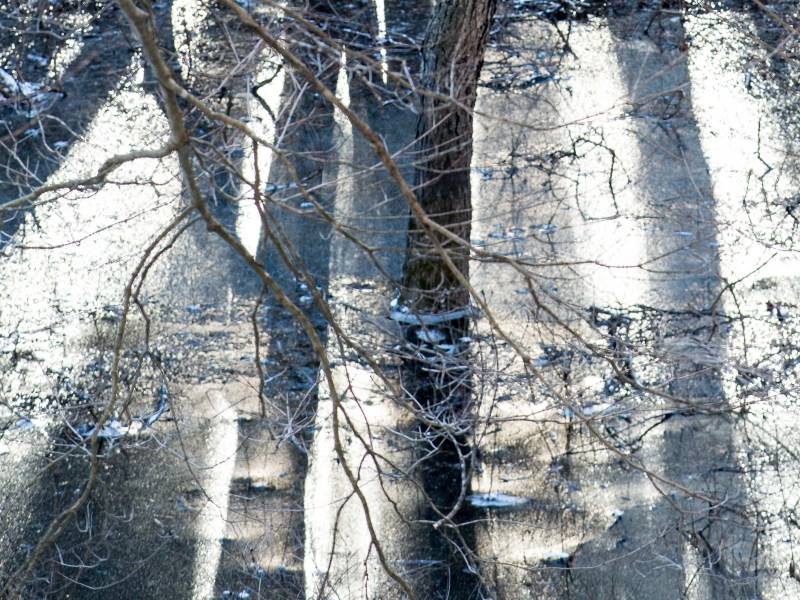
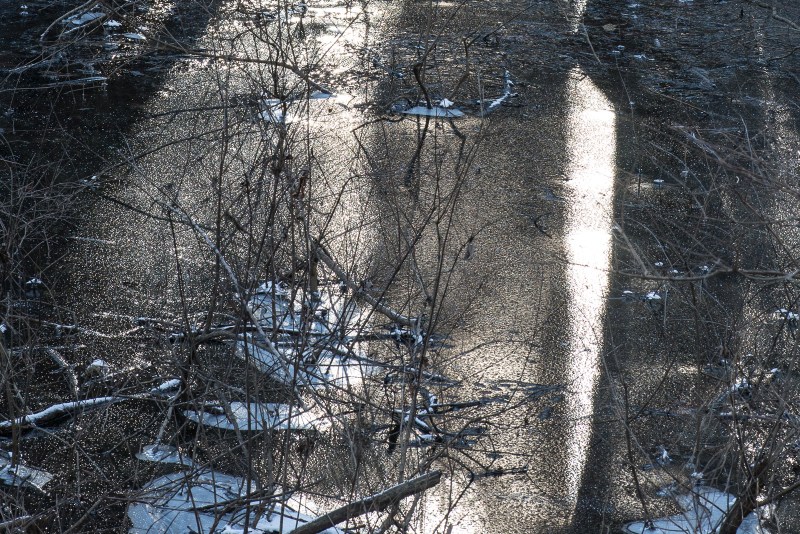
or the irritating complexity of simultaneous reflections of frozen weeds and preposterous trees. It is March, after all.

DSC 0155

Brown (Charles Deam Wilderness II)

DSC 0074

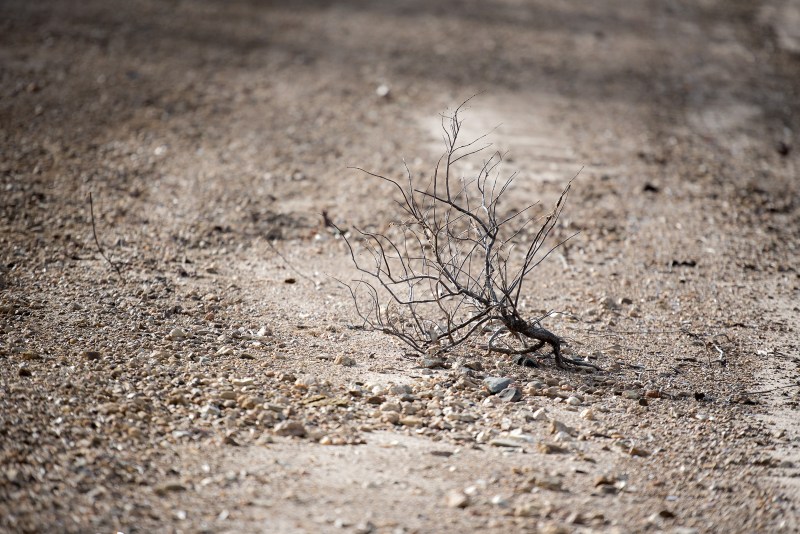
Indiana has a fifth season: A good winter brings snow, harsh light and the contrasts that blind your eyes. A good spring brings mild air, green buds, tree blossoms, and wild flowers. But in between, there is at least a month of nothingness.

DSC 0041

It is the season of decay, and its color is brown. The contrasts of winter light disorient us because they provide information conflicting with the physical landscape. It is almost as if a fourth dimension has been added which we cannot parse. Today, the low contrast of an overcast sky and the muted colors make the contours disappear and appear 2-dimensional.

DSC 0054

Still, the monotonicity has its appeal, in particular when it is interrupted by an alien intrusion.

DSC 0077

Why should we hate what we are attracted to?

DSC 0093

Winter Light (Charles Deam Wilderness I)

The history of the settlement of Indiana has been a history of forest destruction.
So the first sentence of the preface to the second edition of Charles Clemon Deam’s book Trees of Indiana, from 1919.

DSC 9099

Deam was Indiana’s first state forrester, and the state’s only designated wilderness area is named after him. The Charles Deam Wilderness is located in Karst hills bordering Lake Monroe. Deforestation here is pointless, as the ground is not suitable for farming. That there are still plenty of trees in southern Indiana does not contradict the above sentence.

DSC 9102

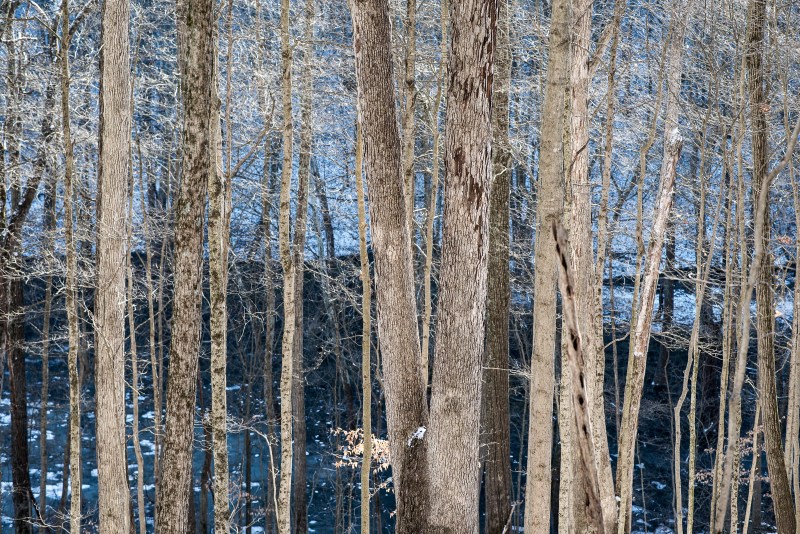
In today’s images I have been trying to catch some of the harsh light that one can experience on cold winter mornings (This year, this has not been easy).

DSC 9103

When colors retreat and contrast is everything, even simple landscapes can become disorienting.

DSC 9116

In truth, there is nothing here but water, ice, wood, and sky.

DSC 9071

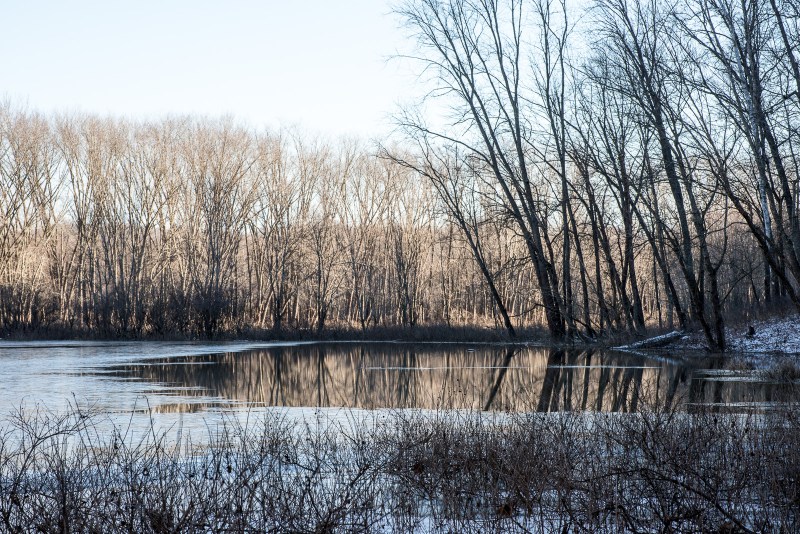
Lakes should be horizontal, and trees should grow vertical.

Julianna and Friends

I have written before about Sofia, one of the wonderful cheeses from Capriole Farm.

DSC 1220

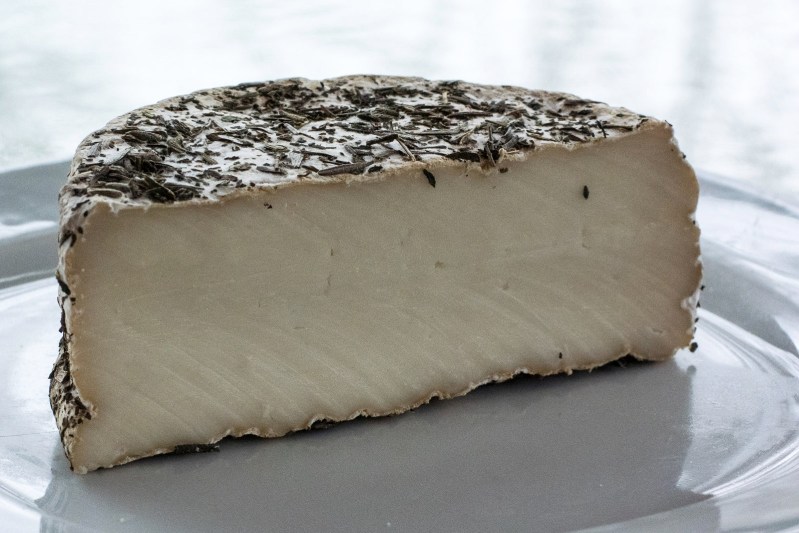
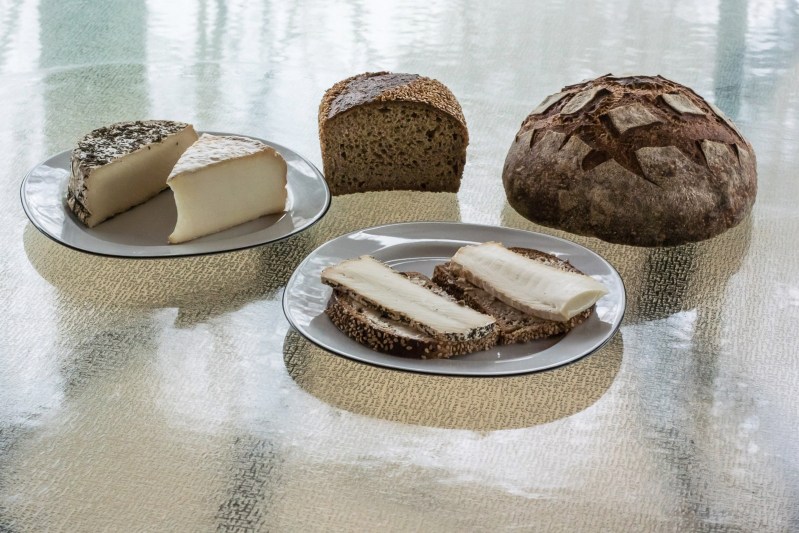
Like her, Julianna (up above) is made from goat cheese, but comes with a nice herbal crust. It’s the stronger companion of the Old Kentucky Tome, which you find below to the right.

DSC 1218

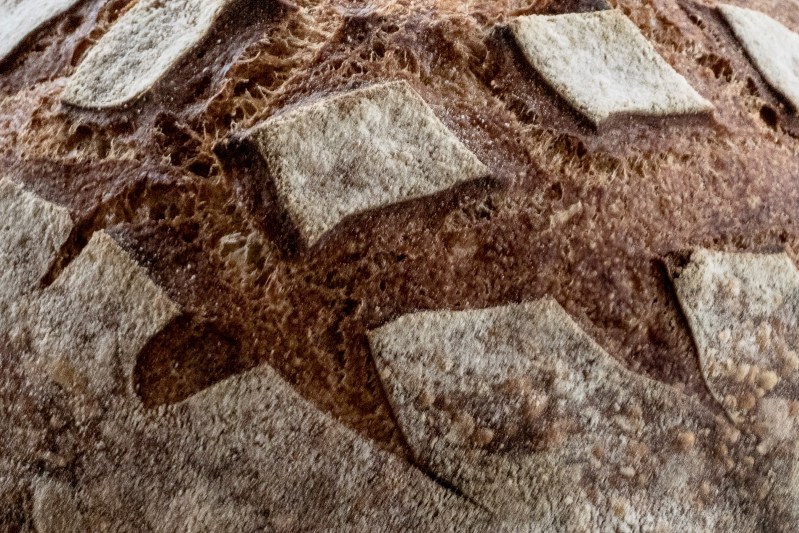
There are other things from here I would like to take with me to my next life, whenever this will happen. The bread, for instance. American bread used to be the biggest nightmare in this country. Not anymore. One reason is the Muddy Fork Bakery that produces this Rustic Sourdough with a perfect crust,

DSC 1216

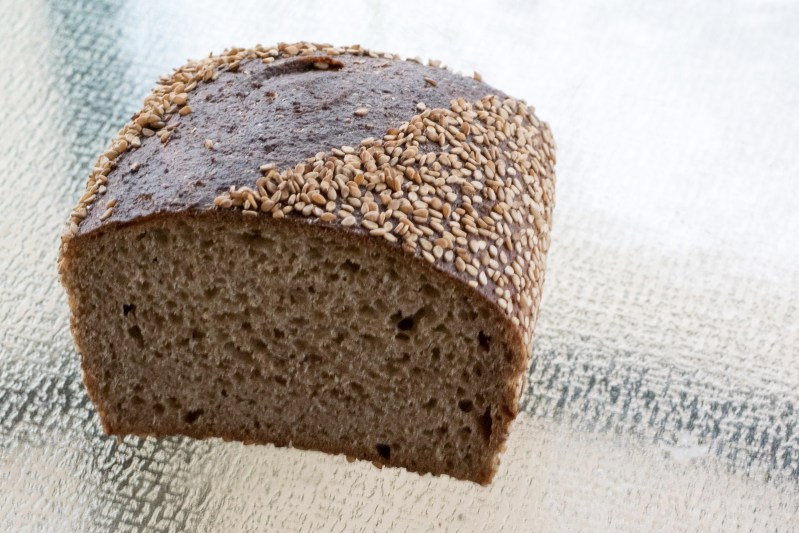
or the beautiful Sesame Spelt

DSC 1217

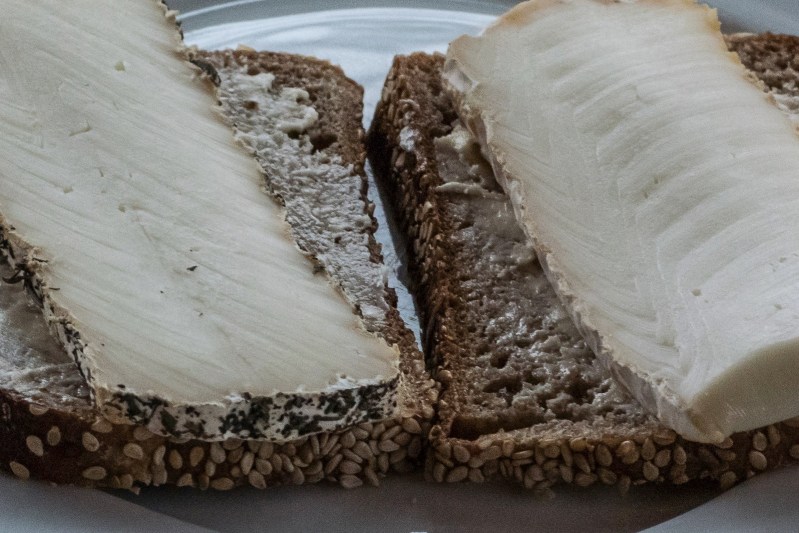
that goes so well with the goat cheese. All their breads are hand-made and wood fired. Amazing stuff. You can find both bread and cheese at the local Farmer’s Market or at Bloomingfoods.

DSC 1215

Tulip Trestle

DSC 8692

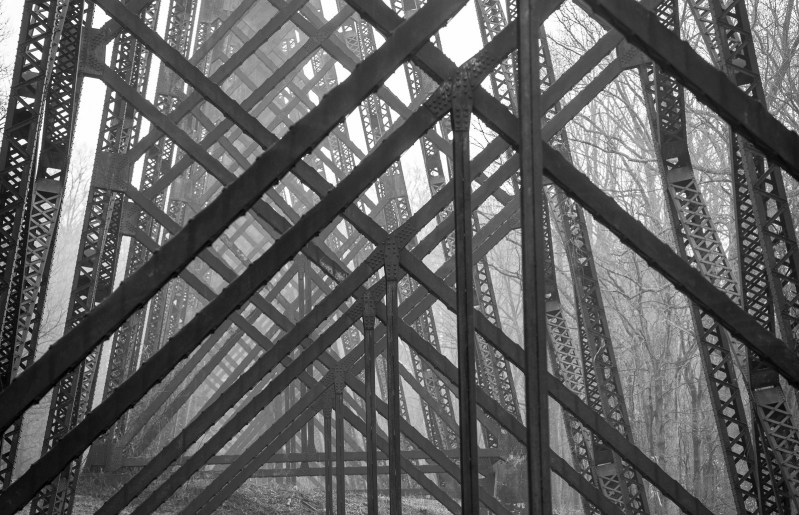
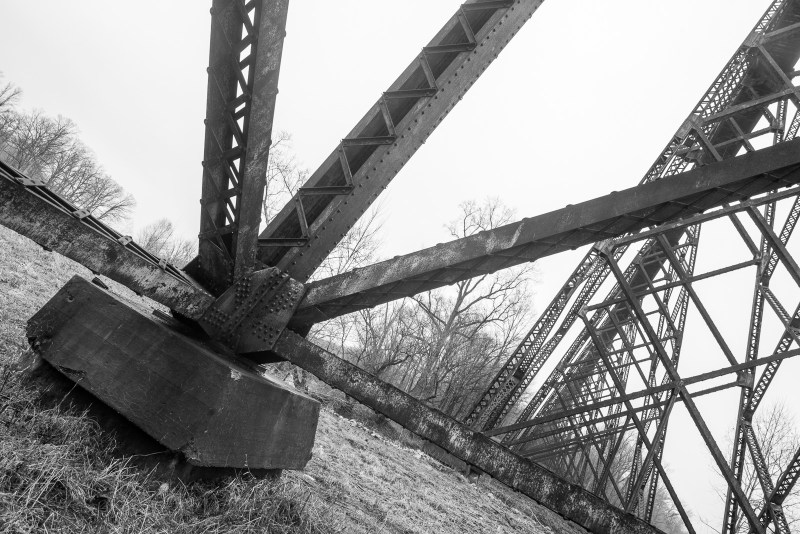
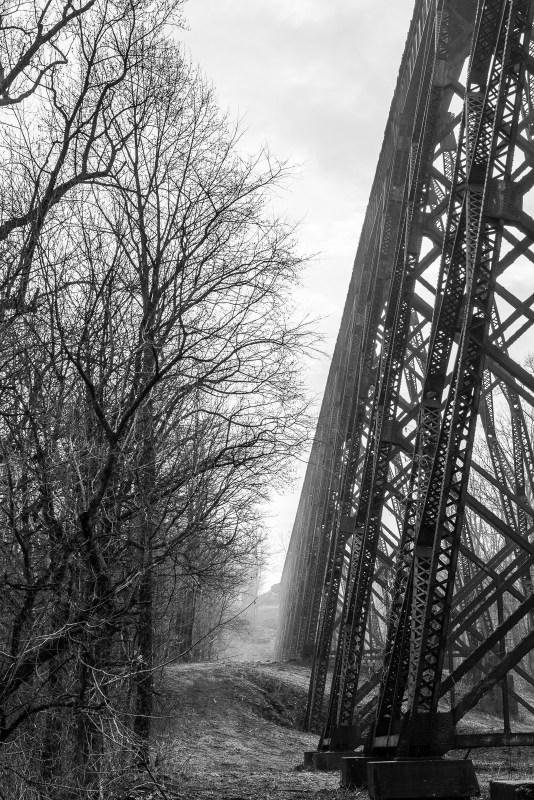
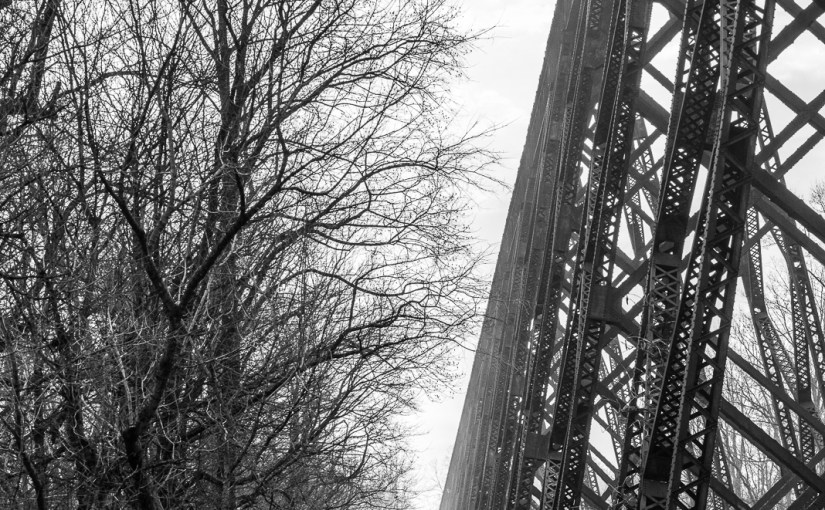
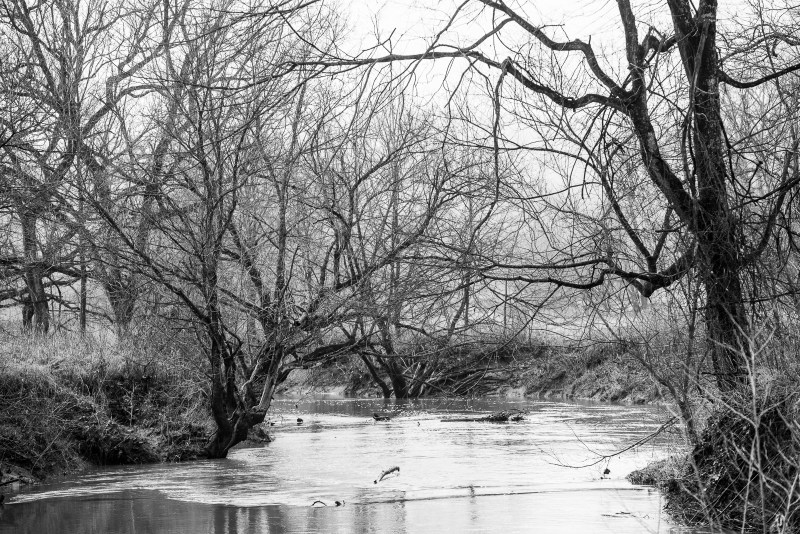
This is the Richland Creek in Green County, Indiana. Nothing spectacular about it, but this is how much of southern Indiana looks like in winter. This creek is bridged by an enormous railroad trestle, whose insisting presence almost justifies is existence.

DSC 8674

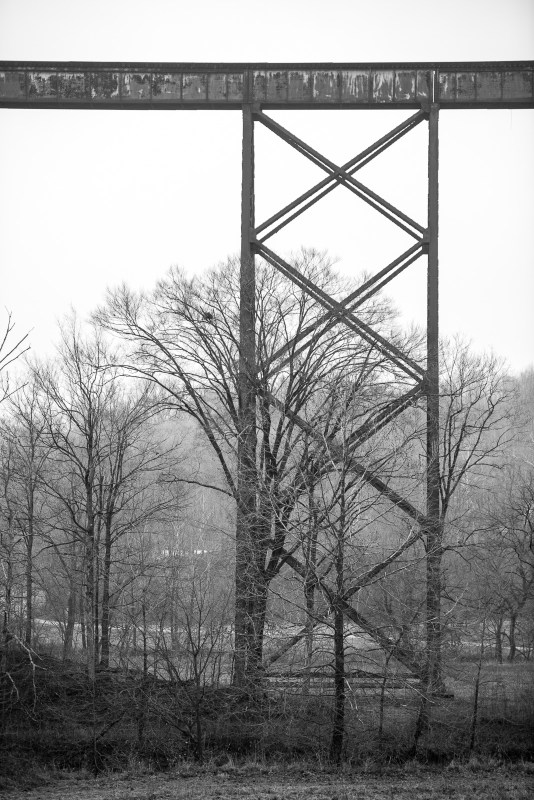
Near the ground, the steel posts are hidden in the brush. Then they emerge, undeniably.

DSC 8691

Made, not grown, and grabbing all the space there is.

DSC 8729

Is dialogue possible?

DSC 8688

The letter T, with which both Tree and Trestle begin, (and Tower, Tall, Top, and others, worse) seems to indicate in its negative space the lack of anything above.

DSC 8660

Will Time say nothing but I told you so?

DSC 8784

Nebelland (Land of Fog)

DSC 8565

Fog is an overused trope. It serves of course as a backdrop for everything spooky, because fog makes us afraid of not knowing. There is also the personal, psychological fog that makes us forget the past or prevents us from seeing clearly into the future, like in Kazuo Ishiguro’s The Buried Giant or Miguel de Unamuno’s Niebla.

DSC 8544

More dramatically, there is the governmentally imposed fog, as in Alfred Kubin’s visionary Die Andere Seite.

DSC 8552

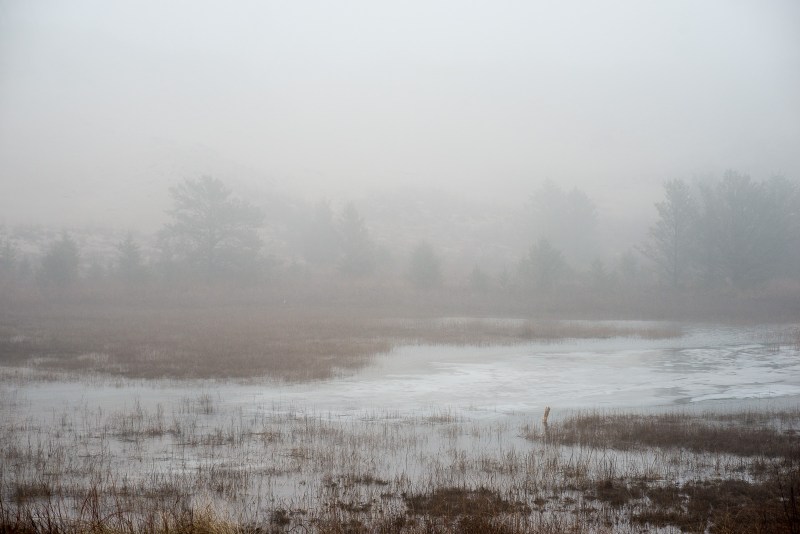
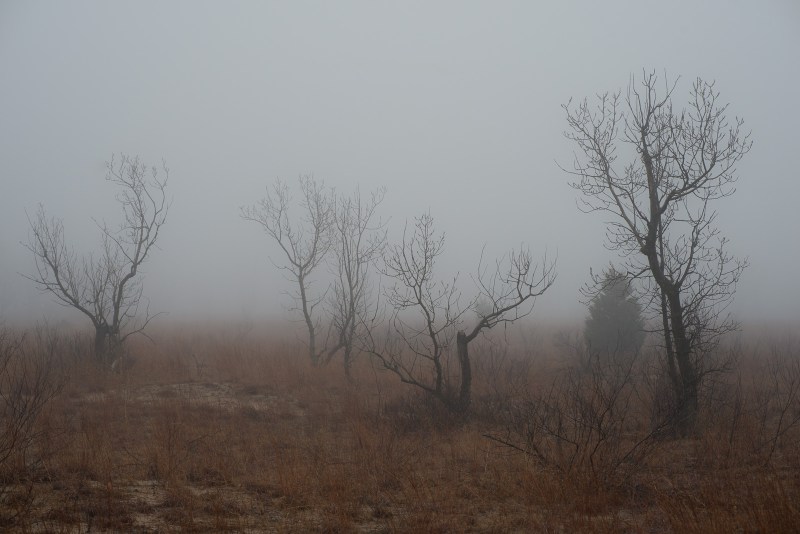
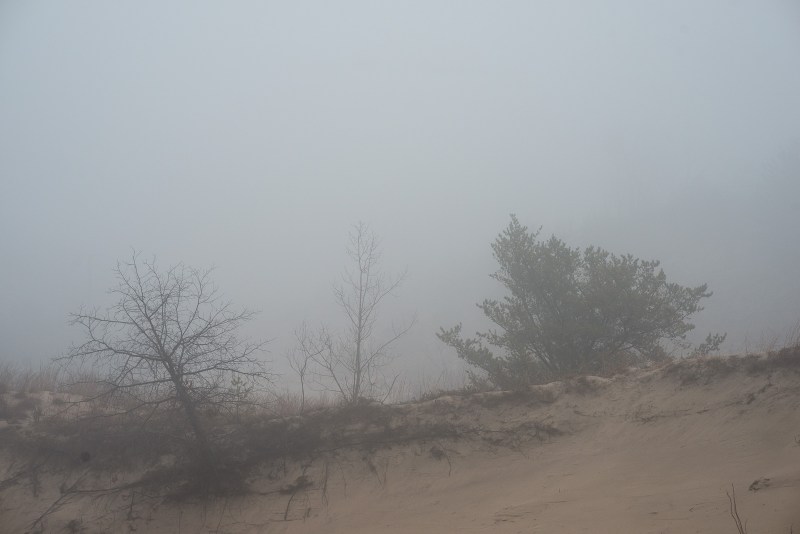
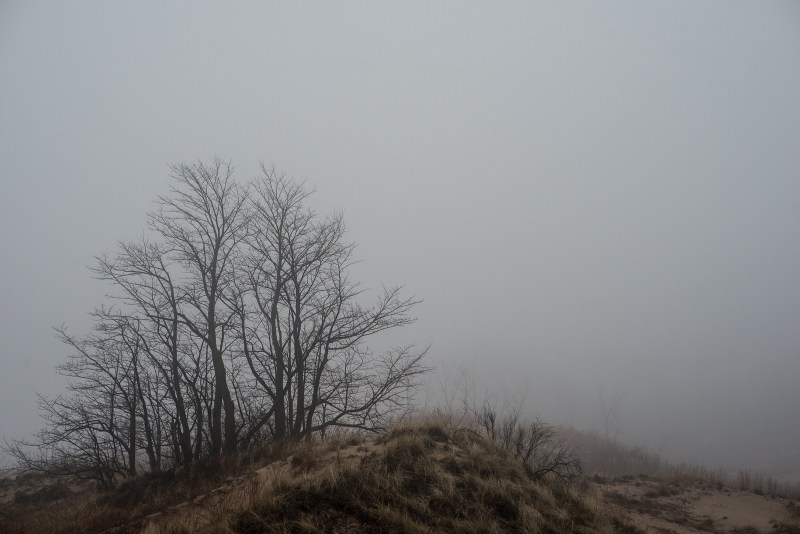
Today’s pictures are from a very recent trip to the Indiana Dunes. A bit of fog helps to hide the view of the industrial port areas north of Gary. This is scenic, too, but I can’t post pictures here, because, alas, the Indiana Administrative Code explicitly forbids to take pictures of the port, even when standing outside the area.

DSC 8540

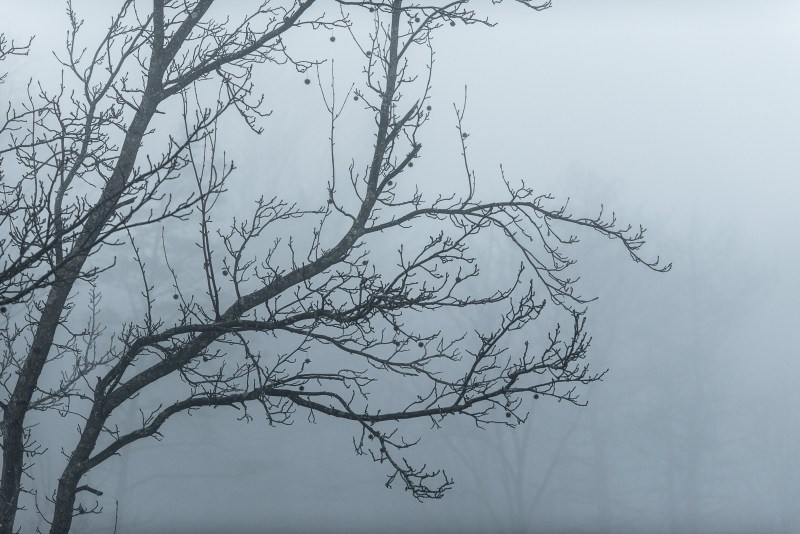
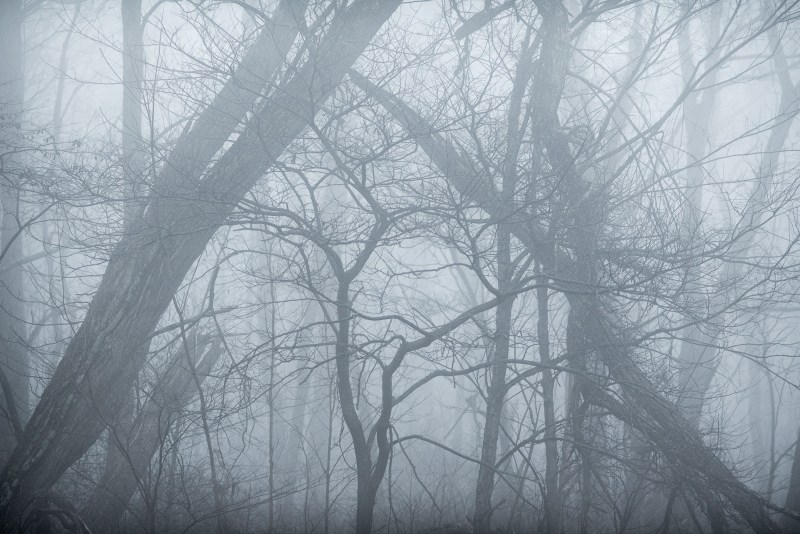
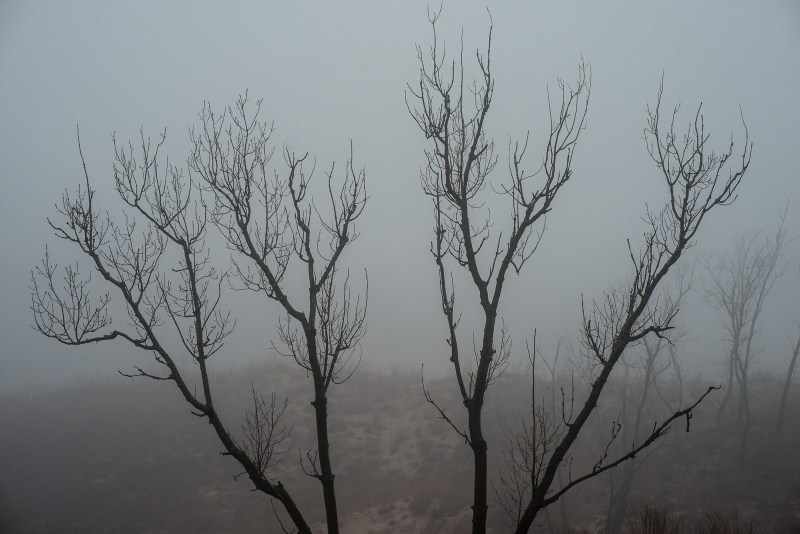
But spreading fog, for whatever purpose, has also the side effect to make the things that remain visible to appear more true to themselves, like the trees here.

DSC 8550

Ingeborg Bachmann, whose thin oeuvre has many references to fog, insisted, while charging her co-writers to become eye-openers for others, that we humans are capable of bearing the truth.