In Memoriam

There is nothing like Paris. Before and after a backpacking vacation in the French Alps in 1991, I spent a few days just walking around in the city.
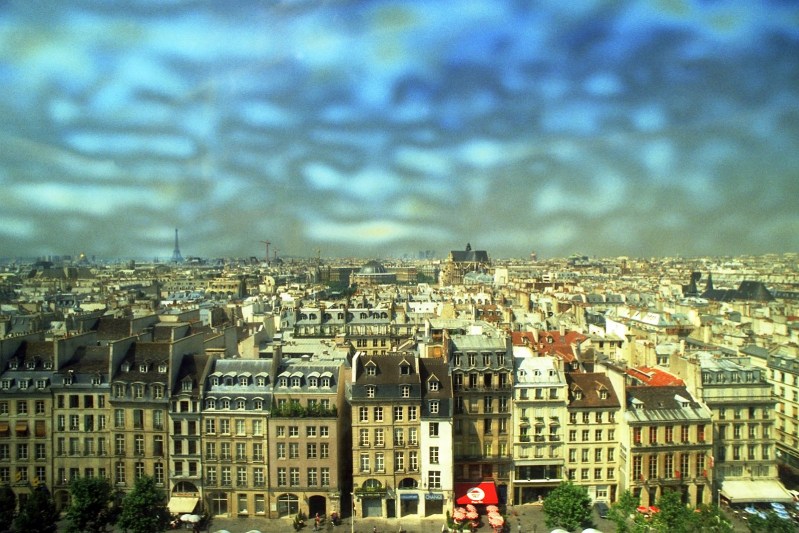
Paris 1

To honor the city and its people, I have scanned and edited the negatives from these walks, as a personal work of memory.
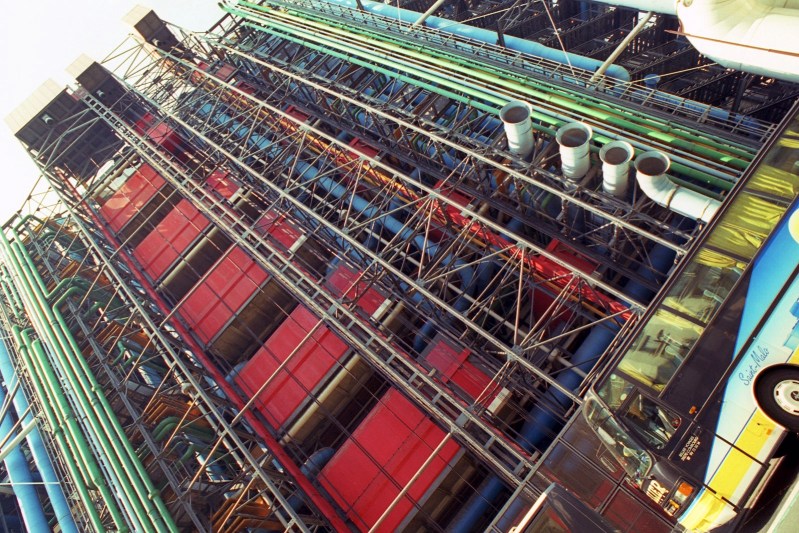
The view above is from the Centre Georges Pompidou. The spooky sky is caused by shooting through the plexiglass windows surrounding the outside escalators of the building.
Paris 6

The French have a wonderful tradition how their presidents invest enormous sums in art and culture.
Paris 2

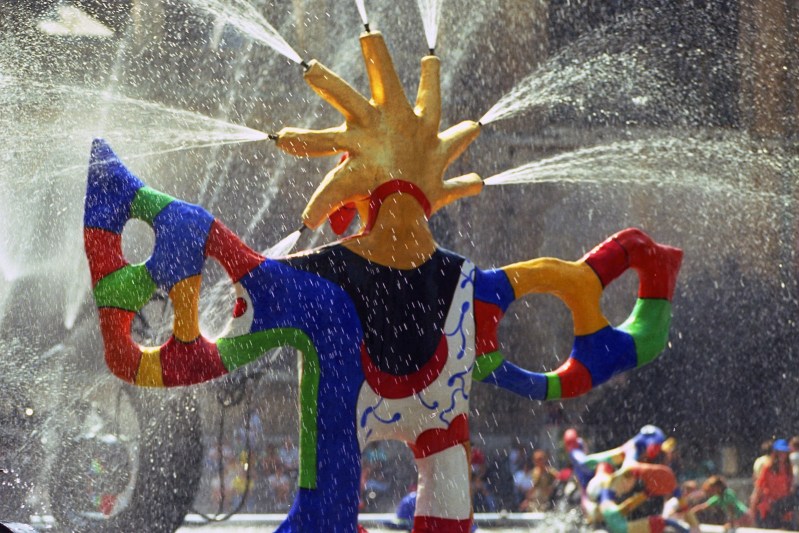
Right outside, the Stravinsky Fountain, with sculptures by Jean Tinguely and Niki de Saint Phalle, vibrant with colors and life.
Paris 10

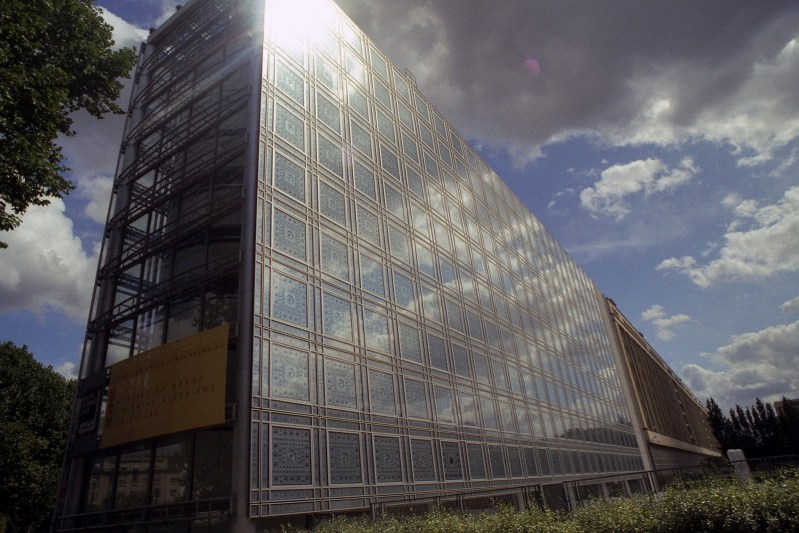
Then there is the Arab World Institute, one of the Grands Projets of François Mitterrand.
Paris 15

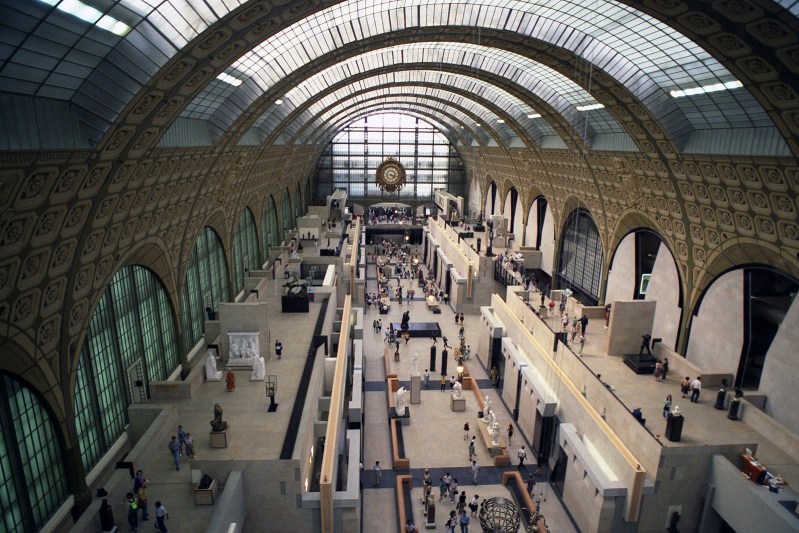
Another project Mitterrand completed: The conversion of a railway station into a museum, the Musée d’Orsay.

Paris 4

This walk will continue.

Costaesque (Algorithmic Geometry V)

Costatop

In 1982, Celso José da Costa wrote down the equations of a minimal surface that most mathematicians at that time thought shouldn’t exist. It shares properties with the plane and catenoid that were supposed to be unique to them. Nothing could be more wrong. Since Costa, many more minimal surfaces in that same elite class have been found.

Costa
The curiously complicated way in which the Costa surfaces merges a horizontal plane with a catenoid by avoiding any intersections has become a pattern for similar constructions that is quite aptly called Costaesque.
Amusingly, the same pattern occurs in Alan Schoen’s I6 or Figure Eight surface from 1970.

SchoenI6

It can be viewed as a triply periodic aunt of the Costa surface but was conceived as a Plateau solution for two pairs of squares in parallel planes, each of which meet a corner to form a figure eight.

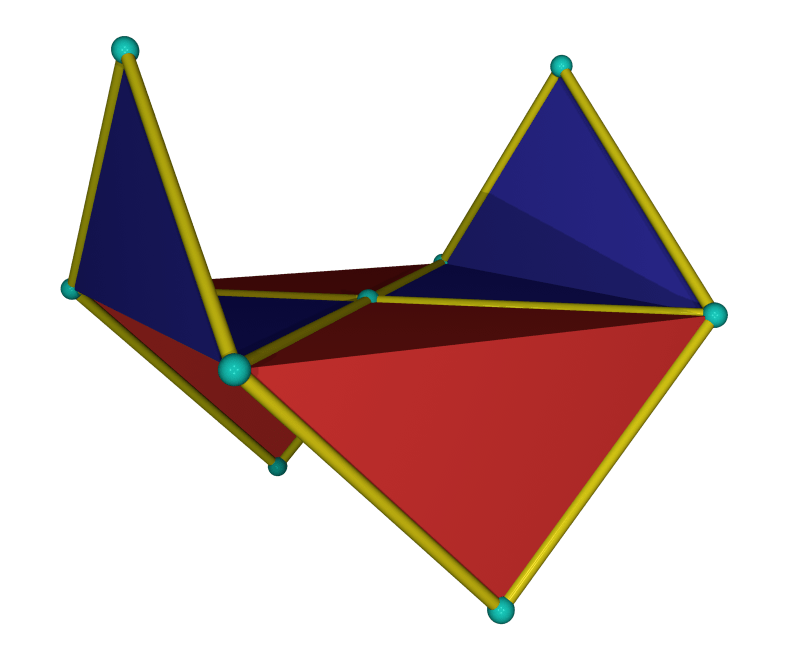
This surface has a particularly simple polygonal approximation by the bent 60 degree rhombi that we have encountered before.
I6b

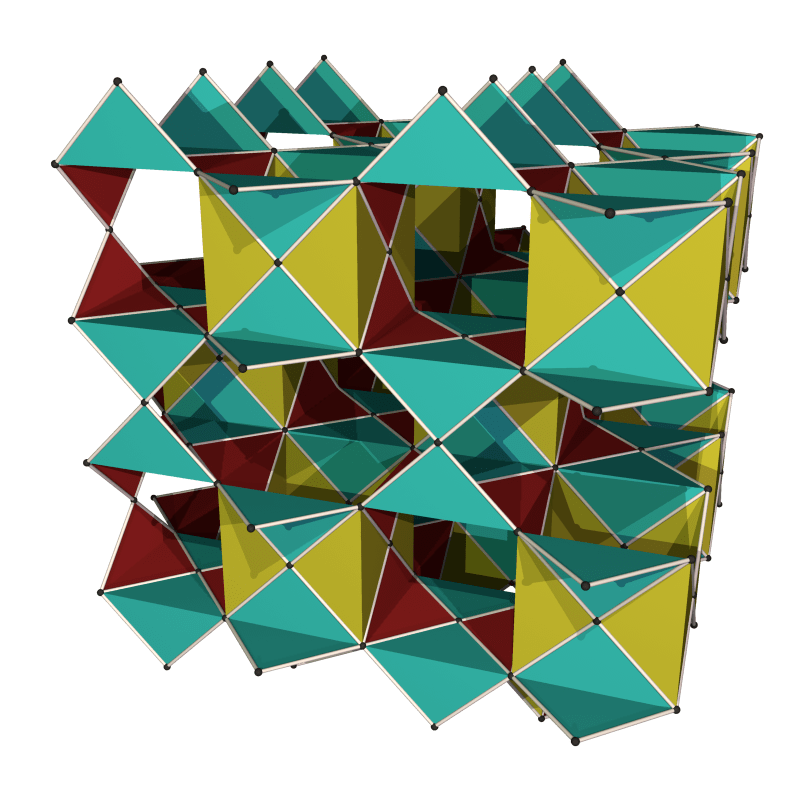
Let’s take 12 such bent rhombi and assemble them into an X-piece that has the two figure 8 squarical holes. A second such X-piece is rotated by 90 degrees and attached to the top to form the polygonal version of Schoen’s I6 fundamental piece.
I6a

Alternatively, one can also tile the surface with straight 60 degree rhombi so that it becomes a triply periodic zonohedron.

I6c

The Grand Gulch

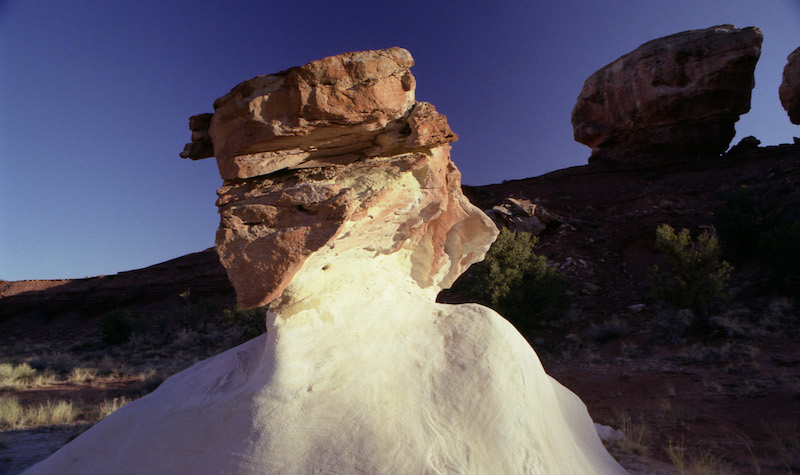
Spring Break 1994 took me to Utah. After 24 hours in the car the landscape started to look like Max Ernst would have painted it.

Utah017

The entire week we (a group of eight members of CHAOS) would spend hiking through a large part of the Grand Gulch, a primitive area in the south eastern corner of Utah.

Utah047

This meant packing food for six days, and hoping that there would be enough water.

Utah093

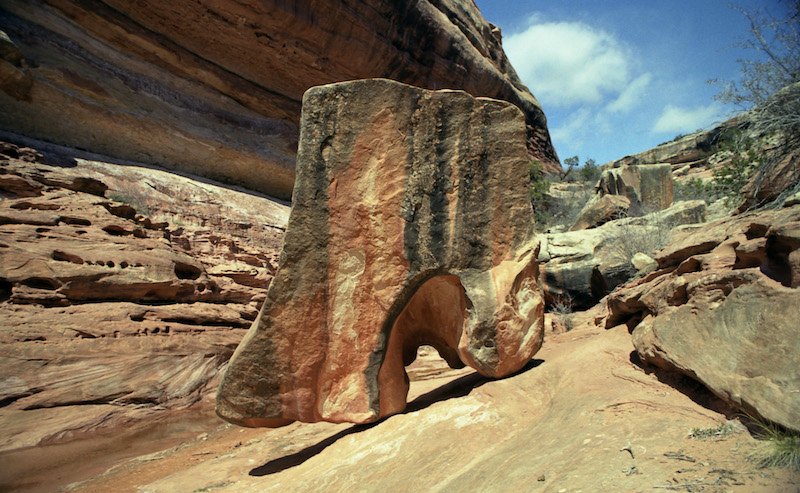
Hiking through a canyon like this can be claustrophobic. After descending to the canyon floor, one is constantly surrounded by unclimbable walls, and the barren vegetation is little consolation.

Utah115

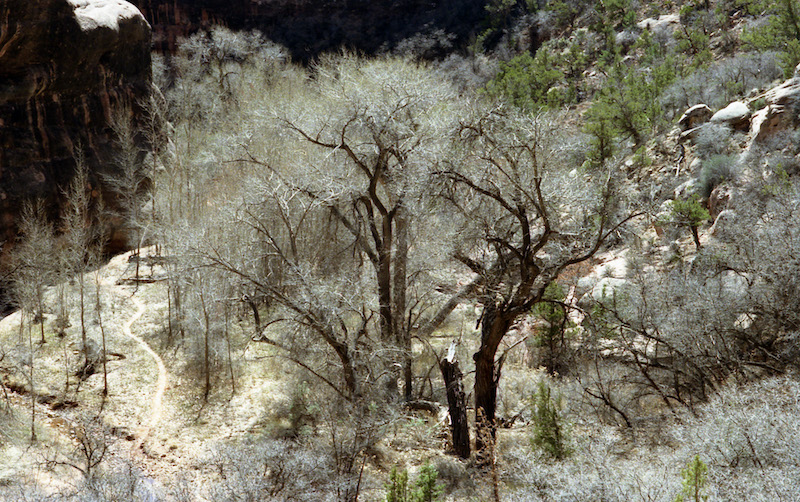
But of course the landscape is full of surprises, with new views at every turn. And then there are the Anasazi ruins.

Utah174

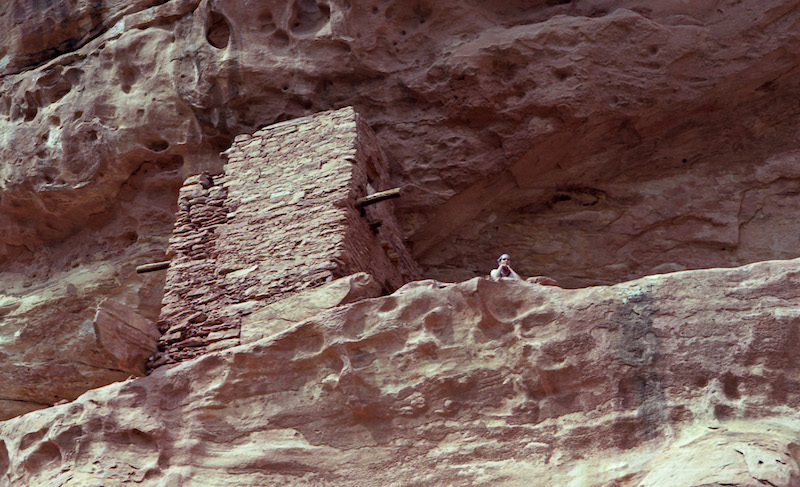
The Ancestral Puebloans (or Anasazi) were a large Native American civilization that disappeared after 1150 CE, likely due to a climate change. Not much is known about them, but in the Grand Gulch one can find their cliff dwellings and pictograms.
There are worse things to leave behind.

Utah198

Neovius surface (Algorithmic Geometry IV)

When the truncated octahedron tiles space, the diagonals of the hexagonal faces become part of a line configuration.

TruncatedOctahedronTiling

Following these lines we can build the bent rhombi that we encountered in Schwarz’ P-surface, but here we will focus on the more complicated bent octagons that weave around the square faces of the truncated octahedra. These serve as Plateau contours for another minimal surface, the Neovius surface, named after the Finnish mathematician Edvard Rudolf Neovius, a student of Hermann Amandus Schwarz.

Neoviusminimal

One can also fill each octagon with four copies of said bent rhombus to obtain an interesting polygonal version of the Neovius surface. Here are two such filled octagons aligned. Note that we have broken a rule: The four bent rhombi that fill the octagon are not rotated about their edges to fit together, but reflected.

Neoviuspiece

Rotating about the edges by 180 degrees will create larger portions of the infinite surface.

Neoviuscube

Temporarily breaking a rule can sometimes be a good thing.

Neoviuspoly

Water in Motion (Iceland XIV)

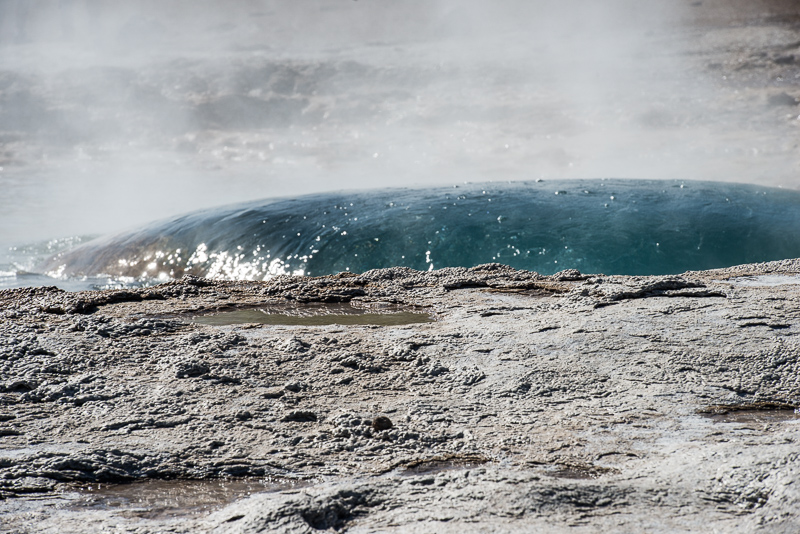
The law of gravity is still intact.

DSC 8709

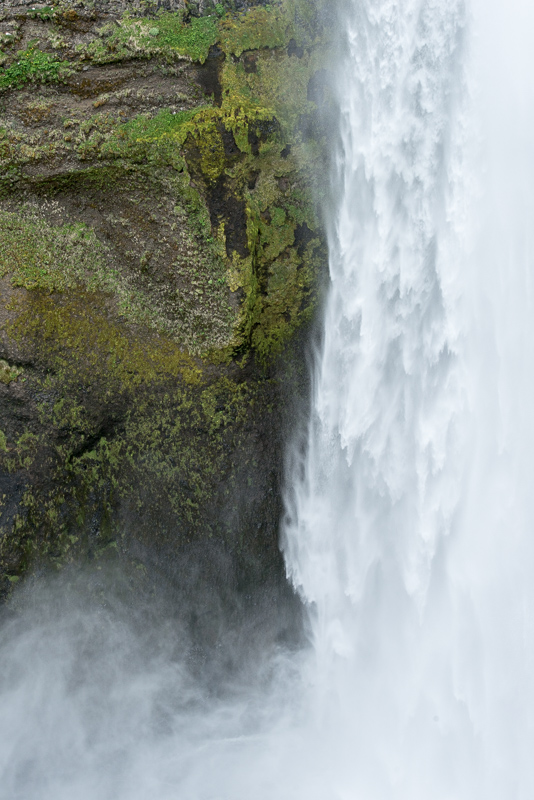
Whenever in doubt, contemplating a healthy waterfall is certain remedy.

DSC 7651

The imposed free fall gives direction, determination and diverts the attention from situations where indecision has become a permanent state.

DSC 7978

So, is that it? Do we have to either submit to a higher power, or be tossed around by pure chance?

DSC 7360

Sometimes, for a few seconds, this koan has an answer.

DSC 7459

Studies in Black and White

Turkey Run State Park has maybe three locations that define the park for me. They are both intensely beautiful and unique.
To capture the essence of a place it is often necessary to reduce it, to strip it from some aspects of its appearance. For instance, to distill the structure of a place, it can help to view everything in black and white.

DSC 9796

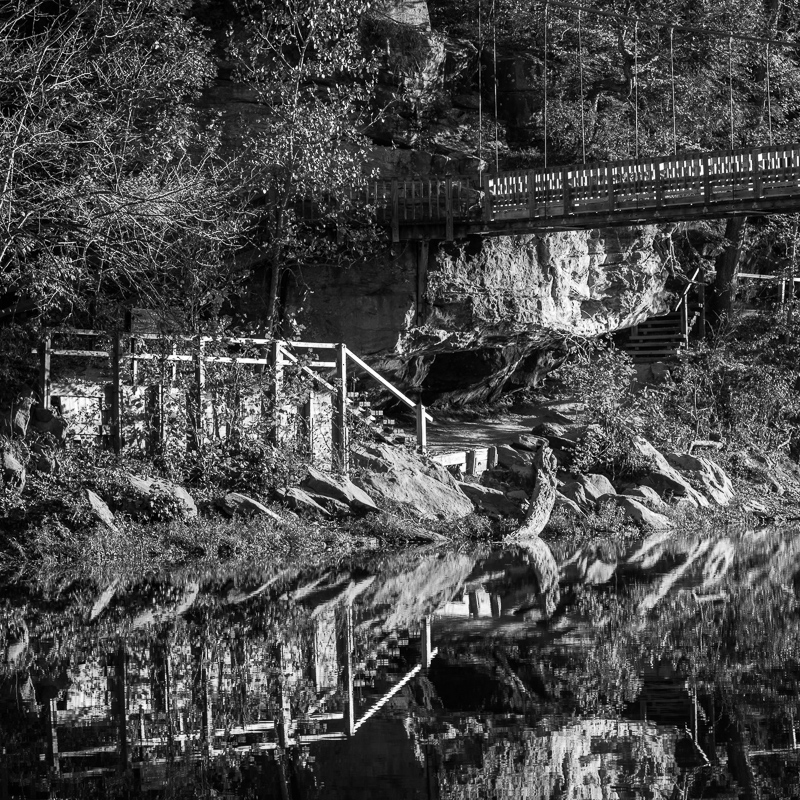
The first of my three places is at the suspension bridge over Sugar Creek. At the right time just after sunrise when the low sun brings the shore to maximal contrast, the wooden structures, rocks, and vegetation become equal contributions to a dazzlingly complex whole.

DSC 9805

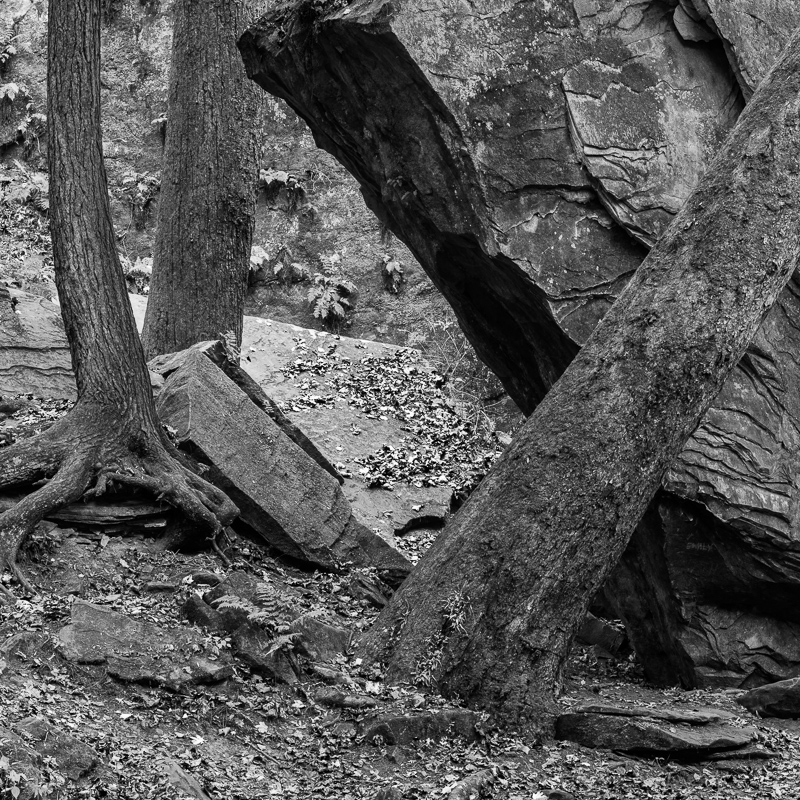
Next there is Wedge Rock. Many times I have tried to capture it in its entirety, but I found it more appropriate to only hint at its size by showing a small portion of it. The three trees cover about as much area in the picture as the rock, and this balance emphasizes the contrast between the two so different main structural elements. On the other hand, they both contribute diagonals to the geometric flavor of the place.

DSC 9824

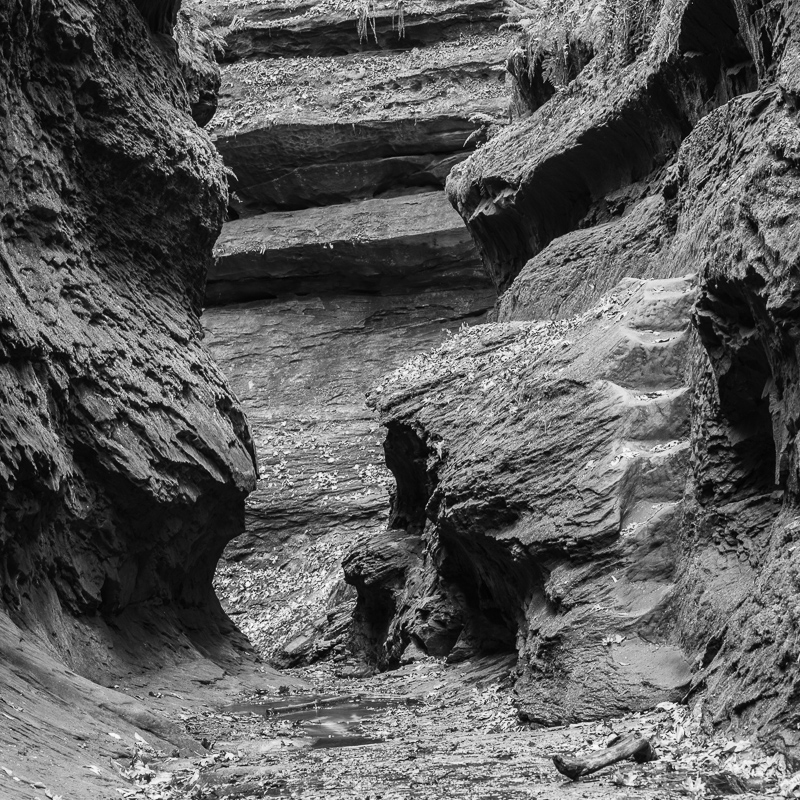
Then, still in Rocky Hollow Nature Preserve, the two main structural elements are the horizontal segments of the steps in the from and the background canyon wall in the back, and the vertical opening between the canyon walls. The function of the steps is not clear from this image. In wetter conditions, the canyon floor will be impassable due to water torrents, and the trail bypasses it on the right side of the wall. In any case, the two paths both give choices without a clear hint where these choices might lead.
The perceived equilibrium between the two choices is a photographic choice: The “heavier” path through the canyon is closer to the center, while the “lighter” steps are further to the side, creating a balance by weight on an imaginary scale. Also the lighter color of the stairs and their unexpected appearance trick the eye into spending equal amounts of time with both elements.

DSC 9785

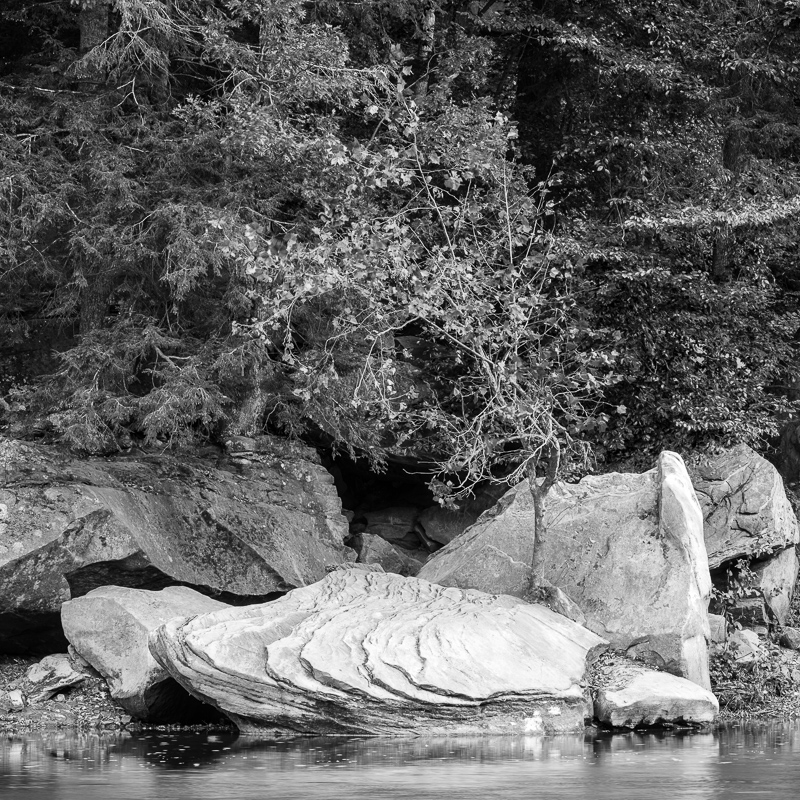
The last picture is from a location that I hadn’t visited until recently. I find this image quite successfully spooky. The two main structural elements, the elegantly layered rocks in the front and the tree that dares to grow inside them both frame a third structural element, the black void just above the rocks. The almost artificial arrangement of rock and tree suggests that there is more to the place, putting a growing question mark into what we might think of as a cave entrance.

The Obscure Object of Desire

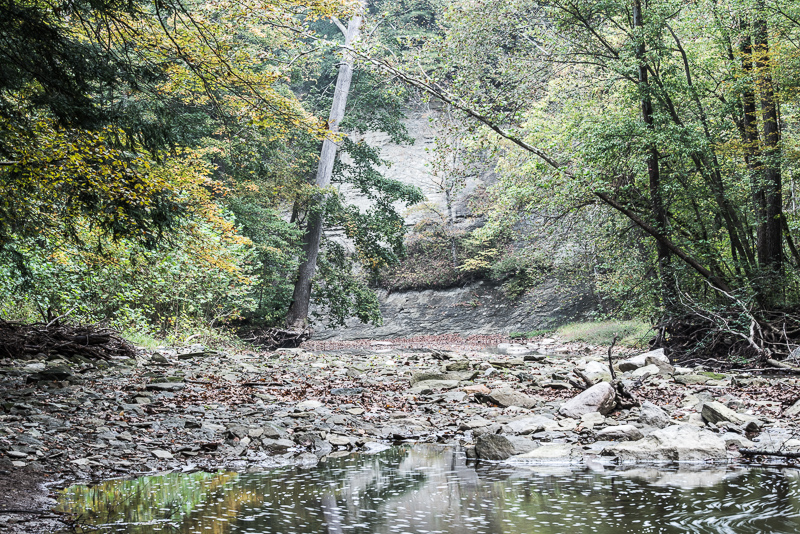
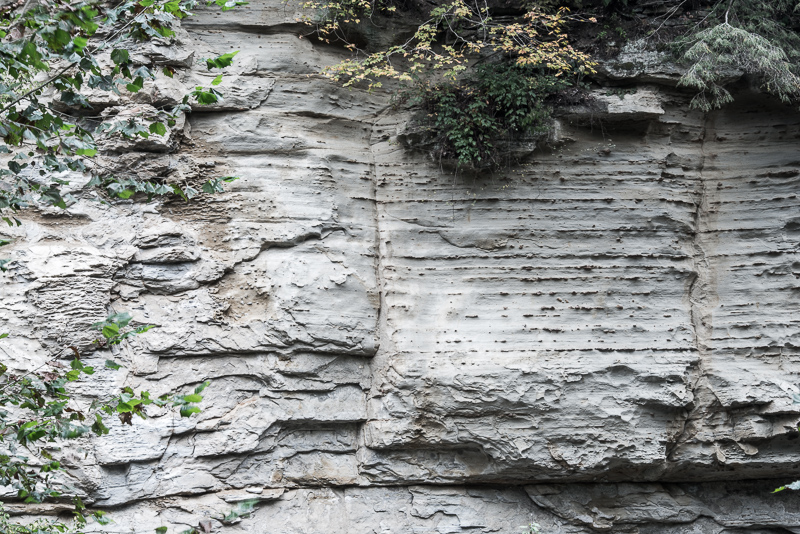
The trails of the Pine Hills Nature Preserve are naturally bordered to the north by the Indian Creek, a tributary to the Sugar Creek. For most of the time, all one can see from here to he west is this triangle riddled view:

DSC 9521

This has become one of my many obscure objects of desire. Fortunately, I am mentally sane enough to have learned that you do not get all what you want in your life, so I have been happy keeping it this way.

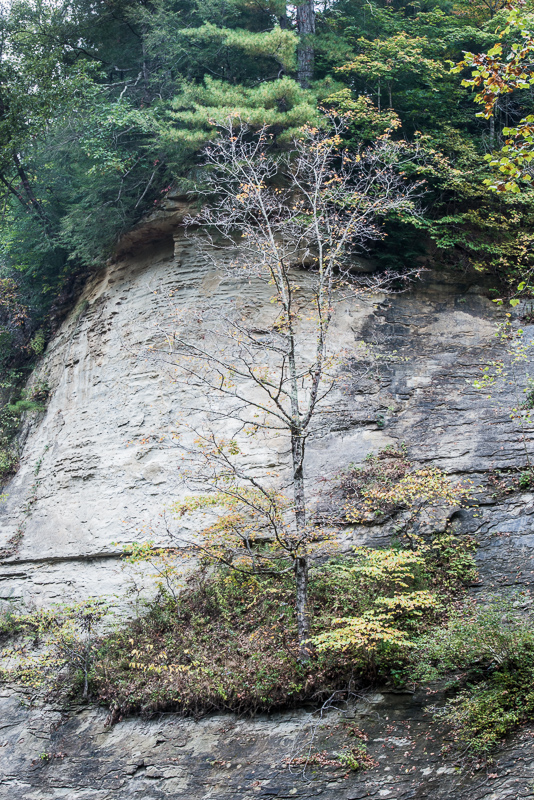
Even more fortunately, this fall the water level in the Indian Creek was so low that one could easily get to that strangely suspended tree in the center triangle. So on we go…

DSC 9526

This tree, growing on a small patch of earth at a nearly vertical cliff is an easy metaphor for too many things. You pick.
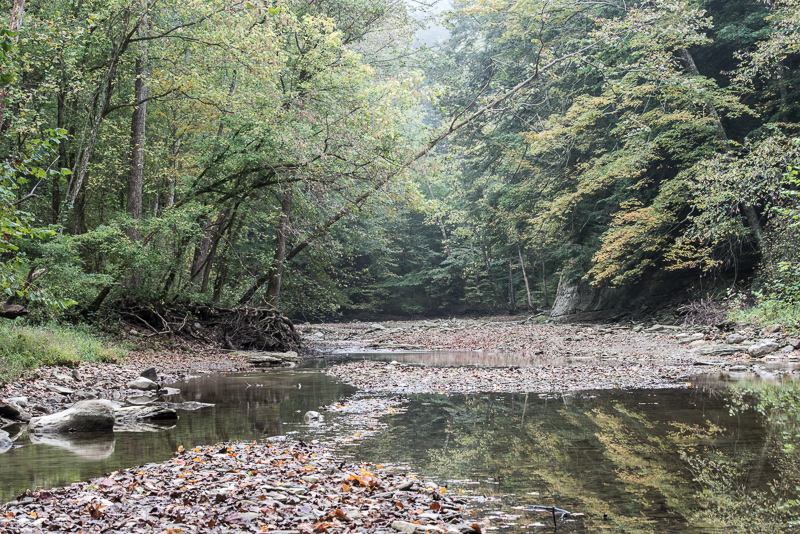
For me, almost more surprisingly, the possibility to move forward also opened the possibility for a view back.

DSC 9527

So maybe, even if we don’t always get what we desire, sometimes we should get it, if only to be able to reflect about the change that just happened.

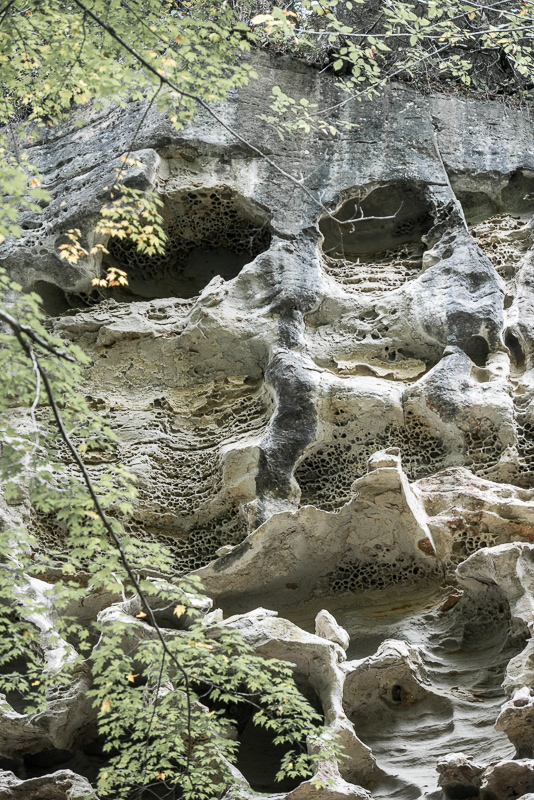
And on we go. Following an abandoned path along the Indian Creek, we meet another cliff, with Morse code writing on it that appears to tell a story for an audience long gone.

DSC 9537

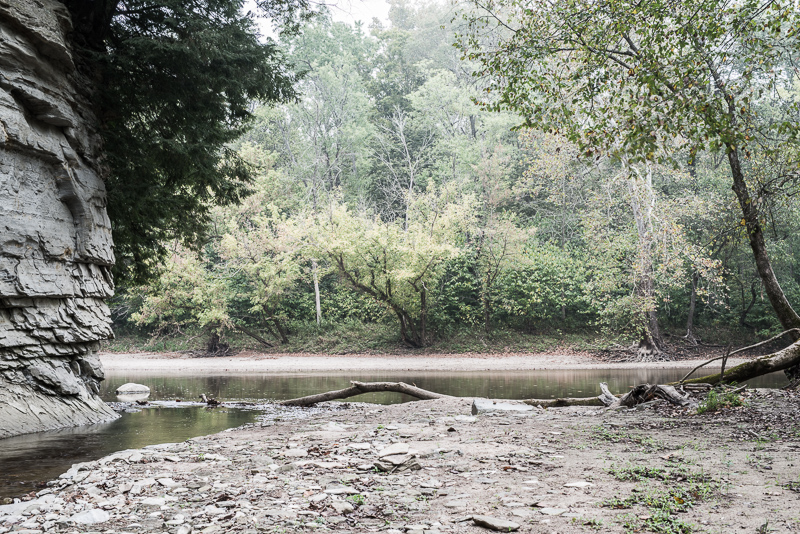
And on we go, exploring the little piece of new territory. Finally, we arrive at a new border: The Sugar Creek, that connects Turkey Run State Park with Shades State Park.

DSC 9574

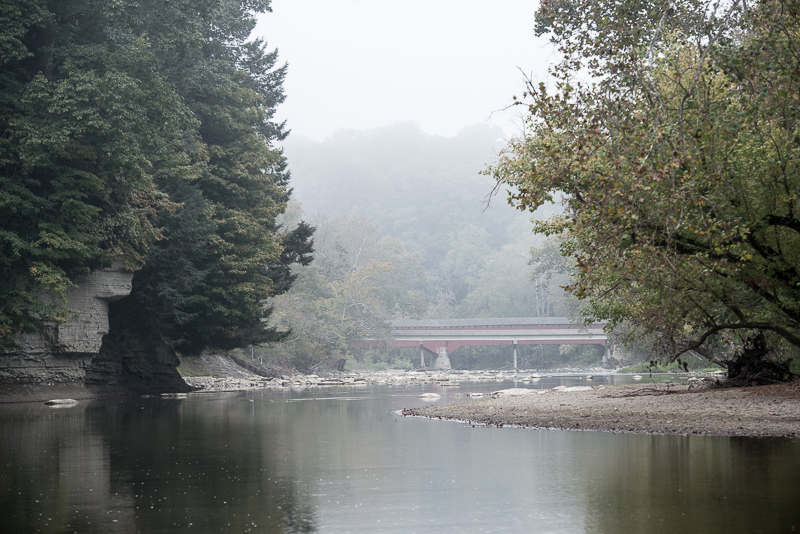
Also, unreachable from here, a covered bridge that would allow to cross the creek.

DSC 9562

Indiana doesn’t have a National Park. This whole area, including Shades State Park and Turkey Run State Park, is so full of quietly beautiful places, that it would make an ideal candidate. But maybe it is better to leave this area alone, and hidden, most of the time.

DSC 9617

Pawpaw

IMG 1335

The Pawpaw tree is one of the more interesting trees that are native to North America.
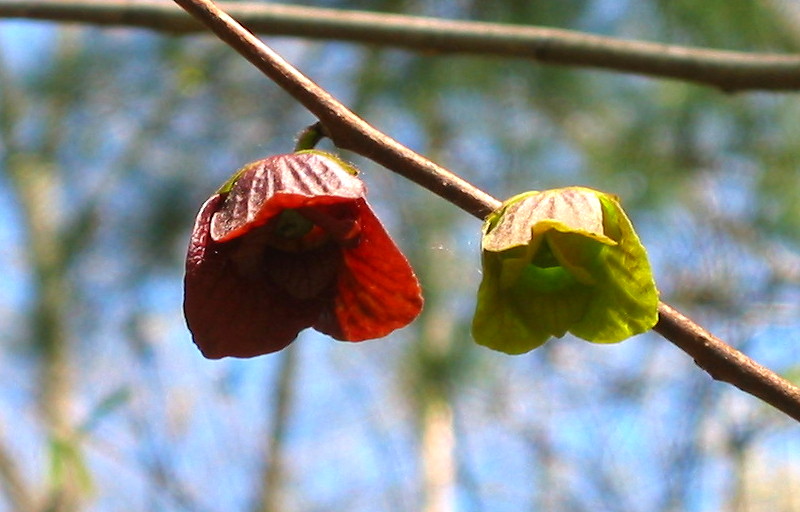
Pawpaws are small and like shade. In the spring they make small colorful flowers. I don’t know whether its common that differently colored flowers appear on the same tree.

DSC 0889

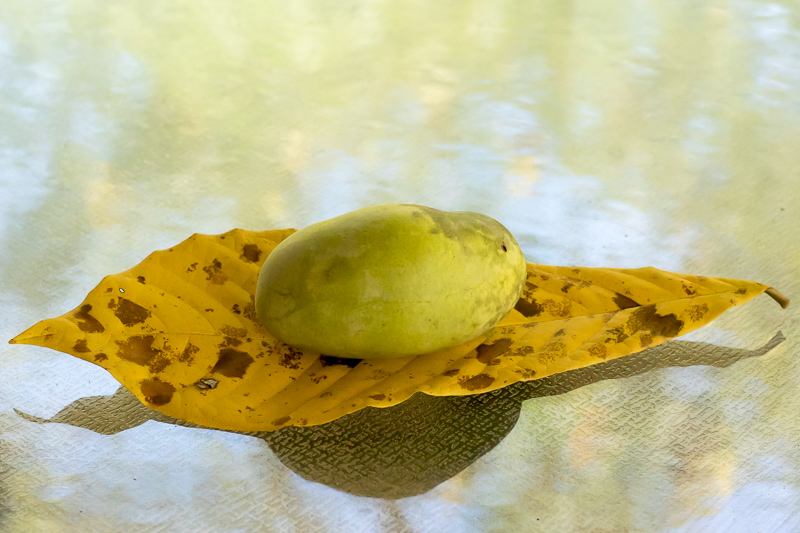
When the big leaves turn yellow, they produce potato sized fruits.
They will not stay long on the trees, as most animals (from squirrel to deer) seem to like them even when not yet ripe. You need to harvest them when they are getting soft and begin to smell.

DSC 0891

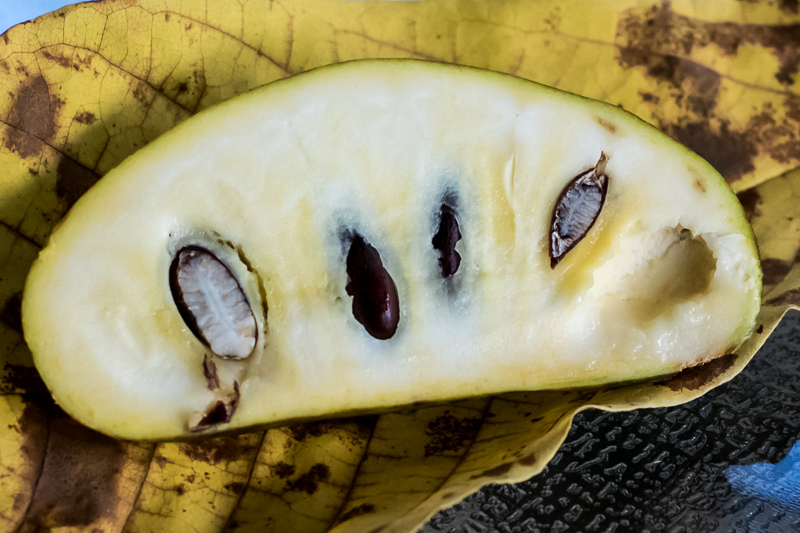
They will not keep fresh for very long, so go ahead and peel them. The easiest way to deal with the large seeds is to eat the fruit in chunks and to spit the seeds out. If you are more patient, you can also remove the seeds, put the fruits into a blender and make a very delicious pulp. The taste is banana like with an exotic touch that is hard to pin down.

DSC 0894

The Gyroids (Algorithmic Geometry III)

Bisquare
When we use squares bent by 90 degrees about one diagonal and extend by the rotate-about-edges rule, we get Petrie’s triply periodic skew polyhedron {4,6|4} which has six squares about each vertex. The two tunnel systems it divides space into are another crude approximation of the primitive surface of Schwarz.

Cubeblock

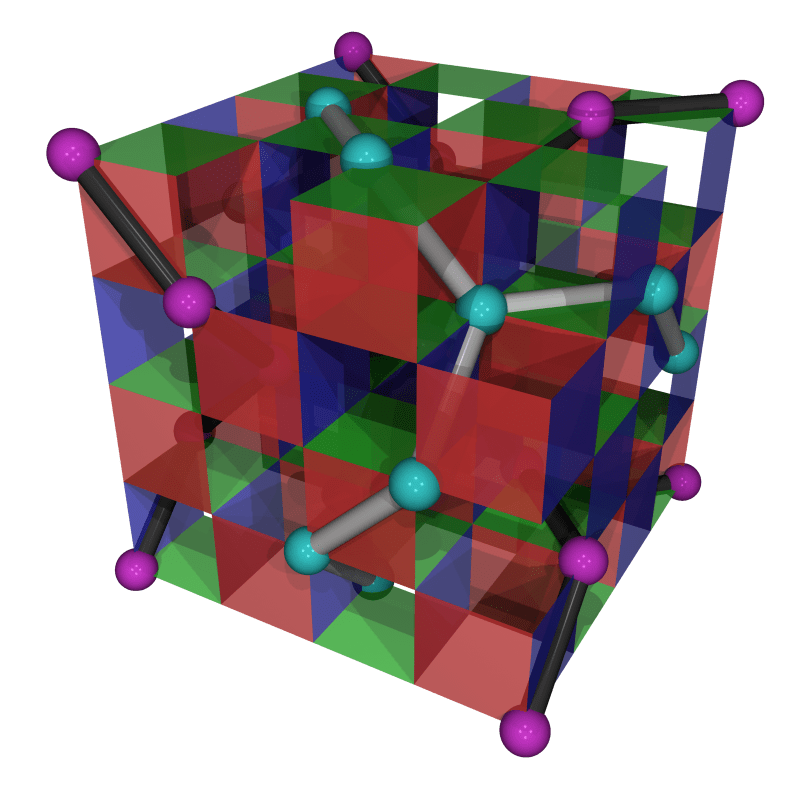
Coxeter observed that this polyhedron can be used to construct Laves’ remarkable chiral triply periodic graph as follows. Choose any diagonal of any of the squares of {4,6|4}. Take an end point of the diagonal, adjacent to which are six squares. Look at the six diagonals of the squares that share the end point as a vertex, and take every other of them, starting with the already chosen diagonal. Keep extending the emerging graph like this.

Laves

You obtain the 3-valent Laves graph. At each vertex, the edges meet 120 degree angles. It turns out a mirror symmetric copy fits onto the {4,6|4} without intersections. These two graphs are the skeletons of the two components of the Gyroid, a triply periodic minimal surface discovered by Alan Schoen. You can read all about the discovery at his Geometry Garret.

Mingyroid

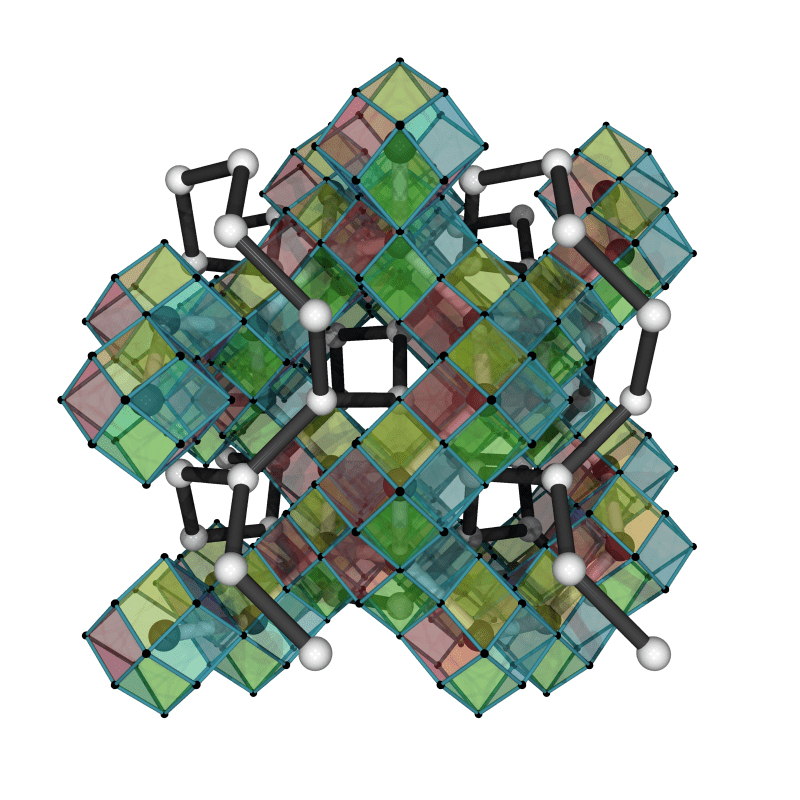
The Laves graph also lies on the dual skeleton of the tiling of space of rhombic dodecahedra. That means that you can get a solid neighborhood of the Laves graph consisting of rhombic dodecahedra:

Rhombic

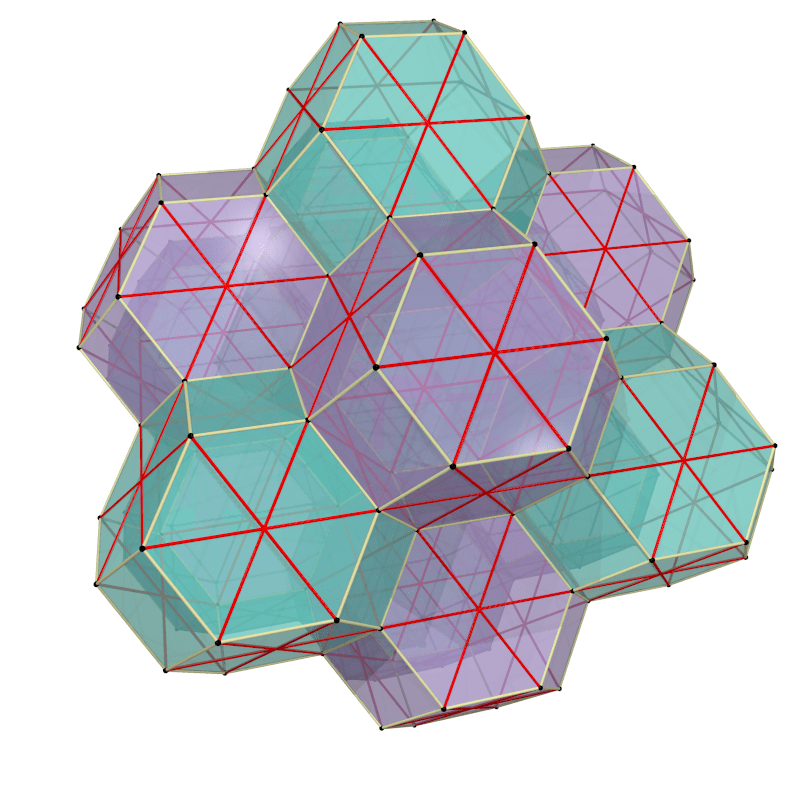
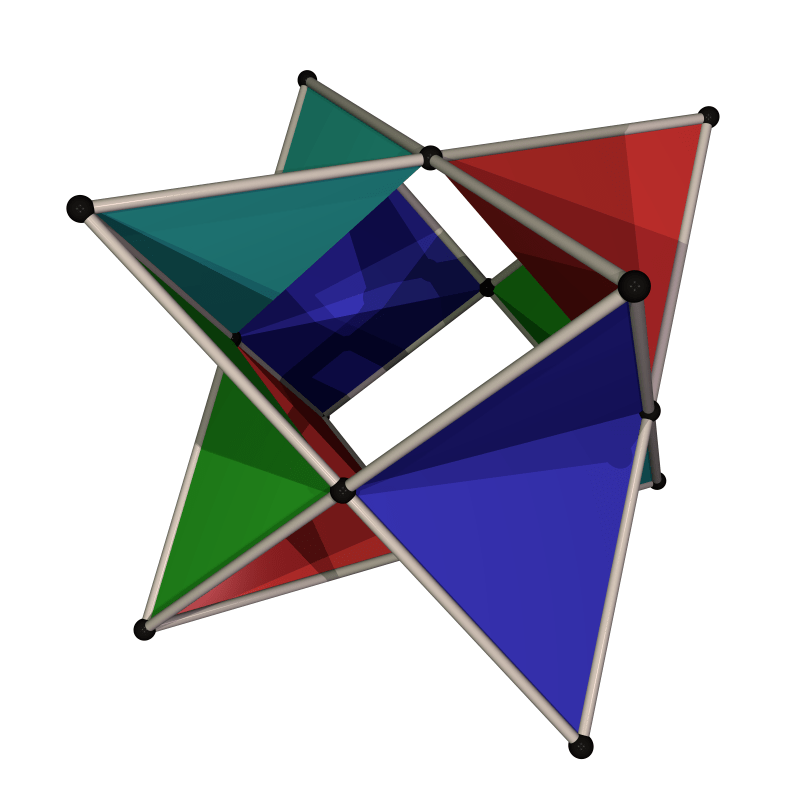
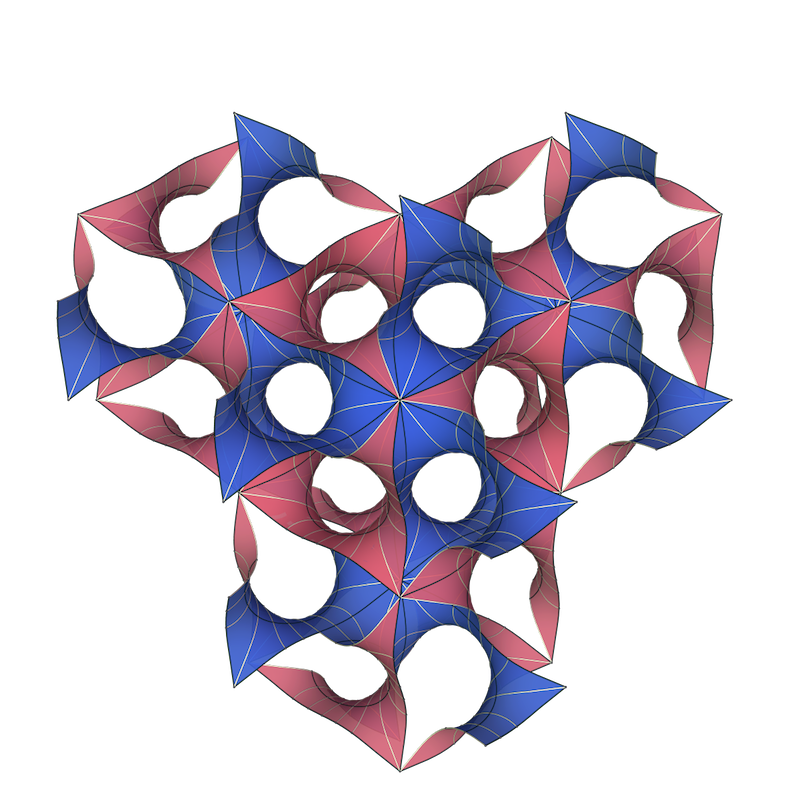
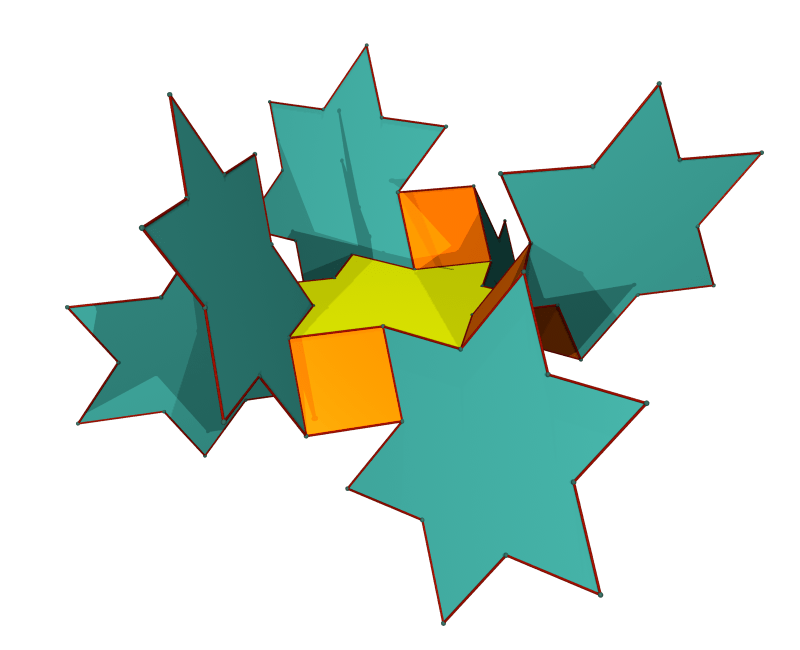
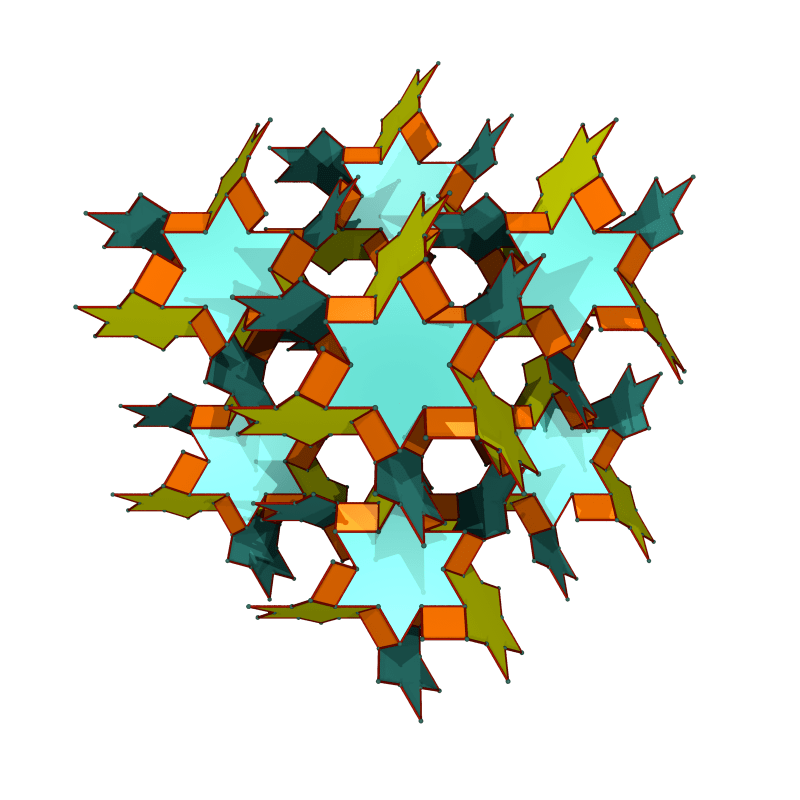
This can be done both for the Laves graph and its mirror still leaving a gap in which one can fit the gyroid. Alan Schoen also discovered a uniform polyhedral approximation of the gyroid, consisting of squares and star hexagons. To build it, take a star, attach a square to every other edge, bending the squares alternatingly up and down. Then attach six more stars to the free edges of the first star, fitting them to one free edge of one of the squares each:

Polygyroid

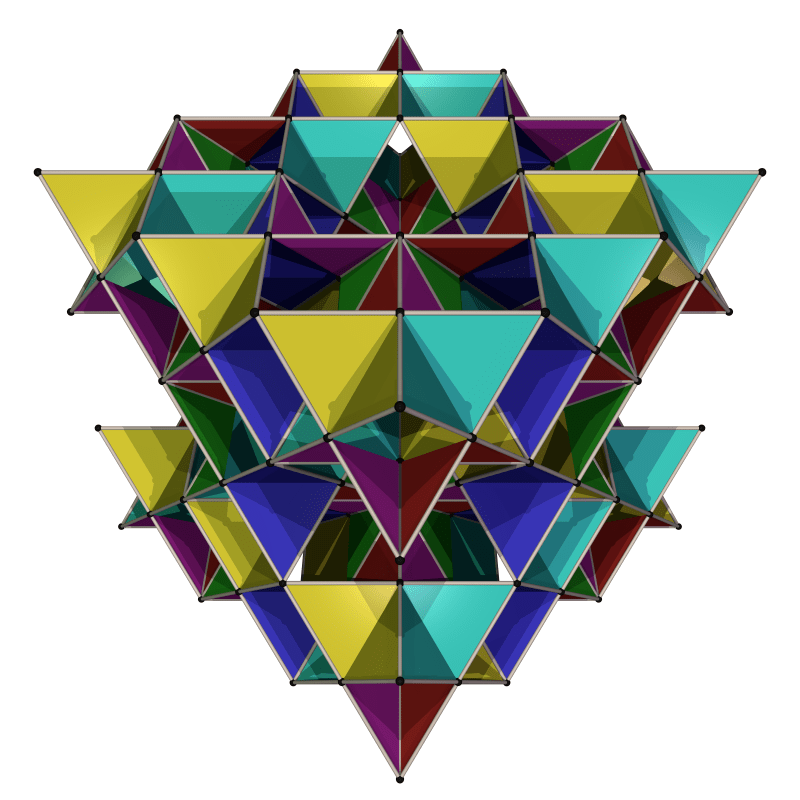
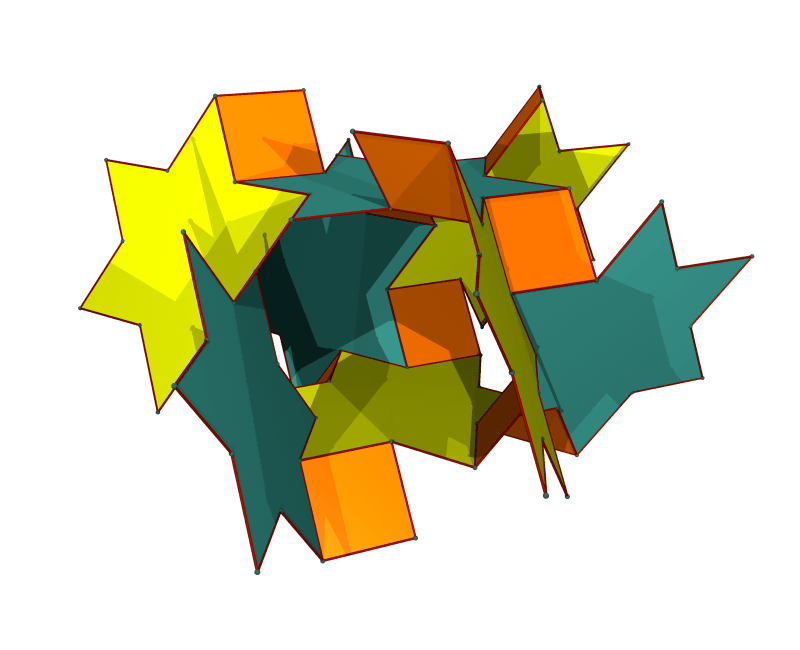
Two copies of this piece (without the downward pointing stars and and squares) make a translational fundamental piece of the uniform gyroid.

Polygyroid2

Images of larger portions are hard to parse, but it makes a wonderful model.

Polygyroid3

Journey

When discussing the options for traveling with a three weeks old baby from California to Indiana, friend Bryce reminded me that while today we view traveling as the unavoidable side effect when to get from A to B, there used to be a more conscious form of travel that one can metaphorize as a journey. Thrilled, we decided to take this trip by train. The idea was to spend two nights in a sleeper car, and the days sightseeing.

DSCF0006

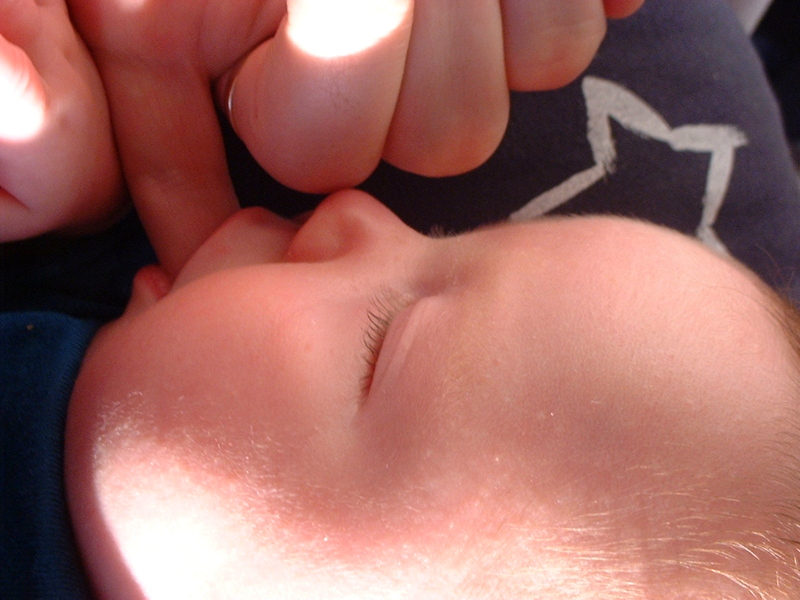
The comfort is minimal, but so are the demands of a three week old.

DSCF0021

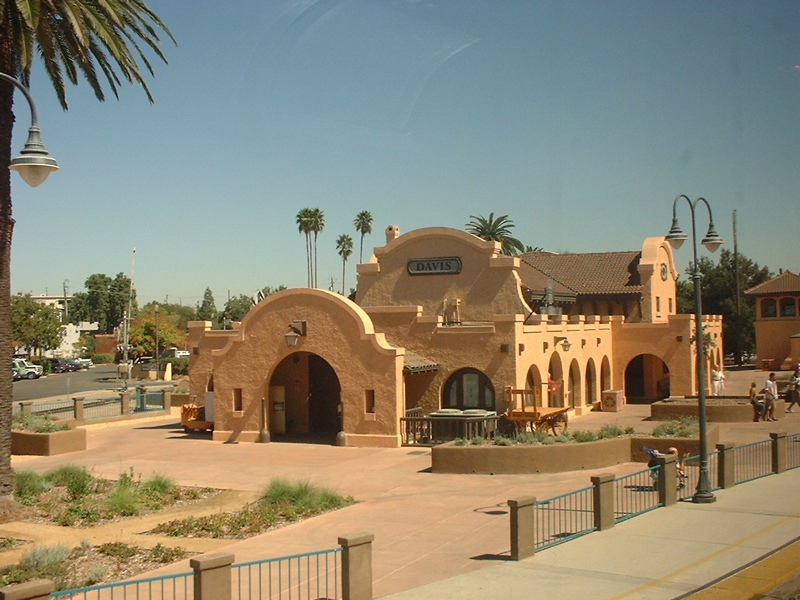
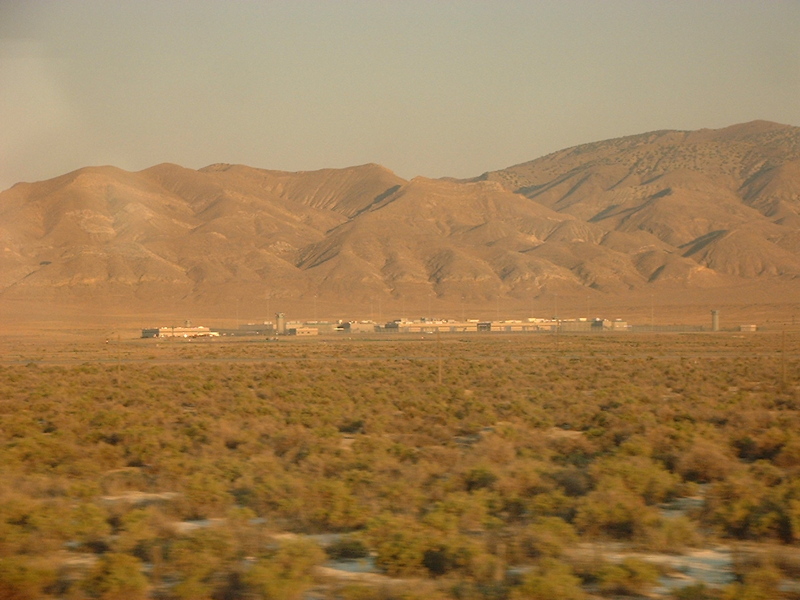
California becomes Nevada. Notice the difference in architecture and functionality (railway station vs. correctional facility).

DSCF0028

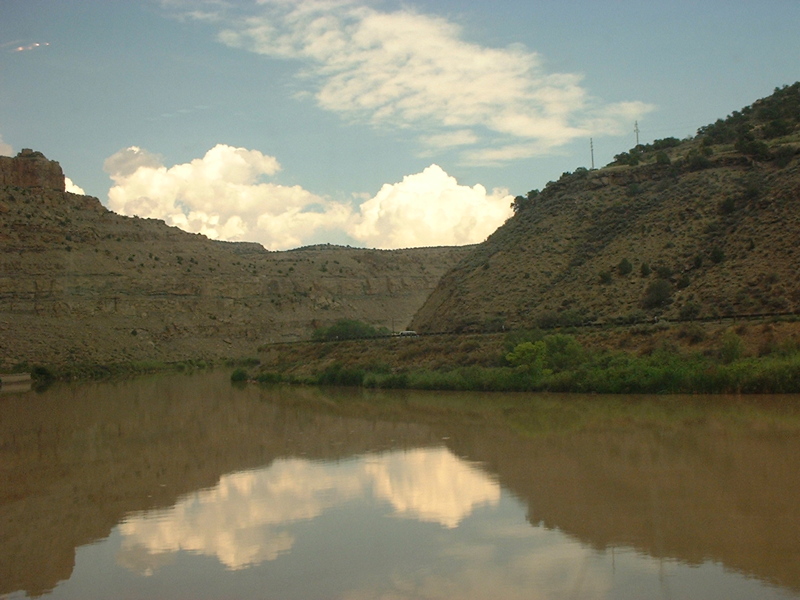
Nevada becomes Utah and Colorado.

DSCF0066

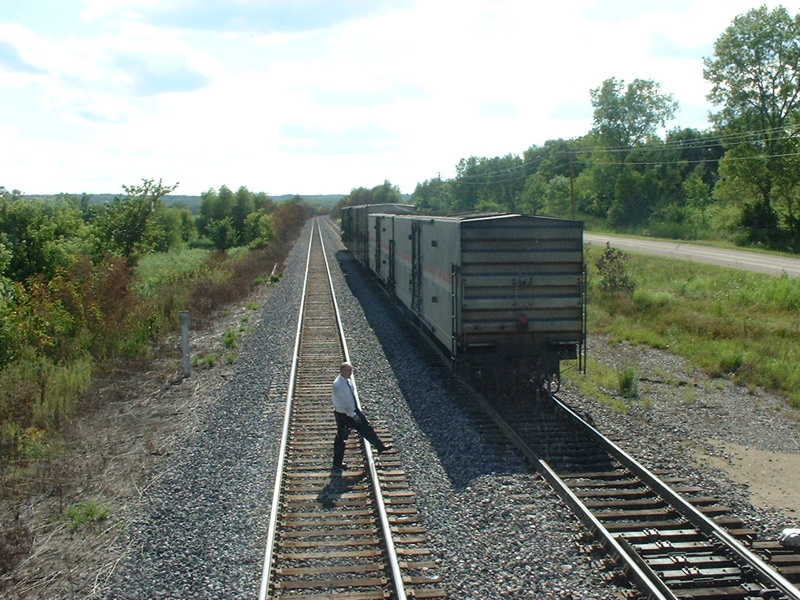
Then, in Iowa, when we start feeling the heat and humidity of summer in the midwest, the power of all passenger cars fail. For hours, the Amtrak personal shuffles the cars in order to put the one with the faulty cable at the end. In vain.

DSCF0076

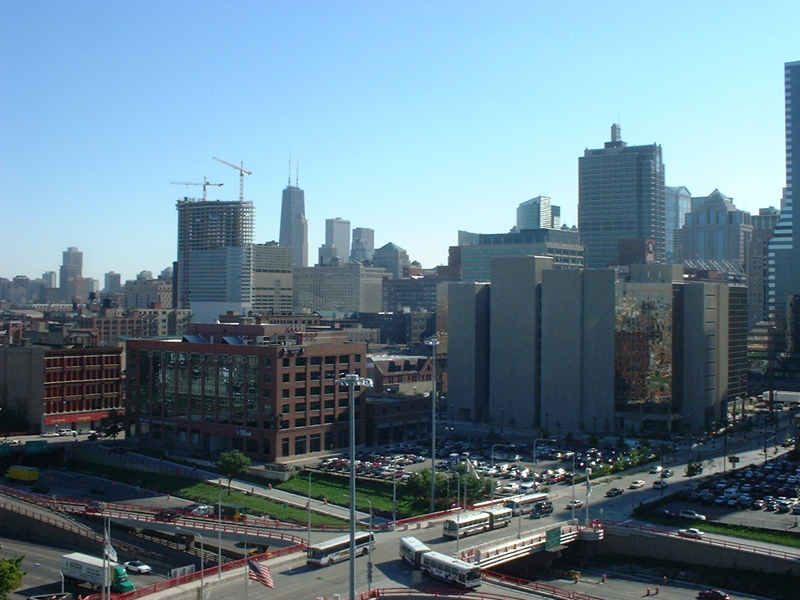
When we arrive in Chicago 8 hours late in the third night, Amtrak pays for a hotel with view.

DSCF0085

We have arrived! Moral: Each journey should result in a story.