Ramsey Cascades

In June 2009, I spent a week hiking in the Smoky mountains. There was much to see, and I will focus here on the Ramsey Cascades waterfall, in the northeastern part of the park.
DSC 9911

The four mile, 2,000′ climb with camera and tripod is strenuous, but as soon as you arrive at the fall, all the pain is forgotten. This is one magnificent waterfall.
DSC 9917

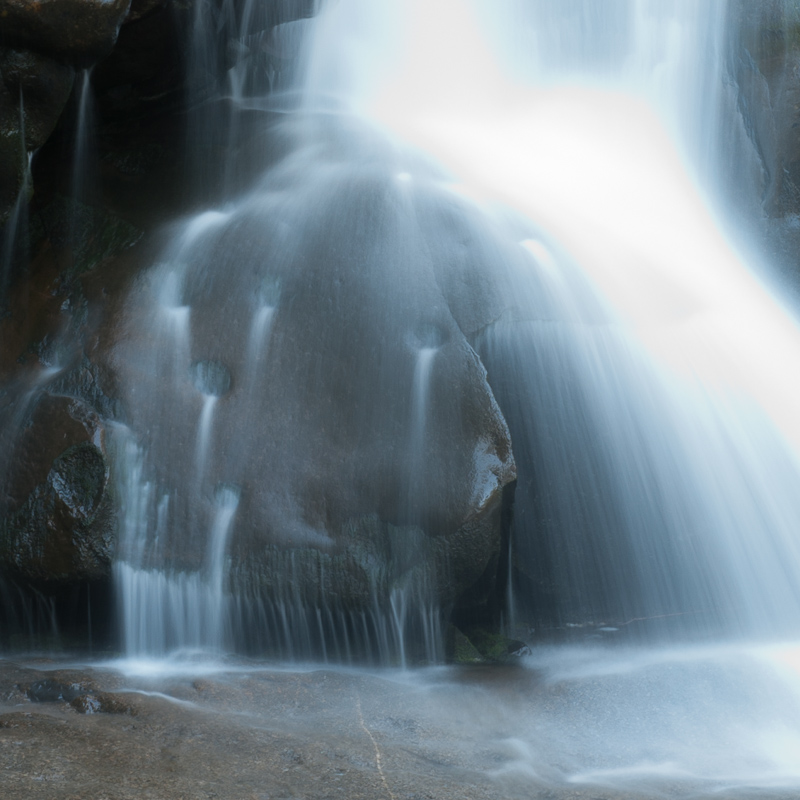
Waterfalls are tricky. Being there is obviously exciting, but not being there and instead having to look at pictures is annoying. So I apologize.
DSC 9711

Photographers have tried to get the most out of waterfalls. The rules of the game have become: Avoid direct sunlight, and use long time exposure to get the surrealistic filaments of water. This is supposed to turn any waterfall into a world of wonder.
DSC 9746

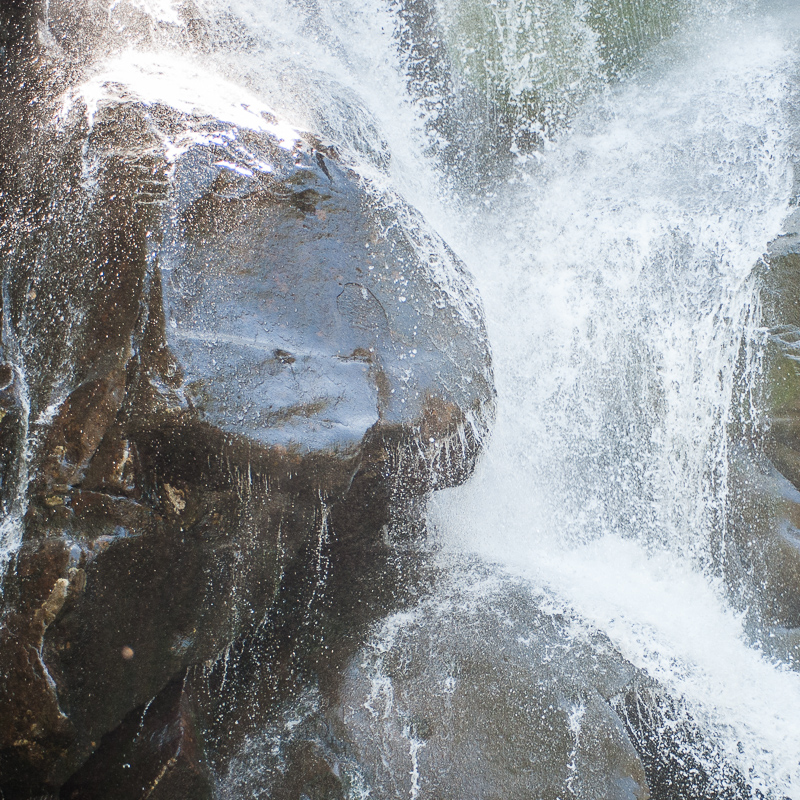
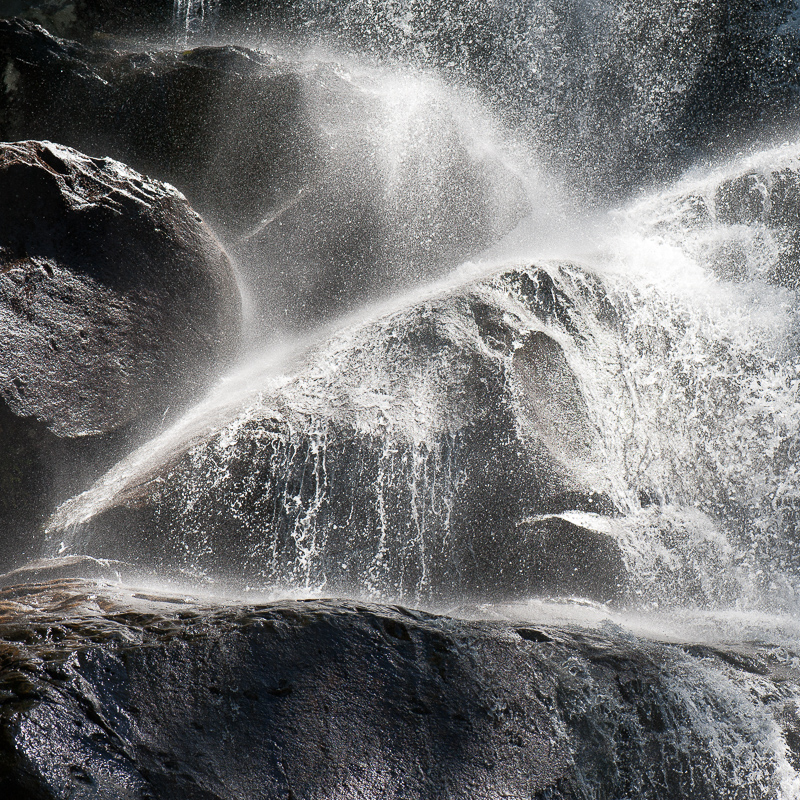
Don’t misunderstand me; I like alienation. But there are other ways, too. A waterfall has a personality that wants to be discovered and appreciated. The Ramsey Cascades are a wonderful example with a highly complex personality.
DSC 9732

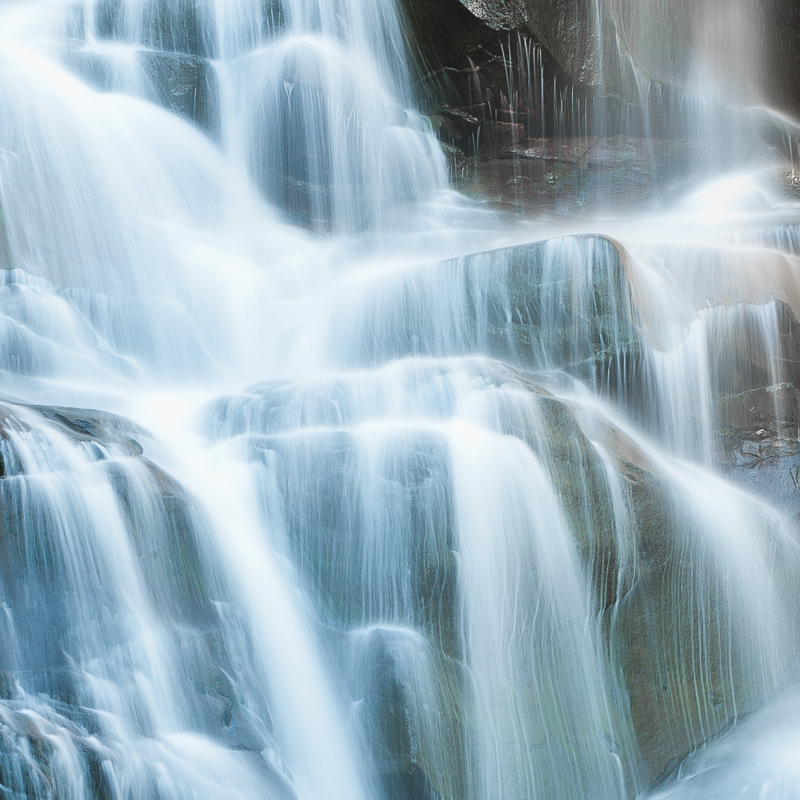
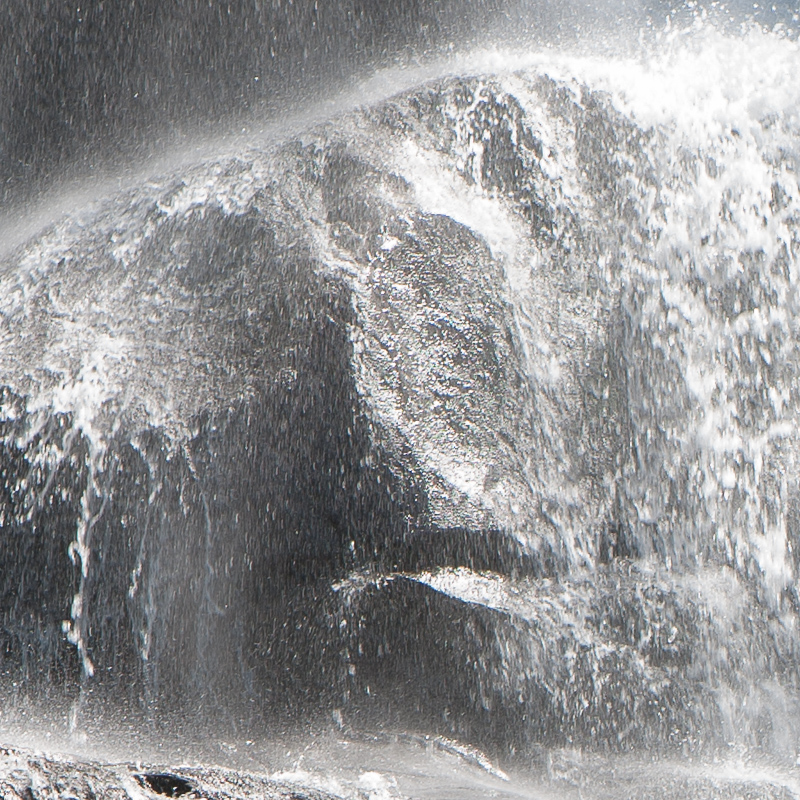
So this post is a teaser, a puzzle. Instead of showing the entire fall, I only show closeups, highlighting the many different ways how water and rock interact.
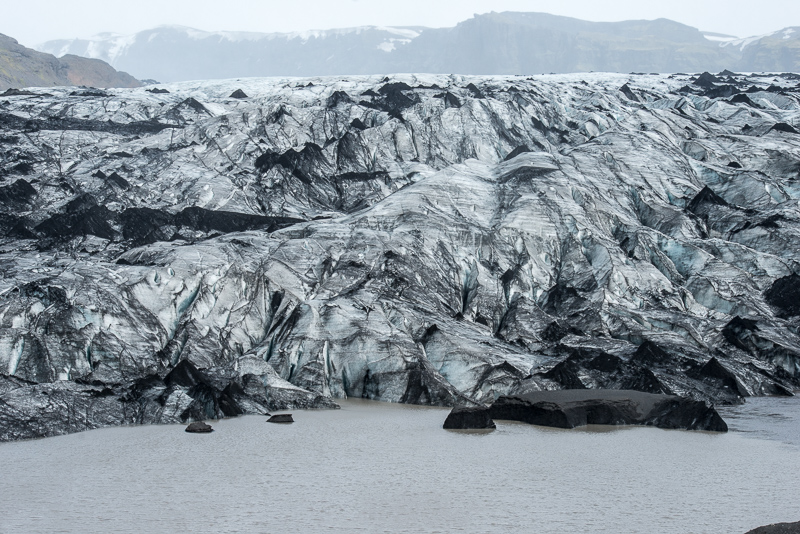
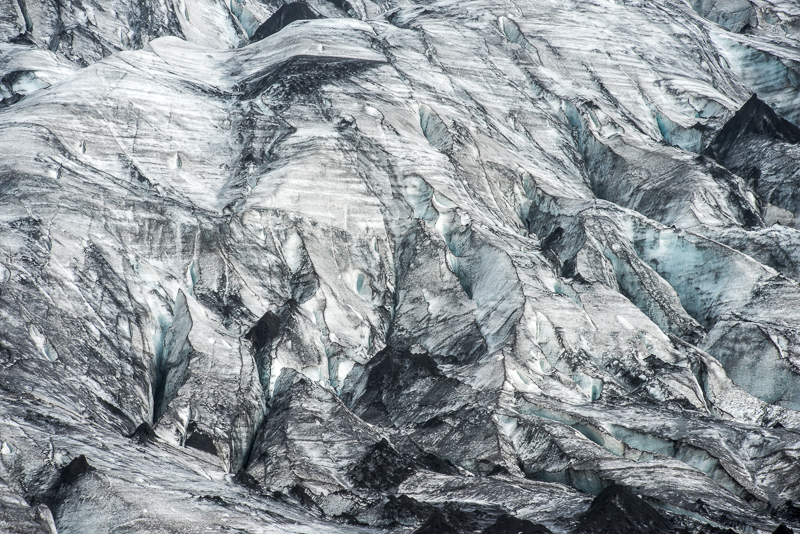
Weggebeizt (Iceland V)

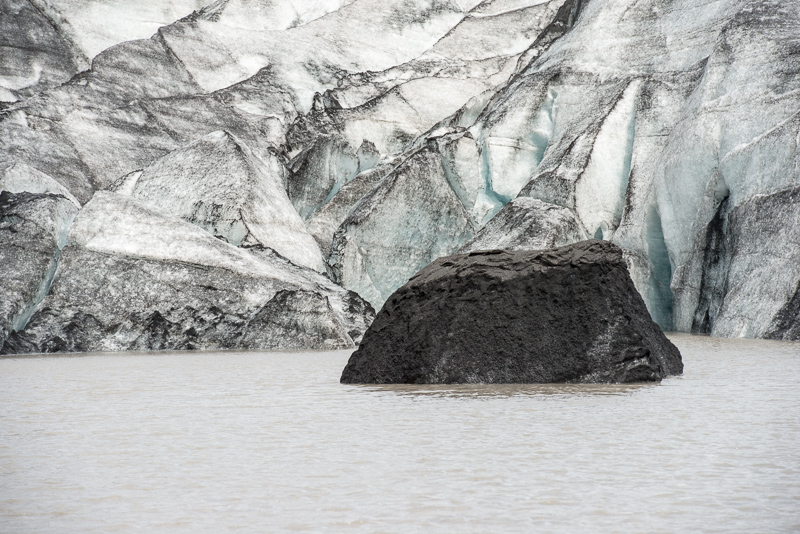
I cannot think of a better description of glaciers than in Adalbert Stifter’s novella Bergkristall, where two young children, on their way home to their alpine village, get lost in a storm on a glacier.

DSC 7681

The glacier becomes a symbol of frozen time, and hence death.

DSC 7689

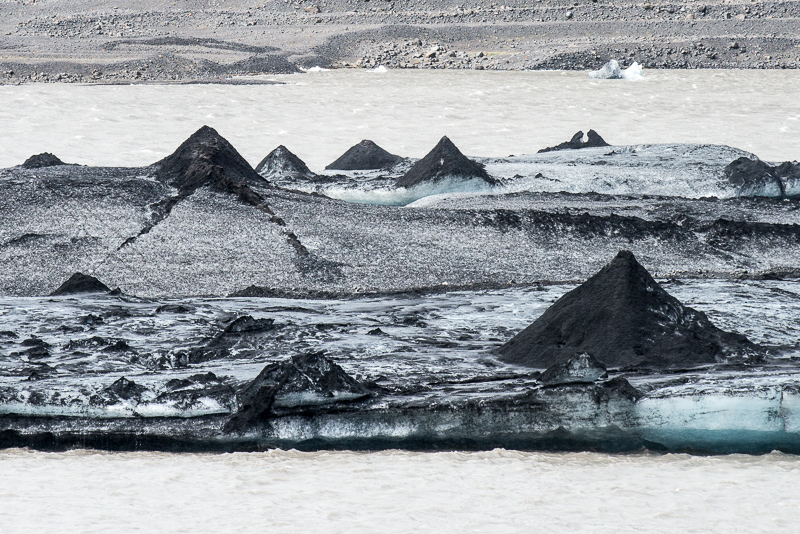
Here at Sólheimajökull, however, the abstract purity of Stifter’s glacier is contrasted by layers of ash, like many glaciers in Iceland.

DSC 7693

Thus the glacier seems to transport time, much like it does in the glacier poems of Paul Celan.

DSC 7699

Scotland in Winter

On of my teenager dreams was to treck though Scotland. Like many things, it never happened, but I could not resist to accept the invitation of a friend to spend New Year 1994/5 near Fort Williams.

Scotland173

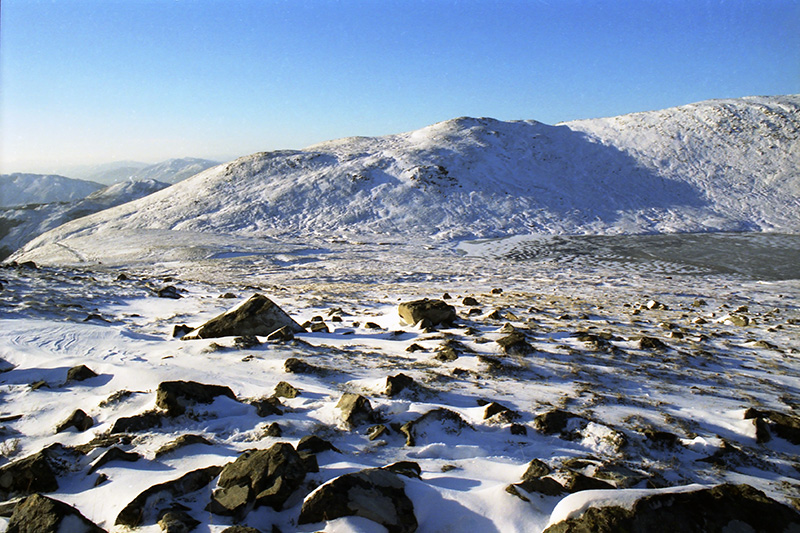
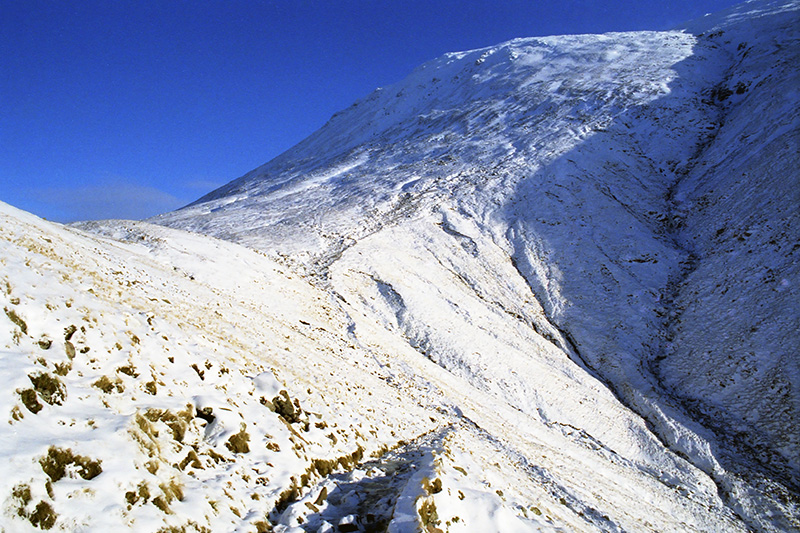
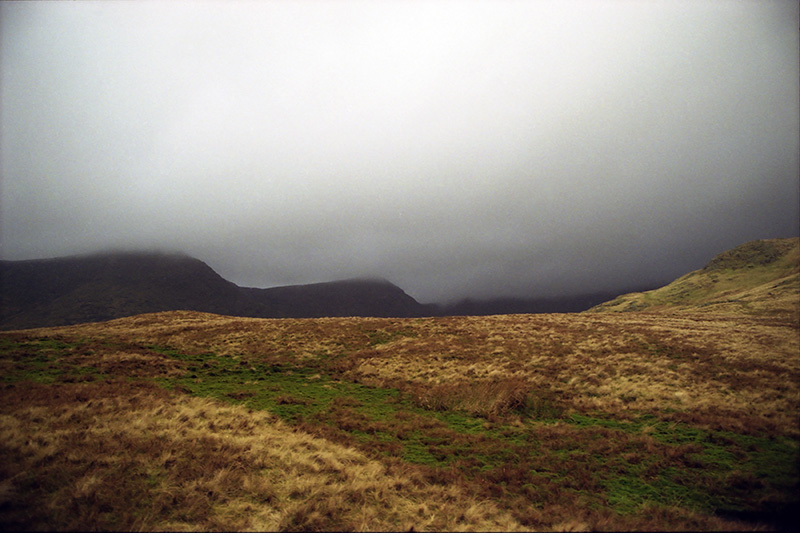
The landscape is harsh and appears alpine, even though one is just a few hundred meters above sea level.

Scotland191

In some sense, these are ideal conditions for some mild mountaineering. The little snow there is is very crisp and allows for easy climbing.

Scotland169

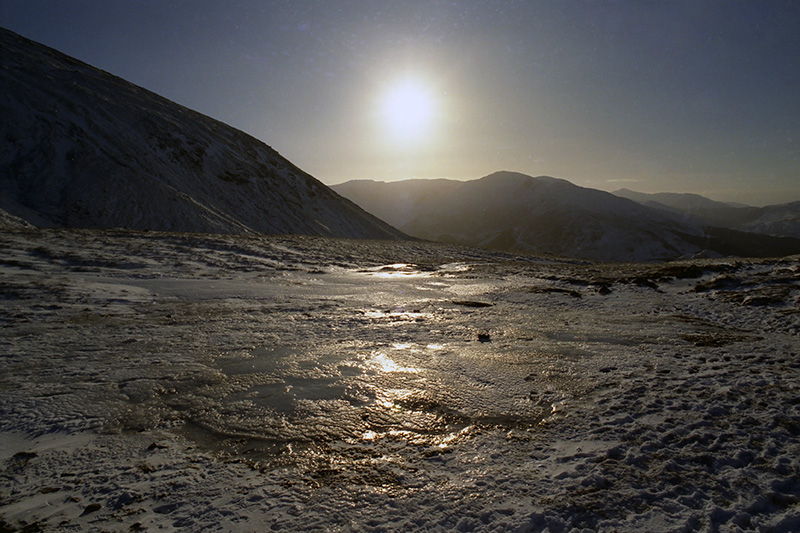
On the other hand, the days are very short. One has six hours at most to get up and down again. You don’t want to get lost there after dark.

Scotland166

The Lake District

Winter Break of 1994 I spent in England, and part of it in the Lake District. I had been to Britain only once before, spending time in Wales and London. This time, it was to be a few days in the Lake District and in Scotland.
Lake 138

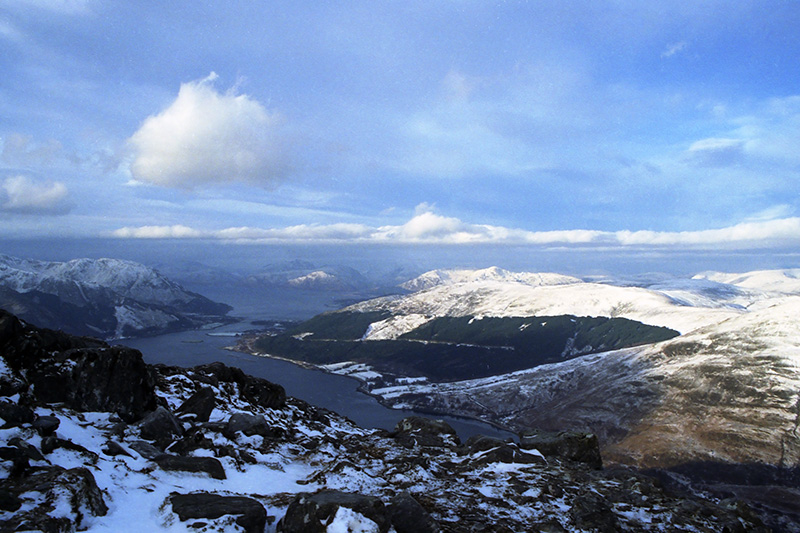
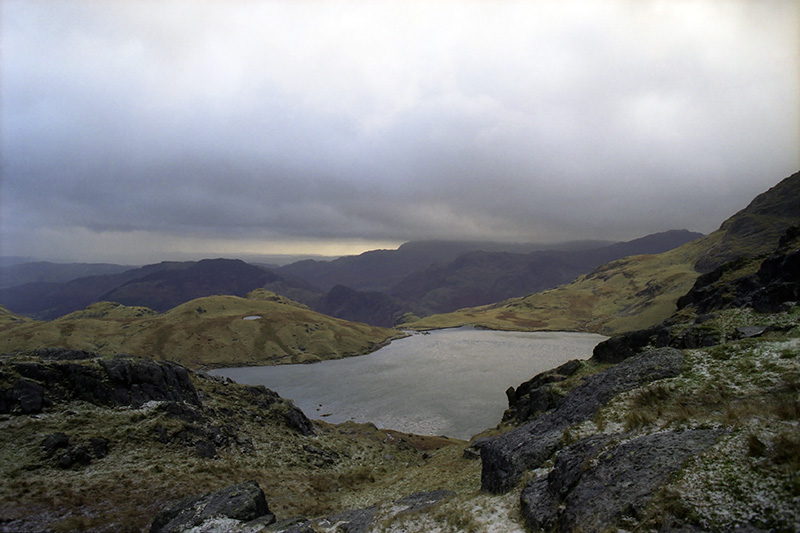
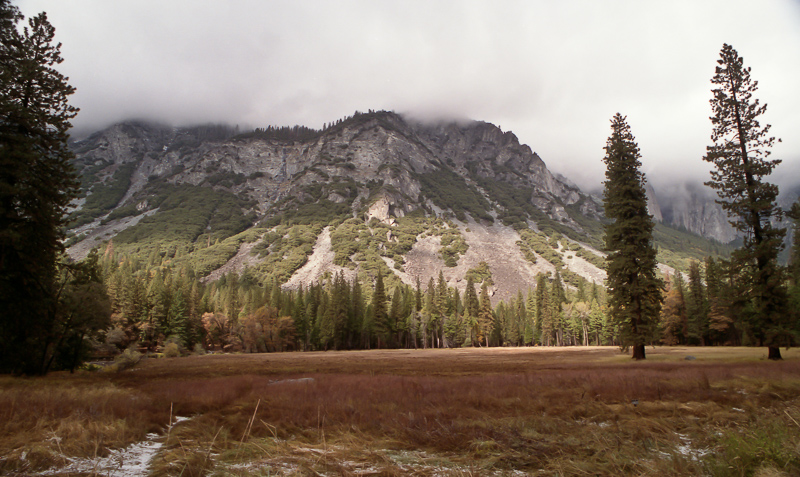
I am reasonably familiar with the British literature, and I knew about the Lake District via the Lake Poets, but nothing could have prepared me for that landscape in winter.

Lake 118

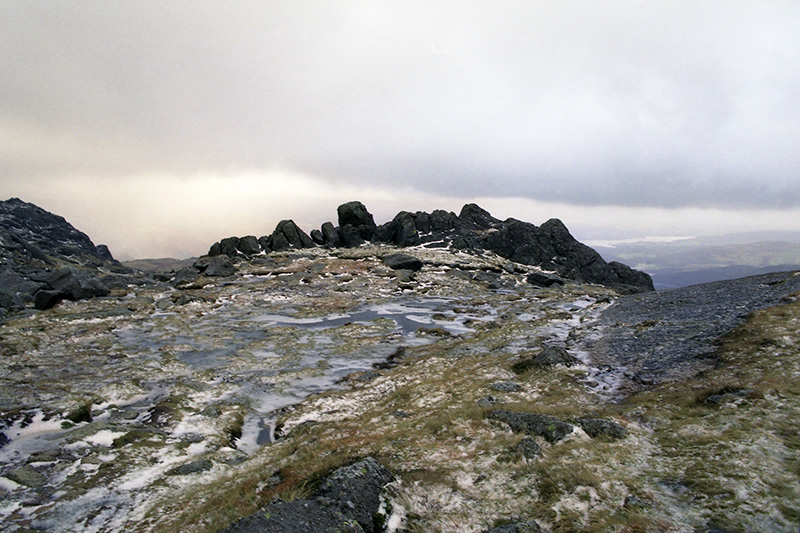
Harsh landscapes are usually simplistic in the sense that there is a barren ground extending to the horizon, where it meets an equally barren sky. In the Lake District, there is often an ominous region in between, hard to define, that seems to open up or tear apart the well defined separation between heaven and earth.

Lake 145

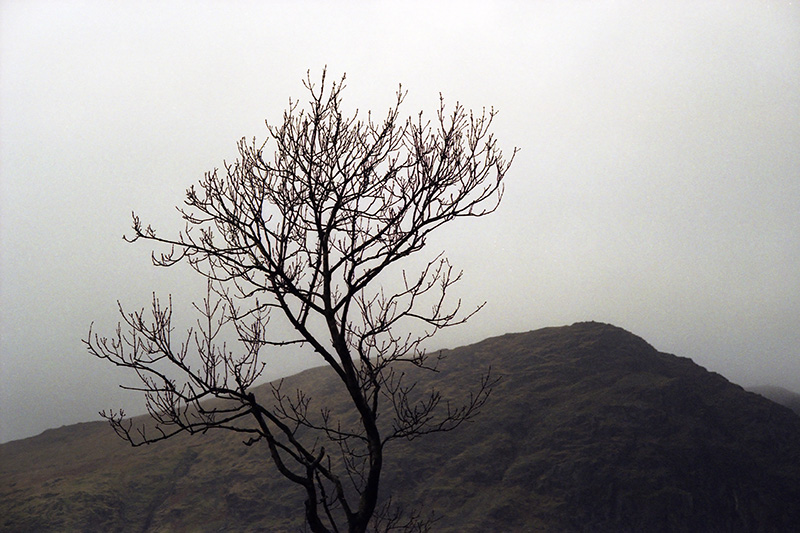
And there is, of course, the lone tree that would suit many a poem.

Lake 150

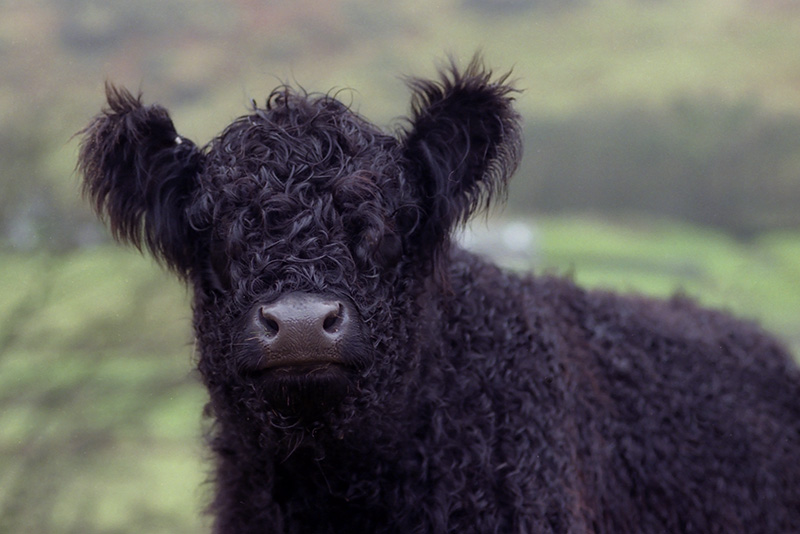
The Galloway cow (I believe) has no comments. She is just happy here.

Lake 146

Rock Art (Iceland IV)

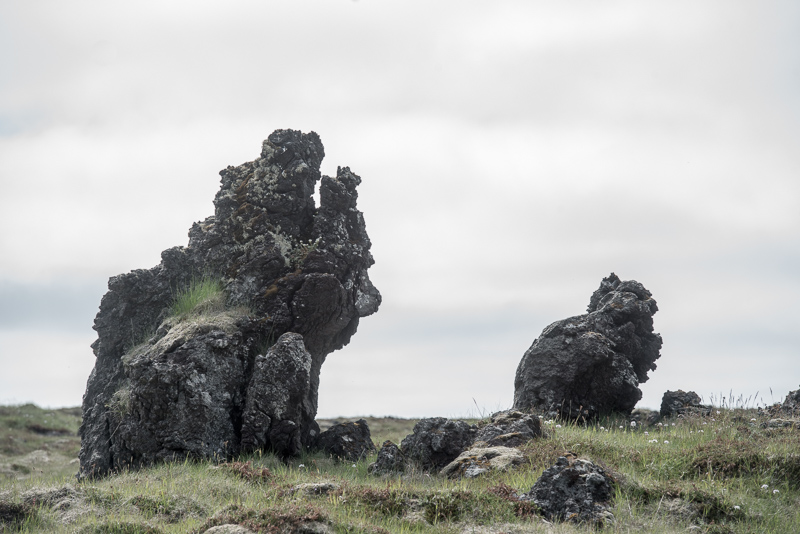
This image of an expecting woman should make it clear that trolls are not as close to extinction as some try to make us believe.

DSC 8873

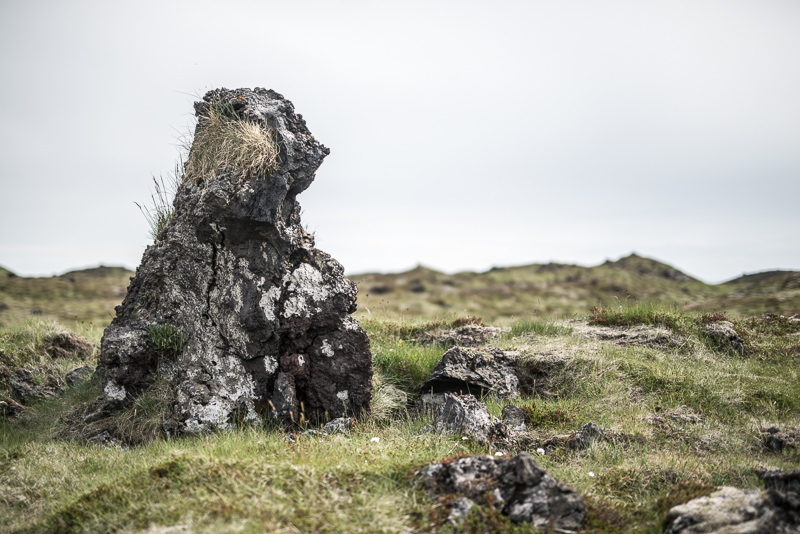
Of course they are hard to find. Not only are they well camouflaged by all the lava rocks, they are also in constant migration, like here a small family, with the child being carried piggyback.

DSC 9147

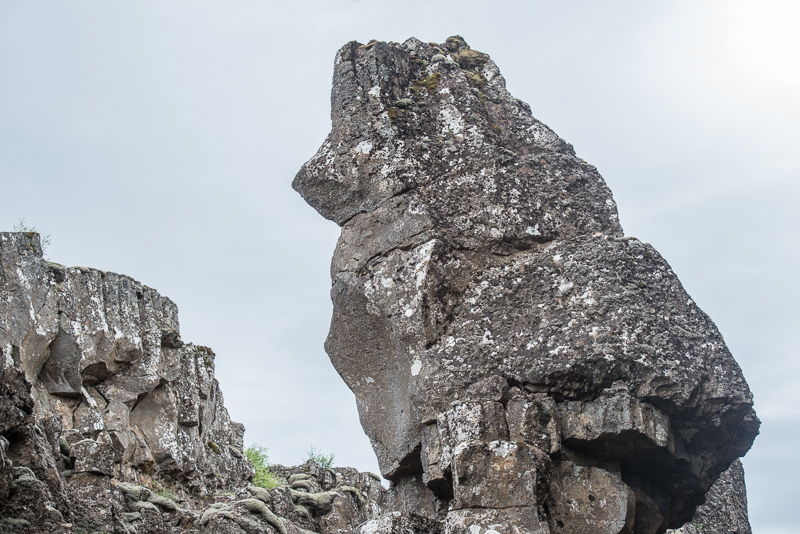
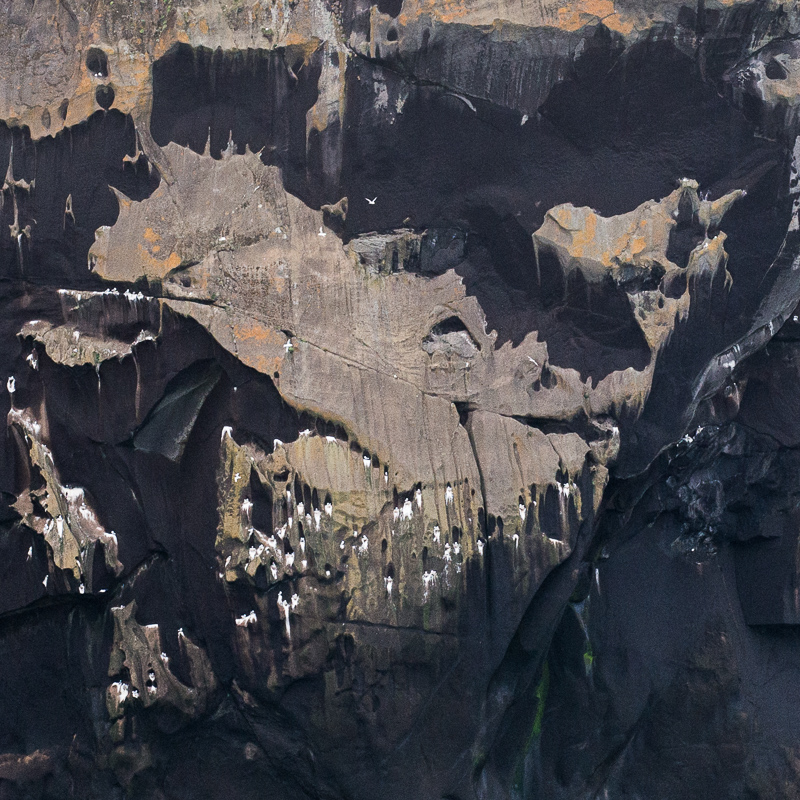
But not only trolls roam Iceland. This large bird should rewrite a chapter of the theory of evolution.

DSC 7767

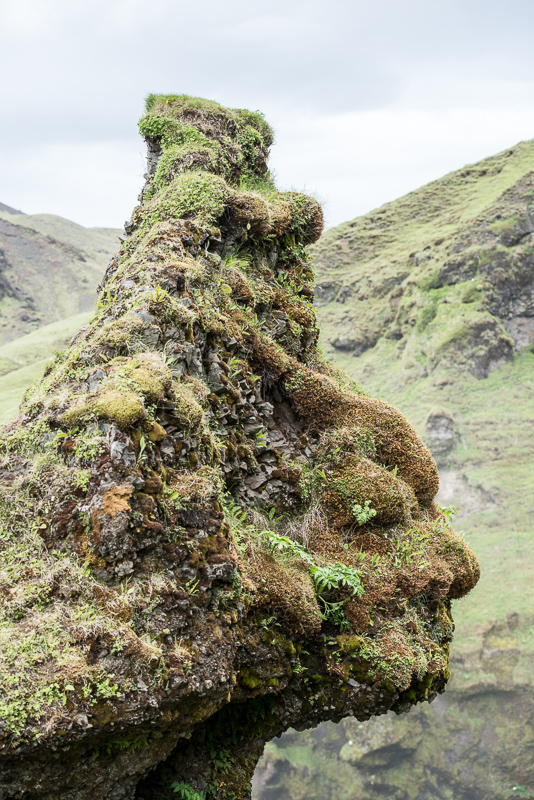
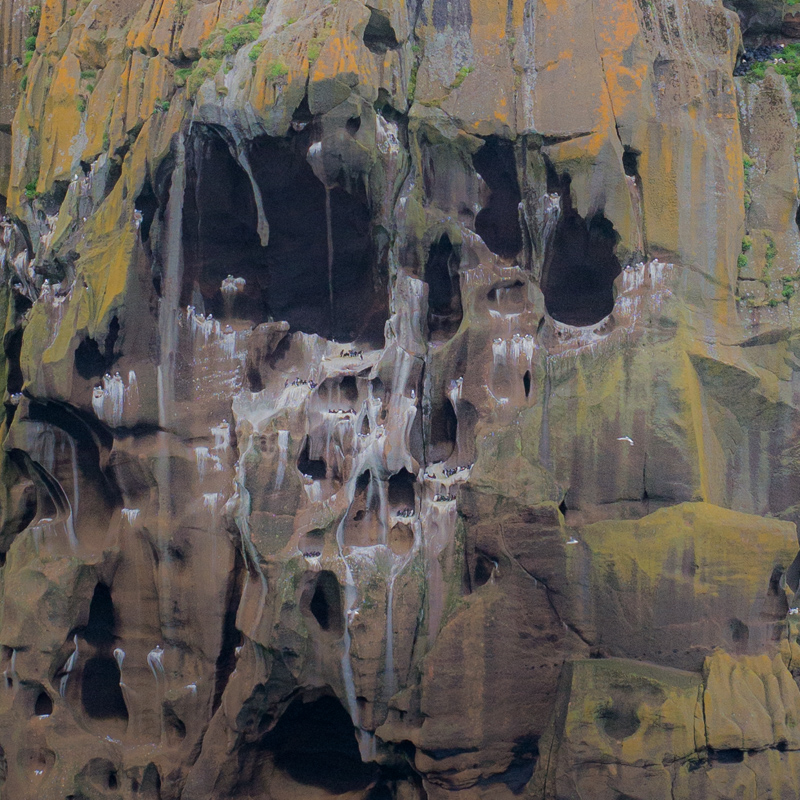
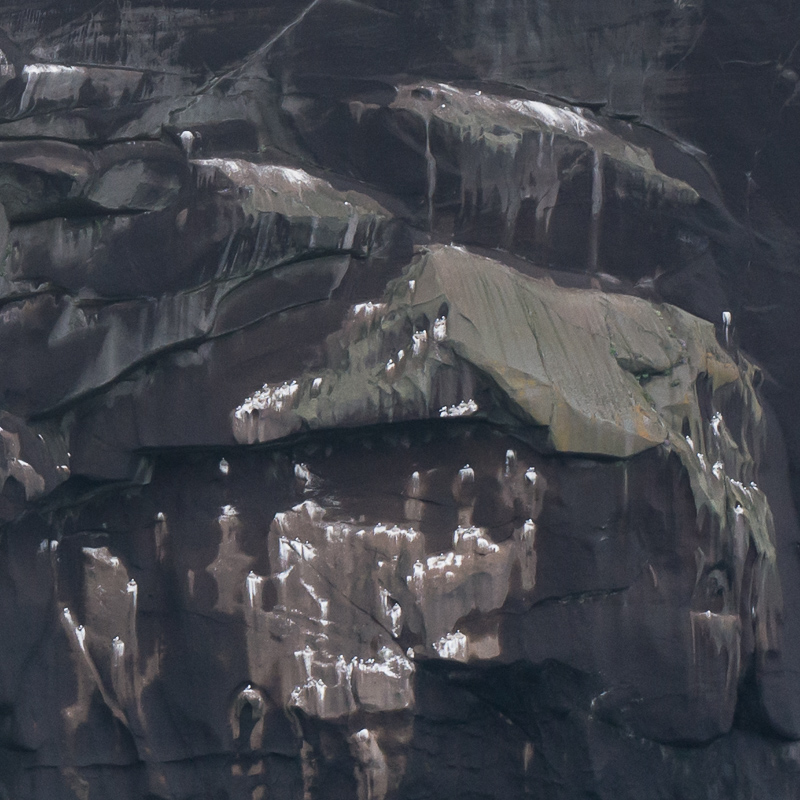
Then there are the giants, always watching.

DSC 7652

Preying (South Tyrol I)

In 1997, my then-girlfriend and I spent two weeks in the village Rasen-Antholz in South Tyrol. Besides a famous and truly stunning landscape, this region has many surprises. As it is protected on all sides by tall mountain ranges, the climate is milder than one would expect for a mountain village, and allows for the existence of the biotope we are visiting below.

Biotope212

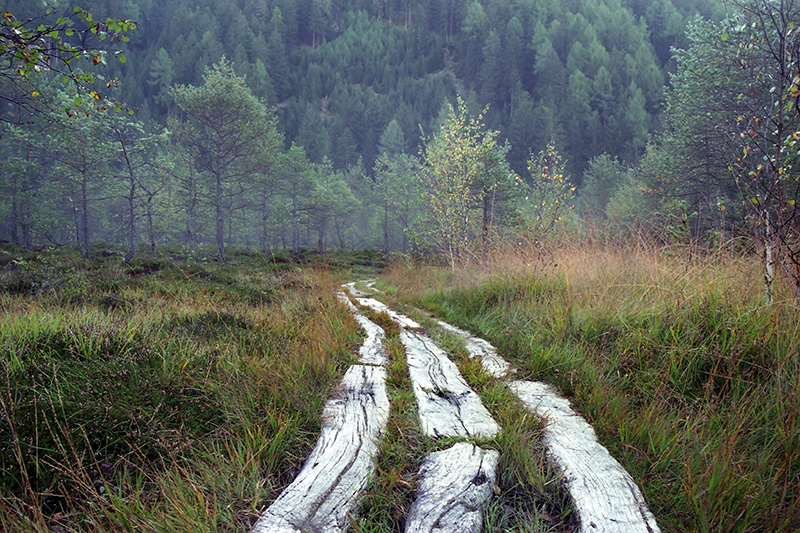
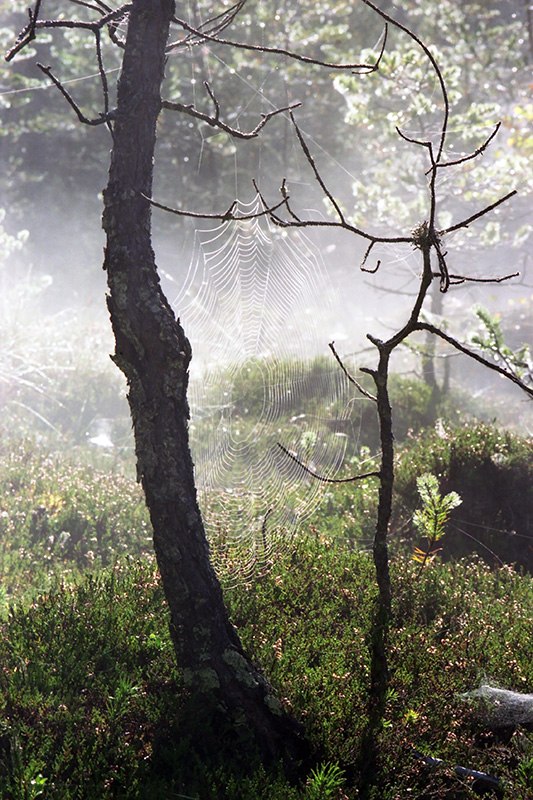
This ominous boardwalk lures the visitor into an unexpected terroir: Instead of harsh mountain meadows, we encounter humid swamps.

Biotope232

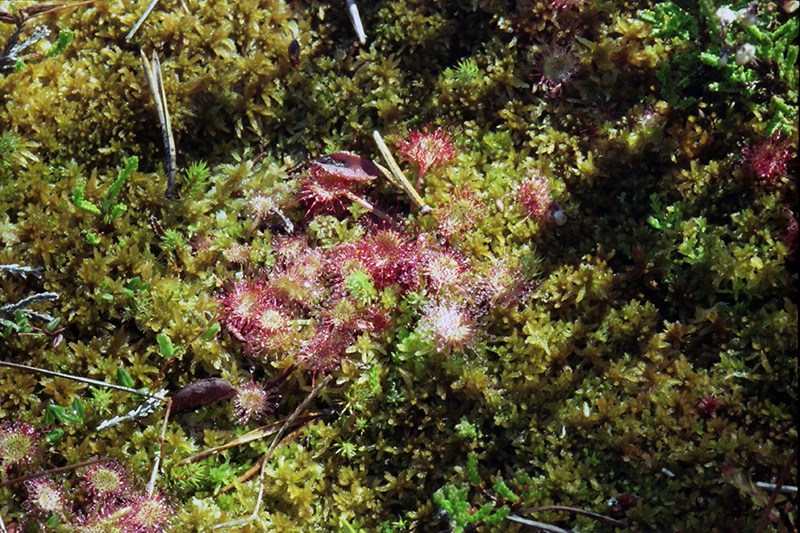
Here thrives the sundew, the only carnivorous plant found in South Tirol. Other predators have similar goals.

Biotope243

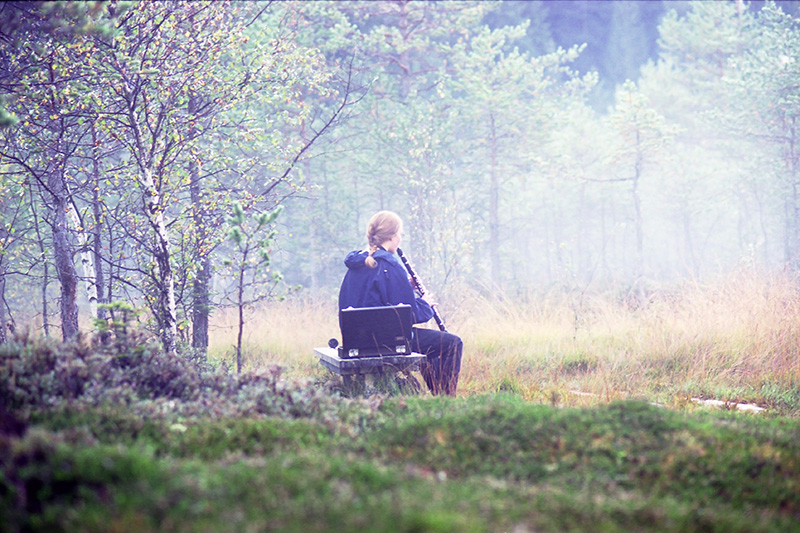
What better place to spend an early morning in the fog to listen to Giacinto Scelsi’s Preghiera per un’ombra for solo clarinet?

Biotope078

Jackson Pollock? (Iceland III)

In Óskar Jónasson’s film Reykjavik-Rotterdam, a painting by Jackson Pollock plays a marginal but hilarious role.

DSC 8327

The pictures in this post are inspired by drip-art and action painting.

DSC 8329

They are not quite up to Pollock’s standard, but I must say I like them.

DSC 8330 2

Of course they are not paintings, but landscape closeups taken off the coast of Westman Islands.

DSC 8330

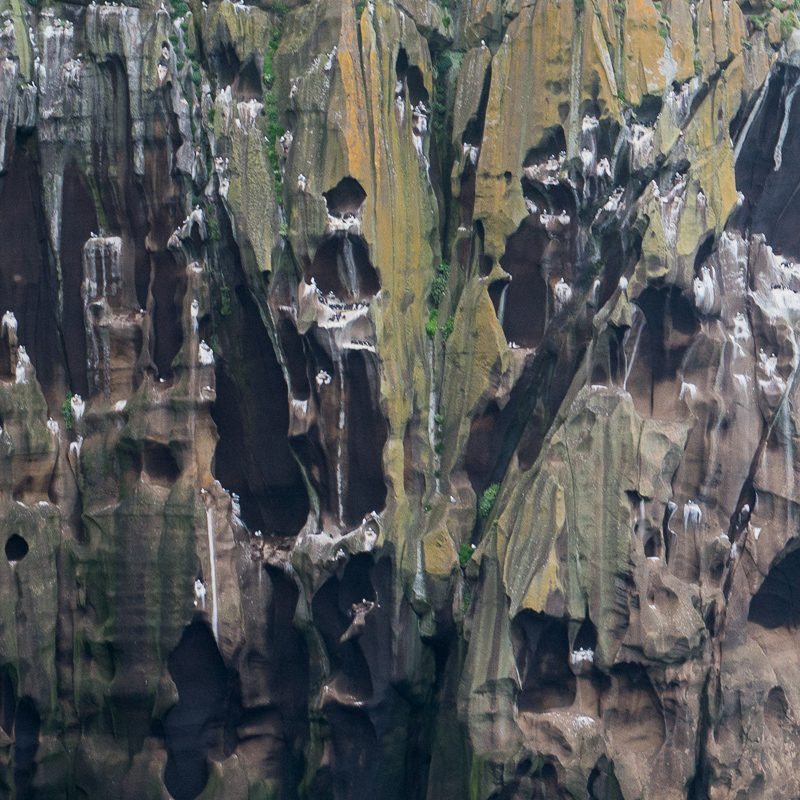
The artist? Hard to say, but at least partially responsible are the doves.

Cracks (Iceland II)

We usually think of a crack as a blemish. A cracked window needs to be replaced. The cracked patina of old paintings is reluctantly accepted as a proof of age. In The Fall of the House of Usher, Edgar Allan Poe has turned the crack in a wall into a bad omen of the worst kind. Roman Polanski did likewise with cracks in concrete in his film Repulsion. Are cracks really that bad?

In geologically active regions like Iceland, cracks happen more often than elsewhere, and on a much larger scale.

DSC 8181

The cracked wall above is from a house on the Westman islands that was half covered by the lave flow from 1973 and is kept as is as a monument.
Cracks appear everywhere. In individual rocks,
DSC 7776

in the ground like here near a lava tube,

DSC 9008

vertically, splitting entire mountains,

DSC 8630

or here, where the crack is literally between the American and European continent.

DSC 7741

Monotony (Iceland I)

This post is the first of many trying to put the 2000+ images I took this summer in Iceland in some unconventional order.

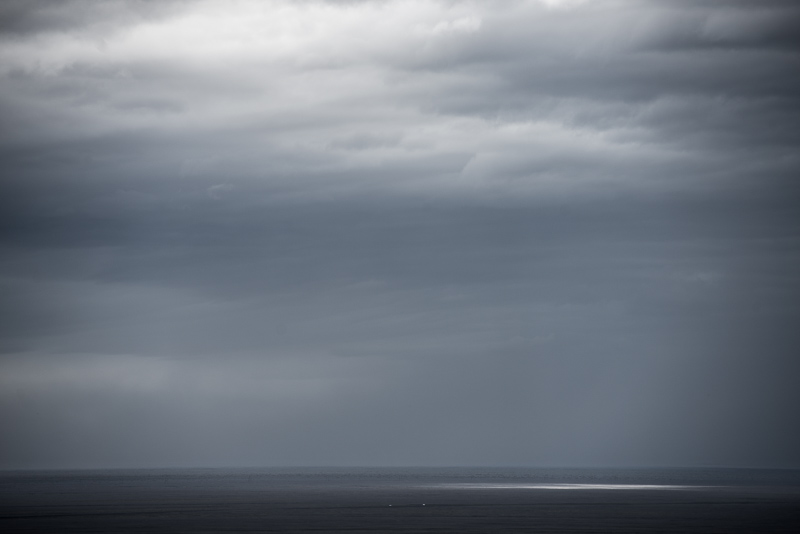
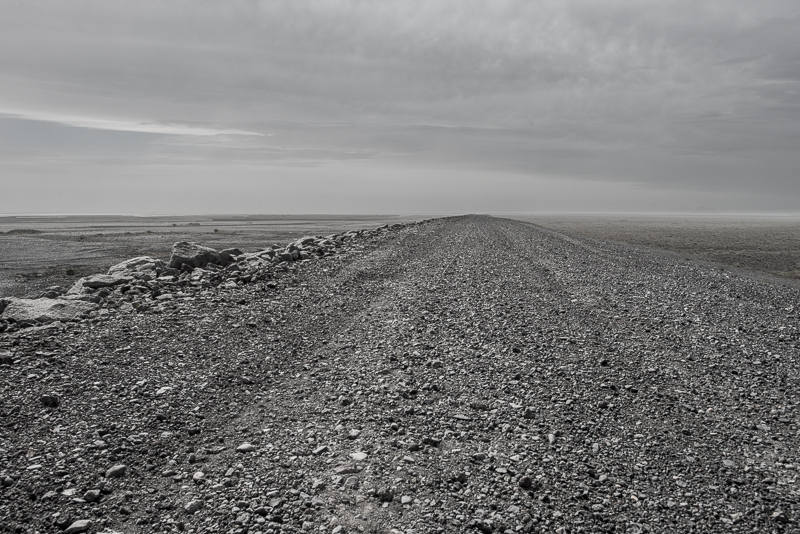
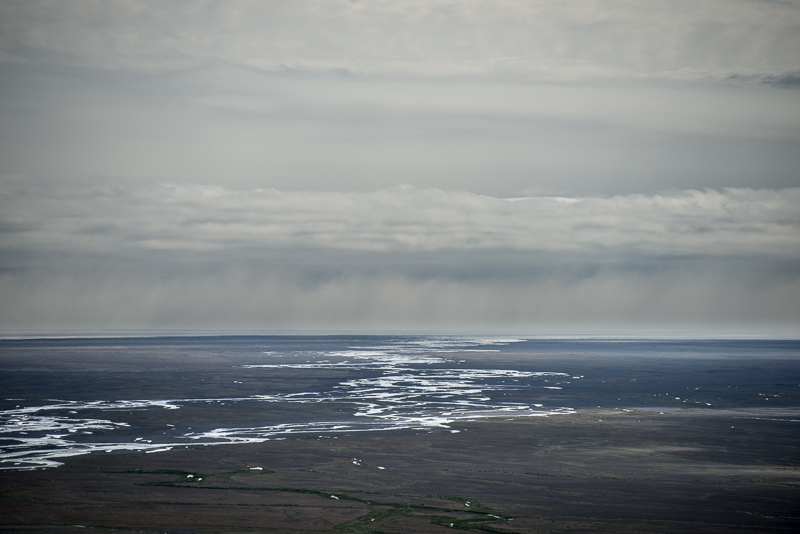
Let’s begin with the simplest aspects of the landscape. In contrast to Hamlet, very often there are fewer things in heaven and earth than you would expect. In fact, you might just see a flat gray plane all the way to the horizon, and above it a similarly gray sky.

DSC 8057

One travels in this landscape on roads that dramatically increase the complexity.

DSC 7492

What is striking is that all this must have been moved and put in place at some point. Enormous volcanic eruptions
have covered this landscape with lava and ash.

DSC 7878

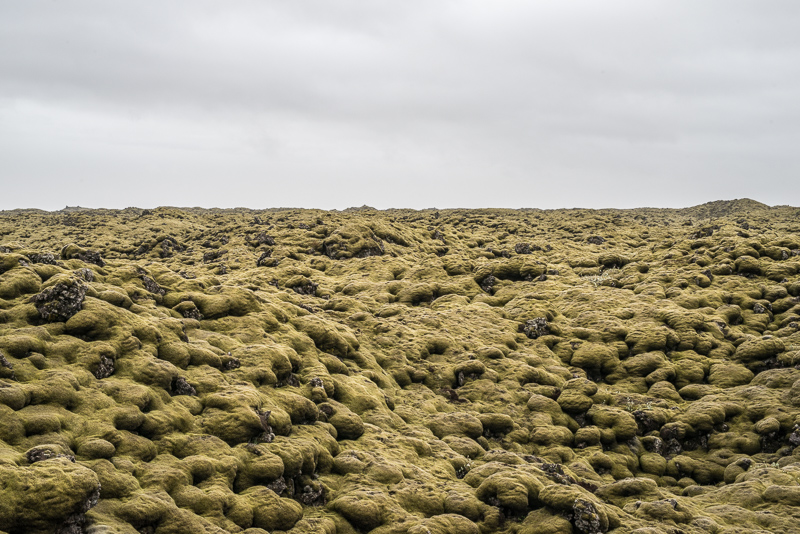
Slowly growing moss patiently tries to withstand the ubiquitous erosion, caused by wind and meandering rivers.

DSC 7979

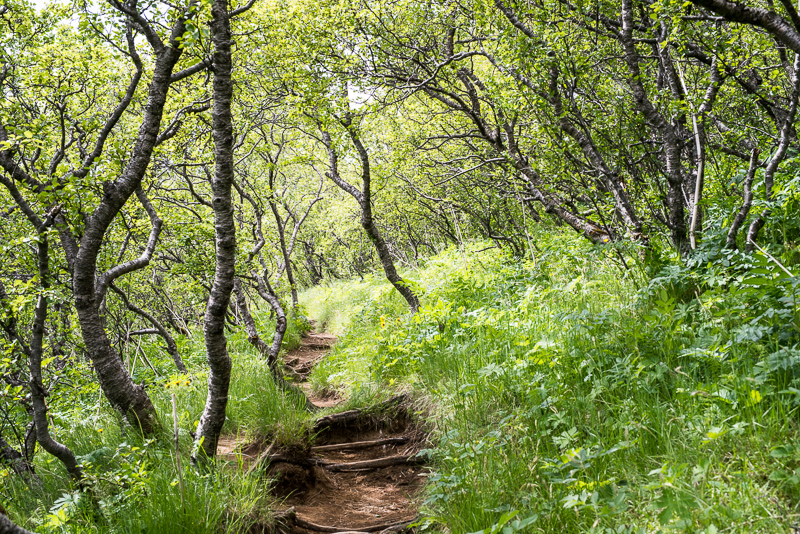
It is hard to believe that most of Iceland was covered with trees, until the Vikings needed the wood for their boats, houses, and fires.

DSC 7949

Yosemite in Winter

Berkeley216b

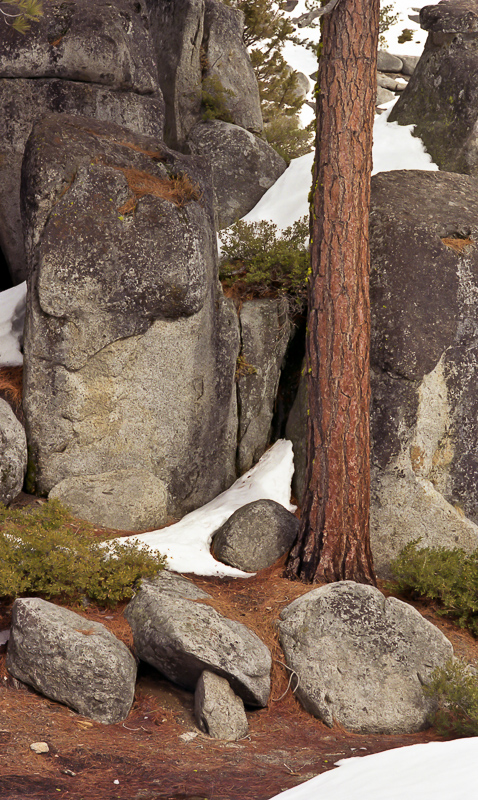
In 1993, when it still rained in California, winter was a desperate time for weekend backpackers, because the Sierras were packed with snow.

Berkeley332

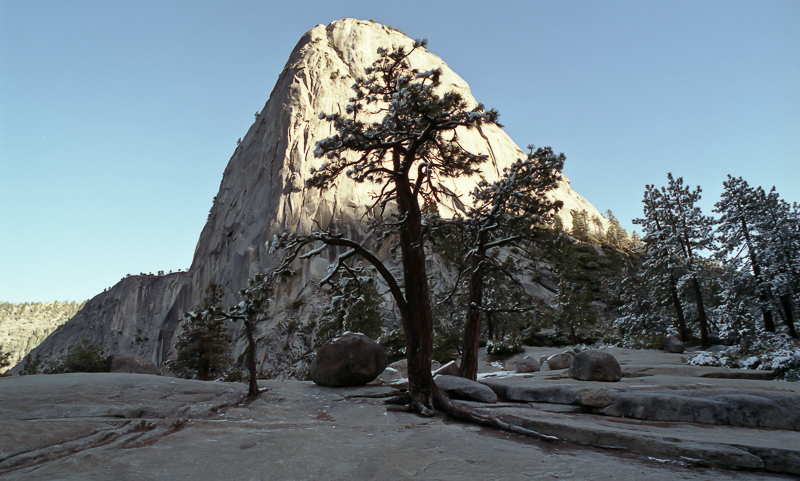
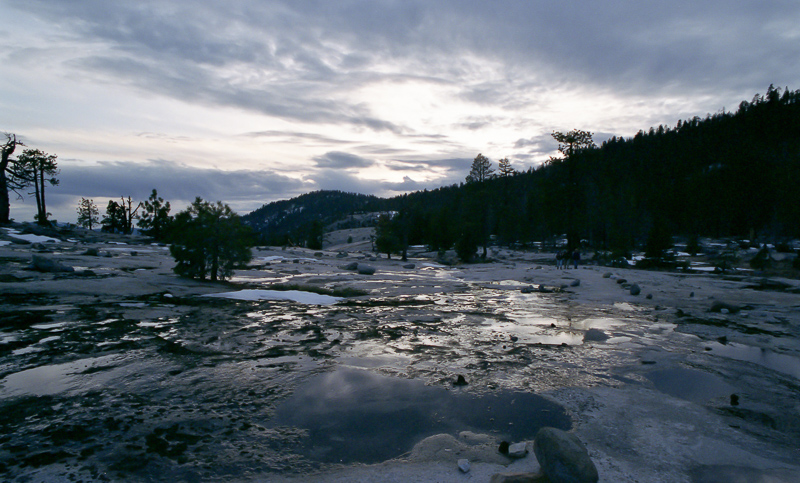
On the other hand, if you dared, you could have places all for yourself that would be packed with humans in the summer. But don’t let this snow free picture of Yosemite Valley betray you.

Berkeley020b

A little further on, the vast granite plains were slush covered, and even further, we there was deep snow and no trace of the trails.

Berkeley028b

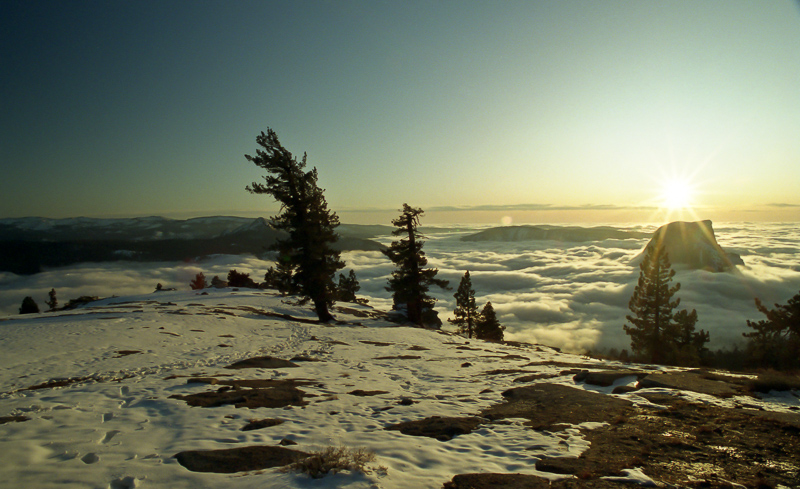
Higher altitude cleared things up a bit (assuming good weather).

Berkeley343

The peace was treacherous. Picking this spot below as a camp site and ignoring the pretty clouds below was a dumb idea. The night became the second stormiest night of my life.

Berkeley389