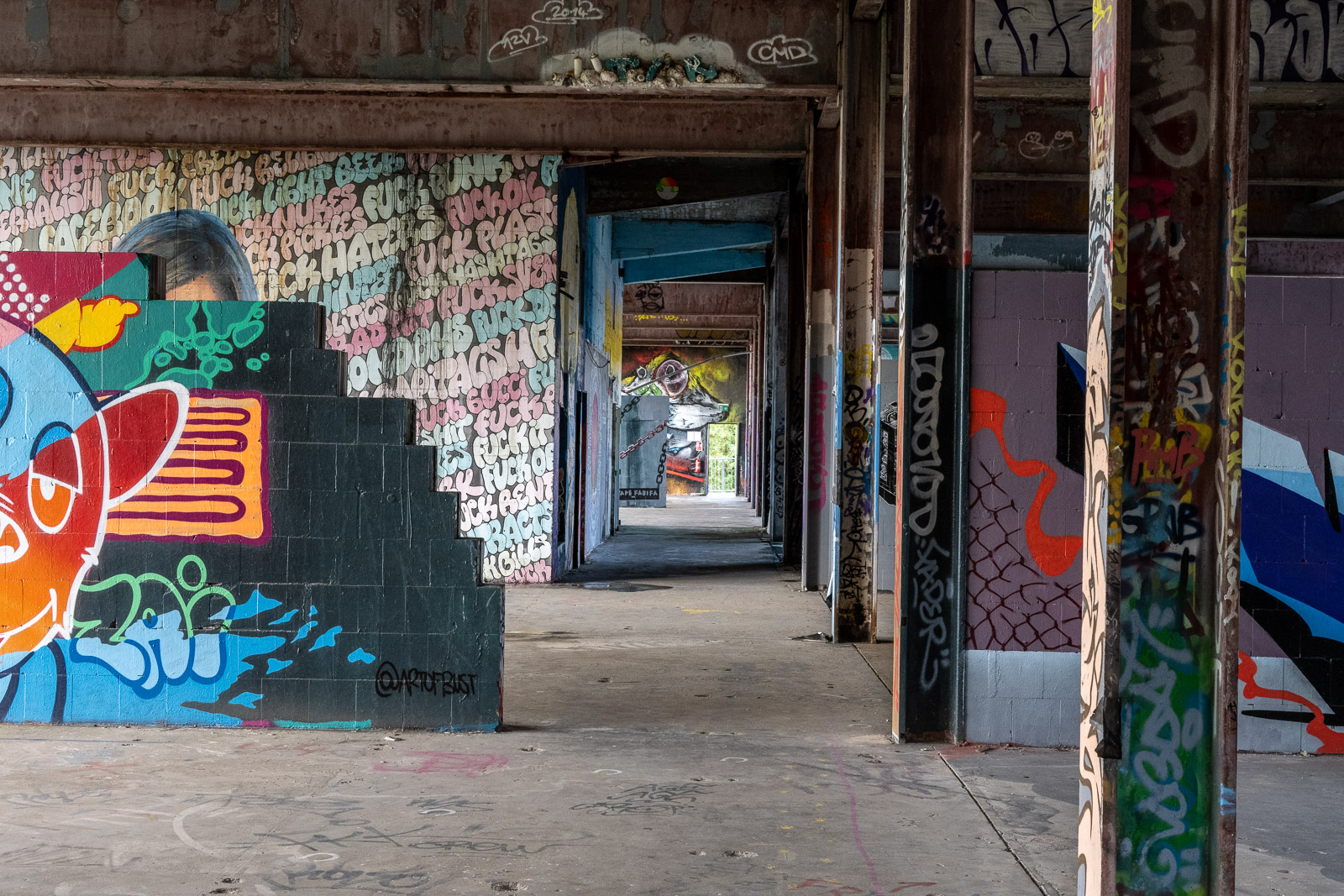
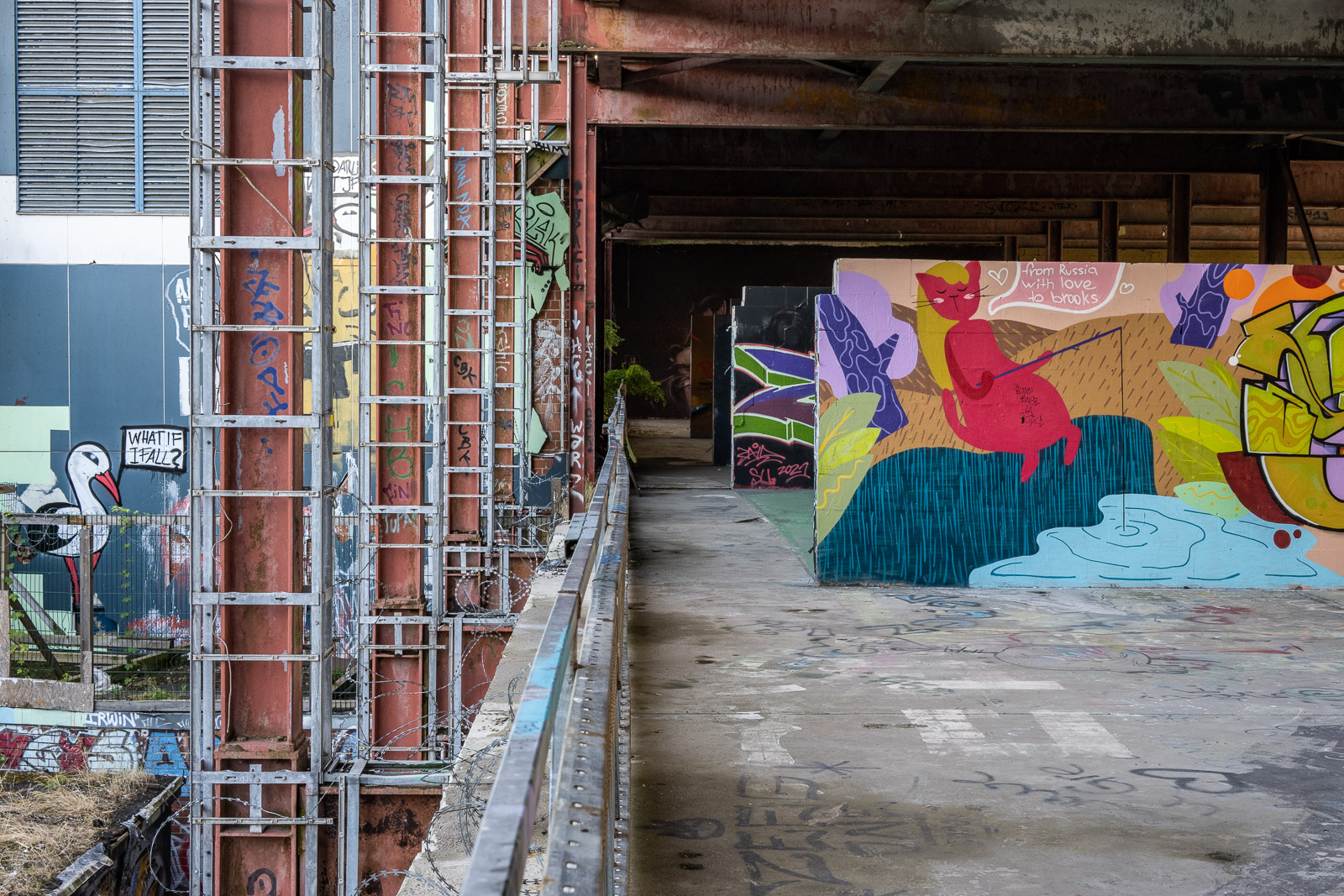
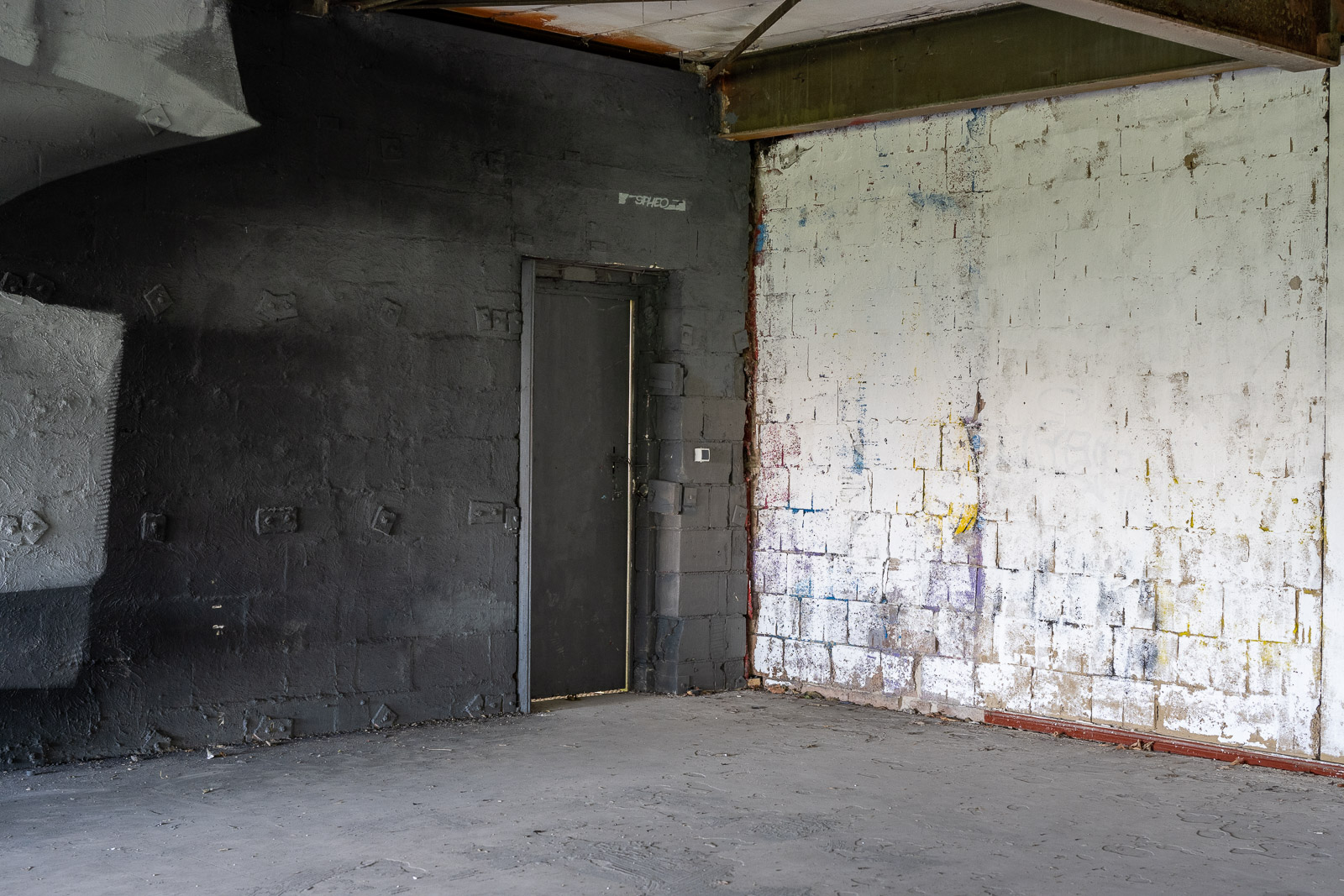
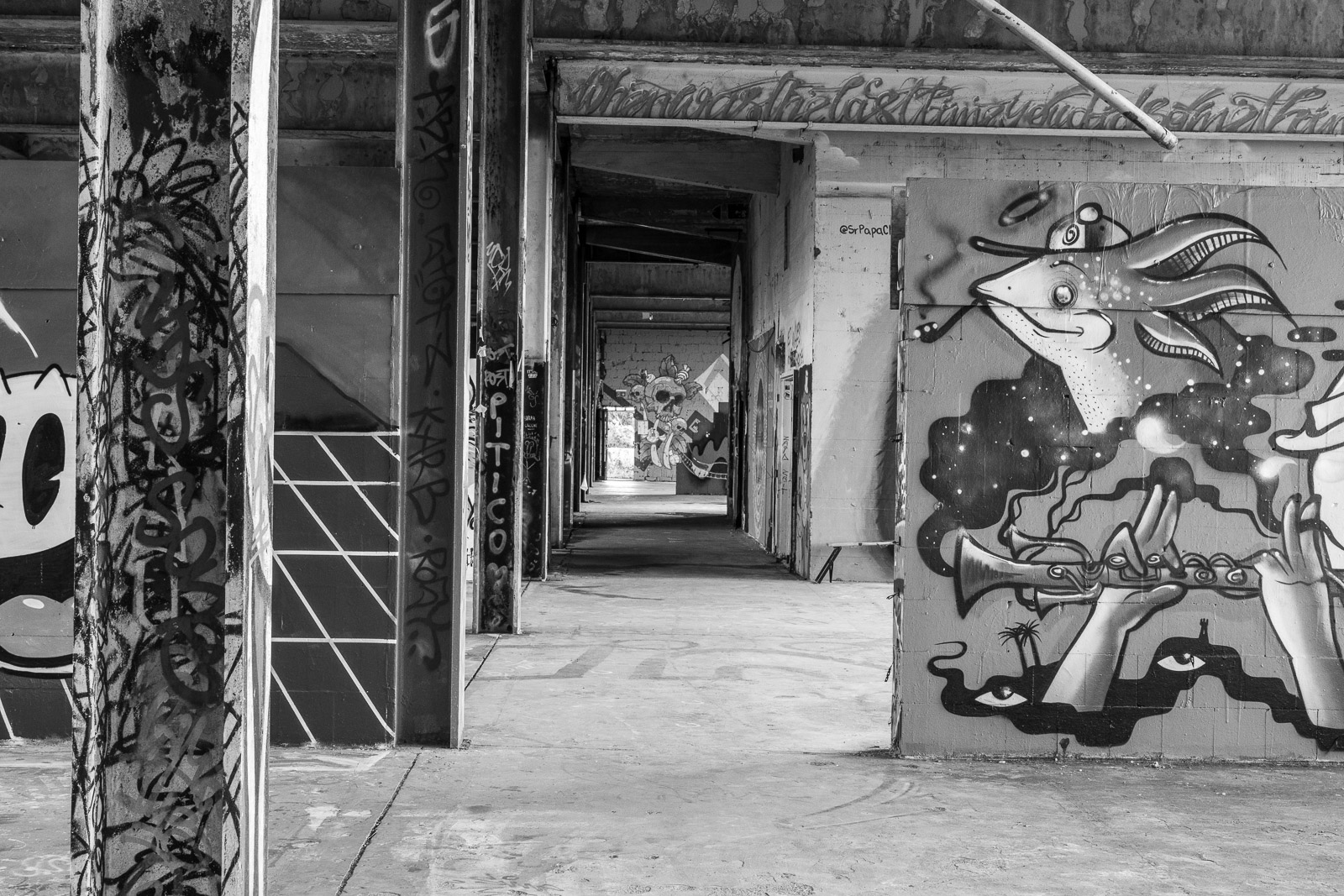
The interior of the four-story building that supports the domes of the former Cold War listening station on the Devil’s Mountain in Berlin is accessible only through two (new) exterior stairwells. Each has a long corridor (without any doors!), and open spaces separated by walls.
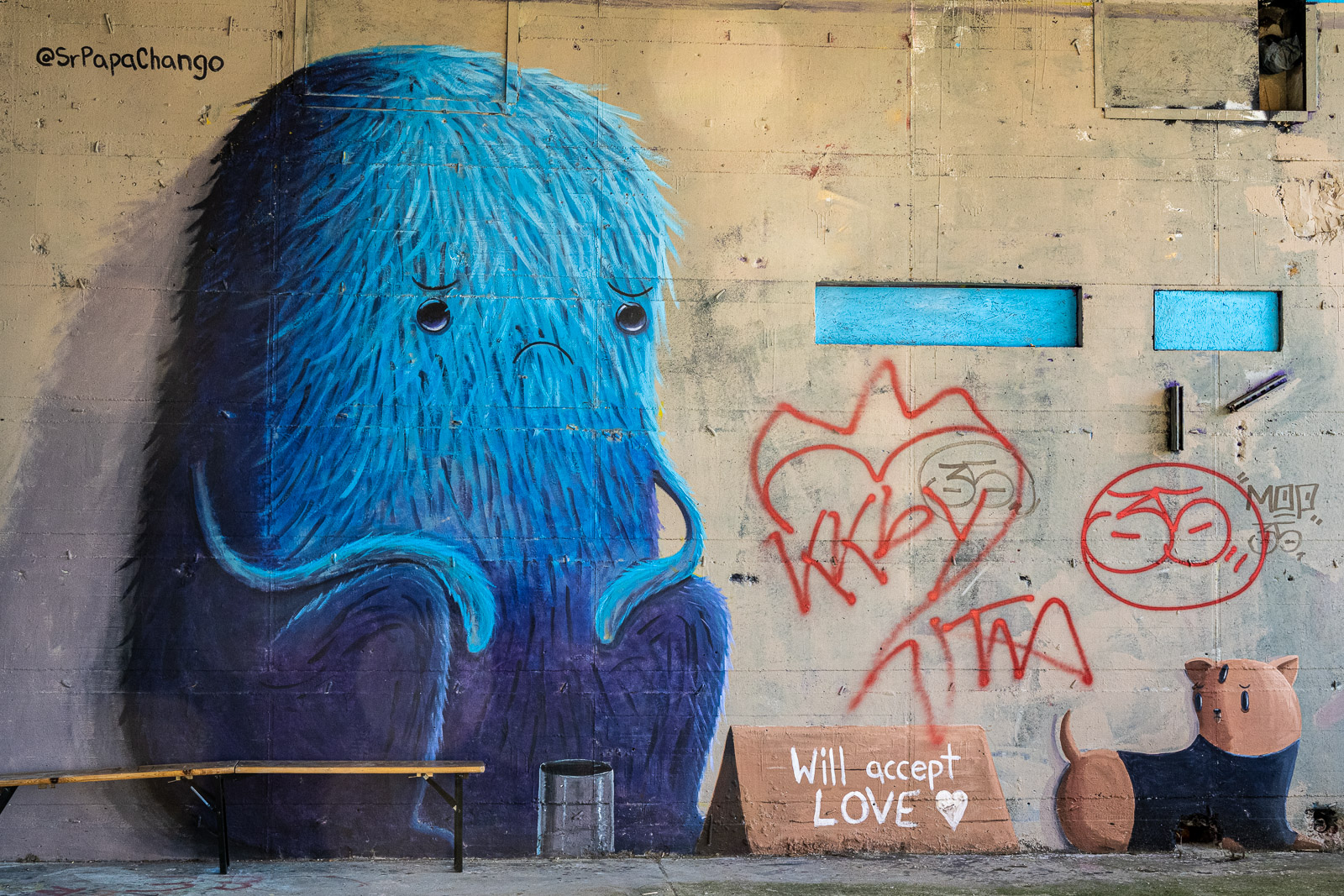
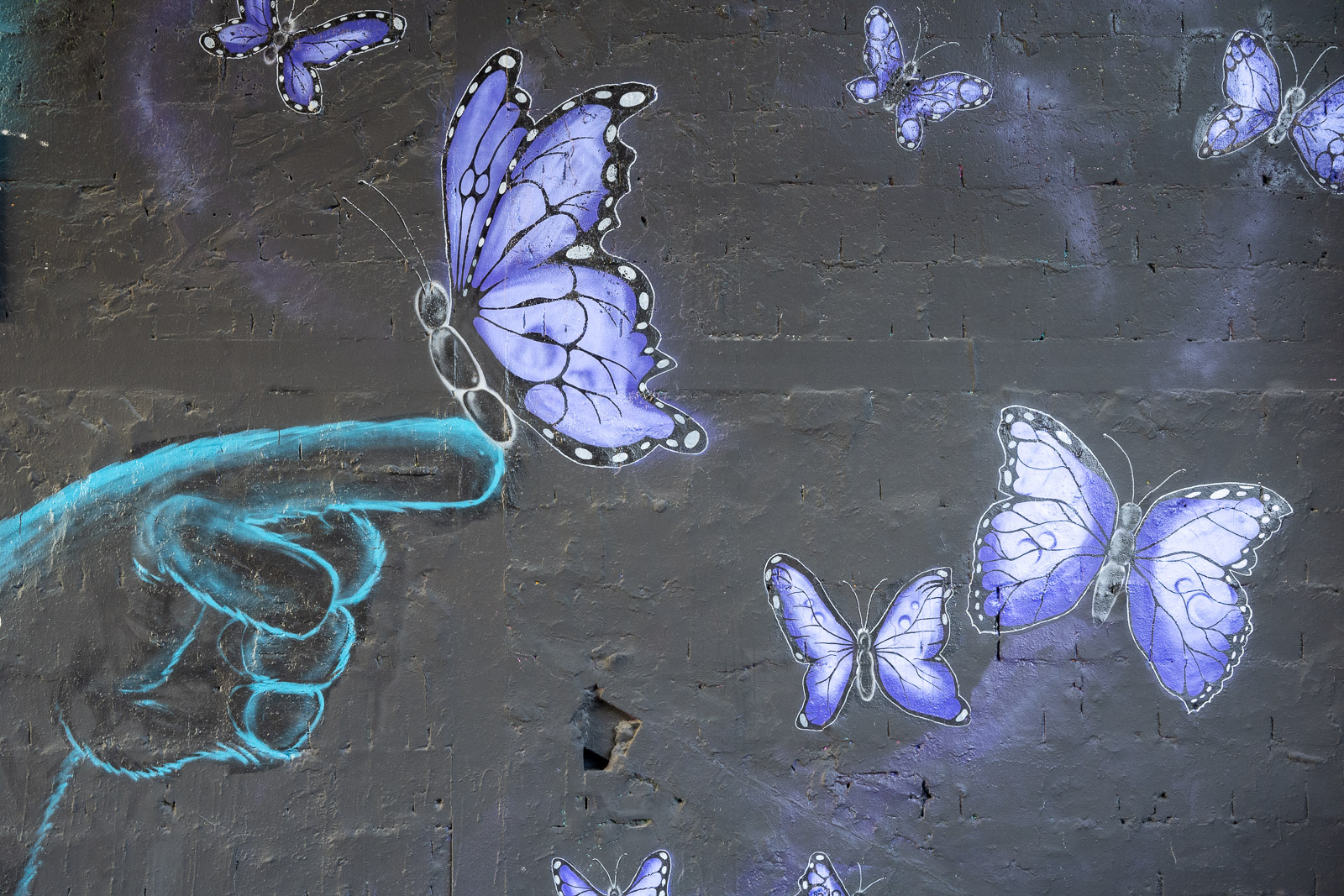
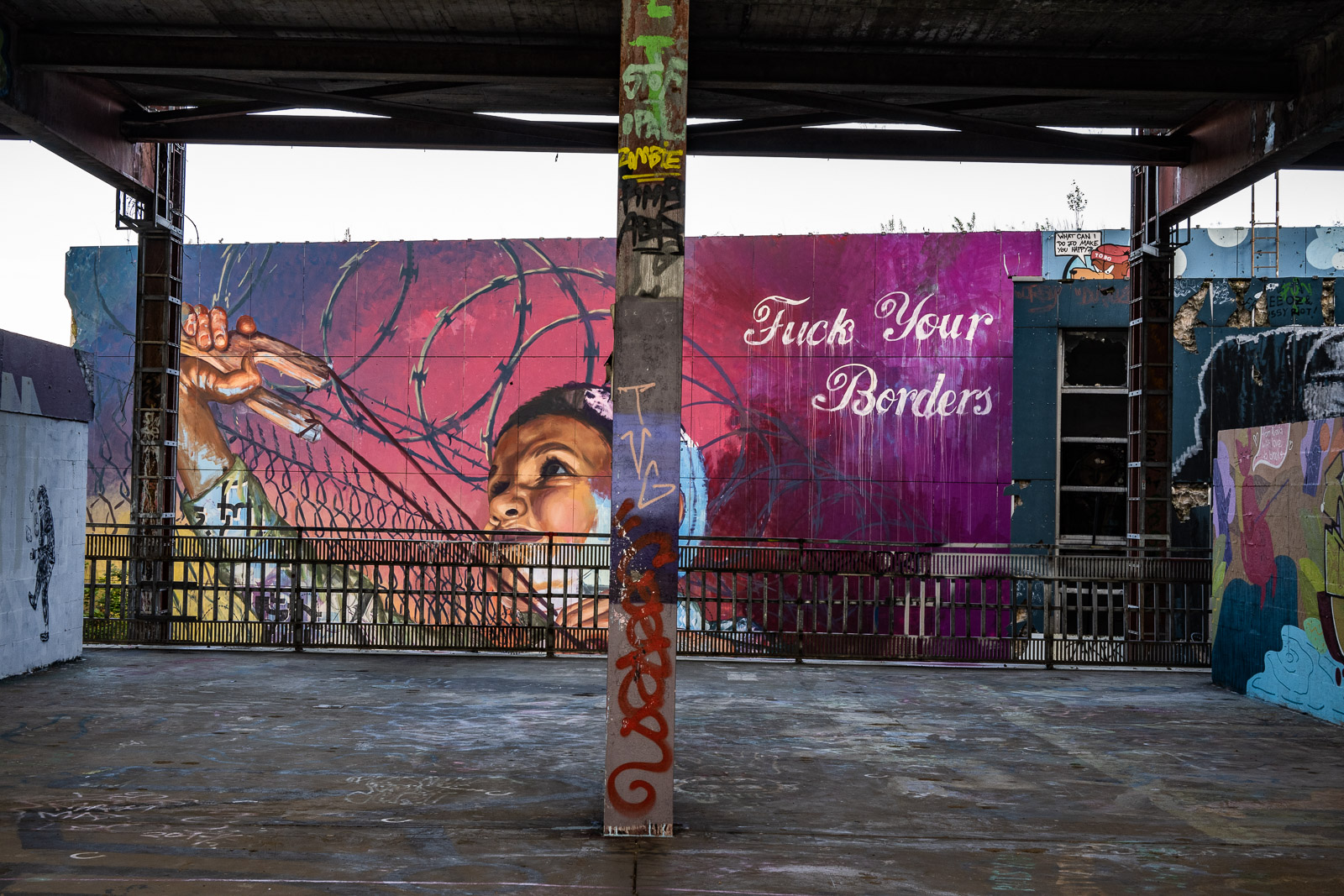
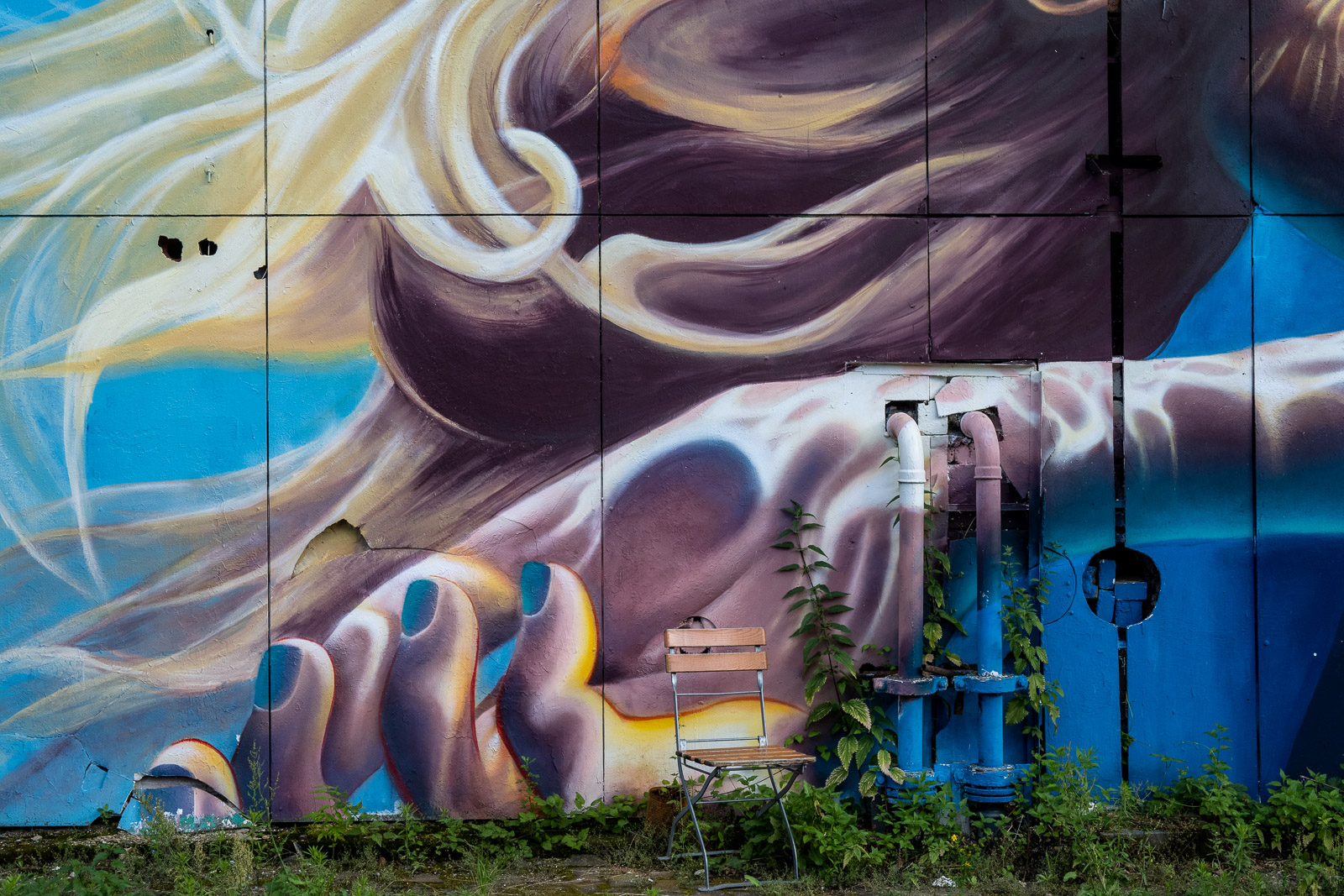
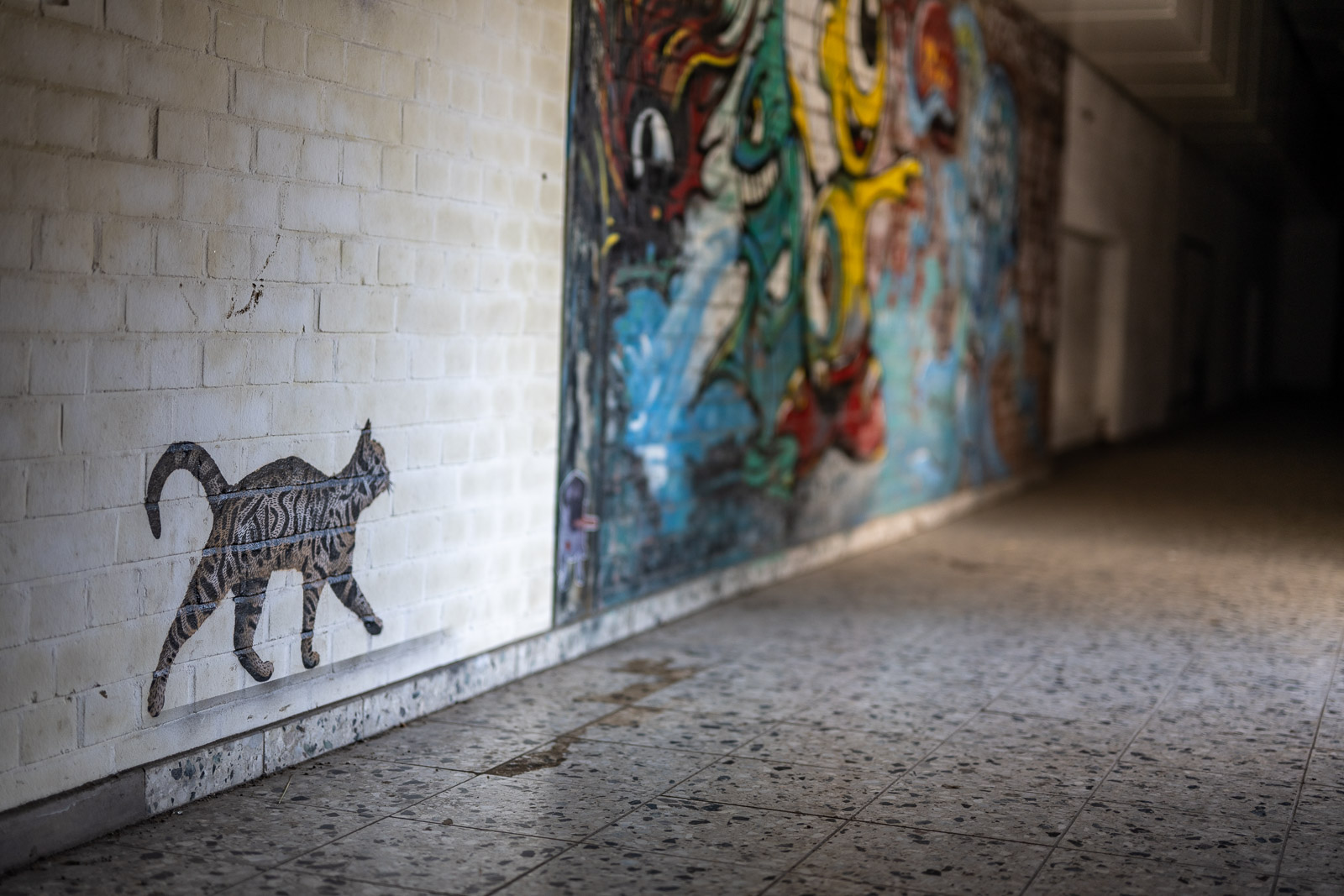
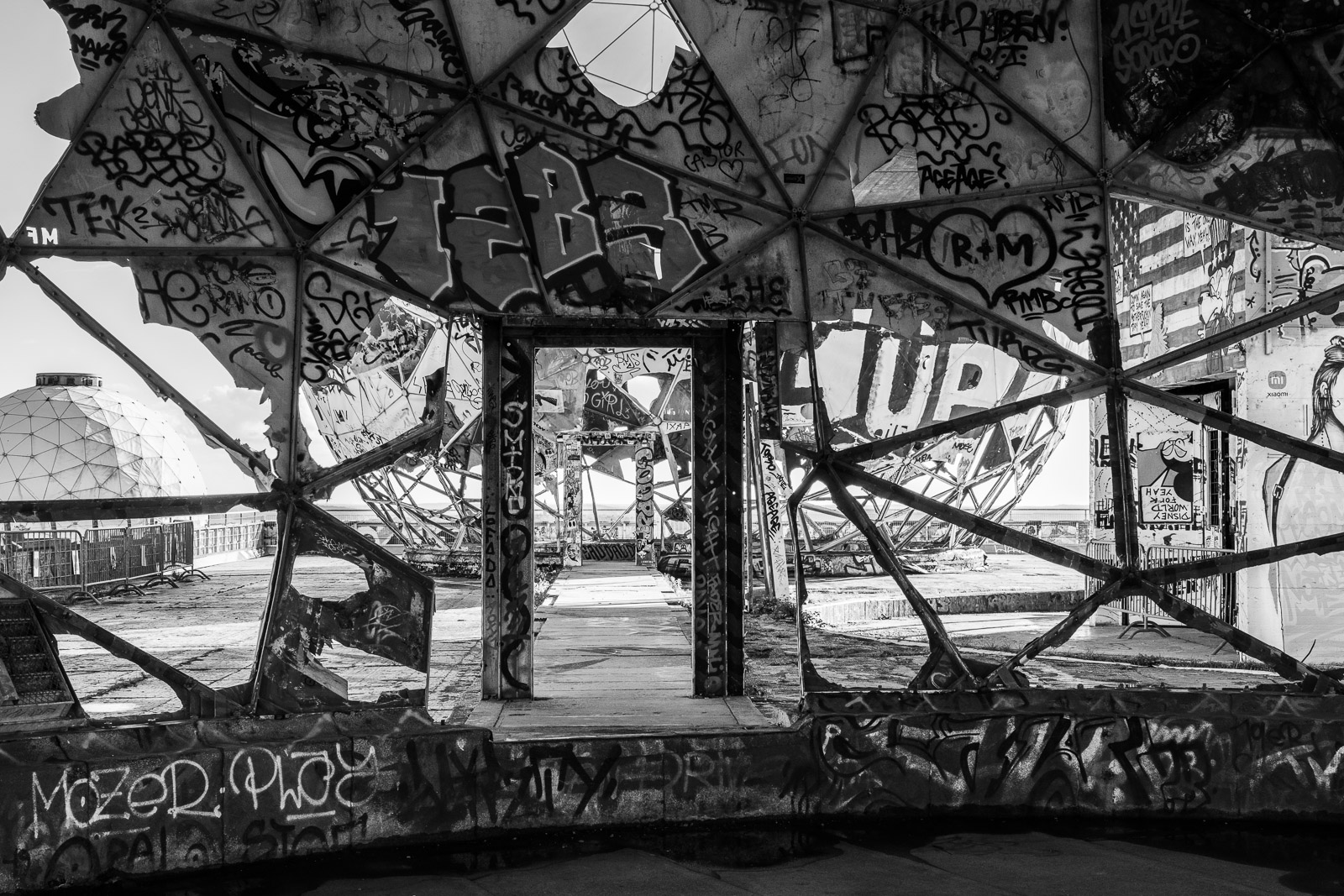
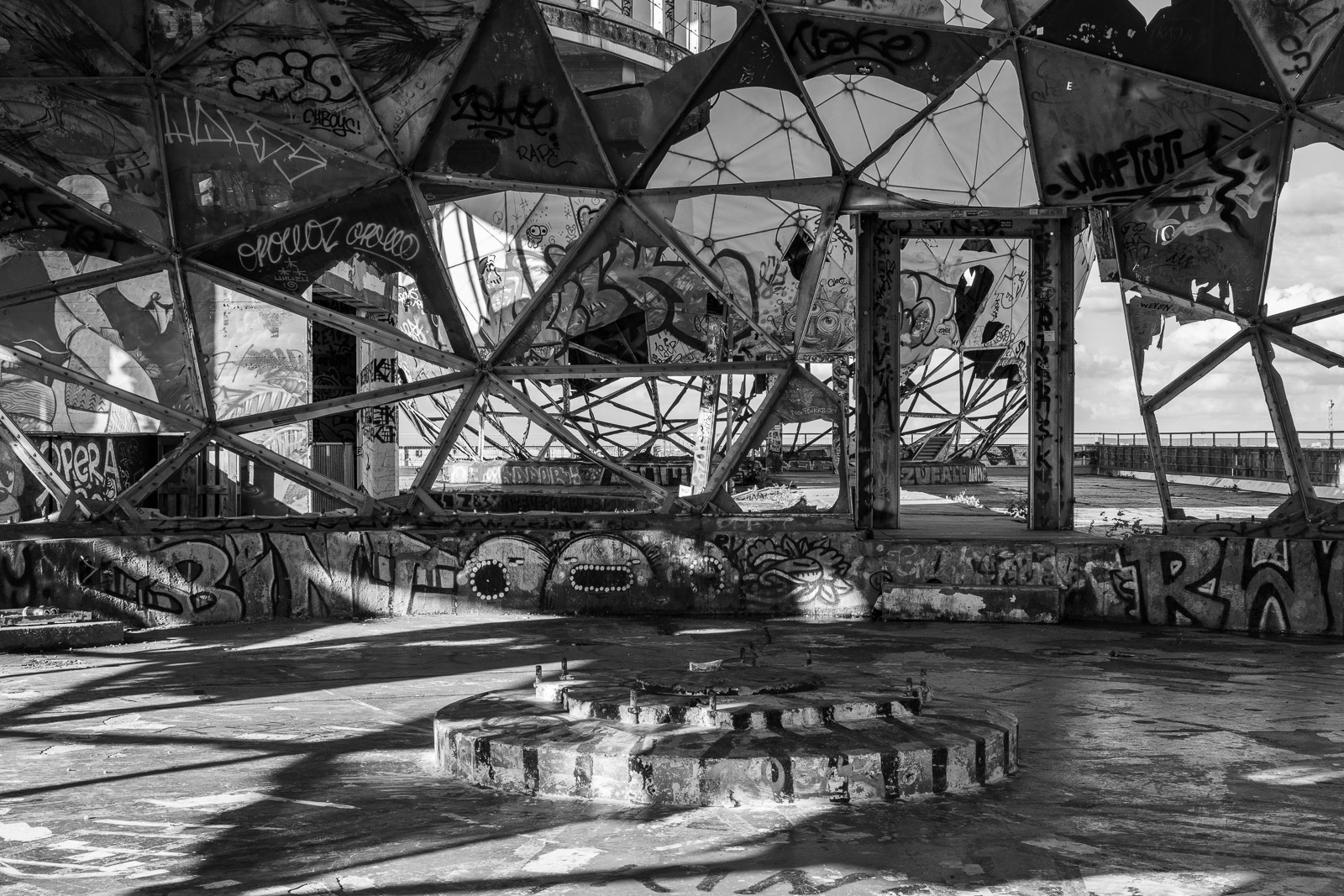
Most of the walls are decorated with the most wonderful graffiti in bright colors.
The entire building has become a piece of art.
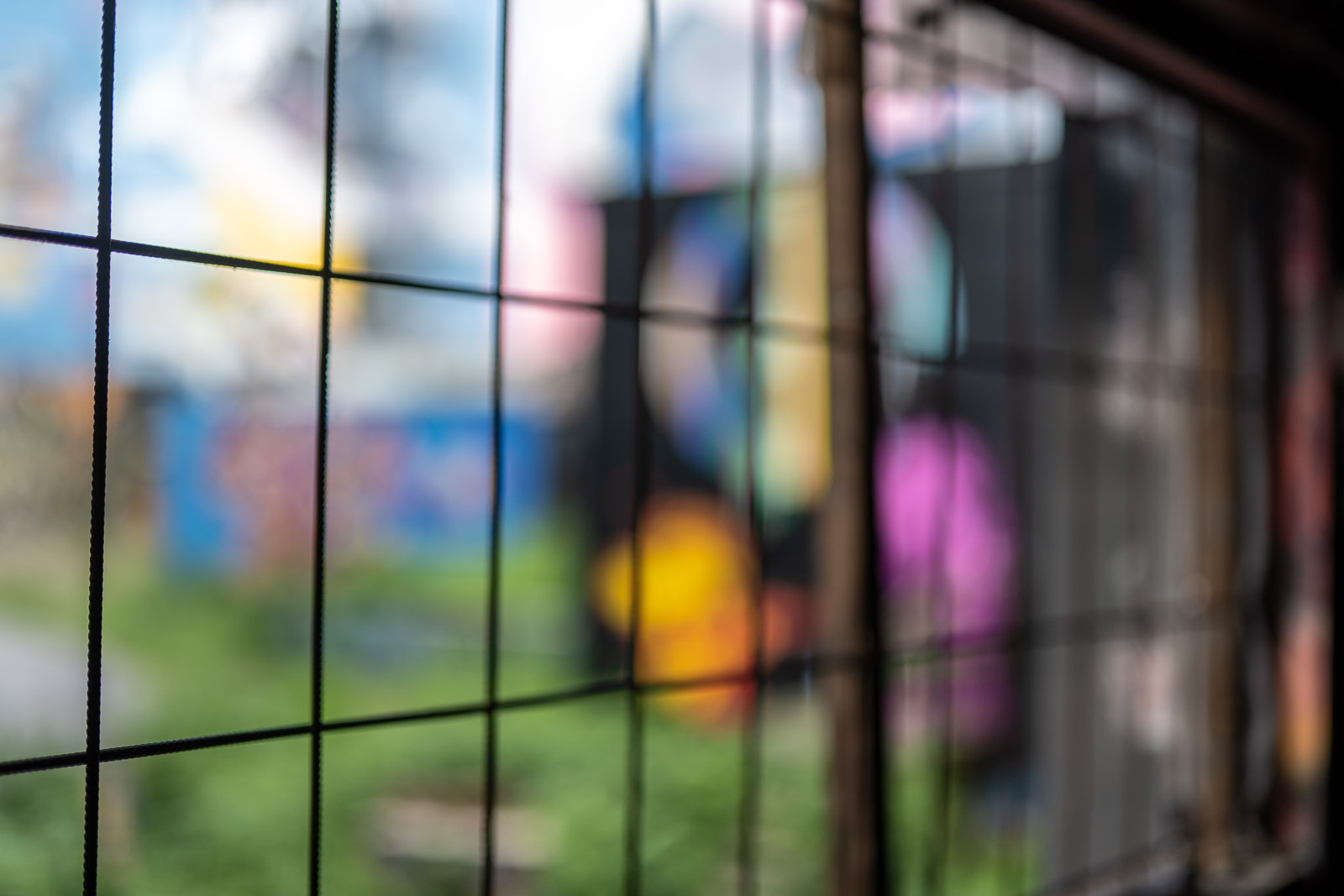
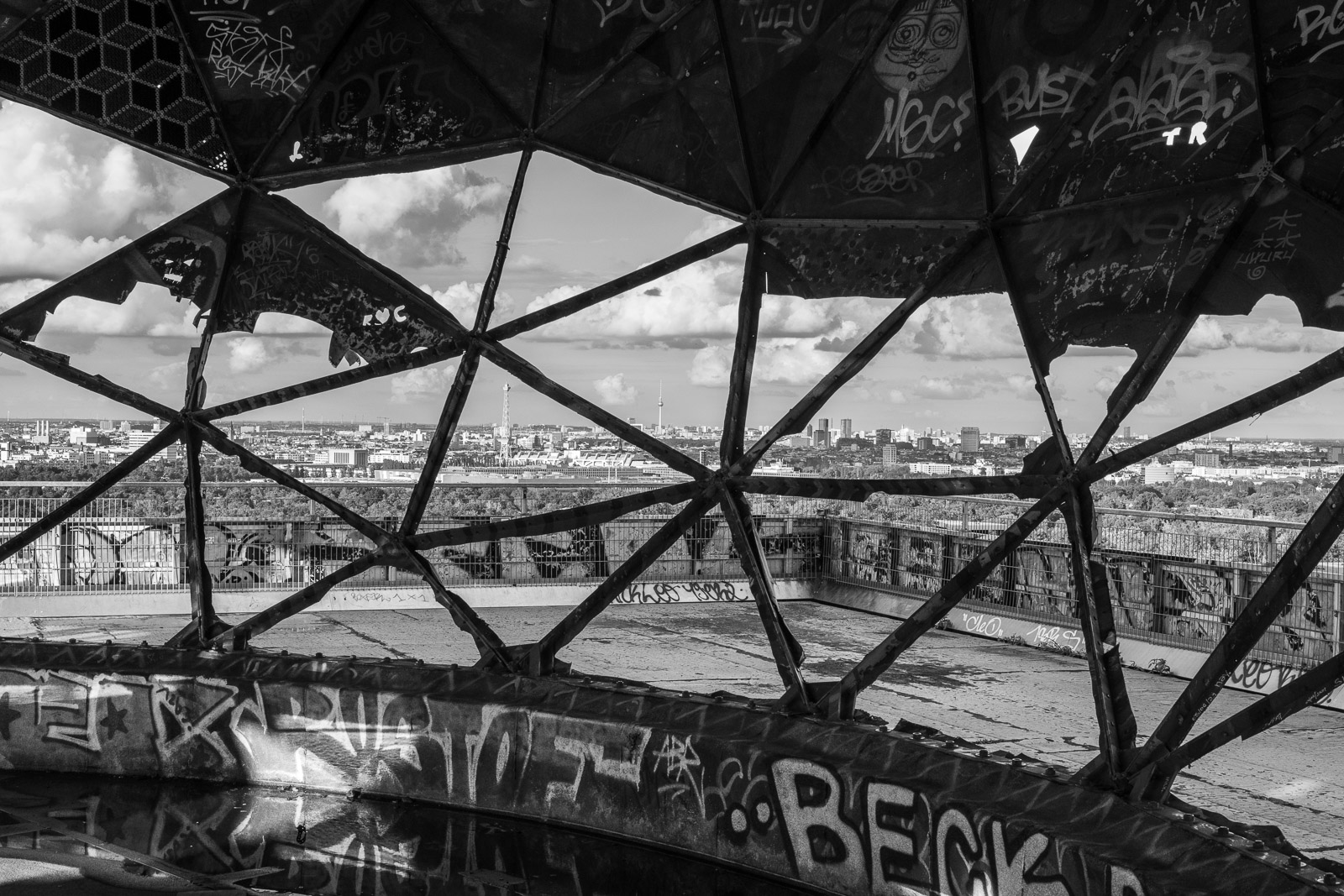
Views through the ‘windows’ show more building-sized graffitis.
So in a miraculous way, one of the most secretive and locked up places from Cold War Berlin has become an organic landscape of open art.
If only we all could deal with our own borders like this.
By building fences and walls, we impose an artificial structure on an existing landscape. Is there a difference in our way of seeing these structures? Both allow us to see them as beautiful, but is it the same esthetics we are applying?
And, probably more importantly, is there a functional difference between natural grown and artificial structures?
And what happens when we consider a landscaped landscape? Is this wall really a wall?
Maybe I am wrong, but it seems to me that Nature doesn’t allow for closed doors.
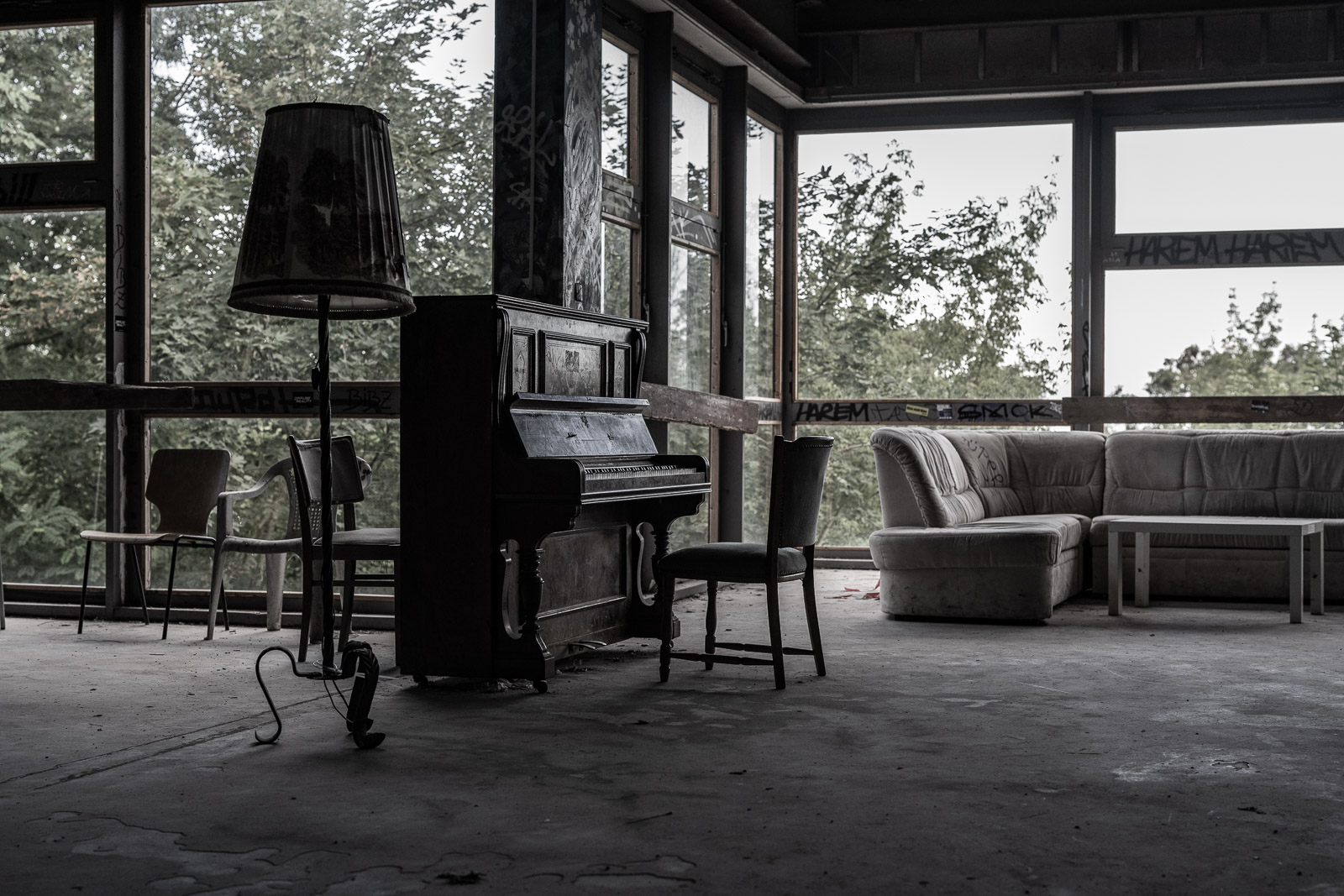
One of the most fascinating buildings in the old listening station on the Devil’s Mountain is the Villa. That’s my name, I don’t know what it is called, or as what it was used for. We are free to imagine.
Dark corridors eventually lead to brighter rooms, where the colors of the outside graffiti is blinding.
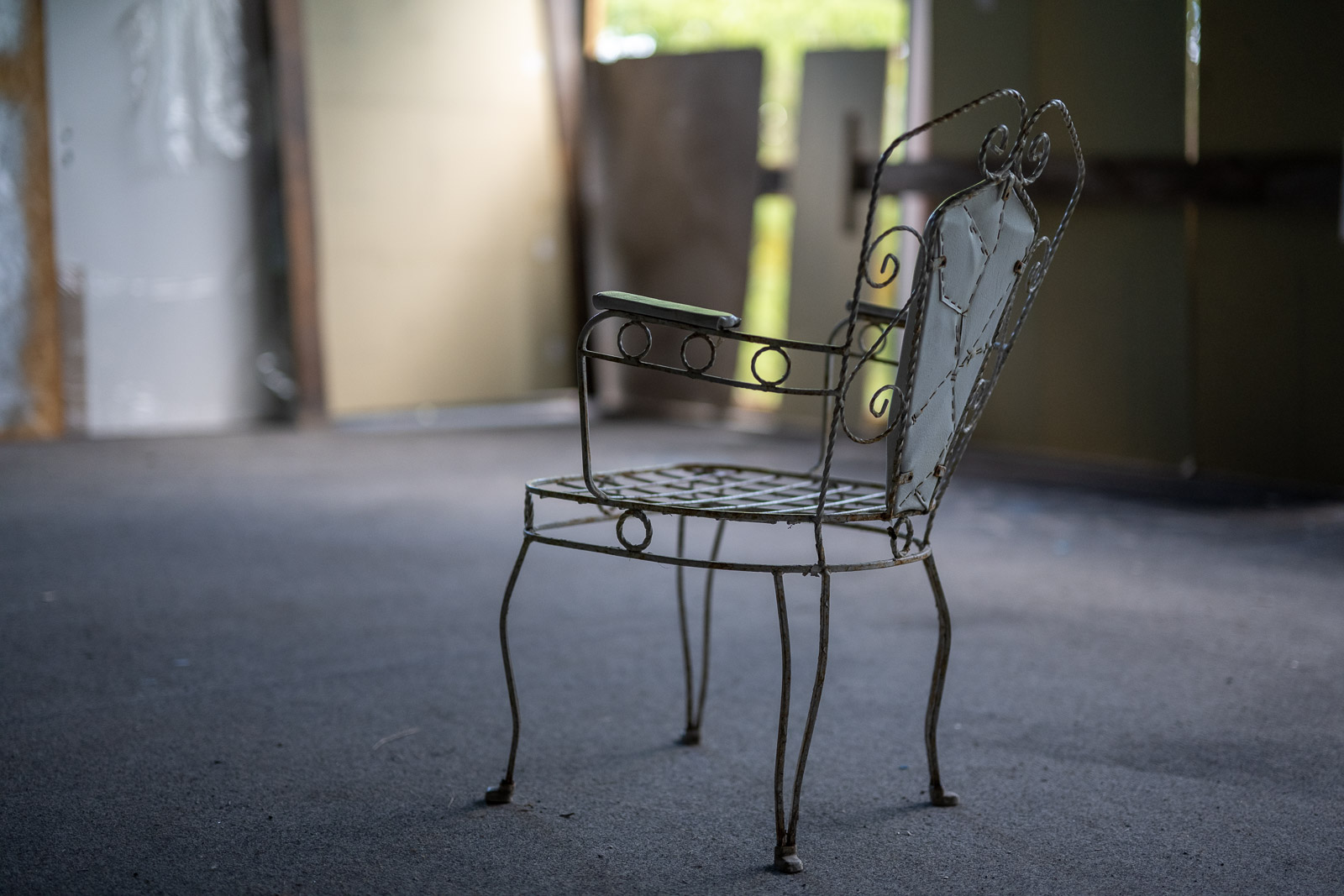
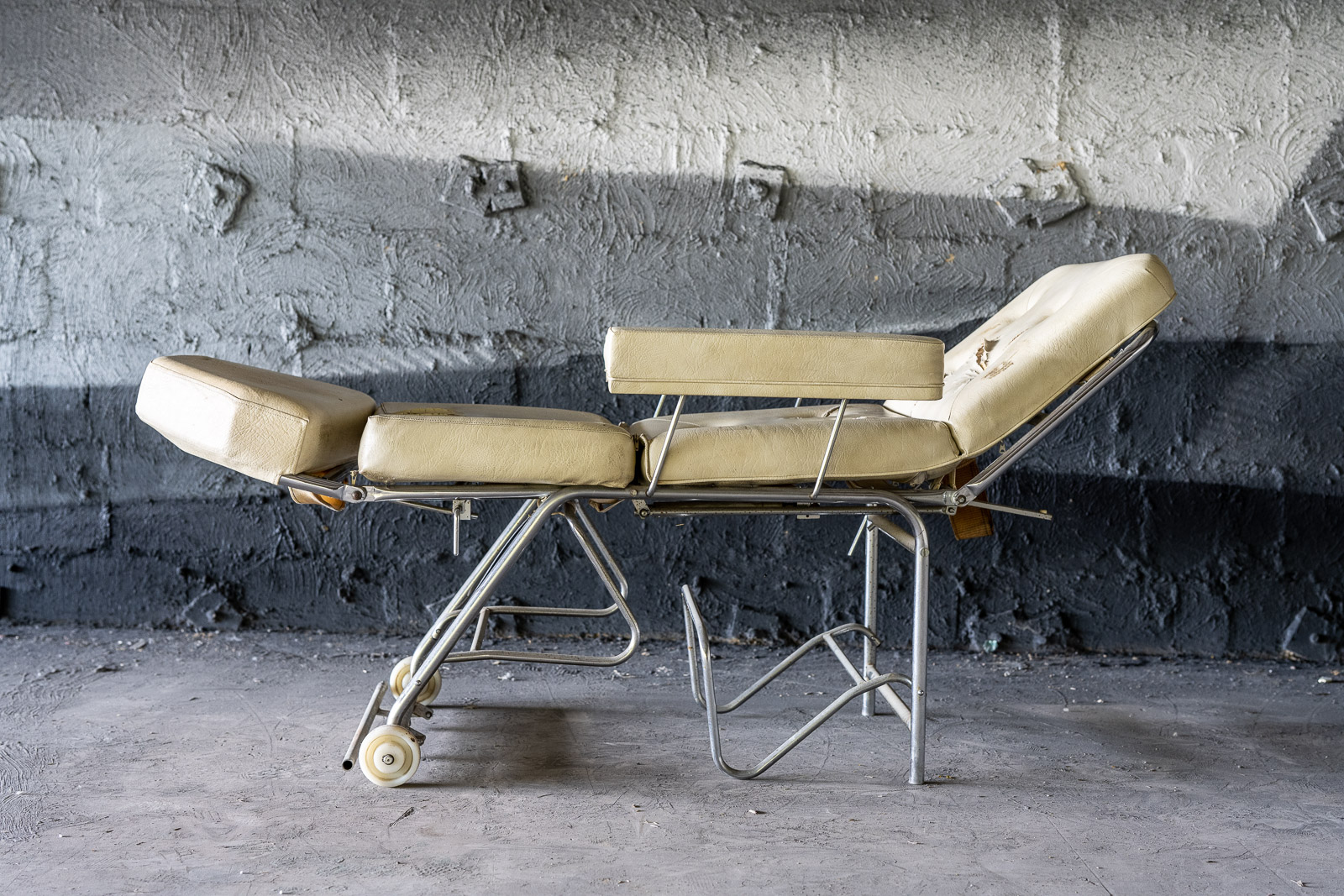
Then, the main room, in faded colors, with shards from a faded time. Who can sit on a chair like this?
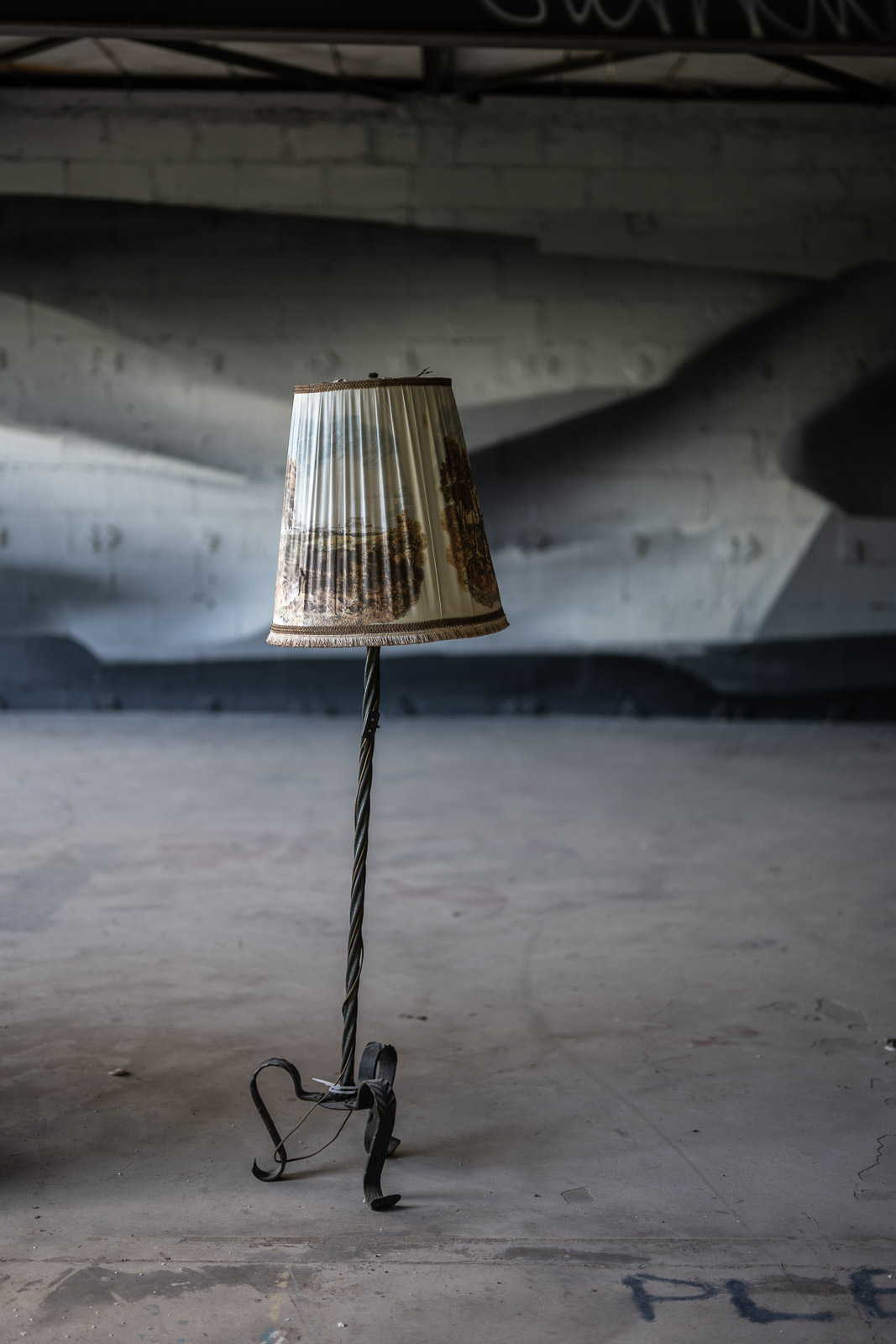
And was that lamp used to take away the light?
It seems like all the happiness has been removed from this place.
And yet what has been left behind appears to be waiting for something, for someone.
Is this how the place looks like where we will eventually go?
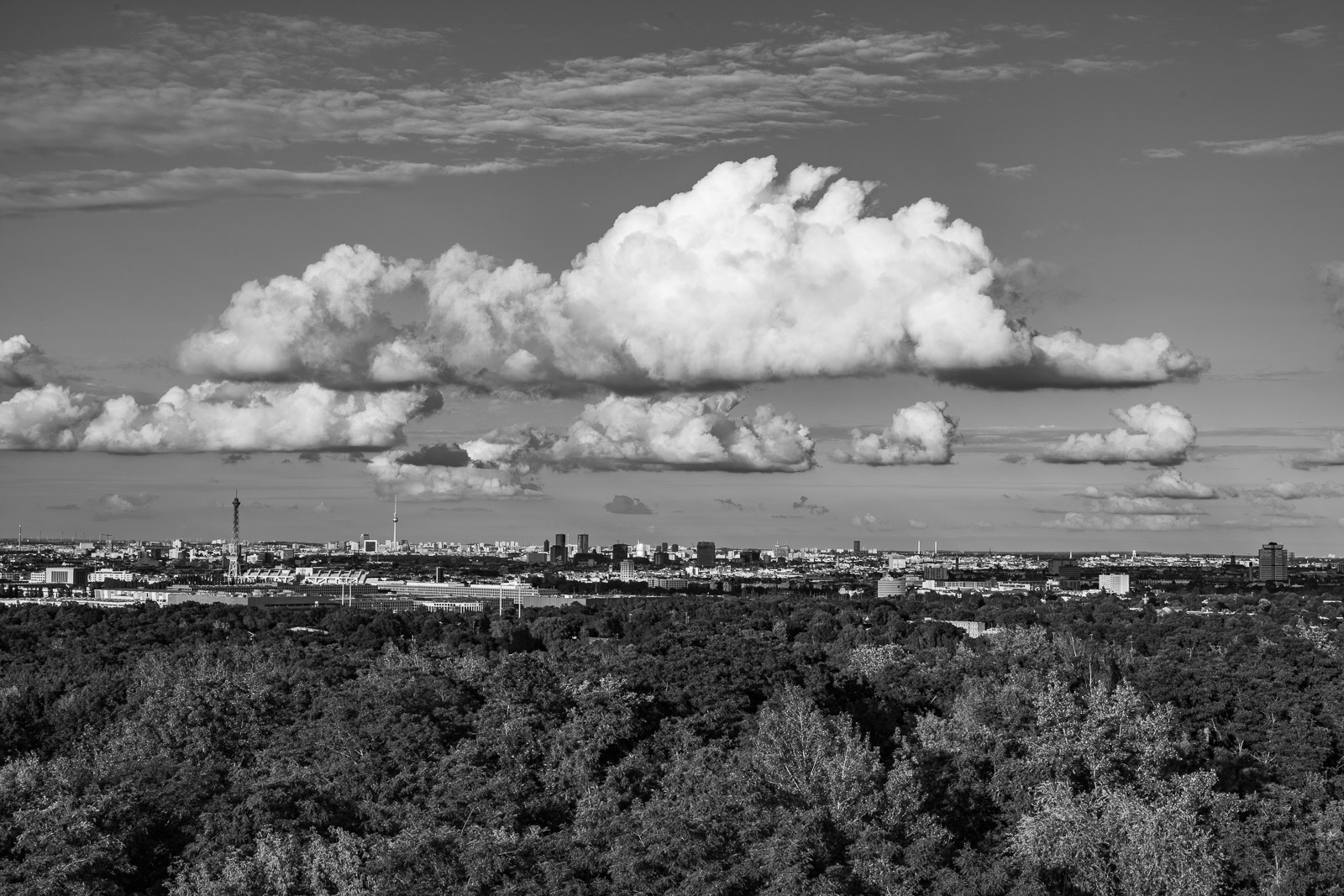
One of the concise views one can have of Berlin these days is from the top of the Devil’s Mountain (Teufelsberg), the artificial hill that consists of rubble from the ruins of World War II.
The conciseness decreases when stepping back, inside the structures on top of the former US listening station from the Cold War.
So we enter a place of fascinating decay and devastation that has become in its entirety a canvas.
The ruin as a design pattern for our self seems an aporia, but not so: as in many paradoxa, there is synthesis.
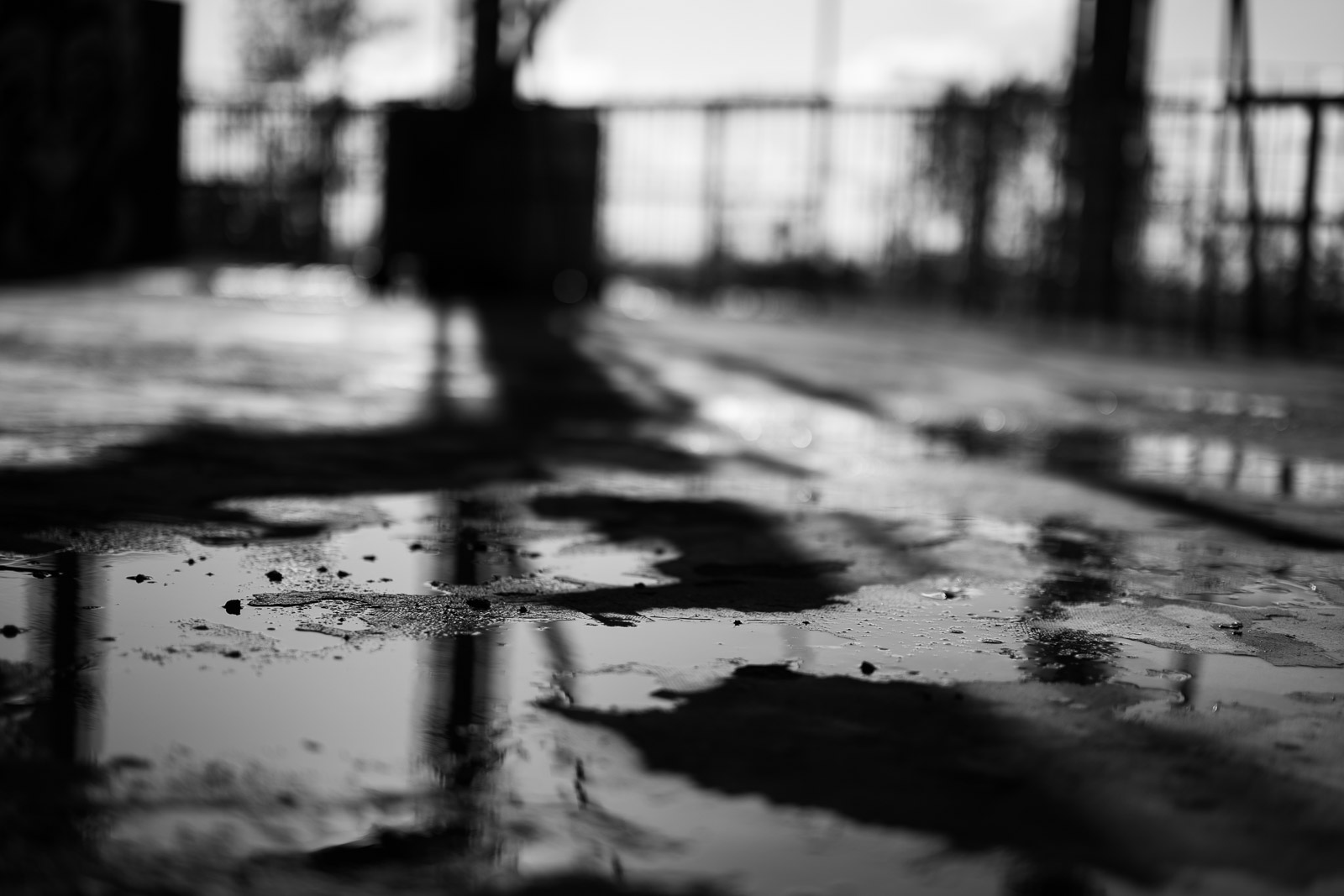
Descending further we witness that light and dark not only coexist, they require each other,
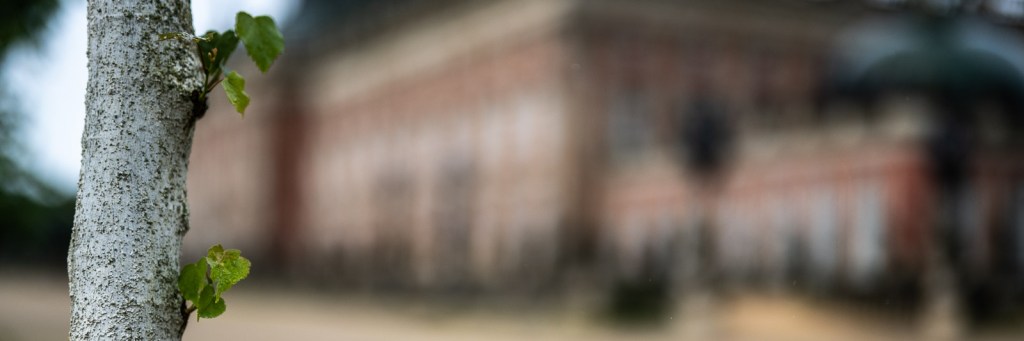
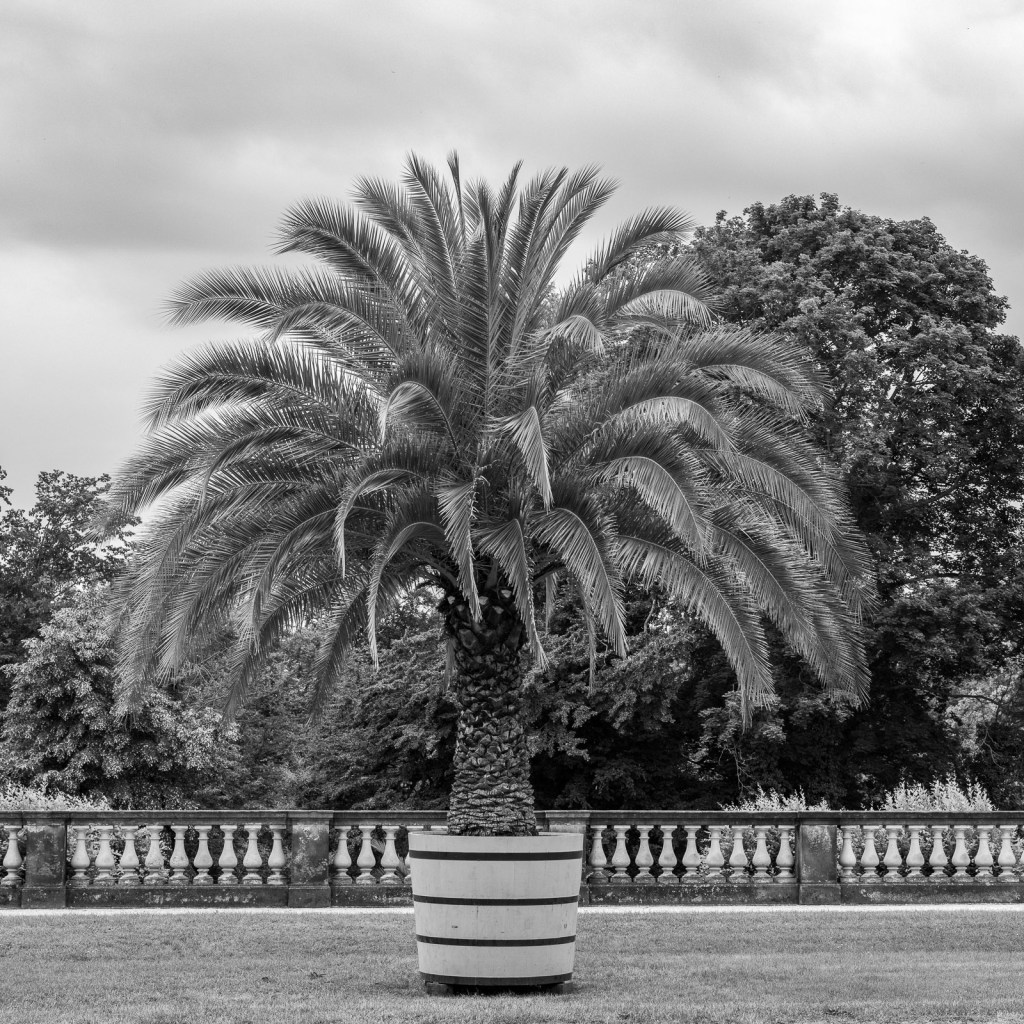
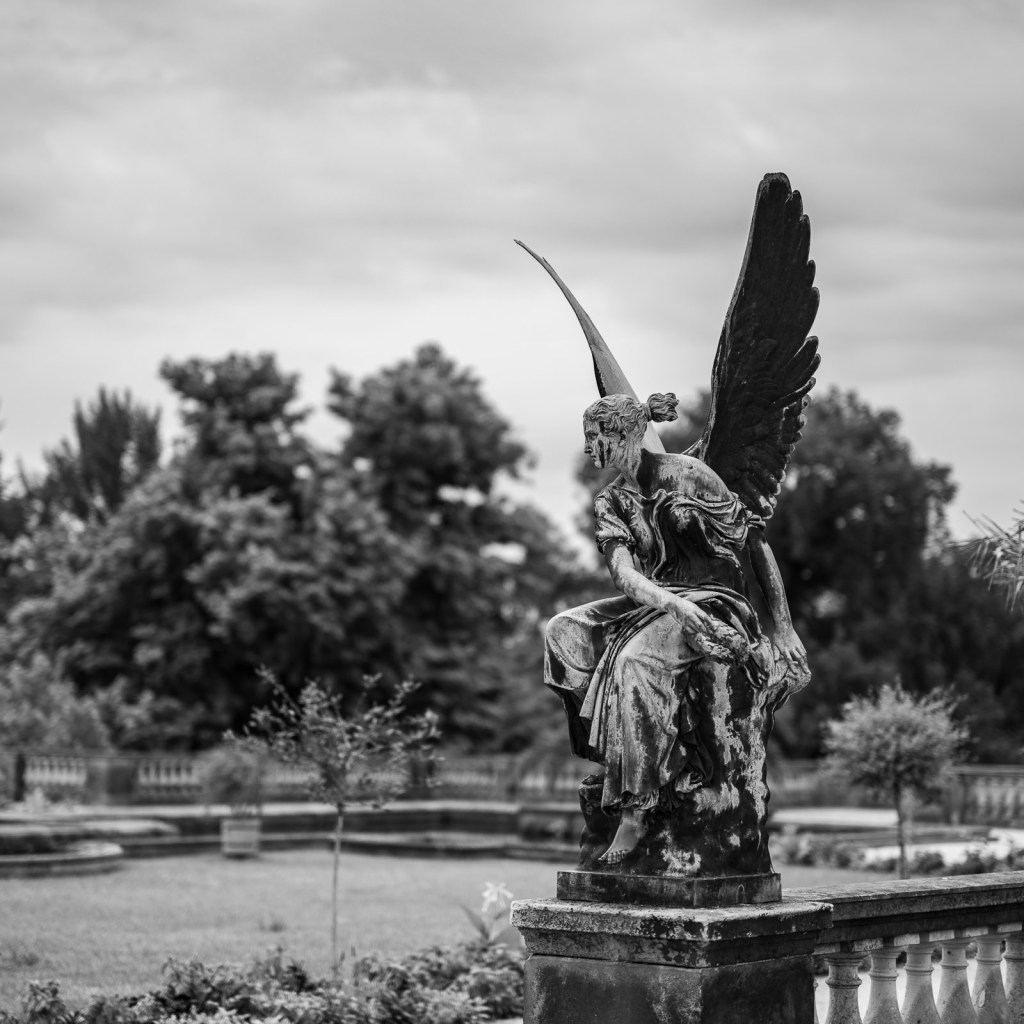
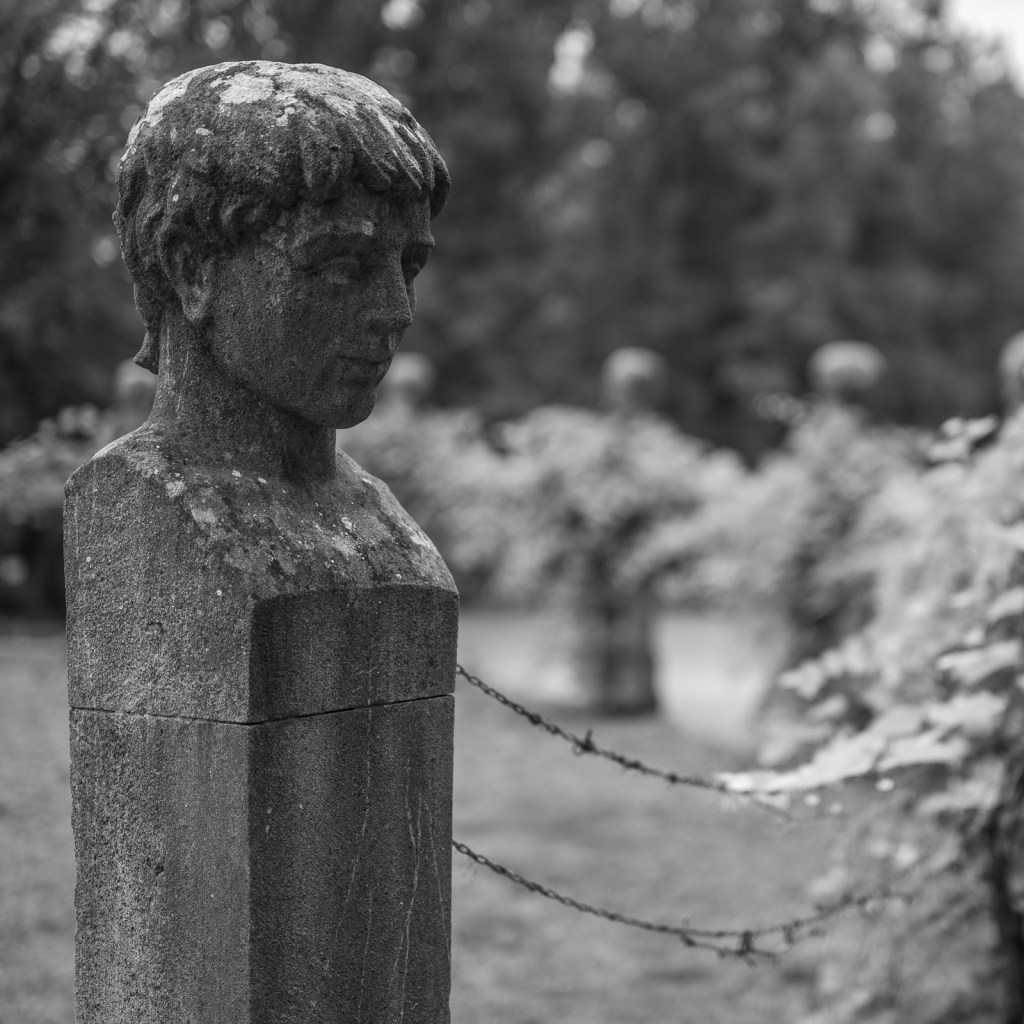
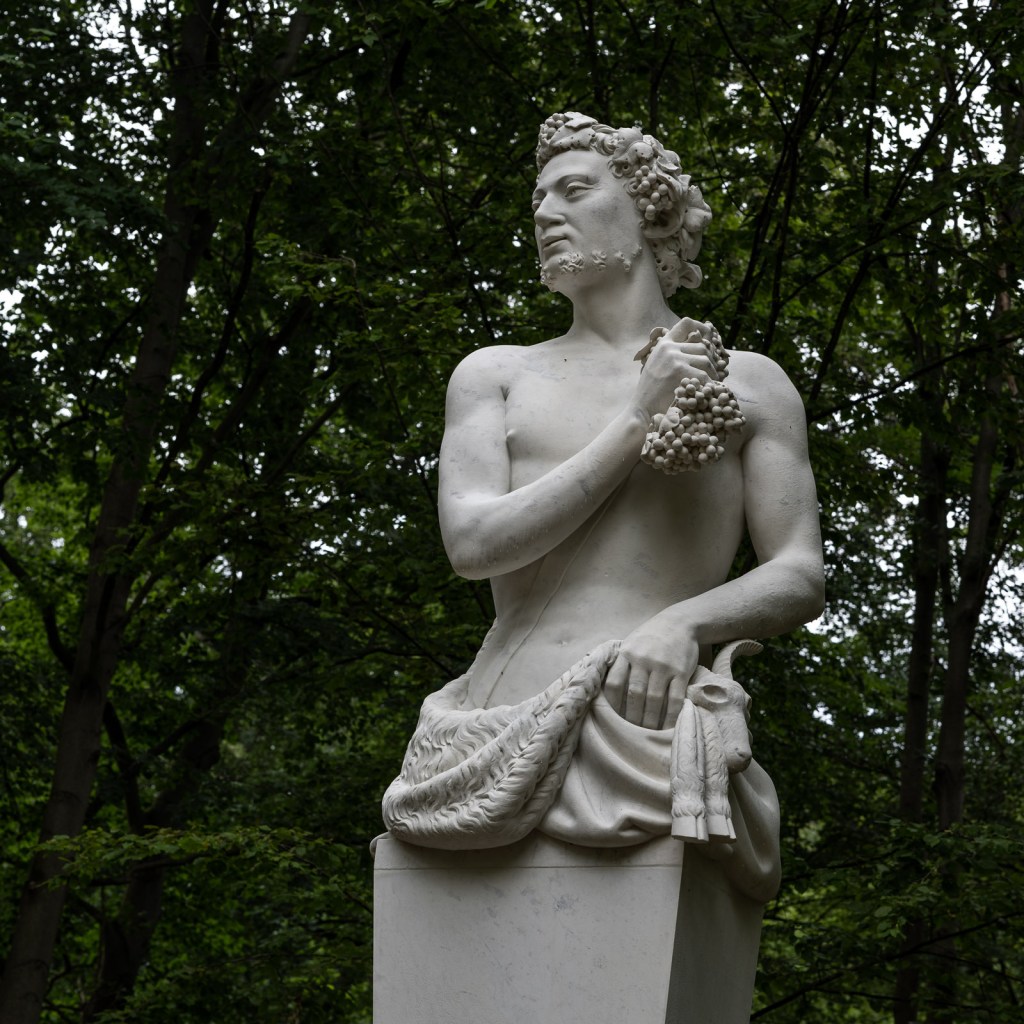
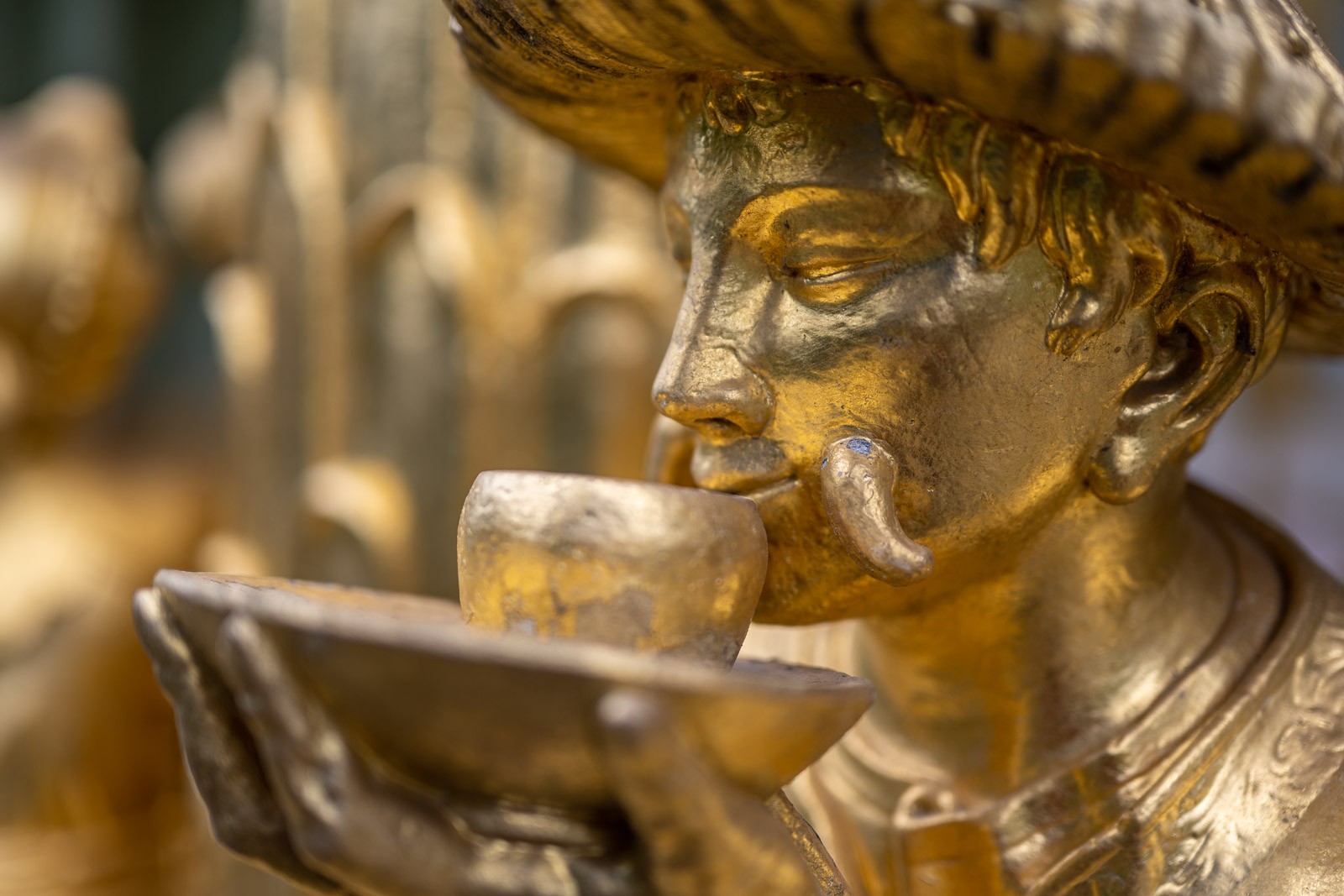
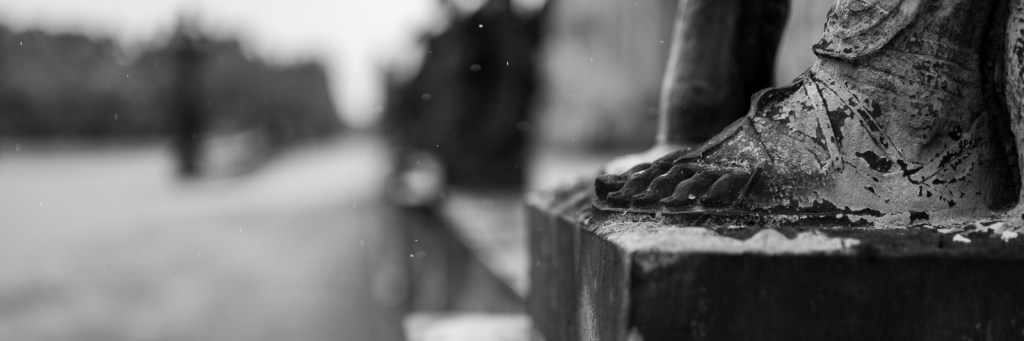
Frederick the Great’s summer residence Sanssouci features a vast park with all kinds of interesting buildings and sculptures.
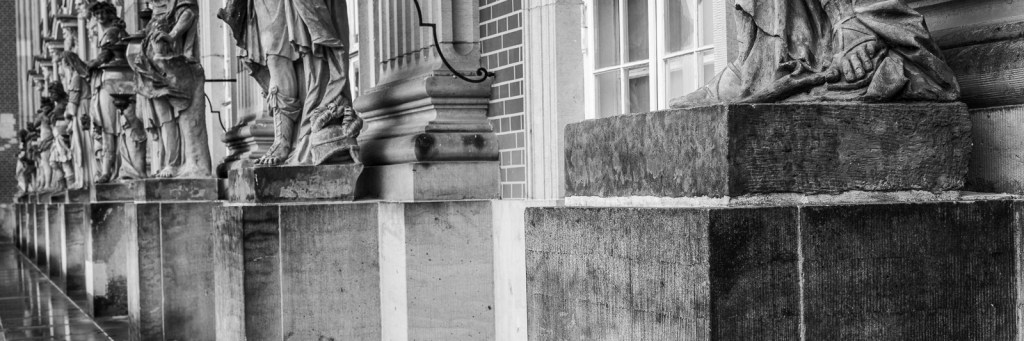
Uncommon plants, angels, truncated heads, fauns – all in some form of isolation, for individual contemplation, and all with a sense of esthetic that is not quite our own anymore – suggest that Frederick consciously made an attempt to deal with the Other, the unfamiliar, the strange and alien.
The Chinese Pavilion appears to give an idea of the sophistication of other cultures, using a sense of beauty that was his — not necessarily theirs.
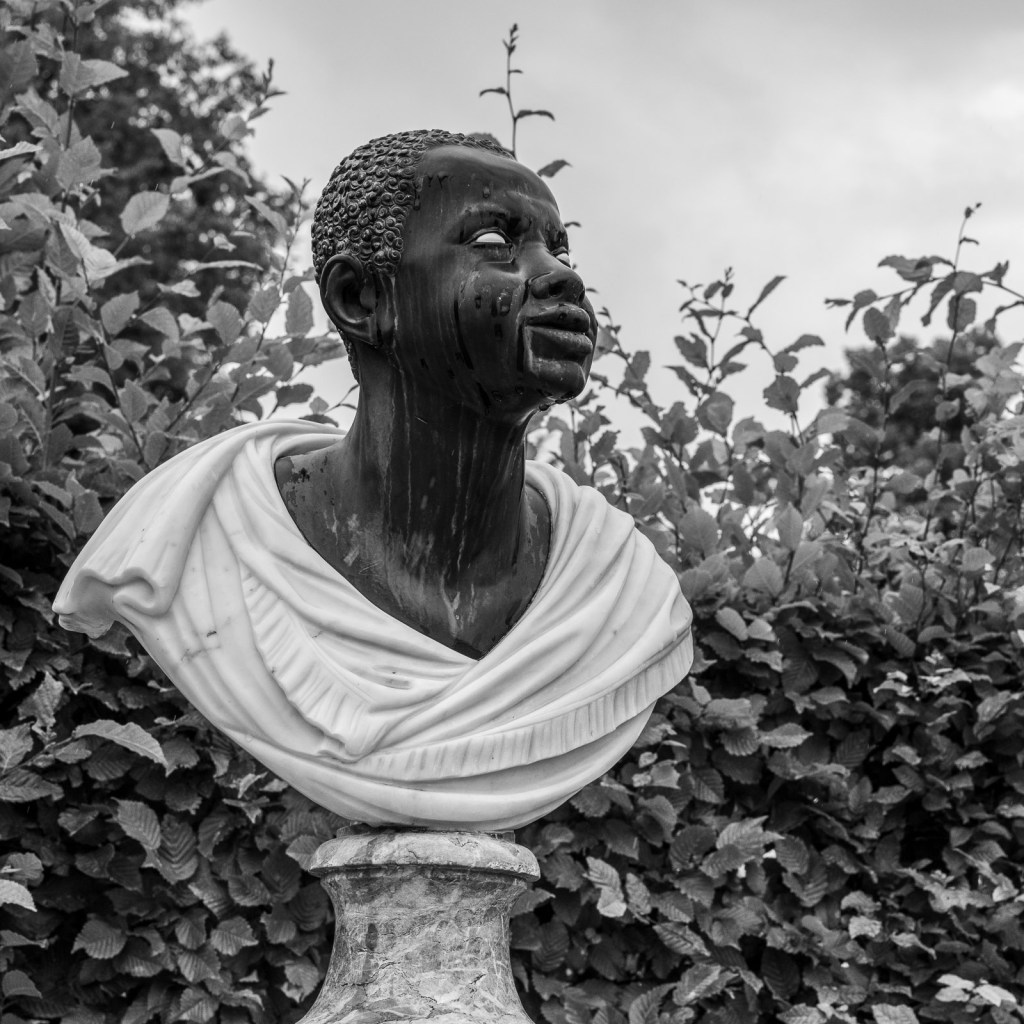
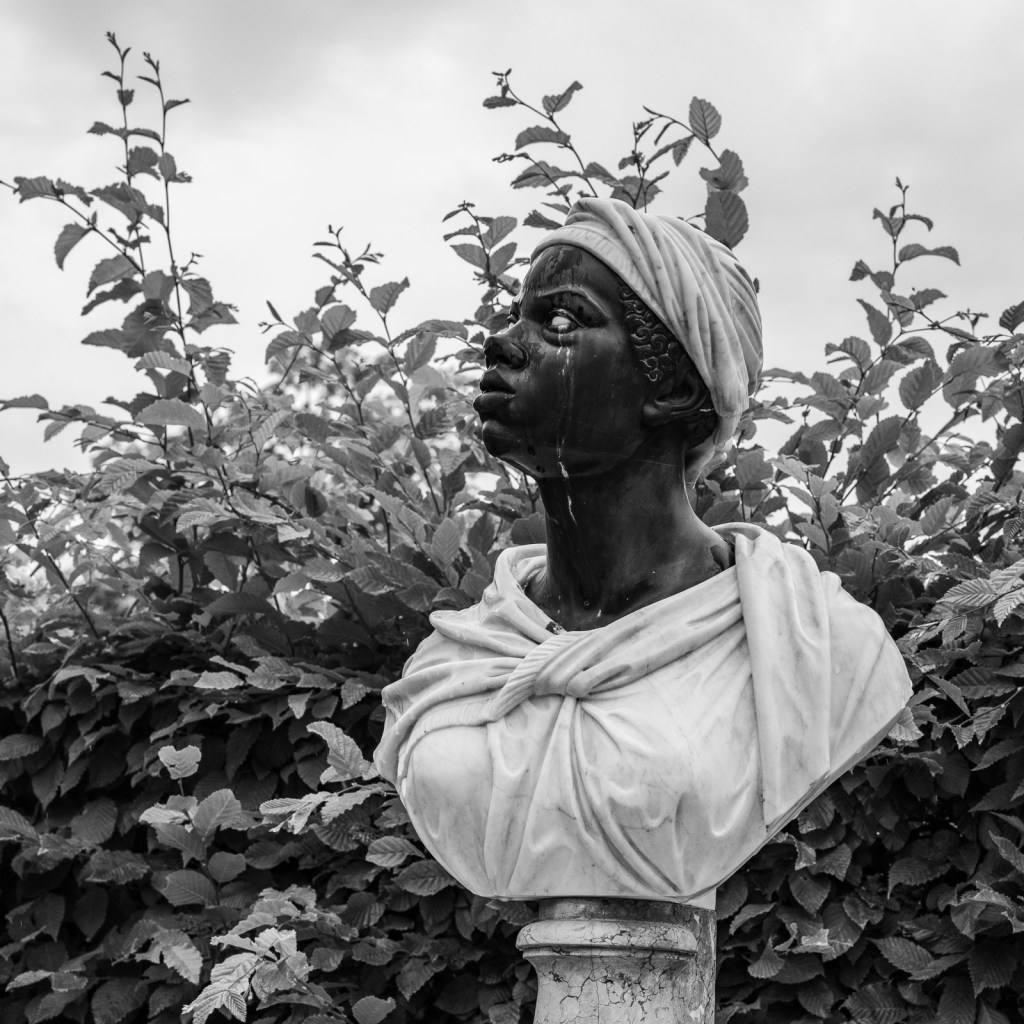
Then a rondel with six busts, a Roman emperor, a philosopher — and four Africans, in white dresses and awkward postures.
Is this how Frederick wanted to see them, and us to see them, too? Then something strange and dangerous has happened here. Esthetic ideals themselves are being colonized.
If our sense of beauty is that fragile, if it allows that imposition so easily, shouldn’t we learn to become more aware of it, and to resist?
When looking itself has become an aggression, isn’t it necessary to see even the familiar differently, to unlearn our sense of beauty, and to begin again, by offering presence?
After yesterday’s more technical description of my Sage Creek Valley flight, today an attempt of a second layer.
I think about photography as a dialogue — between the features of the subject and my abilities to perceive them.
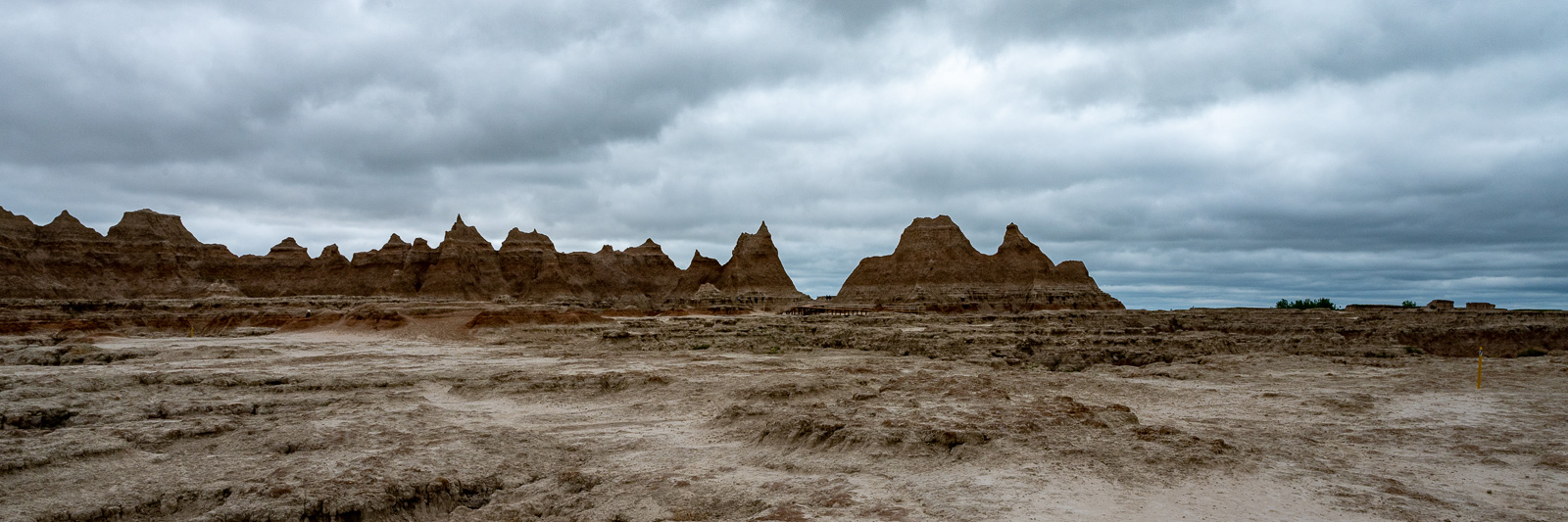
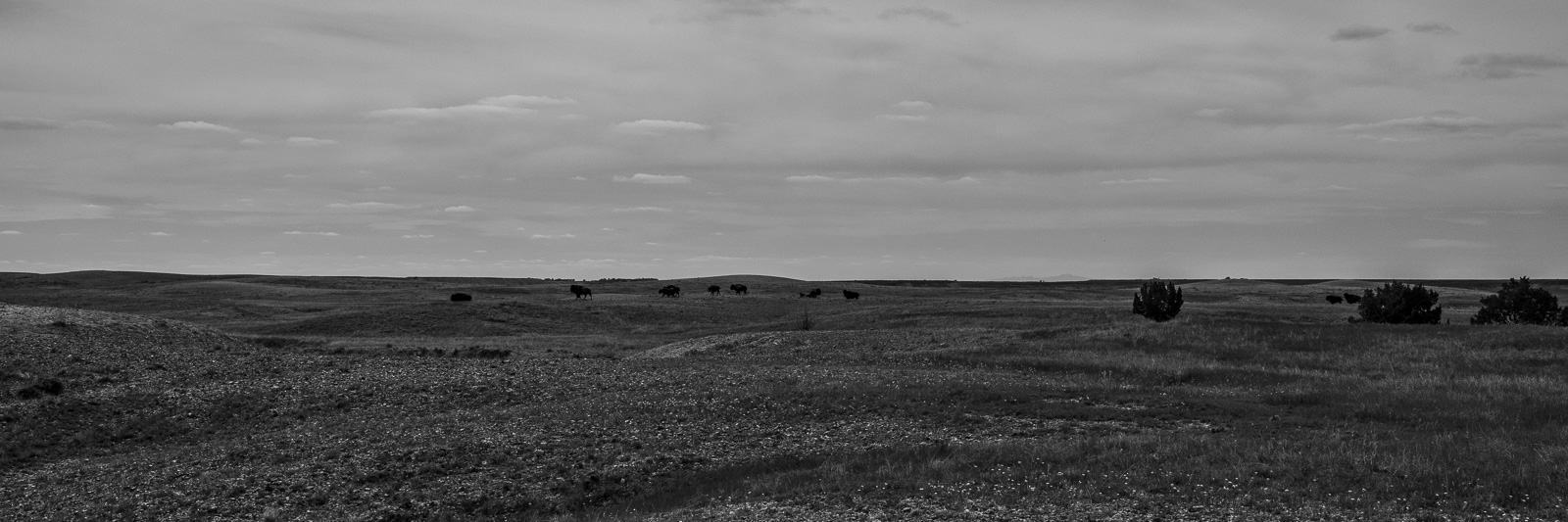
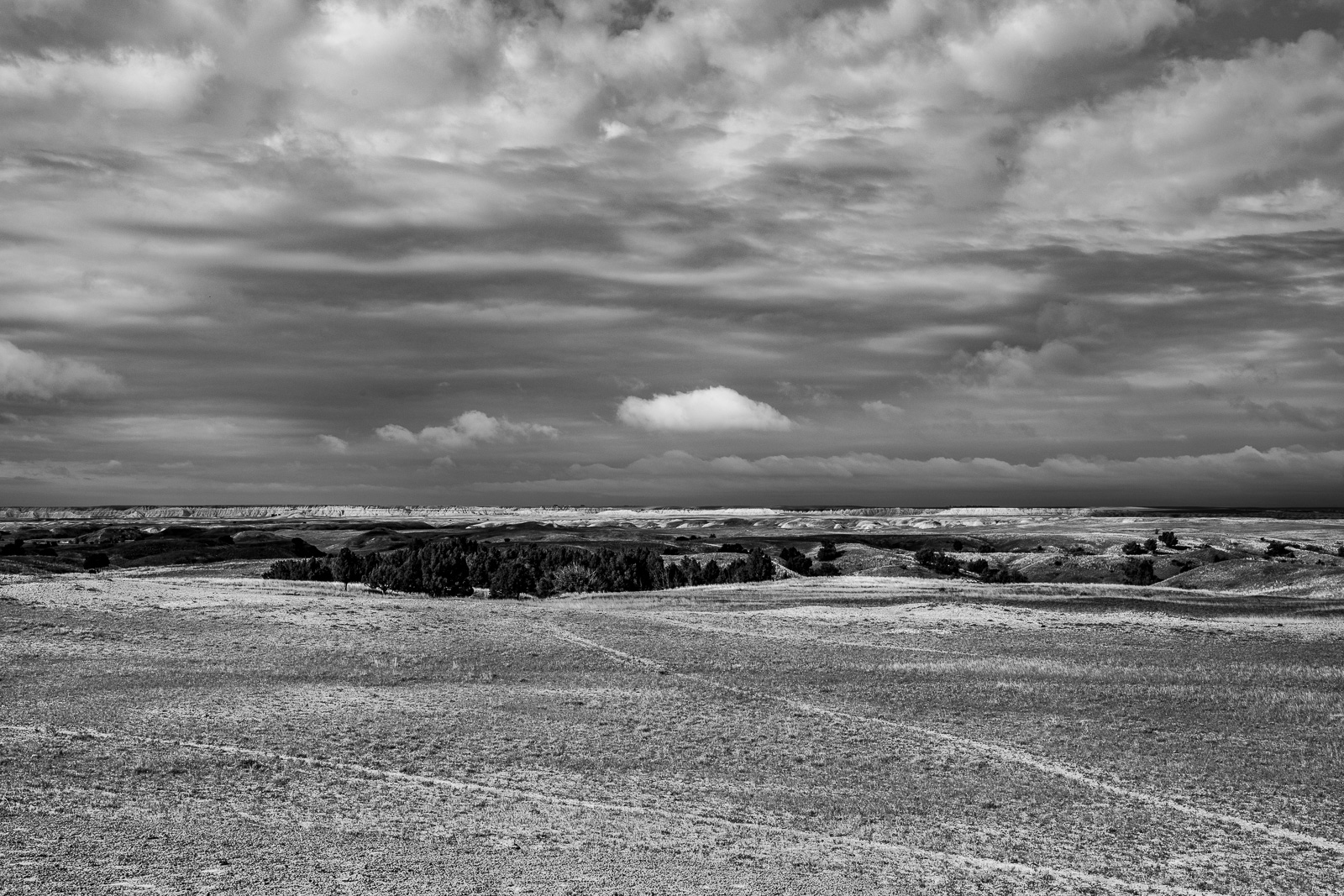
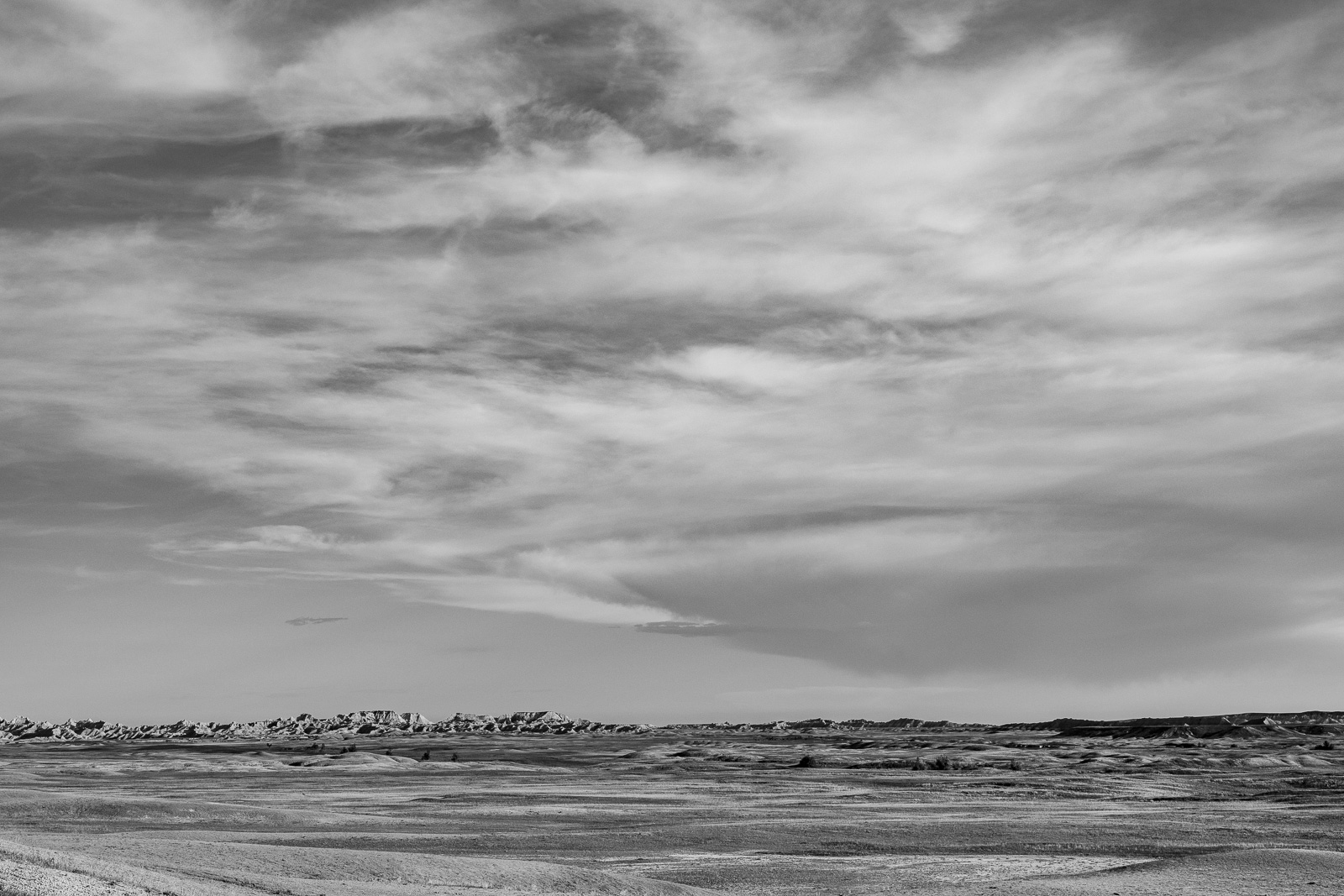
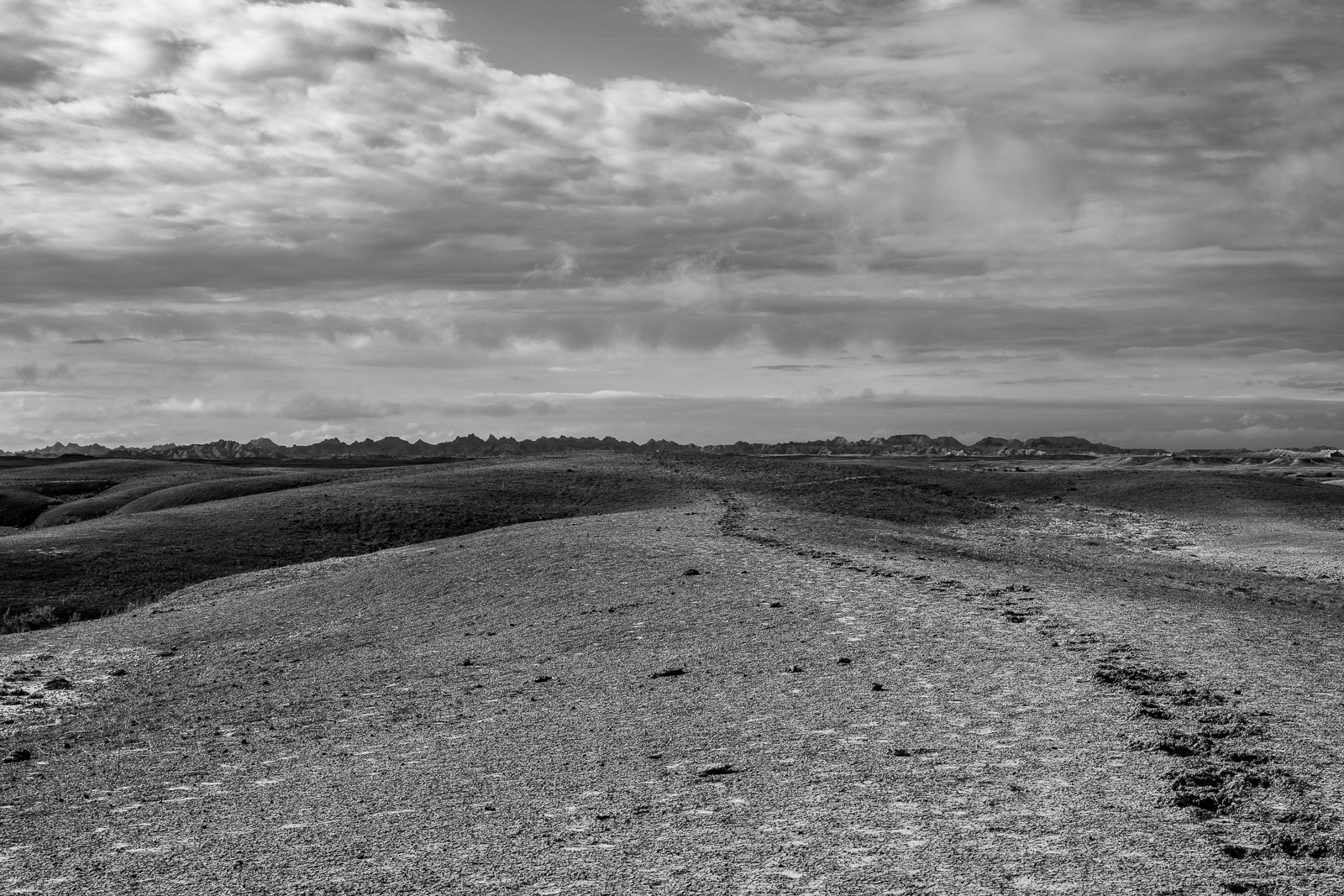
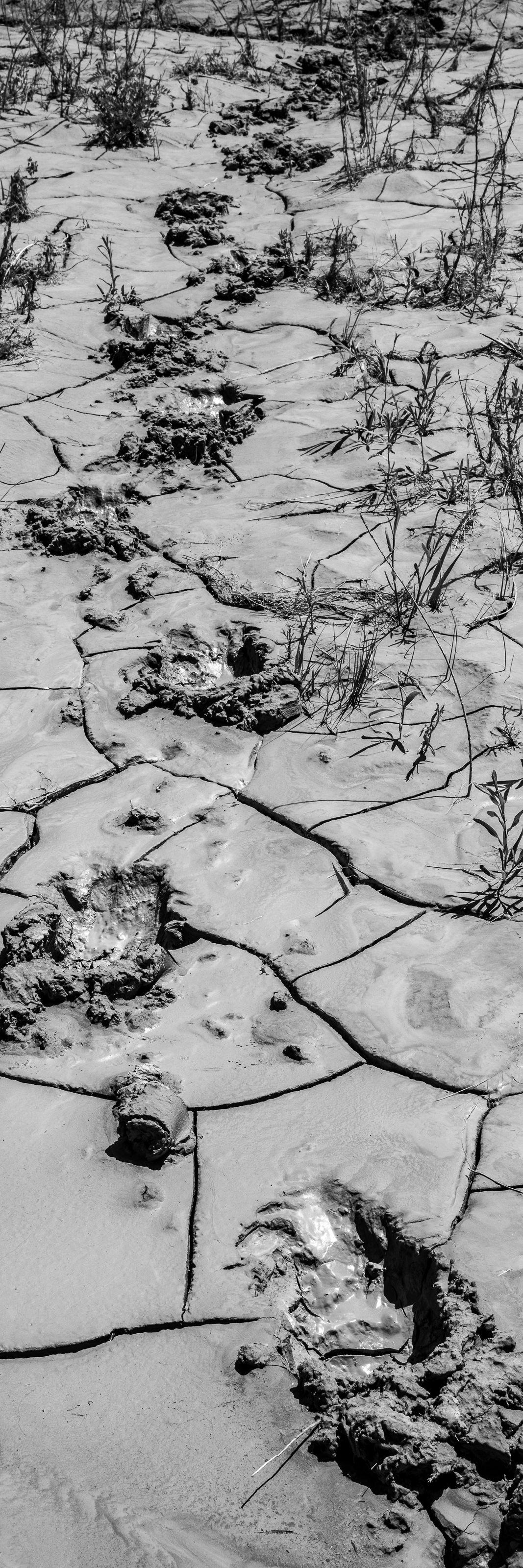
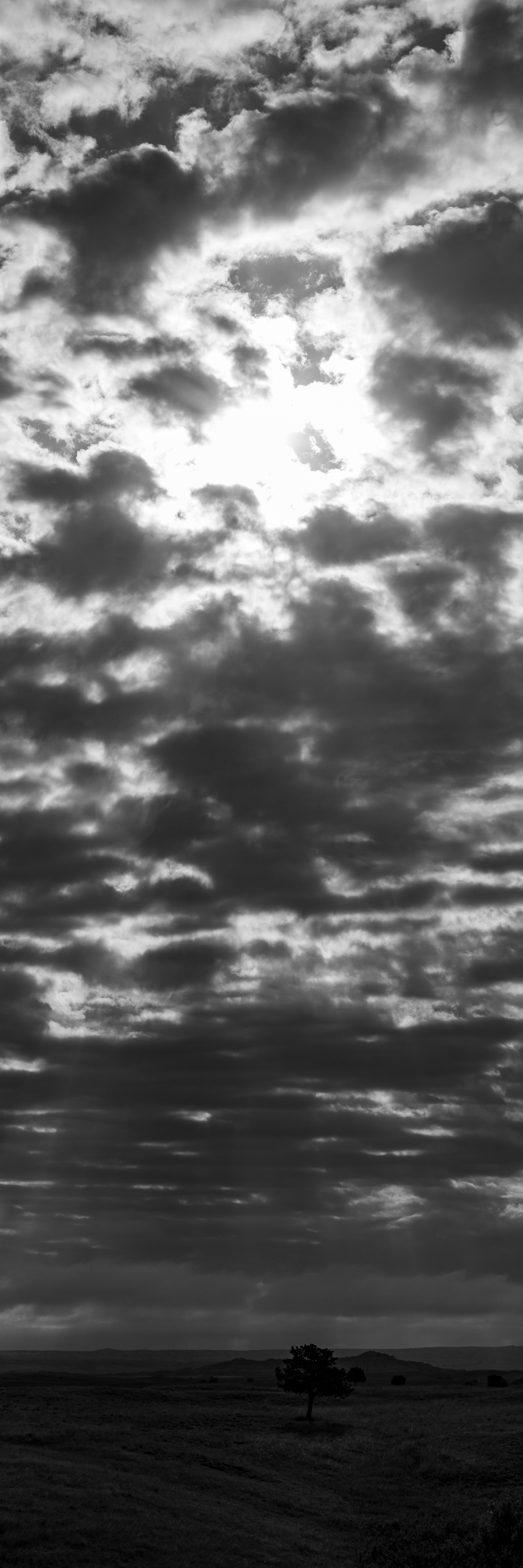
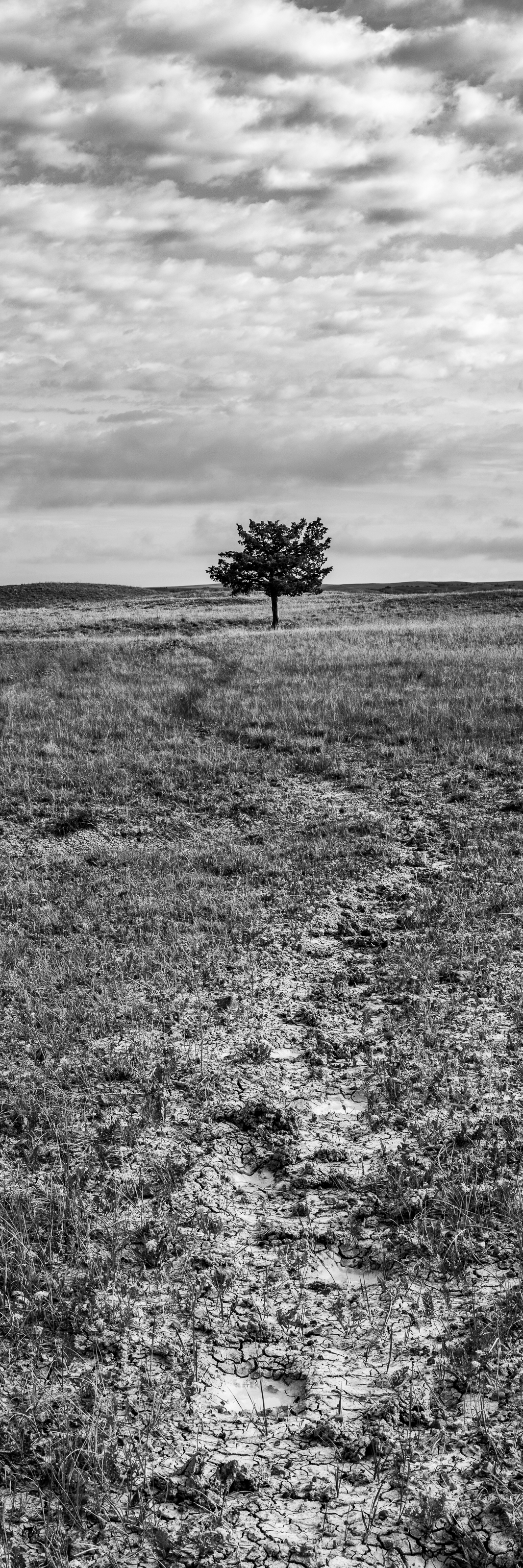
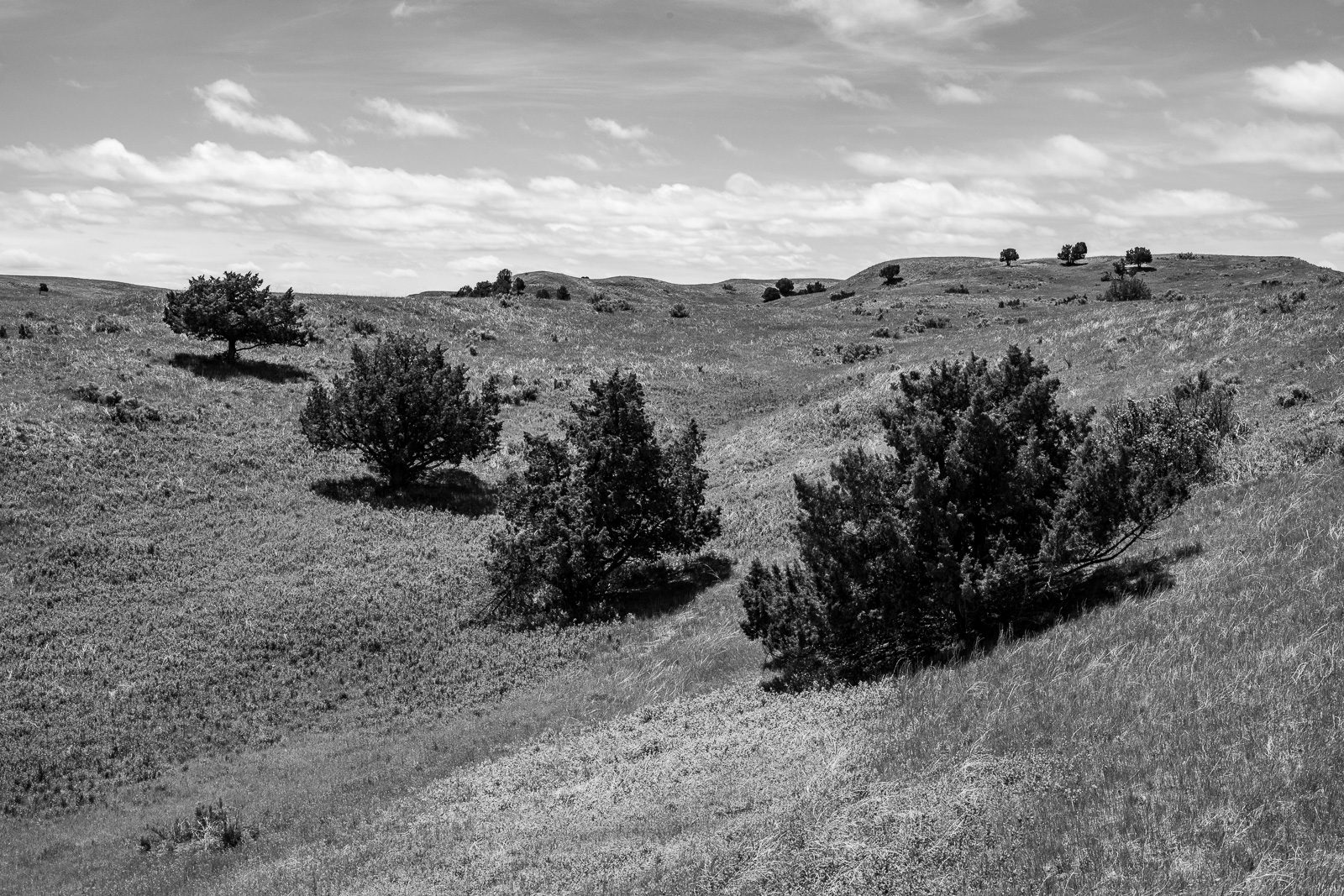
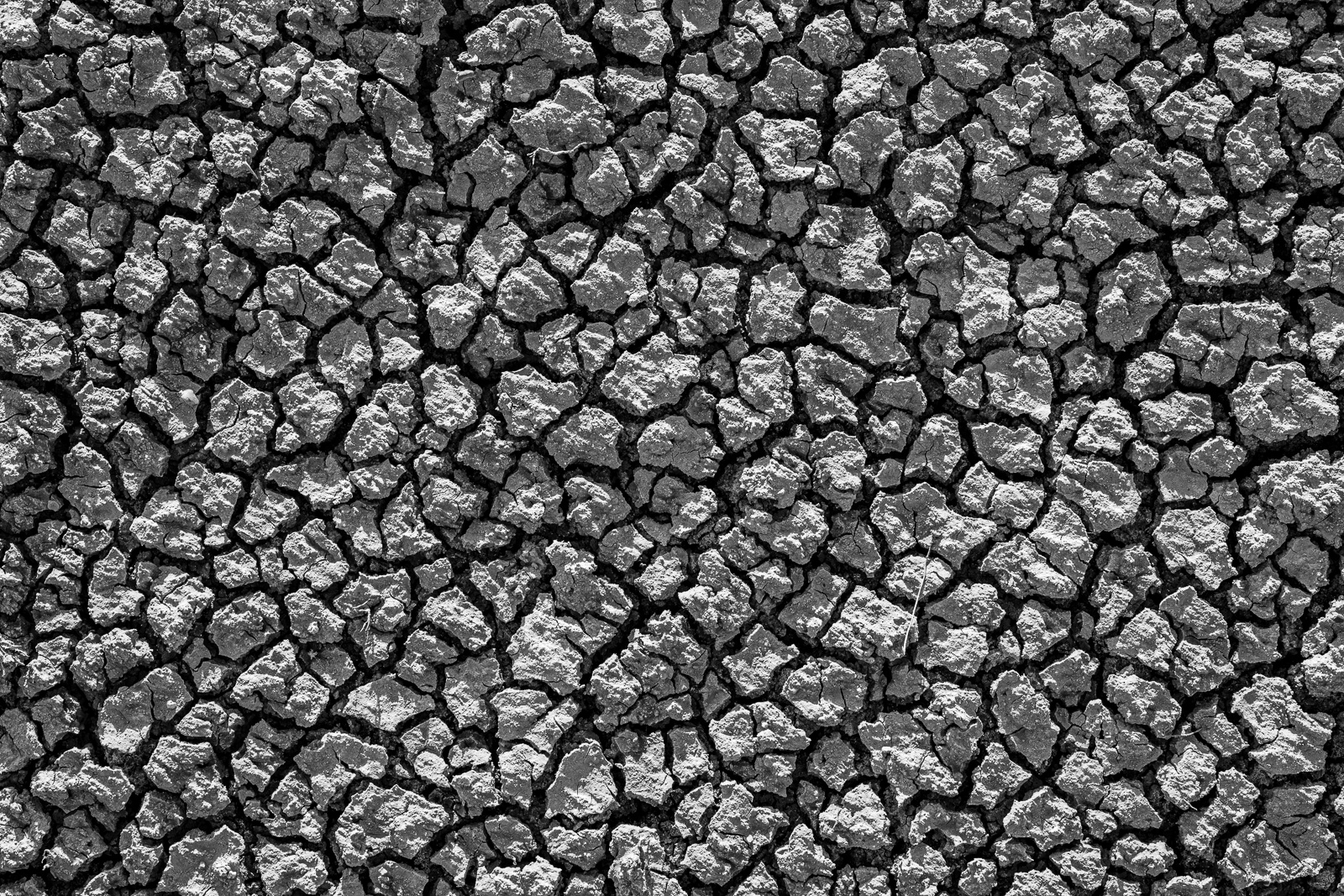
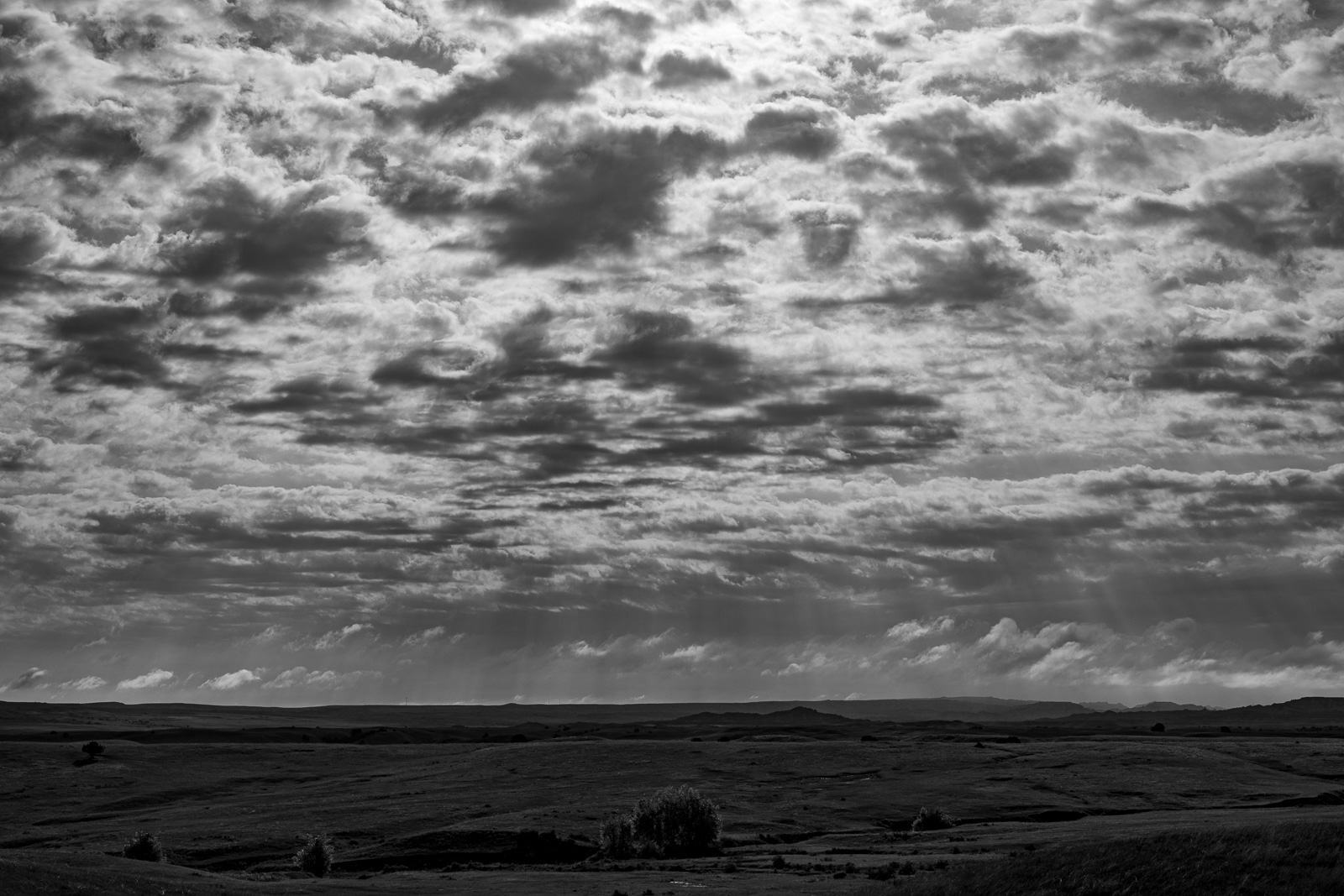
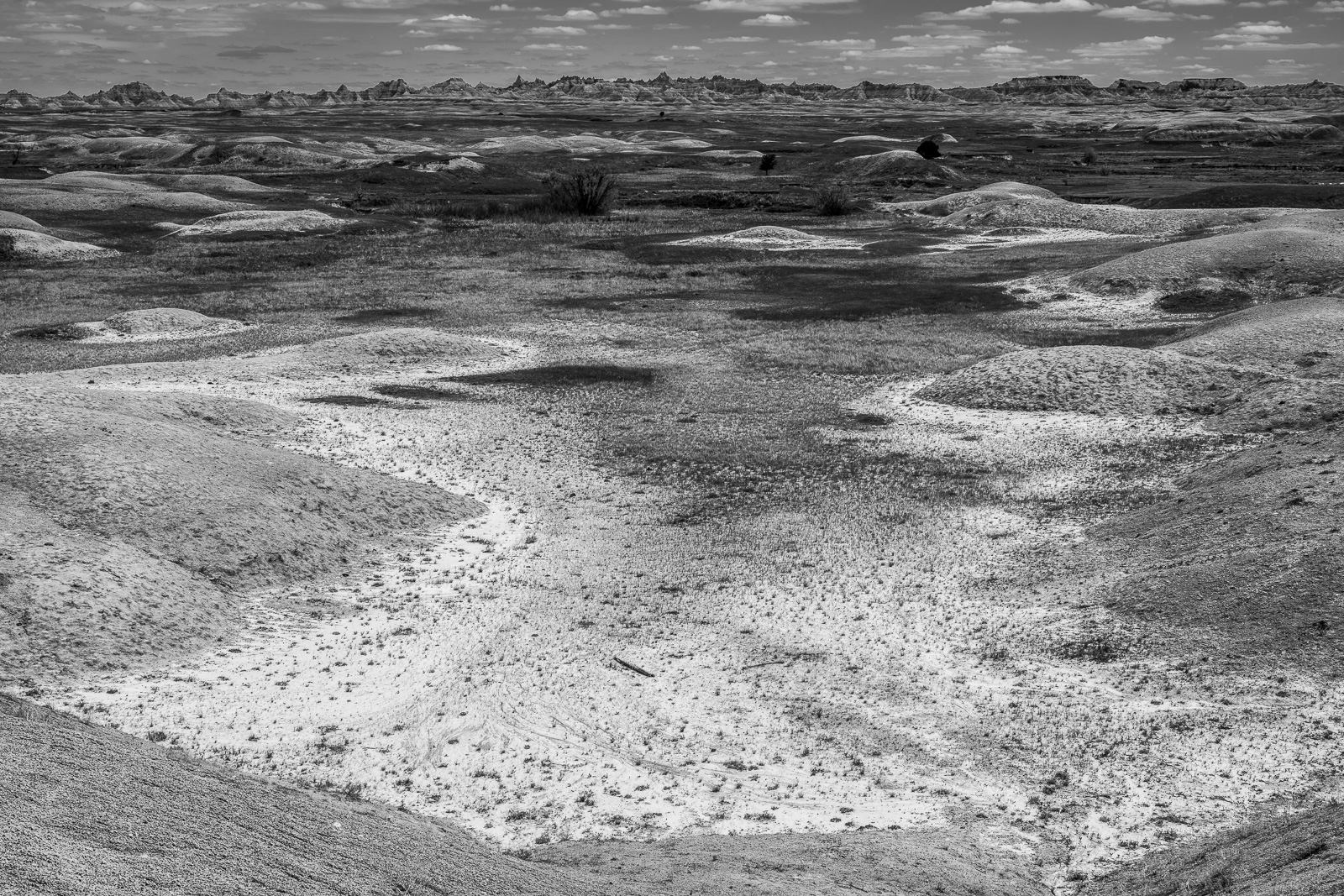
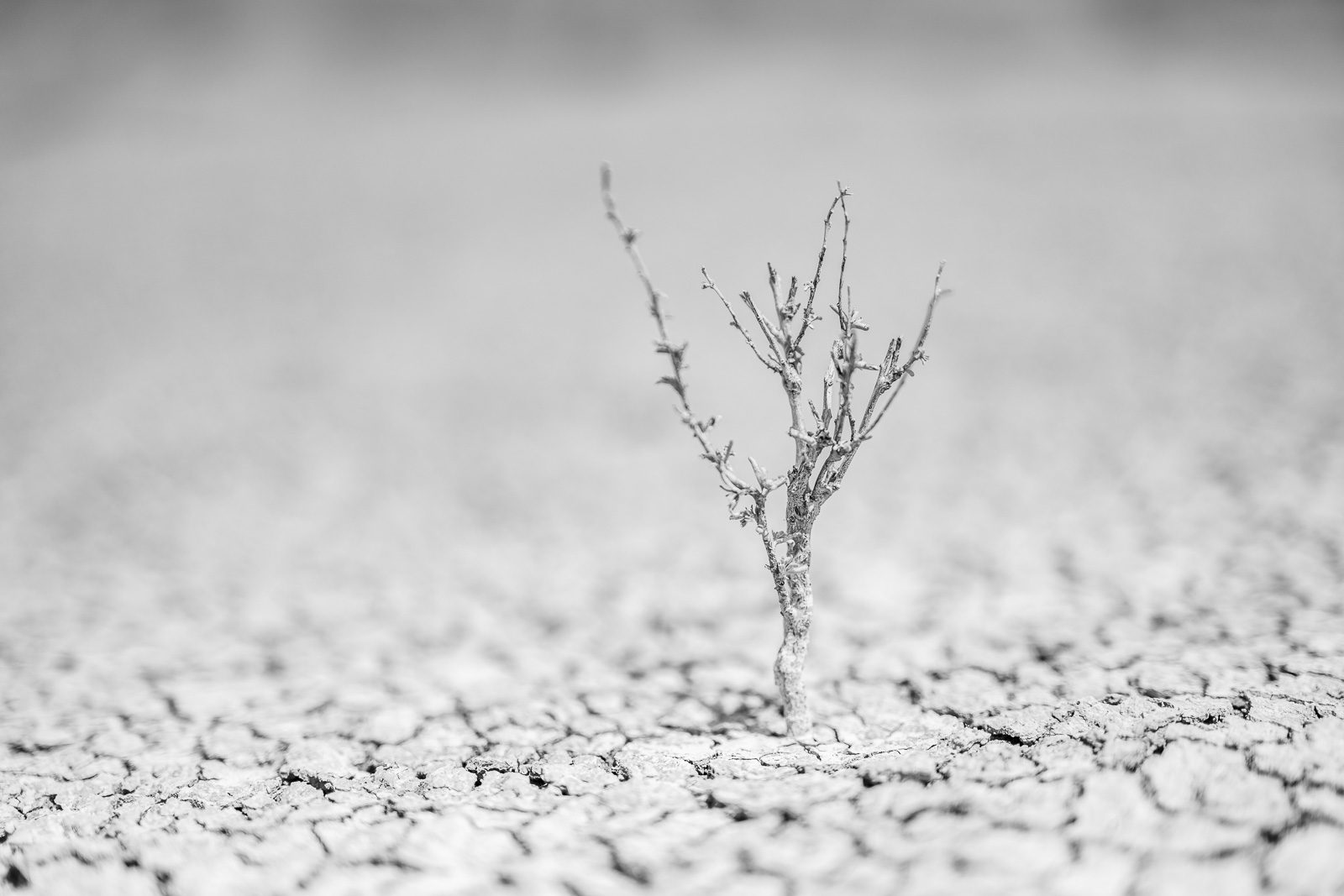
The sparsity of the landscape and its contrasts call for black and white, and this is a good choice, because it also helps emphasizing the occurrences of natural borders.
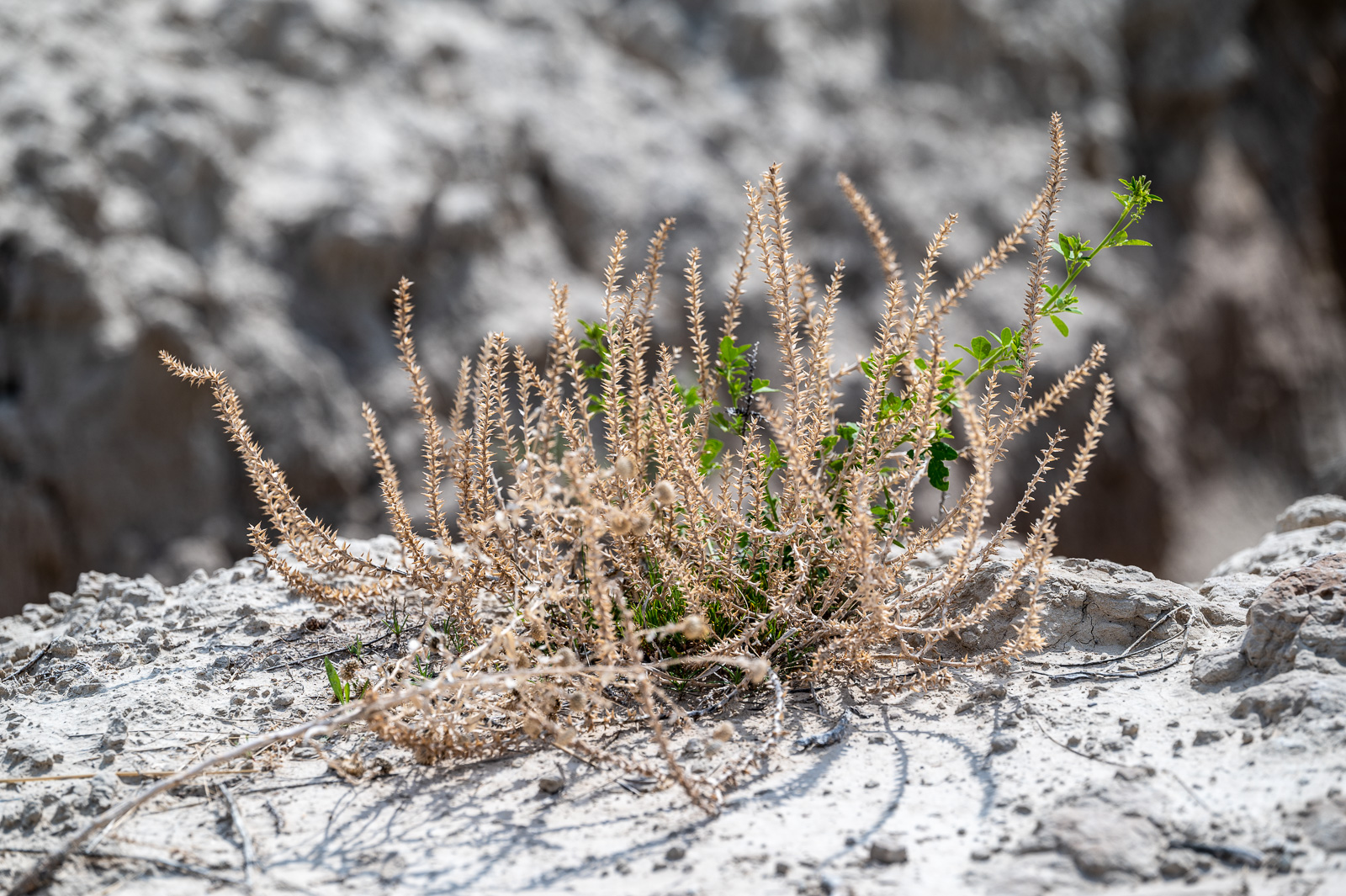
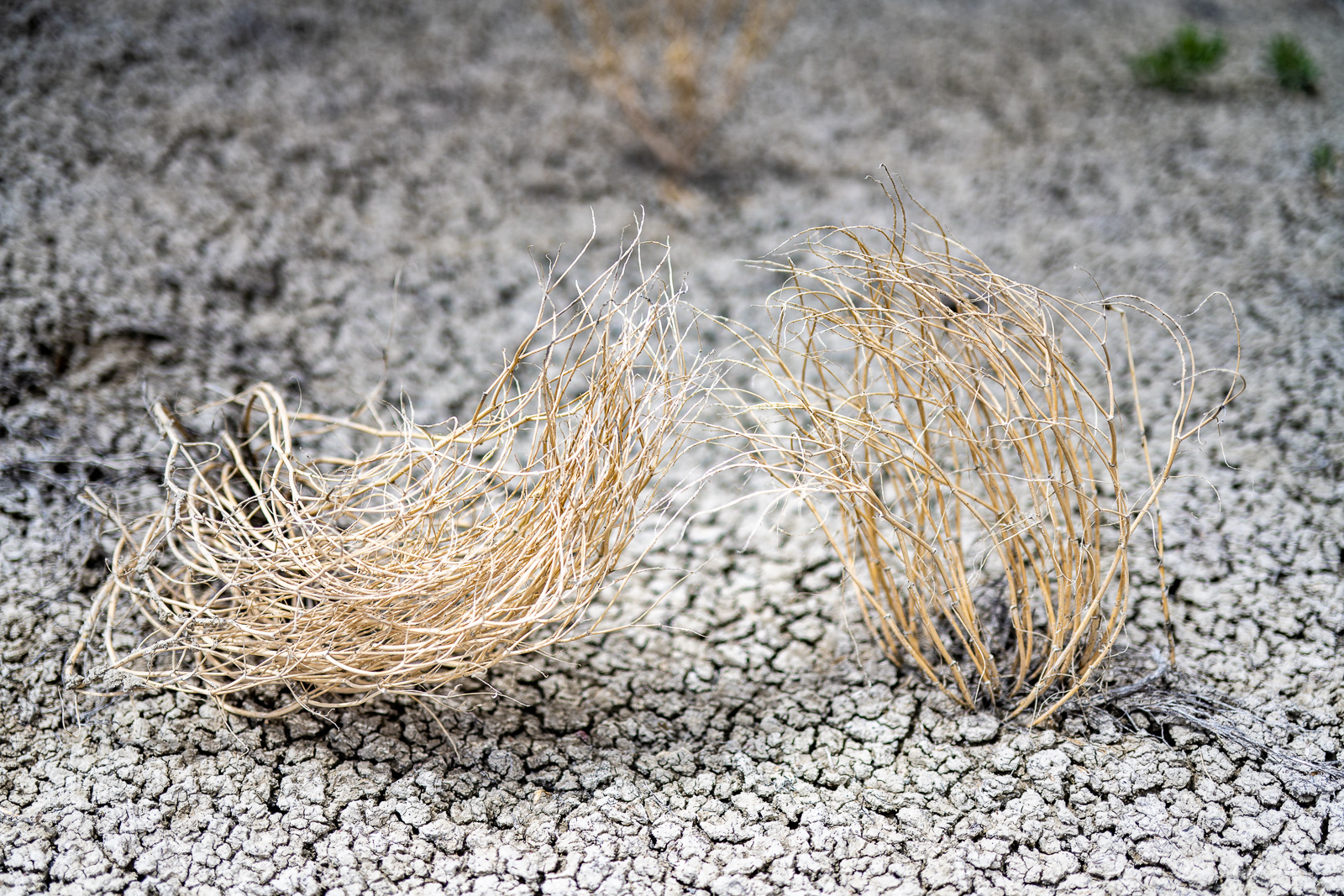
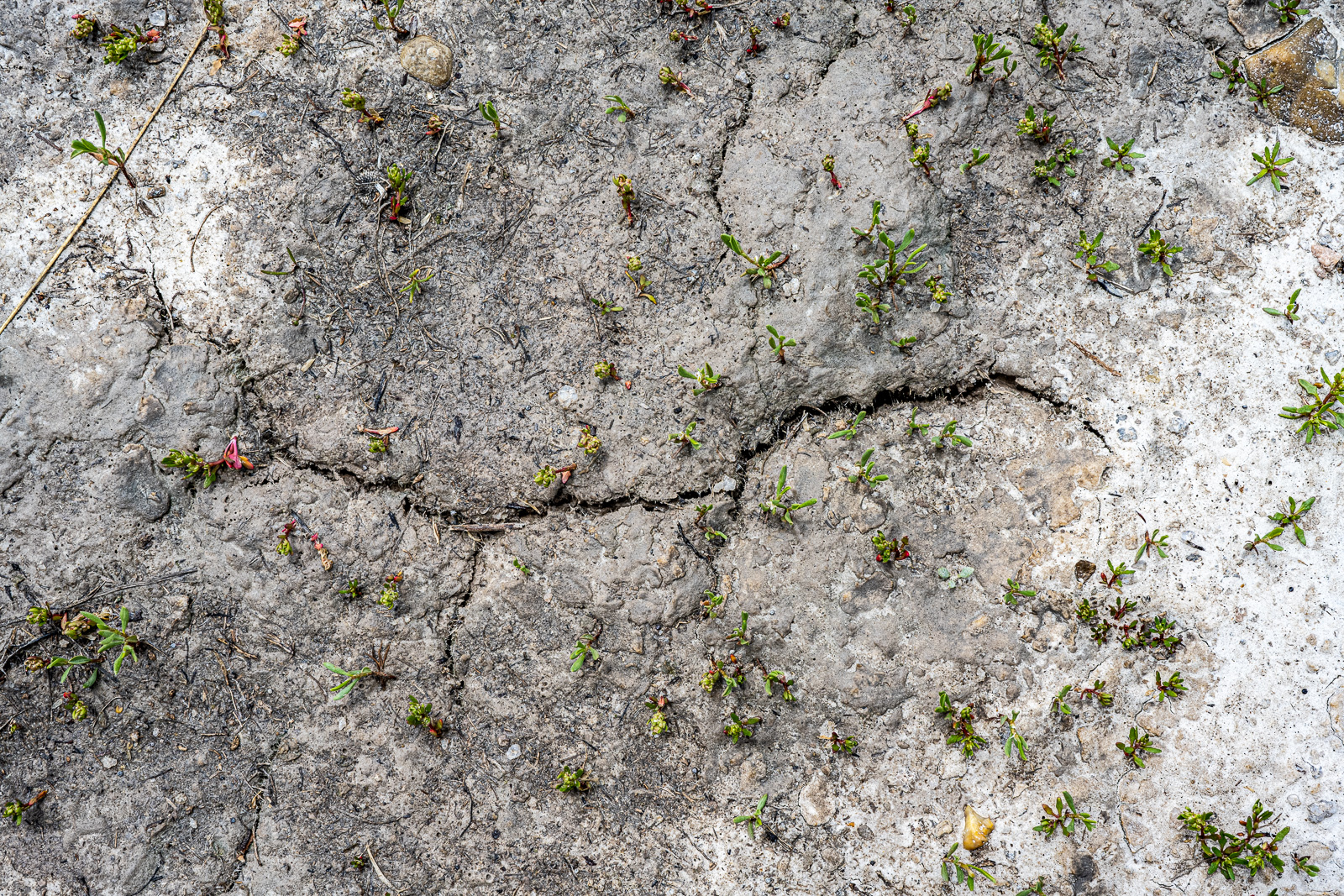
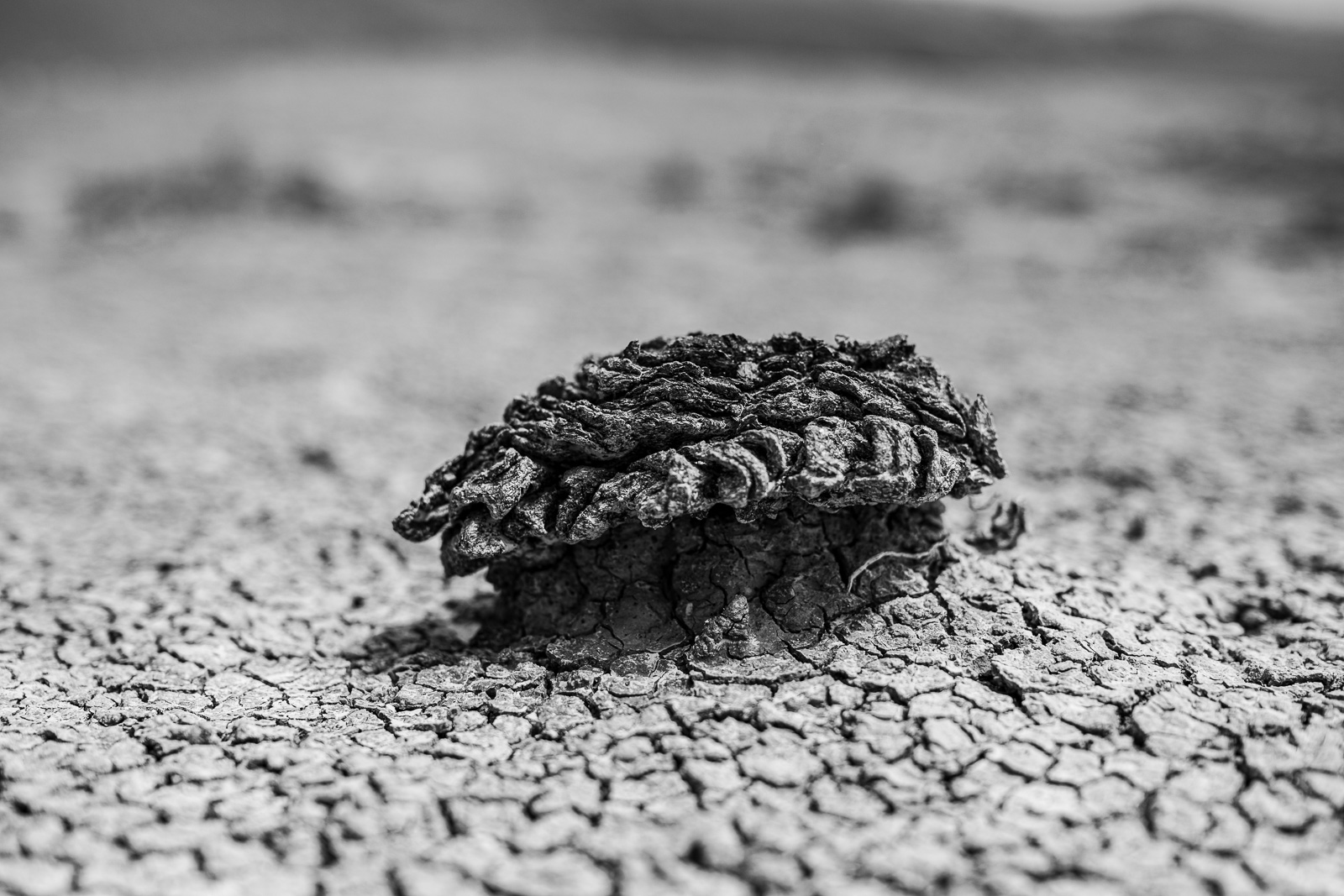
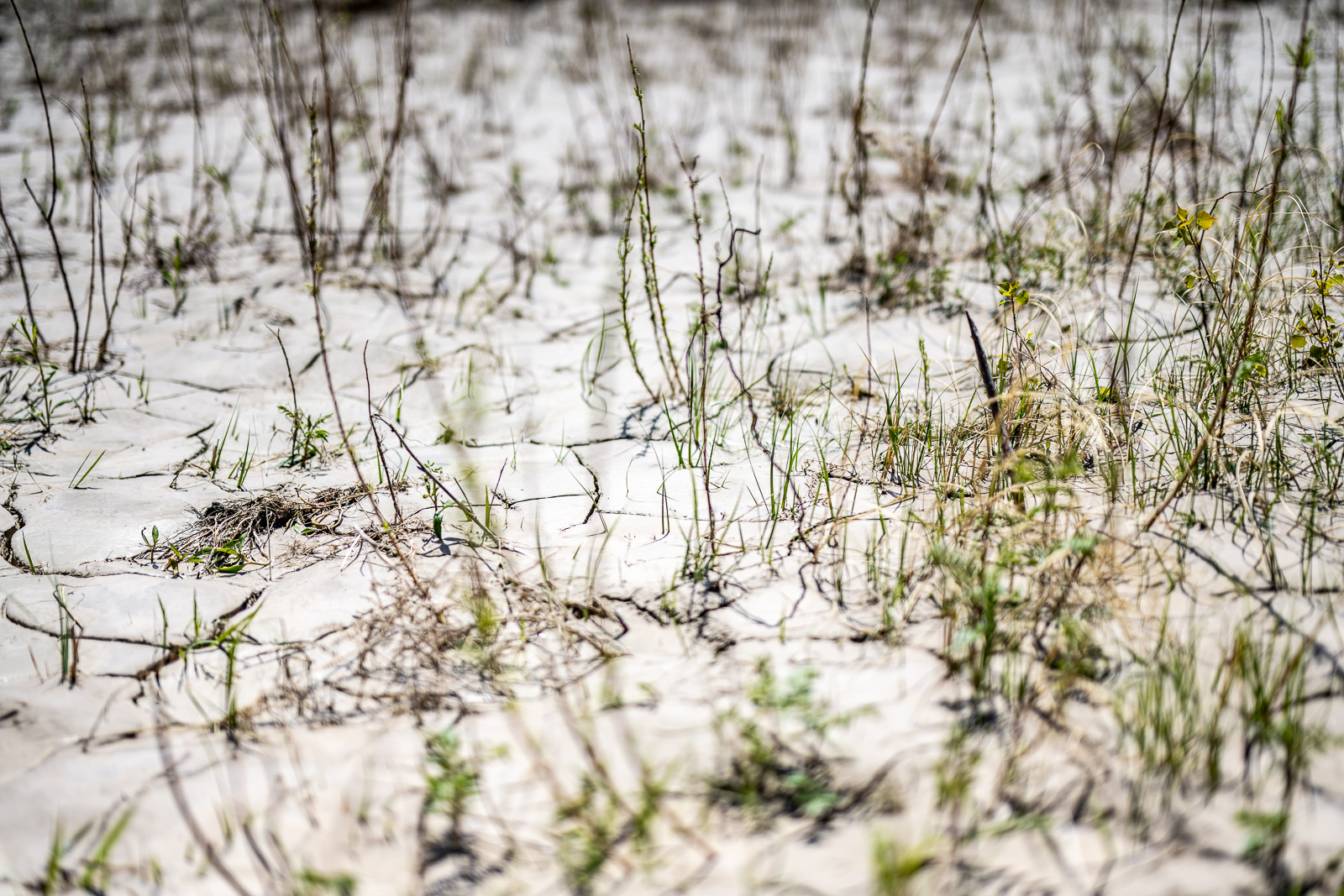
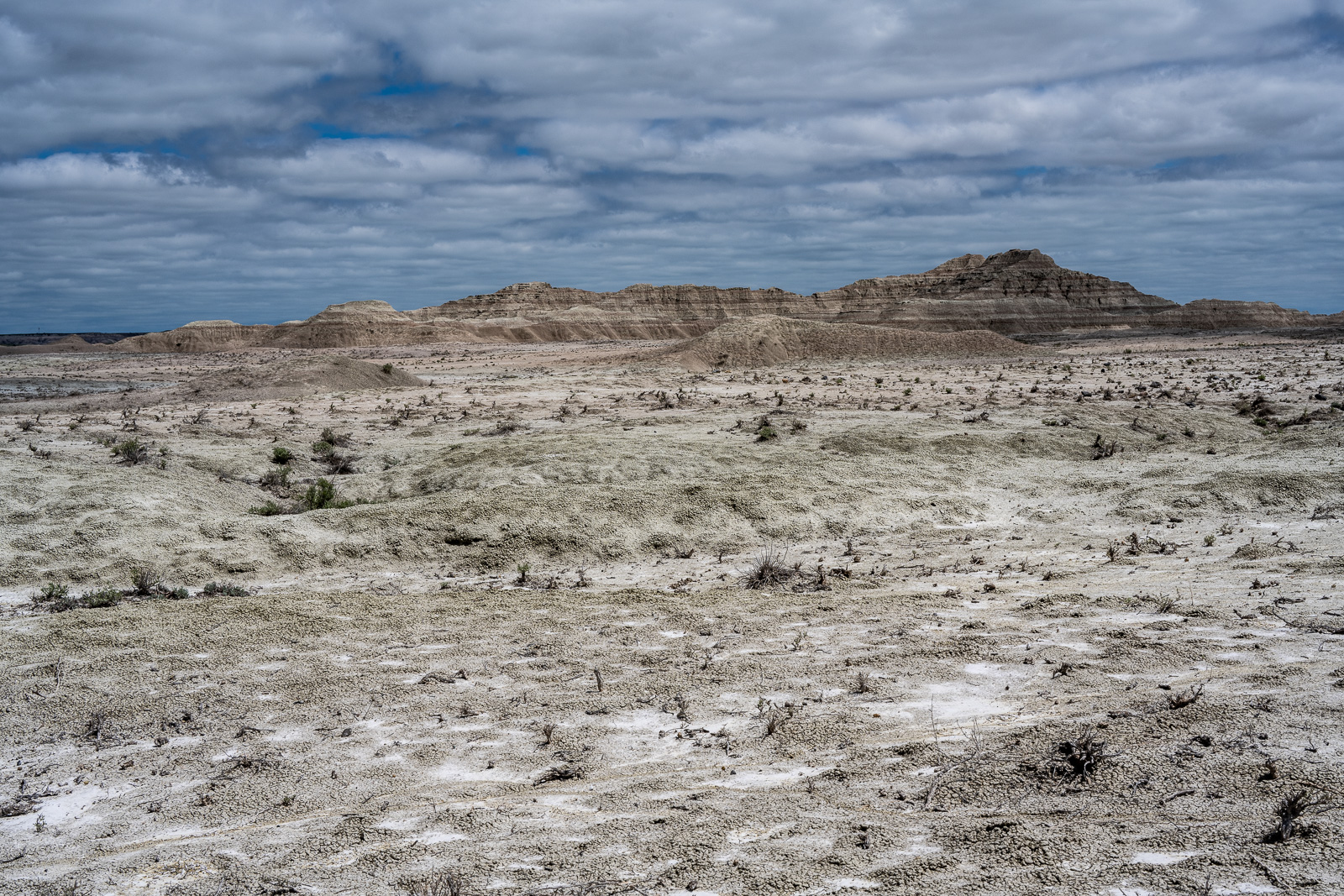
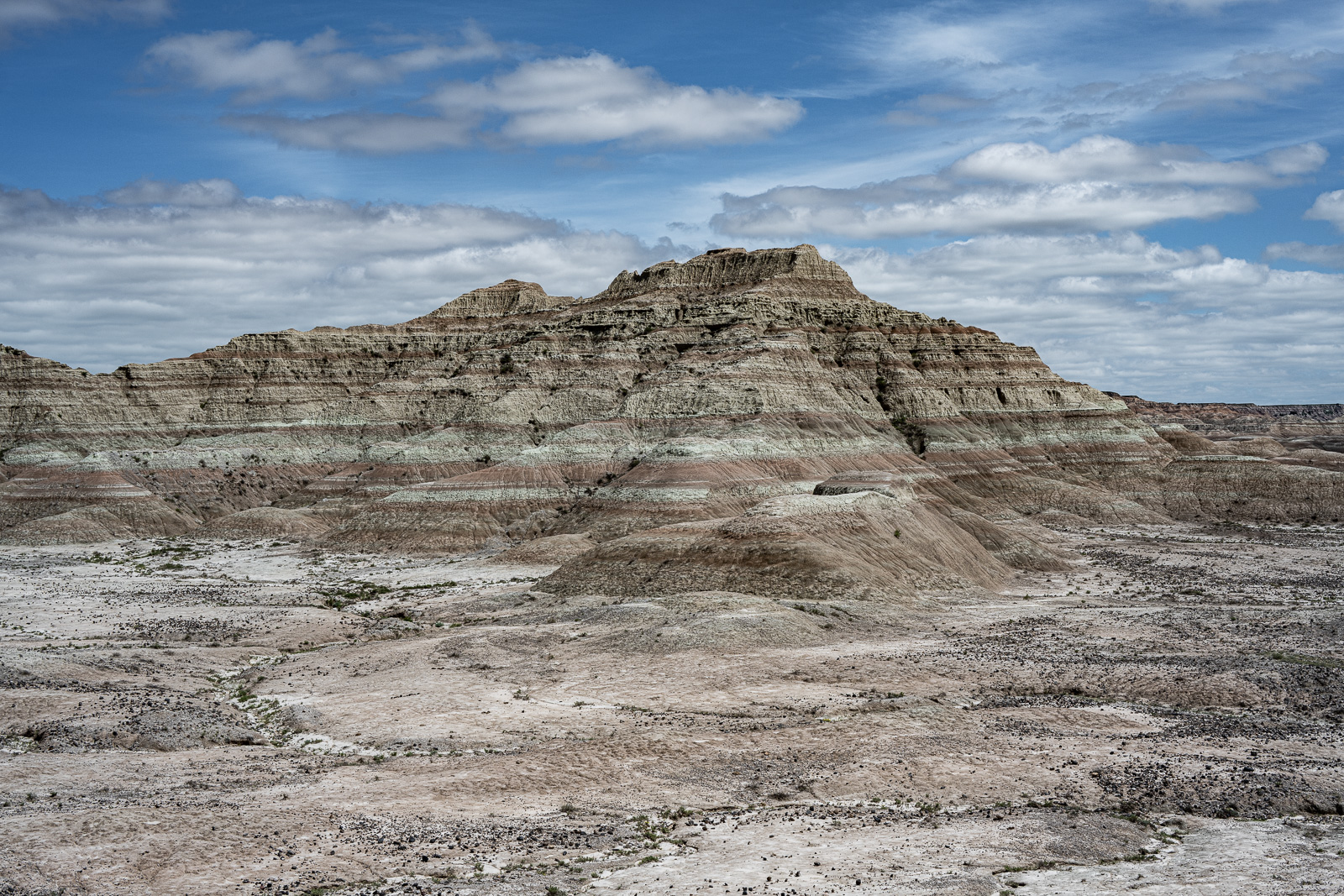
Here the borders occur at different scales and in different contexts, in the texture of the ground, the vast horizons,
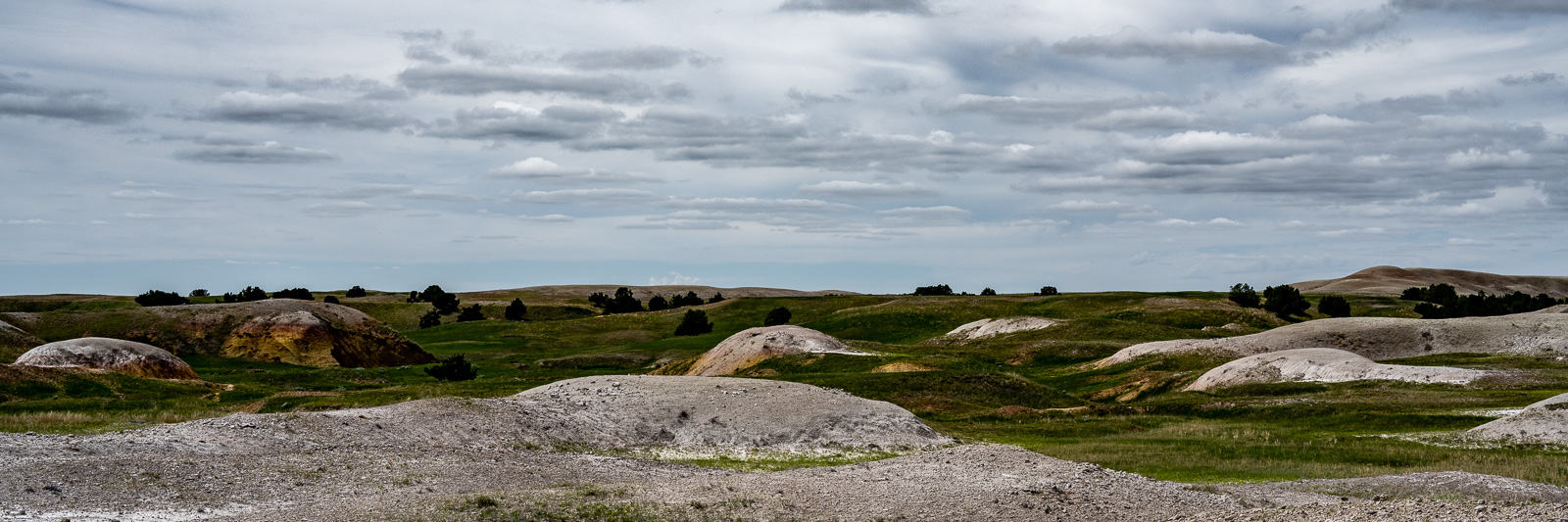
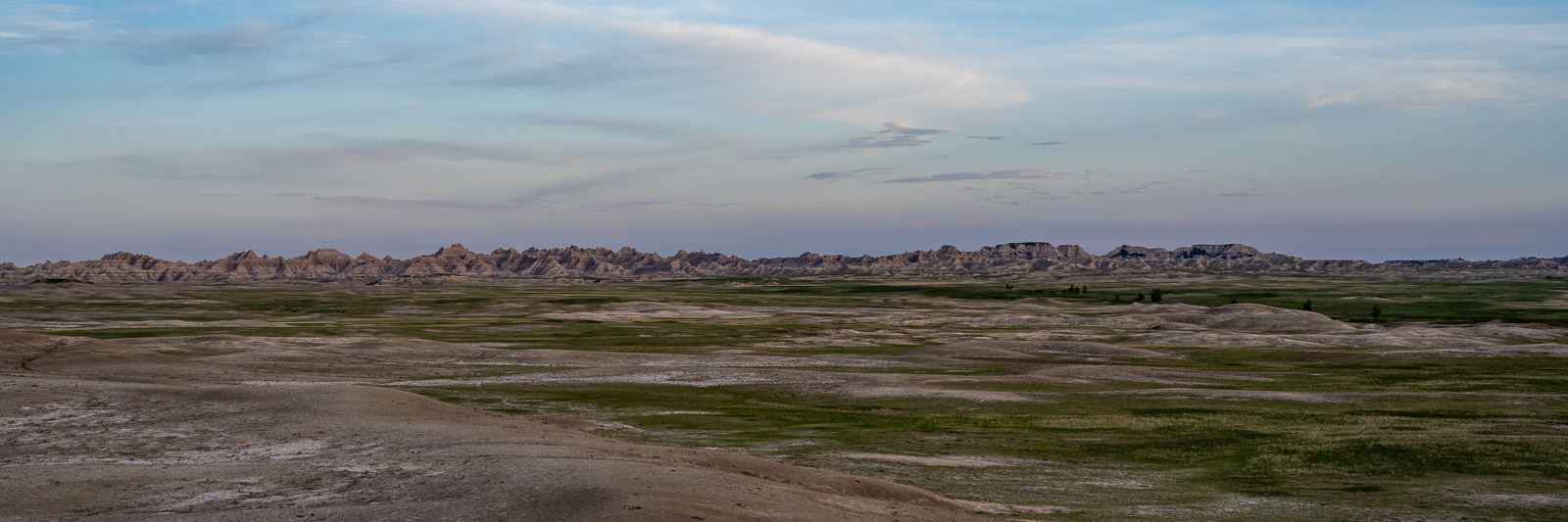
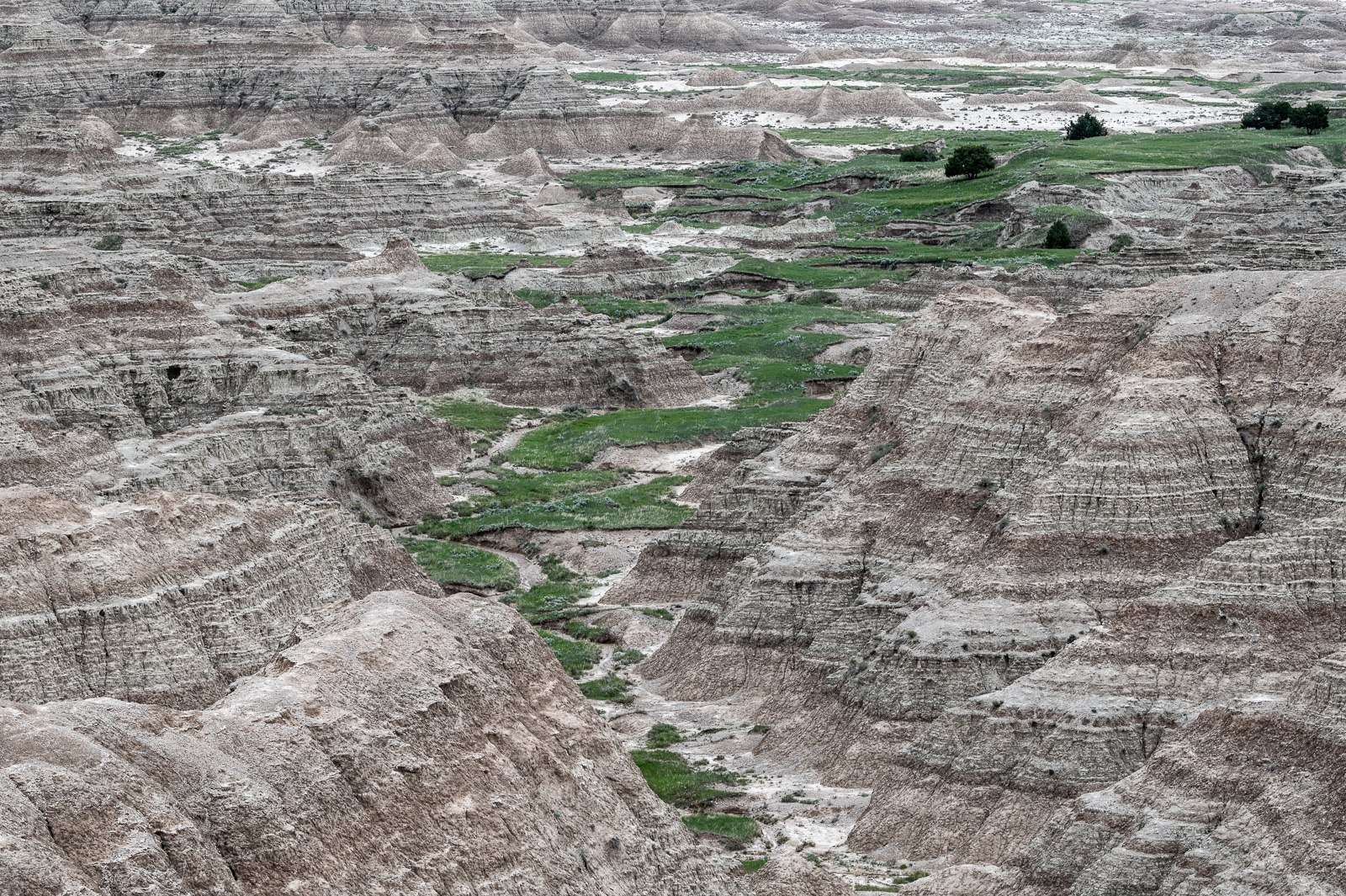
and in the transition between grassland and desert.
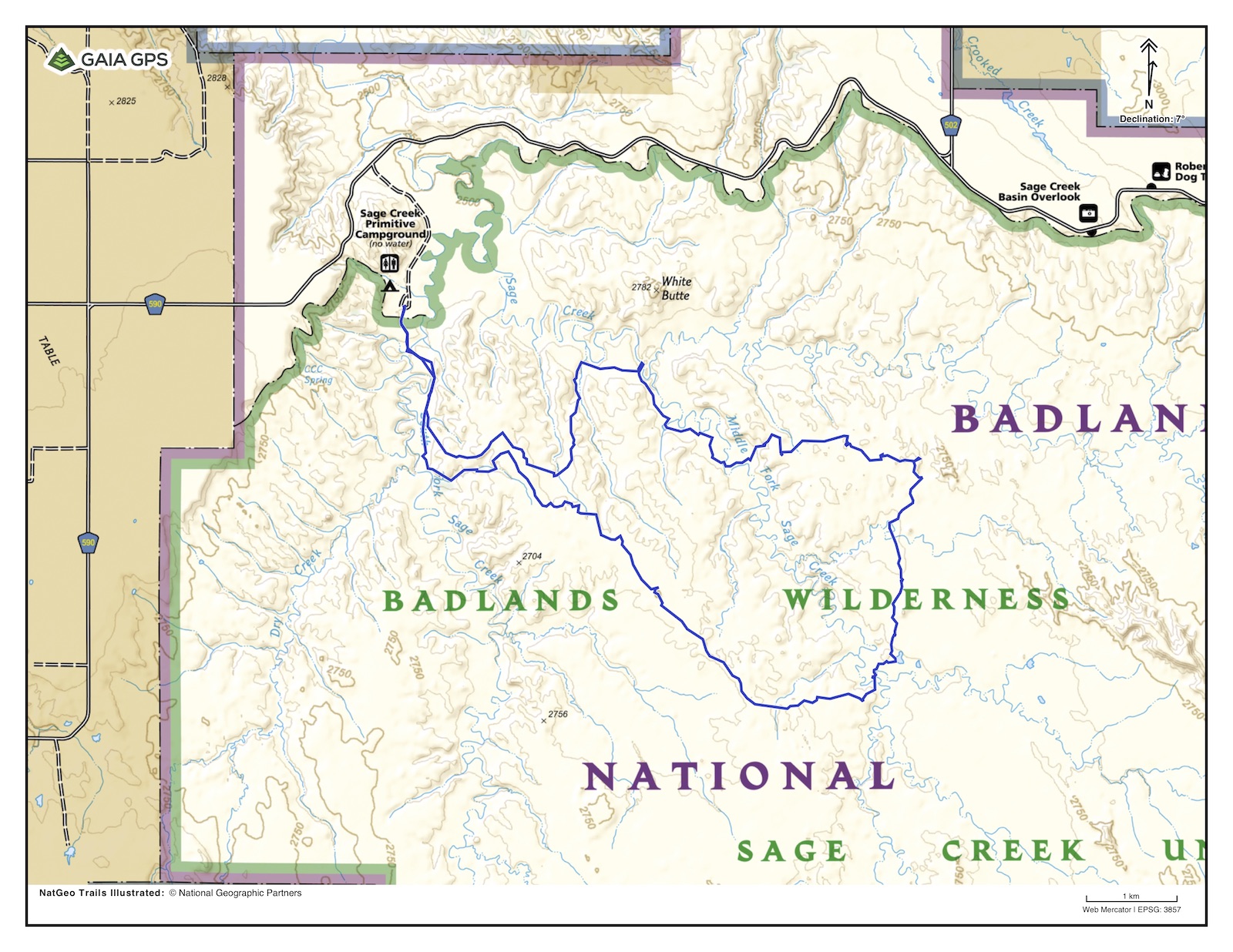
So off I went for an overnighter in the backcountry. My route is above, clockwise, about 12 miles, which one could do in a day, but maybe not with taking as many photos as I did … Here is a first layer.
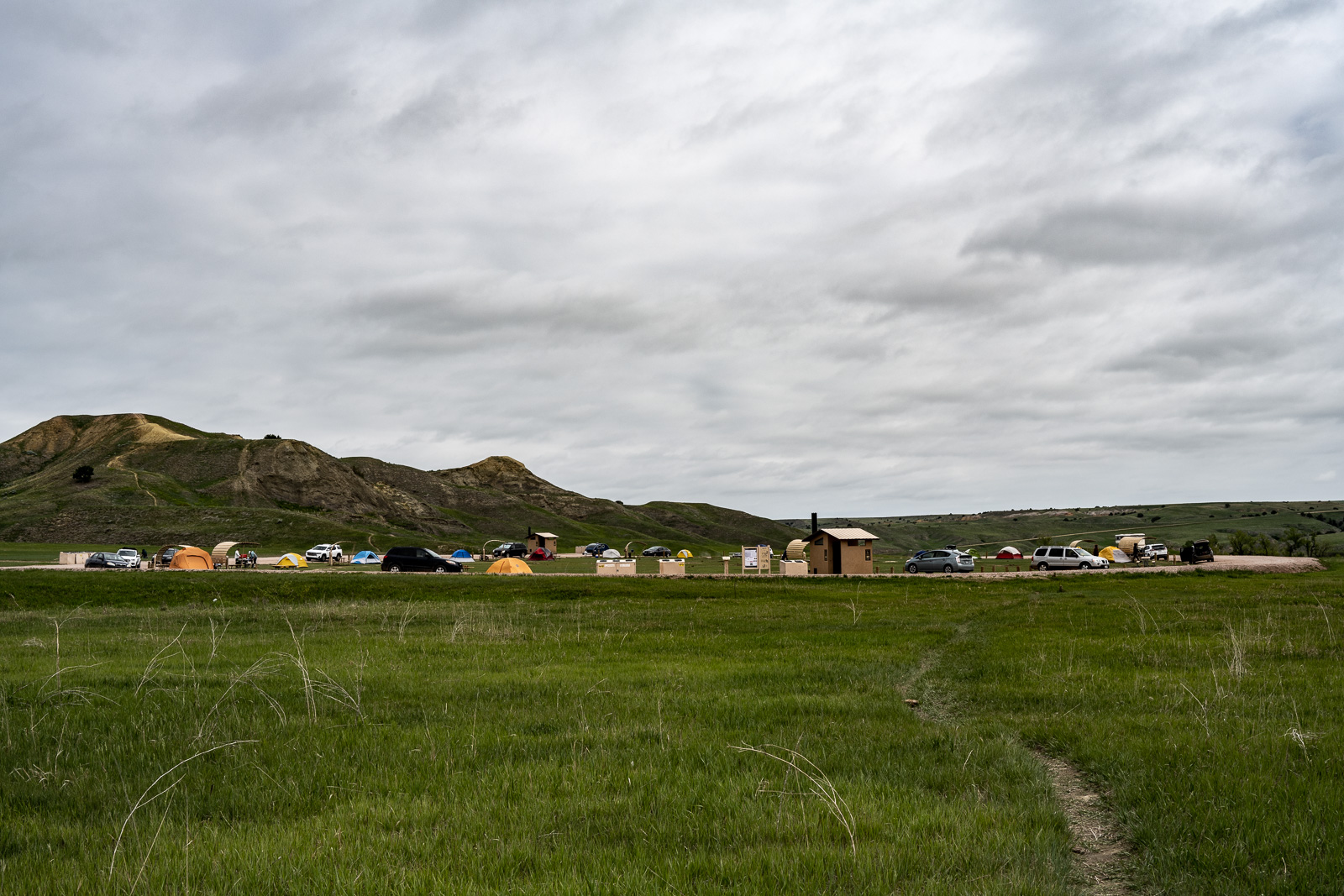
While there are stream crossings, there is no pumpable water, neither at the campground, nor in the wilderness. For me, that meant carrying 4 liters of water, barely enough for two days.
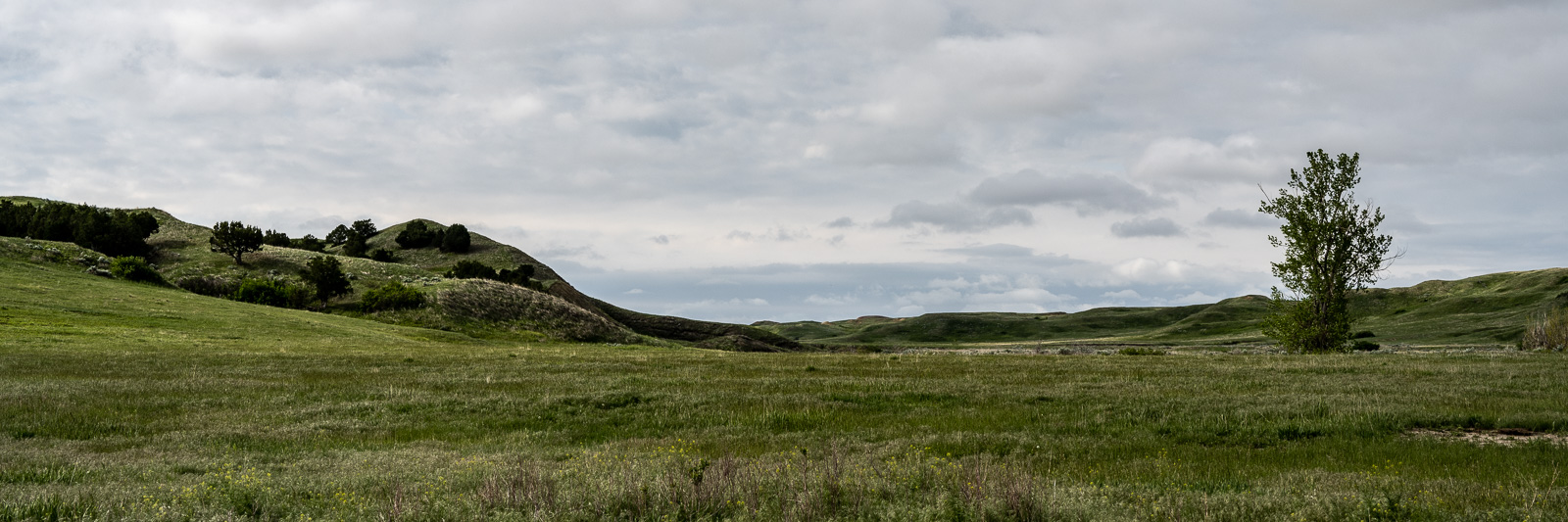
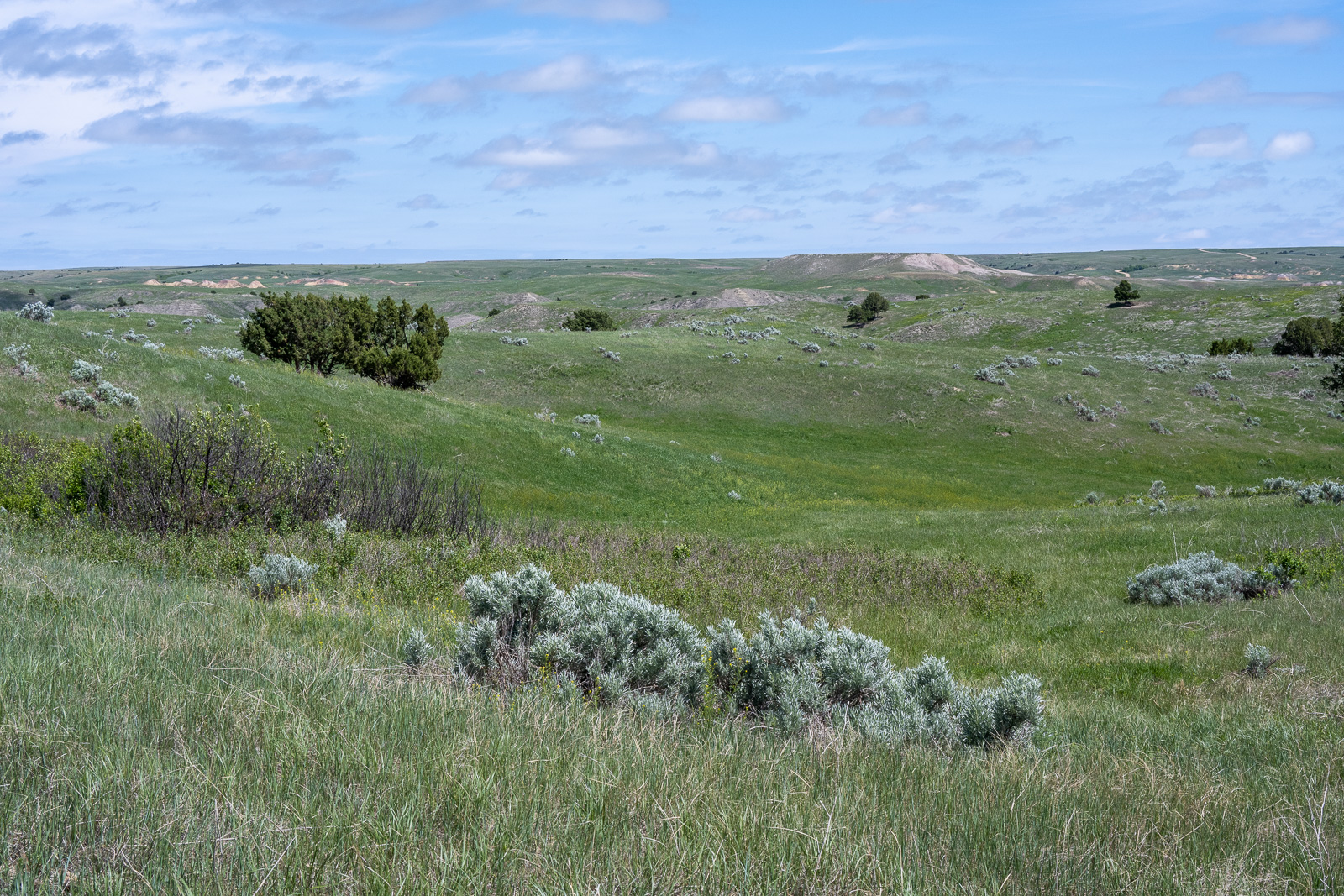
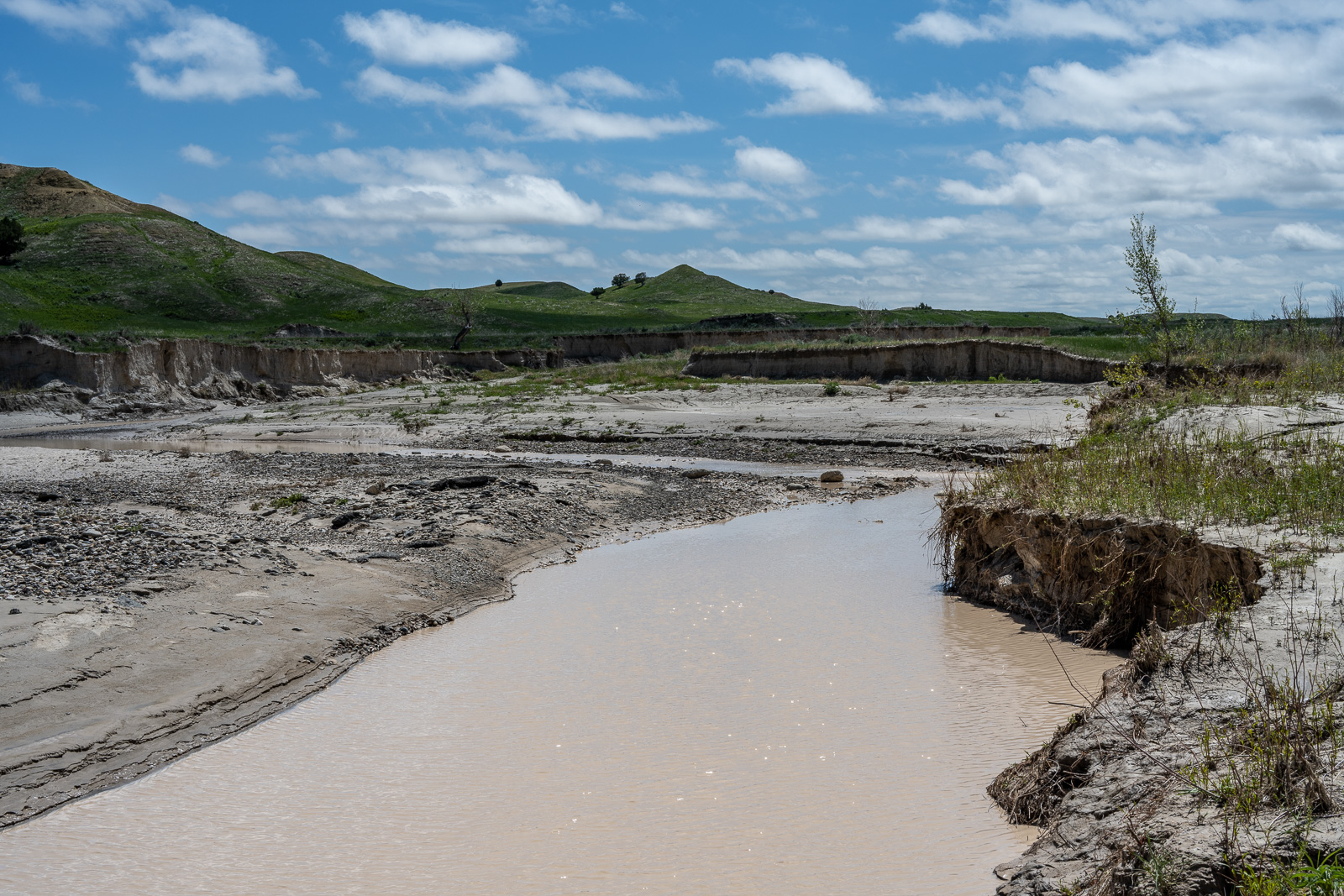
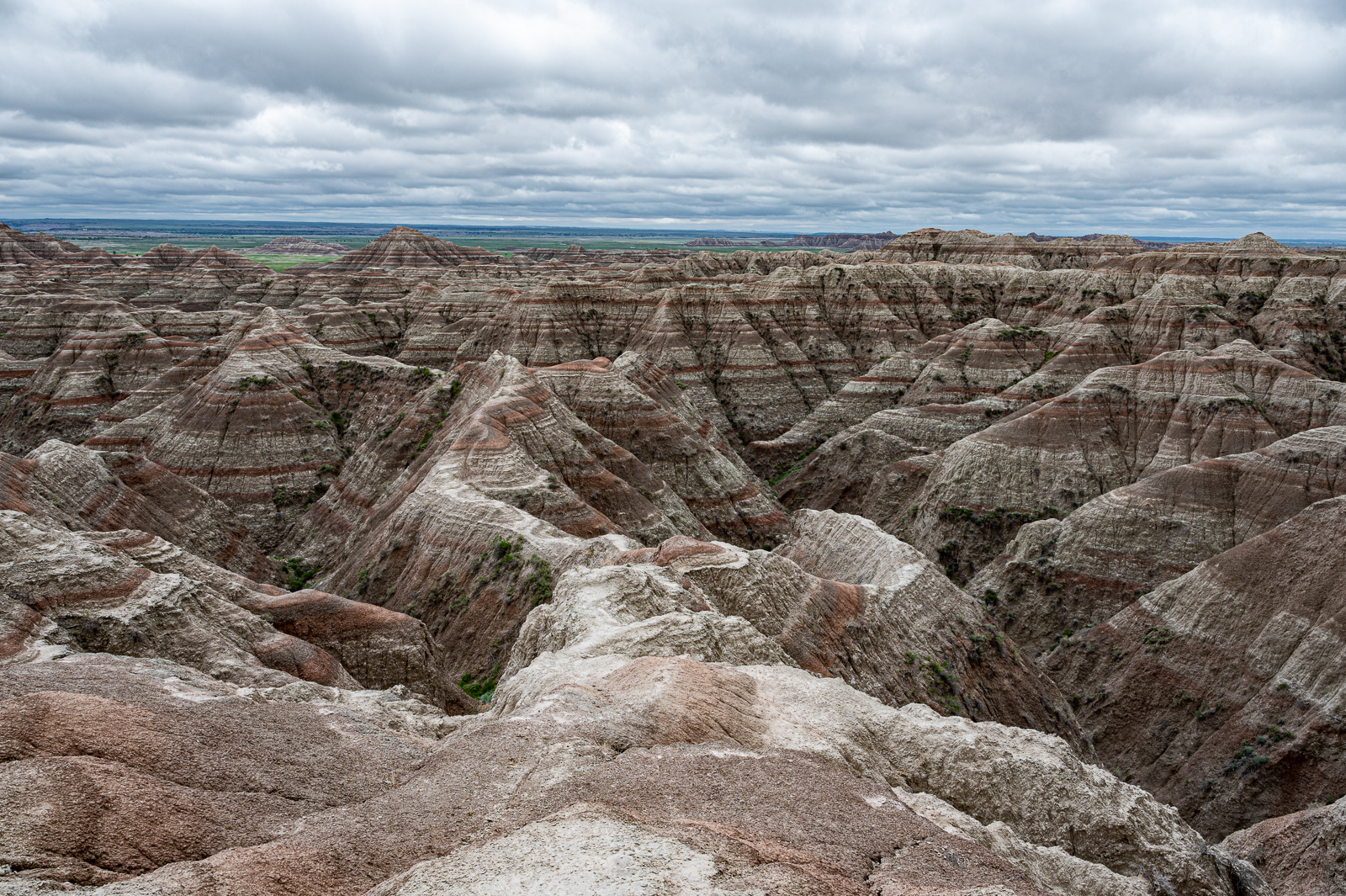
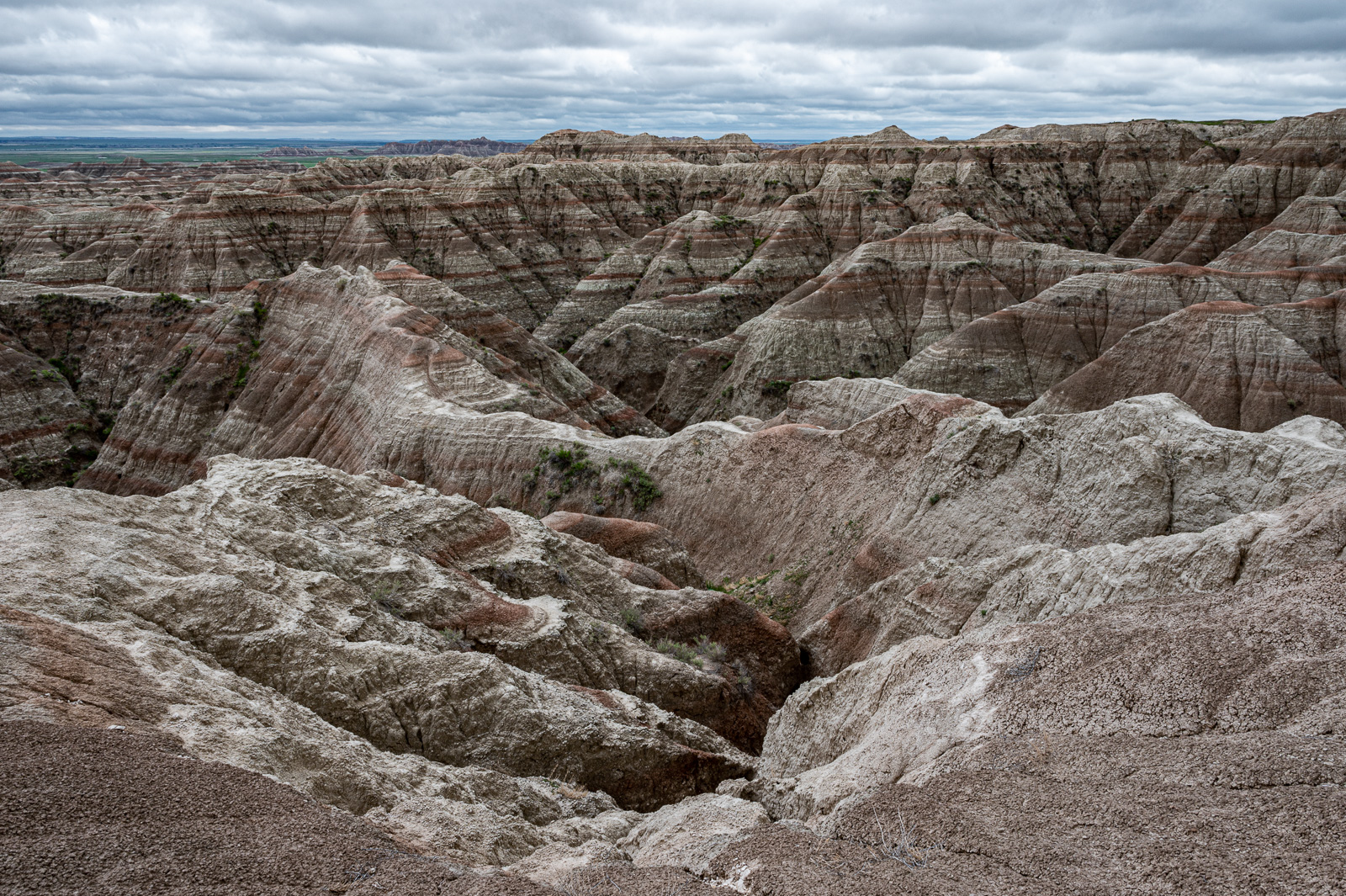
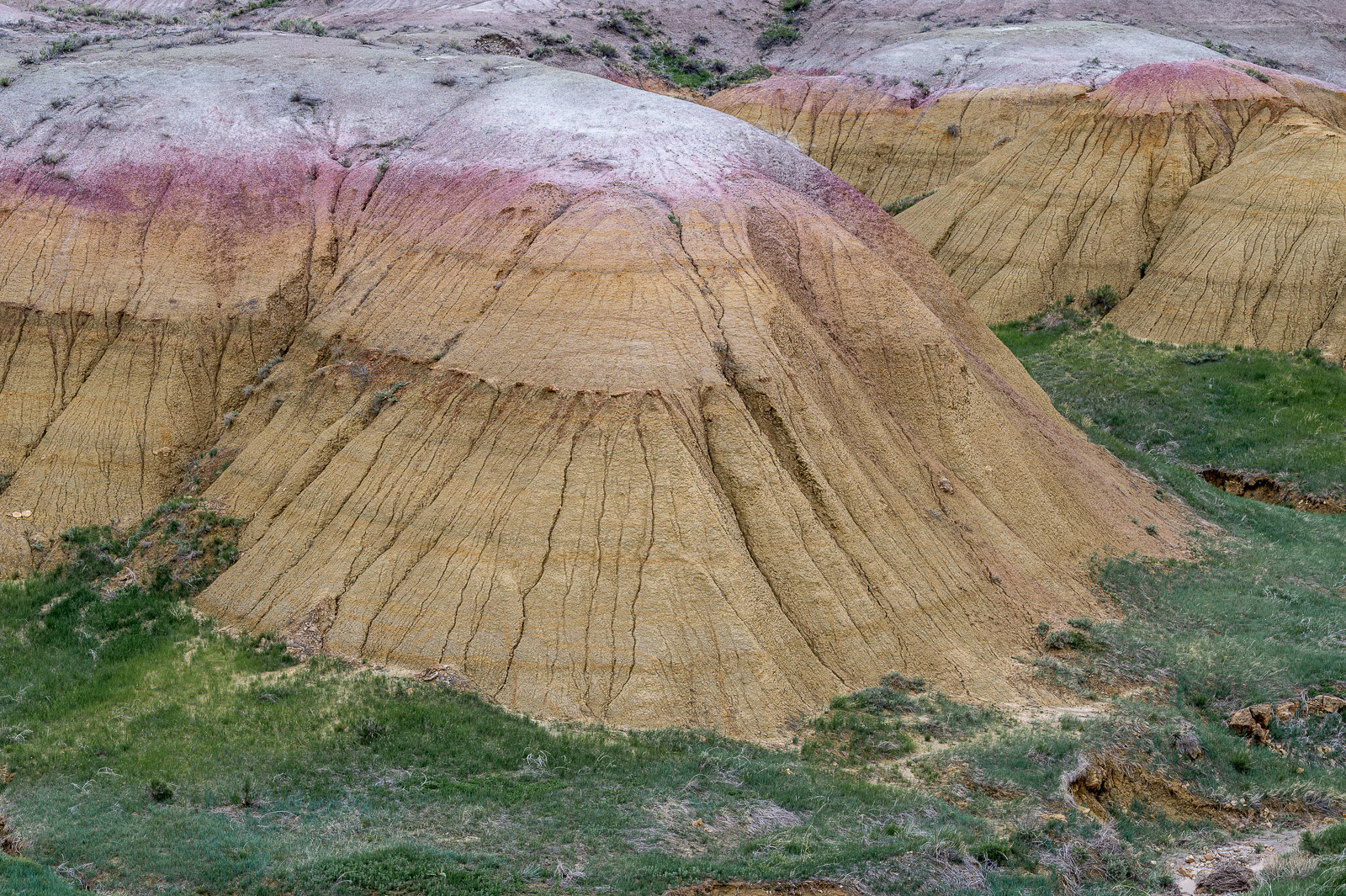
What struck me first was the lush greenness of this region. Where did all the arid rock formations go?
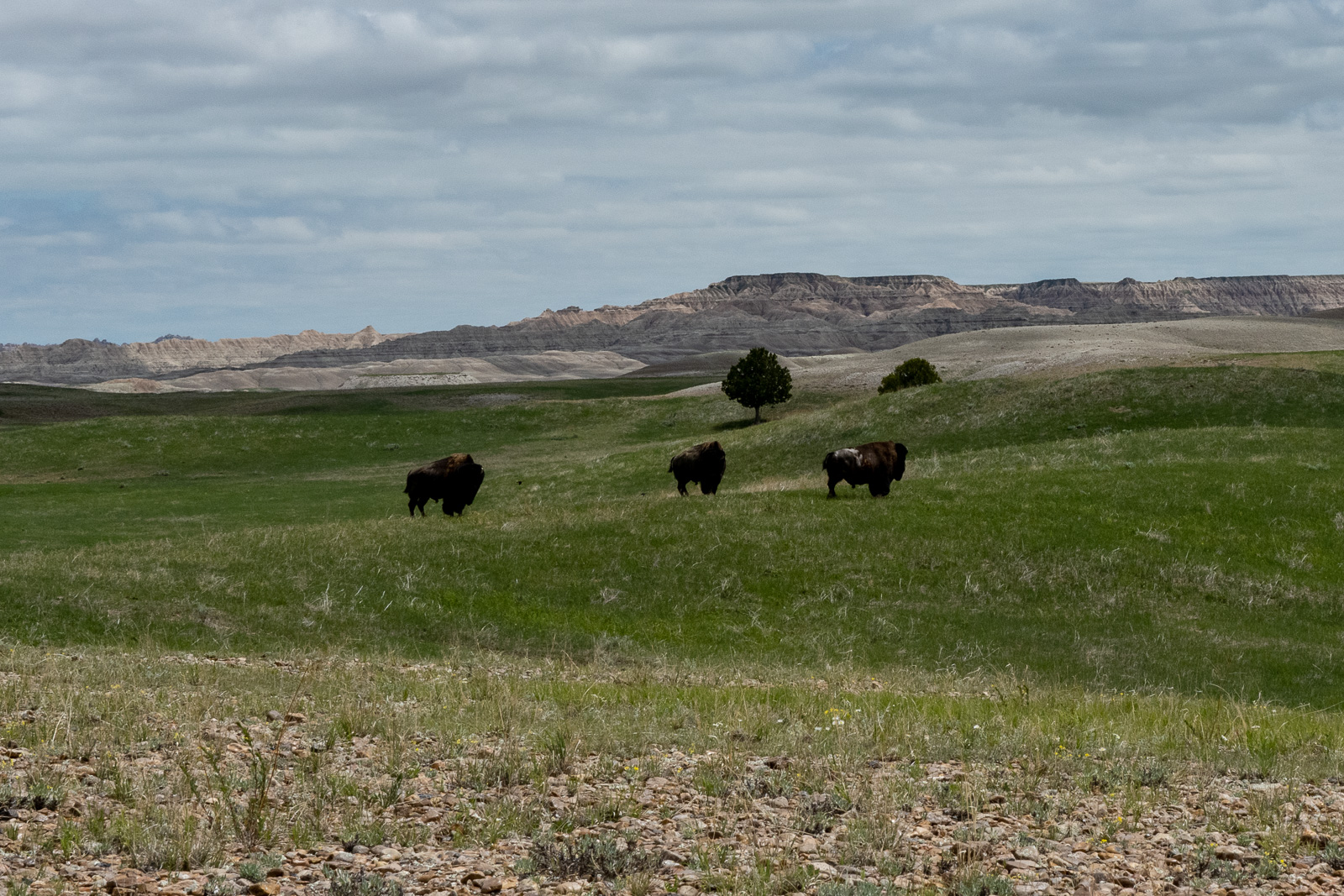
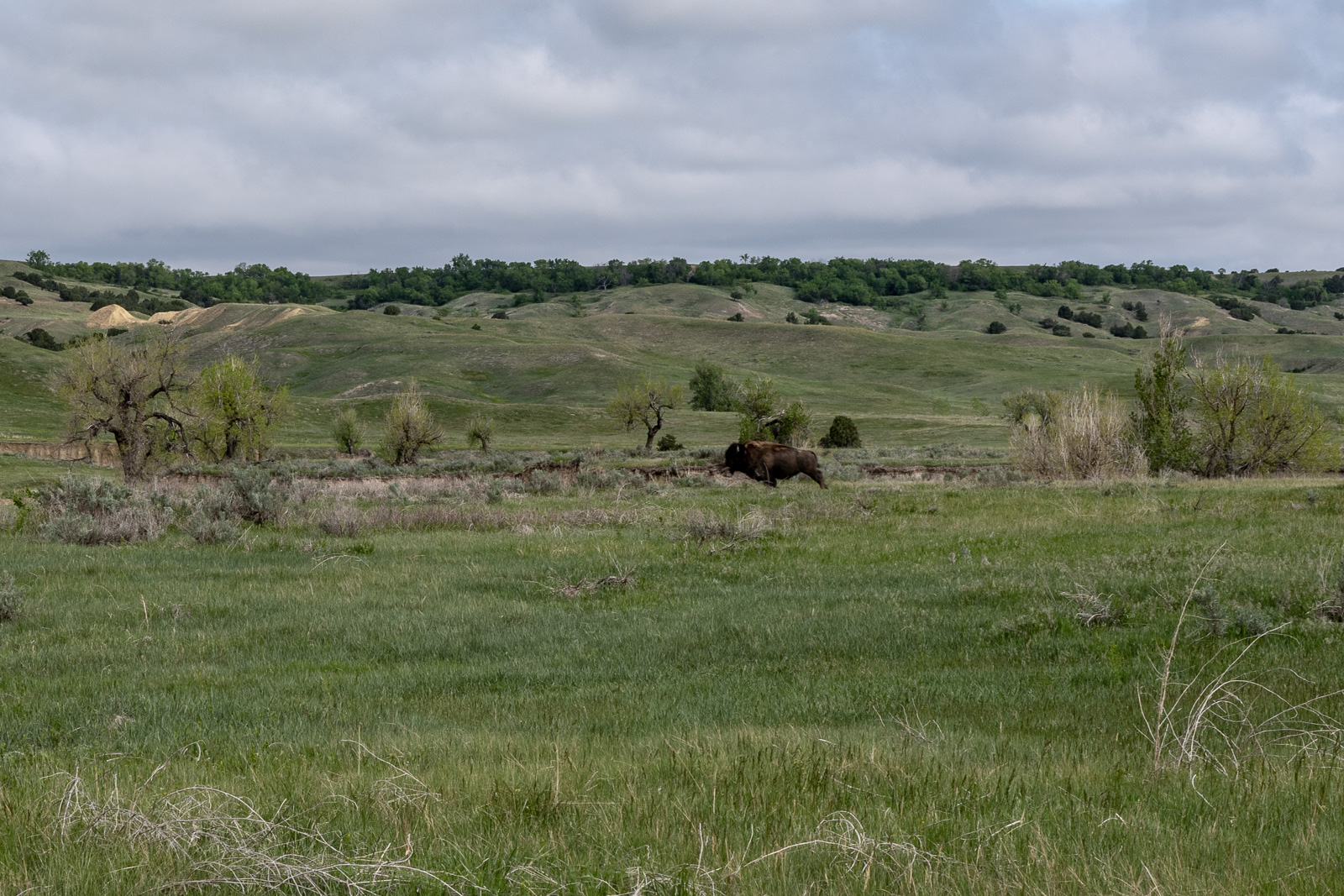
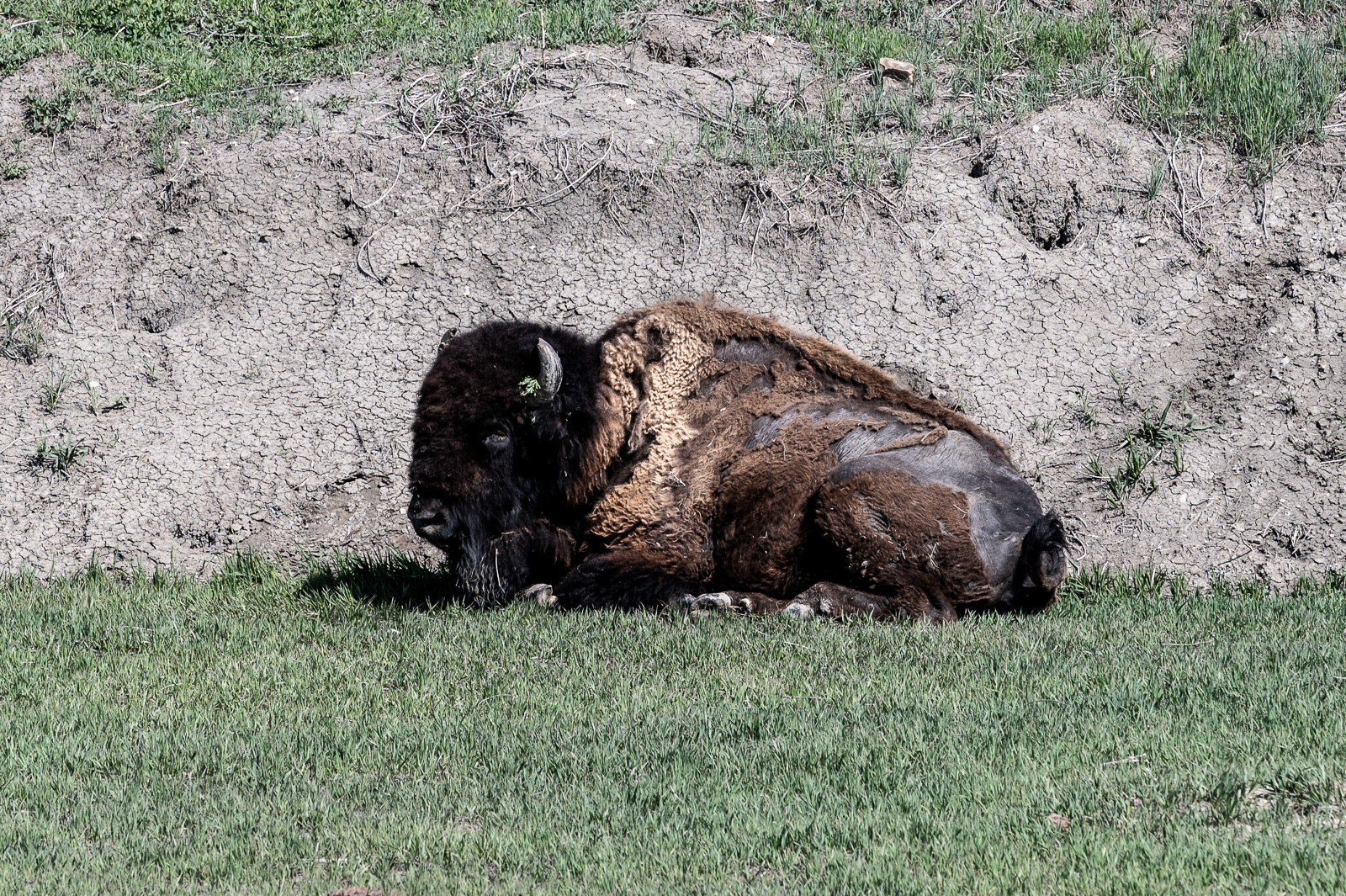
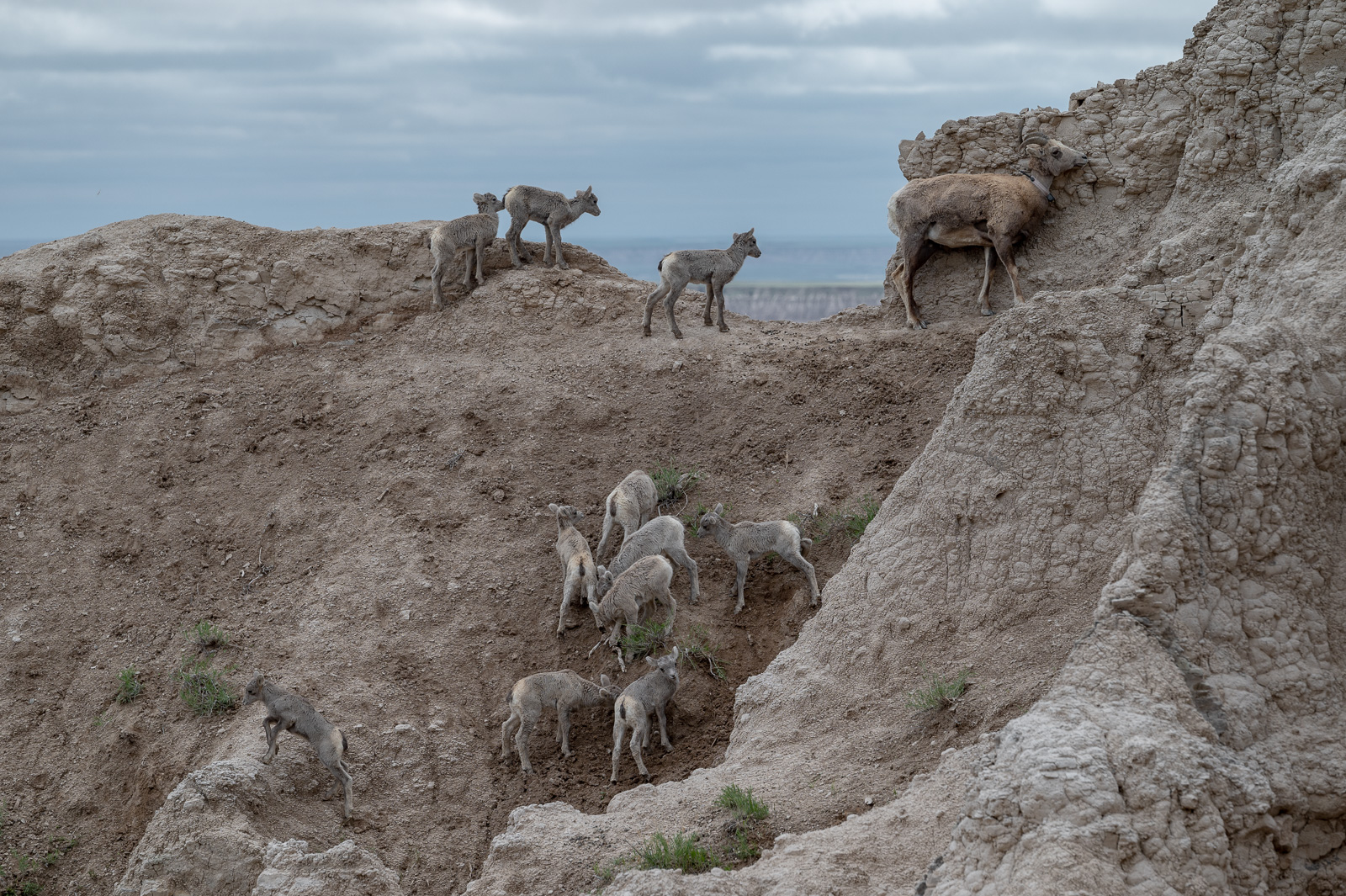
Then there are no trails. What sometimes looks like trails are bison tracks. More about them in a later post.
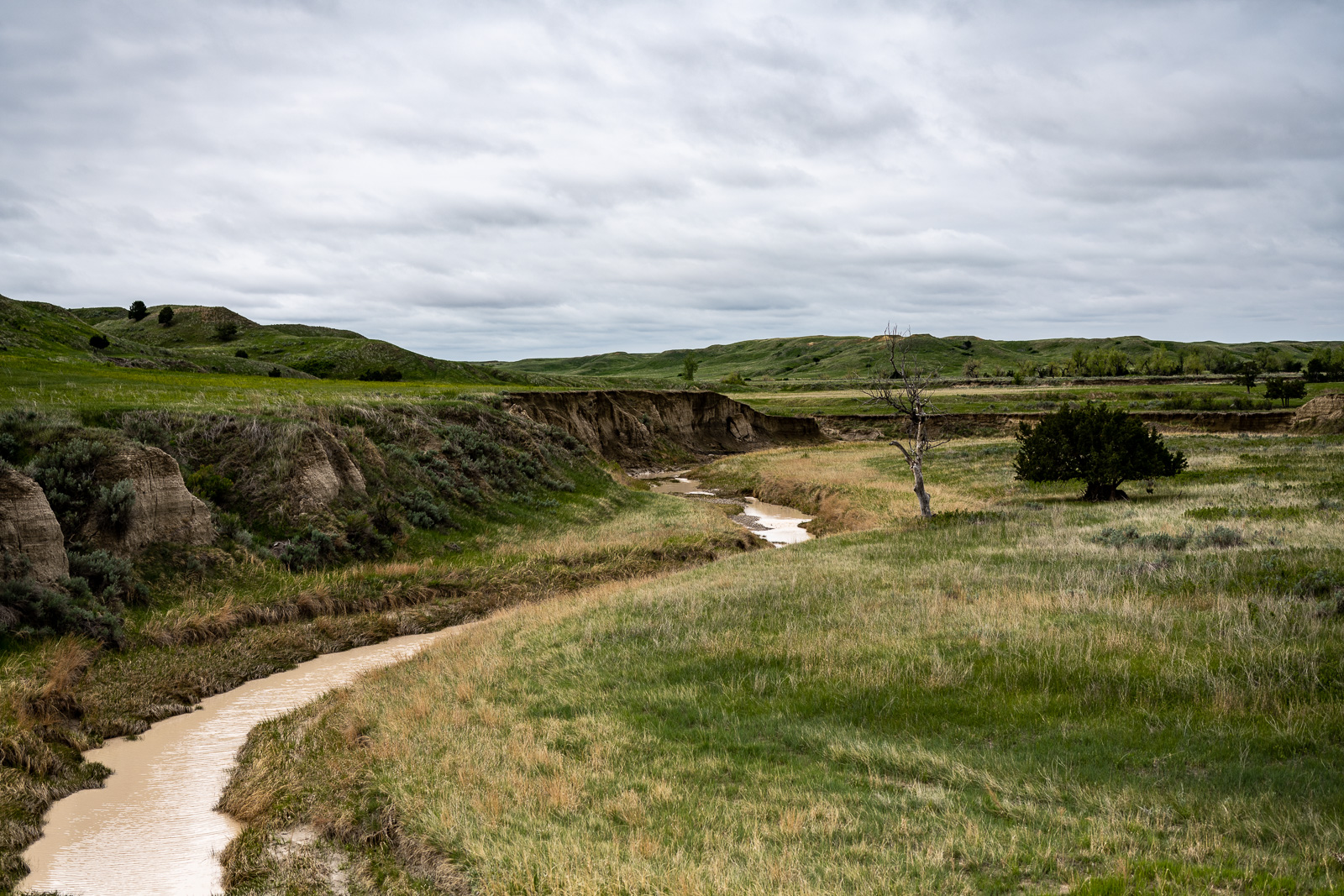
Now I have reached the north fork of Sage Creek, which I didn’t dare to cross. Sinking in ankle deep is ok, but not knee deep without guarantee that it ends there.
So instead I followed the middle fork for a while, crossed when it looked reasonable, and continued east. The landscape underwent some changes soon.
It’s is very tempting to keep going beyond exhaustion. Don’t. Use map, compass, GPS, and set goals. Easy to say.
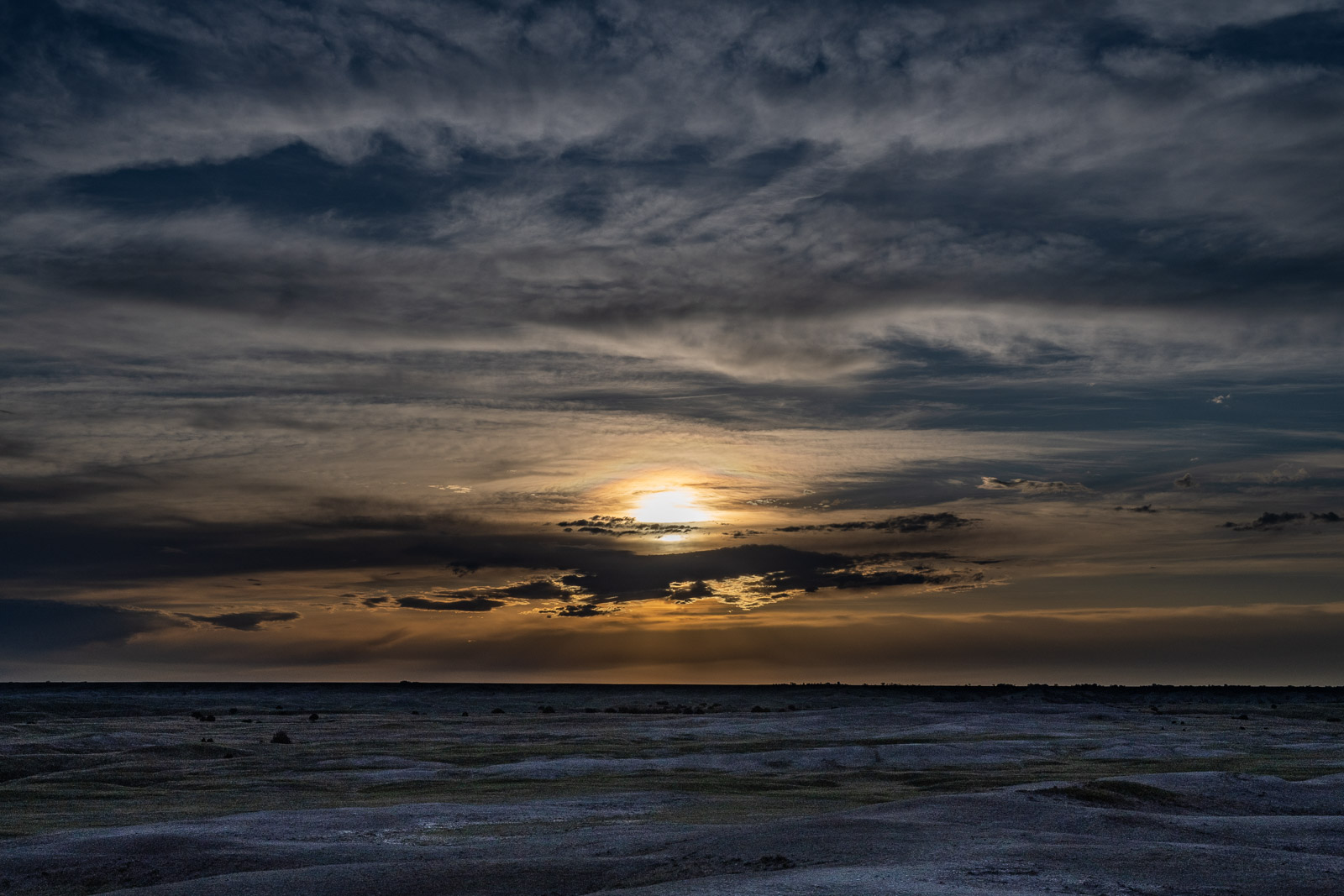
Pitching a tent early gives shelter in the scorching sun and allows to enjoy the sunset. Finding a good spot for a tent in this vast emptiness was surprisingly difficult. I wanted to avoid wind, bison tracks, mud, and tall grass.
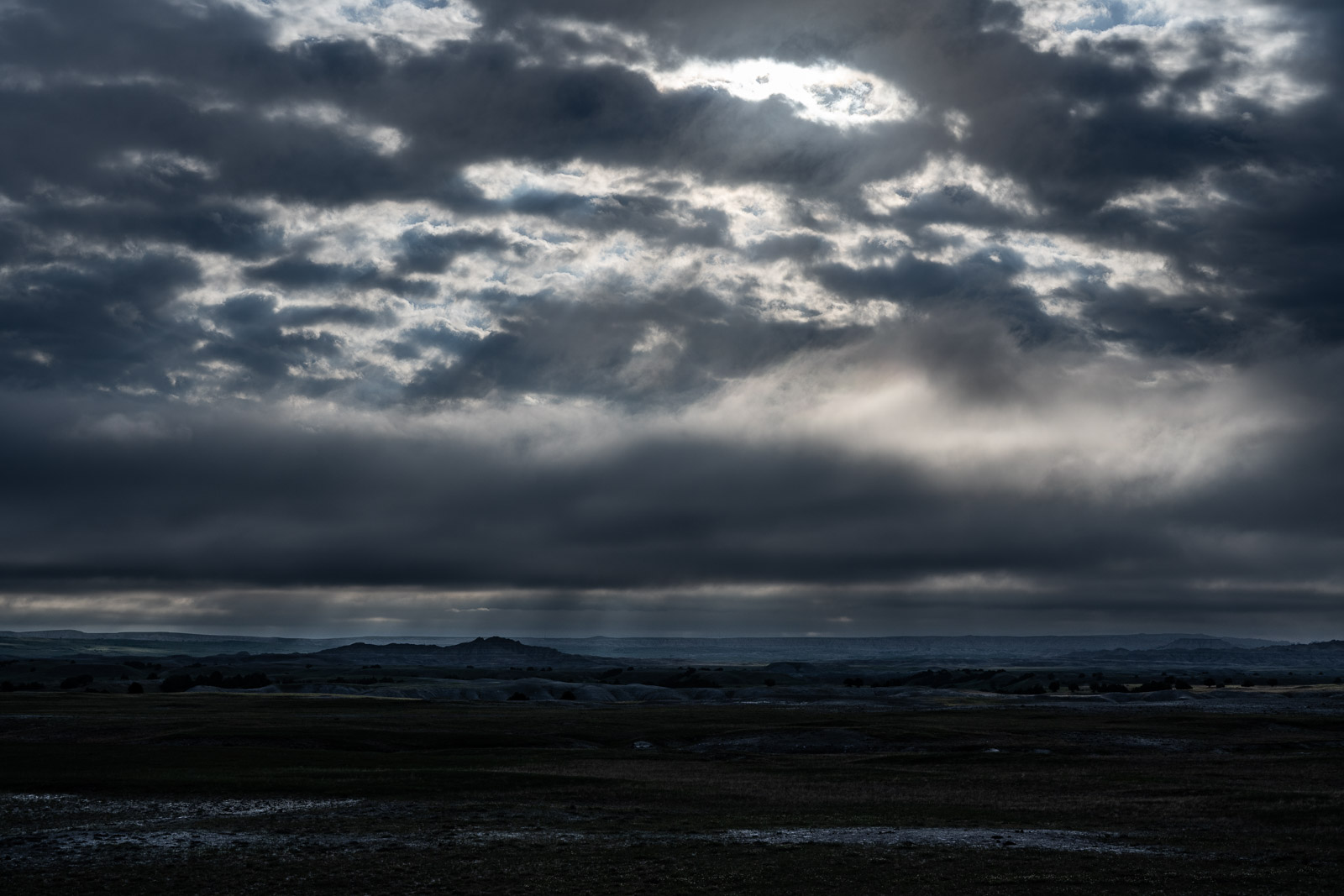
The next morning looked a bit gloomy, but I didn’t get any rain.
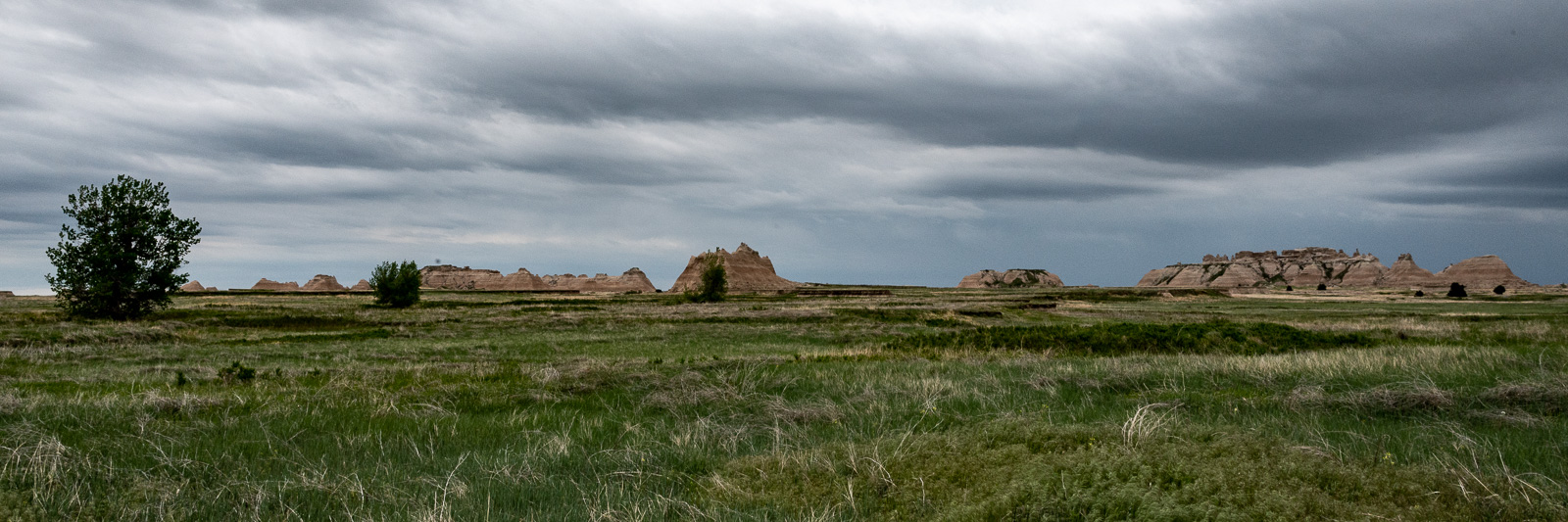
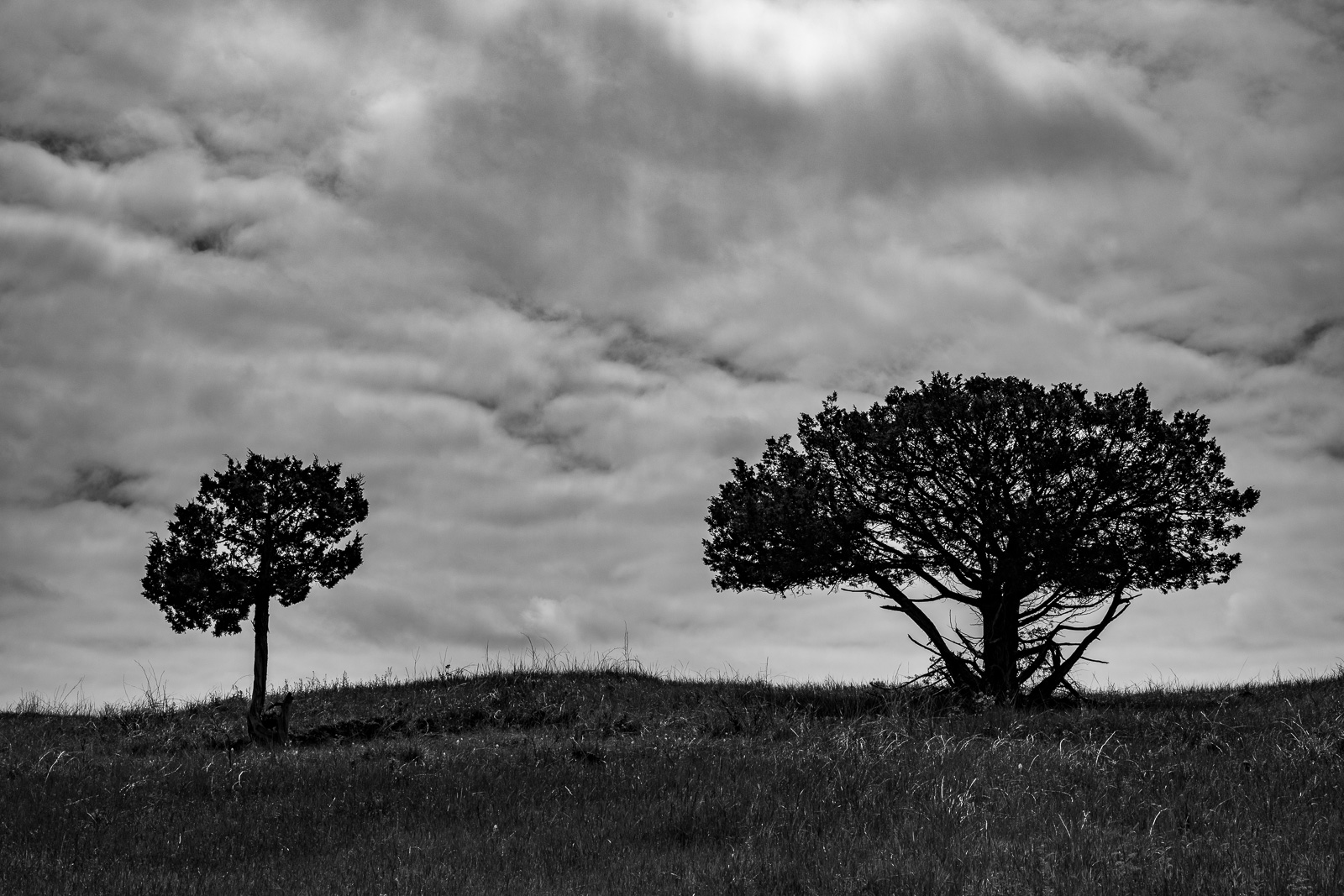
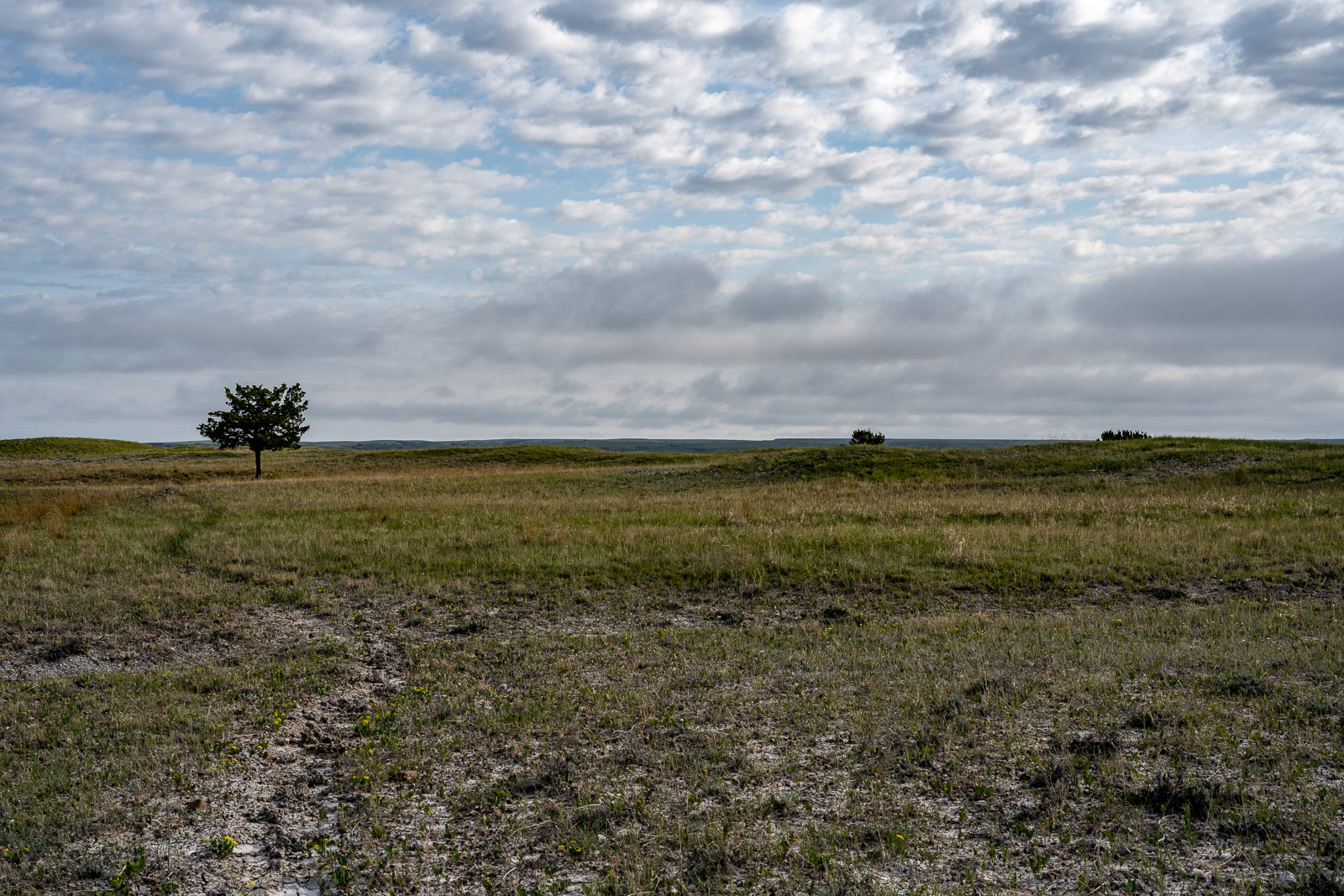
Time to return. Isolated trees are ideal landmarks, as the bisons obviously know, too. Tomorrow we’ll get the second layer.







 The Inner Frame