Category: Travel
The Canadian Rockies
The prospect of the US elections this fall makes me (like many of my US friends) think about Canada.

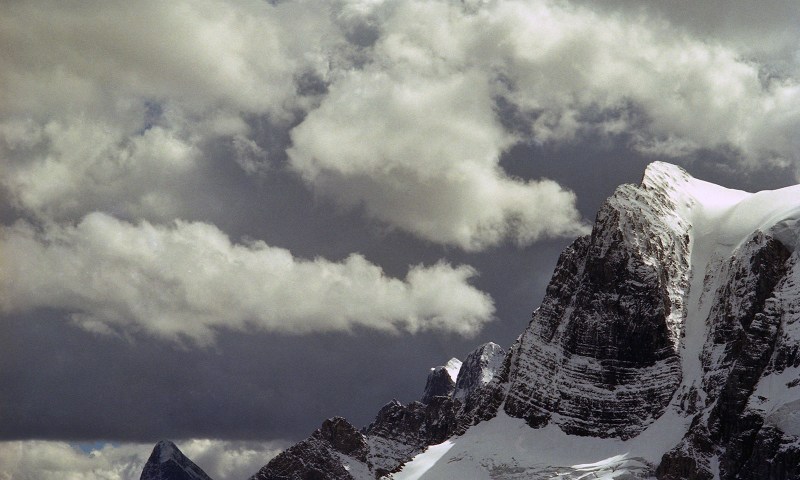
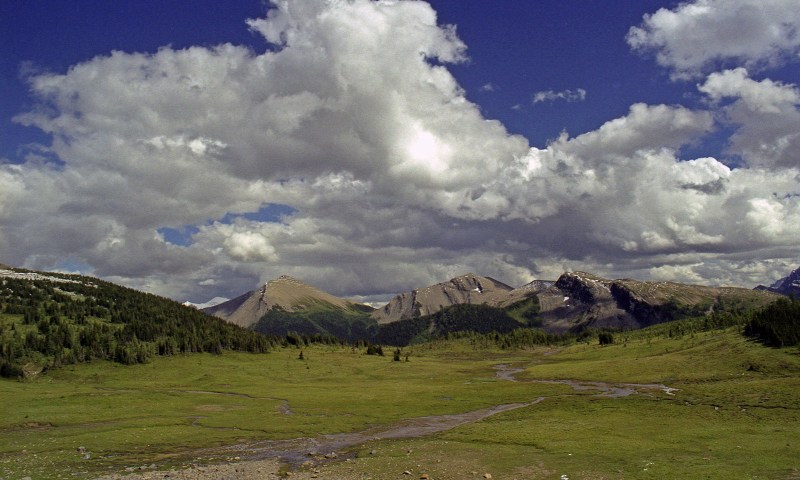
I went hiking there for two weeks with friends from California (sort of – one was from Britain, one from the US, and the third from Australia) in the summer of 1995. We hit two weeks of rain except for one day where it also hailed. Our planned week long backpacking trip needed major revisions. We tried to do overnighters on the trail, but it is not much fun to spend long nights in a tent while it rains all night (and morning).
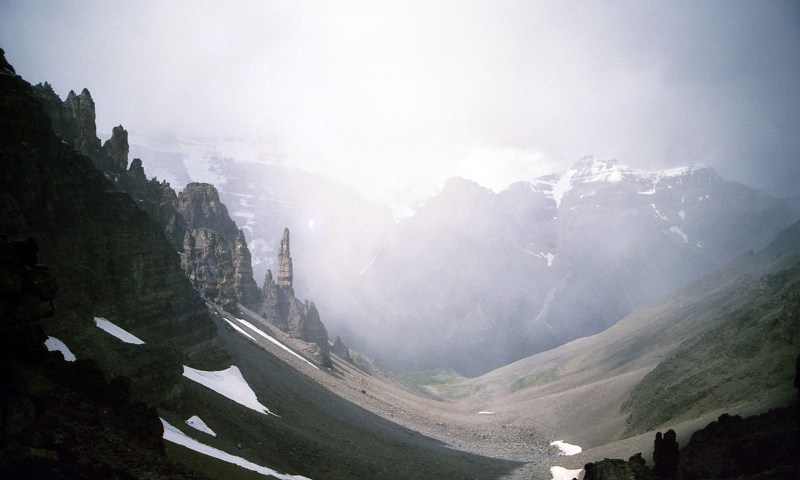
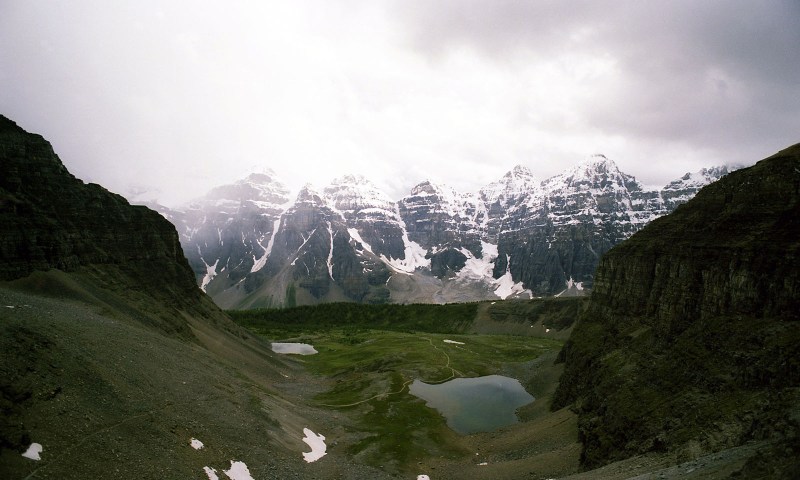
After that, we went for day hikes in the area during brief respites. Whenever the rain stopped, I got my camera out.
At night, we mostly car camped under a tarp and spent hours discussing the problem in what positions one can move a given rectangular tarp by tying it to four given trees with ropes.
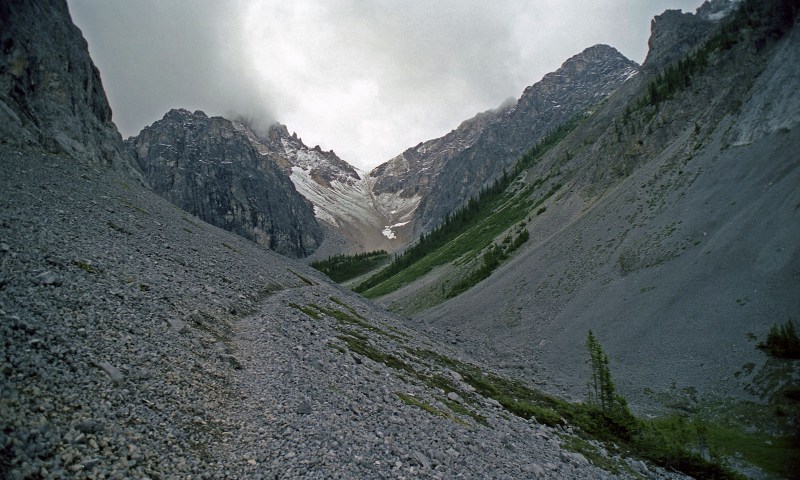
It turned out that most of our arguments were wrong. Neither the weather nor the endless mathematical disputes had any negative impact on our friendship.

A likely cause was the excellent Canadian wine.
So maybe there is hope, after all. Next summer?
Domino meets Towers of Hanoi
When a neighbor and colleague of mine told me he has a blog about abstract comics, that concept fascinated me to the extent that I had to make one myself. Here it is:
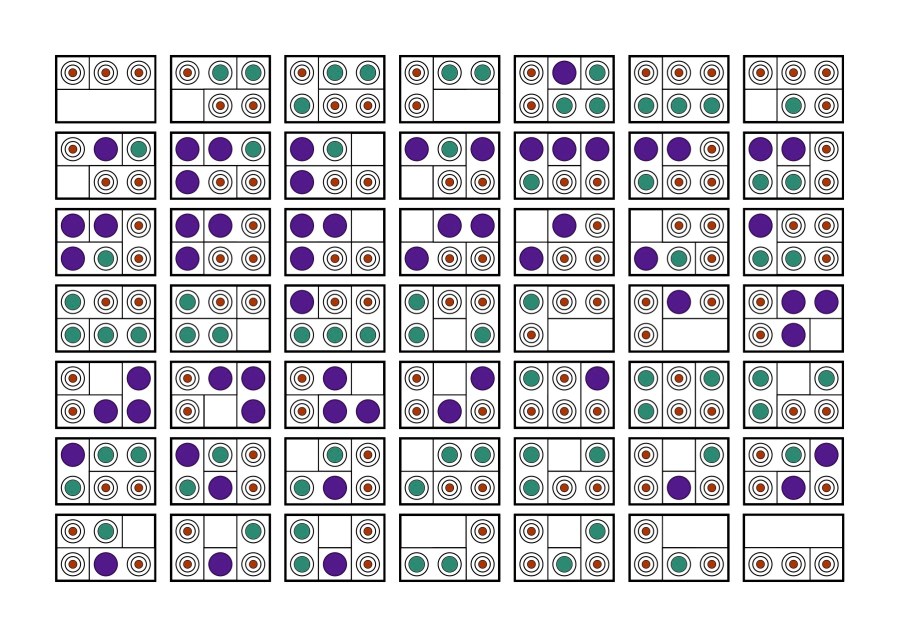
This, by the way, makes a nice poster. I called it Migration, and didn’t give a clue where it came from. There are very smart people who have figured it out by just looking at it, but you can’t compete, because you have already read the title of this post.
Let’s begin with the Towers of Hanoi. This puzzle is so famous that I will not explain it here, mainly because I was traumatized as a high school student when I was forced to solve the puzzle with four disks on TV, in the German TV series Die sechs Siebeng’scheiten. I just pray that no recording has survived.
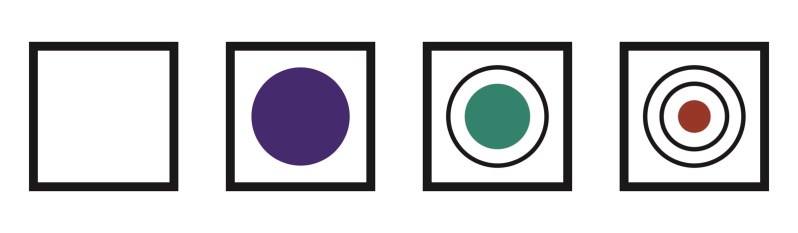
In any case, after a healthy dose of abstraction, let’s look at the Towers of Hanoi from above, and treat it as a card game.
The disks are replaced with cards that have a disk symbol on it. For the three disk game, there are three different cards, showing a small, medium, or large disk. To make everything visually more appealing, we color the disks, and to emphasize size, we show empty annuli around the smaller disks, as above. Then the solution of the three disk puzzle would look like this:
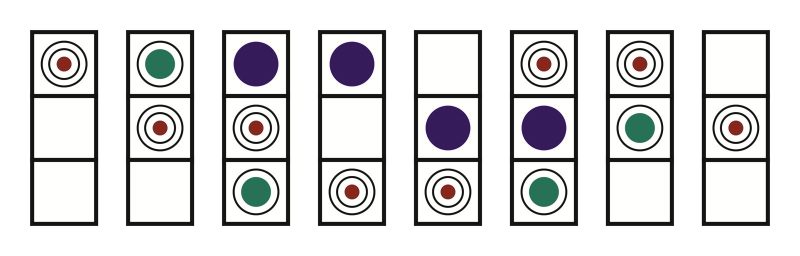
Because a card hides what is possibly underneath, a position requires context. This is one of the two ways the puzzle is mutating into a story. In the next step, we use domino shaped cards consisting of two squares instead of square cards. Here are the six hanoiomino cards:
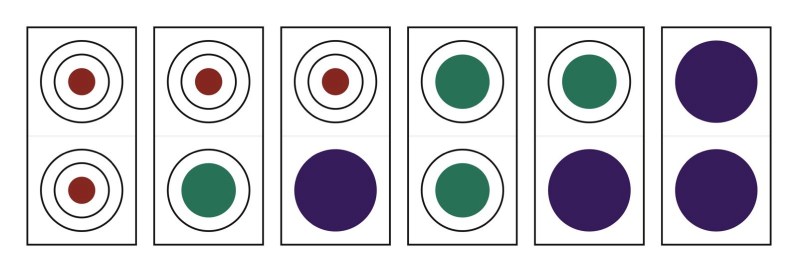
The puzzle is played on a 2 x 3 rectangle, with all six cards stacked like this in the top row:
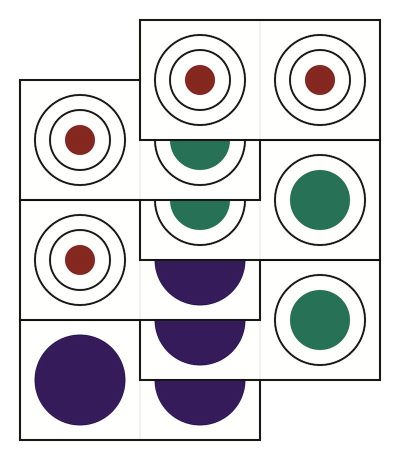
Note that we have modified the Hanoi-rule: In the original version, a card can only be placed on an empty field or on a card with a larger disk. A hanoiomino must be placed so that each of the squares either covers an empty square or a square with a disk of at larger or equal size. This allows for more choice, which causes the second mutation of puzzle into story.
The migration story now tells how to move all the hanoiominos to the bottom row, to the same position, albeit reversed. It is the shortest solution, and unique as such, unless you want to count the backwards migration as a second solution.
The Woman in the Dunes
While living in Bonn, I often went to the local art house cinema, the Brotfabrik (bread factory), not knowing what to expect. I was often rewarded with surprises, but few were as impressionable as watching The Woman in the Dunes by Hiroshi Teshigahara.

The next morning I went to a bookstore (yes, it’s that long ago) and bought Kobo Abe’s book with the same title. The book, while still worth reading, pales compared to the film, which is still sticking with me, in particular when I visit dunes

The pictures here are from Oregon in 1994, when I visited Christine and Tom.
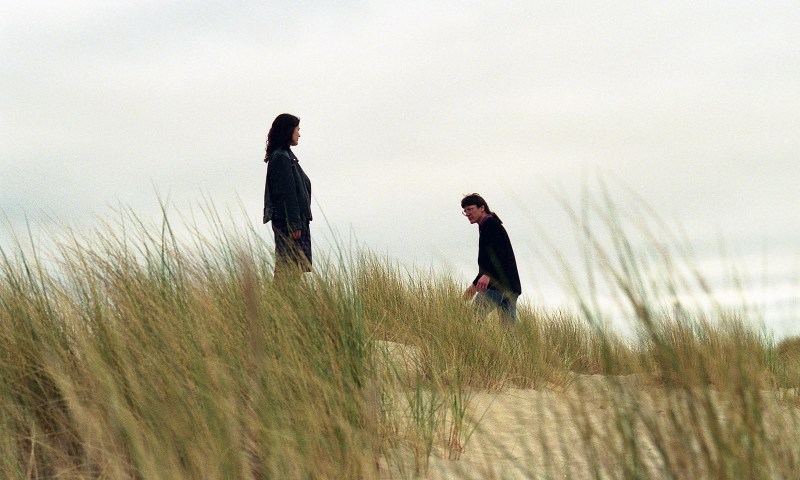
I paid them back their hospitality by taking these pictures.

And no, we did not try to reenact the film. But the intensity of the landscape almost too easily distills the personality of the visitor.
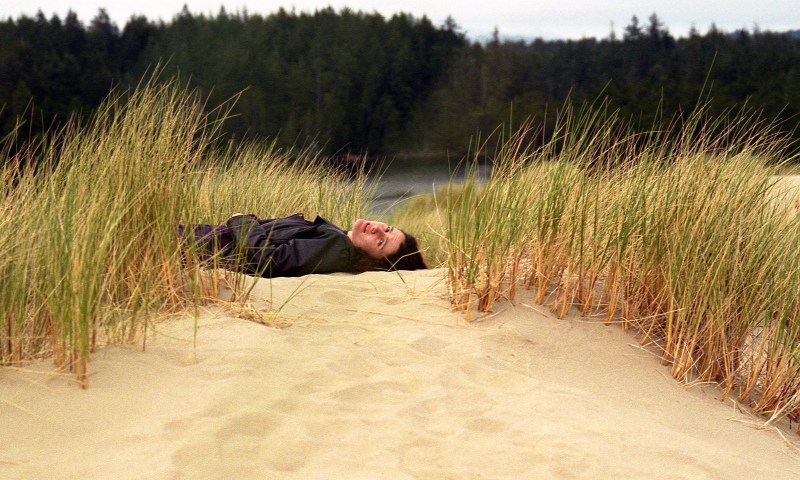
If I ever feel like emotional cleansing, I will walk the Oregon Dune Trail.

Maya Ruins (Yucatan II)
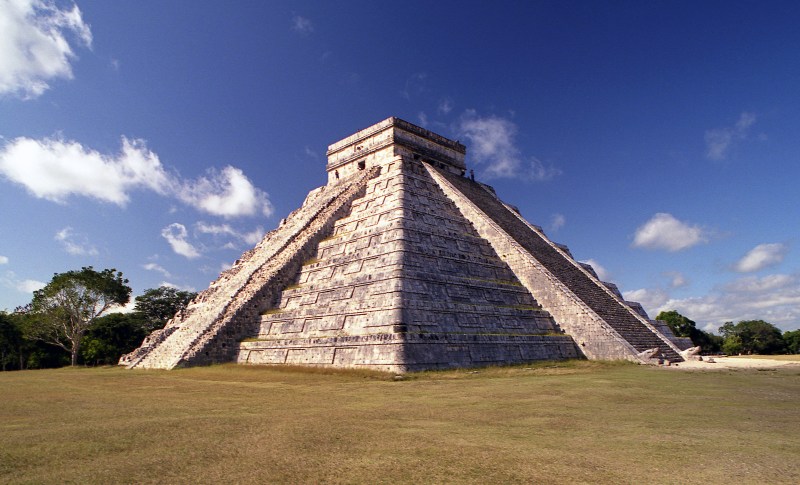
After a few days in Yucatan, I left most of my luggage in the hotel, and went on a three day road trip through Yucatan. The first stop was Chichenitza. If you ever travel there, arrive early.
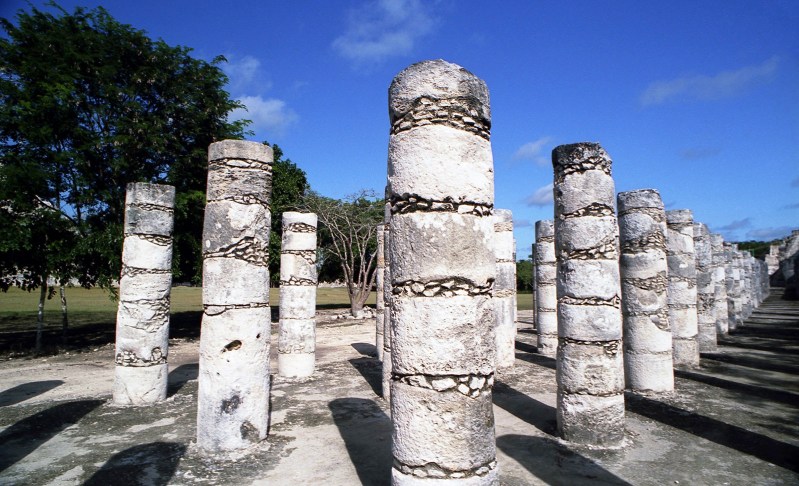
New Year’s day I spent a night in a hammock in Playa del Carmen, had an easy morning swim in the Caribbean, and a fantastic breakfast. The nearby ruins of Tulum show that the Mayas knew to live.
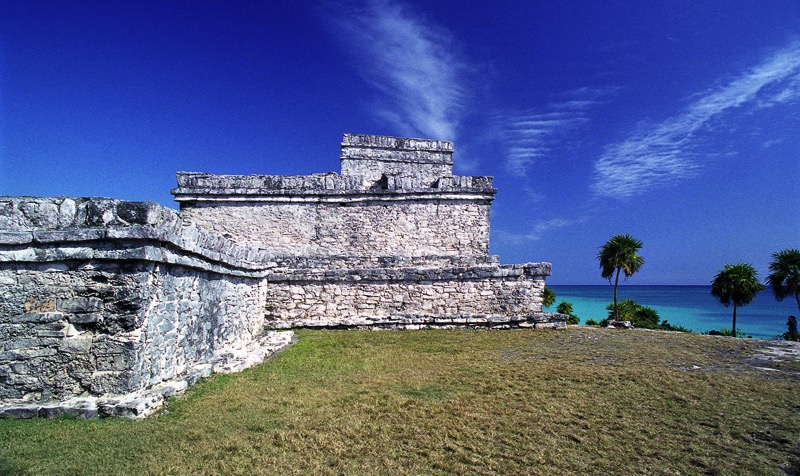
Then I hitchhiked to Coba to get an idea what the less visited Maya places look like: More jungle, fewer tourists, interesting animal noises, large spiders. Here at last I had the feeling that around the corner there could be some left over piece of the real Maya civilization.
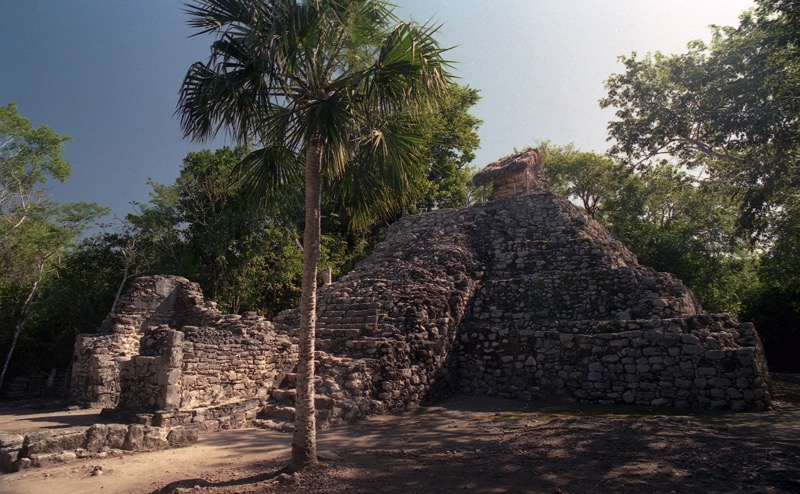
The next morning I took the bus back to Merida, for recovery and more sightseeing.
Ultental (South Tyrol II)
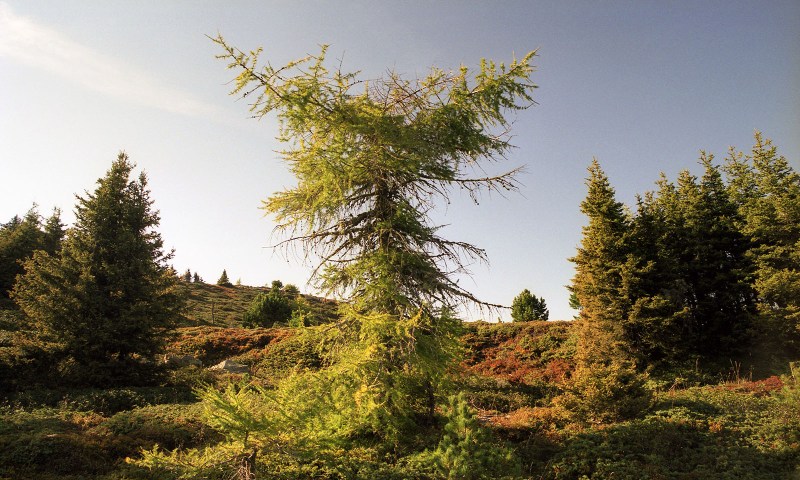
Late Summer 1997 I went with my girl friend for a second time to South Tyrol, this time visiting the Ultental near Meran. The valley itself is unremarkable. Its elevation is at about 1500 meters and the steep mountains reach easily 3000 meters and more.
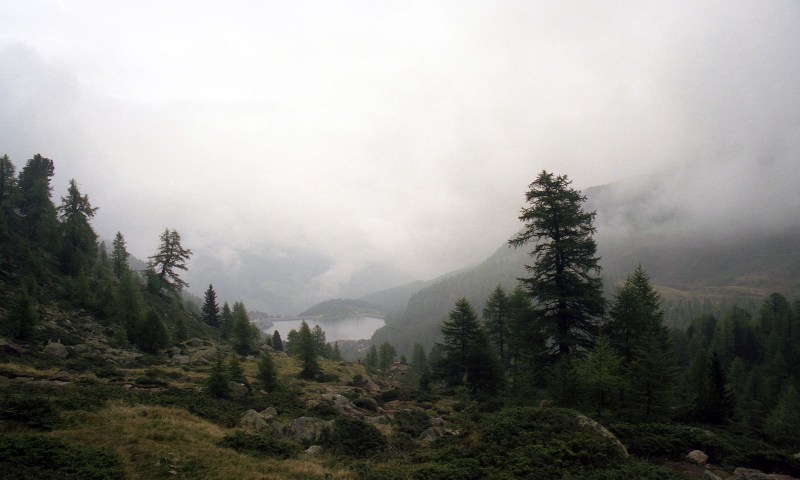
However, at a certain elevation, everything opens up,
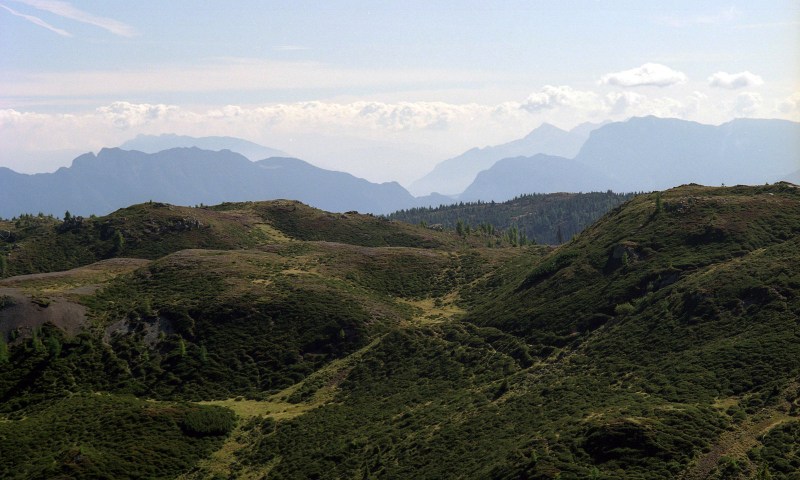
and one has the opportunity for endless ridge walks which are so typical for the mountains of Southern Tyrol.
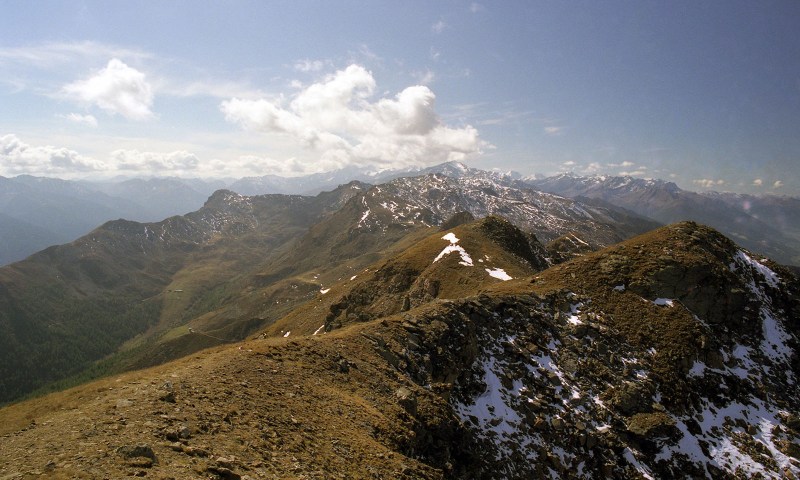
At even higher elevation and after fresh snow fall the landscape becomes truly alpine.
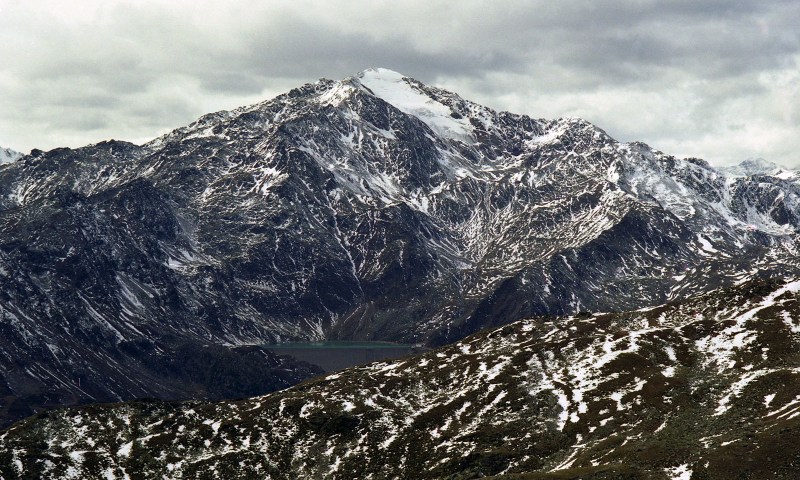
At this occasion (spending the night at a mountain hut), we learned something valuable: Whenever you sleep in a room you are not familiar with, look into all the closets. This is not to foster one’s superstitions, but to find the warm blankets that could have prevented us from shivering through a very cold night.
Near Merida (Yucatan I)
When I told one of my Gringo friends that I would spend the two weeks of winter break 1993 in Mexico, traveling through Yucatan by myself and using public transport, he had only one word: Nuts. So I took precautions by learning a little Spanish, which made me much easier to identify as de Alemannia than when I had spoken inglés.
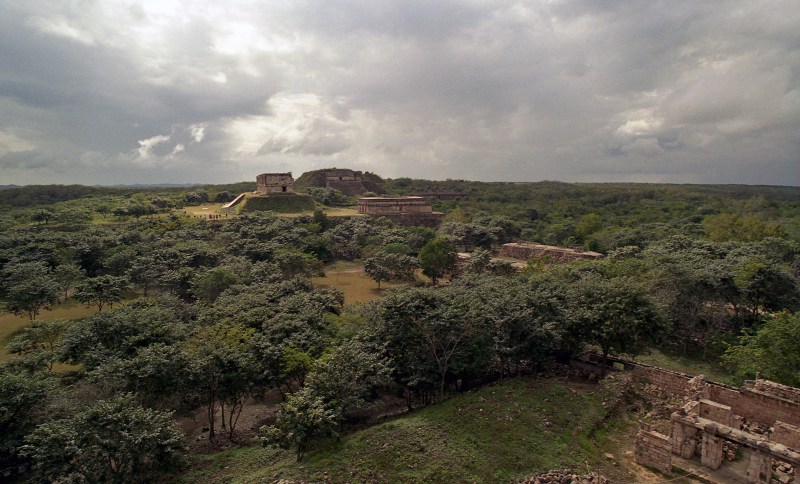
In any case, I never felt threatened. I flew into Mexico City and continued on to Merida, the capital of Yucatan, where I spent a few days exploring the city and its surroundings. The landscape is flat and wooded, the geology lime stone, the climate warm and humid. People clearly live from tourism and agriculture, and are friendly but shy.
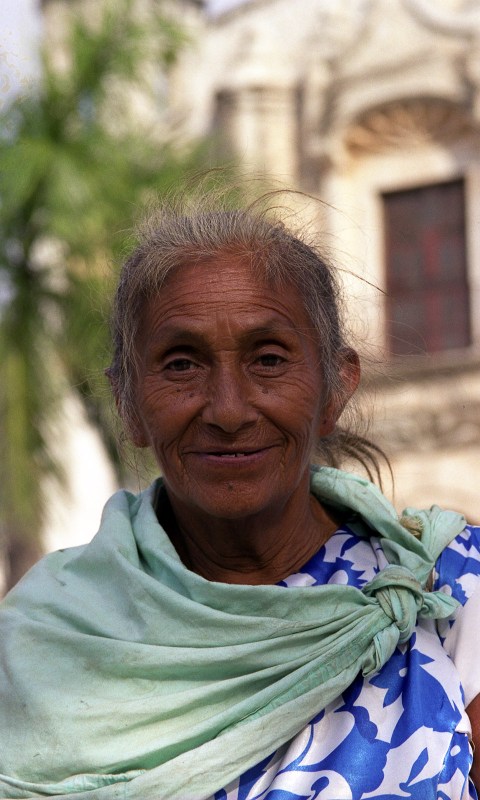
Main attraction for the generic tourist are the Maya ruins.
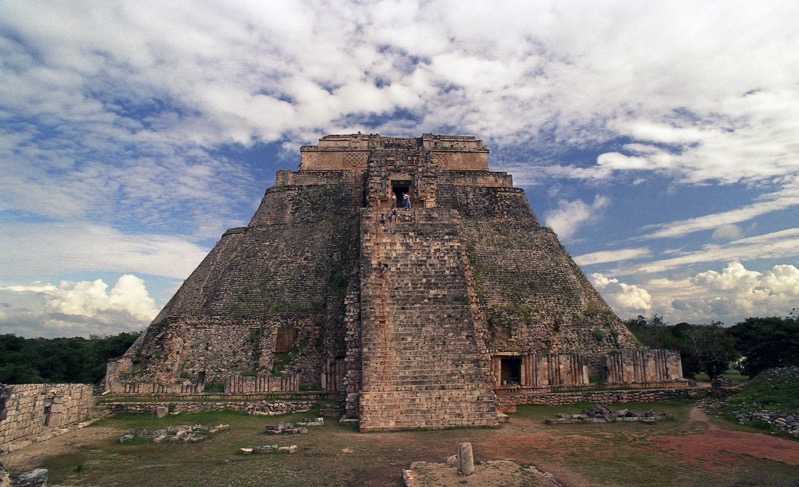
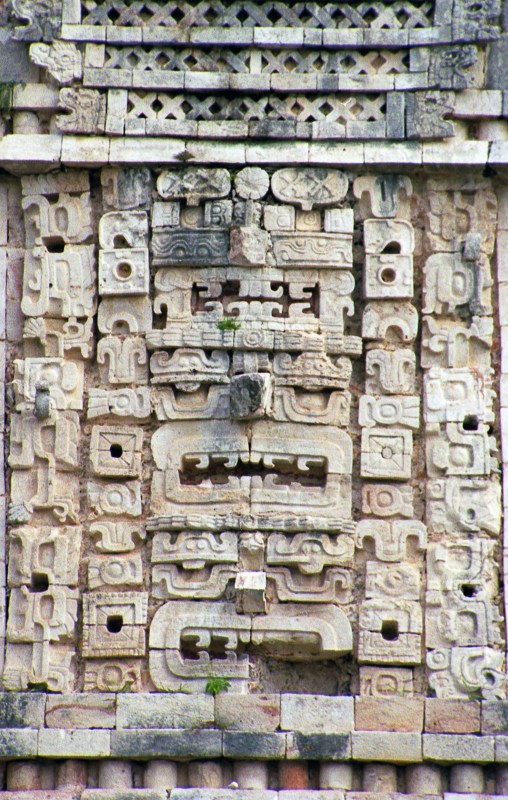
While it is true that the Maya civilization was already past its peak when the first European arrived, the almost complete eradication of the still extant culture makes the presence of what is left haunting. The alien looking artwork just tells us that the aliens, that’s us.
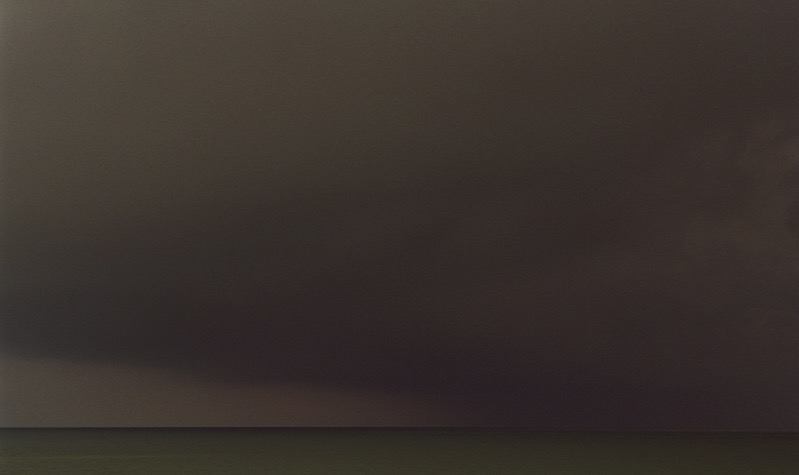
The near Caribbean coast invites to watch storms and muse over past and present destruction.
Dreams
This is as far as I can go back with pictures from Paris. I had their been earlier, briefly, but without camera. This one excursion, in the spring 1990, is special, though, for many reasons. One of them is that, usually, when I shot film with an SLR, the rule of thump was that 2-3 of the 36 images were keepers.
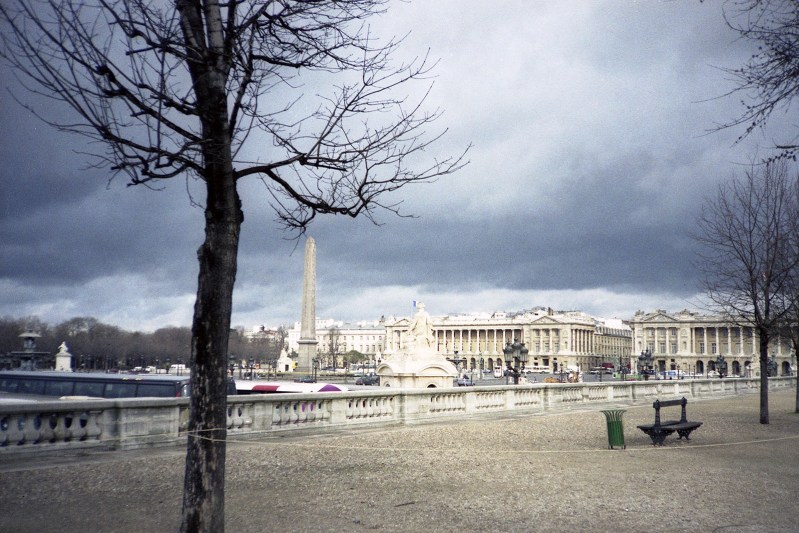
This weekend was different, because I had only brought a single roll of 24 images, and not my SLR, but just the little Olympus XA pocket camera that I still have sitting around somewhere. I guess the light and rain of early spring helped.
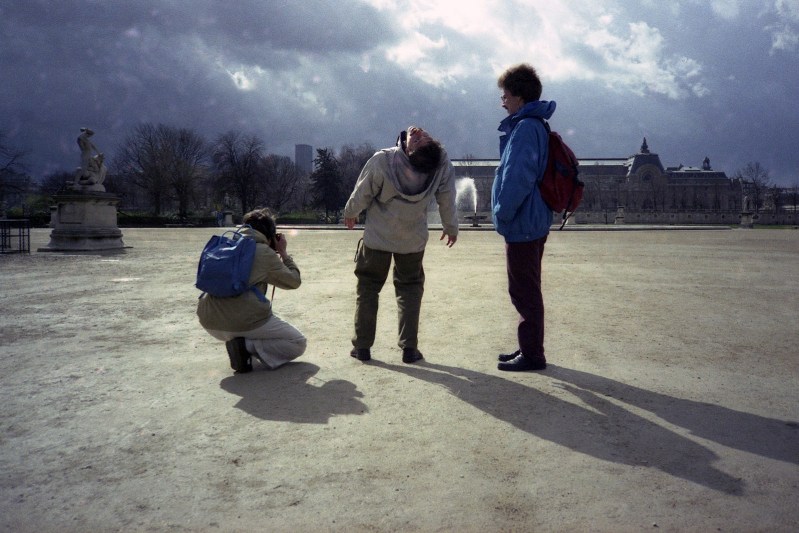
Another reason is that these were inspiring days, spent with thoughts about here and elsewhere, which has become a theme in my life.
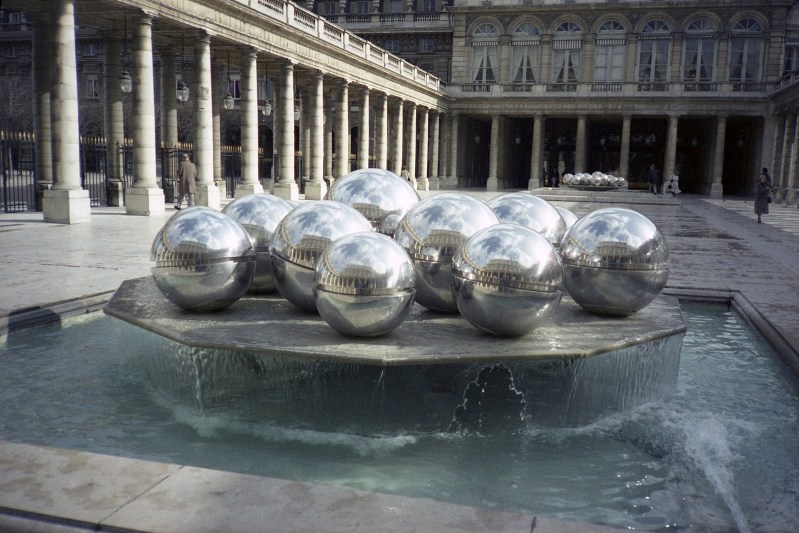
A time to reflect on oneself
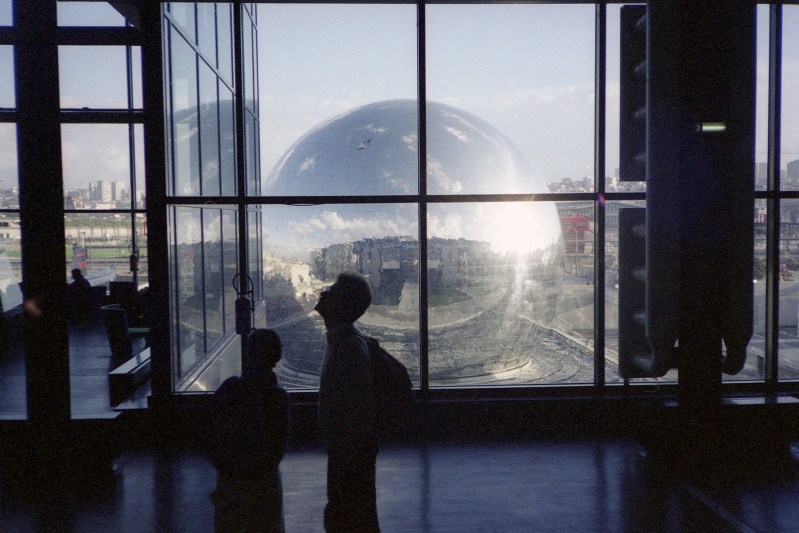
and each other, and on time running by,
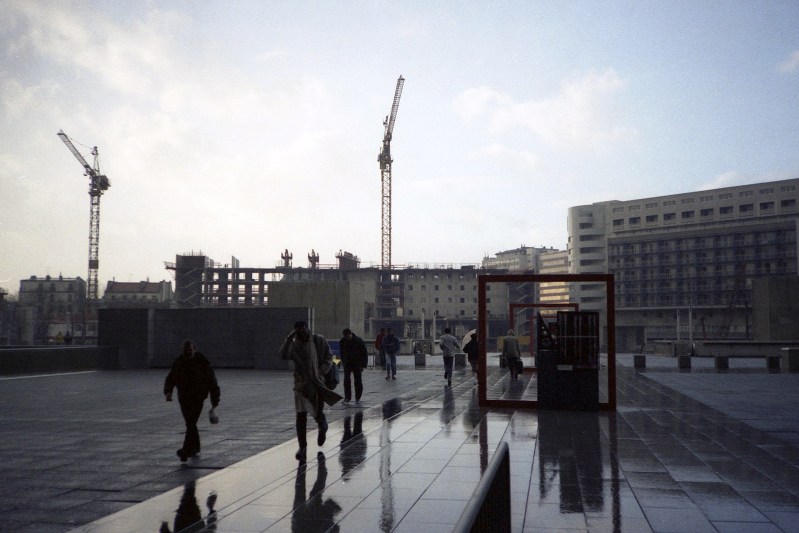
and at night, at sleep, während die Ordner der Welt geschäftig sind.
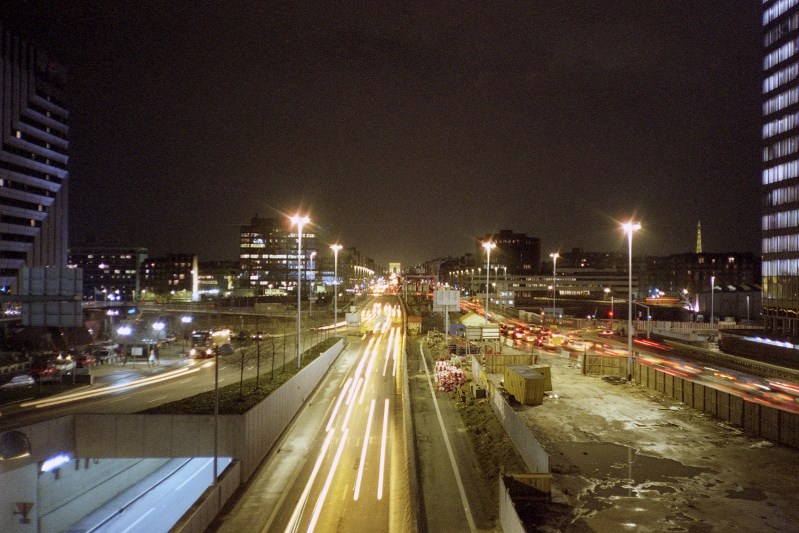
La Condition Humaine
In 1992, I visited Lyons to talk some math. On the way back home I wanted to explore Burgundy, and asked for advice. I was sent to Emmanuel Giroux, who grew up in Burgundy, and is blind. My mastery of the french language was never satisfactory, but I understood that I had to see the hospital in Beaune. Here it is, l’Hôtel-Dieu de Beaune:
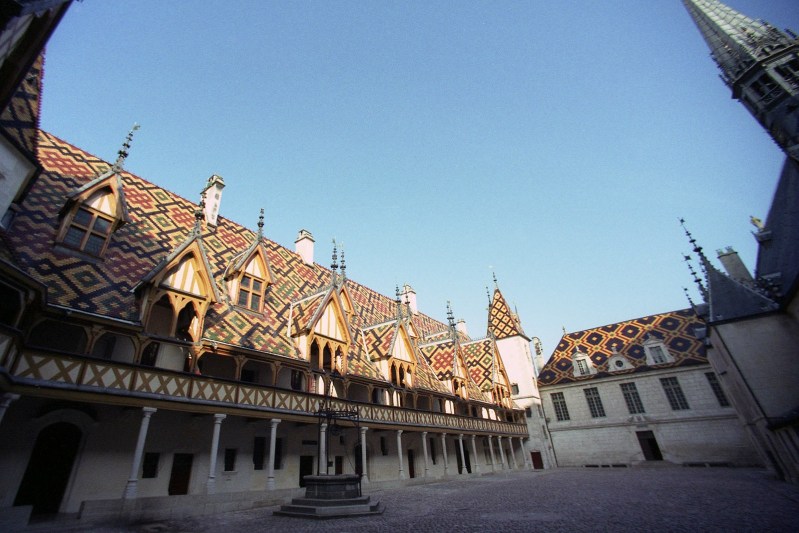
I walked around, admired the roof tiles, appreciated it as an early example of a real hospital, but didn’t quite understand why this was most essential, until, on my second walk through the halls, I noticed stairs leading downstairs into darkness.
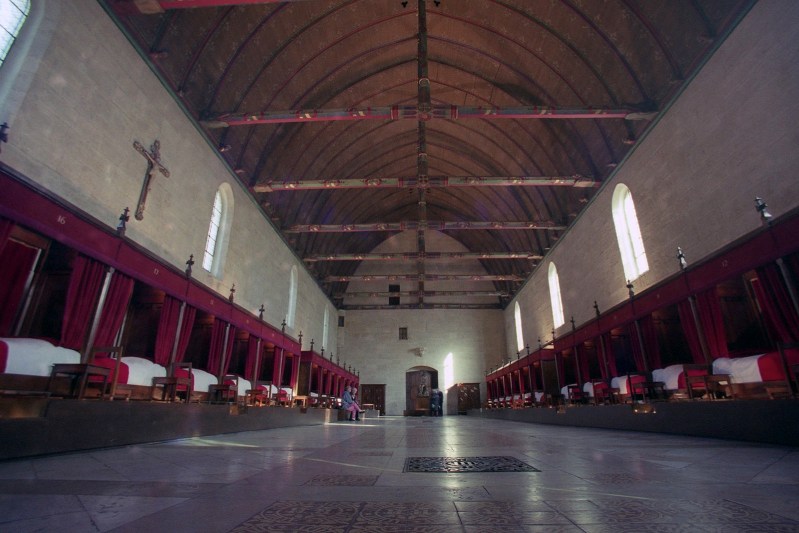
Nothing could have possibly prepared me for Rogier van der Weyden’s enormous triptych with a Last Judgment from about 1450. There is of course the usual awakening and suffering, but above all, there is the hypnotic stare of archangel Michael.
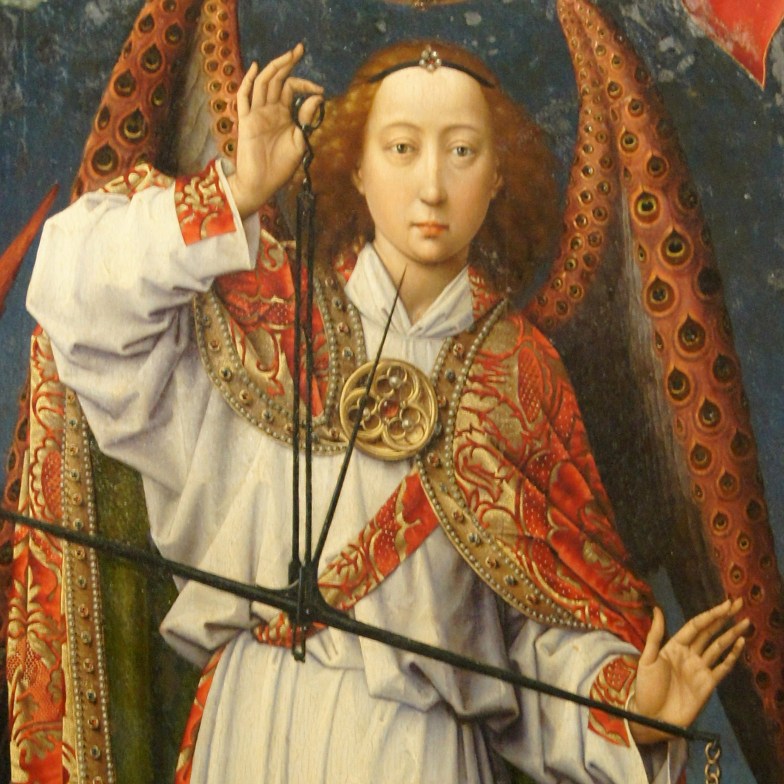
(That I post this image here is an exception; I usually only post my own. Thanks to Wikipedia France, this one is in the public domain.)
Could it be that the artists had finally realized that cause and effect were exchanged in their famous Last Judgments:
The imagined atrocities they depicted were not distant punishments for a life wasted in sin and inflicted by a superior power, as suggested by Gislebertus’ nighmarish version from the 12th century in the nearby Cathedral of Saint Lazare at Autun.
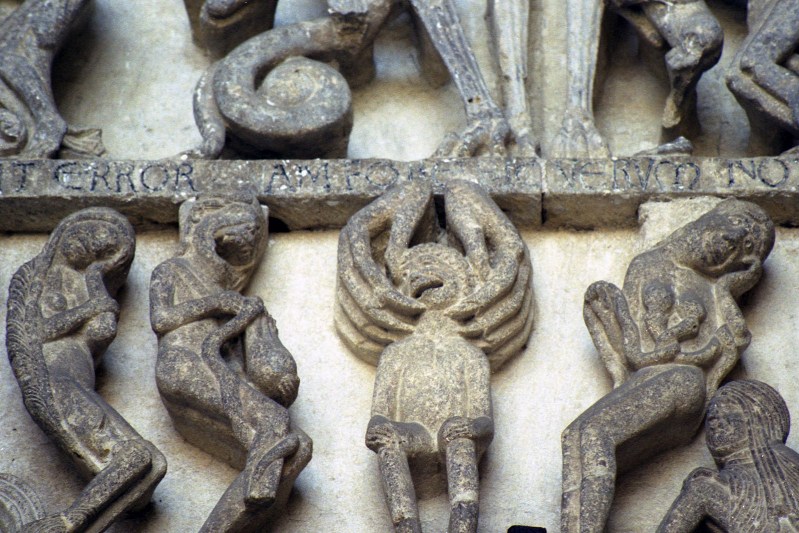
Michael’s intense presence tells us that all this is happening right now and here: it is us who are committing those atrocities ourselves, and the weighing of our corrupted souls has always been under way.
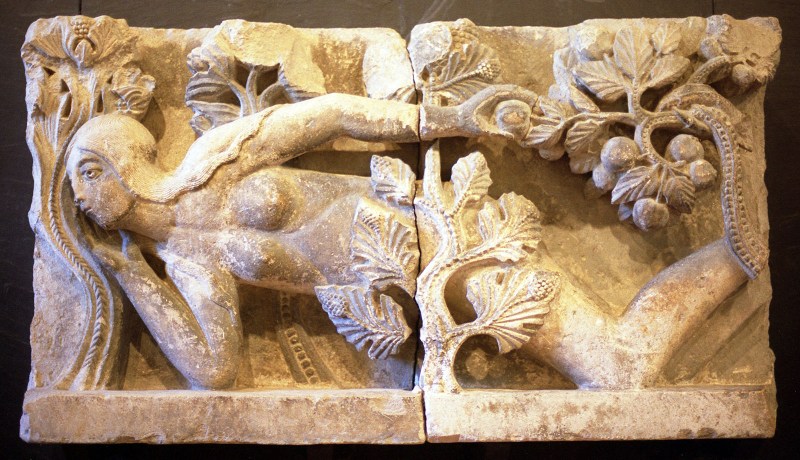
It might well be that the human race can’t exist without sin. Gislebertus knew that we have choices, though. The first European nude since the Fall of Rome must have raised some eyebrows.
Le Ventre de Paris
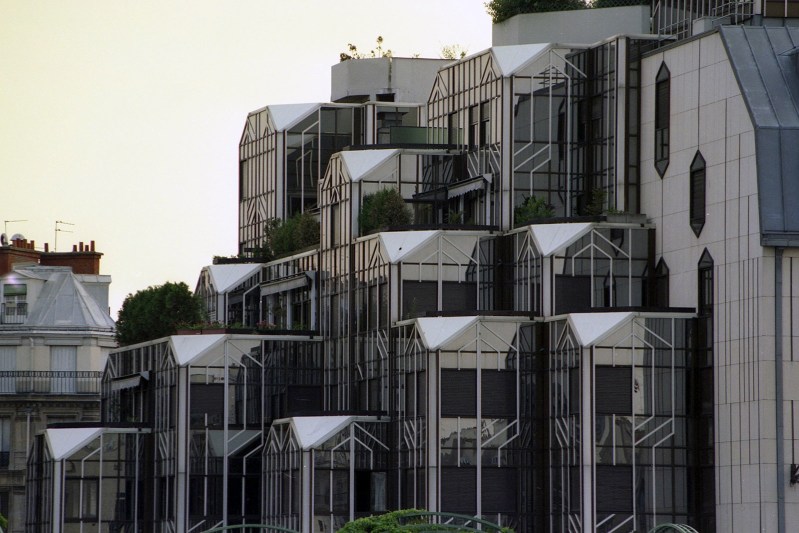
The Belly of Paris must always have been a place worth visiting. After the food market was dismantled, Les Halles became a gigantic shopping center. I have not seen it since the new construction began a few years ago.
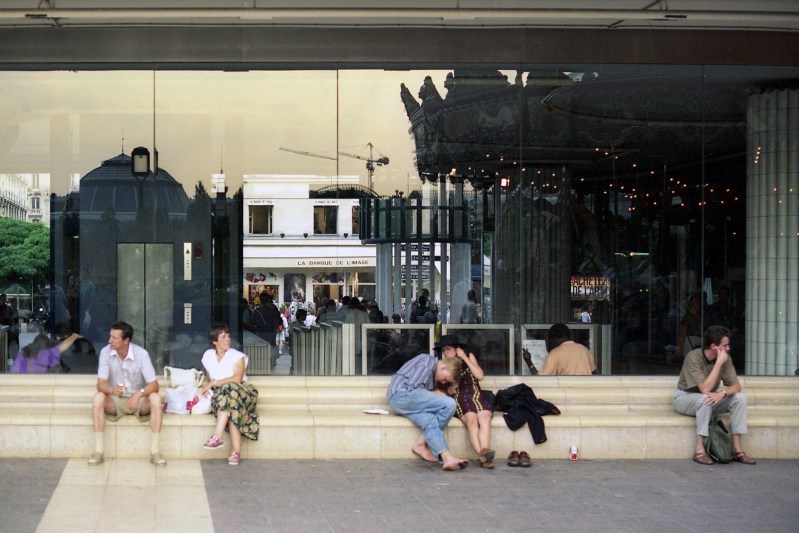
In any case, the area is a place worth visiting without wallet. At some places, we cannot tell anymore whether we are inside or outside.
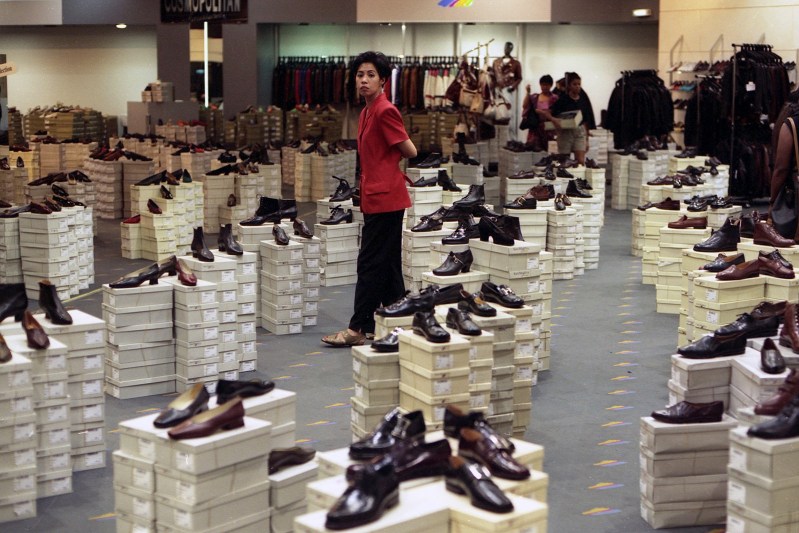
Architecture permeates everything, even the layout of the boutiques. The lady was not pleased with me taking the picture and called security. And this was in 1991.
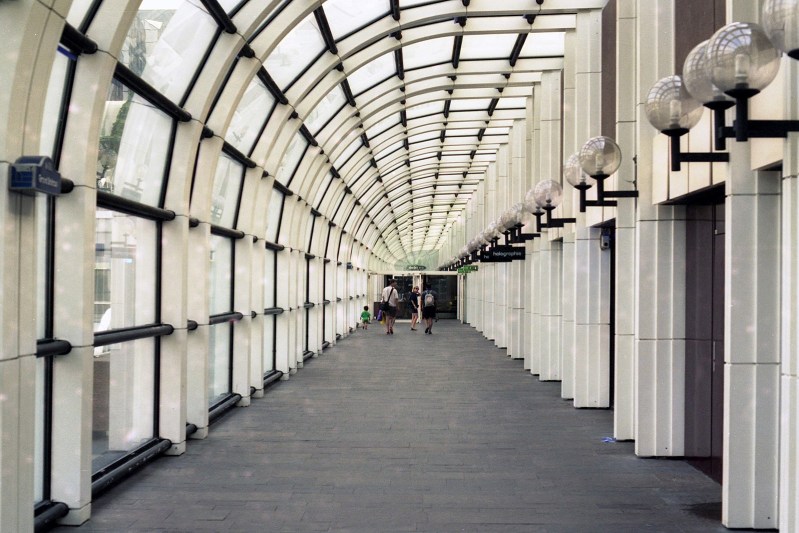
Long passageways in almost black and white made me think of Alain Resnais.
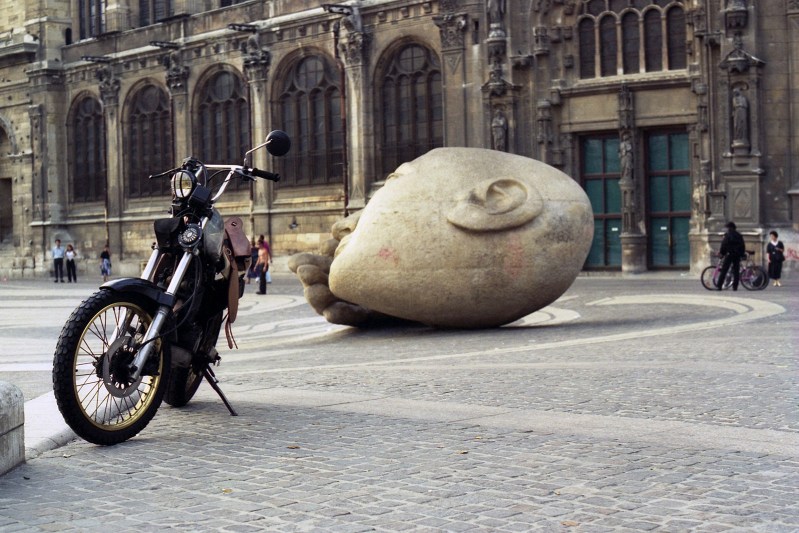
Escaped, one wonders if Henri de Miller’s sculpture L’Écoute in front of the nearby church of St Eustace ever gets a quiet moment.
 The Inner Frame