Reflections (Spheres I)

DSC5479

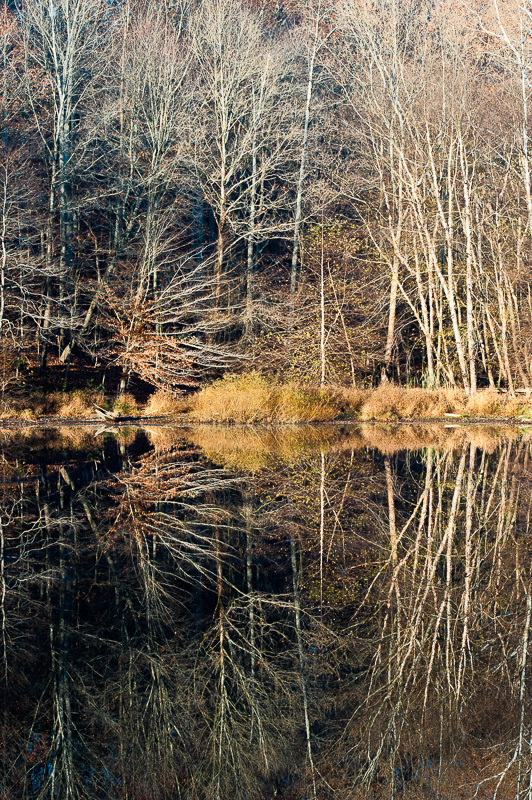
Large scale mirrors like the surface of a lake are awe inspiring. They simultaneously create complexity and
order. The order comes from the inherent symmetry, and the complexity from subtle differences between original and
mirror image.

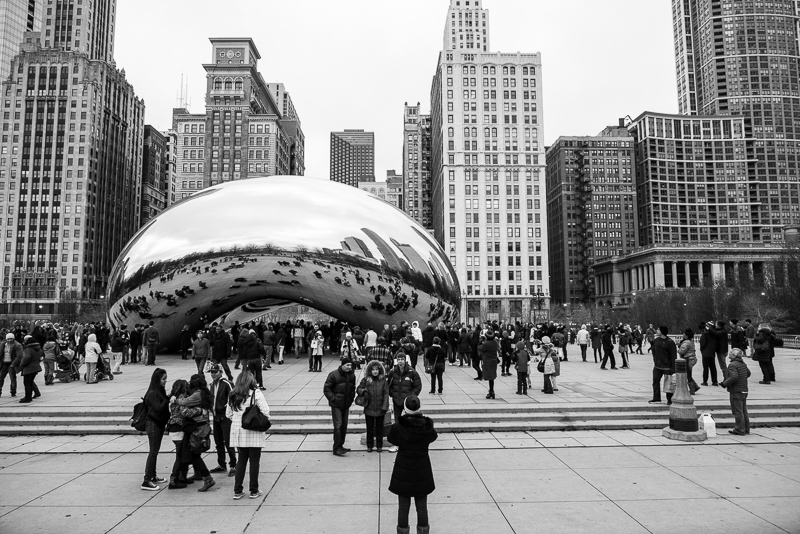
Things get considerably more complicated when the mirrors are curved. The Cloud Gate sculpture by Anish Kapoor (the Bean) in the Millennium Park in Chicago is a popular example. The multiple reflections create an immediately surprising chaotic richness of the reflection: Taking one step to the side changes the appearance of the reflection dramatically. But the sculpture also extends and therefore enriches the architecture.
DSC 6142

Motivated by this, I began to experiment with the spherical mirrors, spheres being the simplest curved shapes.
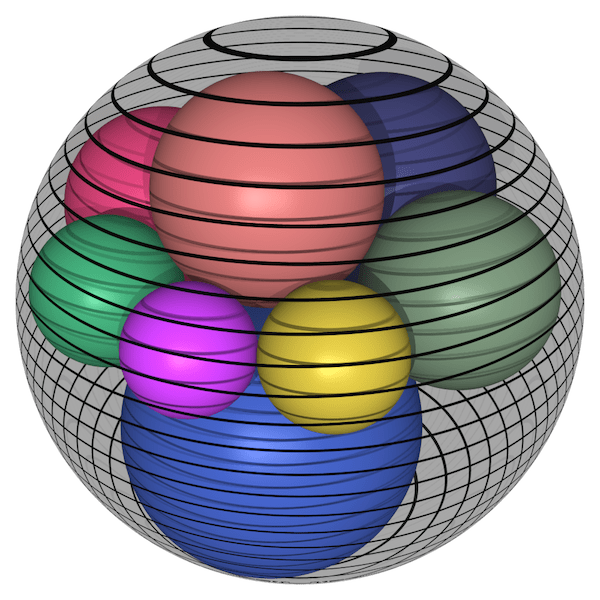
For multiple spheres touching each other there is a surprising phenomenon that is best understood when we begin with seven spheres of equal size, one at the center, and the remaining six surrounding the central sphere symmetrically. Complete this configuration by adding two planes that touch all seven spheres. Now pretend that the two planes are in fact also gigantic spheres. Than these two and the central sphere all touch the remaining six spheres, which in turn form a chain where consecutive spheres touch.
Soddysimple

It turns out that this picture is not just an approximation that only works in the ideal situation shown above where the big spheres are planes, but in fact works for spheres of any size. This is the content of Soddy’s theorem.
Soddy2

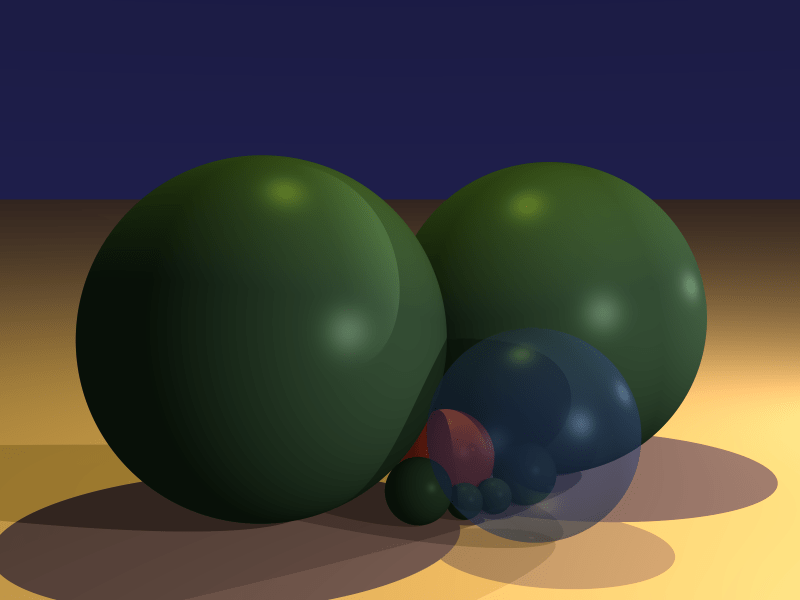
To turn this into some sort of virtual sculpture, it is best to make just one of the spheres a plane. Then place two spheres onto the plane so that they touch. If you continue placing more spheres onto the plane so that they also touch the two initial spheres and the previously placed sphere, they will form a chain of six spheres of which the last again touches the first.
Soddy0

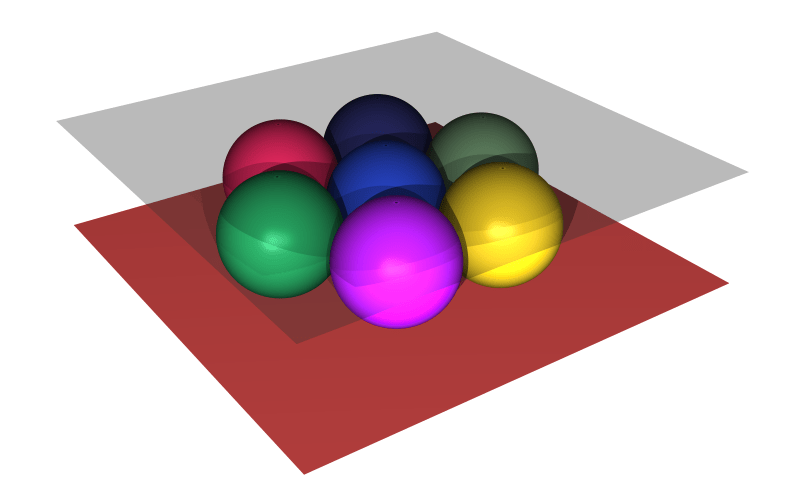
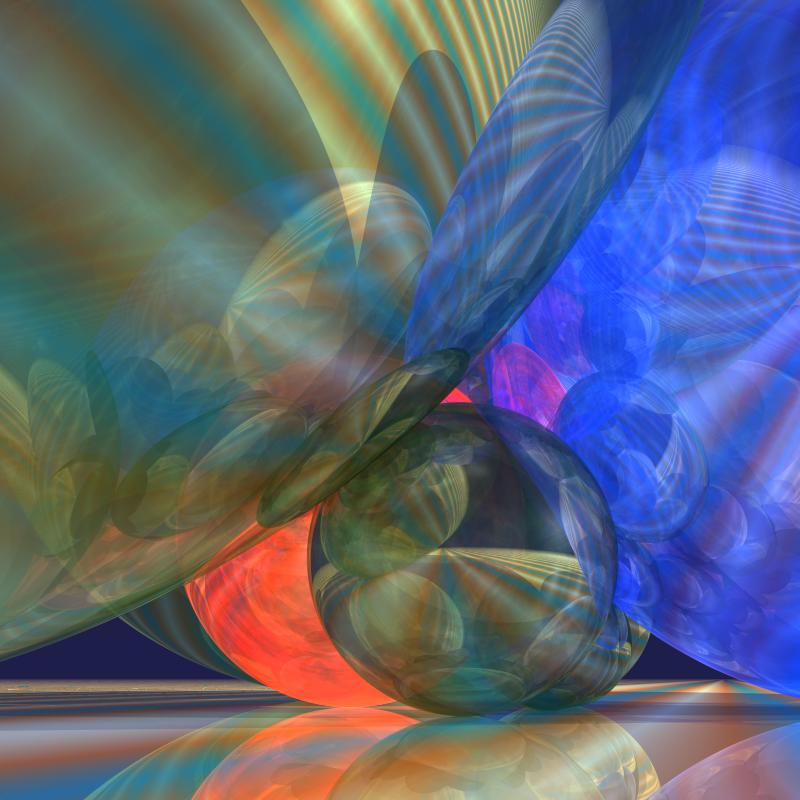
Now imagine these being really large, reflective, slightly translucent, and illuminated with colored light sources. You might see something like this:
Soddy

This is the first of a series of images featuring ray traced spheres.
Frost Flowers

DSC 3134

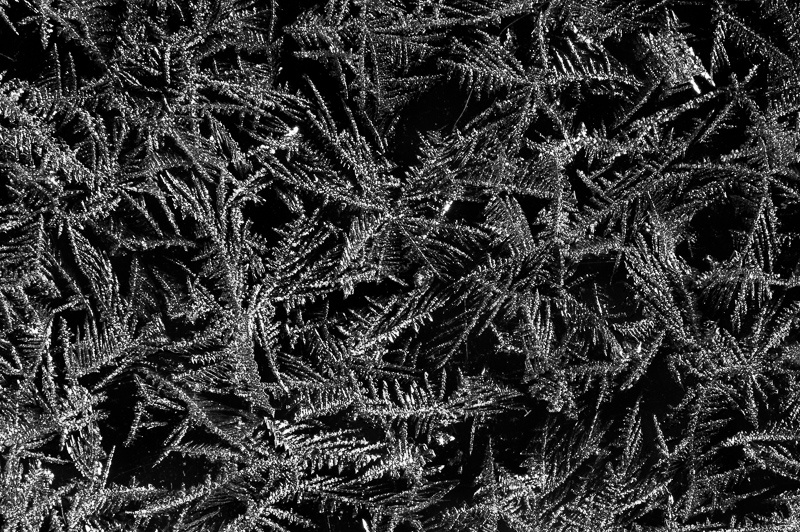
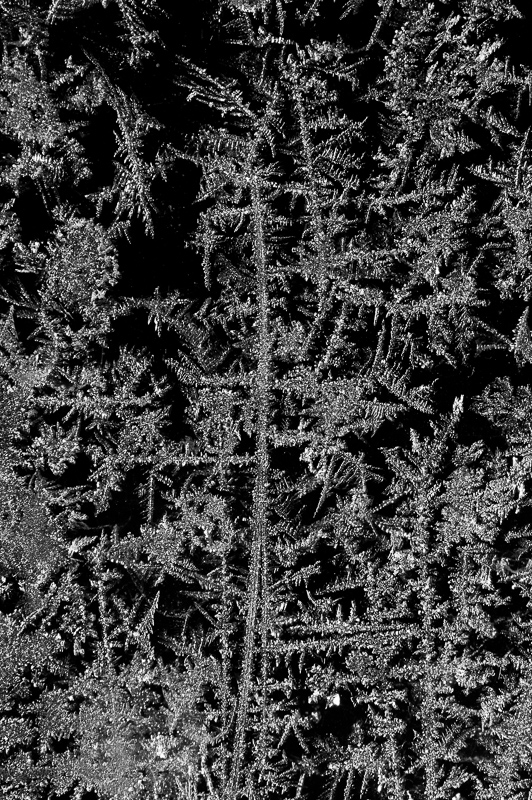
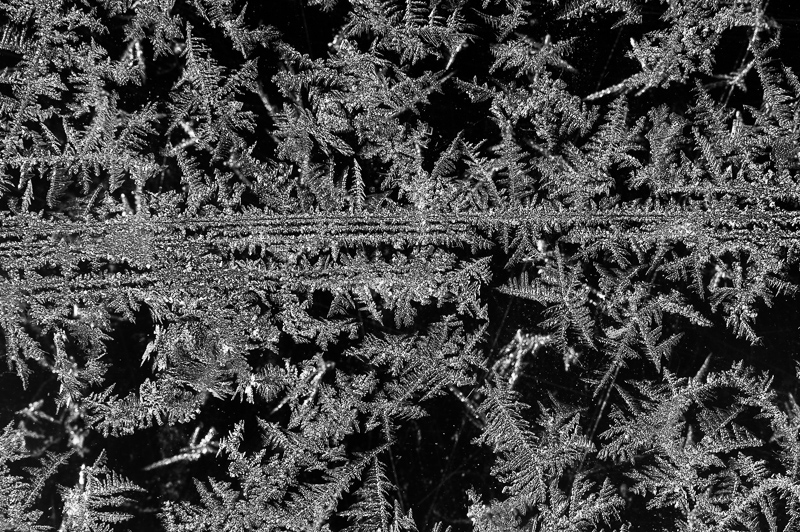
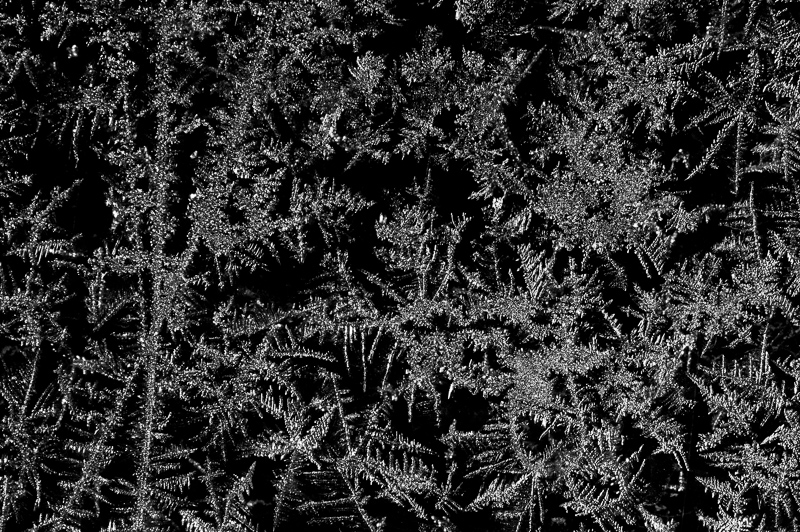
Several years ago I happened to have an empty aquarium sitting outside, and one winter morning its glass faces were covered with intricate from flowers.

DSC 3145

Using a flash from the side created beautiful highlights and eliminated distractions in the background.

DSC 3146

I have not been able to reproduce this. I would be fascinating to make a time lapse video showing how these actually form.

DSC 3150

This, however, requires more optimism and patience than I have.

DSC 3166

I wish these images here had the ability to decay like the frost flowers. Instead, they are truly digital: They are, or they are not.

Creation in a Nutshell

The Sculpture Trails Outdoor Museum near Solesbury displays a large collection of iron sculptures in an unsuspecting, hilly, southern Indiana landscape.

I will post pictures from the trails at a later point. Today I would like to talk about an annual event that takes place there.

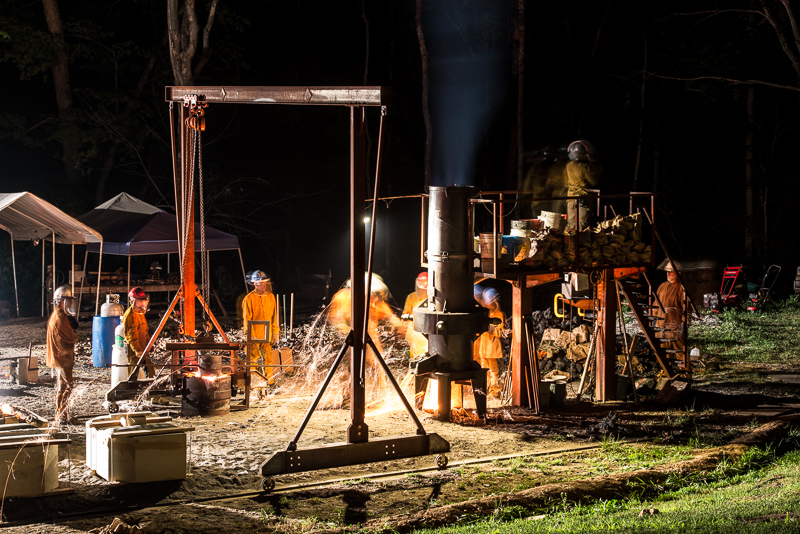
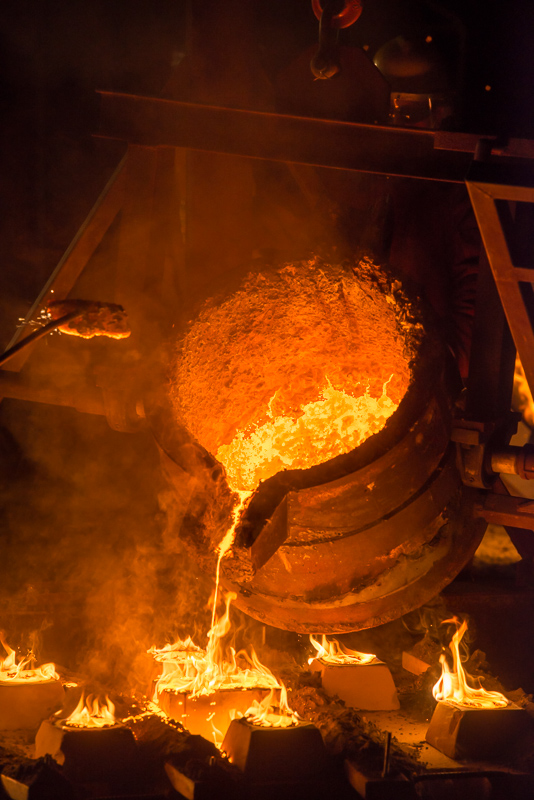
Each July, artists from all over the worlds gather to a month long event at SculptureTrails to work on iron casts. Over several weeks they produce moulds for their sculptures which are then subjected to a ritual that lasts several hours: The iron pour. And indeed a ritual it is. It begins with the firing of the furnace.

DSC 1011

All participants wear protective gear and perform their tasks with a concentration, discipline and respect that reminds me of ancienct religious ceremonies. A look at the molten iron alone is awe inspiring.

DSC 0629

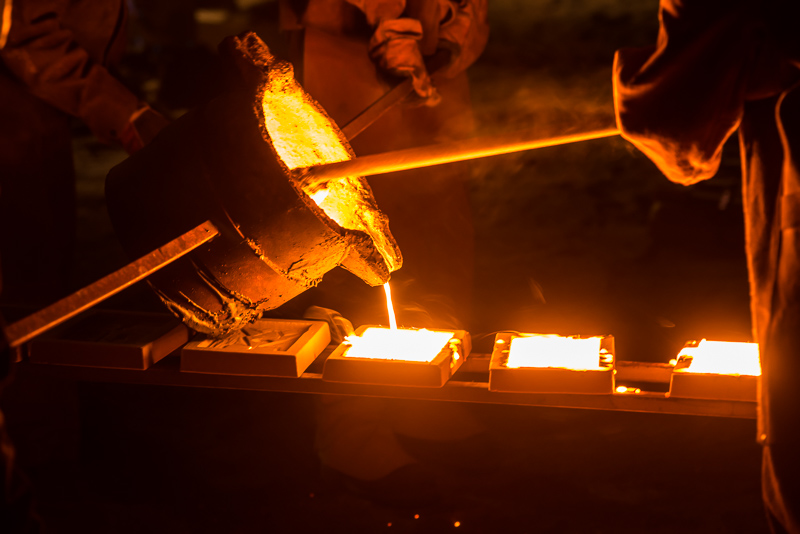
The actual pouring takes place in several rounds, depending on the number of moulds.

Visitors have the opportunity to scratch sandstone molds for a nominal fee.

DSC 0688

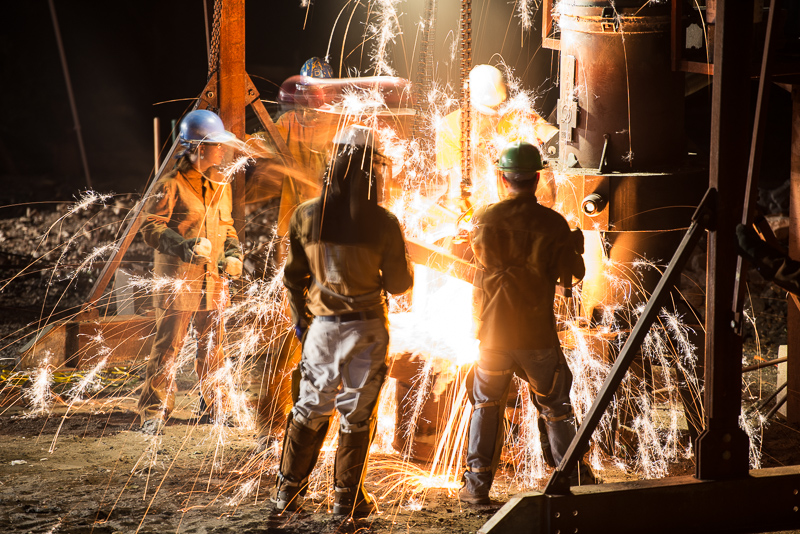
More often than not, the sparks fly high, and let the human beings involved disappear.

DSC 0996

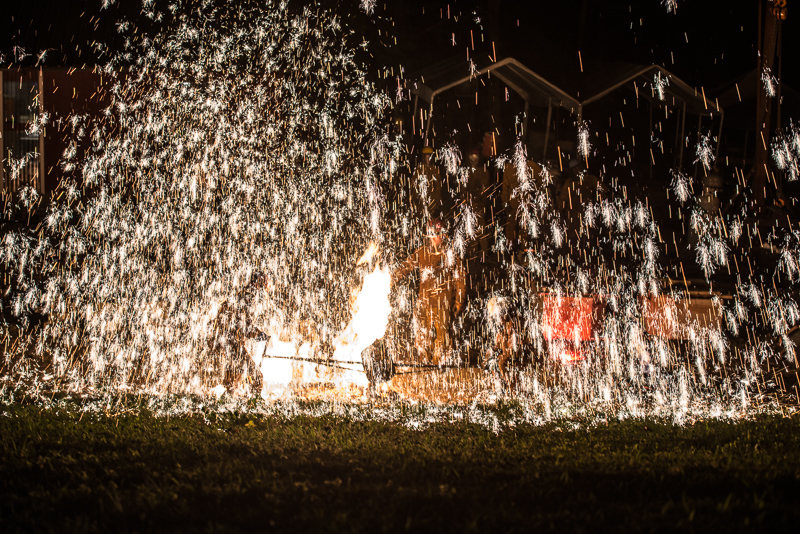
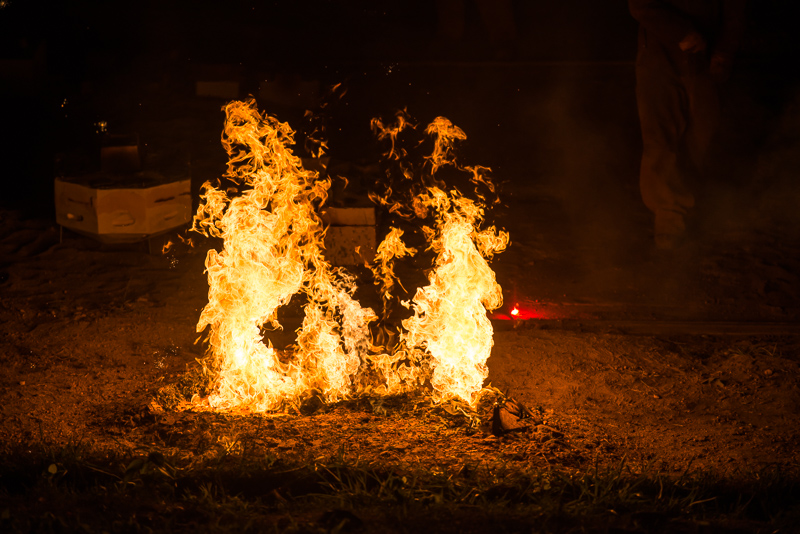
When the liquid iron is poured, the flames and sparks take on fantastical shapes that are, one might believe, the ghosts or souls of the sculptures to be created.

DSC 1123

It is hard to say what makes this whole process so fascinating. Is it the ability to handle molten iron? The solemnity of the ritual? The spectacle of the flames?

DSC 1150

Maybe it is the deep satisfaction to see something truly transformed.

In Andrei Tarkowski’s film Andrei Rublev, the last chapter shows the casting of a bell (two bells, if you wish). There and here, the spiritual dimension of a purely physical phenomenon is astounding.