The Fractal (Foldables 2)

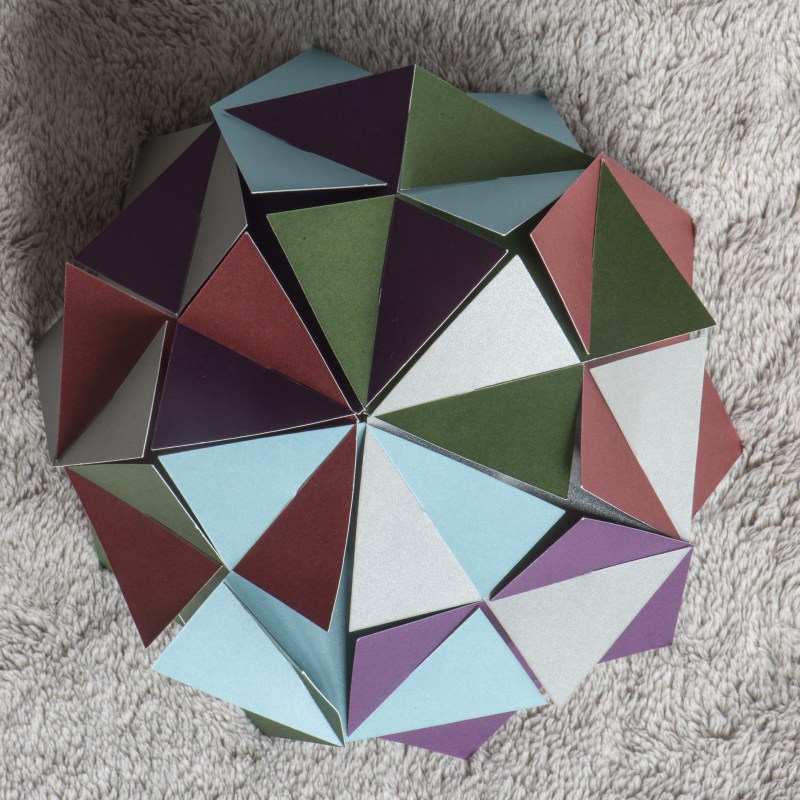
The second bifoldable object Jiangmei showed me was this:
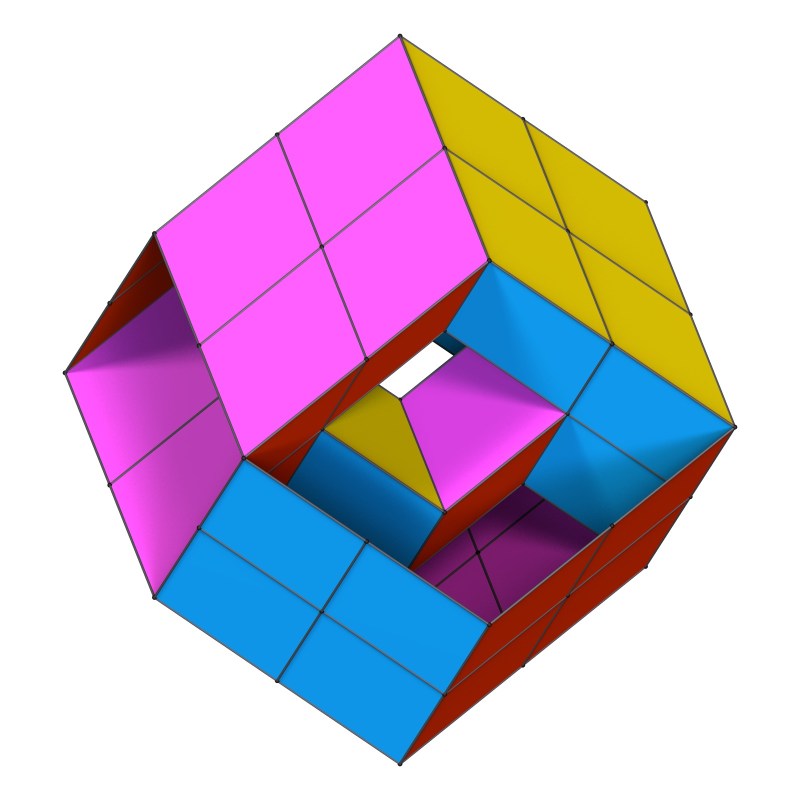
Fractal 1

You can find a movie showing how this folds together in two ways here. To understand how and why this works, let’s first look at a simple saddle:

Saddle

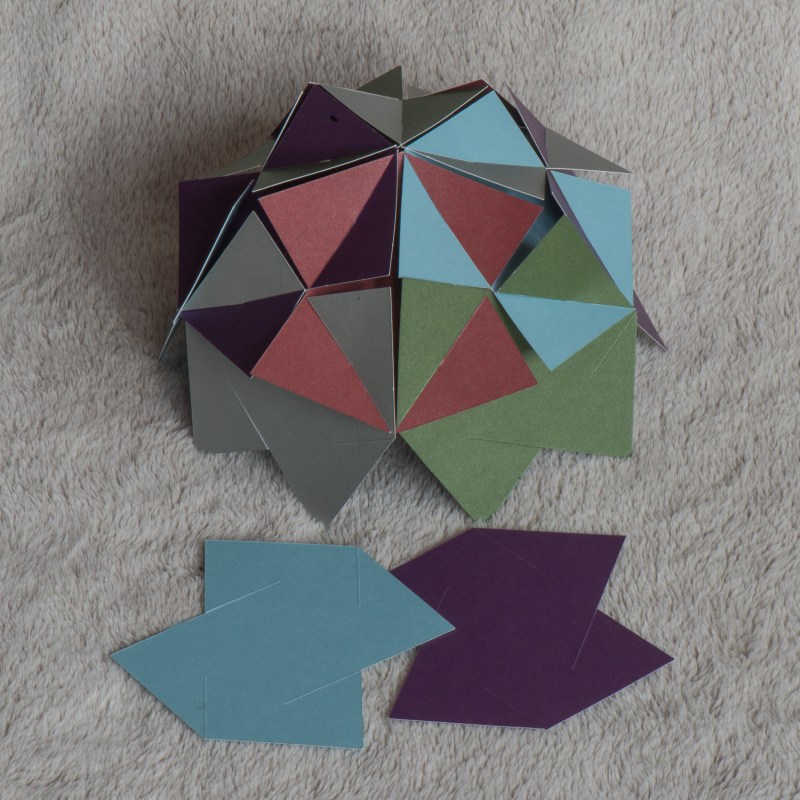
This is a polyhedron with a non-planar 8-gon as boundary. Its faces are precisely the four types of faces that are allowed in our polyhedra: All others have to be parallel to these four. The four edges that meet at the center of this saddle constitute the star I talked about the last time. Again, all edges that can occur must be parallel to one of these four. One can fold the saddle by moving the upwards pointing star edges further up (or down), and the downwards pointing edges further down (or up), thereby keeping the faces congruent. This works locally everywhere and therefore allows a global folding of anything built that way. Fractal 0

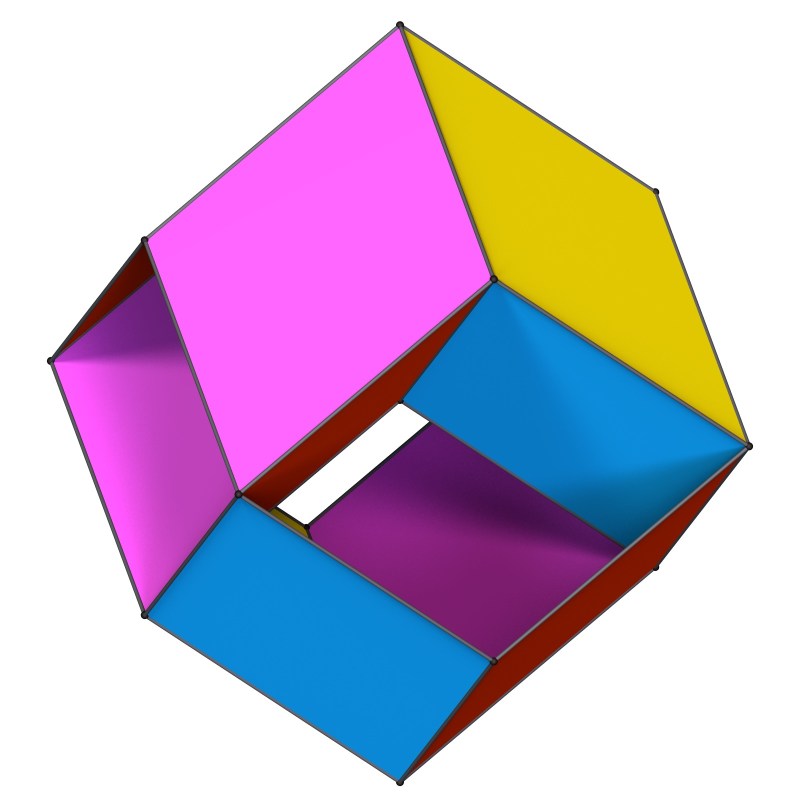
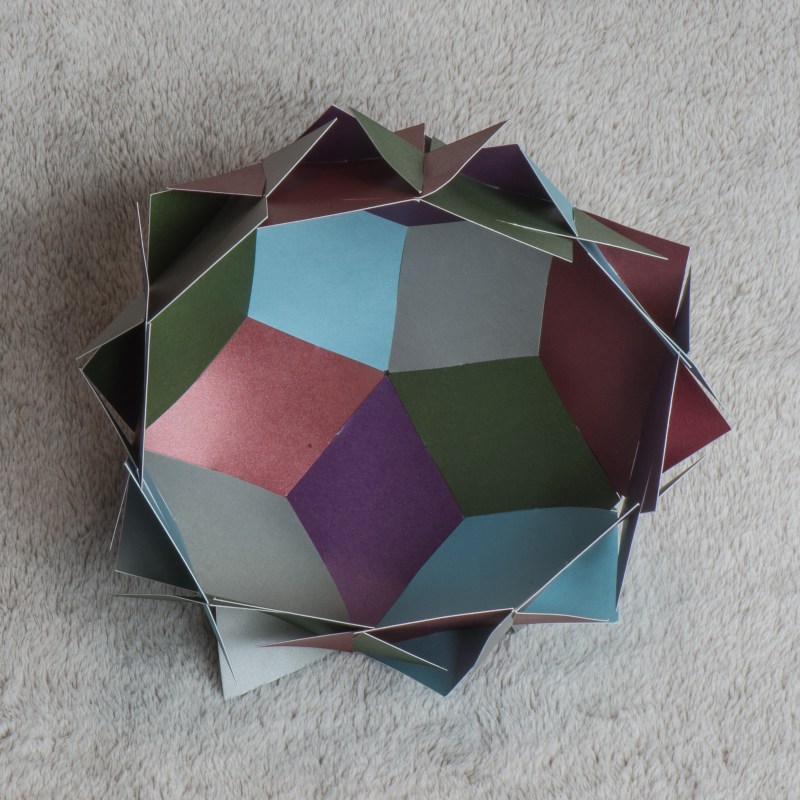
For instance, the hollow rhombic dodecahedron above can be bi-folded. Now note that this piece is also a polyhedron with boundary. In fact, its boundary is exactly the same octagon as the boundary of the saddle. 

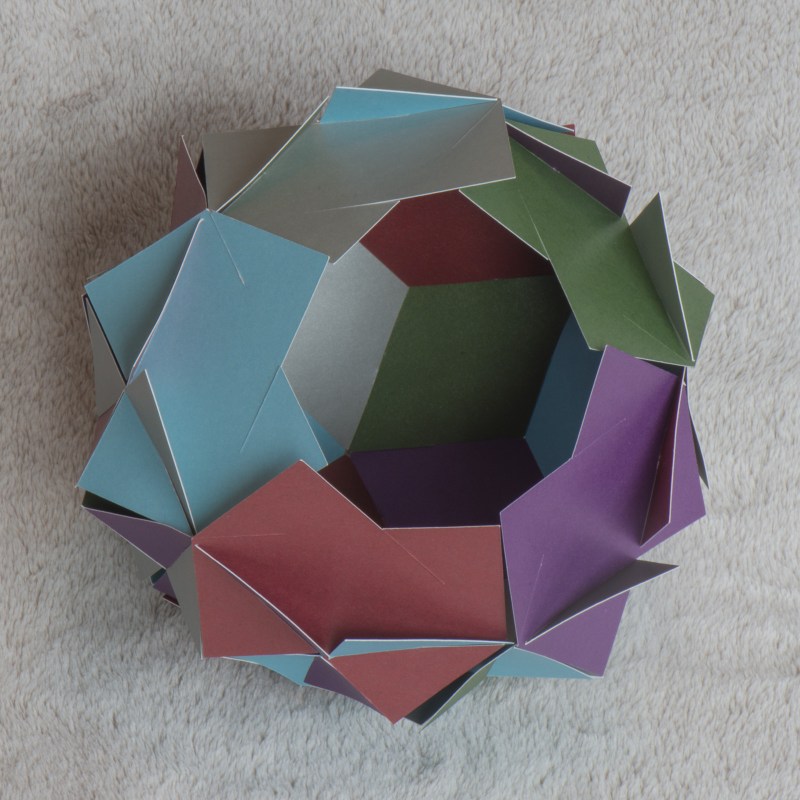
Observe also that at the center of this piece we have a vertex in saddle form. This suggests to subdivide all rhombi into four smaller rhombi, remove the saddle an the middle vertex of the doubled hollow dodecahedron, and replace it by a copy of the standard hollow dodecahedron. This gives you Jiangmei’s fractal. Repeating this is now easy. Below is the generation 2 fractal (animation):

Fractal 2

And, just for fun, the generation 10 fractal:

 Fractal 10 colorgradient

You can see it being bifolded here. So far, the two completely folded states of our polyhedra looked very much the same. We will see next week that this doesn’t need to be the case.
The Butterfly (Foldables 1)

We all know that cardboard cubes are rigid, which is why we get our packages in boxes. We also all know that if we remove two opposite faces from a cube, we can fold it together. This started to interest me when I noticed that the polyhedral approximation of the Schwarz P surface is surprisingly flexible. This summer, I showed this to our local Origami and Paper Folding expert, Jiangmei Wu from our School of Art and Design, and she became interested. A few days later she came with a paper model that looked like this:

ButterflyTriply

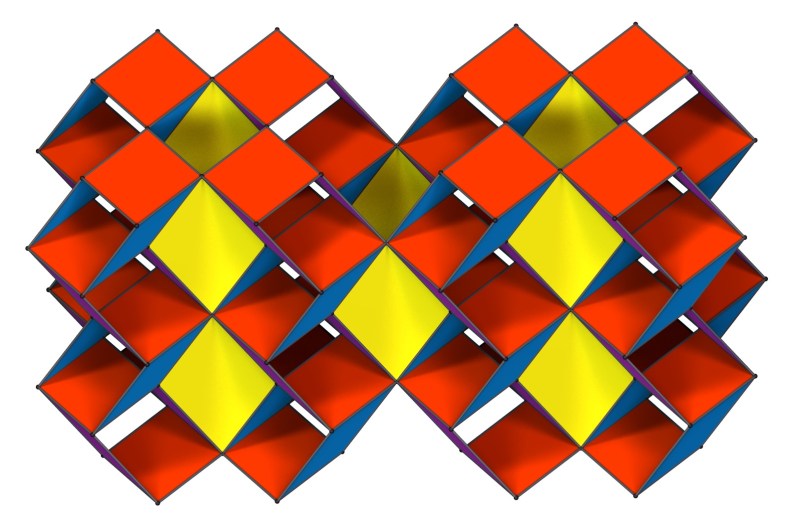
She called it a simple variation of the polyhedral P-surface. Hmm. This is a triply periodic polyhedral surfaces tiled with rhombi. To understand it, we build it out of smaller units (which we called butterflies):

Butterbuild

The really cool thing about it is that it can be folded together in two different ways, like so:

Butterdeform

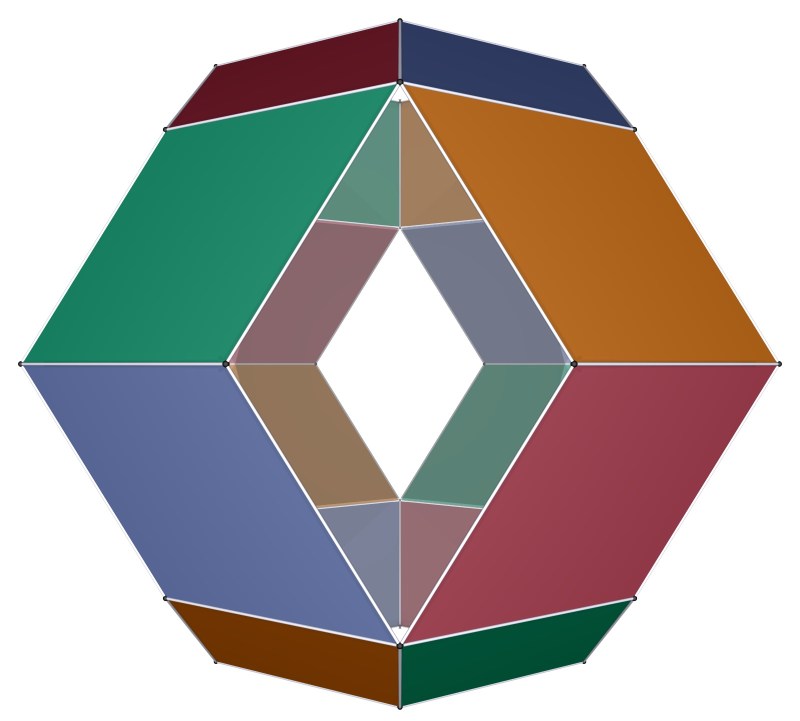
You can find an animation showing the continuous deformation here. We stared at this for a (long) while, until we realized that this has to do with rhombic dodecahedra. The structures up above are composed of the rhomboids from last week that tile a rhombic dodecahedron. The latter has, as the name hints, 12 faces, which occur in opposite pairs. Like the cube, it is rigid per se, but becomes foldable if we remove two pairs of parallel faces, leaving us with four faces to use, which are distinguished by color up above.Fractal0b

Above you can see the four hollow parallelepipeds (which we called hollowpeds). The almost trivial but nevertheless mind bending realization is that everything you build out of these hollowpeds becomes a structure foldable in two different ways. Next week I’ll show Jiangmei’s second model, a foldable fractal… If you can’t wait, check out this.


A Double Figure 8

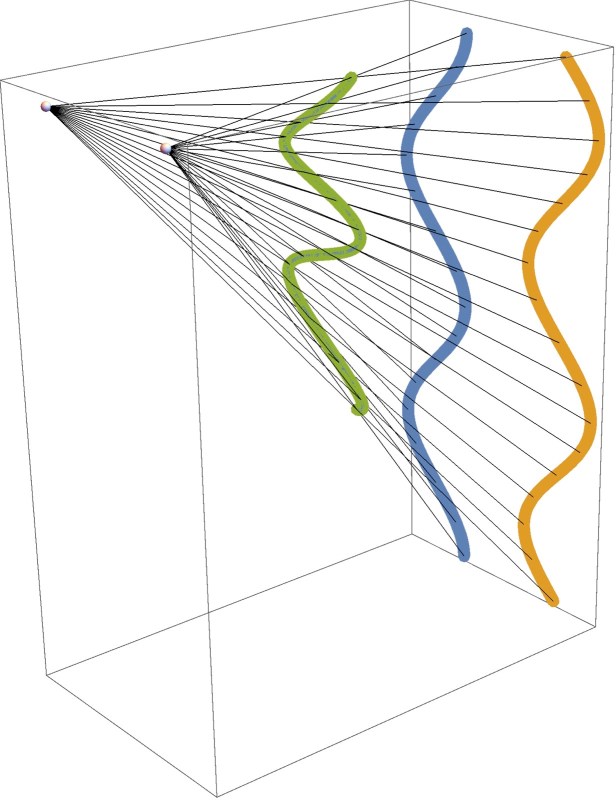
Recently, a local artist had an intriguing question. Suppose you have a hook in the ceiling (who hasn’t?), and  two spot lights in front of the hook, slightly to the left and to the right. Suppose also that you have drawn two curves on the back wall. Can you bend a wire and suspend it from the hook so that the two projections match the drawings?


Sketch

I first thought: Yes, this means we just have to determine the intersection of two cones, so this is possible but maybe tricky.

Figure8001

After playing around with it a little I realized that this is simpler than I thought: Of both curves have the same height, this is essentially always possible, and even completely explicit. In fact, this is almost as simple as using two perpendicular parallel projections.

For instance, below you see a single red wire that has two figure 8 curves as projections.

Figure8010

Then of course one wants to play with it and rotate the wire.

Figure8032

Clearly, there are two more rotational positions where one of the projections is again a figure 8, the one above and the one below.

Figure8329

Now we need to find somebody who can accurately bend wires for us.

Toxic City

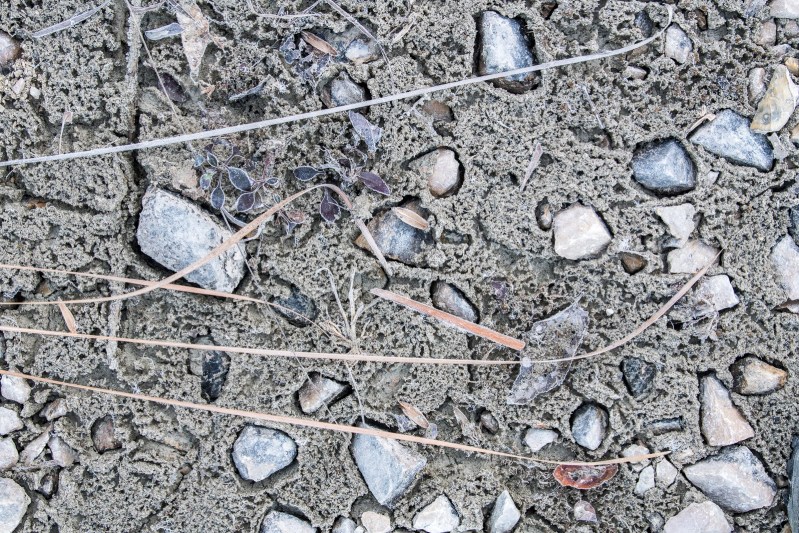
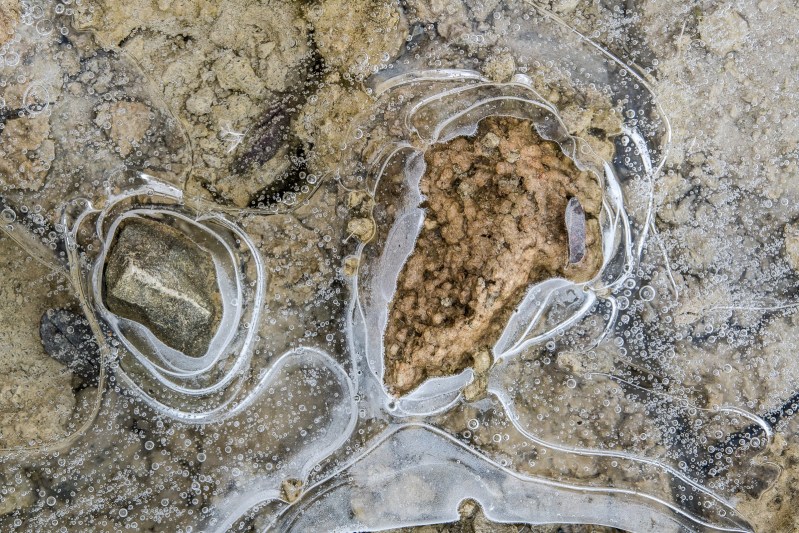
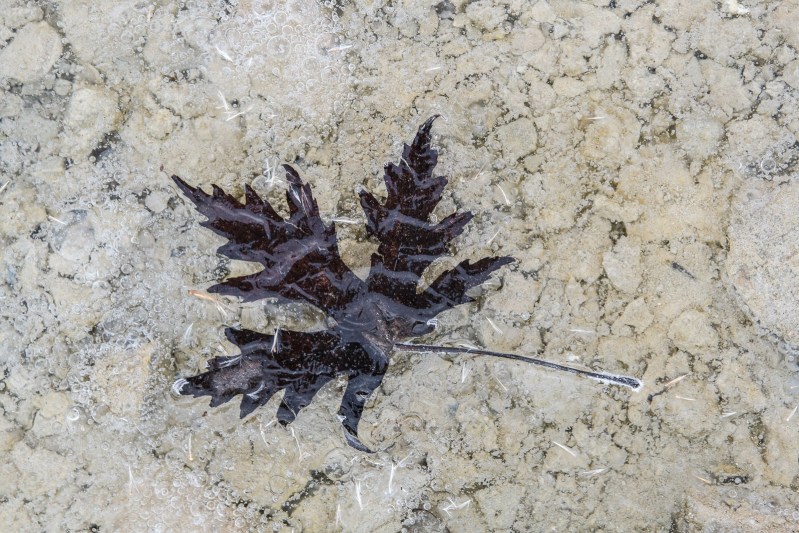
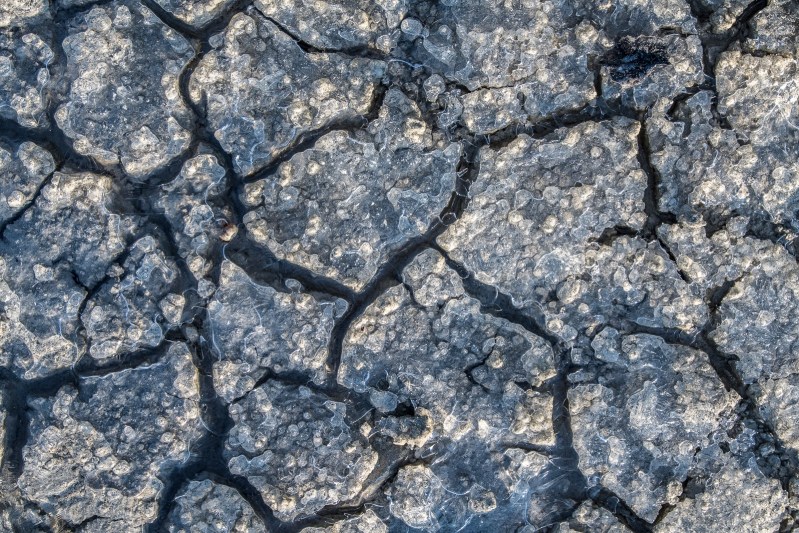
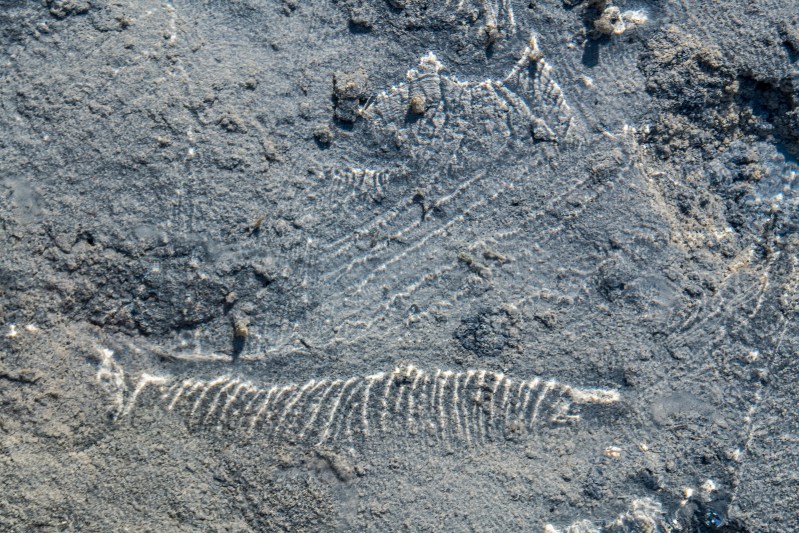
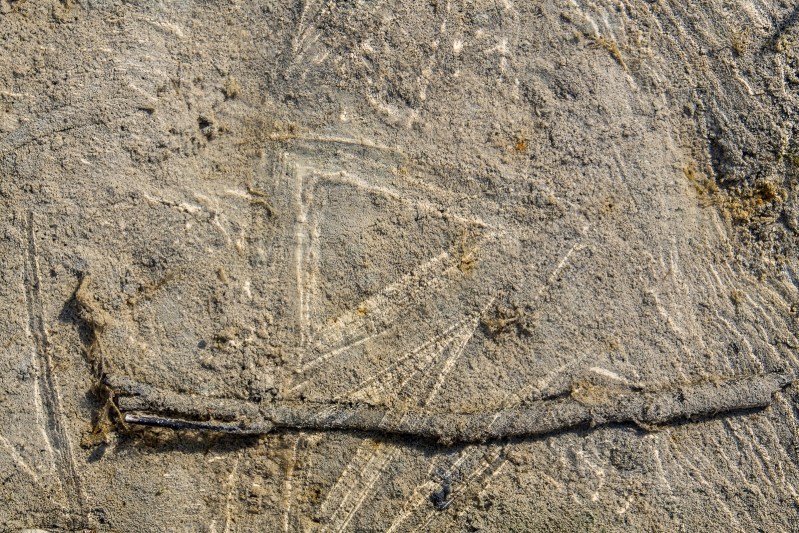
There are (at least) two aspects of the DePauw Nature Park that I haven’t written about that make this place fascinating to me. One is the structure of the ground. 

DSC 0071

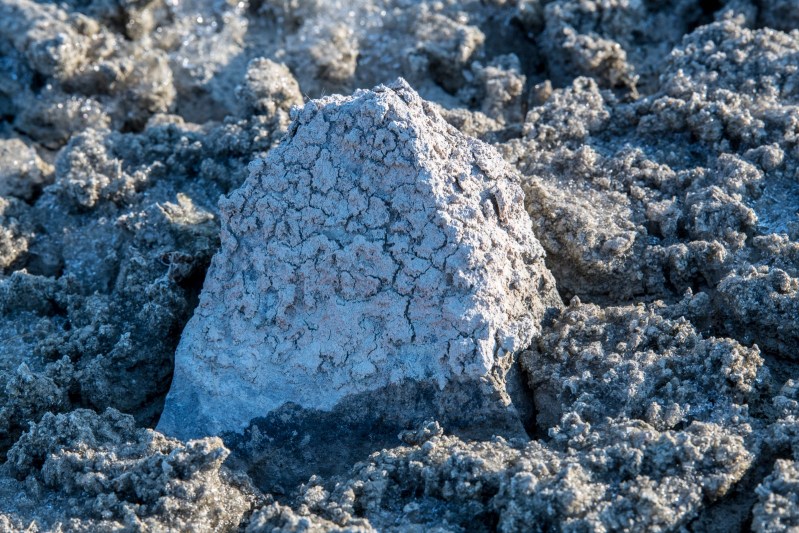
There is some weird flaky stuff that I haven’t seen elsewhere, but besides that, the ground is just more complex than what you typically would call Indiana Dirt

DSC 0099

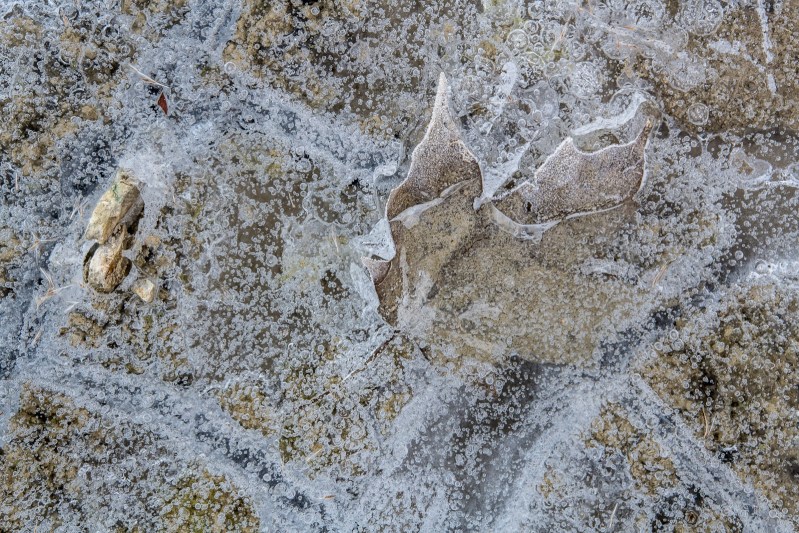
I have waited to show this until now because, with early frost, everything gets even better. 

DSC 0081

The other aspect is the sound. In principle, this should be a quiet place (there rarely is anybody, at least not at my favorite hours). But there are birds, of course, and other noises, from factories and railroad tracks just not far enough away to be inaudible. Somebody should record this.

DSC 0084

Which brings me to another theme, that of ambiance in general. I have been listening to what is called ambient music for a while now, with increasing pleasure. Ambient music is not a well defined thing. It can just mean the incorporation of everyday sounds, or the questionable pleasure of background music. I like ambient music best when it distills everyday noise into something exceptional. Examples of that are Richard Skelton’s compositions (that are, in a good sense, very much down to earth), or, a recent discovery for me, Evan Caminiti’s recent music, including his new album Toxic City

DSC 0102

In photography (or even in art in general) there is the “classical” way to idealize the object — remove it from its context, isolate it, and even alienate it, in order to show a possibly artificially construed intrinsic beauty.

DSC 0164

Ambient art, in contrast, tries to show you how much there is without interference. We just have to look.

DSC 0165

That is a lie, of course. Whenever we show, we select. But selecting what we feel is worth seeing (or hearing) is very different from imposing a verdict on how things are on the viewer (or listener).
DSC 0090

Everyday is silent and grey

Driving from Bloomington to Chicago takes four to five hours and is a pretty boring drive. This year’s highlight was a lone sign saying “Boycott Fox News”, a stark contrast to what we had last year at around this time.
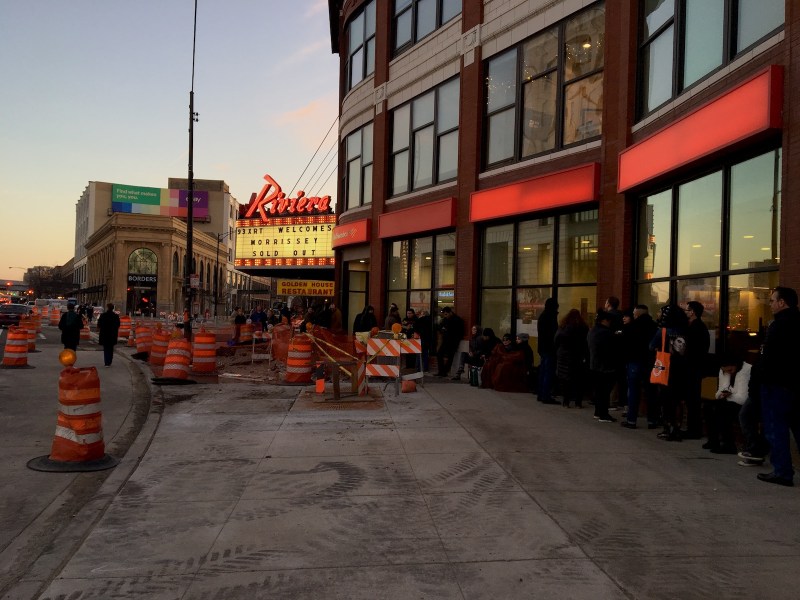
There are many reasons to go to Chicago. This time I had the privilege to be needed as company, because my daughter wanted to see Morrissey.

2017 11 25 16 24 29

I am not very literate when it comes to popular music. The concerts I look back to with fondness had “stars” like Luigi Nono, Karlheinz Stockhausen, or Bhimsen Joshi present. No, I didn’t listen to The Smiths. But this is what our kids are for: To educate us.

2017 11 25 22 18 53

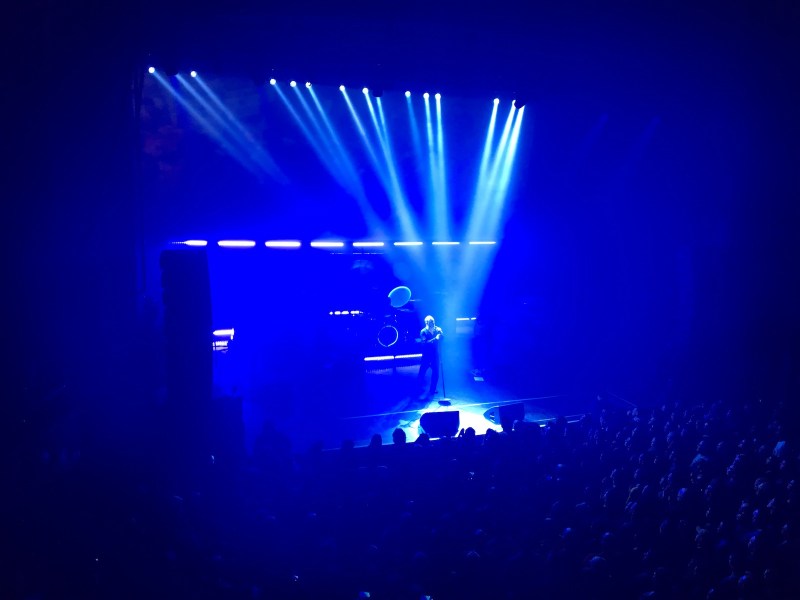
And Morrissey impresses. He says what he thinks not to be a clown, but to be himself, and he is still good at it. His band was dressed in T-shirts saying “This country makes me sick”. Morrissey was obviously very angry.

2017 11 25 22 24 35

The theater was sold out, with a very diverse crowd. A few rows away a group started smoking weed early on. Chicago. But they all had a good time.

2017 11 25 22 12 27

It was good to see this kind of solidarity across generations. It is the kind of angriness that brings people together.

2017 11 25 21 55 24

Stellating the Icosidodecahedron in Black and White

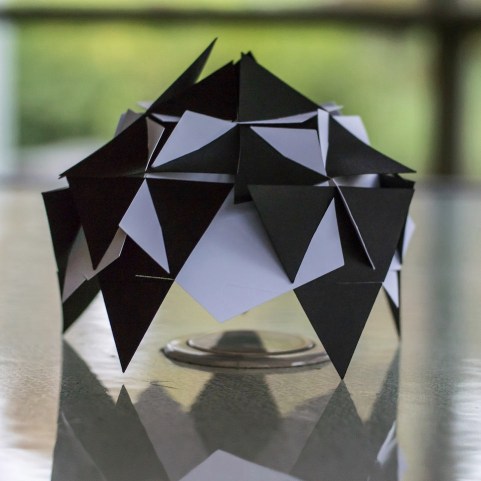
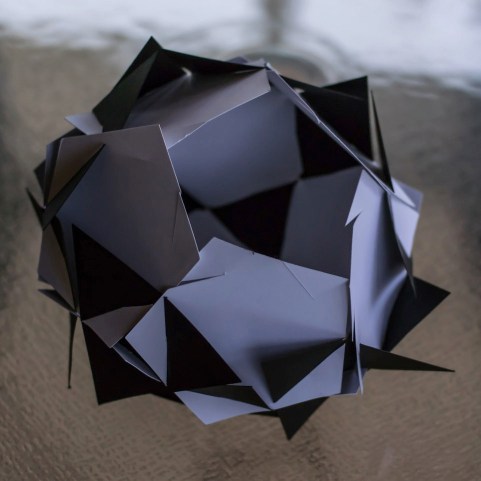
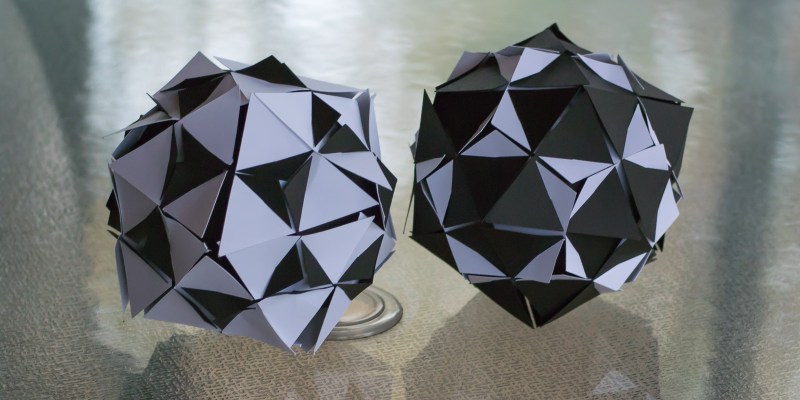
DSC 1737

It is also this time of the year to chase away the dark hours by making presents. As in previous years,
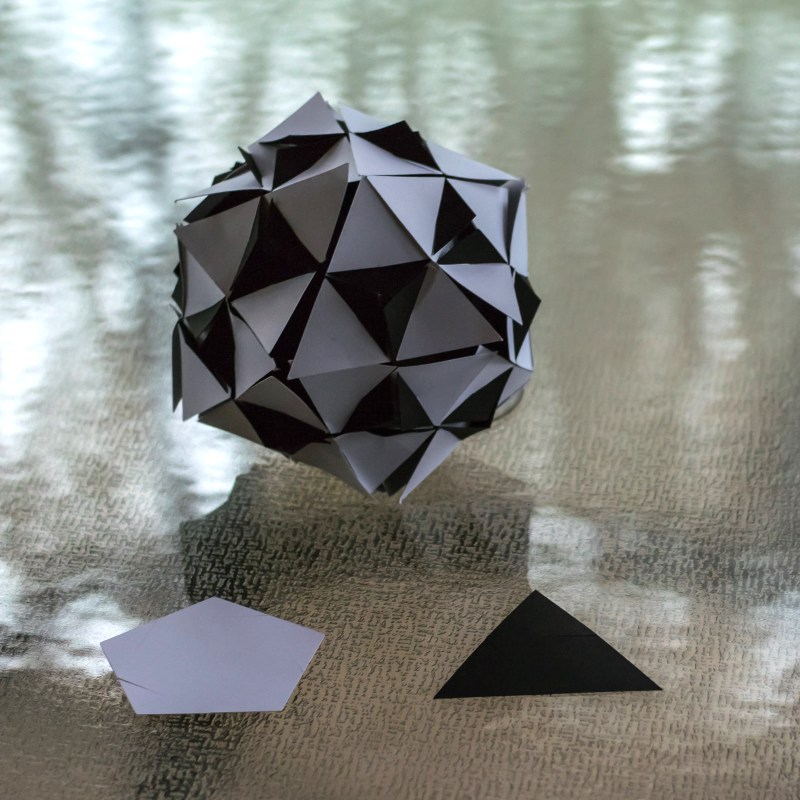
we will make a stellation out of paper without glue. This year, we are going to stellate the Icosidodecahedron, one of the fancier Archimedean solids.

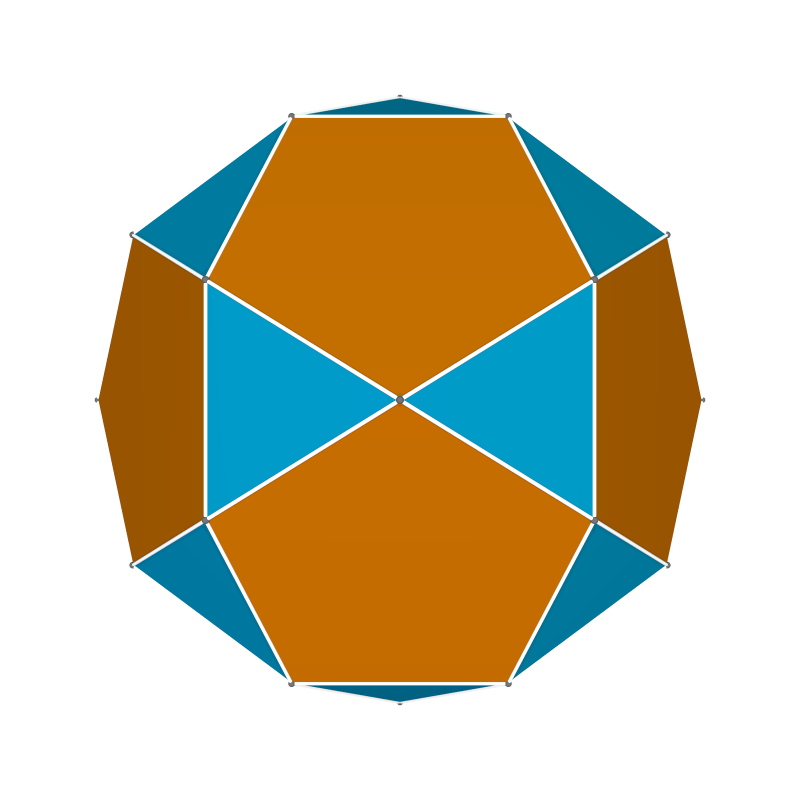
Icosidodecahedron

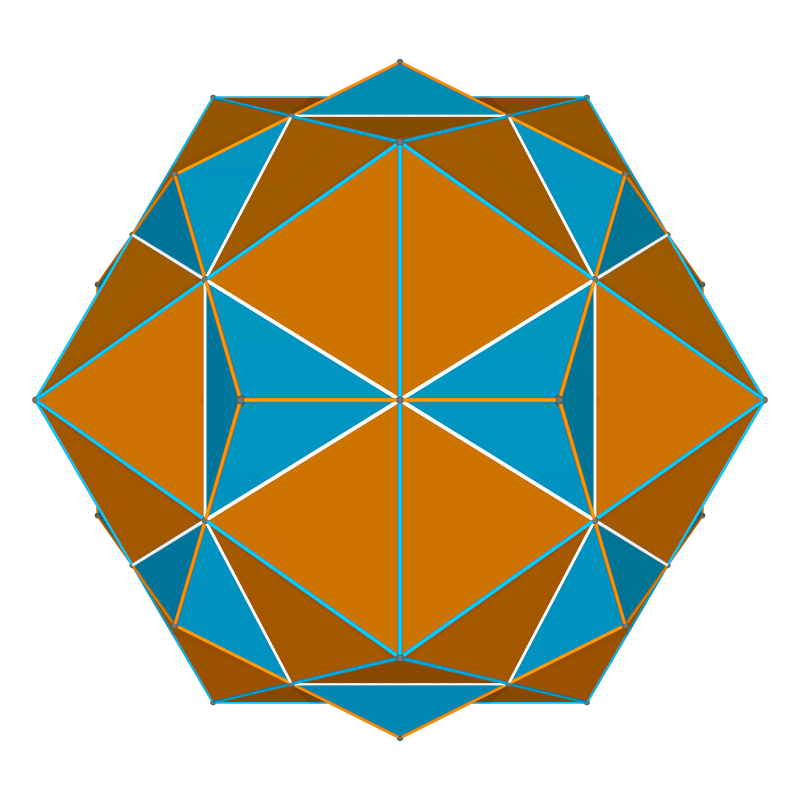
The stellation is quite simple, it is also a compound of the dodecahedron and icosahedron. The simpler compounds of a Platonic solid with its dual are also doable, see the post from two years ago.

Compound

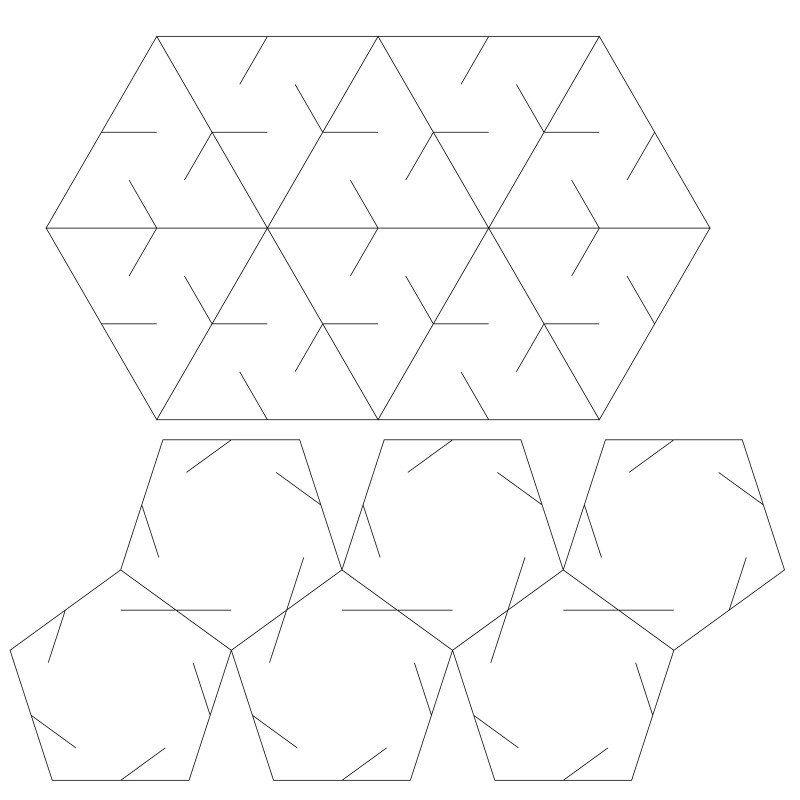
To make it, we will need 20 triangles and 12 pentagons, so printing and cutting two of the templates below will do. I suggest to print four templates in two different colors and to make two models.

StellaDodecaIcosa

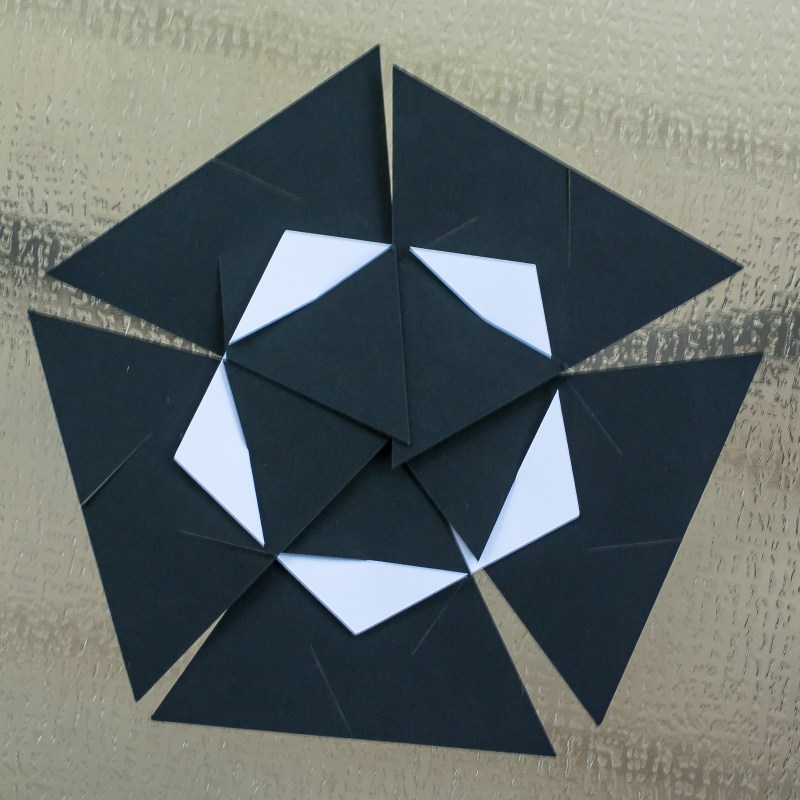
Then we start by sliding five triangles into one pentagon like so:

DSC 1739

Then we add five pentagons between two adjacent triangles.

DSC 1740

Next another five triangles:

DSC 1742

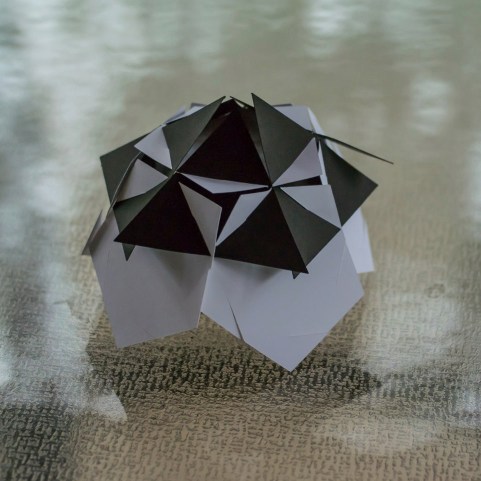
Now we have finished one half of the model. This already would make a nice dome for the backyard.

You can make another half and try to attach them, but I think it is easier to just keep going.
This next step is a little tricky, because to prevent the polygons from falling out, it is best to add a ring of alternating pentagons and triangles. When done, it looks like this:

DSC 1746

The last two steps (add five more triangles and one more pentagon) are then pretty clear, but still tricky because you have to insert the new polygons in four or five slits essentially at once.

DSC 1750

The Grass is Still Growing

I have written about Columbus (Indiana) before. The little town cultivates a lot of modern architecture, given its size and location. This Fall it houses an exhibit of contemporary sculptures.

DSC 6825

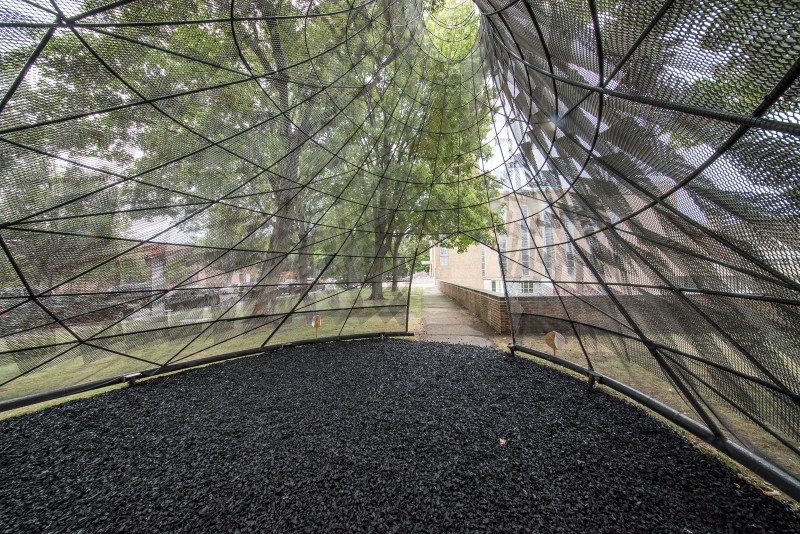
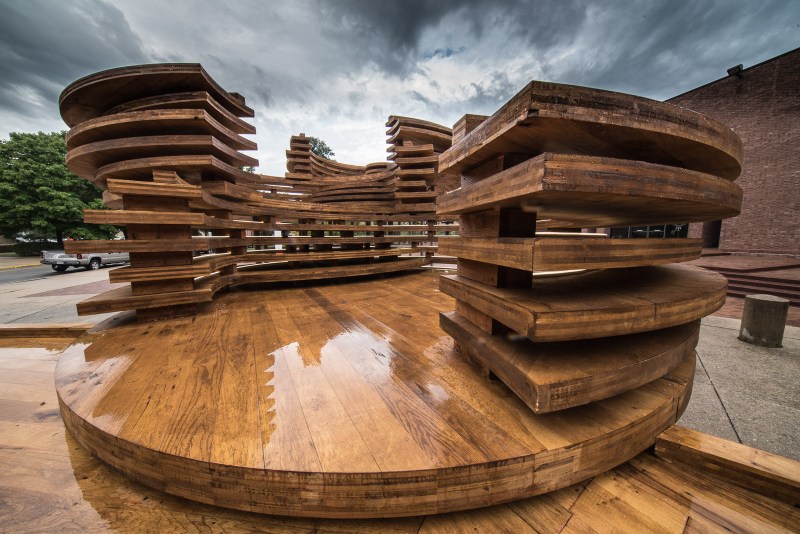
Wiikiaami by studio:indigenous made me think of being caught in a gigantic fish trap (incidentally, the German word Reuse for it seems to have no english counterpart). At the moment, spiders have taken it as their new home.

DSC 6836

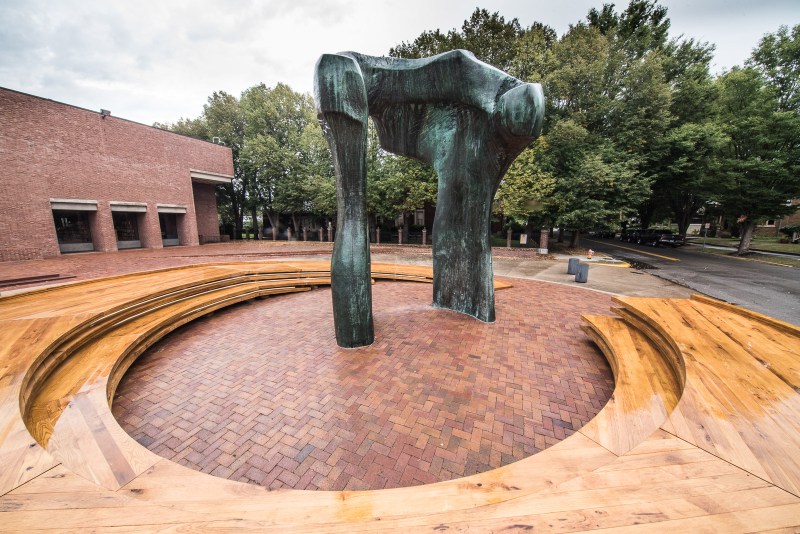
The Moore sculpture is now framed by Conversation Plinth from IKD.

DSC 6839

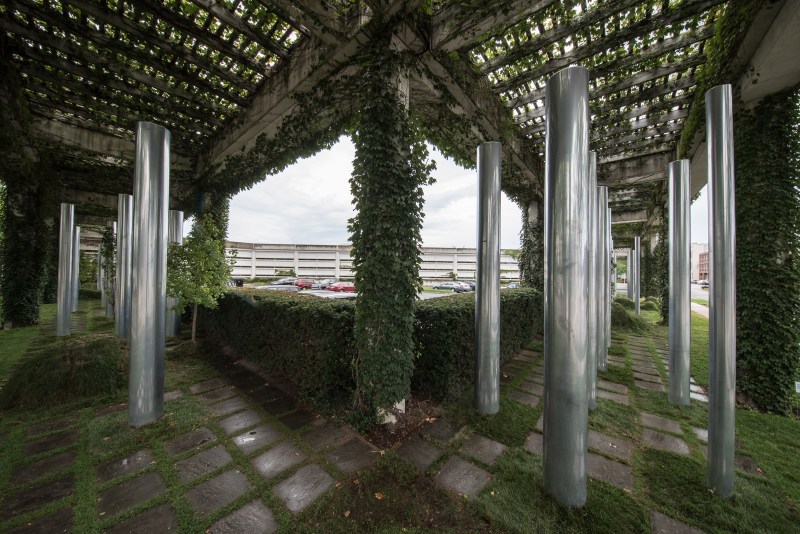
My favorite sculpture is Anything can happen in the woods by Plan B Architecture & Urbanism.

DSC 6886

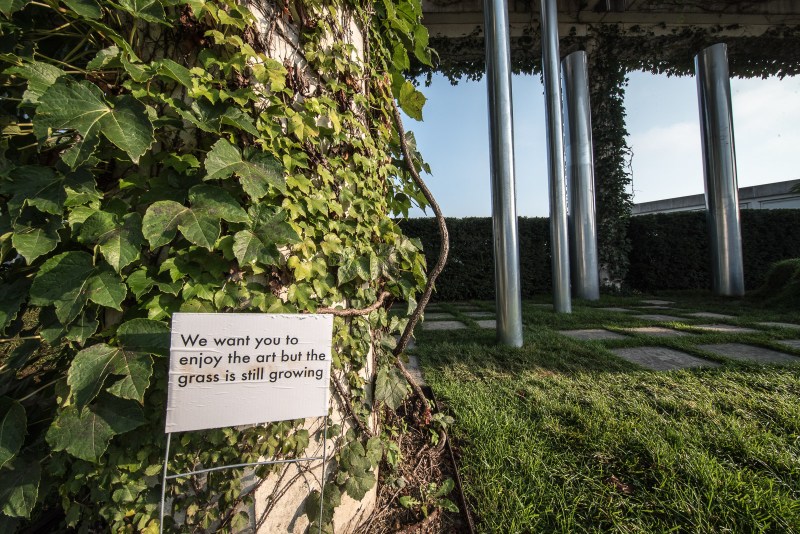
They consist of metal columns seemingly growing next to grass covered mounds that were intended for sitting but are more used for climbing.

DSC 6984

Playing with circular images

After successfully transforming rectangular images into circular ones it is time to do something with them. We have seen already that the one can deform them by shifting one point somewhere else. This is very much like rotating a globe.

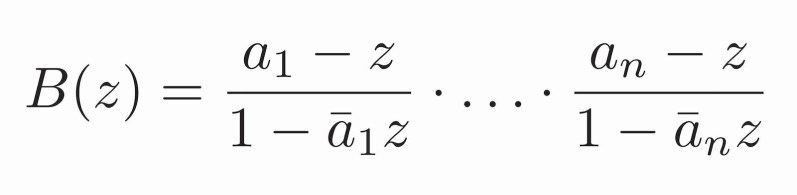
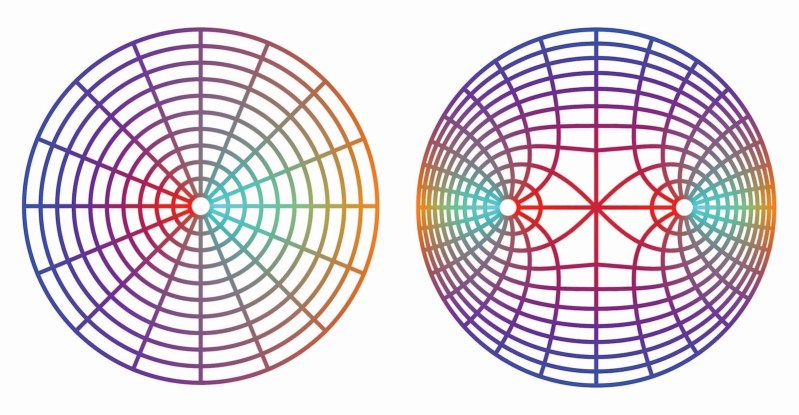
But besides these angle preserving symmetries of the disk there are other maps from the disk to itself that also preserve angles but are not anymore 1:1. These are the Blaschke products, written in complex notation as follows.

Product 01

Let’s look at a simple example with just two factors, and choose the a-parameters to be 1/2 and -1/2. Then B(z) maps the double spiderweb on the right to the standard spiderweb on the left:

Blascke2 01

In other words, by taking preimages (or better, by using B(z) to pull back an image…), we can create multiple copies of a circular image within a circular image. The a-parameters designate the locations of the “centers” of the multiple spiderwebs where the strands converge.

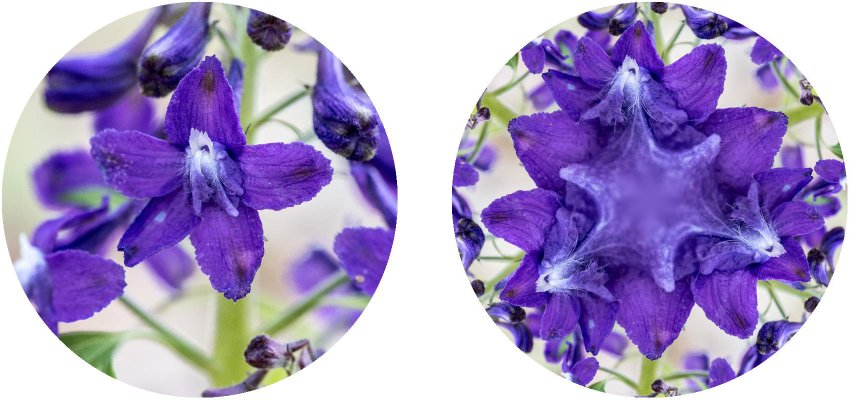
Flower1

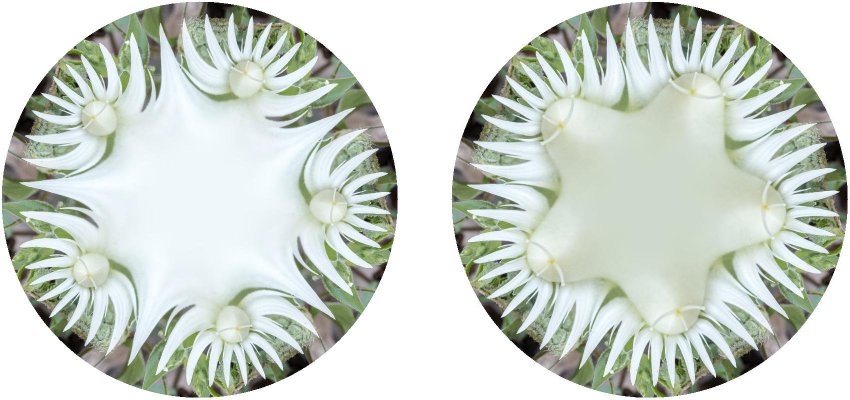
For instance, above is a circular image of a Spring wild flower, and to the left its 3-fold mutation. Below are 5-fold mutations with two different choices for the a-parameter.

Flower2

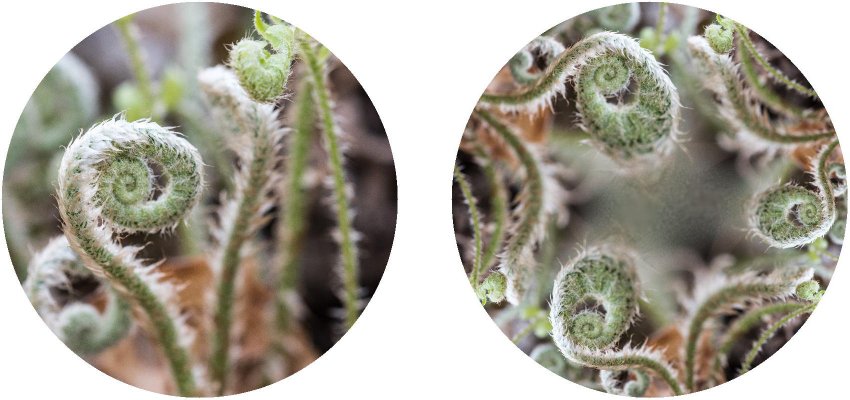
These images resemble kaleidoscopes, but are improved, because the copies of the original image fit together more evenly (smoothly, and not just by reflection). One can also make the result less symmetrical by choosing the a-parameters less symmetrical. Below the copies of the ferns are places at 120 degree angles but differently far out,

Ferns

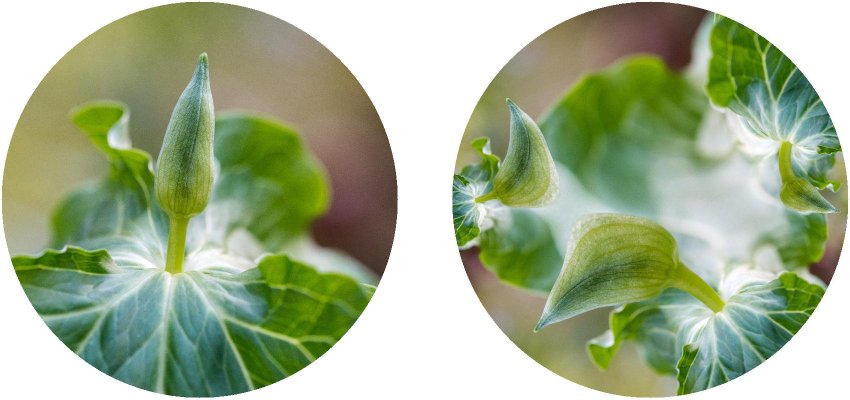
and here we have a large copy of the original budding trillium at the bottom with two smaller copies to the left and right.

Flower3

Now I need to find somebody who writes an app that implements all this…

Julianna and Friends

I have written before about Sofia, one of the wonderful cheeses from Capriole Farm.

DSC 1220

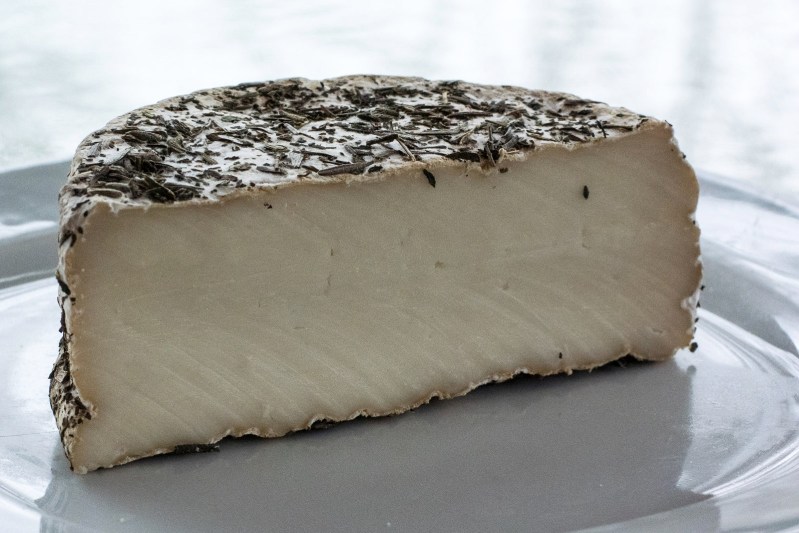
Like her, Julianna (up above) is made from goat cheese, but comes with a nice herbal crust. It’s the stronger companion of the Old Kentucky Tome, which you find below to the right.

DSC 1218

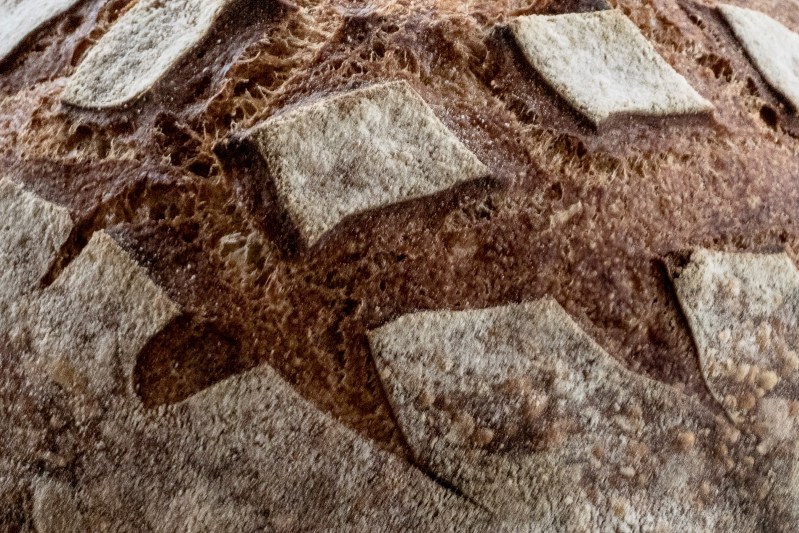
There are other things from here I would like to take with me to my next life, whenever this will happen. The bread, for instance. American bread used to be the biggest nightmare in this country. Not anymore. One reason is the Muddy Fork Bakery that produces this Rustic Sourdough with a perfect crust,

DSC 1216

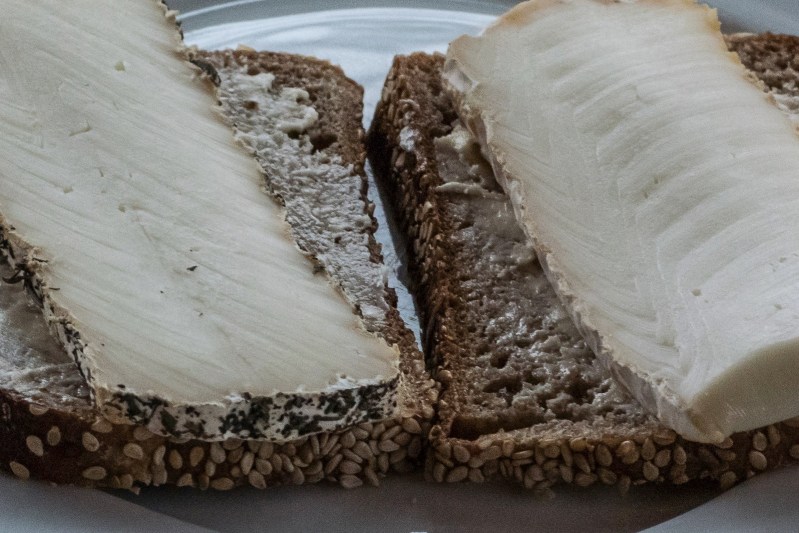
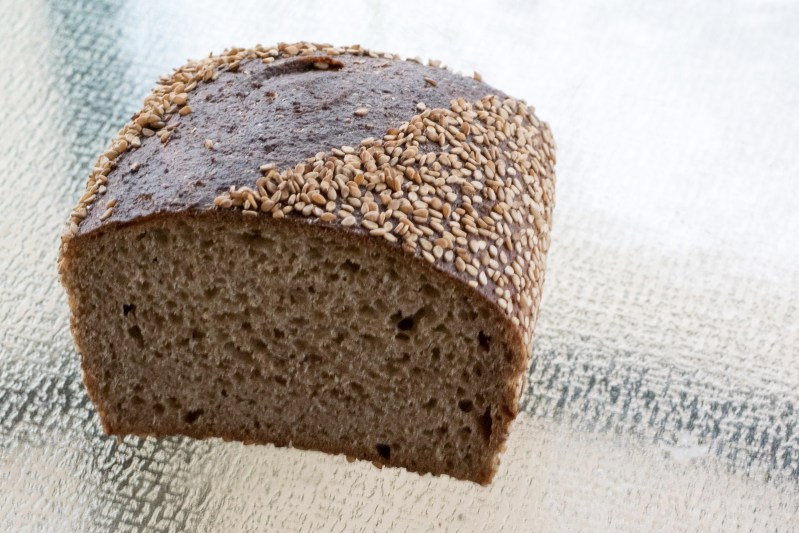
or the beautiful Sesame Spelt

DSC 1217

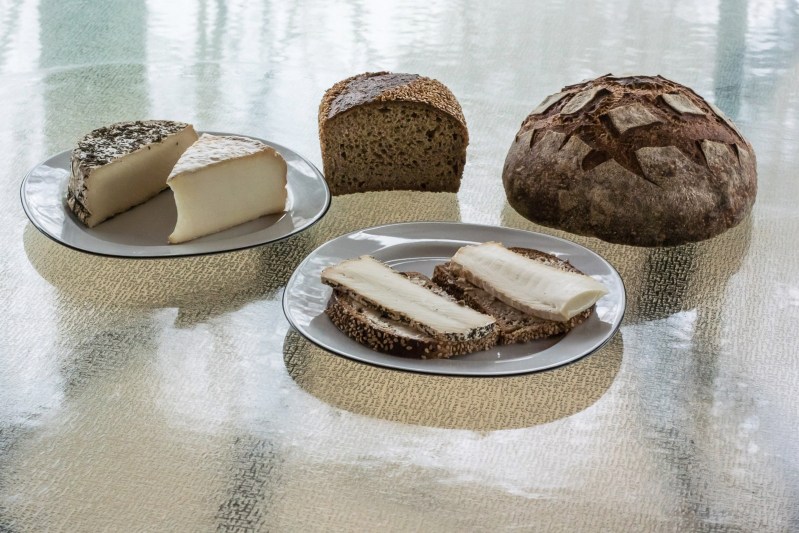
that goes so well with the goat cheese. All their breads are hand-made and wood fired. Amazing stuff. You can find both bread and cheese at the local Farmer’s Market or at Bloomingfoods.

DSC 1215

Stellated Triacontahedron

If you have mastered the Slidables from last year and had enough of the past gloomy posts, you are ready for this one.

Let’s begin with the rhombic triacontahedron, a zonohedron with 30 golden rhombi as faces. There are two types of vertices, 12 with valency 5, and 20 with valency 3. In the image below, the faces are colored with five colors, one of which is transparent.

Triacontahedron

The coloring is made a bit more explicit in the map of this polyhedron below.

Triagraph 01

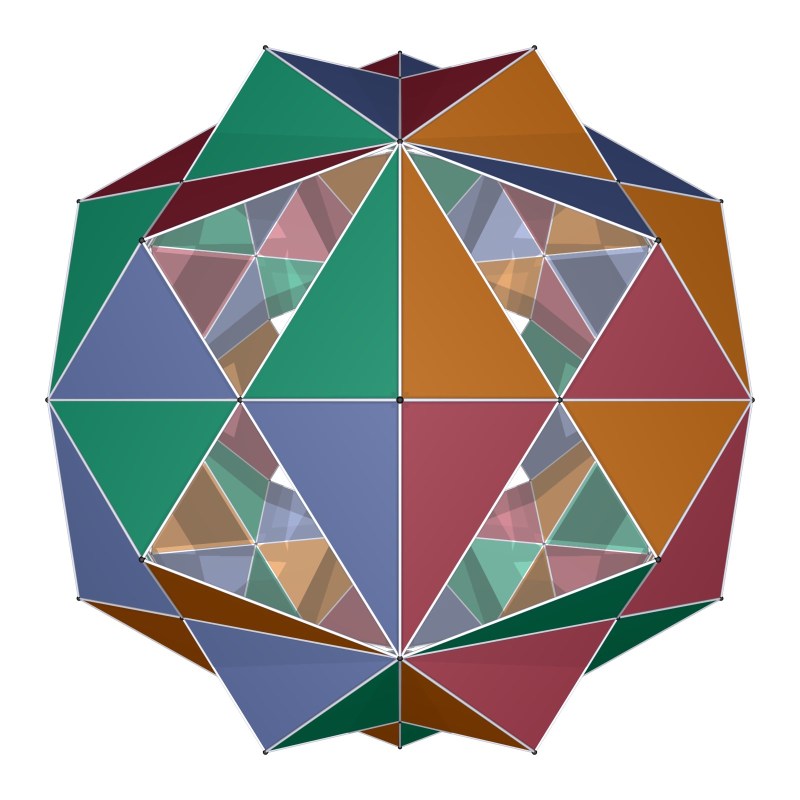
We are going to make a paper model of one of the 358,833,072 stellations of it. This number comes from George Hart’s highly inspiring Virtual Polyhedra.

Stellatriacontahedron

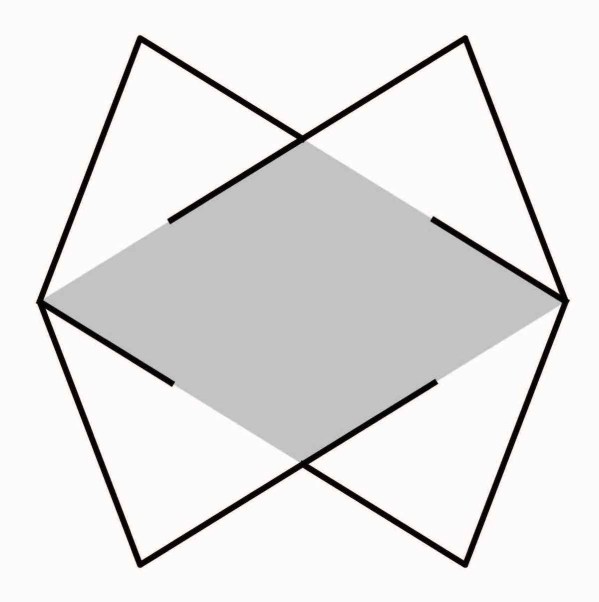
In a stellation, one replaces each face of the original polyhedron by another polygon in the same plane, making sure that the result is still a polyhedron, possibly with self intersections.

Newface 01

In our case, each golden (or rather, gray) rhombus becomes a non convex 8-gon. The picture above serves as a template. You will need 30 of them, cut along the dark black edges. The slits will allow you to assemble the stellation without glue. Print 6 of each of the five colors:

DSC 8159

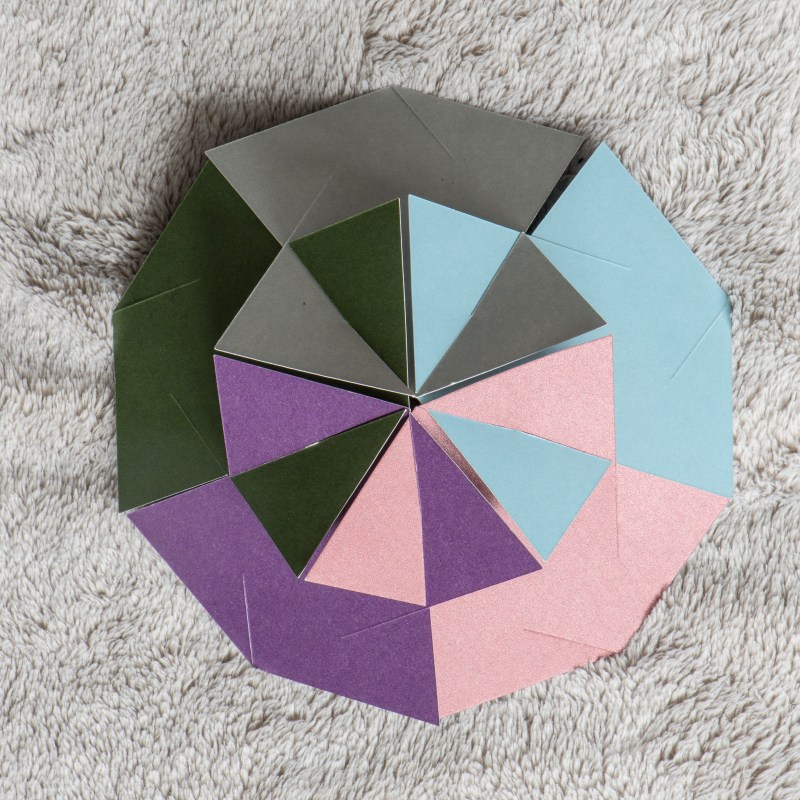
Now assemble five of them, one of each color, around a vertex. Note that there are different ways to put two together, make sure that the original golden rhombi always have acute vertices meeting acute vertices. This produces the first layer.

DSC 8161

The next layer of five templates takes care of the 3-valent vertices of the first layer. Here the coloring starts to play a role.

DSC 8162

The third layer is the trickiest, because you have to add 10 templates, making vertices of valency 5 again. The next image shows how to pick the colors to maintain consistency.

DSC 8166

Below is the inside of the completed third layer.

DSC 8168

Two more to go. Layer 4 is easy:

DSC 8170

The last layer is again a bit tricky again, but just because it gets tight. Here is my finished model. It is quite stable.

DSC 8174