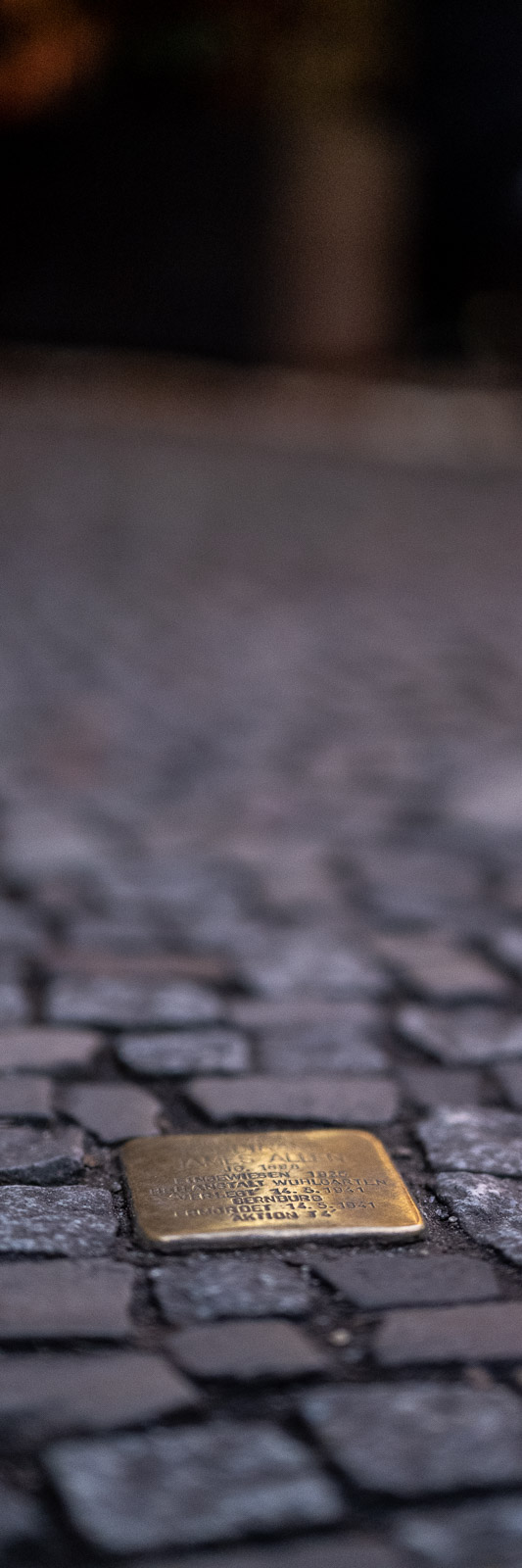
Stolpersteine (Berlin XIV)

I grew up learning little about the German colonialism in Africa from 1884-1920, or the Herero and Namaqua genocide between 1904 and 1908 (the first genocide of the 20th century), or the term Rhineland Bastard, used by the Nazis for Afro-Germans.
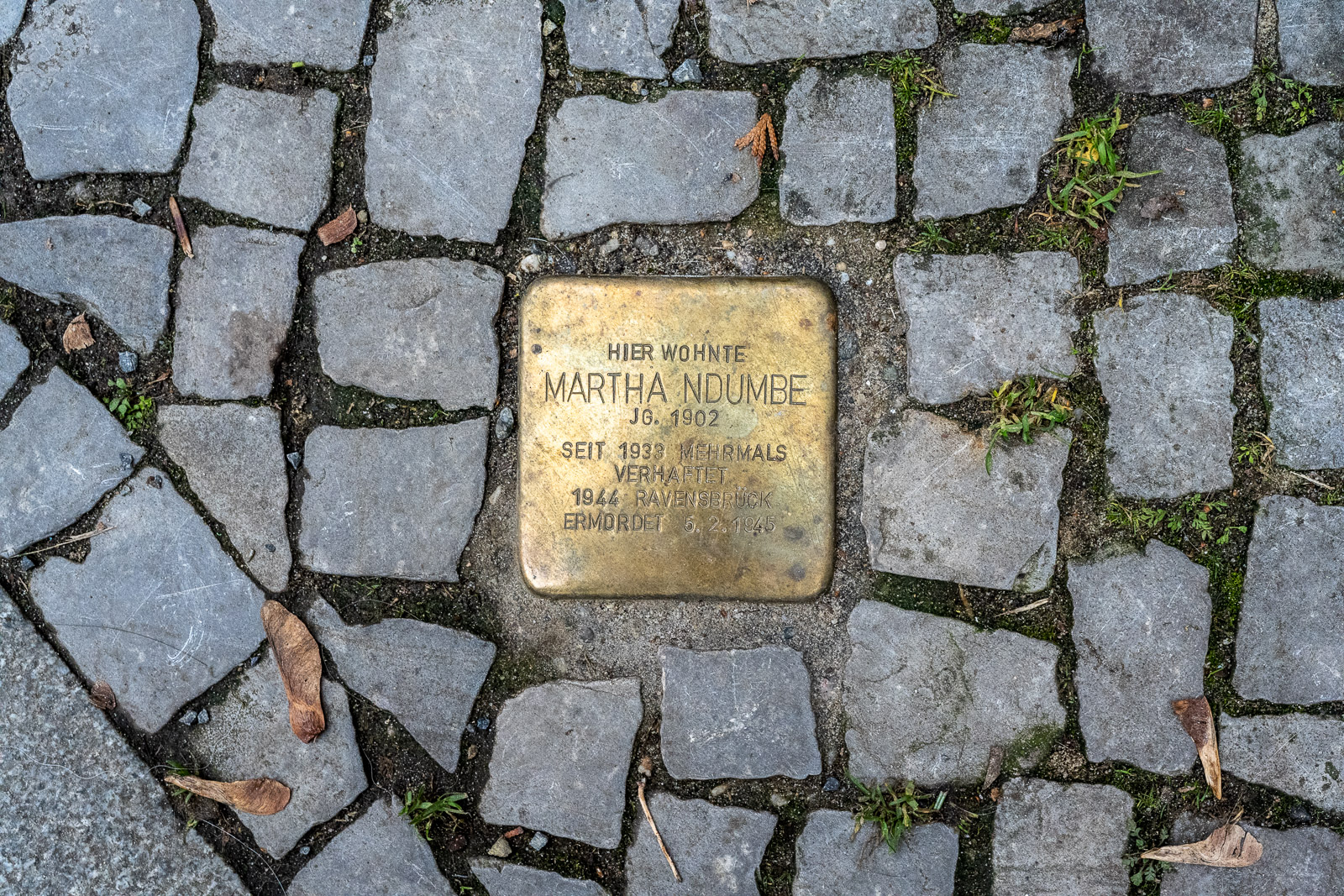
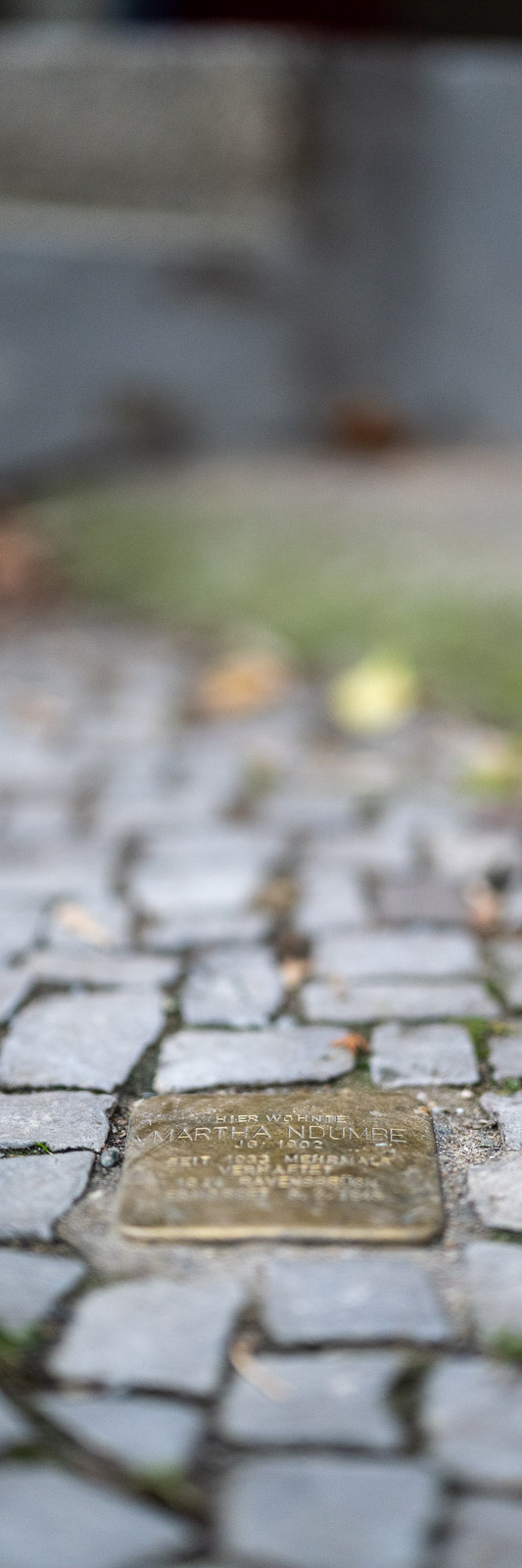
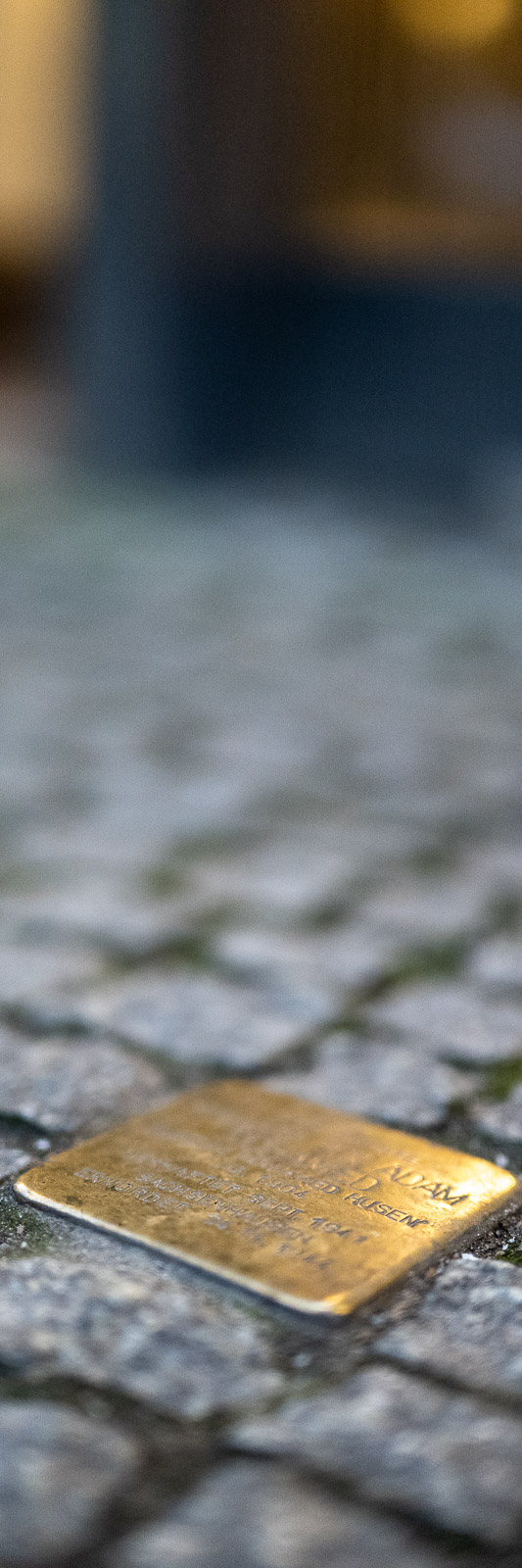
The Stolpersteine Project commemorates people prosecuted and murdered by the Nazis by placing a brass plate at their last place of residence of their own choice. There are more than 75,000 of them in Europe, in Berlin alone 8587 at the moment. Most of them commemorate Jewish victims. As far as I know, there are three such Stolpersteine for so-called Afro-Germans in Berlin, and another one in Frankfurt.

Martha Ndumbe‘s Stolperstein is in front of a day care at Max-Beer-Str. 24. She was prosecuted officially as a sex worker, which is why her mother didn’t receive any compensation after the war: She couldn’t prove her daughter was prosecuted because of her race.
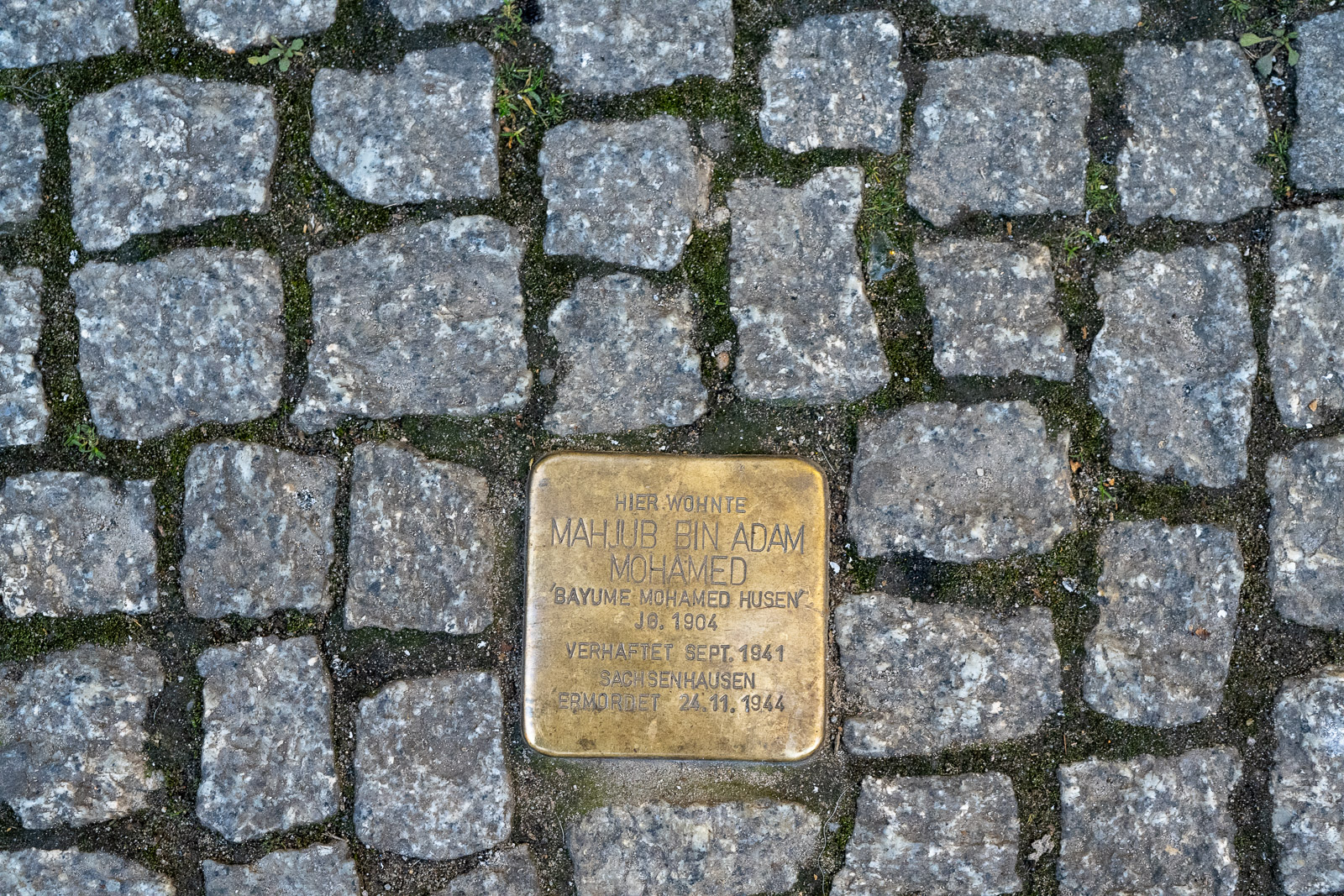
Mahjub (Bayume Mohamed) bin Adam Mohamed (Brunnenstraße 193) was a soldier and actor. He was killed in the concentration camp Sachsenhausen.

Ferdinand James Allen (Torstraße 174) was the son of a black musician and his German wife. He lived with epilepsy and was first sterilized than murdered by the Nazis.

All three Stolpersteine are in Berlin Mitte and can be visited during a 30 minute walk. There are several others on the way.
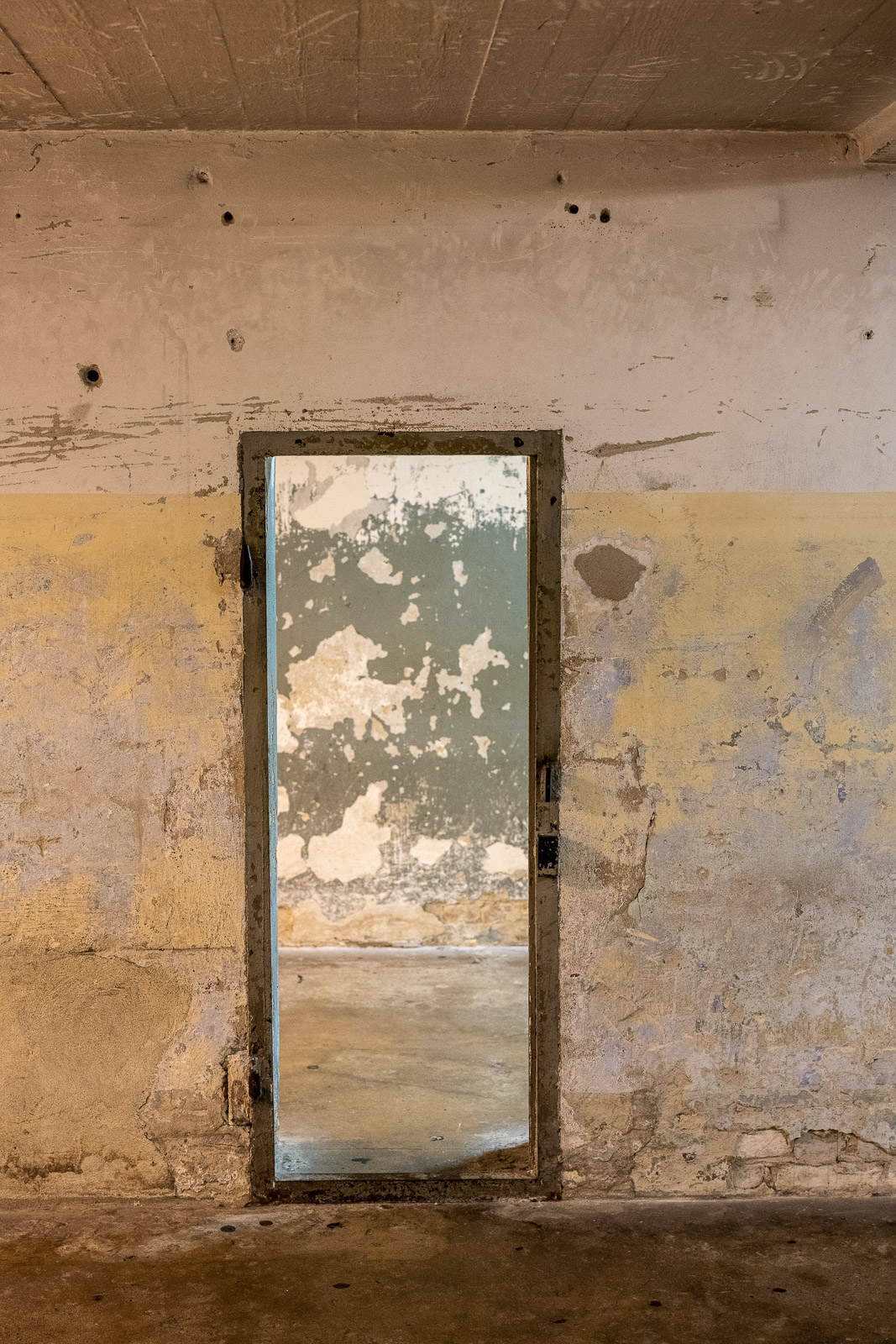
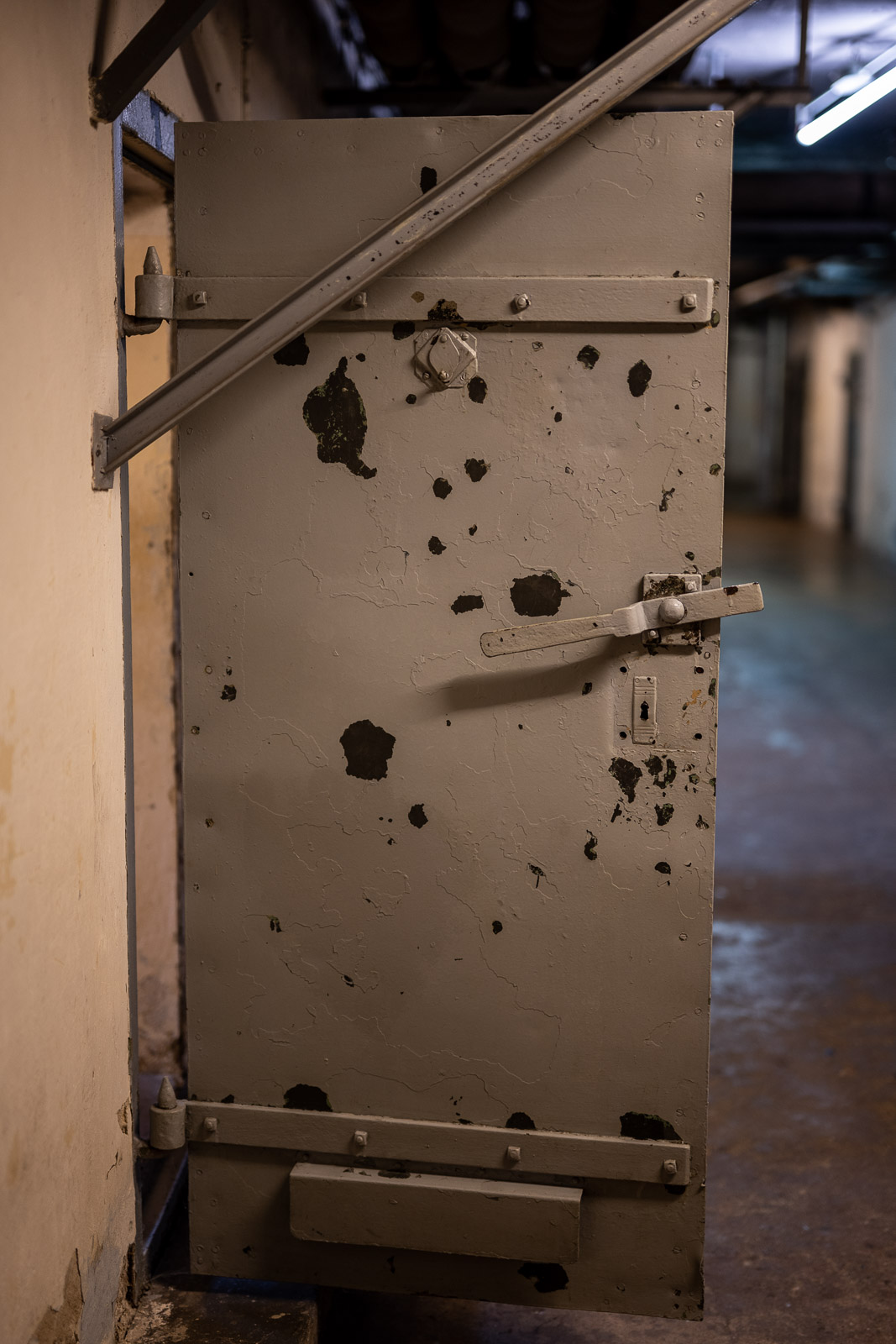
Doors (Berlin XIII)

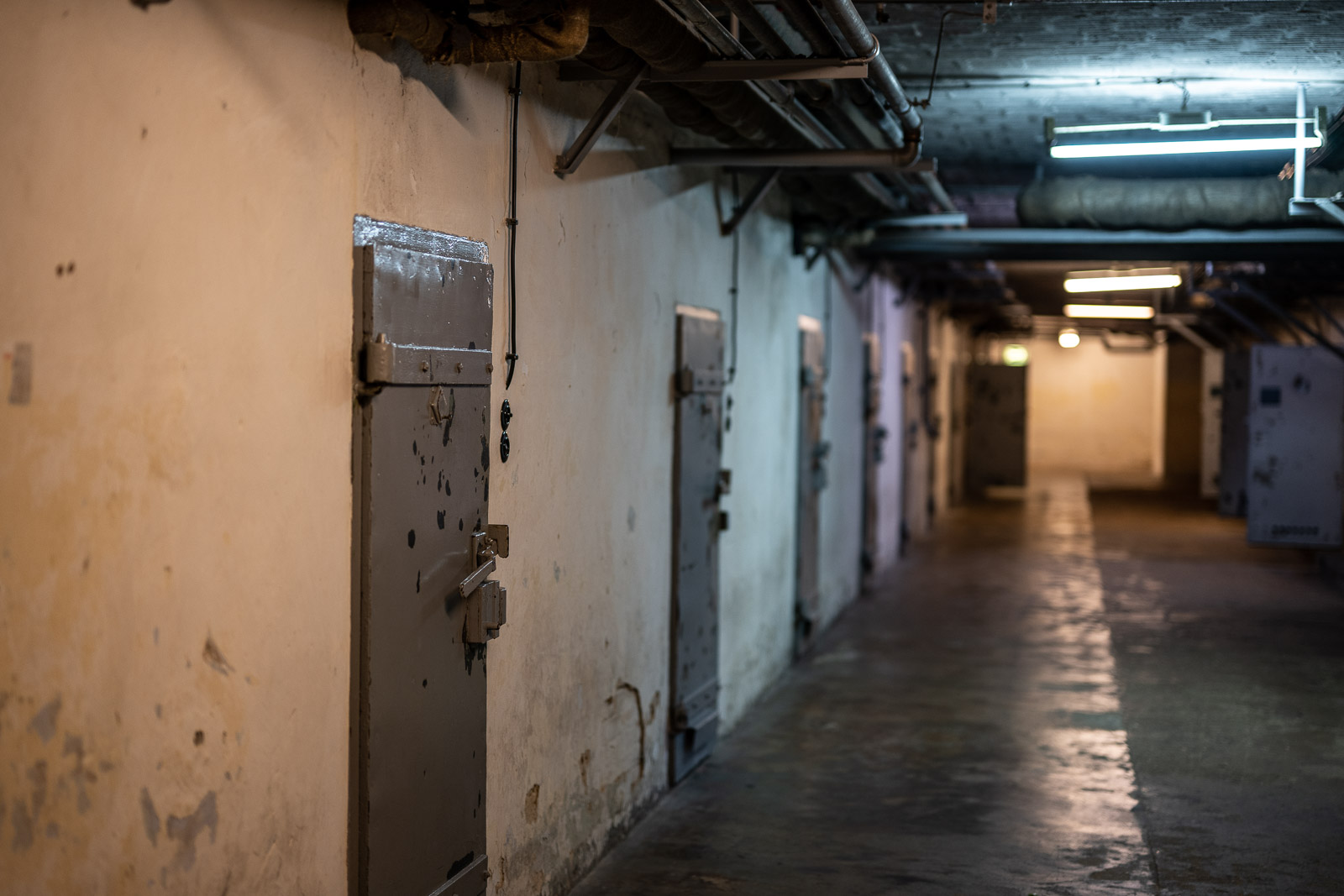
During the second world war, Hohenschönhausen was a heavily bombed industrial area in the northeast of Berlin.

In 1945, one of the few still intact buildings was used by the Soviet Secret Police as Special Camp 3, a prison camp to intern Nazis and other undesired elements.

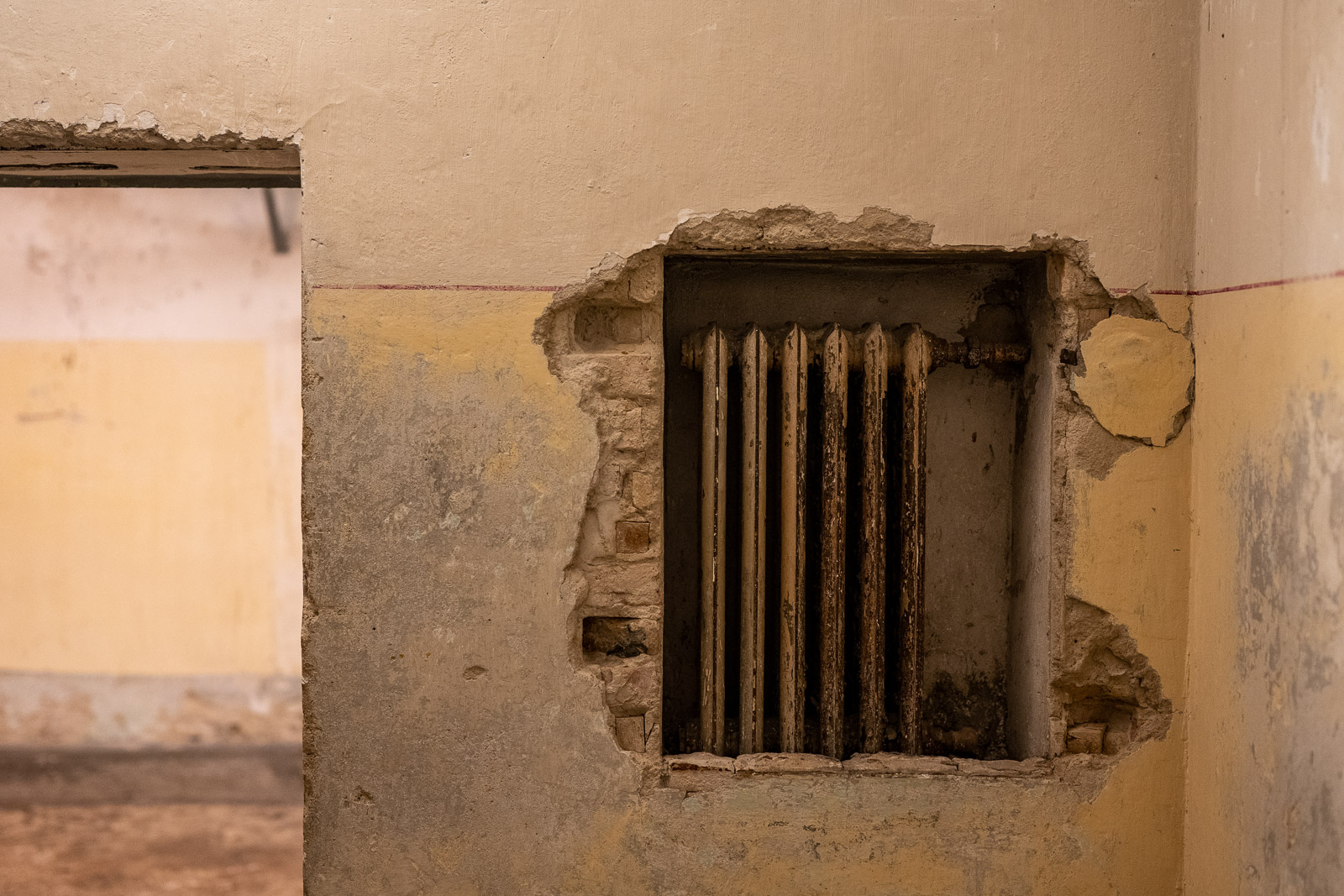
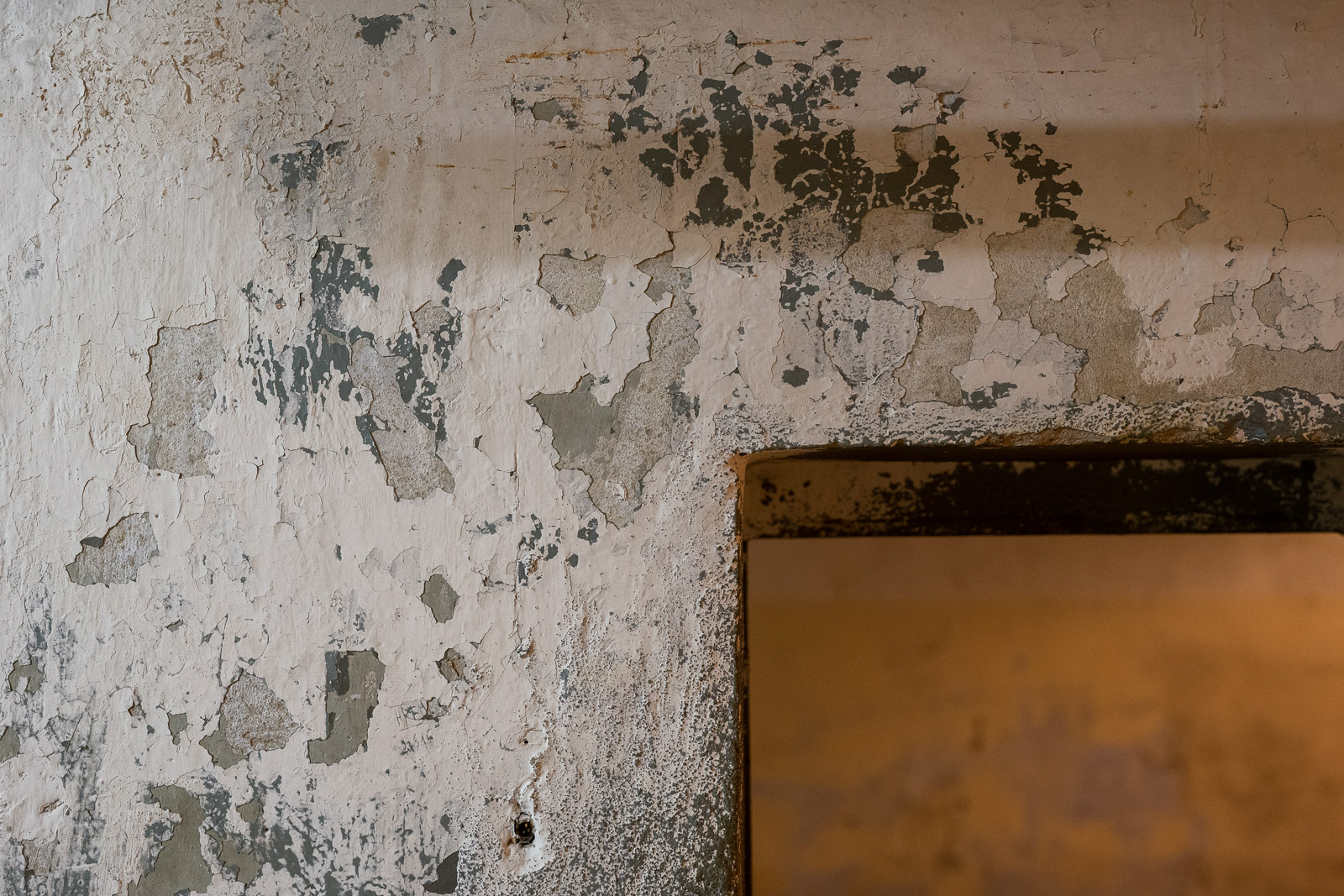
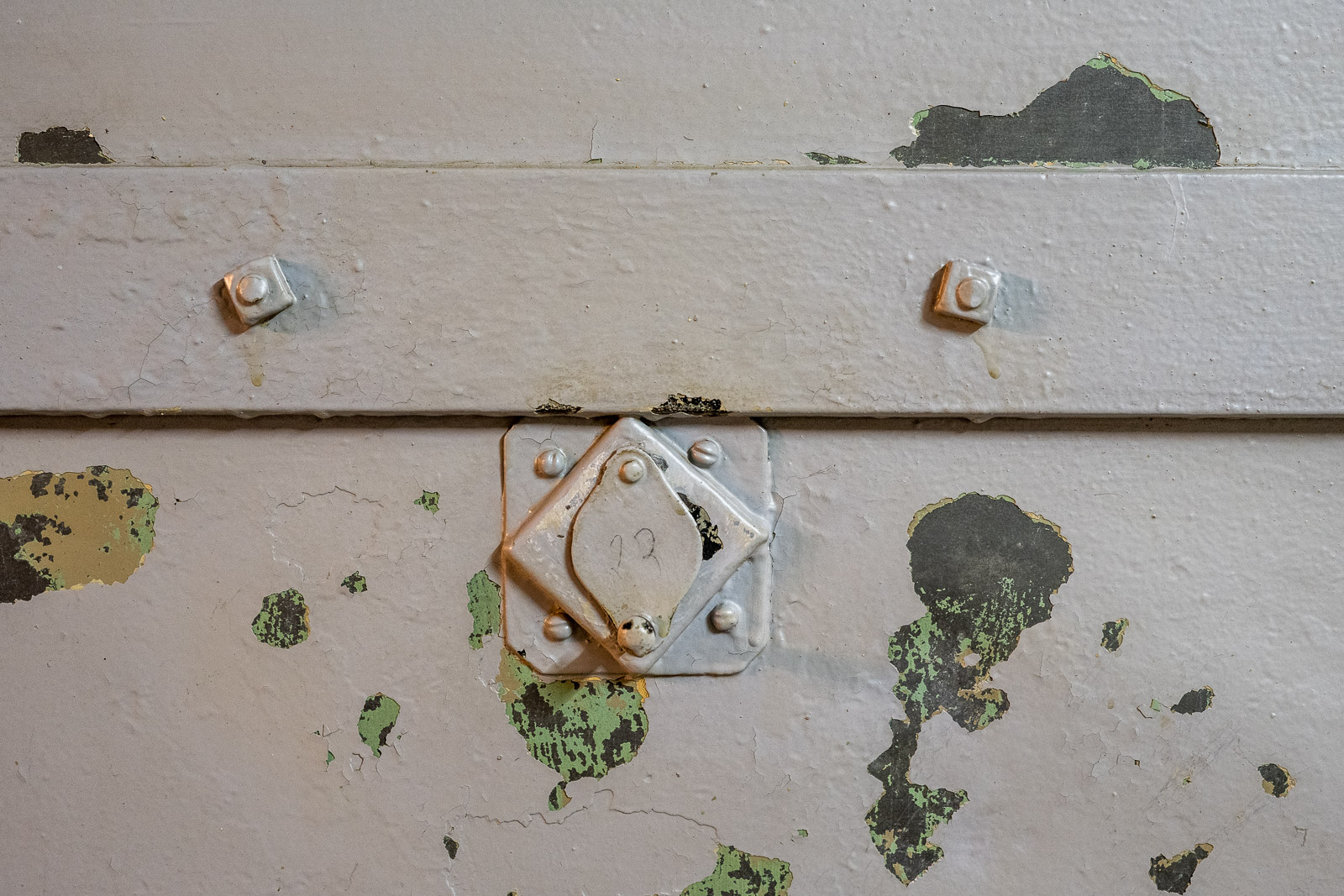
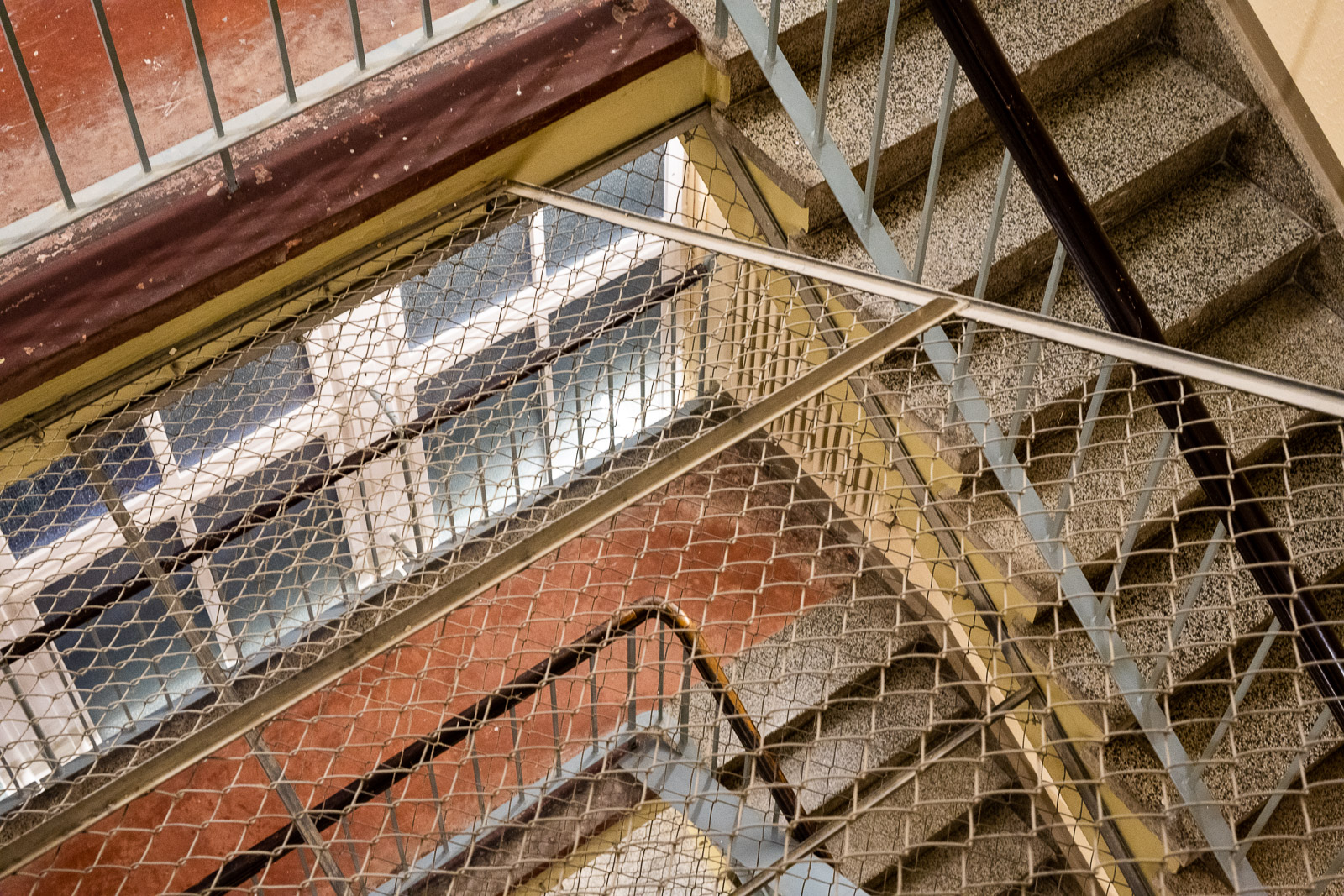
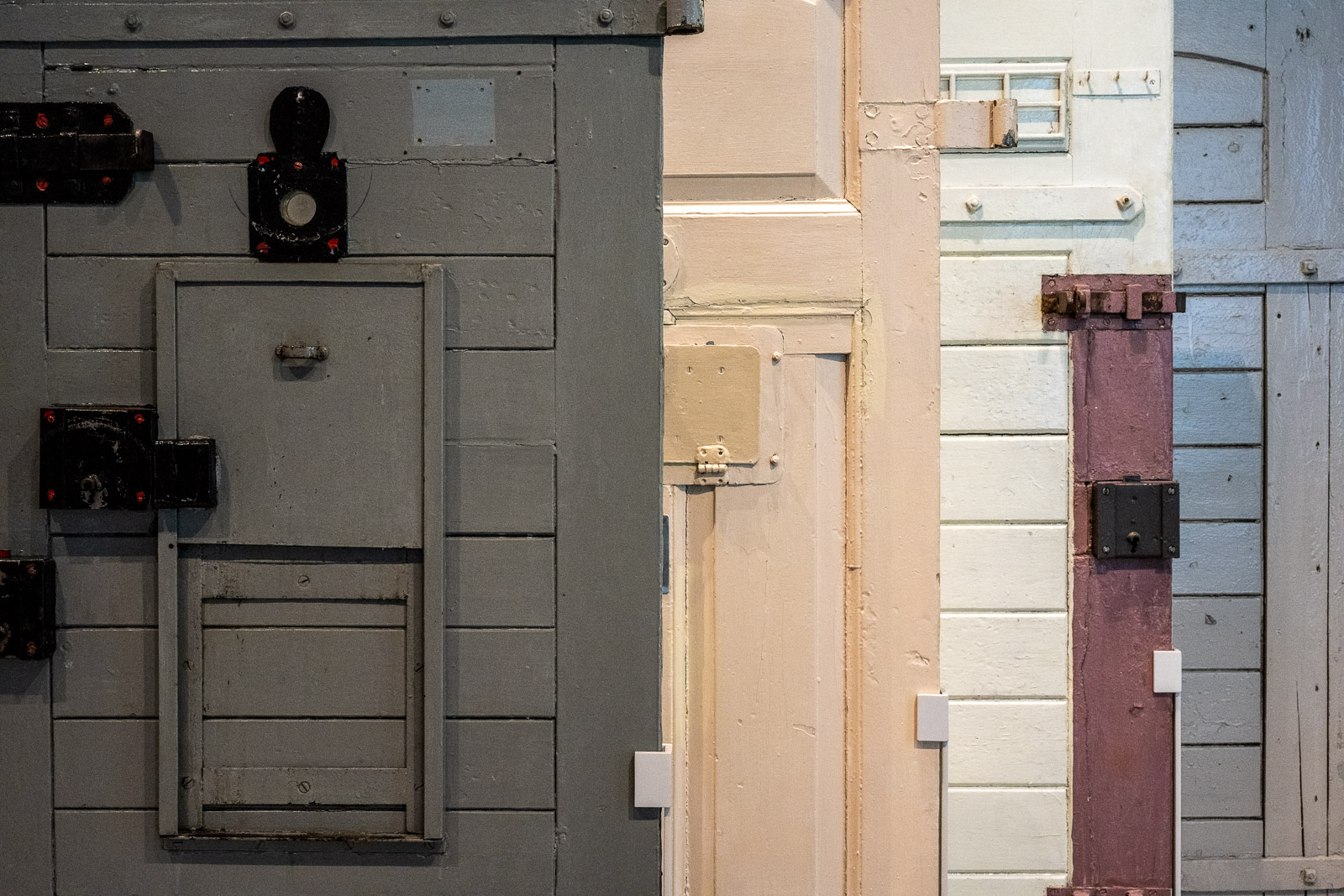
The pictures above are from the former cafeteria, converted into prison cells by forced labor.

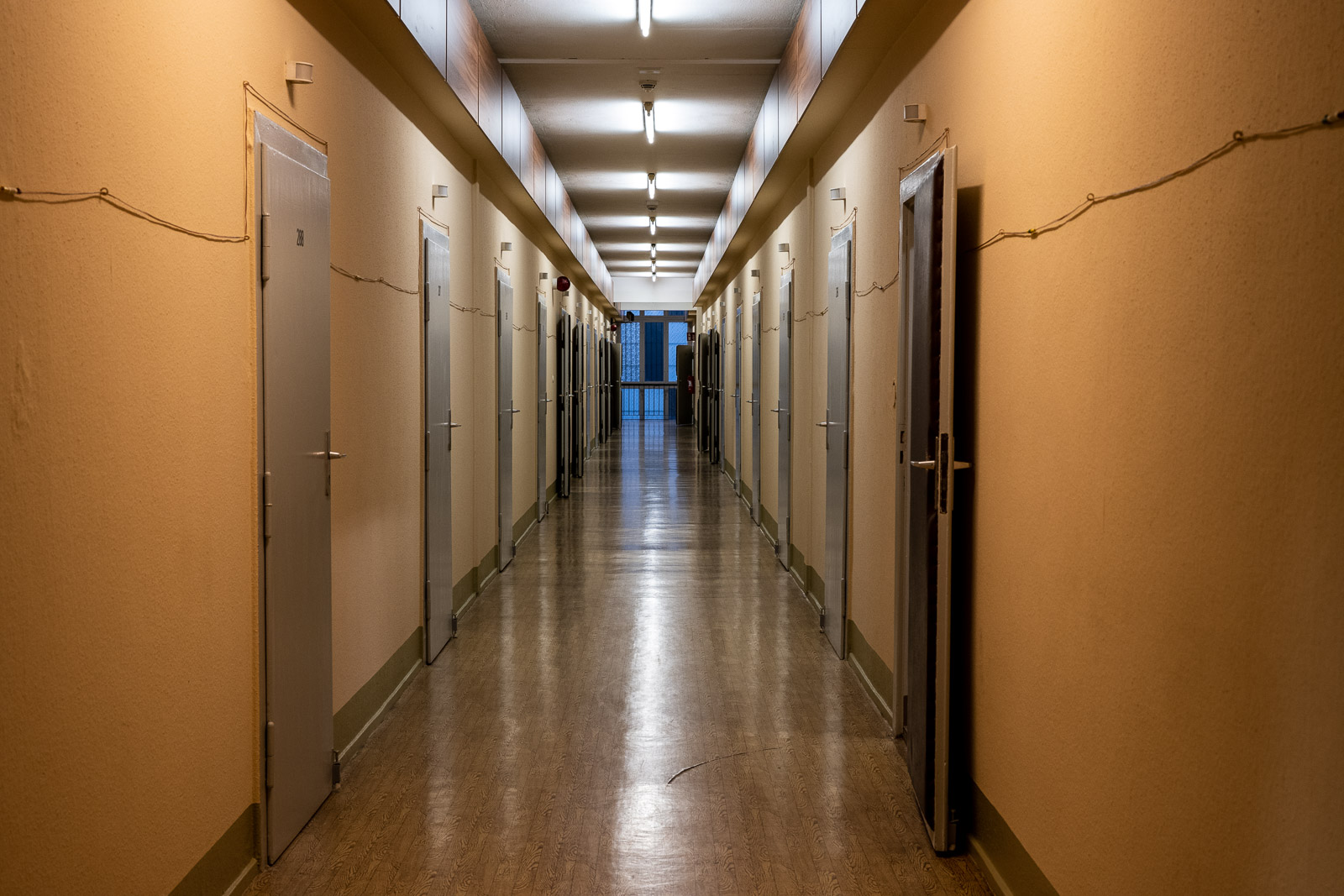
In 1951, the East German Stasi took over and added a new building with nicer rooms.

It was used as a highly secret interrogation prison, with few people knowing about its existence. Dissidents and other people stubbornly seeking to leave the young republic were brought here into solitary confinement to solicit confessions.

At night, prisoners were checked on every few minutes and woken up if their sleeping position in bed deviated from the norm. The sound of the keyhole latches is still causing nightmares to the survivors.

The psychological torture aimed to make the prisoners feel utterly alone, disoriented, and hopeless.

An open door became even more terrifying than a closed one.

Grunewald Cemetery (Berlin XII)

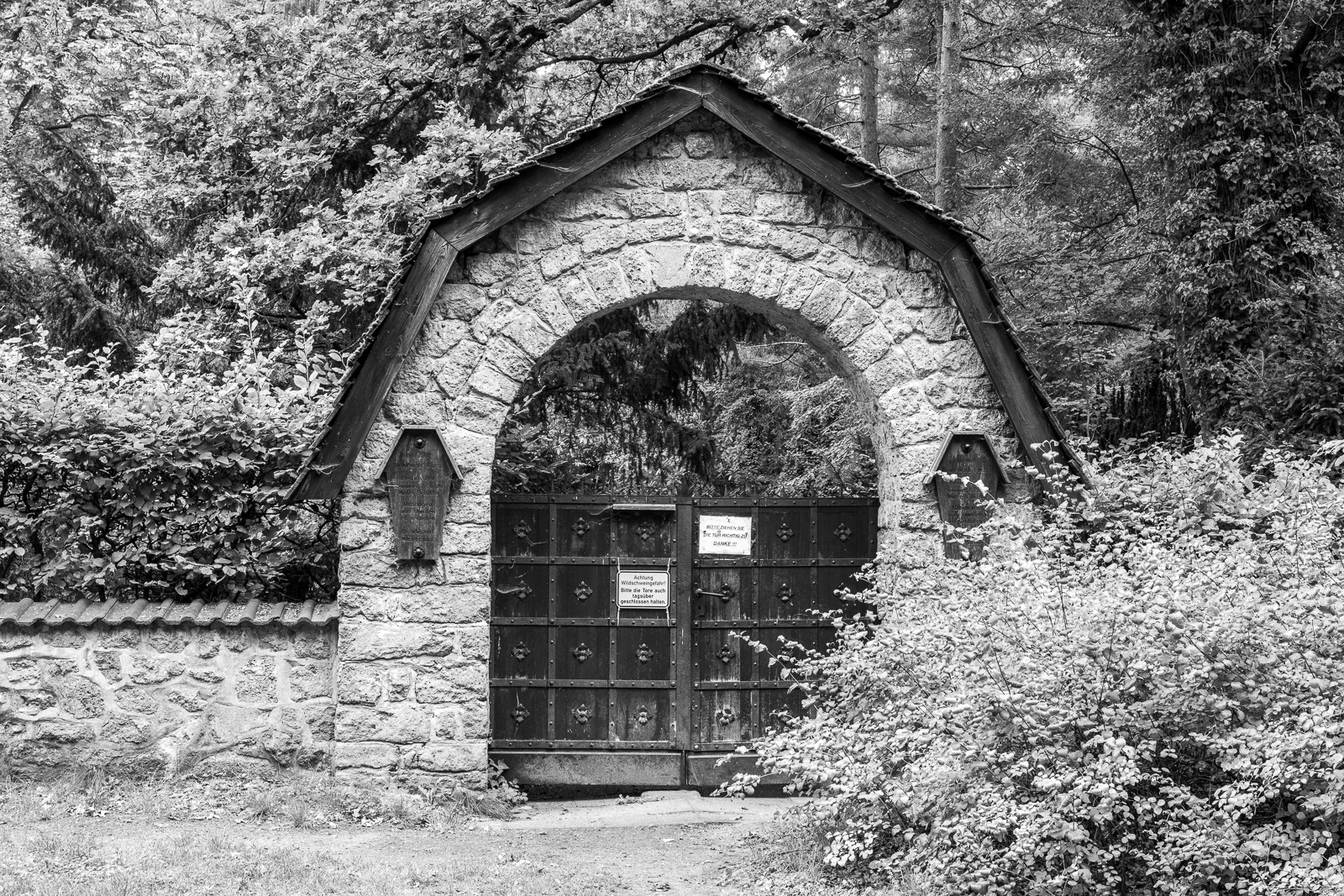
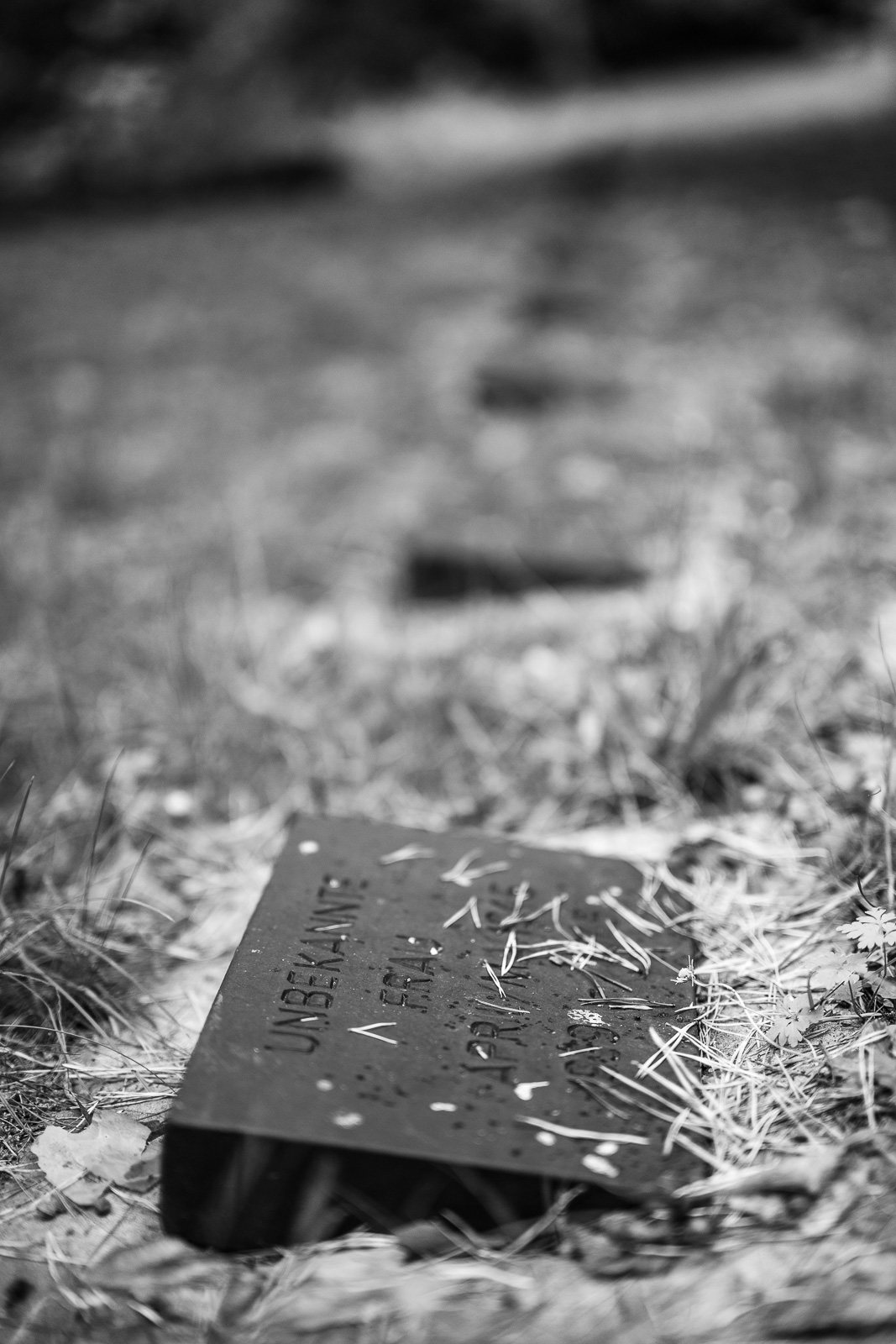
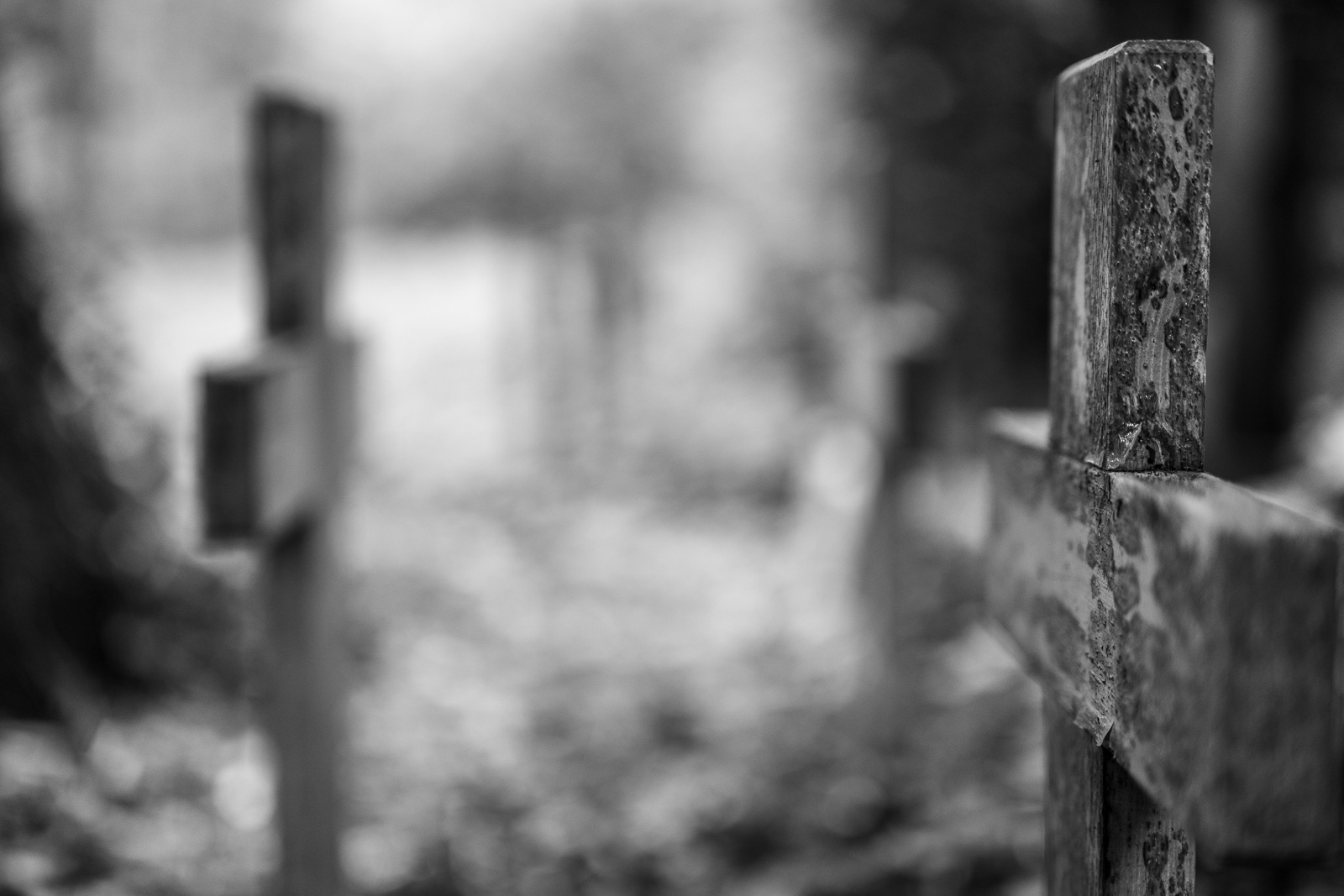
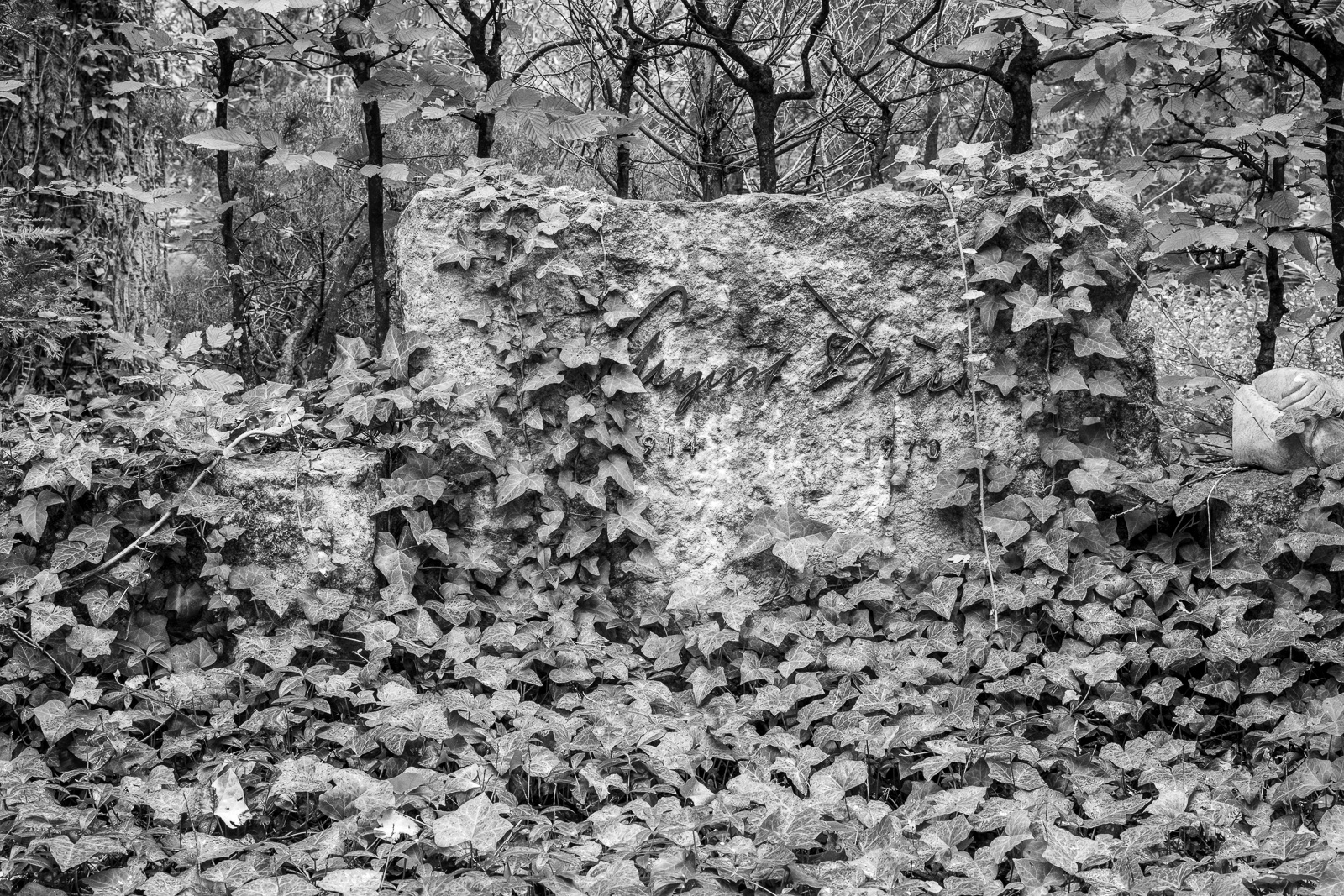
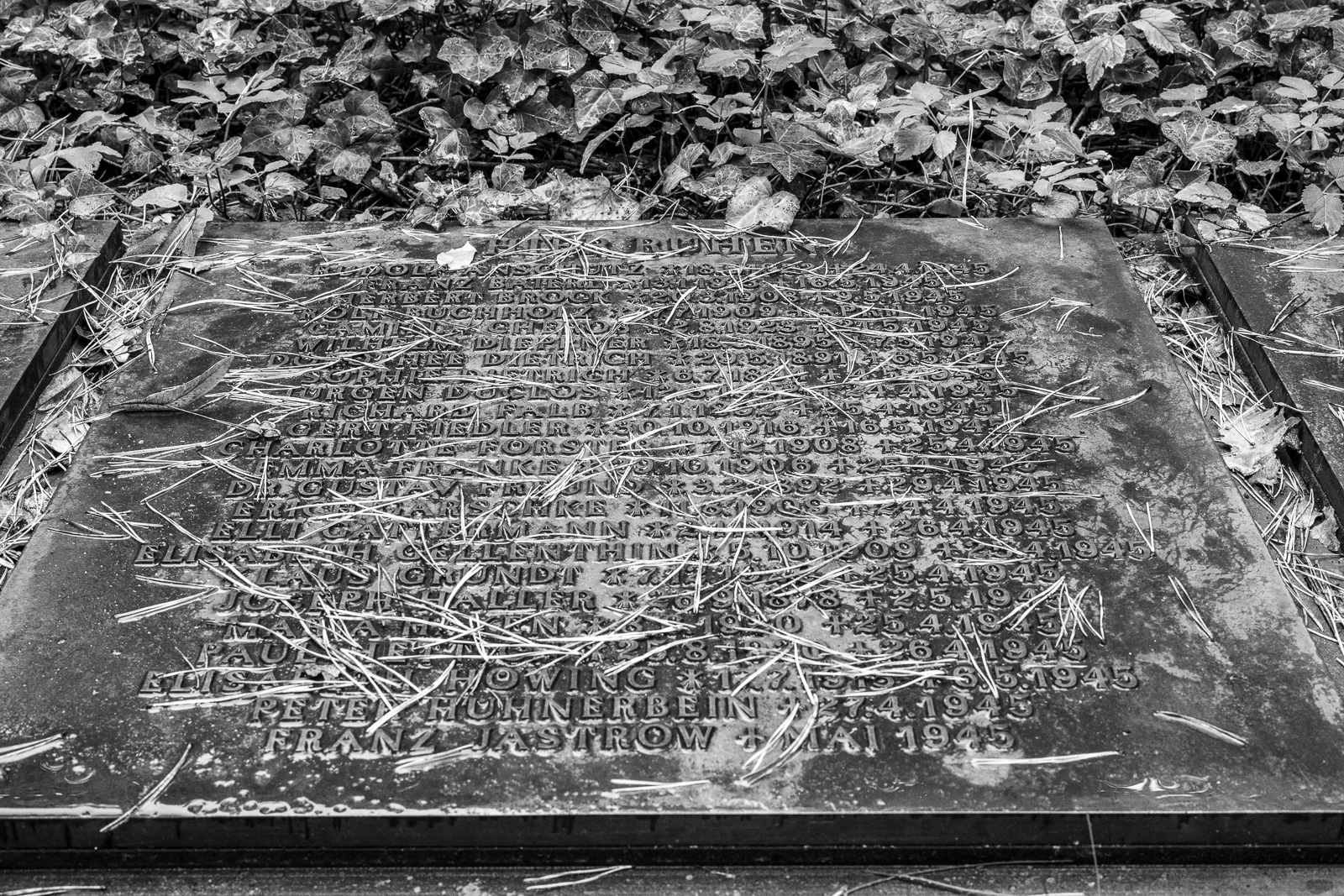
Close to the Havel — a famous place to drown — secluded, away from any popular hiking trails, in the largest forest of the western part of Berlin, the Grunewald, is a little cemetery.

It is for the misfits, the nameless ones, by fate or choice.

It is a somber place, but it doesn’t depress. Instead it makes us calm and serene. I would even say this is a place I could live.

The earliest graves are from 1900, many of them overgrown.

Some of the graves are mass graves, for fallen soldiers who had no other place.

I wish we knew all their stories.

Walls (Ohio XII)

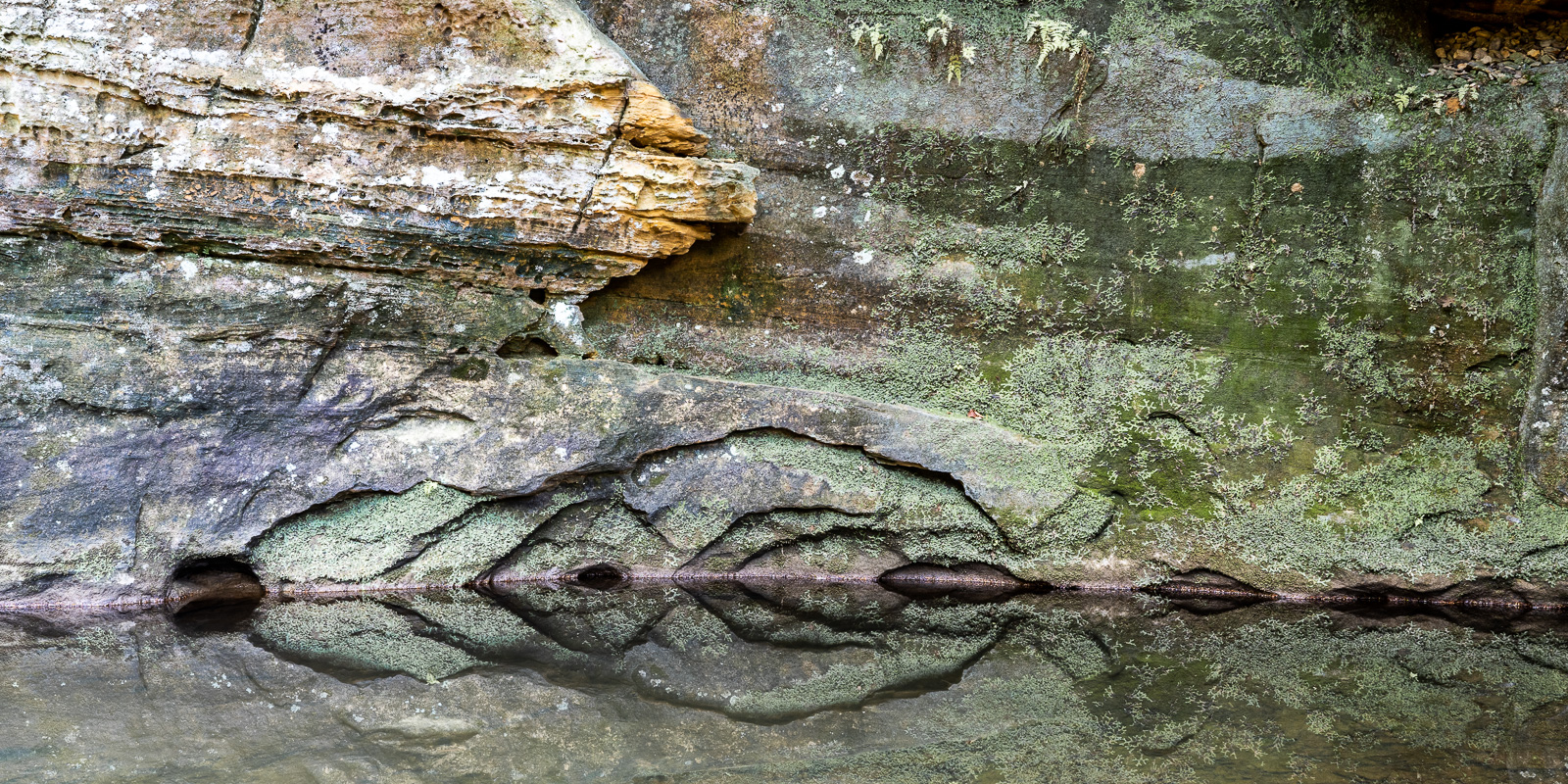
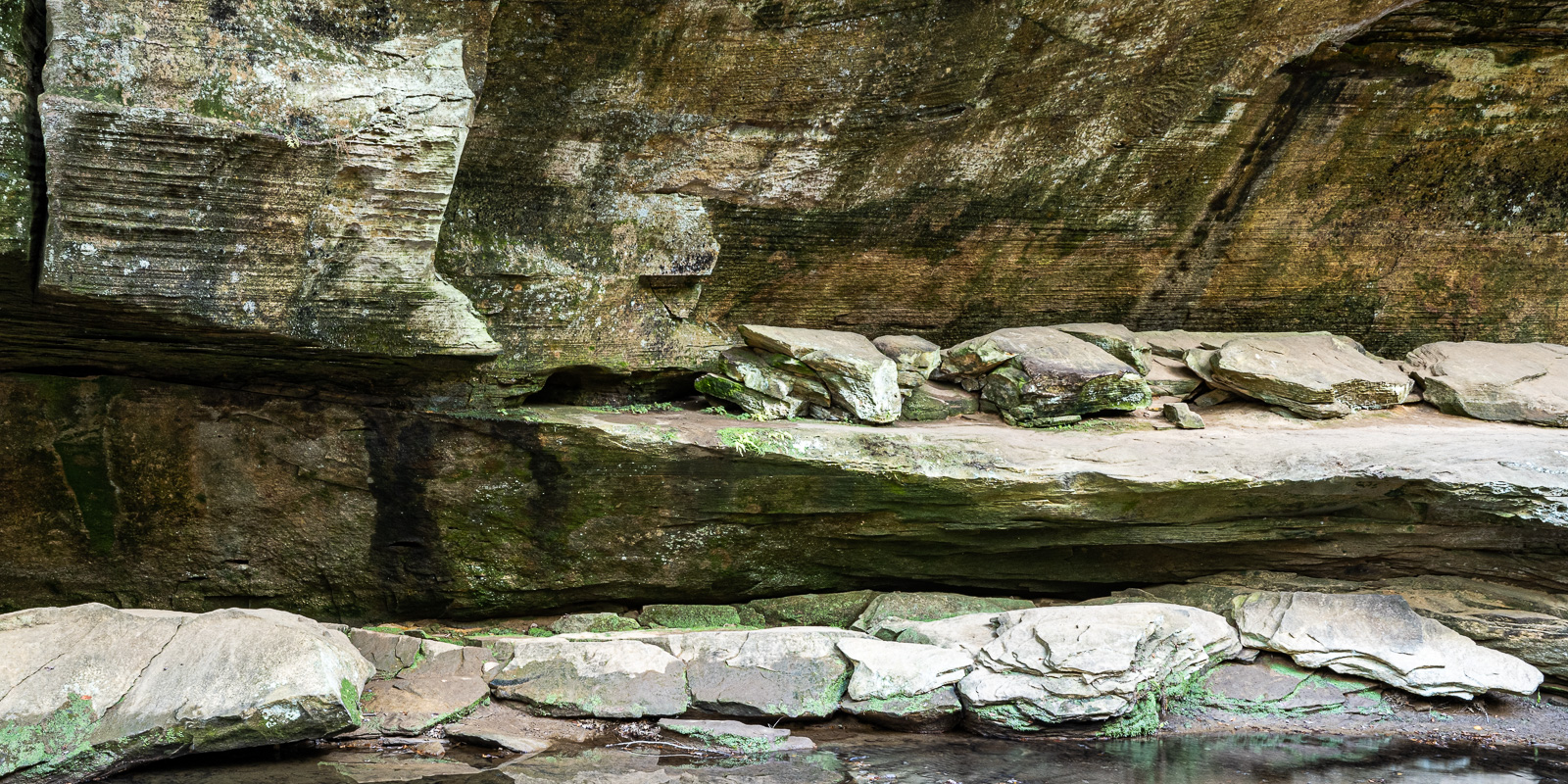
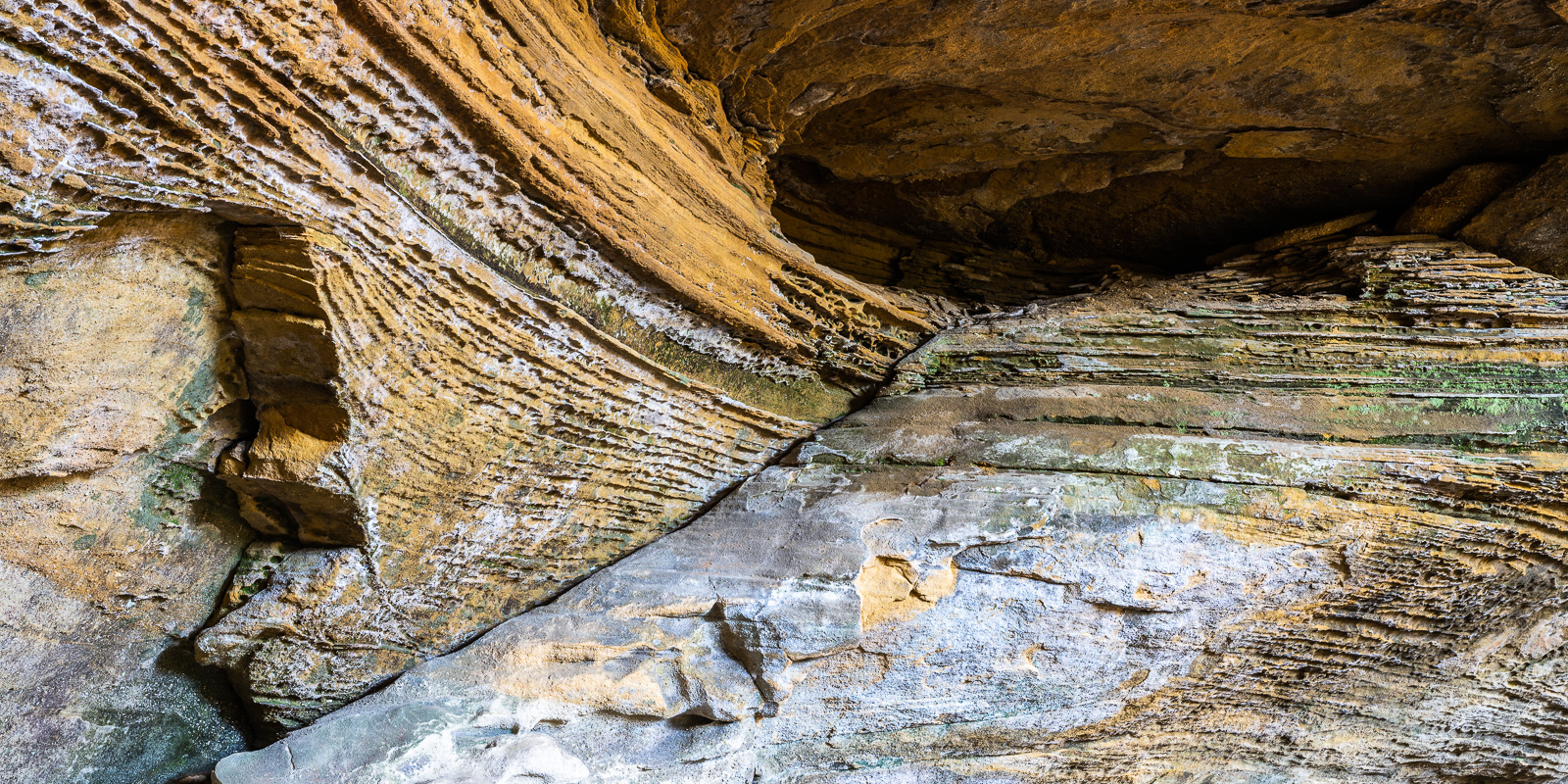
While the concept of a wall is simple, its function or pattern is complex. A wall can block the way, prevent us from getting elsewhere.

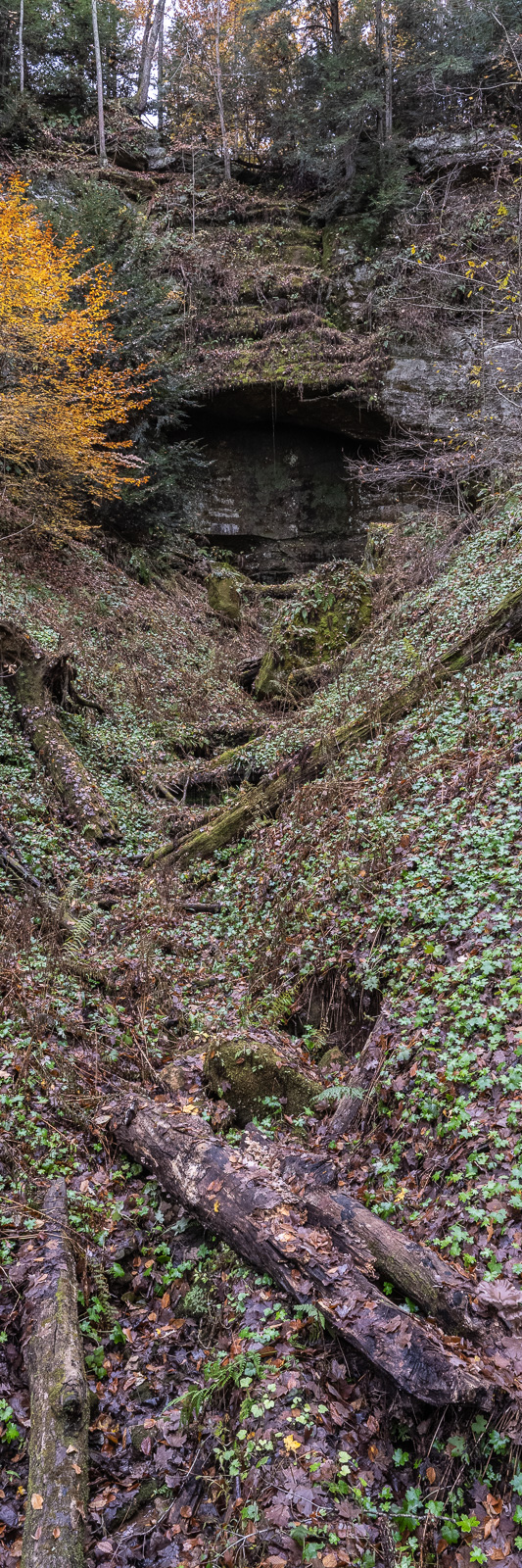
A wall can also provide protection, like the cave wall here in Hocking Hills State Park.

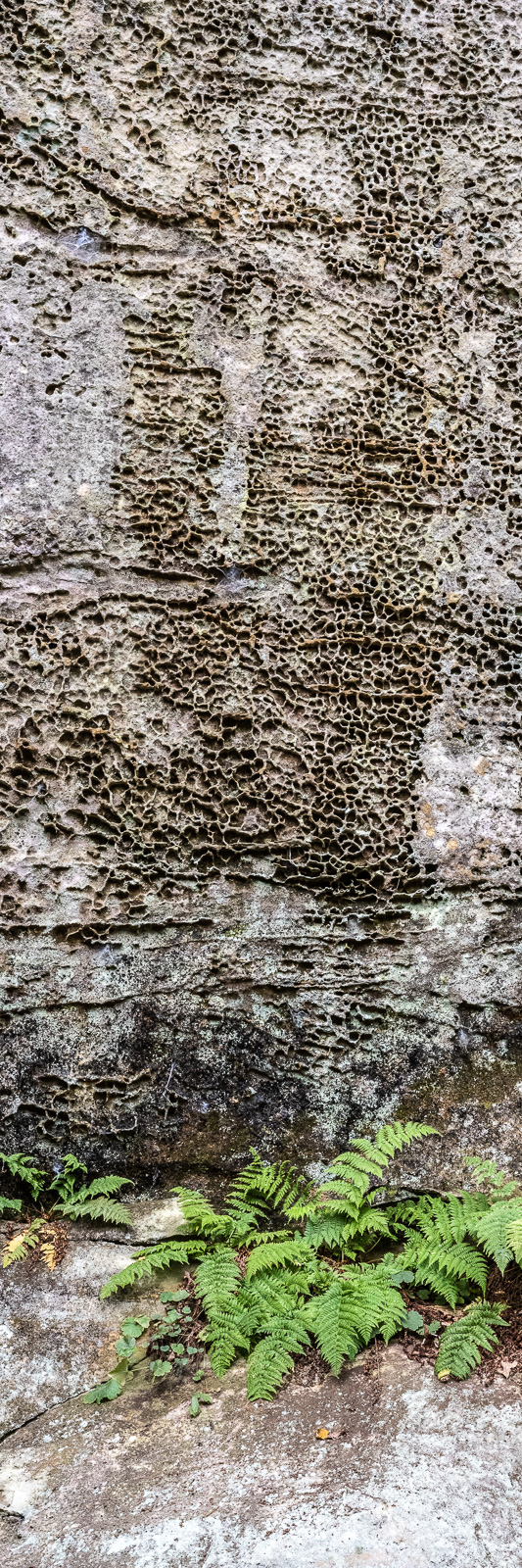
Sometimes a wall provides support for hidden growth.

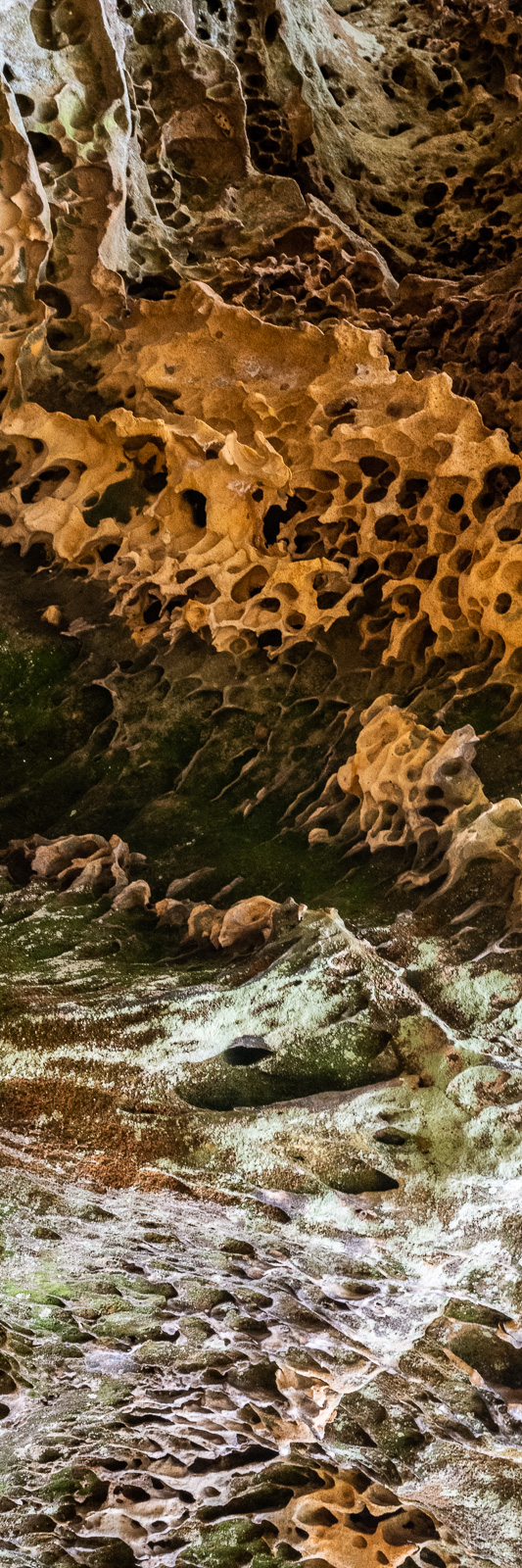
A wall can become a space for something else to exist.

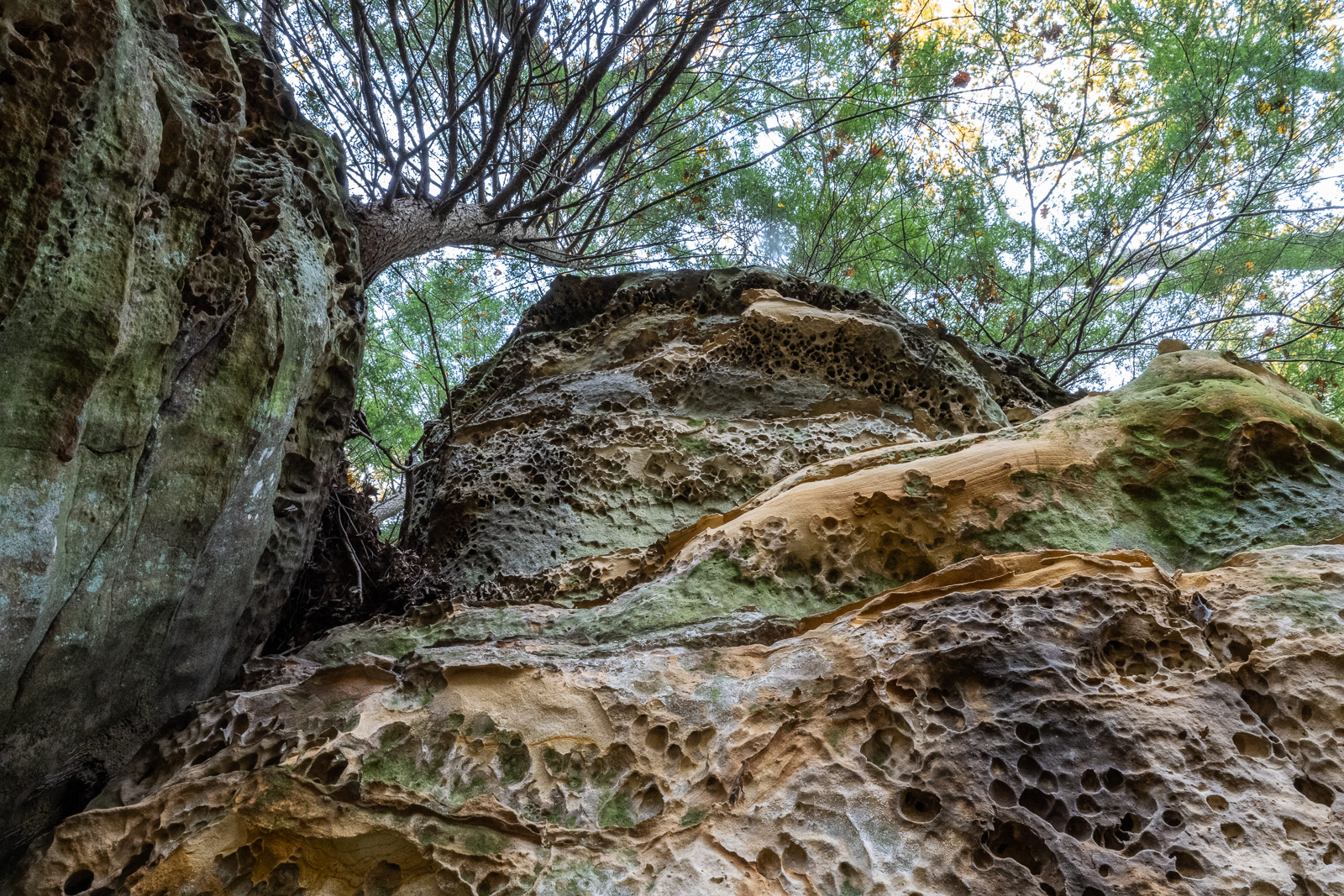
A wall can even recede and disappear.

Our inner walls are like this, too.

Some Caterpillars Stay Caterpillars

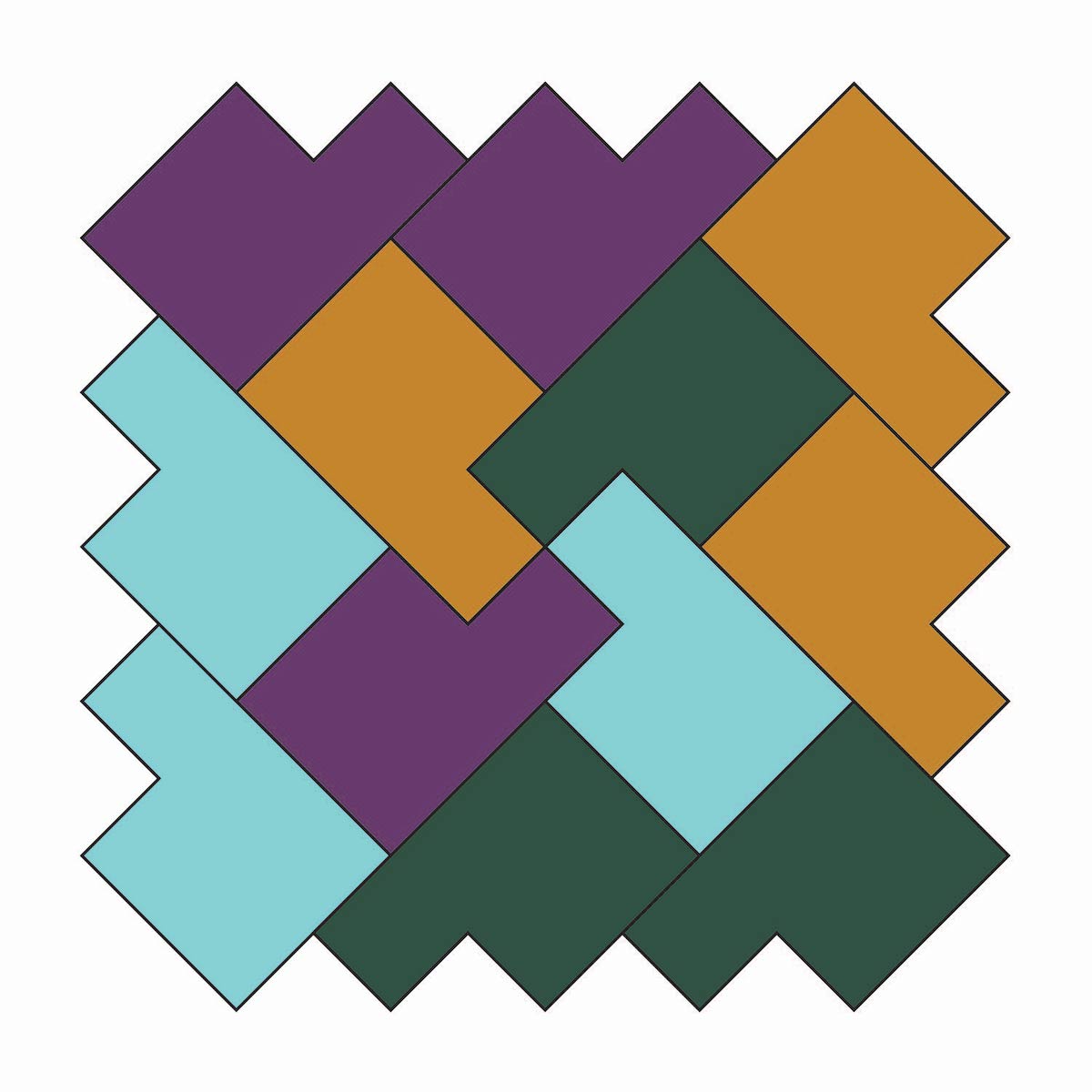
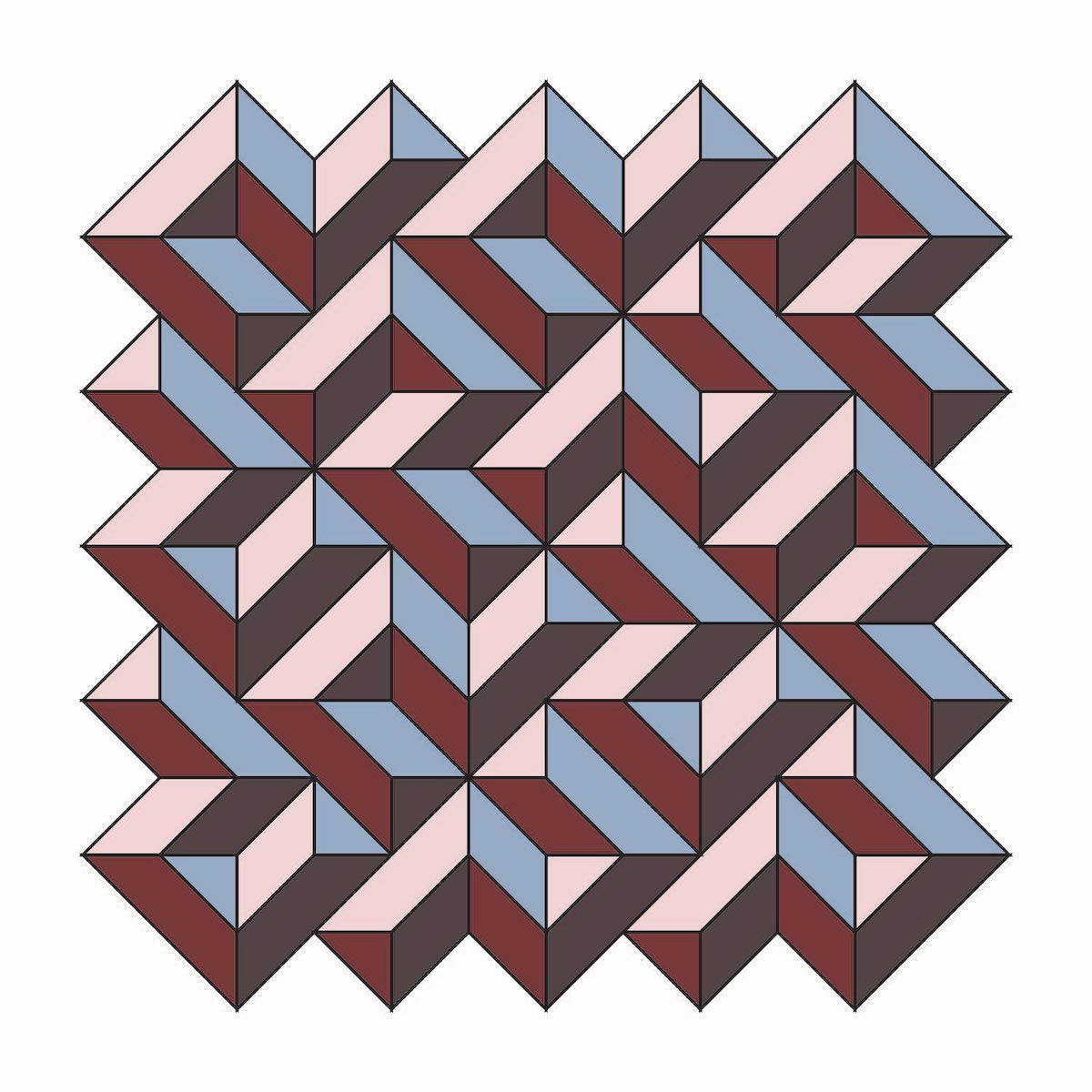
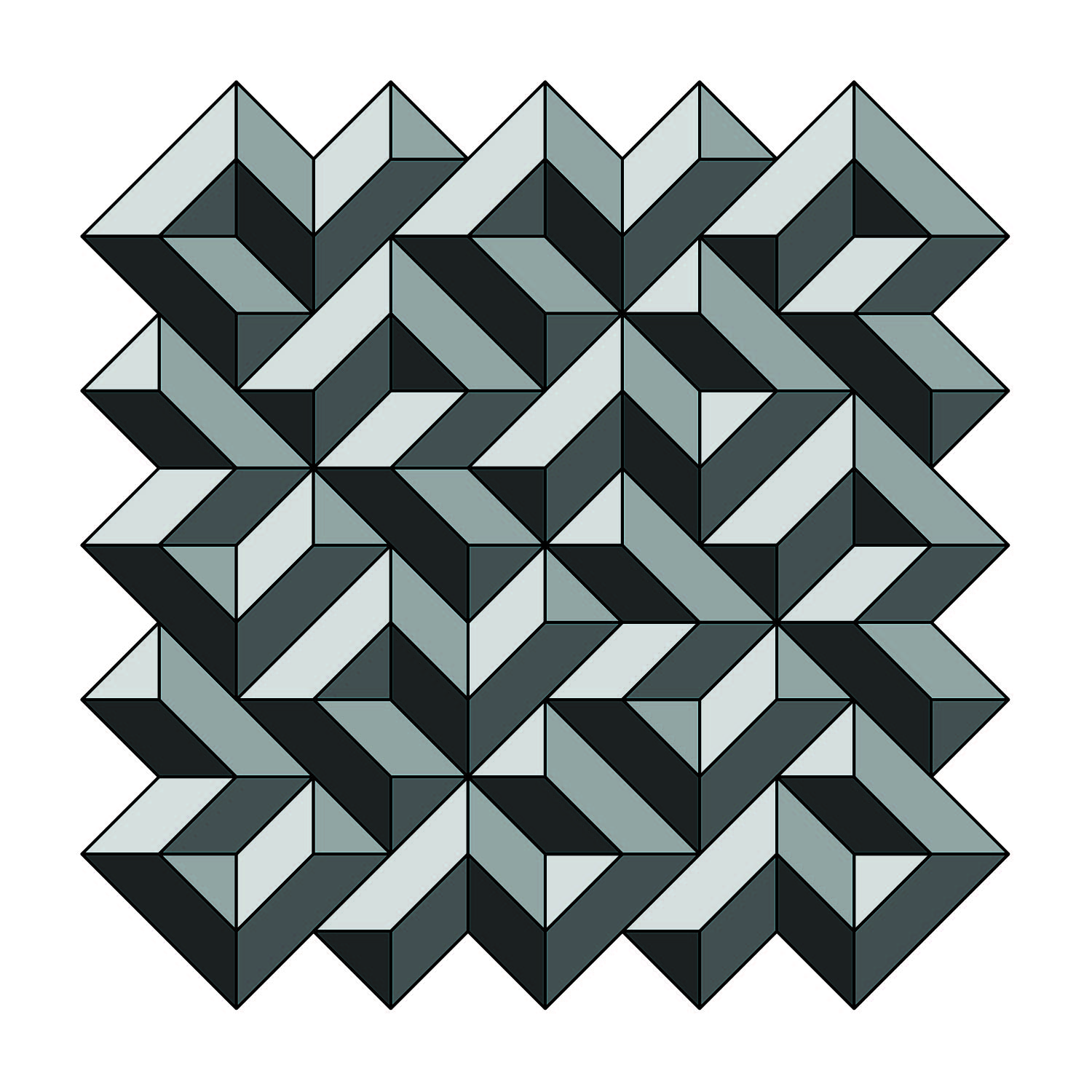
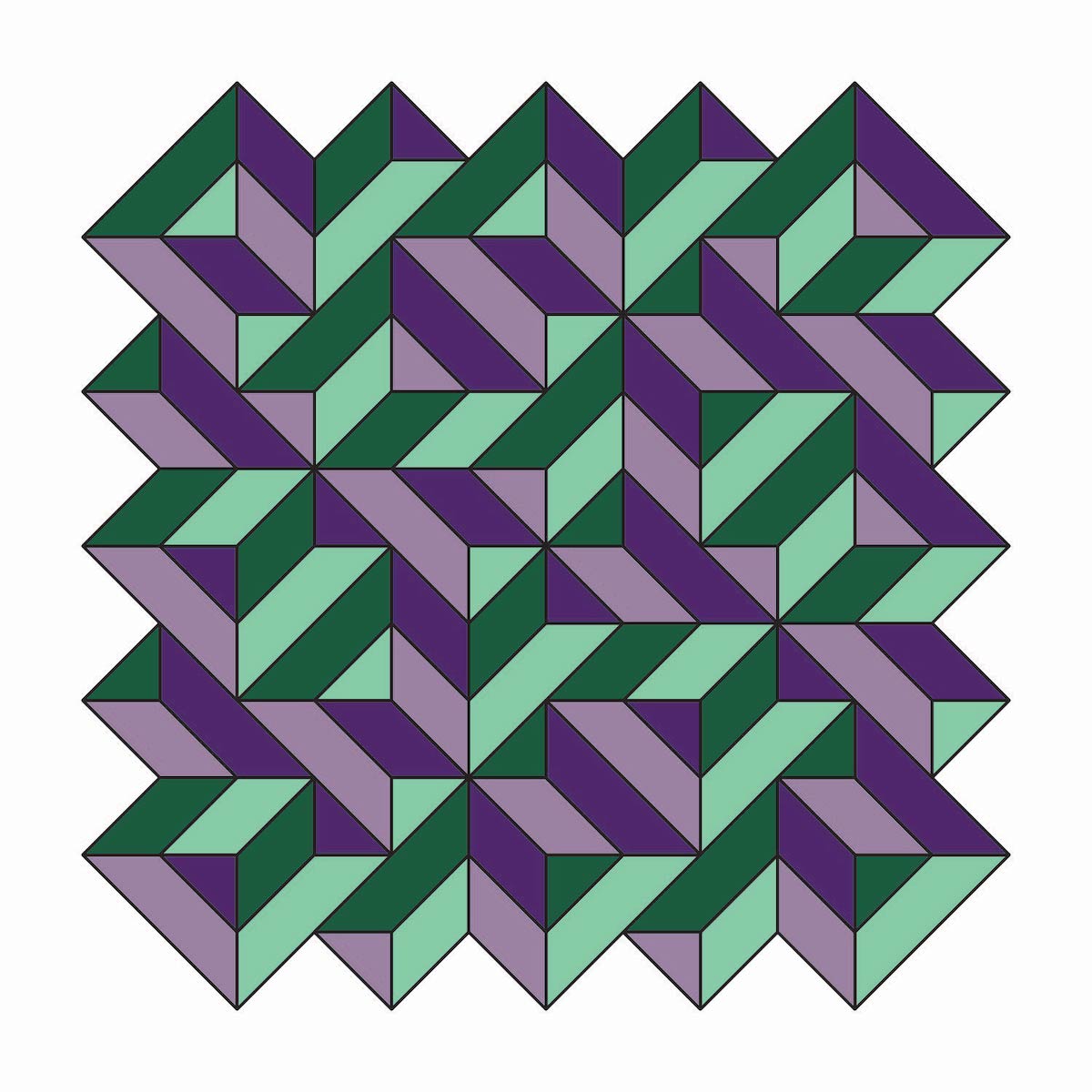
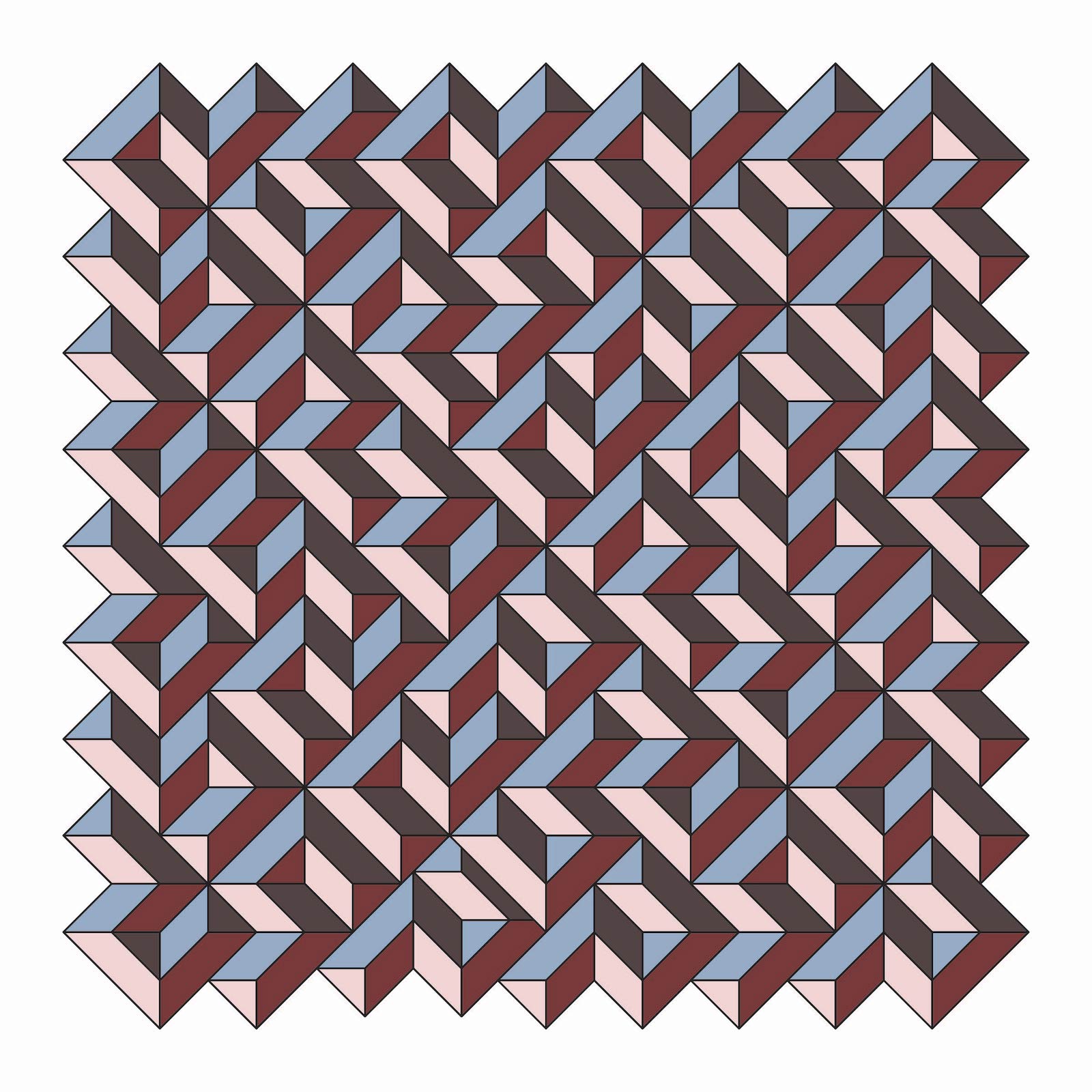
This blog post is (as will be several in the next weeks) inspired by the art of Matthew Shlian. Below you see ragged squares (or Aztec diamonds, if rotated by 45º), tiled by P-pentominos. On the right, we get by without using mirrored copies, and on the left we see all eight rotations and reflections of the P-pentomino.

The embossment on the left comes from Matt’s instagram pages where you can find a paper sculpture called Some Caterpillars Stay Caterpillars 42. He realizes this tiling using folded paper, and my different color are his different shades of grey, coming from natural light, and much more subtle in his sculpture than here.

The colors used in the embossment above add different esthetic and structural flavors. For instance, on the right the parallel slopes of the region are colored in different shades of the same color, emphasizing striped bands that completely eliminate the original tiling by P-pentominoes.

Matt’s original sculpture maintains a poetic balance between the mathematical rigor of the tiling and the more organic nature of a landscape of valleys and ridges that appear in his embossment.

Above is a tiling of the next larger Aztec diamond that can be tiled by P-pentominoes. It turns out that here you need the P-pentomino together with its mirror, but I don’t know a reason for this.

Elusiveness (Fischer-Koch II)

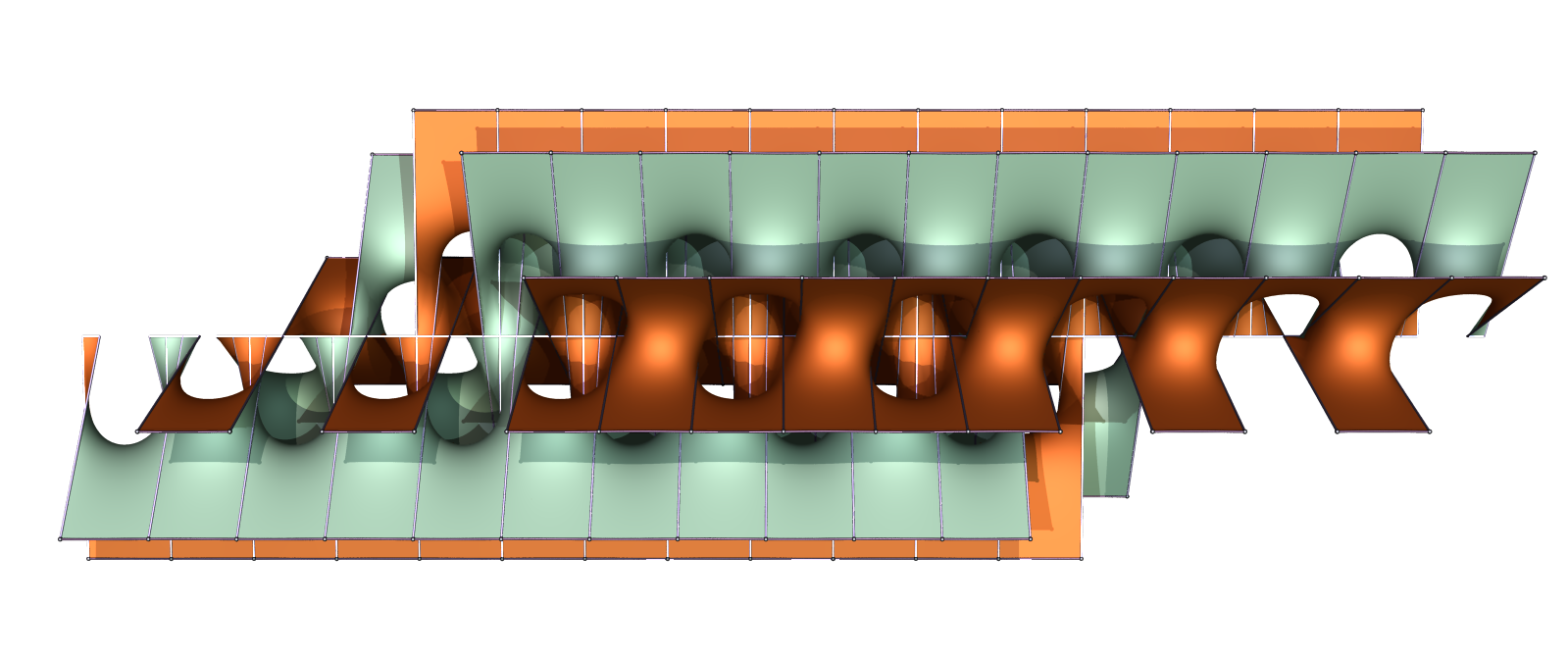
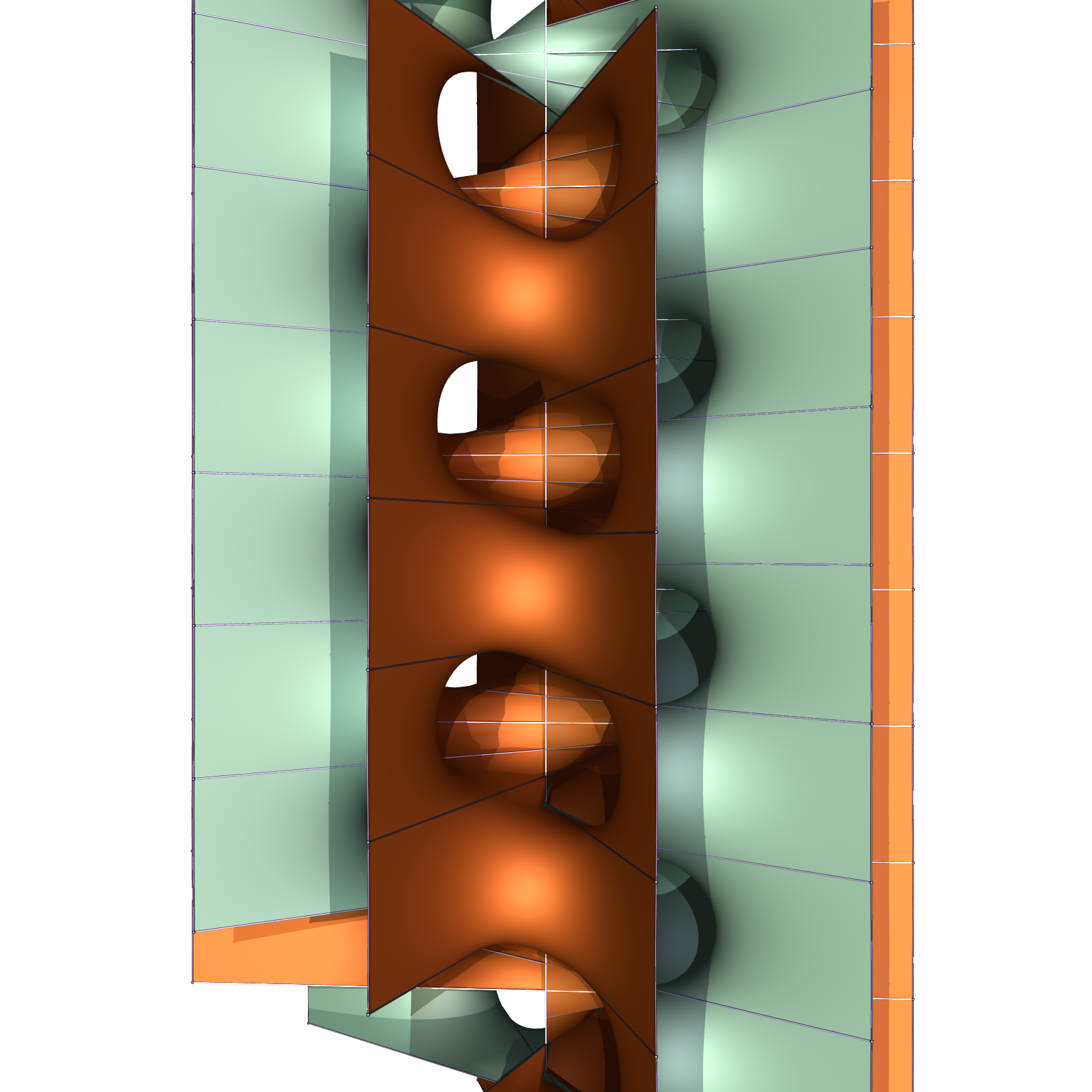
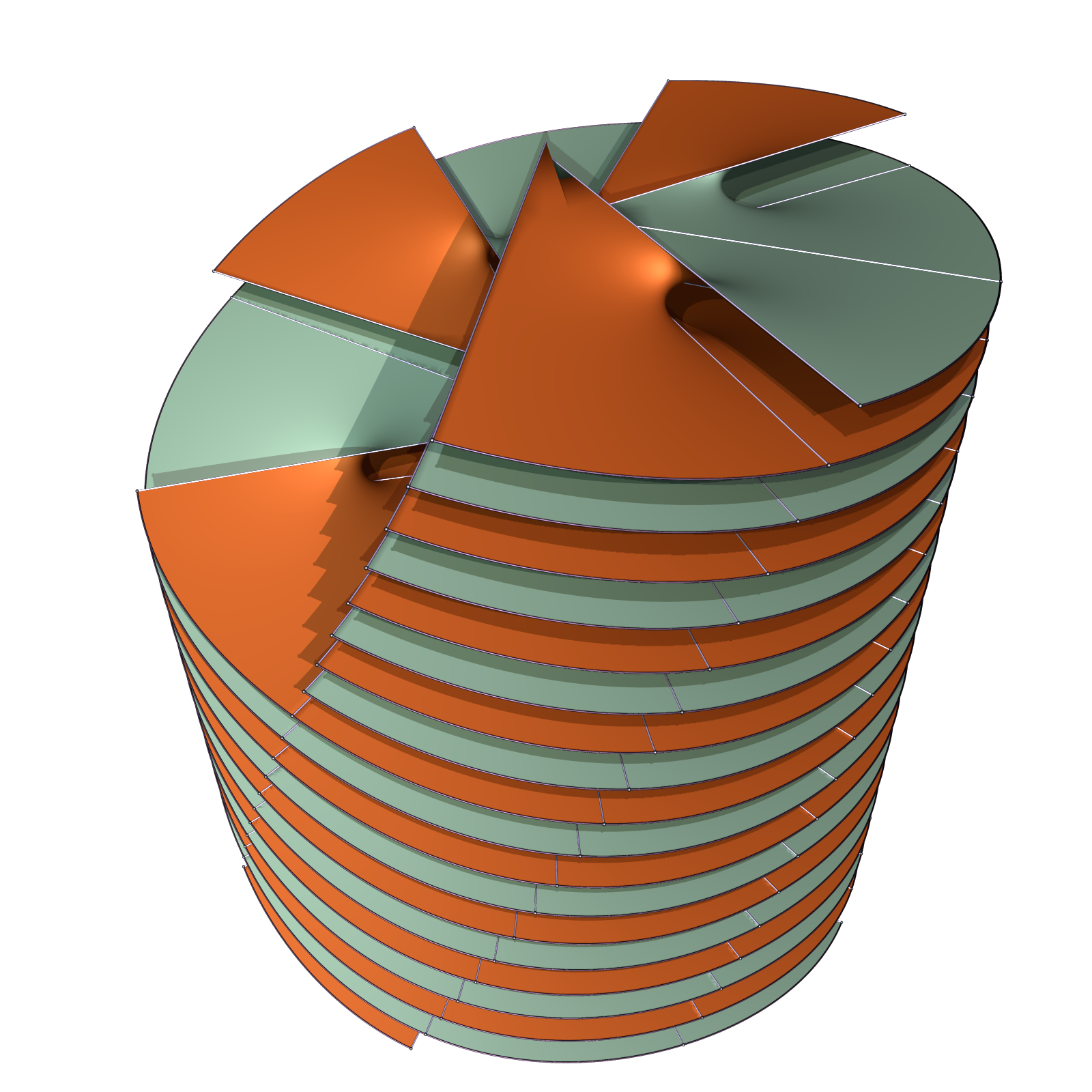
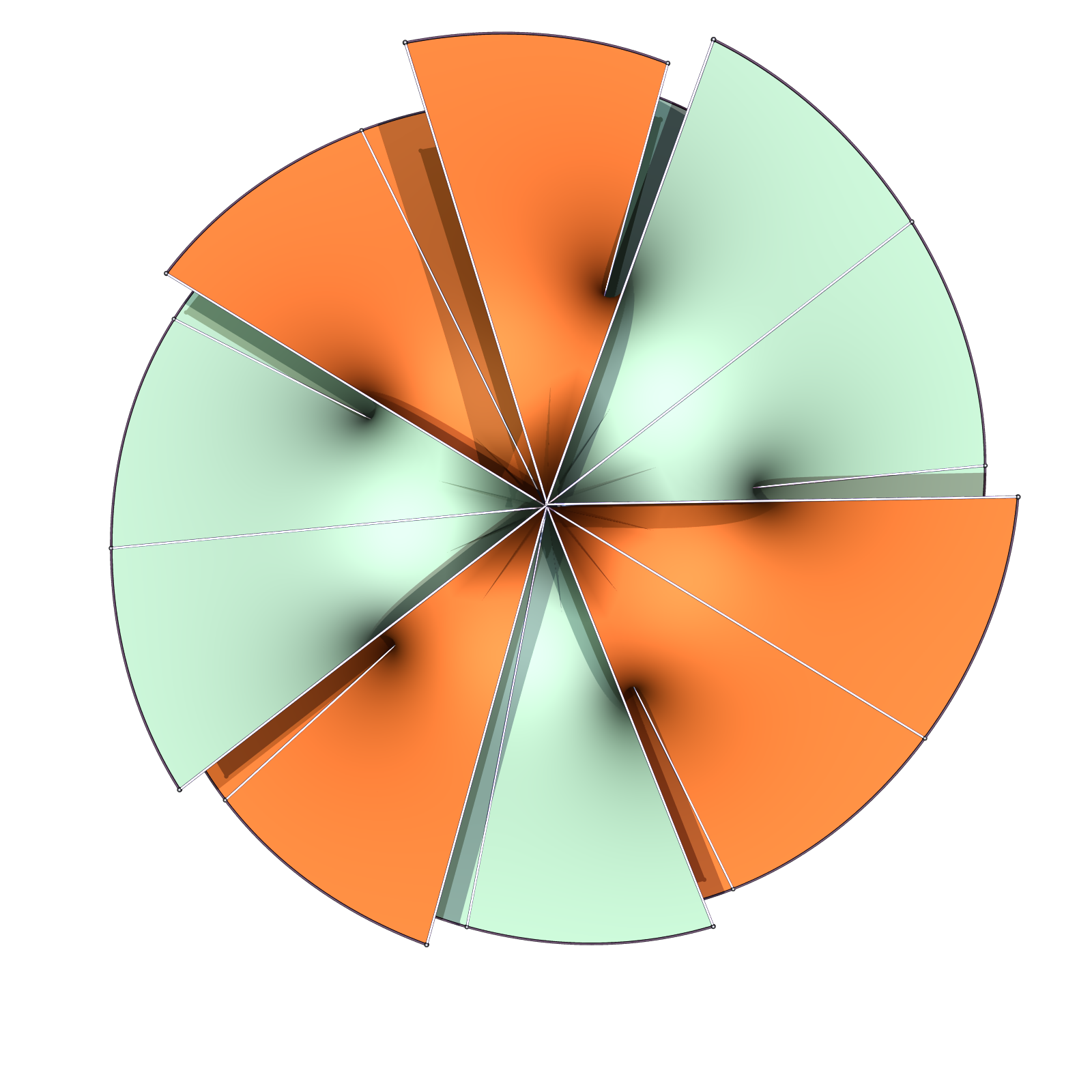
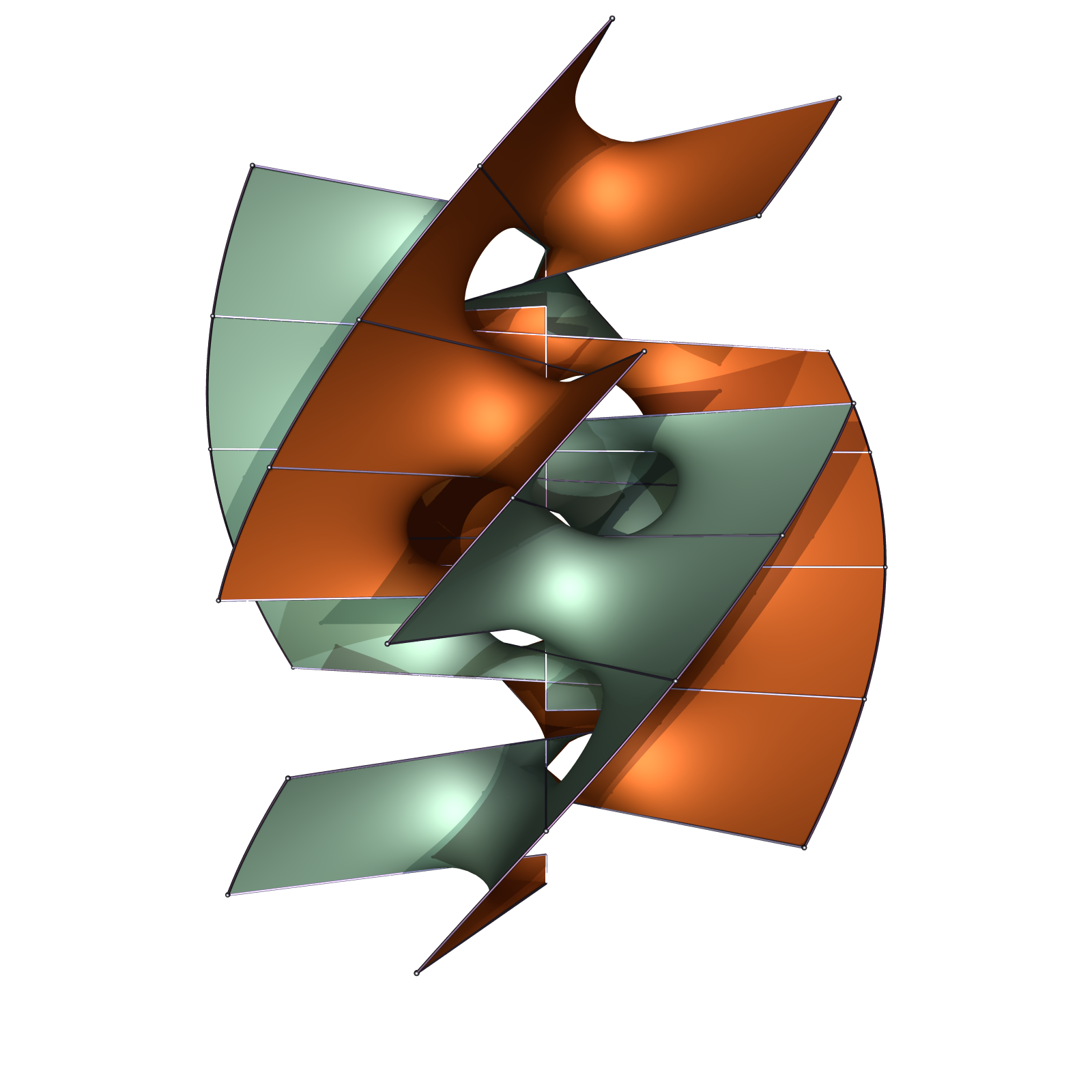
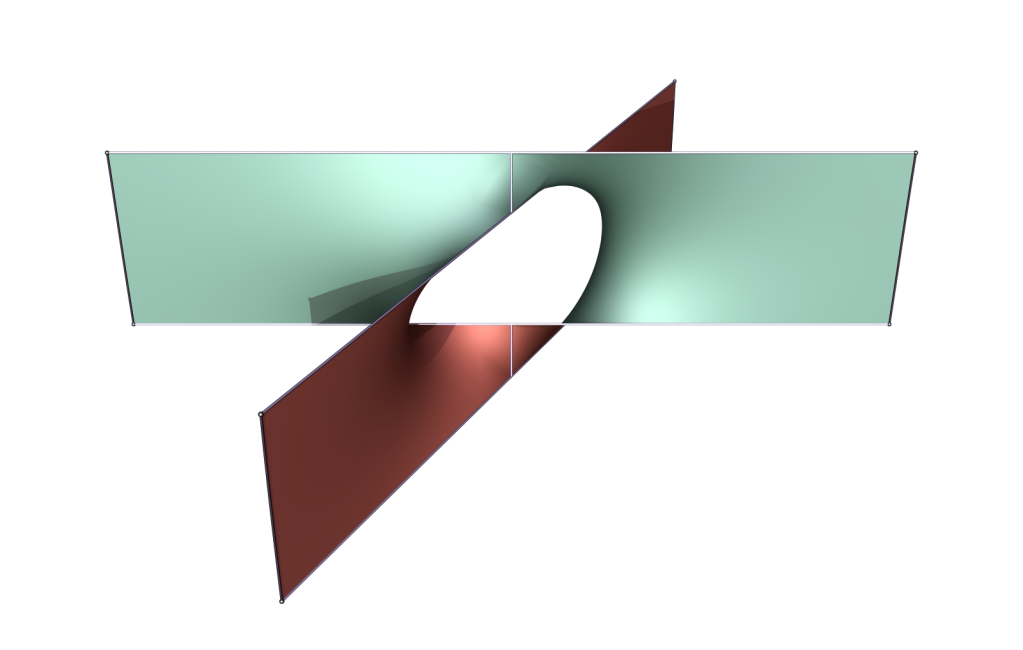
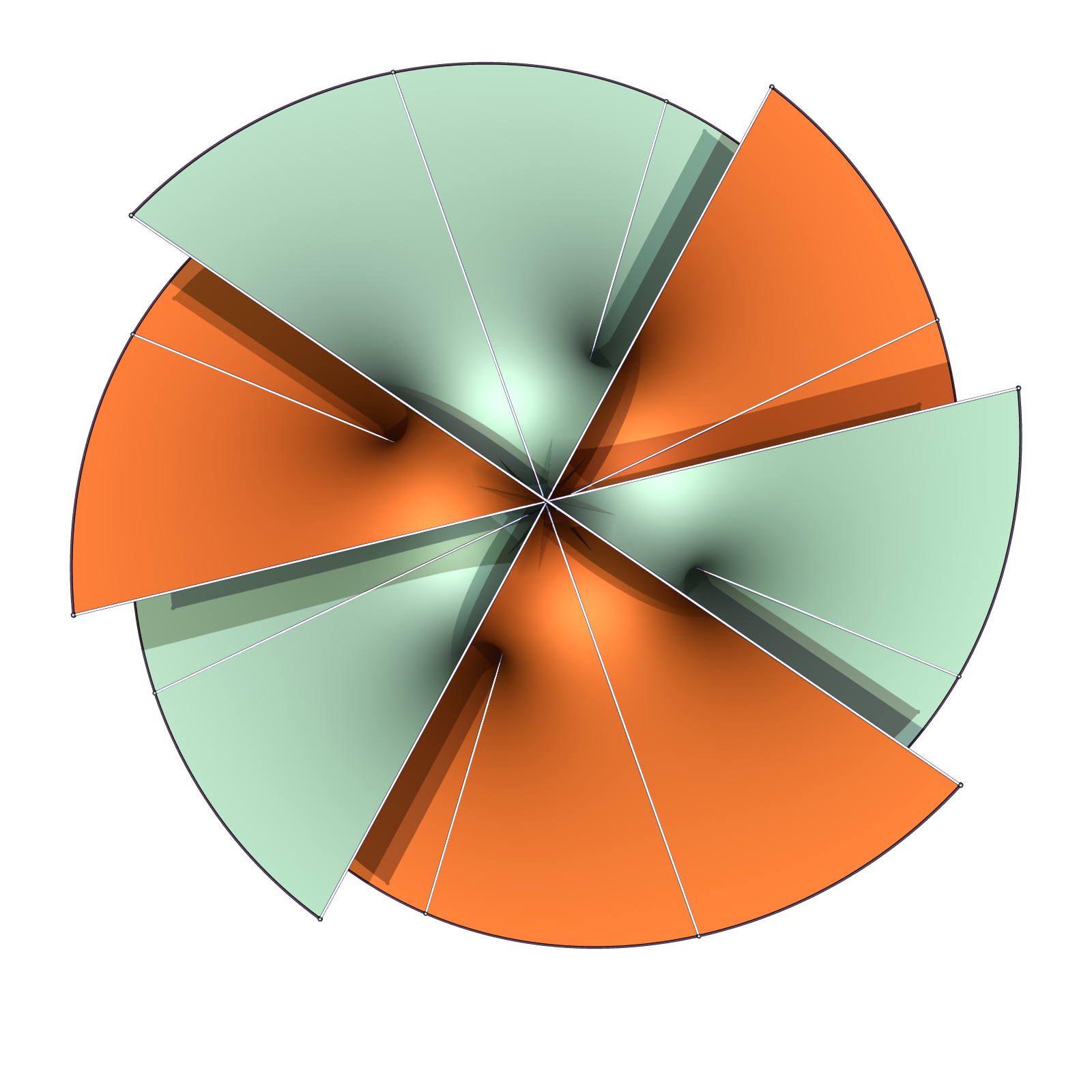
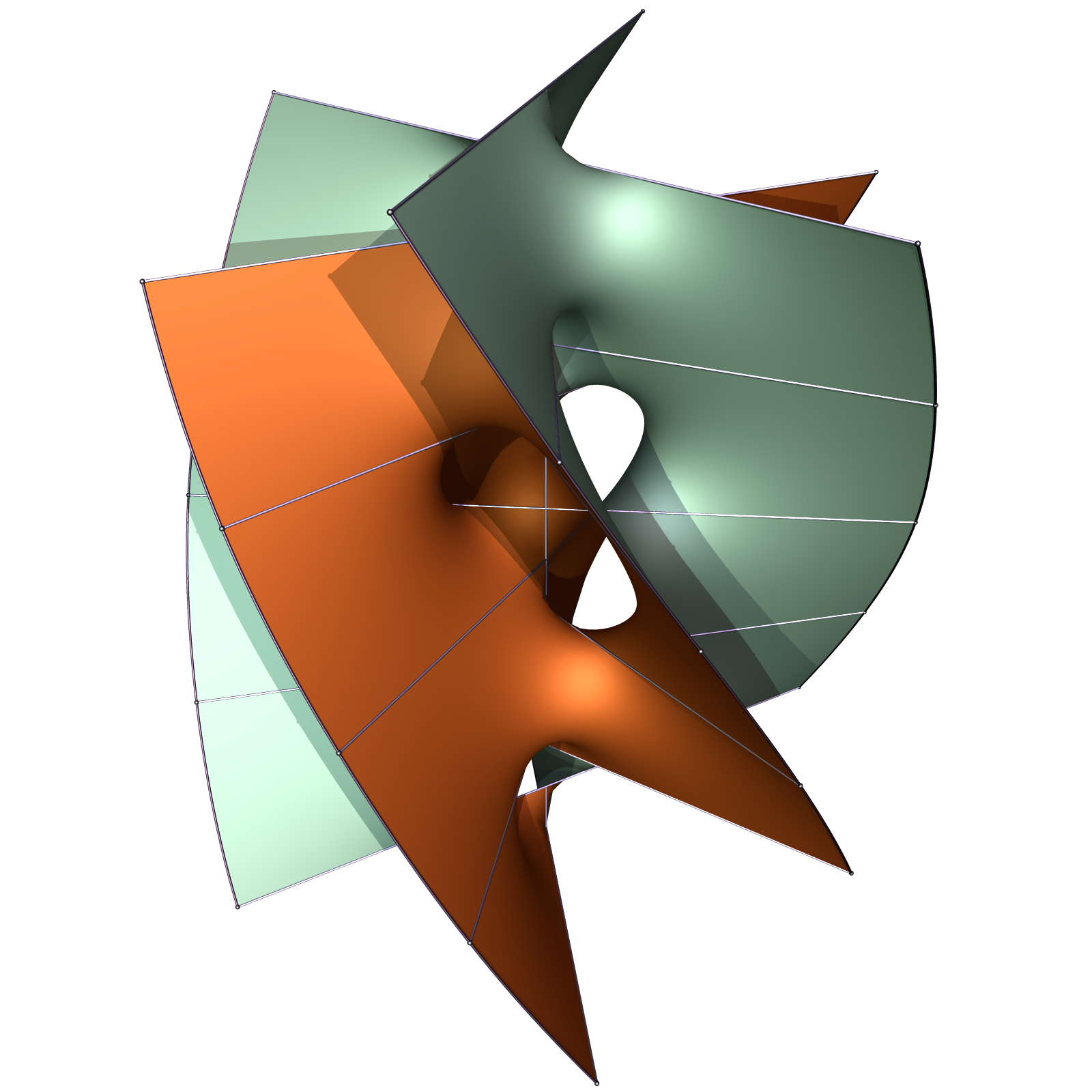
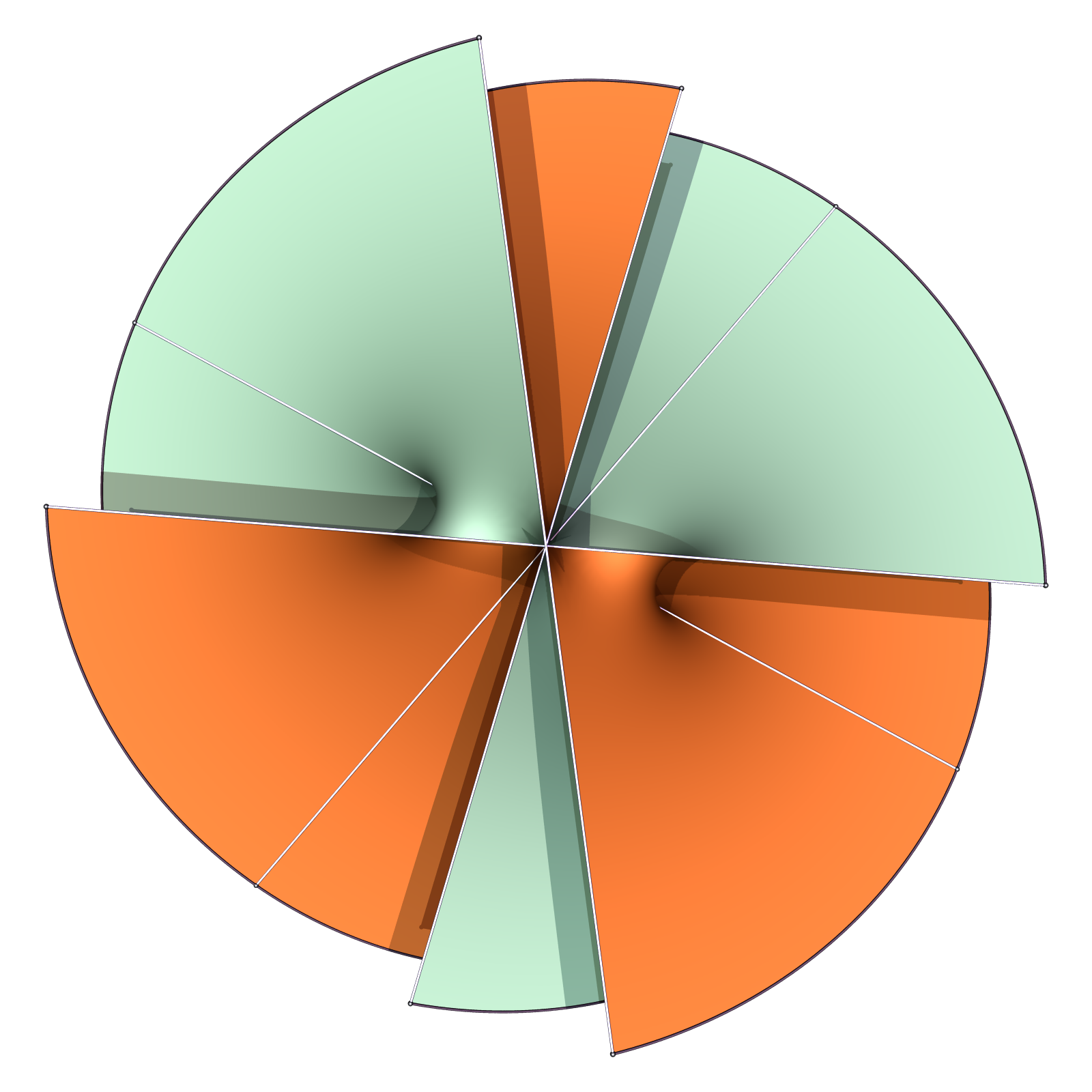
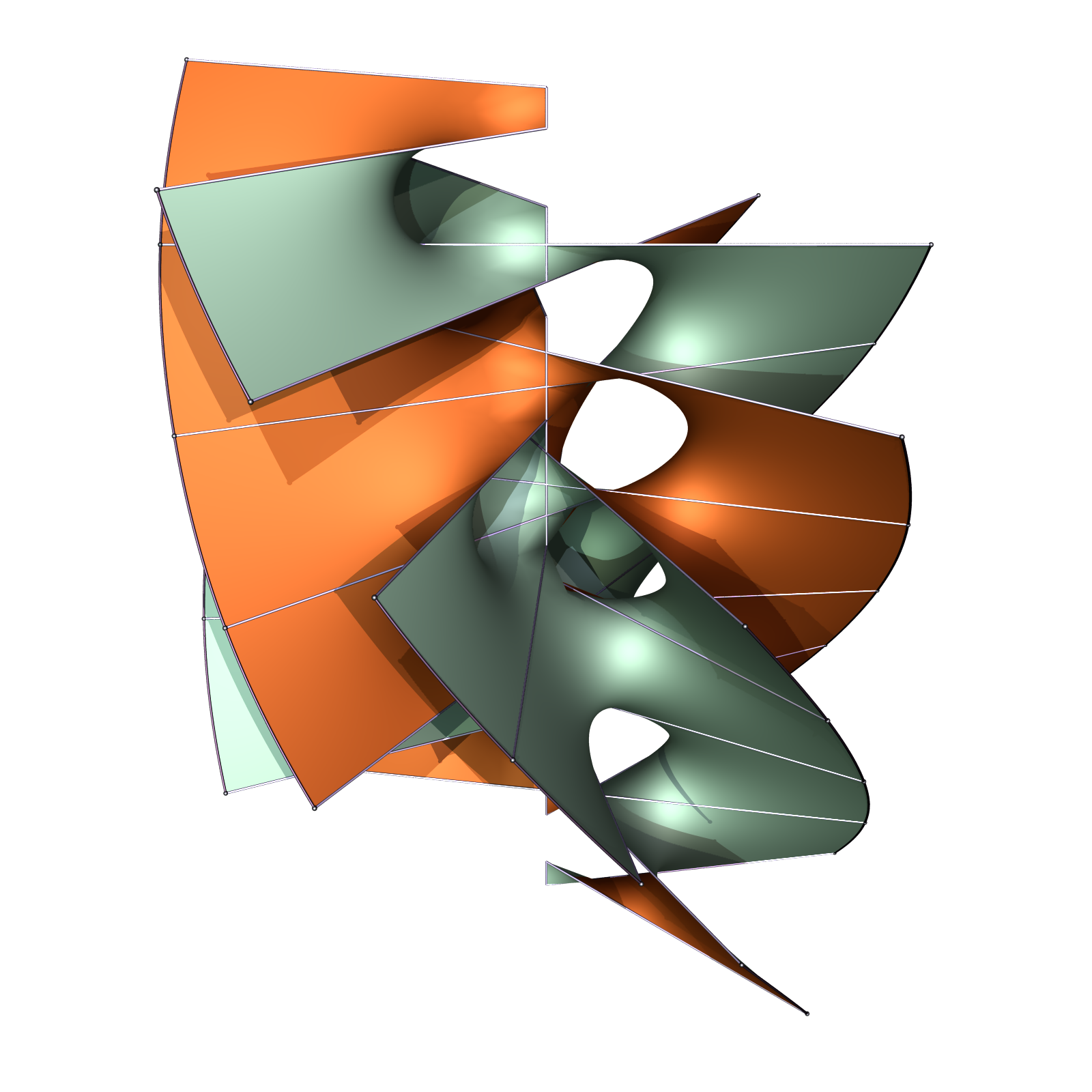
By varying angles and edge lengths of the fundamental piece, one can repeat last week’s construction of the 6-ended Fischer-Koch surfaces and make surfaces with more ends. Above and below you see images of the 10-ended version, together with their twisted friends.

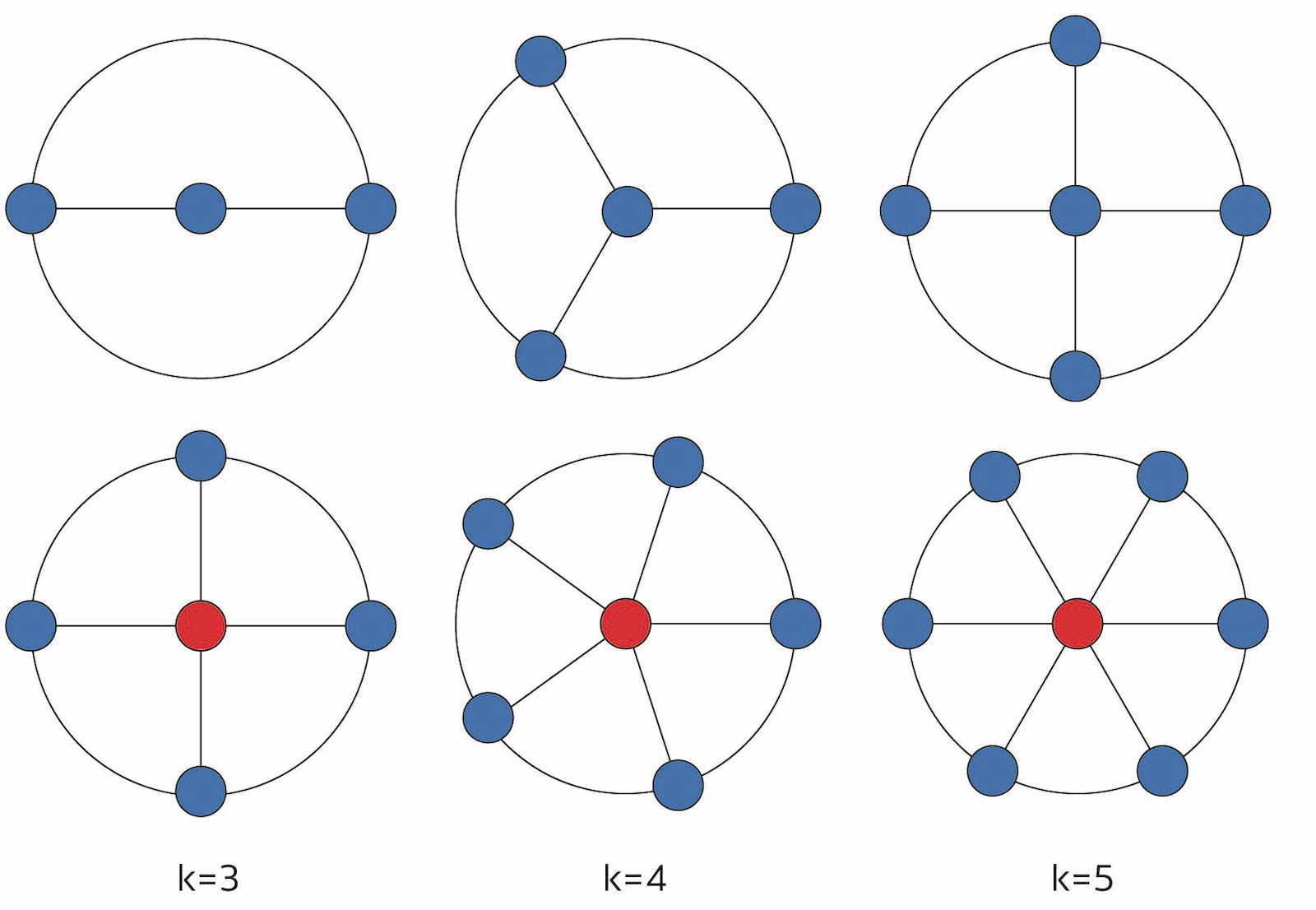
Again one obtains parking garage structures as limits, and the position of the helicoidal axes is indicated below: The case k=3 corresponds to last week’s surfaces, the case k=5 to the ones above. The colored disks represent helicoidal axes, with the color showing the different spins.

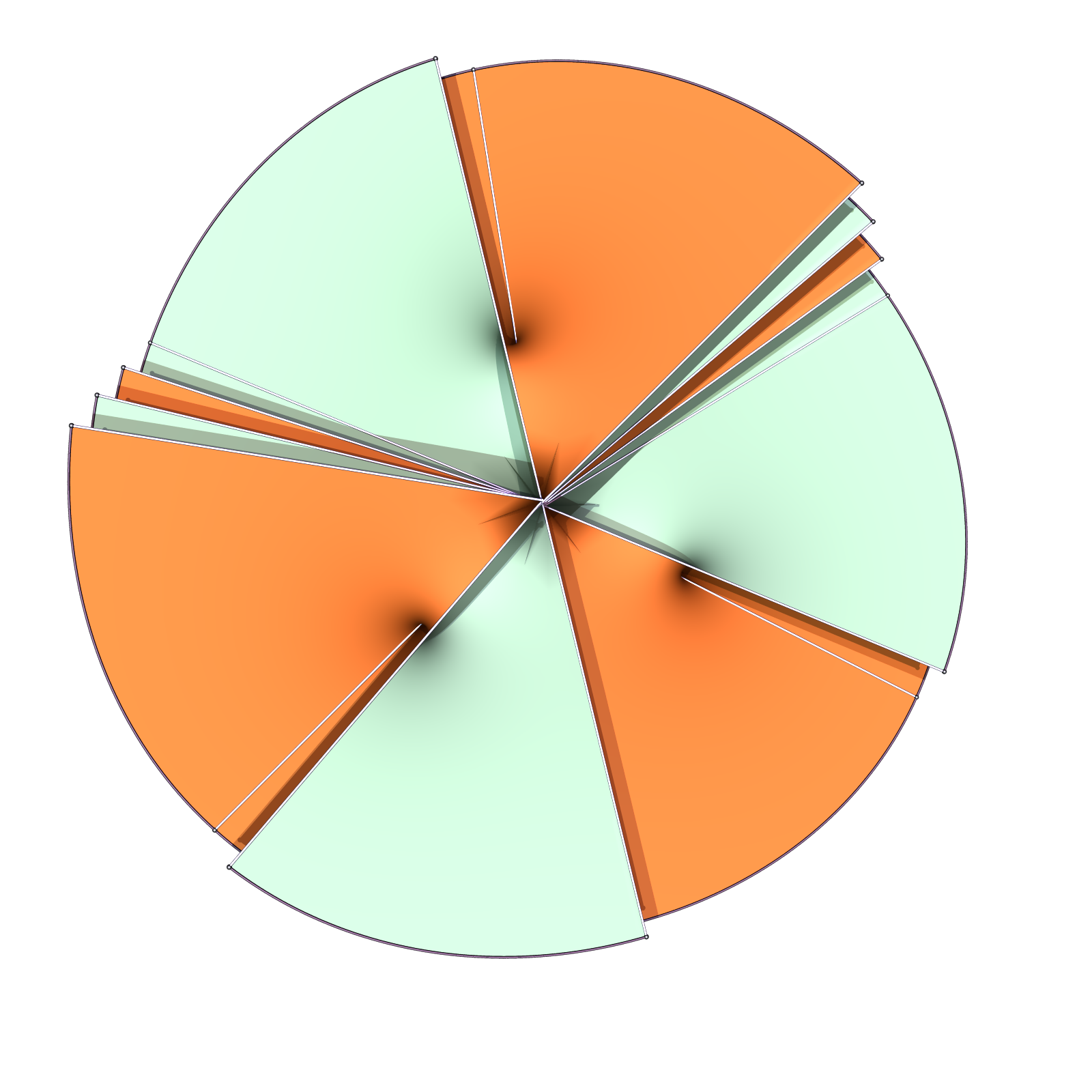
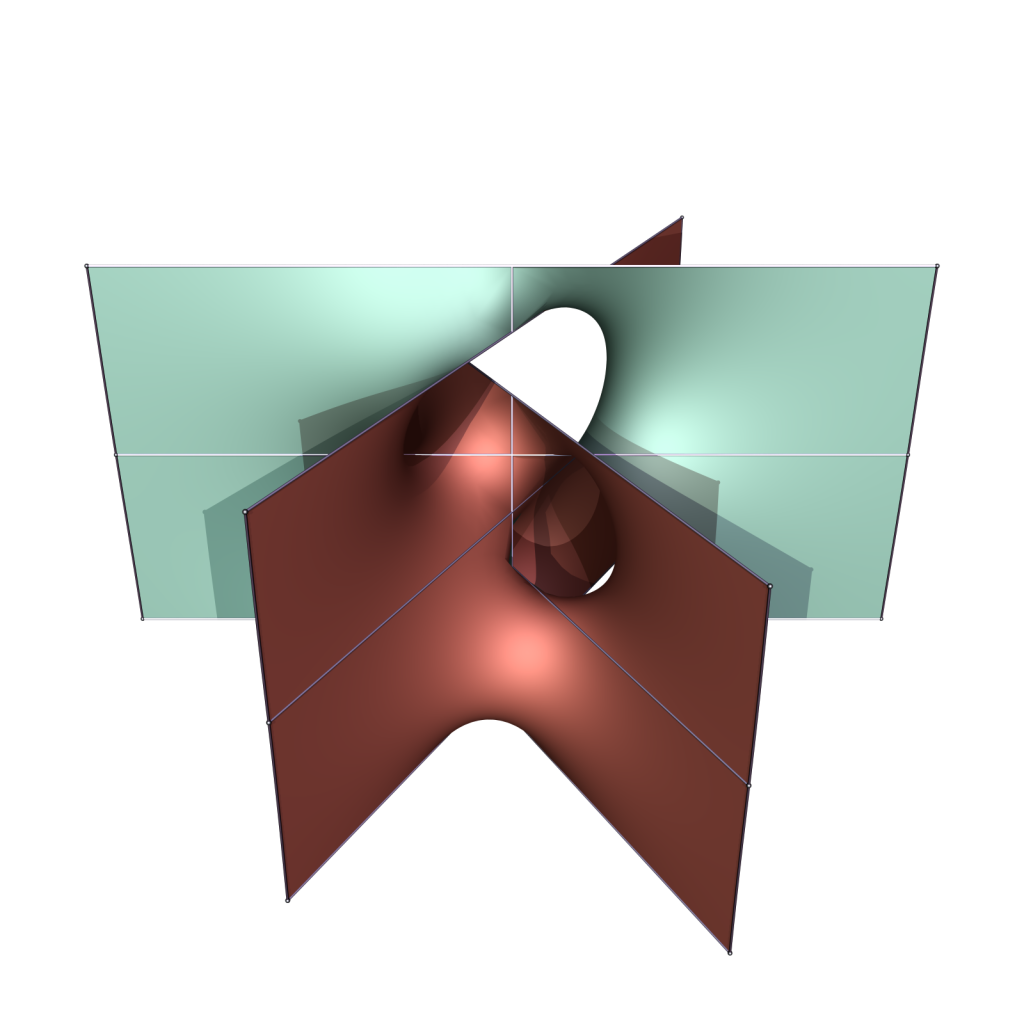
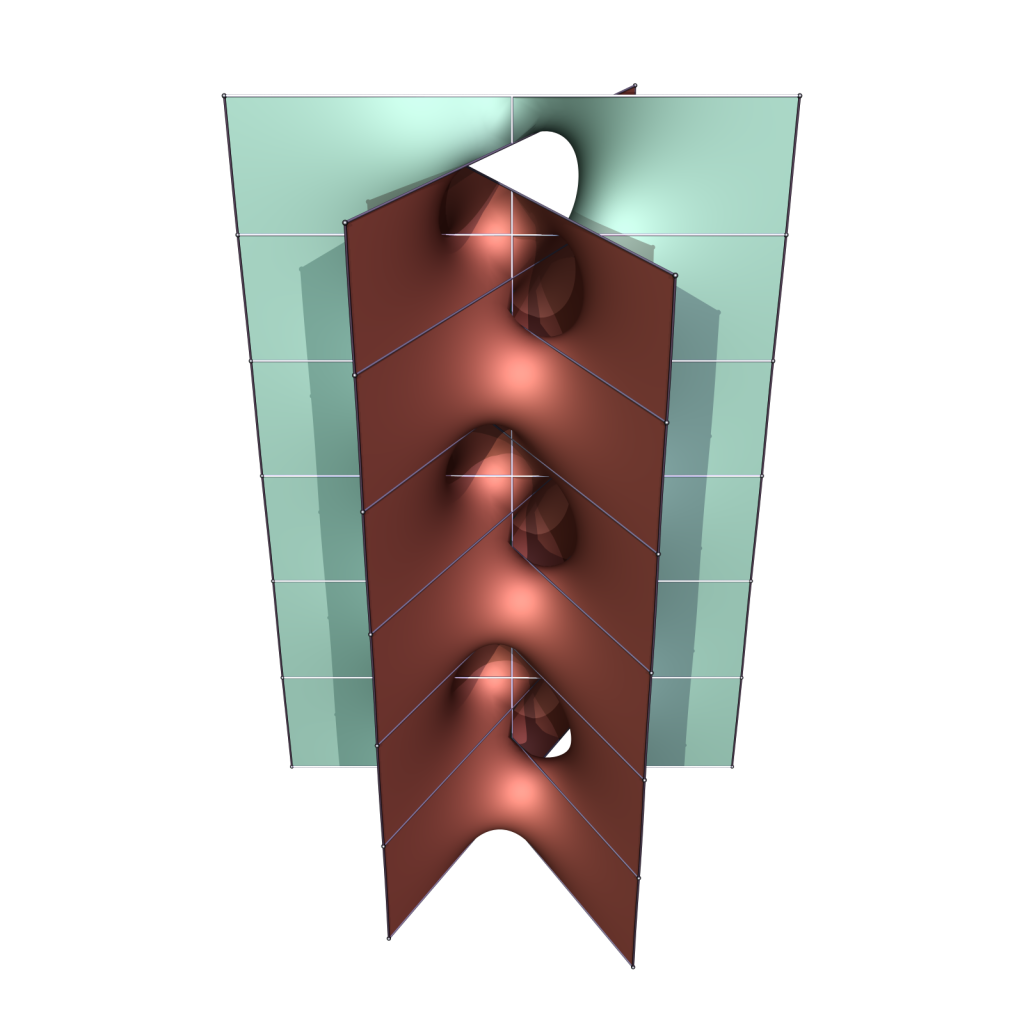
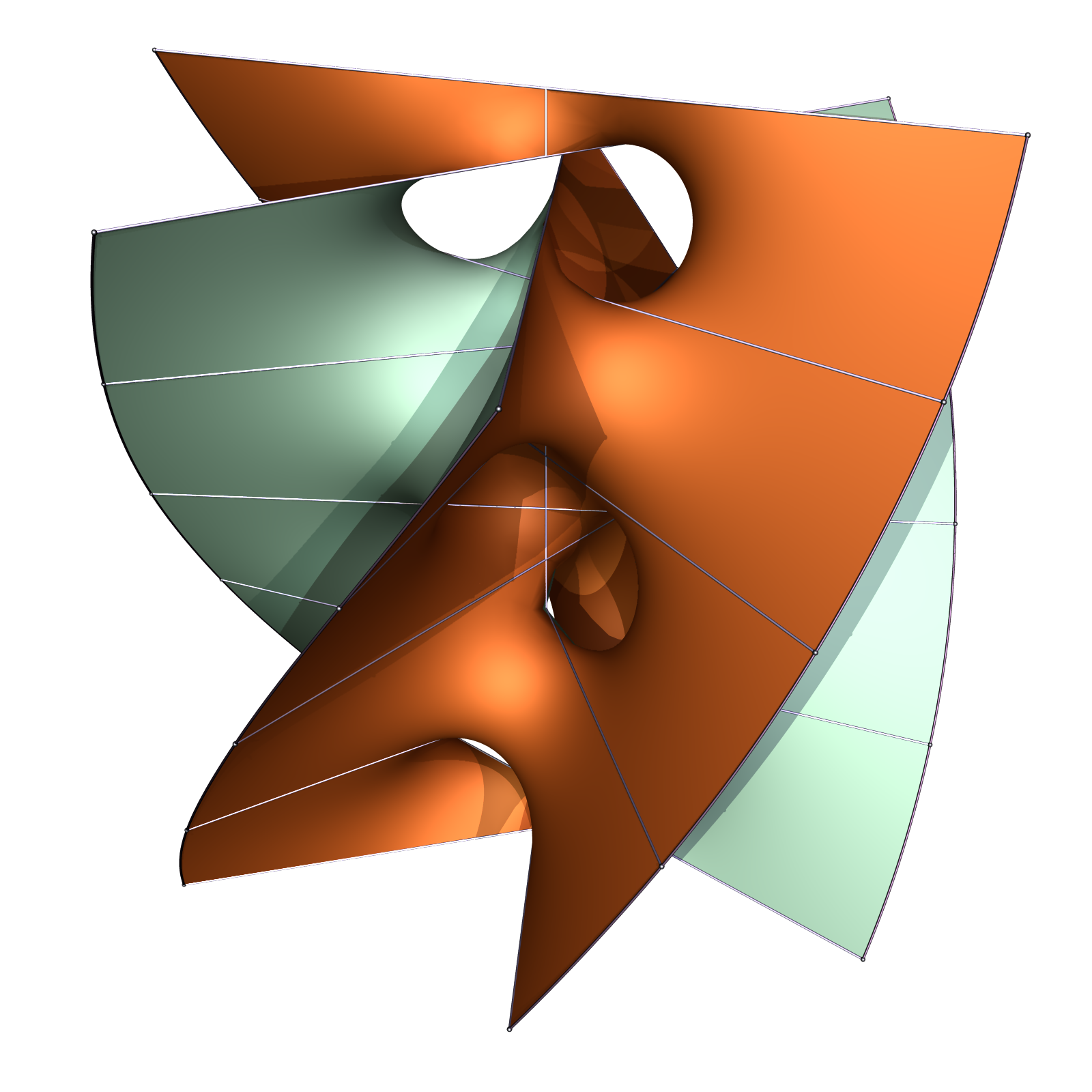
What about the case k=4, which should lead to 8-ended surfaces? Daniel Freese has shown that one can untwist the parking garage structures to screw motion invariant minimal surfaces:

and

But these surfaces can not be obtained using the Fischer-Koch construction. Below you see the completely untwisted version with annular ends.

One key difference to the Fischer-Koch surfaces is that opposing ends have opposite normals in Daniel’s surfaces (or differently colored sides, as visible above). If the vertical line was really a straight line, it would be a rotational symmetry line, and opposing ends had the same color.

So things are not always quite what they seem.

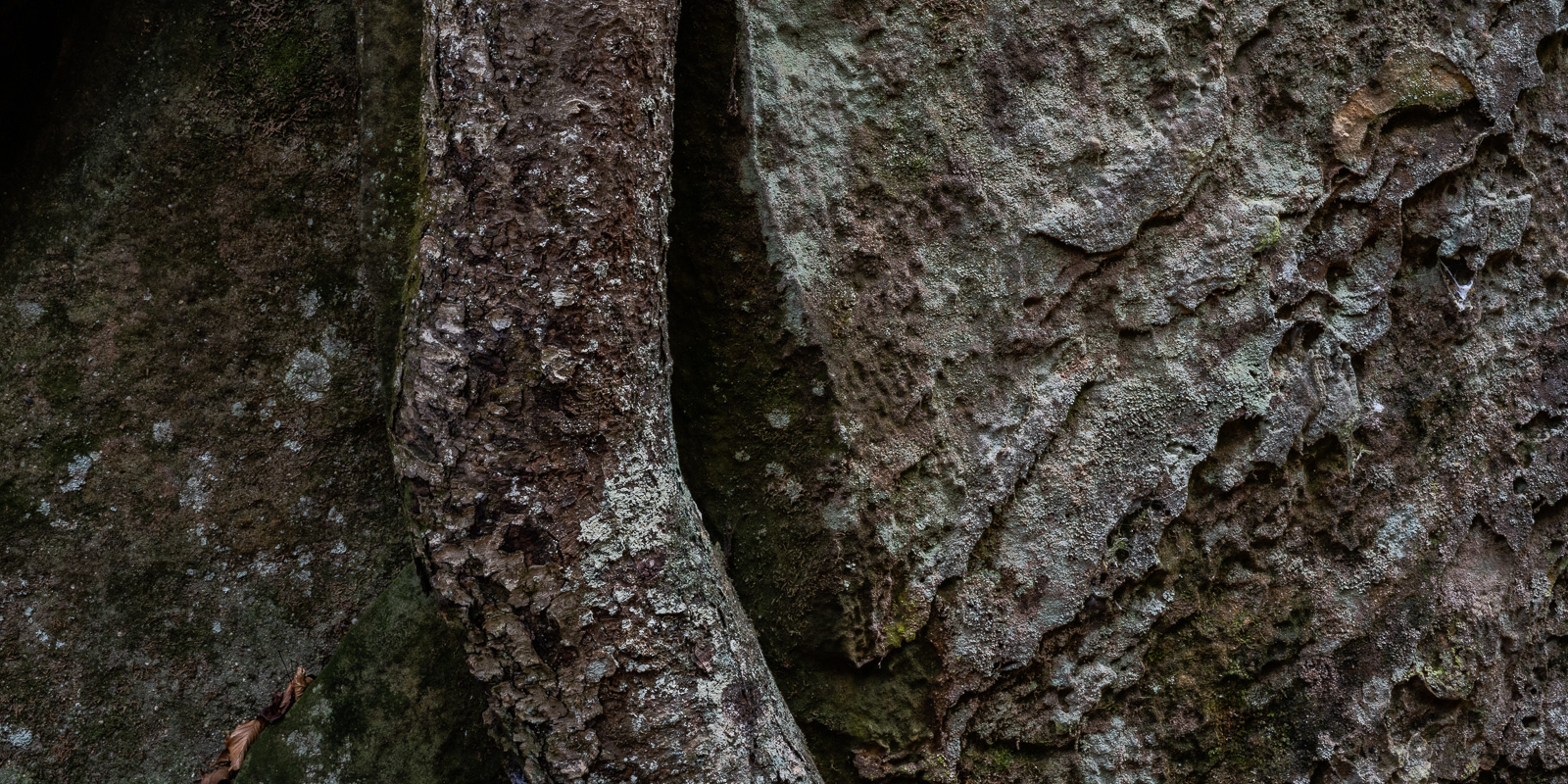
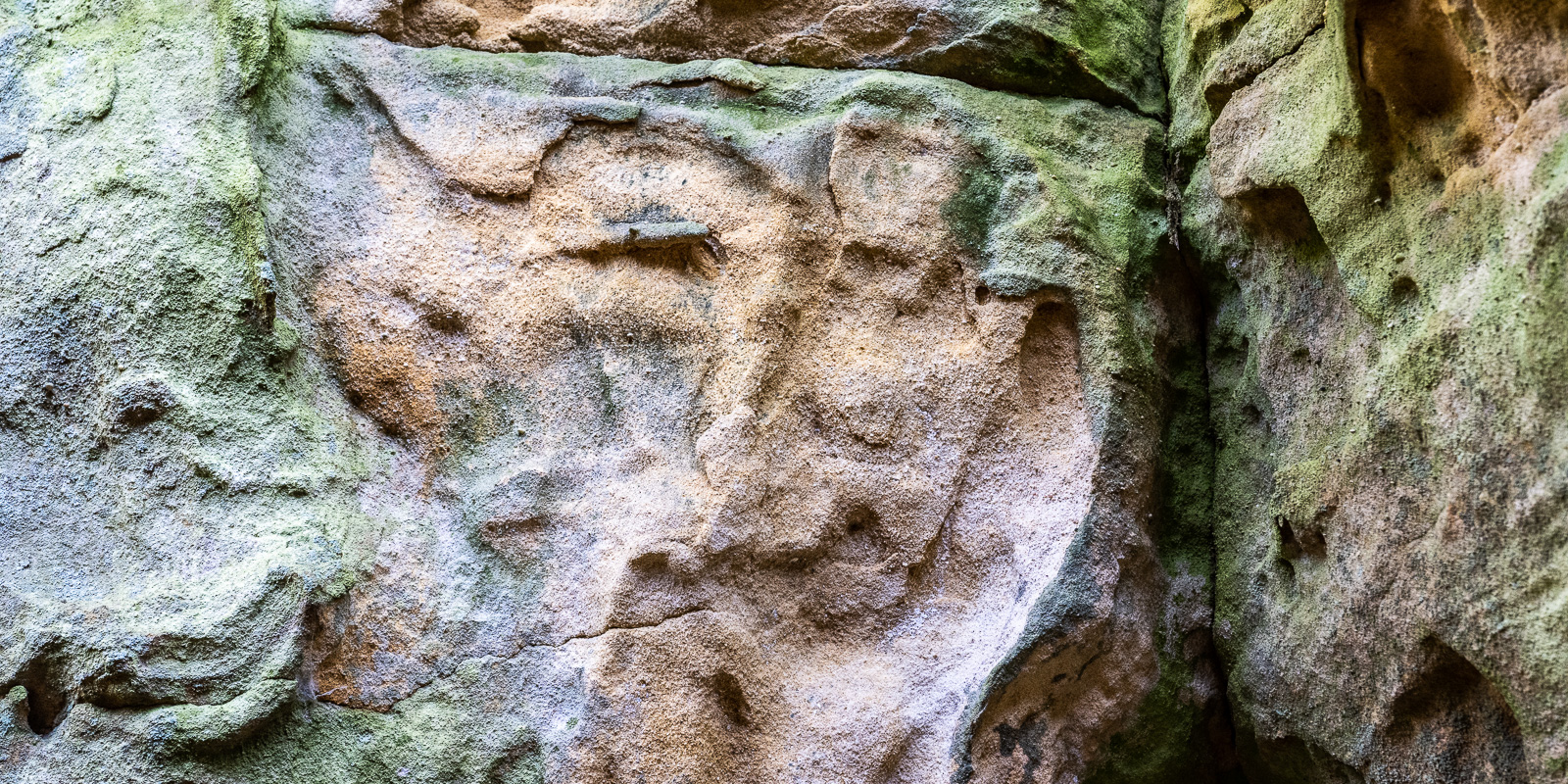
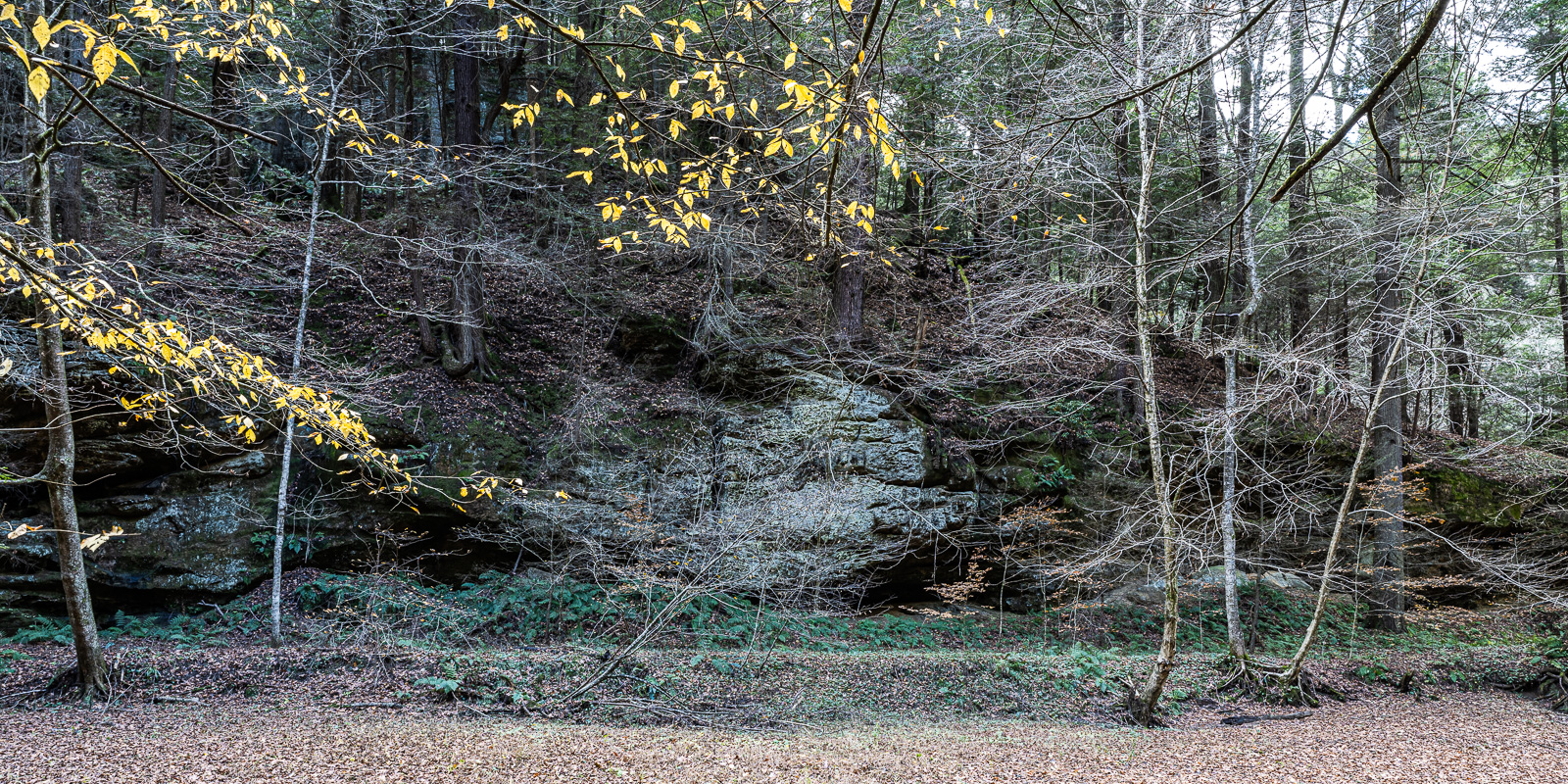
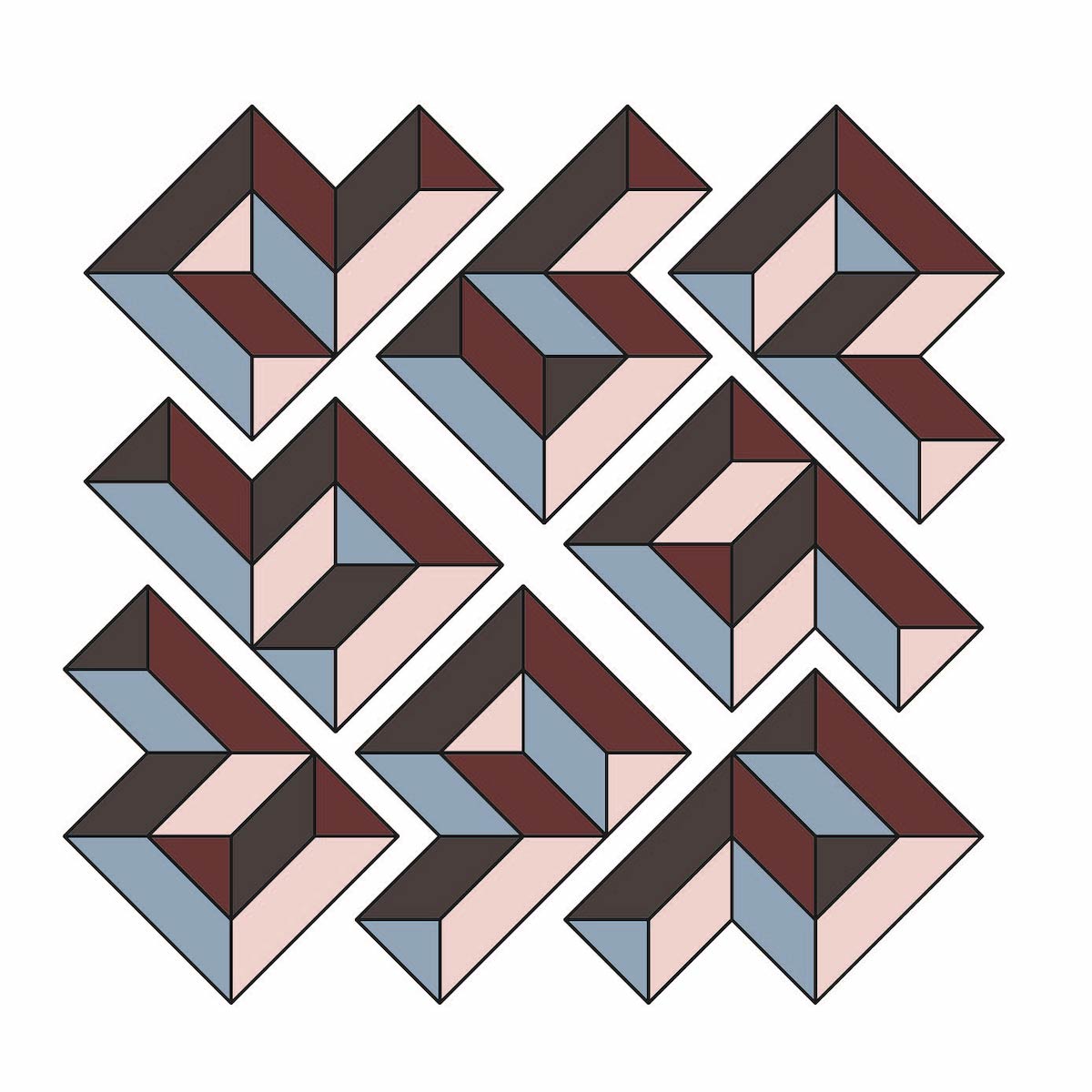
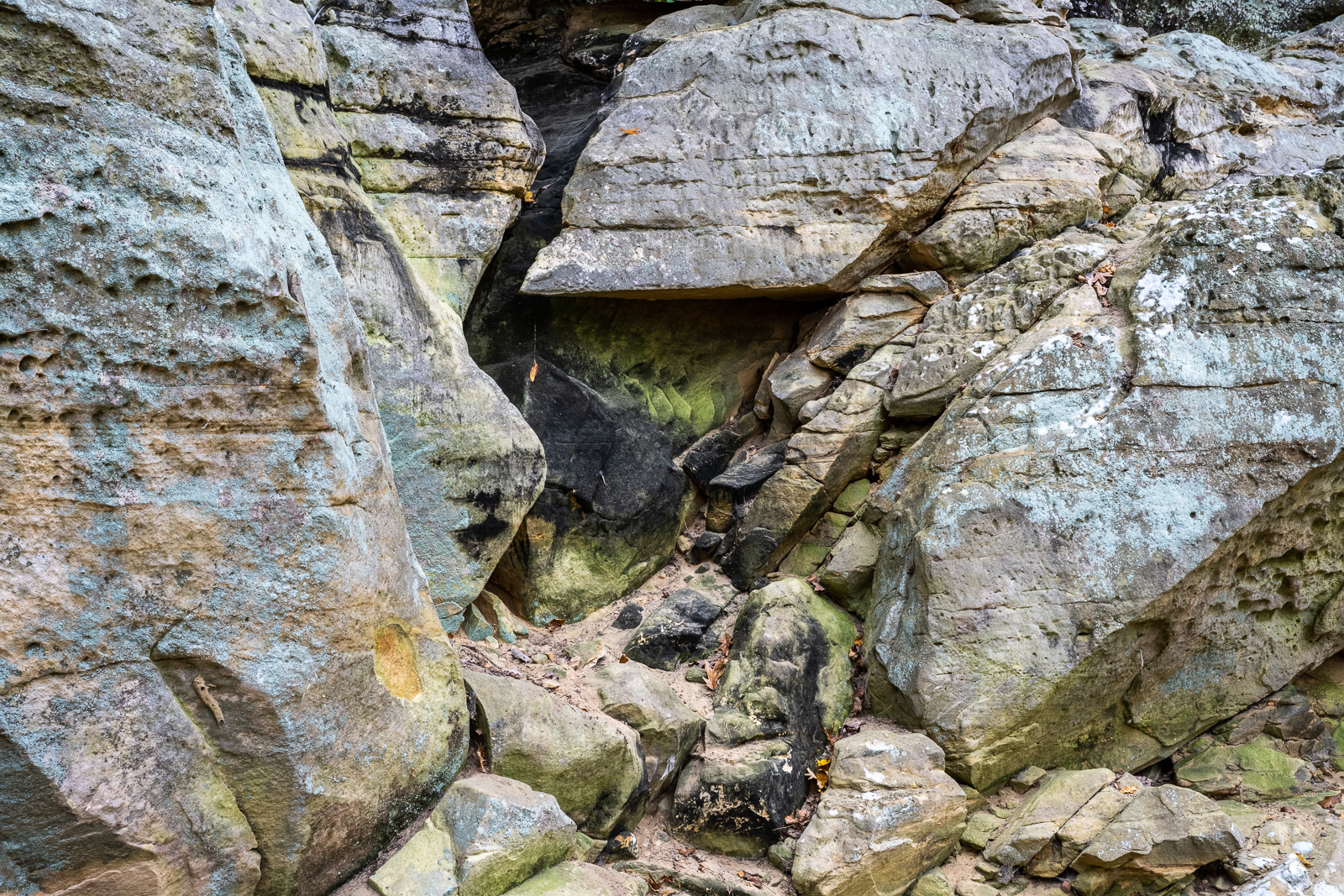
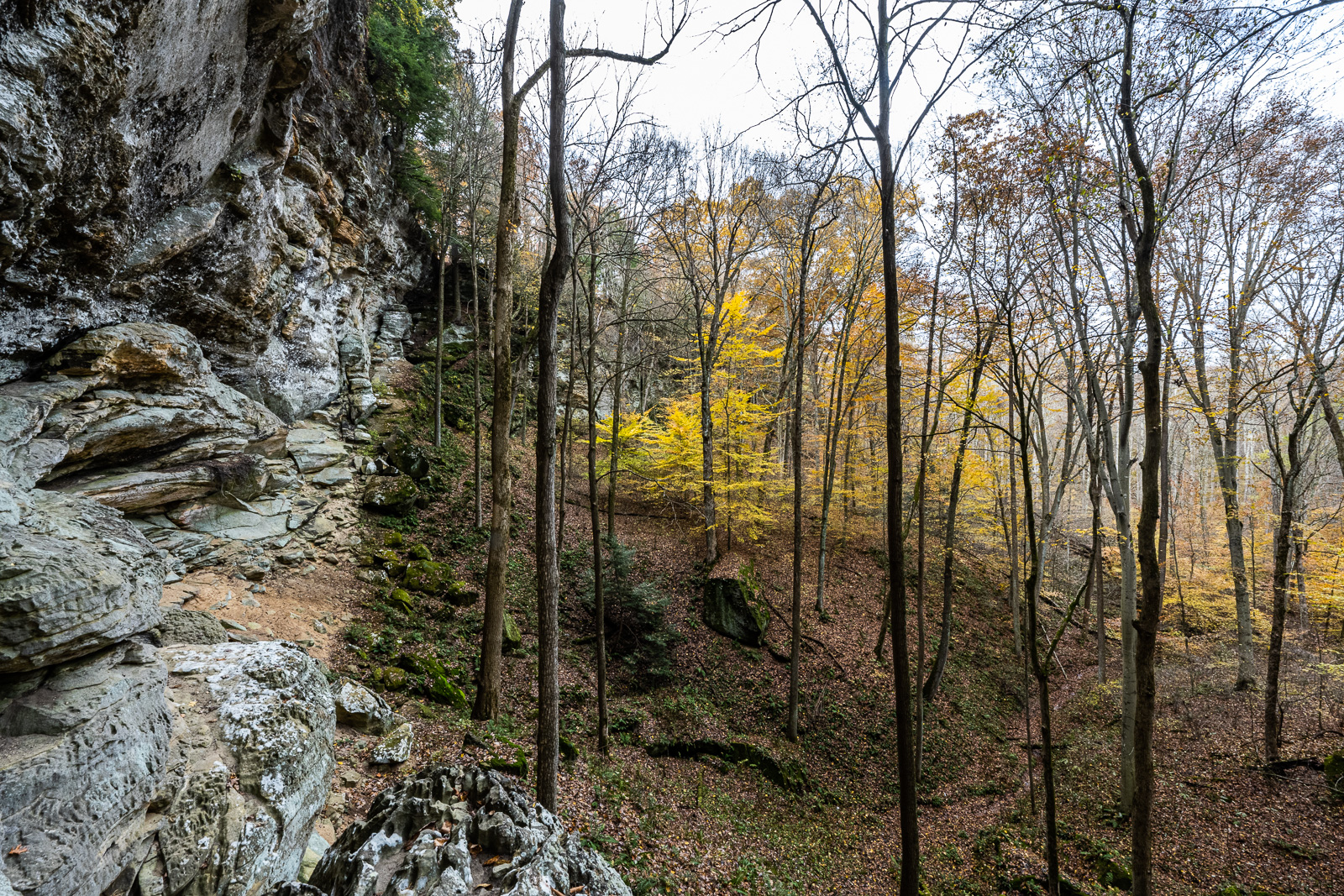
Stubbornness (Hemlock Cliffs VII)

About 9 months ago I went looking for the Arrowhead Arch near Hemlock Cliffs, and I thought it’s time to see how this place looks like in the autumn.

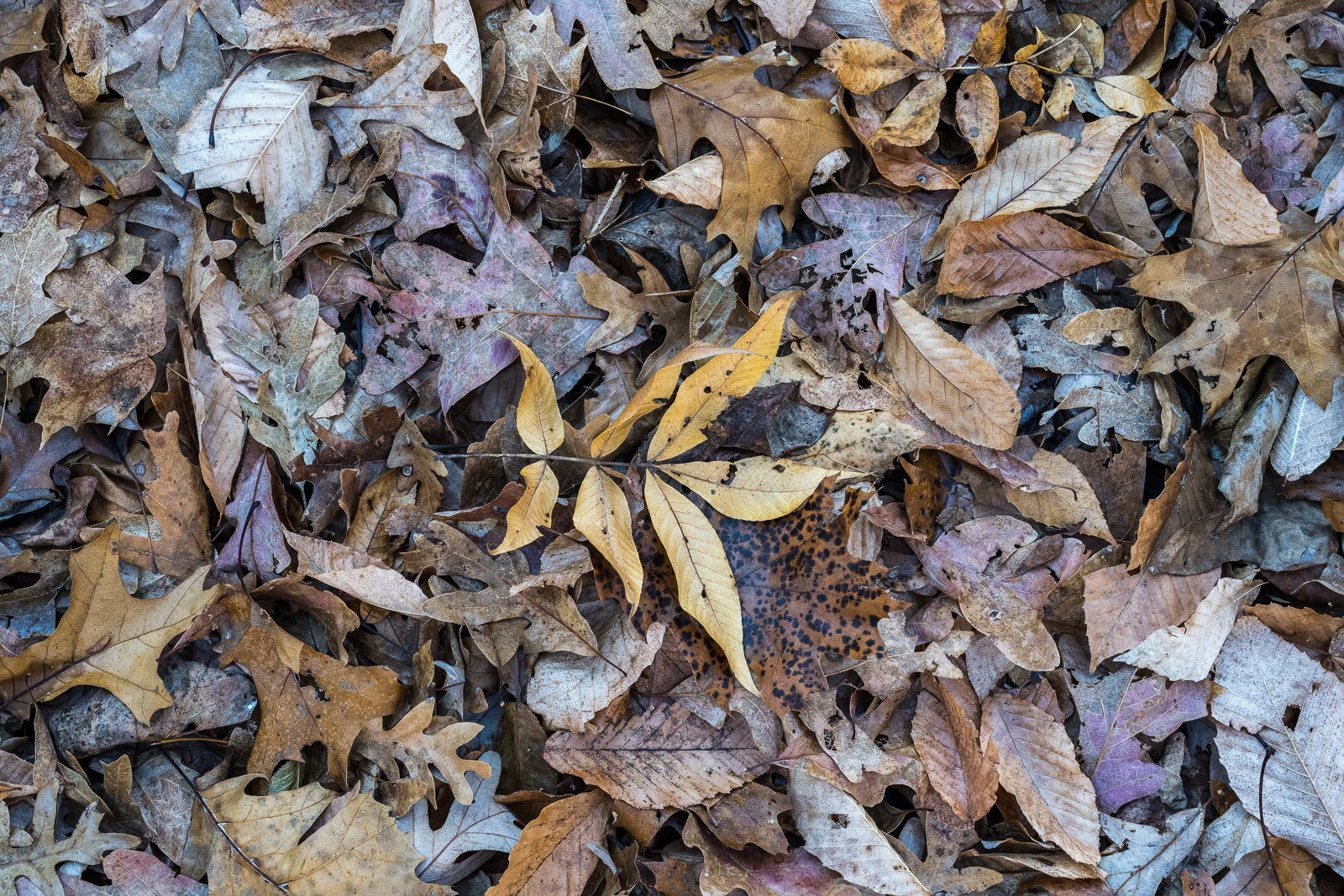
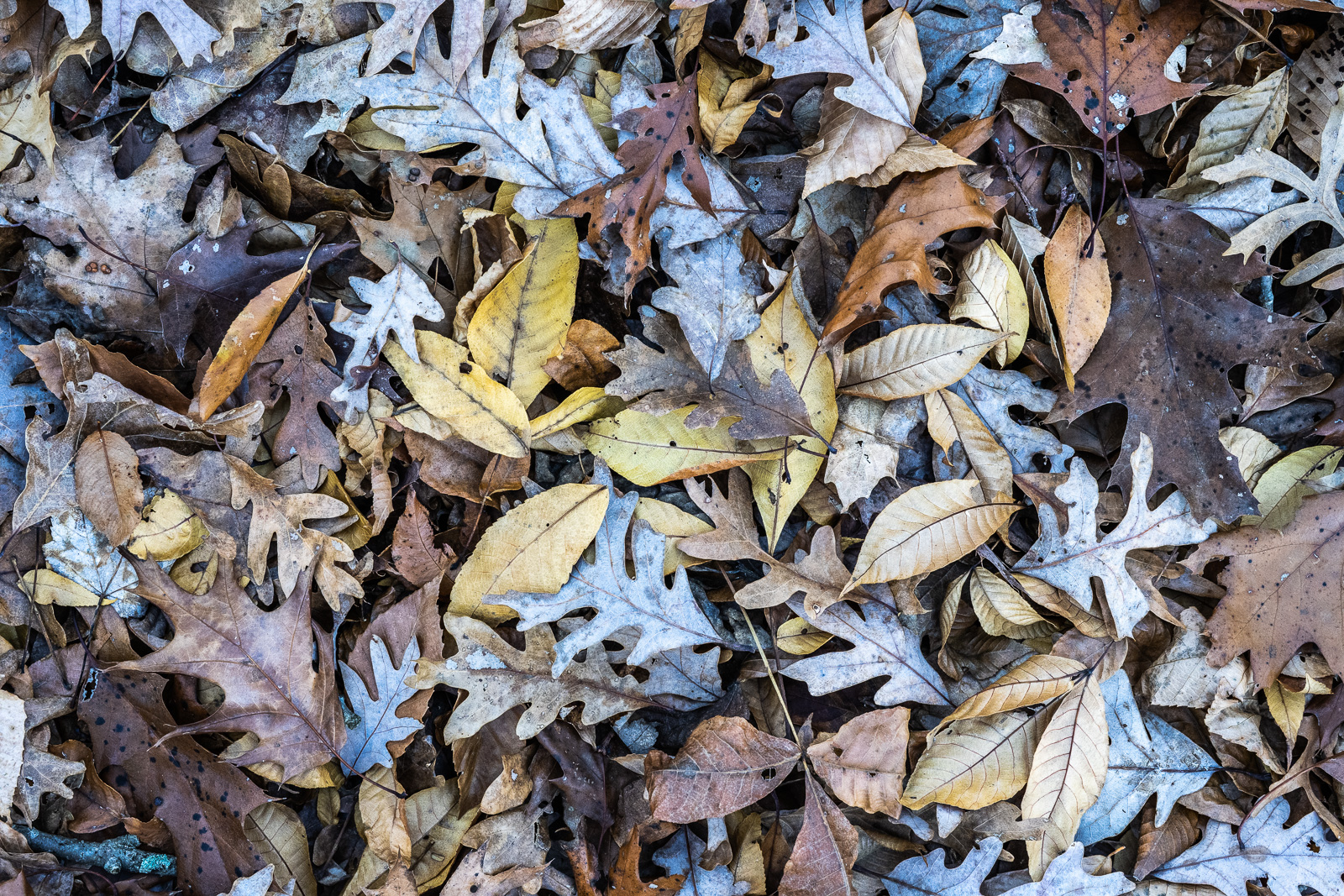
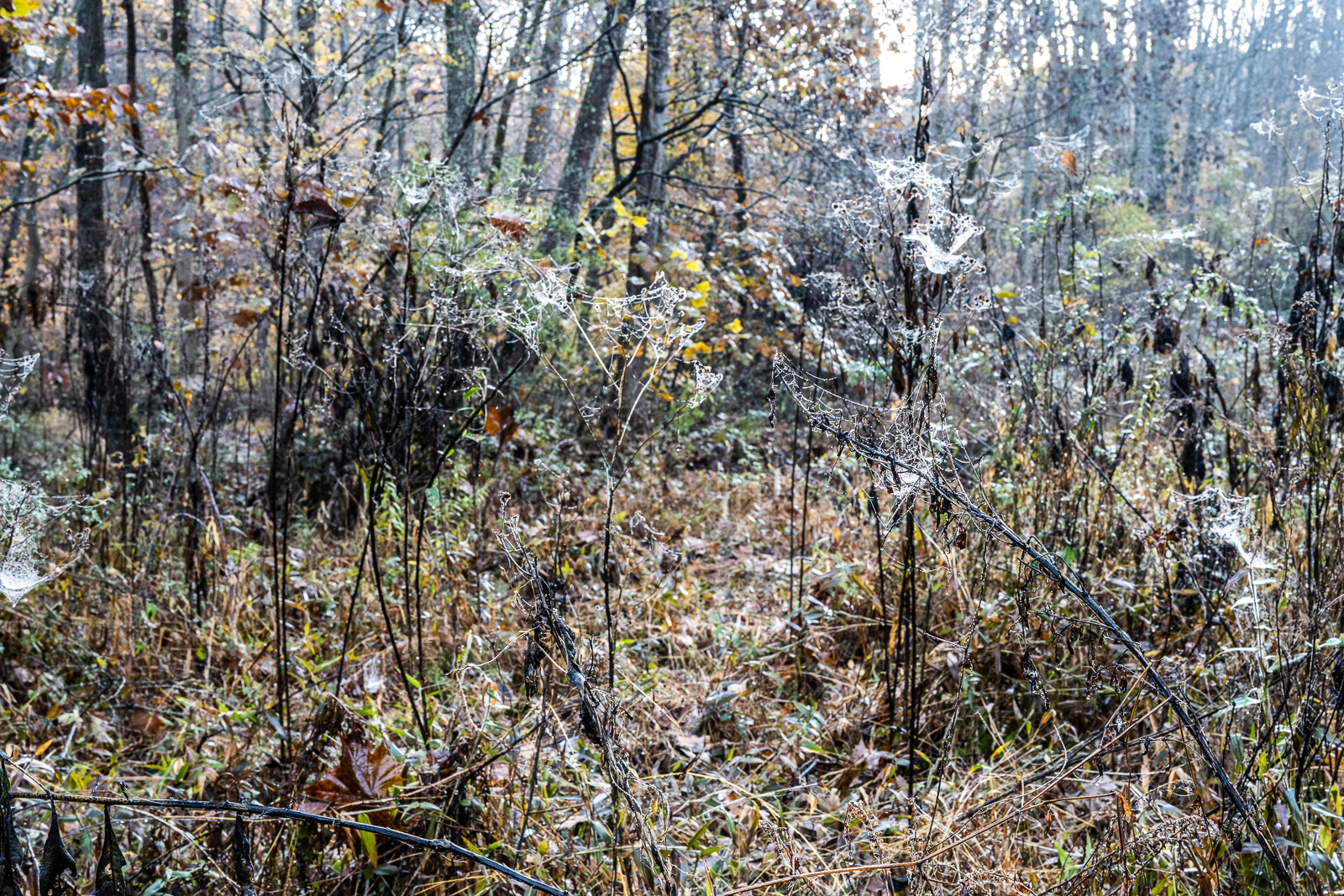
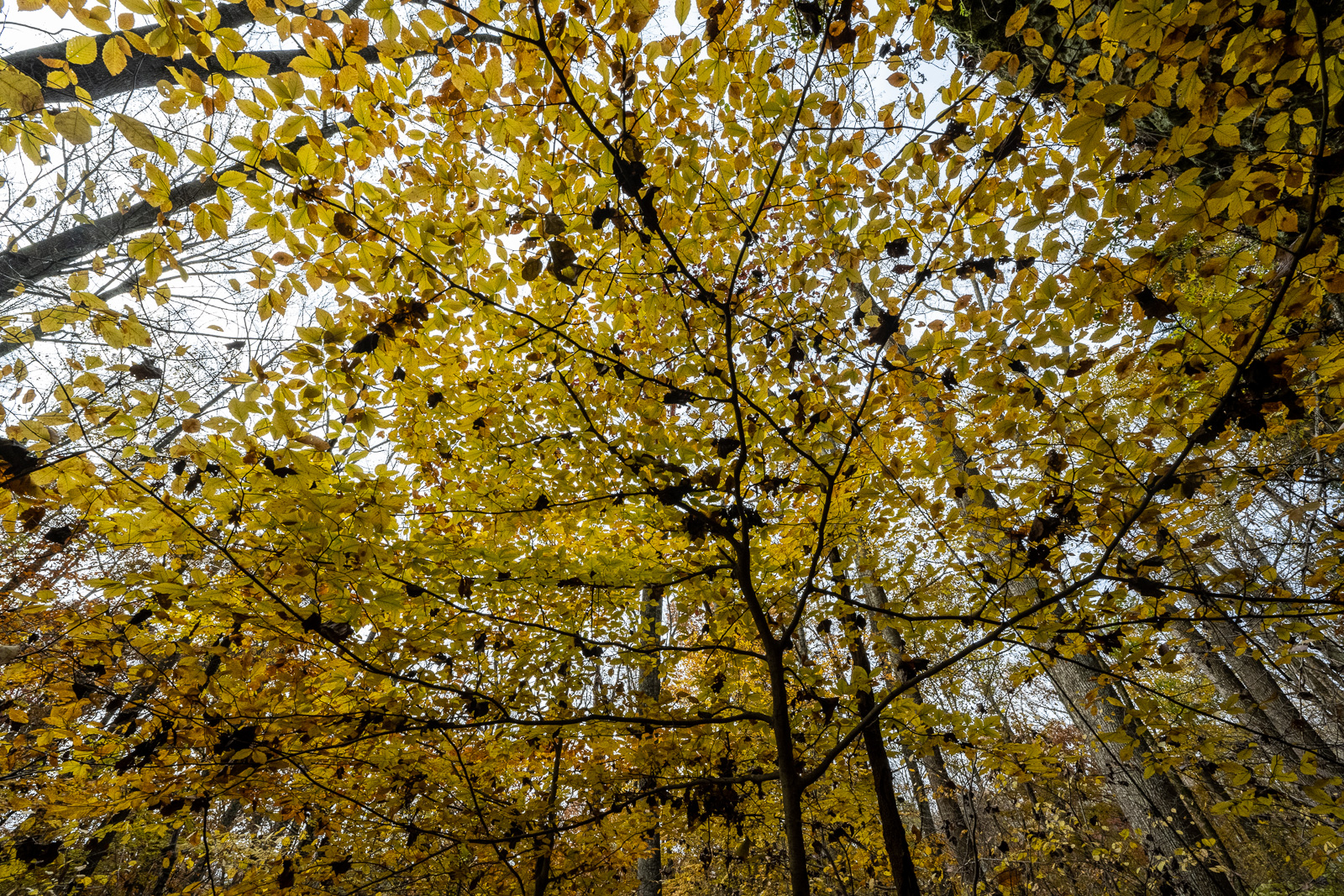
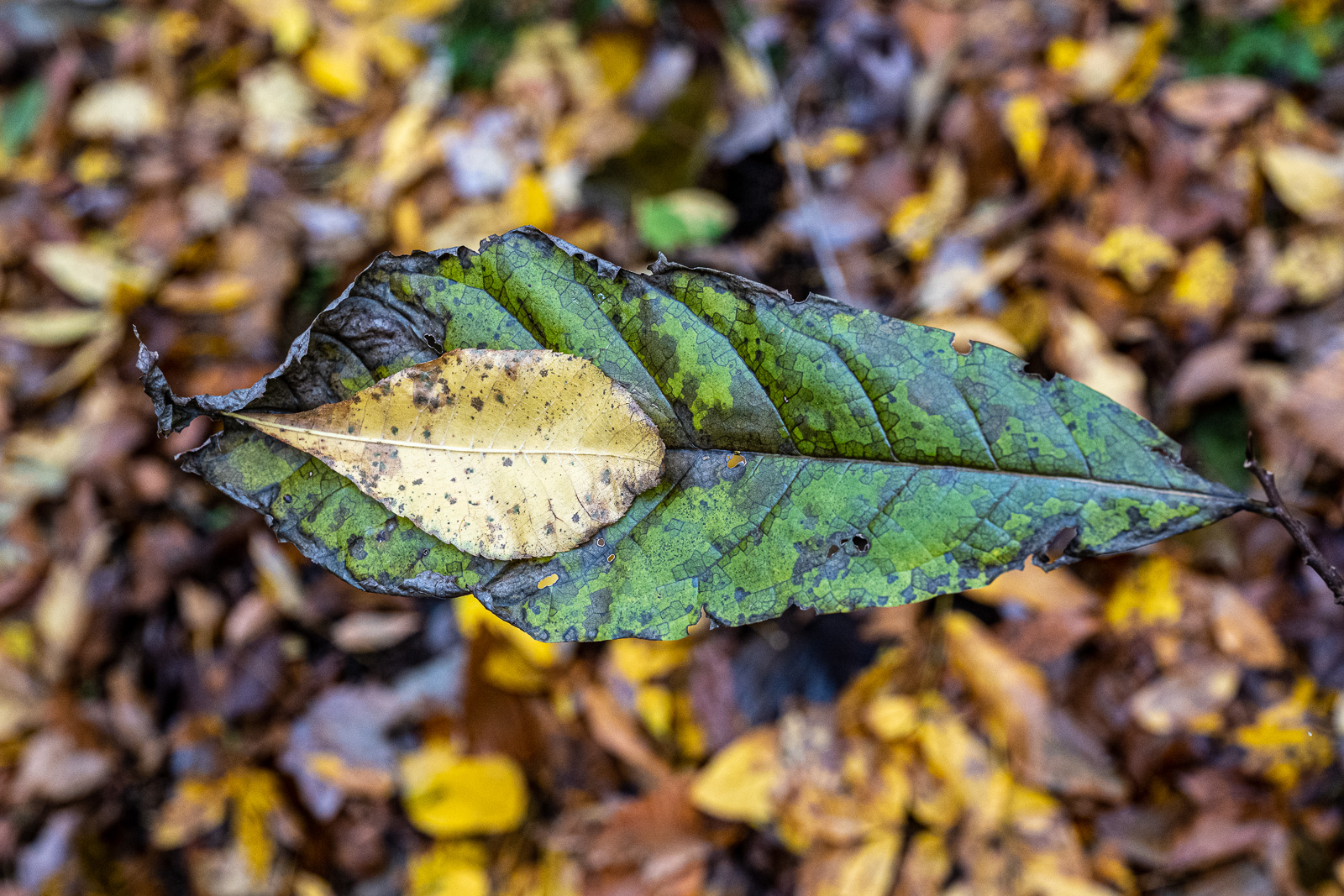
The stubborn spiders are out and about, and the stubborn leaves cling to the trees.

But, of course, what is really stubborn are the rocks of the Messmore cliffs.

This time I was stubborn enough to explore them all the way.

I like the complex and noisy landscape.

And there is the surprisingly harmonious contrast between the cold rock and the warm autumn colors.

Contrasts like these seem to need each other.

In places like this, sometimes, something magical can happen, pure serendipity.
Lost in Translation (Fischer-Koch I)

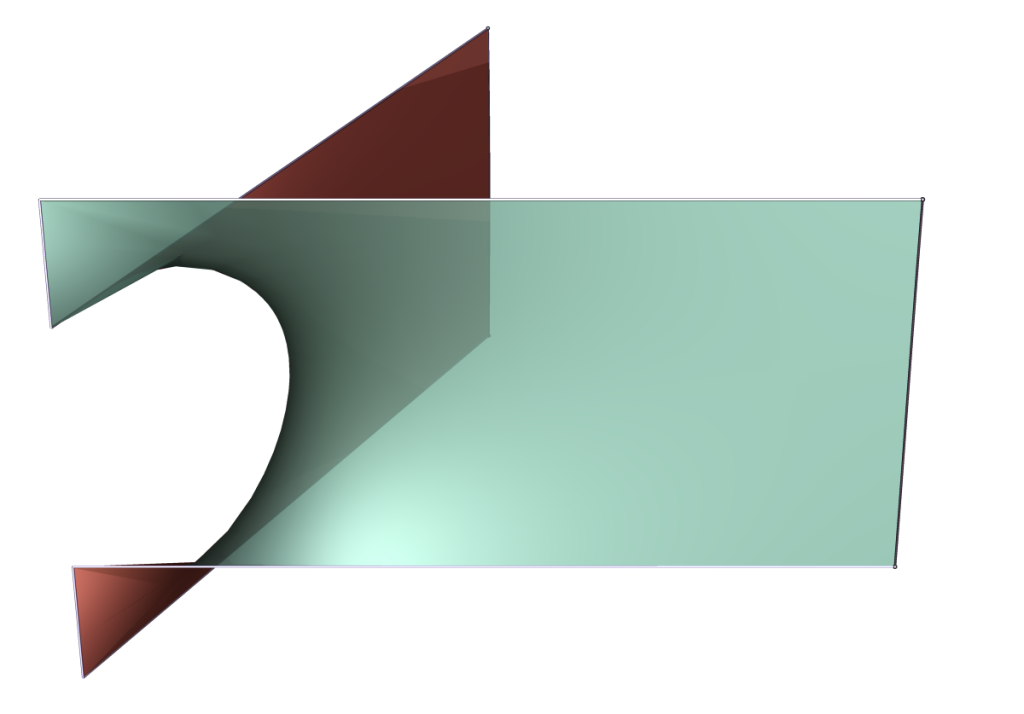
In 1990, Werner Fischer and Elke Koch classified embedded triply periodic minimal surfaces that can be obtained by extending Plateau solutions for Euclidean polygons.
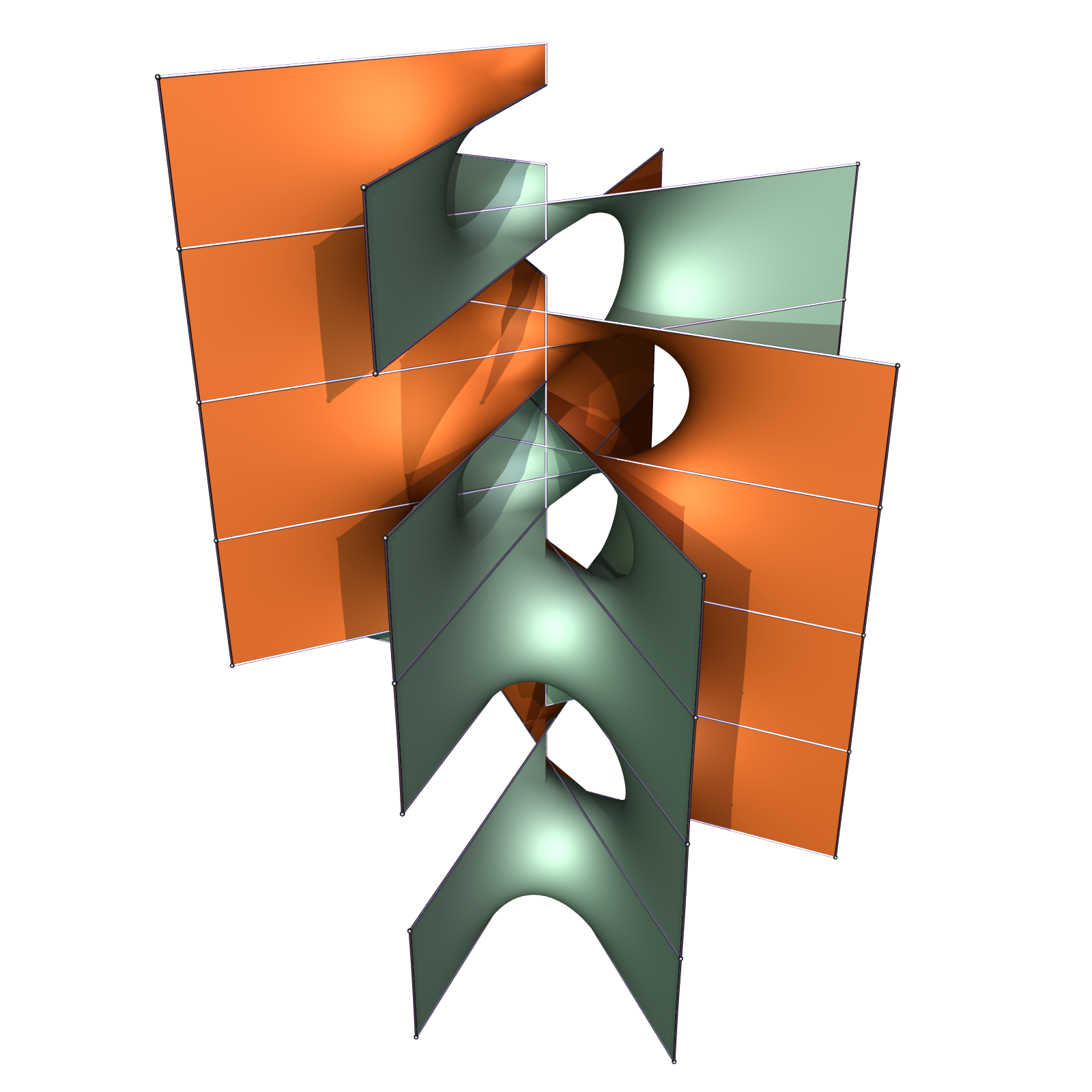
Above to the left you see a minimal 8-gon, extended to a twisted minimal annulus to the right. The horizontal lines make a 60 degree angle, and if the height of the shorter vertical segments is one half of the gap size between two of these segments, further rotations will deliver an embedded surface.

It is hard to believe that something like this is possible, isn’t it?

Hermann Karcher describes a variation of this construction that creates 6-ended singly periodic minimal surfaces. He also mentions that these surfaces can be twisted, i.e. deformed into screw-motion invariant minimal surfaces with helicoidal ends.

Above you can see what happens when the surface is twisted clockwise. On the right, we approach a parking garage structure with five helicoidal columns, four of them with positive spin and axes at the corners of a square, and one with negative spin at the center of the square. Not getting lost in a parking garage like this would be very difficult…

As these surfaces are chiral, twisting them counterclockwise leads to essentially different surfaces. In this case, the limit parking garage structure consists of three helicoidal columns with axes placed on a straight line. So during this entire deformation, two of the helicoids have magically cancelled.

Next week we will see a very recent and surprising variation of this construction.

Aporetic Water (Ohio XI)

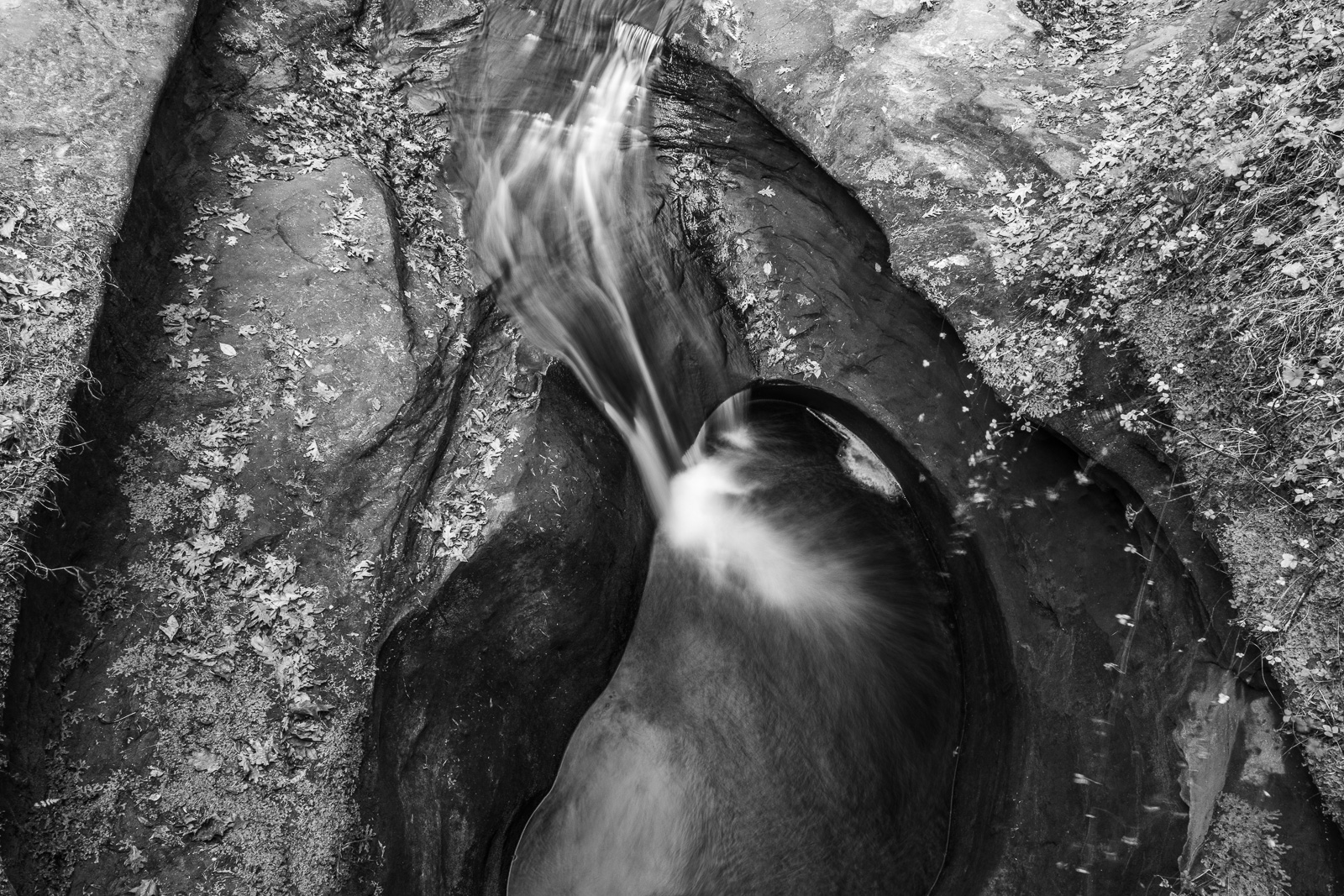
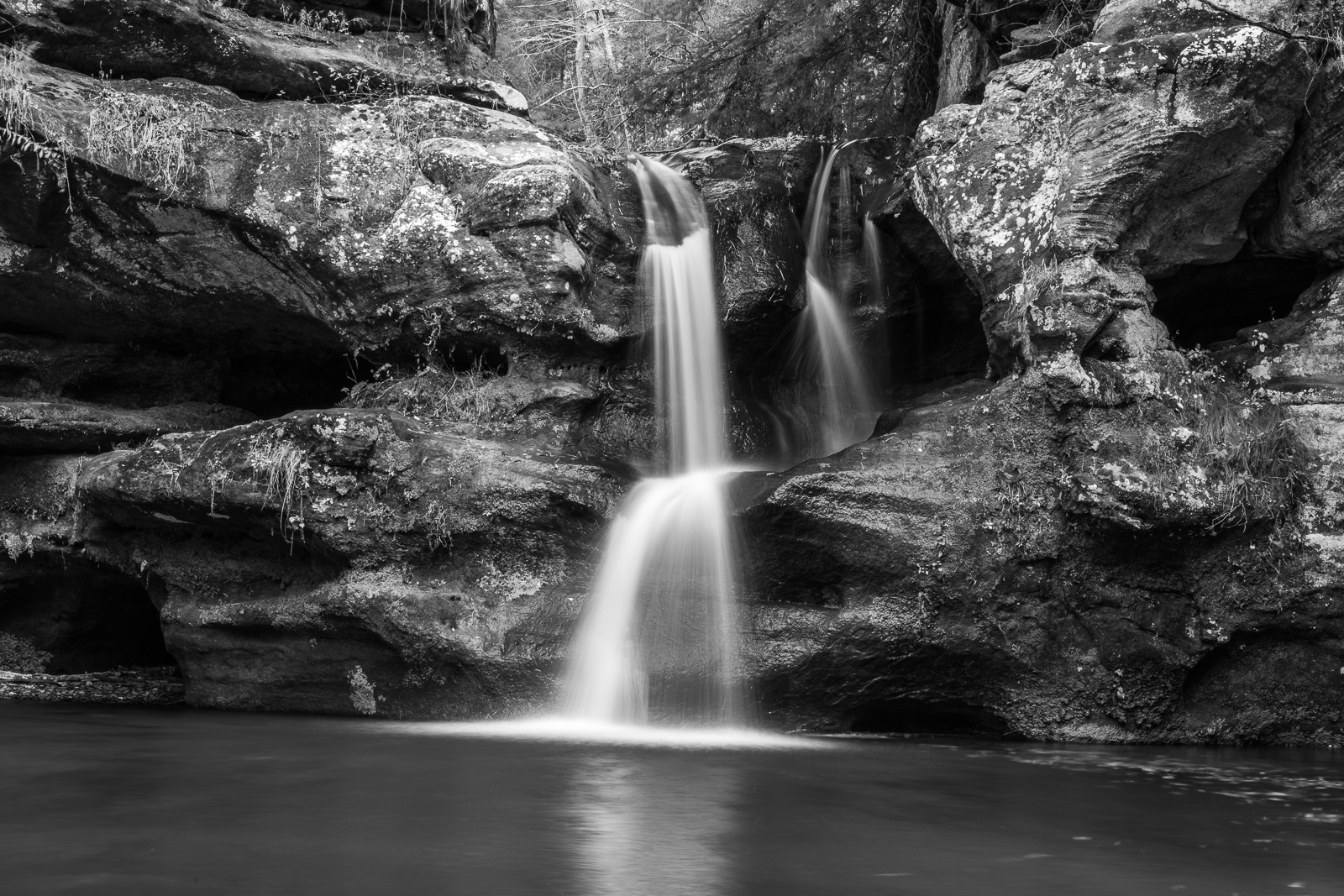
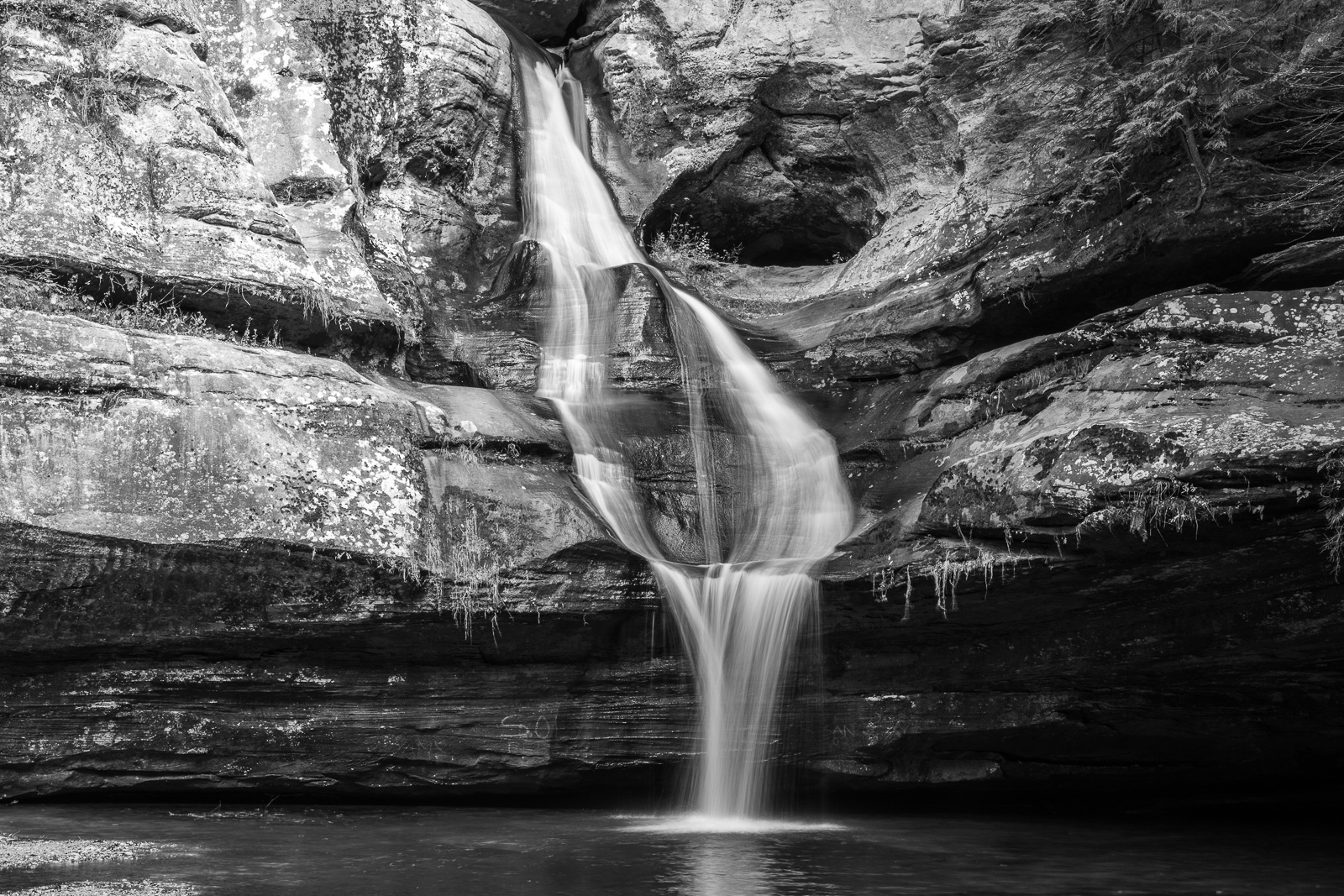
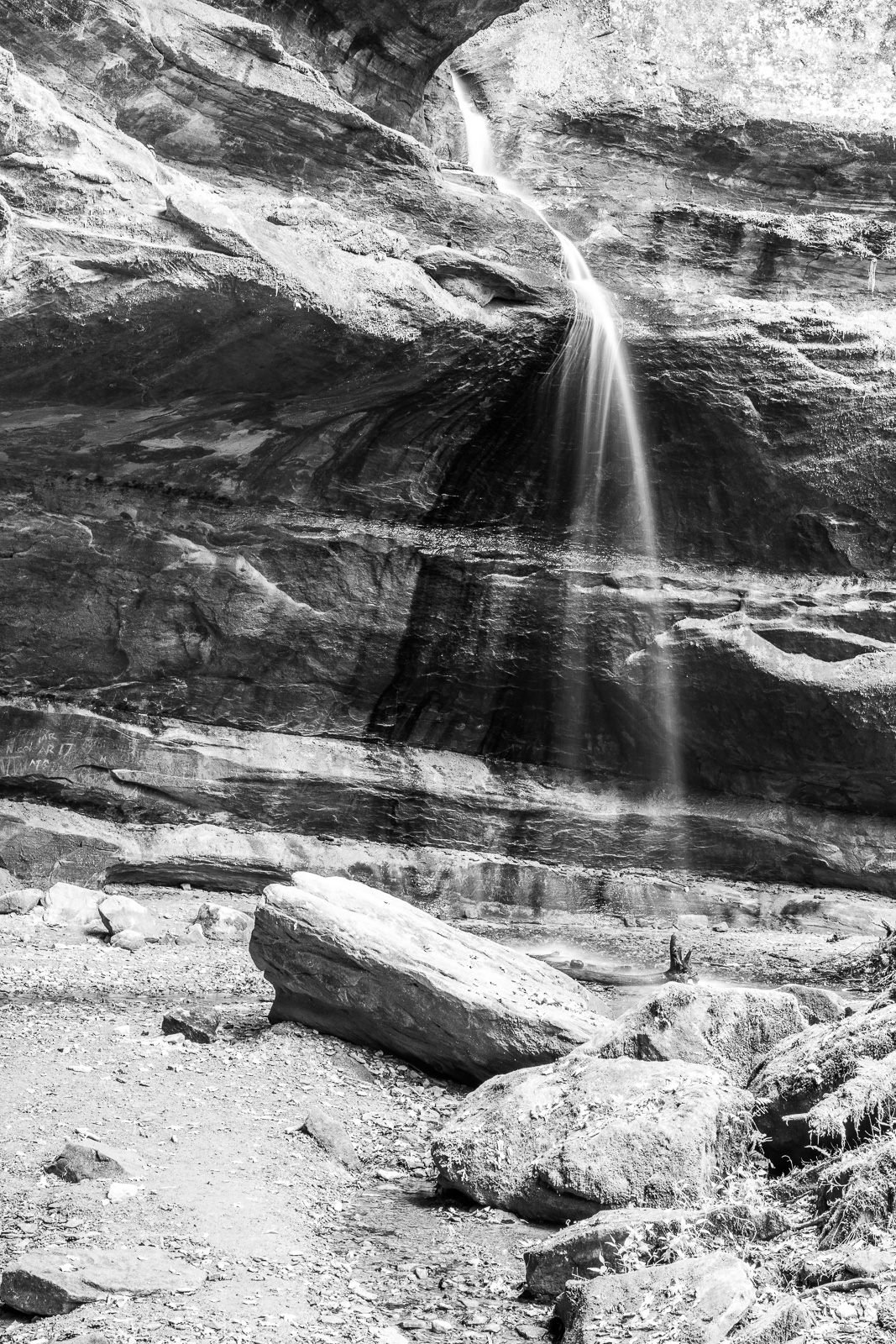
The second long hike this fall in Ohio took me to the waterfalls in Hocking Hills State Park.

Flowing water is infinitely attractive. It’s common to capture waterfalls through long exposures to get that seductive silkiness.

Waterfalls can be as beautiful as the human body.

One little project I have is to make a time lapse movie with long time exposures of waterfalls, ideally in Iceland, over 24 hours, taking one shot every minute, which would give a single one minute long clip.

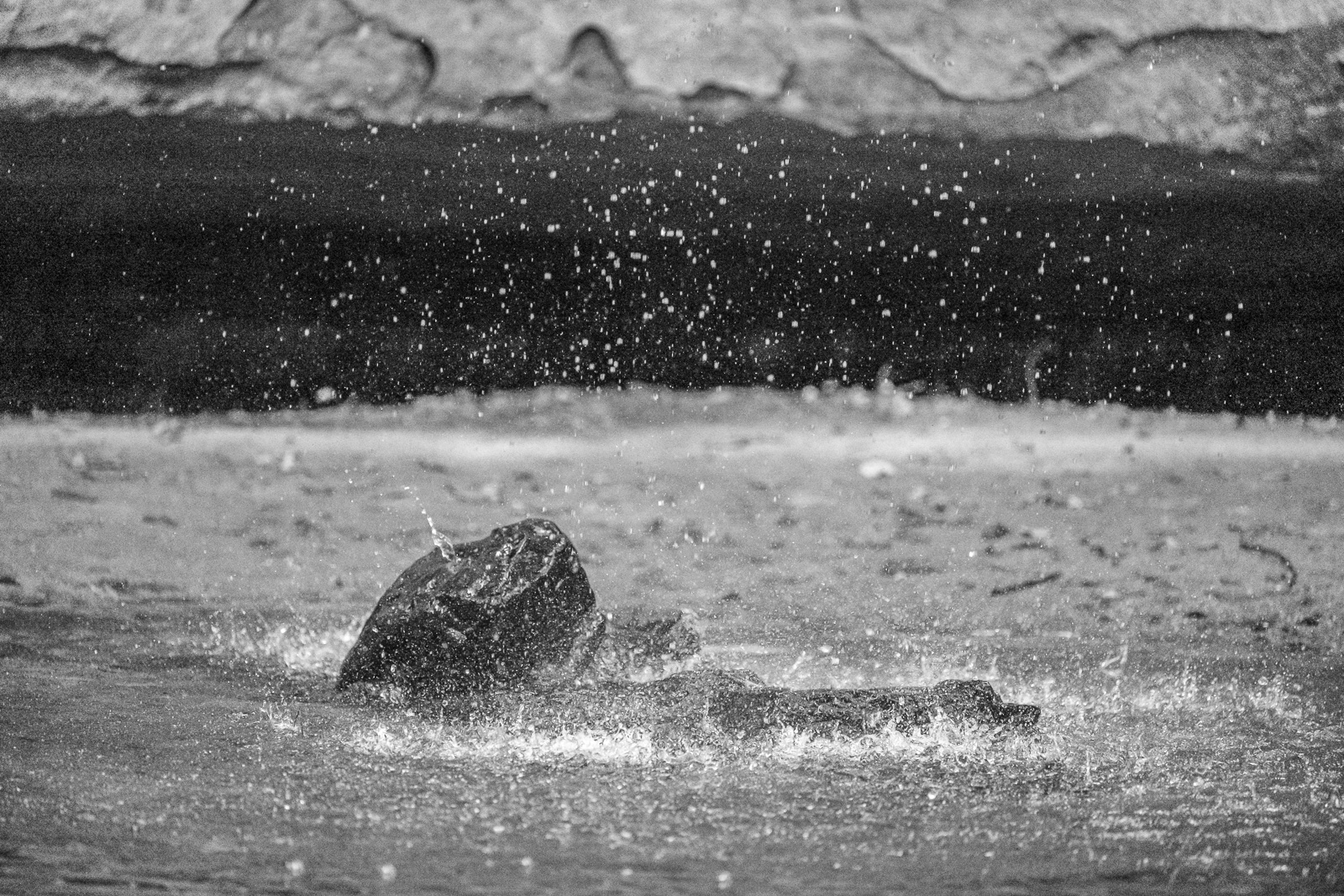
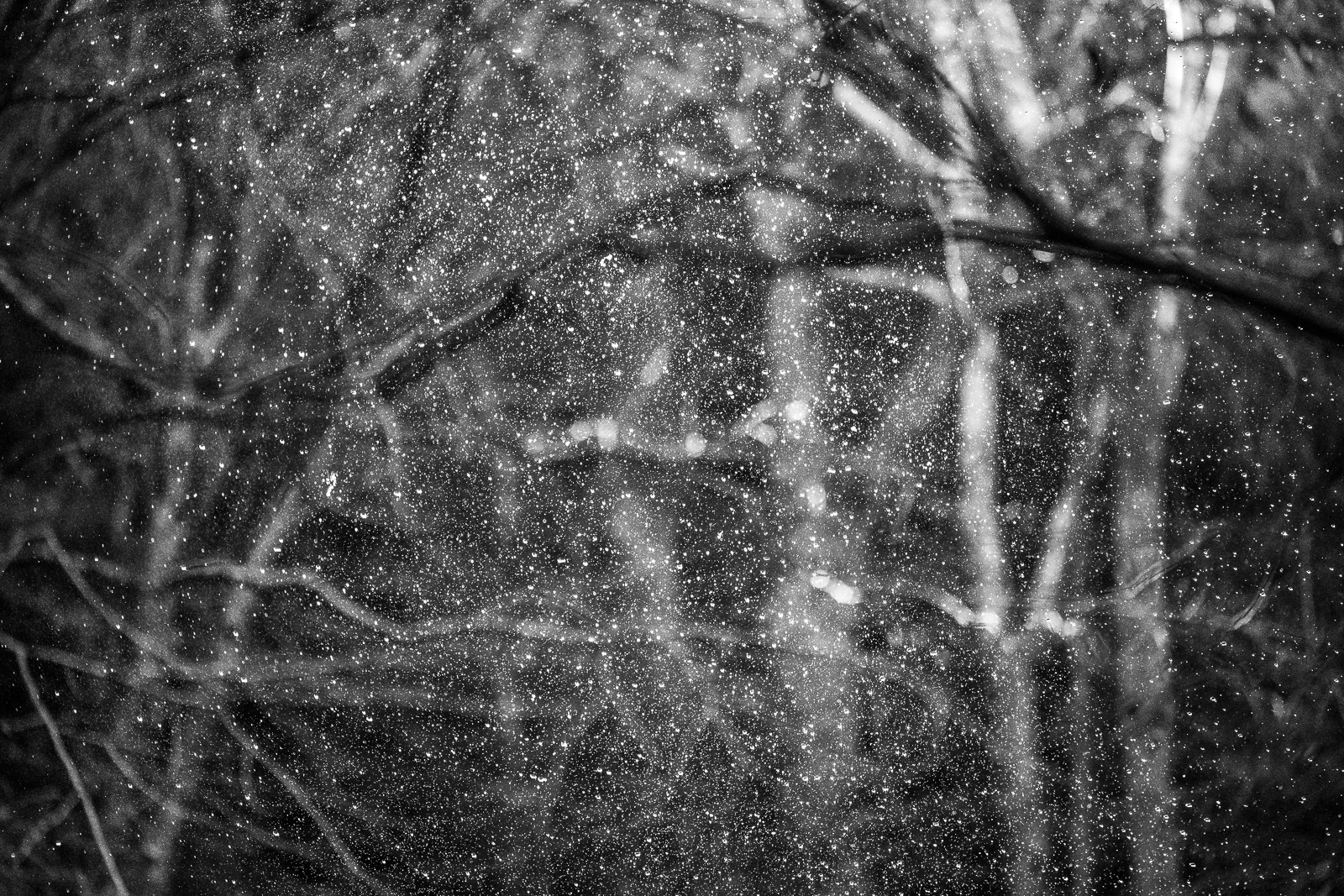
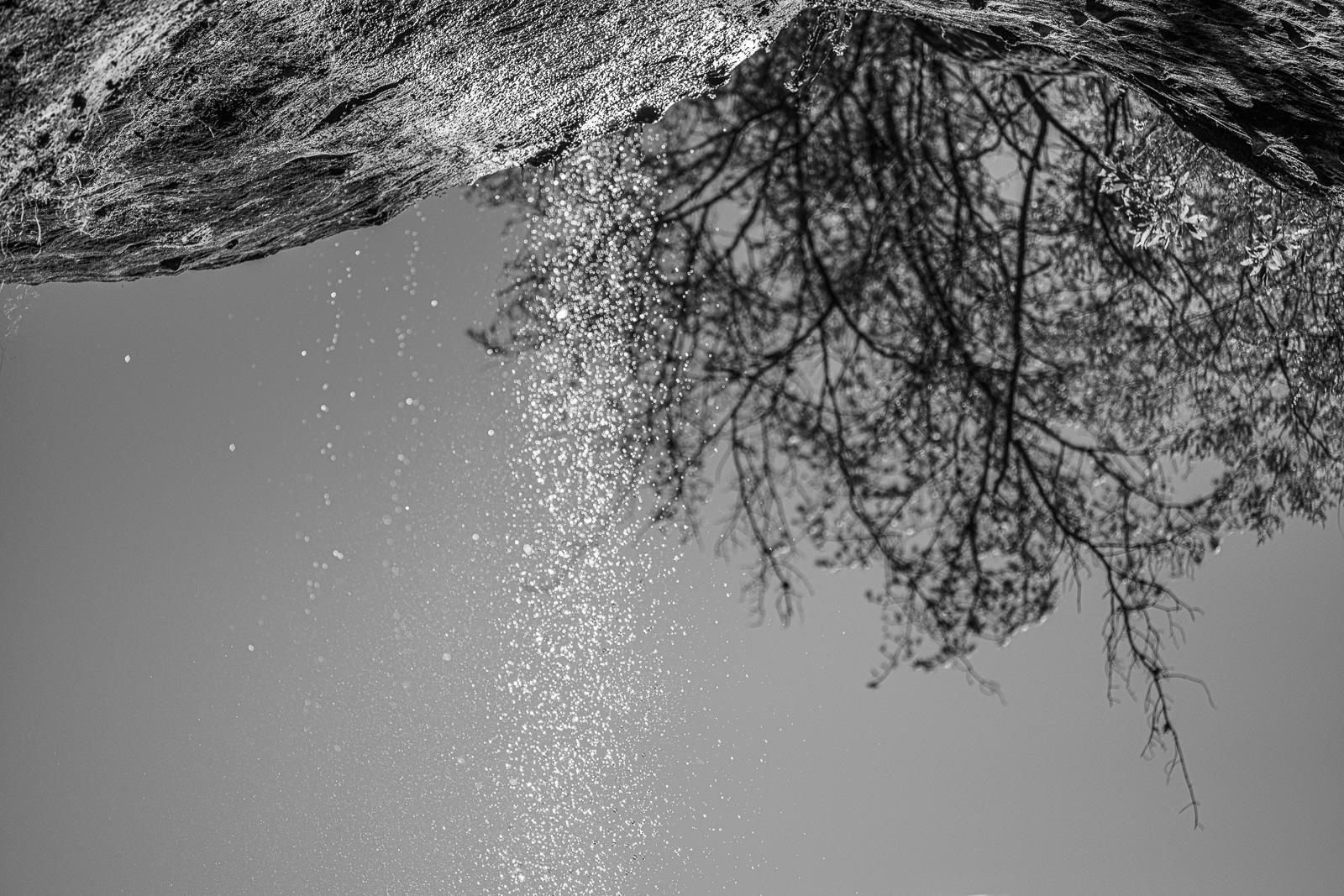
Then one can also capture instants time with very short exposures, dissolving the flow of a water into isolated droplets.

Here the plan would be to create a slow-motion film, taking hundreds of shots a minute, and exposing each for 1/8000 of a second, so that we can follow each droplet for much longer that it takes to fall.