Brianchon’s Theorem

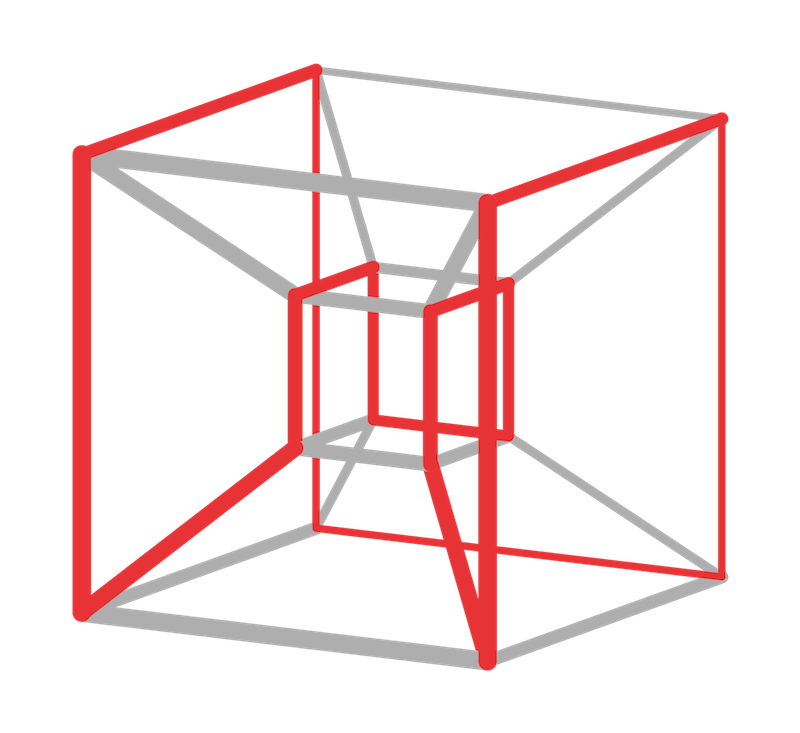
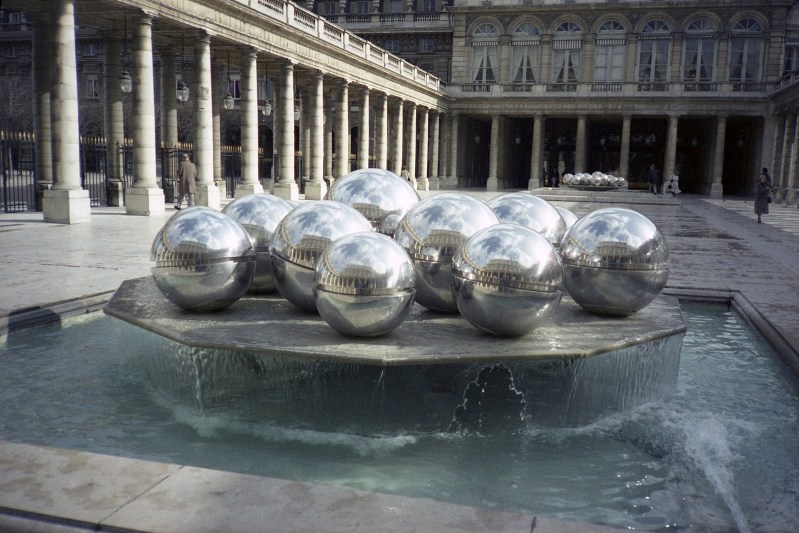
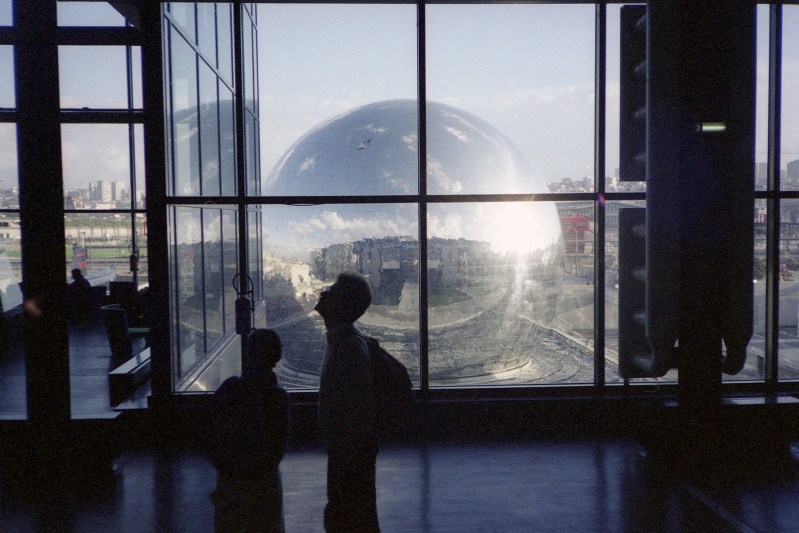
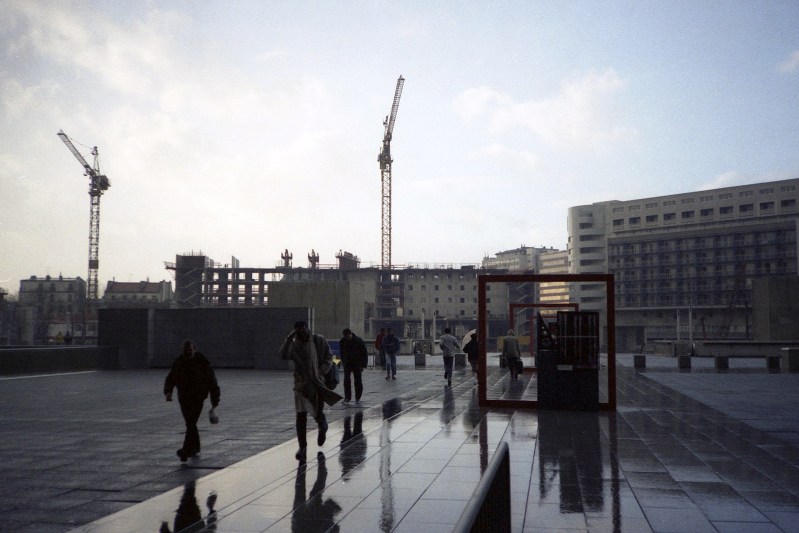
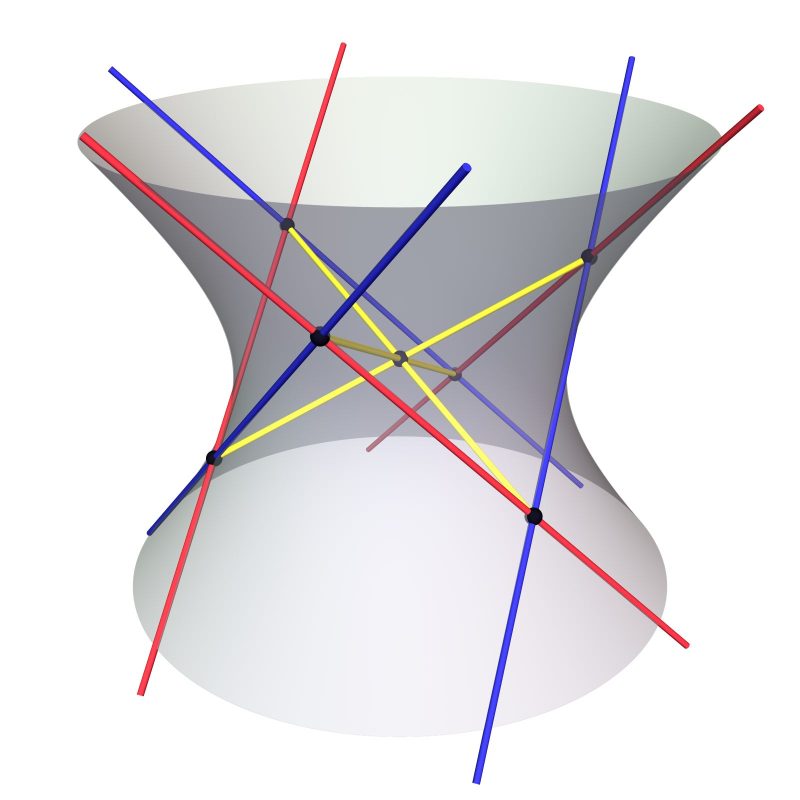
When you rotate a straight line about the vertical axis, you will generally get a hyperboloid of revolution. By construction, this is a ruled surface, and by symmetry, there is a second set of lines on the surface. We call these two sets of lines the A-lines and B-lines.

Sor

These lines dissect the hyperboloid into lots of skew quadrilaterals, reminding us that any quadrilateral can be doubly ruled, and opening up more possibilities for our previously discussed bent rhombi.

Patches

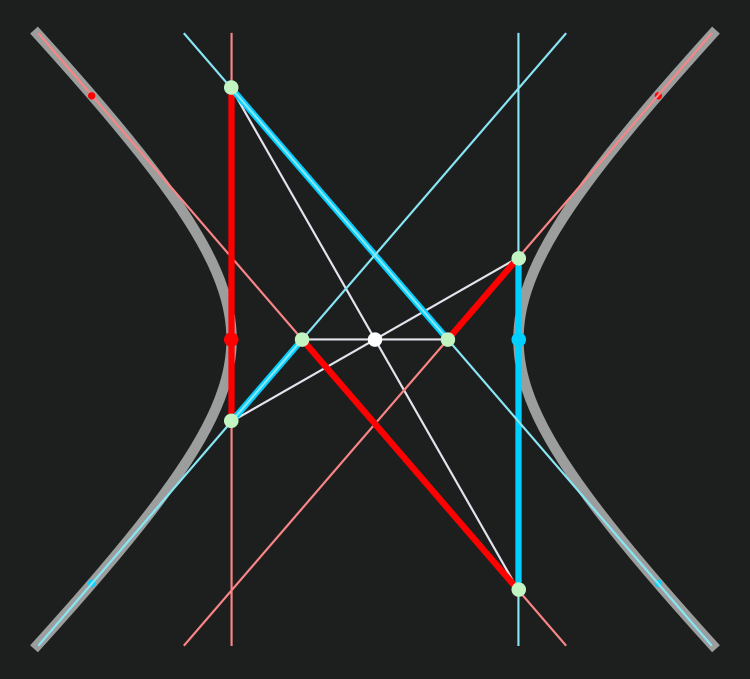
Let’s form a hexagon, following the A- and B-lines alternatingly once around the hyperboloid. Then a theorem by Charles Julien Brianchon states that the three main diagonals (i.e. those connecting opposite vertices) of this hexagon will meet in one point.
Sor2

One reason why this is curious is that it quite unexpected: In space, we don’t even expect two lines to meet in a point, let alone three. The other reason is that it has such a simple proof, due to Germinal Pierre Dandelin: Any pair of A- and B-lines will lie in a common plane, because they either intersect or are parallel. So the pairs of opposite edges give us three planes, which will meet in a common point. Because the diagonals of the hexagon are also the intersections of any pair of the three planes, we are done.

Sor3

If we project the hyperboloid with all its decorations into the plane, like done so in the images above, the outline of the hyperboloid becomes a common hyperbola, and the six lines of the hexagon tangential to it. This leads to Brianchon’s theorem in the plane: The main diagonals of a hexagon circumscribed in a conic section meet in a point.
Brianchon Hyperbola2 01

This theorem becomes easier to parse if the conic is just an ellipse:

Brianchon ellptic 01

We also have enough room here to see that there is a second dual conic on which the A-lines and B-lines, respectively, meet.

Slidables

A while ago I tried to start a blog about games and puzzles, which failed, mainly due to time constraints.
I will recycle some of the posts here.

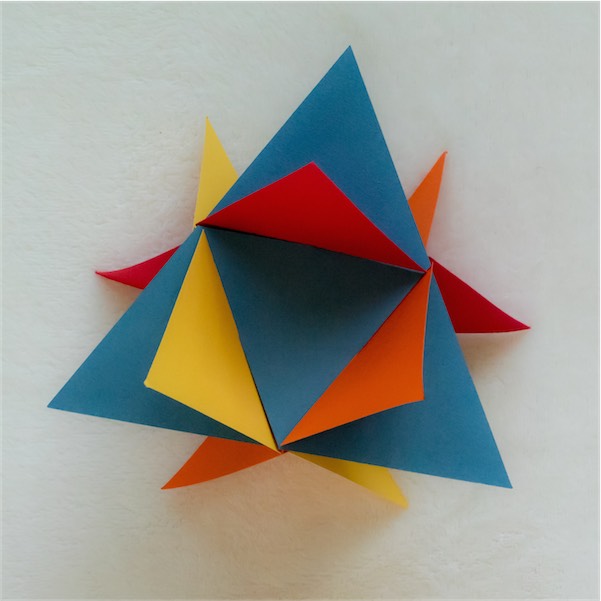
Here are a few crafts of varying difficulty that you can do just with card stock and scissors. The idea is always the same: Use several copies of a simple shape with slits to build paper sculptures. They all make nice holiday ornaments.

Triangles

The simplest such shape is an equilateral triangle that has been slit as shown below.

Triangle

Using four such triangles, you can build the following star.

Folds 2

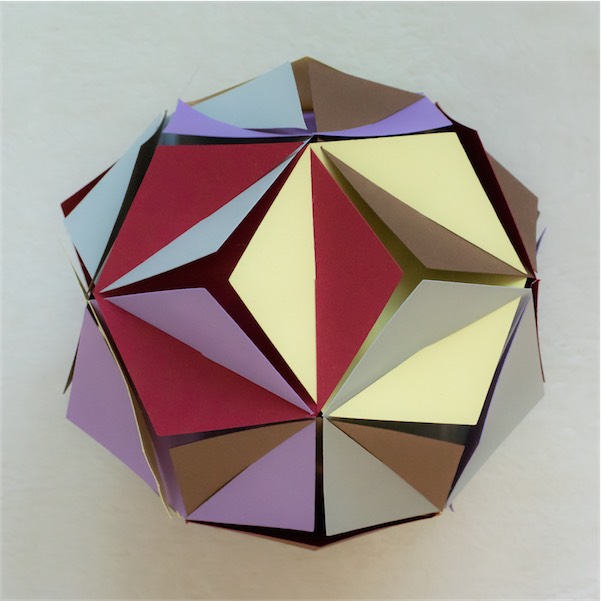
With eight triangles and a bit more patience, you get the following shape, which is Kepler’s Stella Octangula, a stellation of the octahedron, or the compound of two tetrahedra.

Folds 6

I like to curl the tips of the triangles to make them look like flower petals.

You can of course also build other objects.

Pentagonal Stars

Folds 1

Using 12 copies of the slit pentagrams below, one can build Kepler’s Small Stellated Dodecahedron.

Pentagram

This requires a bit patience. Start with one pentagram, and insert five pentagrams successively in all of its slits, thereby also linking the inserted pentagrams together as well. Then insert another five pentagrams into neighboring pairs of the first ring of pentagrams, again linking the pentagrams from the new ring together. Finally, insert the twelfth pentagram into the free slits of the pentagrams from the second ring.

The last steps require some heavy bending of the pentagrams, and careful adjustment at the end.

Triangles and Squares

Folds 7

Using properly slit triangles and squares, one can build a stellation of the cuboctahedron.

Trisquare

The slits in the squares and triangles must have the same length.

This is a bit easier than the previous example. During assembly, the model falls easily apart, but it is quite sturdy when done.

Irregular Hexagons

Folds 4

Twenty of the regular hexagons below can be used to create one of the stellations of the Icosahedron, the Small Triambic Icosahedron.

Icosahedron

Escher’s Solid

Folds 3

This is the first stellation of the rhombic dodecahedron, also called Escher’s Solid. It tiles space. You need 12 of the non-convex hexagons below.

Escher

A simpler version is a stellation of a rhomboid, using 6 hexagons.

Folds 5

Final Comments

The strategy to design these models is to look for regular polyhedral shapes with few kinds of faces that intersect in a relatively simple way. Then, each intersection of two faces leads to slits on both faces half way along the intersection, so that the two faces can be slid into each other.

There are of course limits to this, but I am sure there are many more models one can assemble.

Es reiche aber des dunkeln Lichtes voll, mir einer den duftenden Becher (Pyrenees 1996 – II)

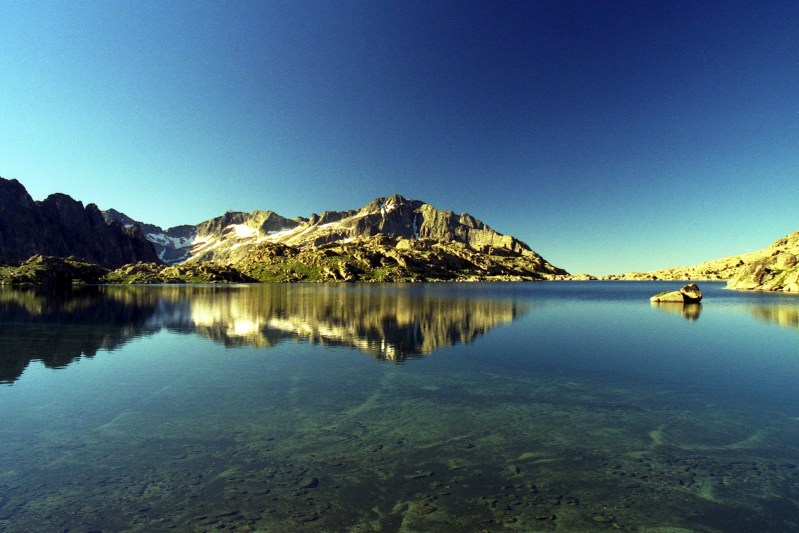
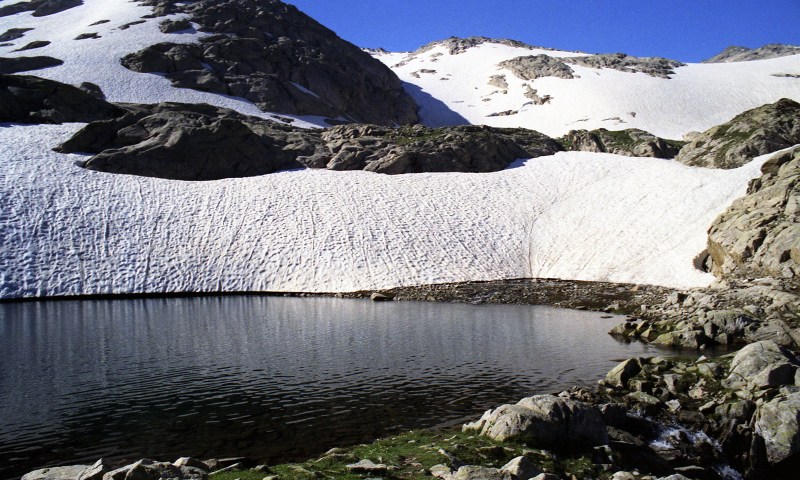
Spending the night at a mountain lake is without comparison. Here we are at the Estany dels Monges at 2422m altitude, which was very cold, but we needed it. Walking around the lake in the evening and morning

Pyr23

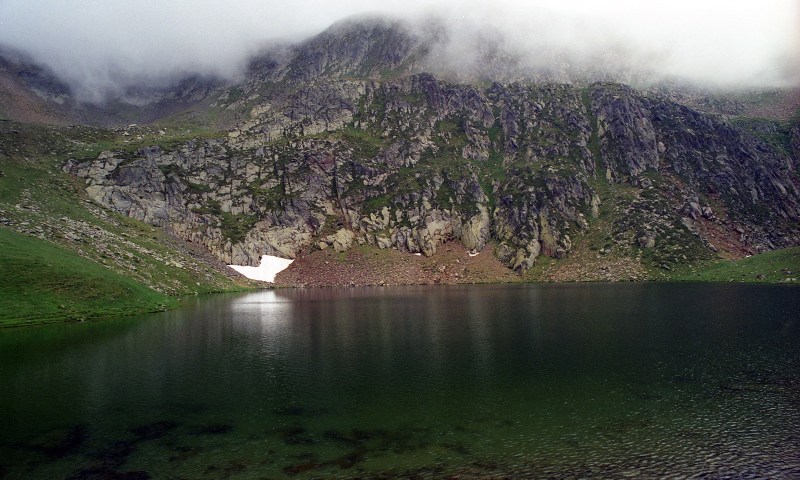
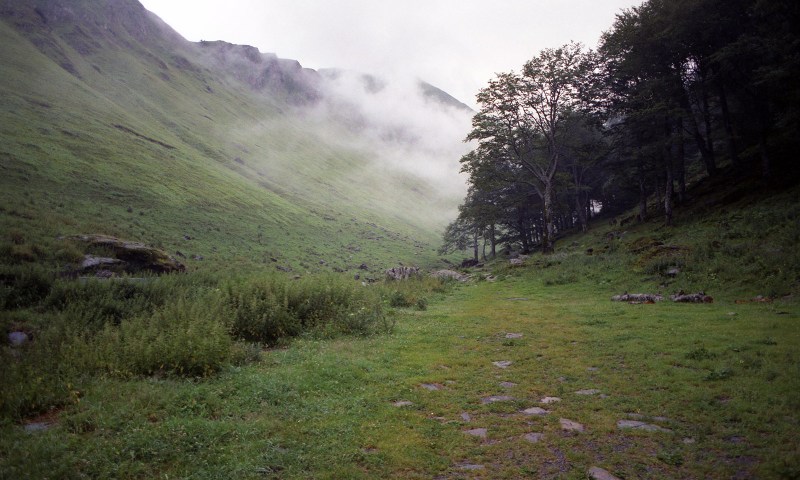
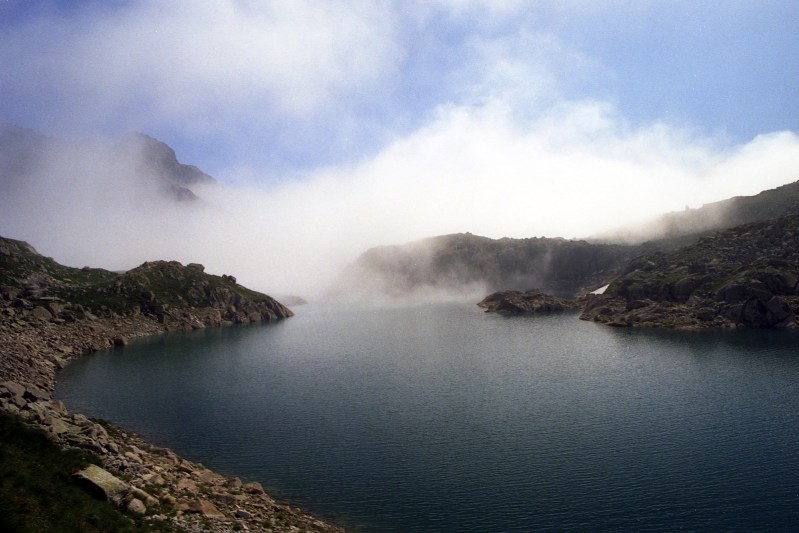
The next two days brough disappointment: The area around Salardú had been heavily developed, to the extent that the GRP follows asphalted roads. Thankfully, heavy fog started to cover up all the ugliness.

Pyr33

Assuming that touristic development implies well marked paths was not a good idea. The plan was to reach the Col de Curios by day 7, which managed a day late, after losing the trail a couple of times and scrambling off trail whenever we felt like it.

Pyr35

A valley further we reached the Estany de Colberante at 2490m, which the HRP guide book praised as an ideal camping spot.
Unfortunately, the weather has deteriorated, and we were desperately looking for shelter, to no avail. So we pitched the tent and spent the night pretty much without sleep through two heavy thunderstorms with rain and hail.

Pyr30

I still do not know what the best survival strategy is in a thunderstorm at high altitude without any protection nearby. My guess is that the narrow valley was our savior, because the lightning strikes would rarely find their way all the way down to the valley floor. It was scary enough, though.

(to be concluded)

Grain (Polyforms I)

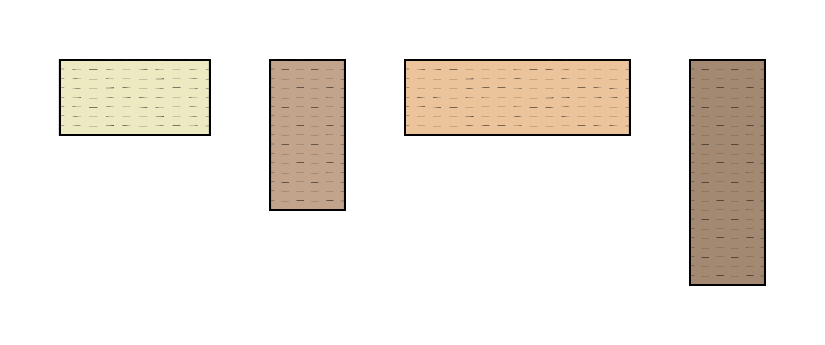
Go and purchase four types of wood, in different colors, with distinctive grain. Cut it into four different sizes, 2×1, 1×2, 3×1, and 1×3 inches long and tall, of the same thickness, and so that pieces of the same wood type all have the same dimensions and orientation of the grain. Here is my humble illustration of what will look much more beautiful in reality:

Tiles 01

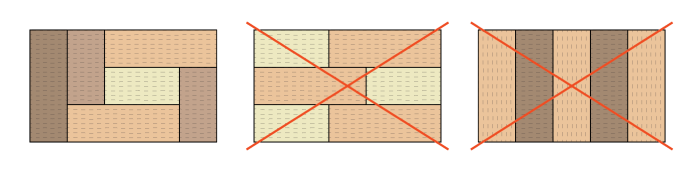
These are grained dominoes and polyominoes, a special case of more general grained polyominoes. In puzzles with polyominoes, you are typically tasked with tiling a certain shape with certain types of polyominoes. The presence of grain allows for variations of the rules. For instance, guided by esthetically considerations, we might demand that the grain needs to be horizontal, and that no two tiles of equal type touch along an edge or part of an edge.

Rules 01

Here, for instance, only the first tiling of the 5×3 rectangle follows the rules: The second has two tiles of the same kind meeting at a part of their edge, while the third does not preserve the grain.

8x7sol 01

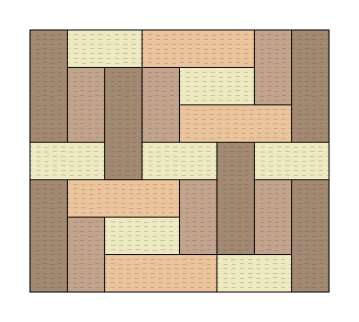
Now for the puzzles: Above is one of the four different ways to tile the 8×7 rectangle, not counting symmetries. At this point, solving such puzzles involves mainly trial and error. The divide-and-conquer strategy that works for the ungrained case, namely using small, already tiled, rectangles to tile larger rectangles, does not work here, because lining up tiled rectangles will usually violate the rules.

Bands 01

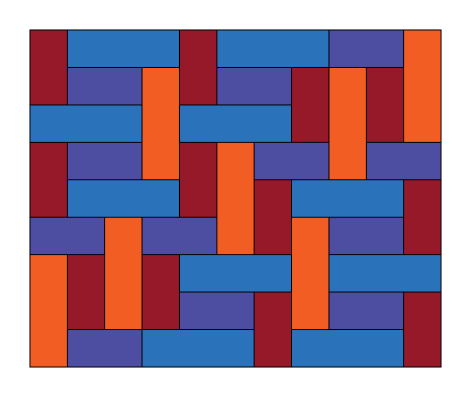
There is, however, some interesting structure emerging, that one can see better in a coloring that distinguishes more clearly between horizontal and vertical tiles. In the solution of the 11×9 rectangle (one of two), one can see bands of horizontal (blue) tiles and of vertical (red) tiles that extend from the top to the bottom edge.

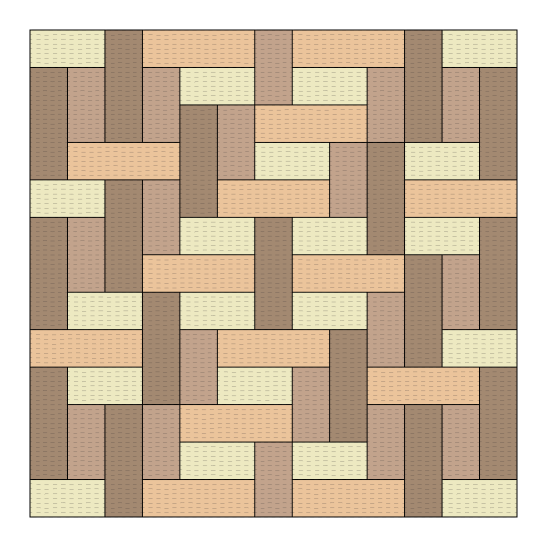
Finally, below is the only solution for tiling the 13×13 square, ignoring symmetries of course:

13x13sol 01

Geh aber nun und grüße die schöne Garonne (Pyrennees 1996 – I)

My second backpacking vacation in the Pyrenees was better prepared than the first. We had a tent, and we both had a fair amount of experience. The plan was to start start in Luchon, on the french side, and the hike the HRP until Andorra. We only made two mistakes: We started late in the Summer (end of July counts as late), which means hot weather in the valleys accompanied by thunderstorms, and our tour guide was from the previous year, i.e. too old. What saved us was the communication with the locals, who were enormously helpful.

Pyr1

The clouds on the picture above confirm what we had heard in Luchon: Heavy rain would come over night.
Fortunately, a friendly couple invited us to spend the night with them in a little hut they had the key for.

Pyr2

One of the highlights of the second day was to see the Garonne, that originates on the Spanish side, disappear in a sink hole, sneak its way under the mountains to reappear on the French side. The following day we had to cross the Port de la Picarde, which was slightly problematic, because it was still heavily snowed in:

Pyr11

(The other side is much steeper). The landscape changes rapidly between very very rugged to lush.

Pyr18

Similarly, the weather changes rapidly from sunny and hot to foggy and cold.

Pyr20

To be continued.

Incomplete

Honoré de Balzac’s short story Le Chef-d’œuvre inconnu has as a theme the desperation of the artist Frenhofer over
his disability to complete his masterpiece.

It is an early paradigm for fragmental art where not the completed work is the objective but the fragment deliberately left incomplete.

Bk143

Why do we give up and turn back? This can be because of lack of skills or imminent danger, and it is a sane thing to do.
But it can also be because we reach a point that we realize we should not touch, we reach a realm that is not ours.

Bk111

This happened to me on a long weekend hike on McGee trail in the John Muir Wilderness in the eastern Sierras, in the early summer of 1994.

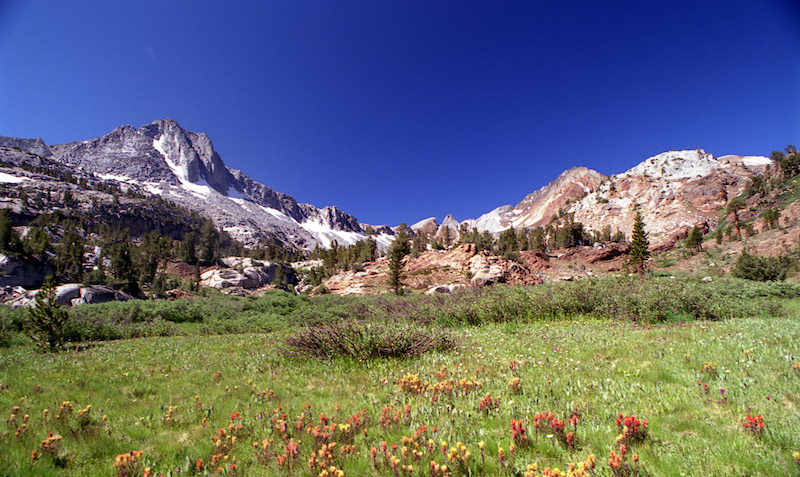
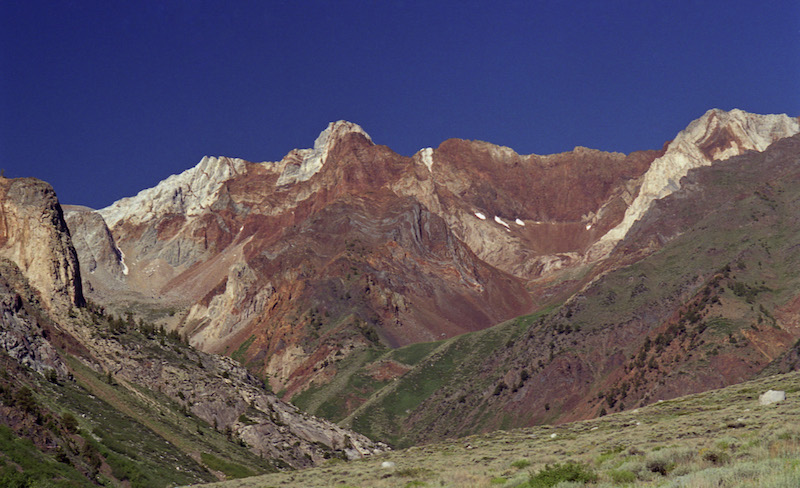
The trail leads at the beginning through lush meadows, but one quickly gains altitude, and the colored mountains like Mount Baldwin here become predominant. It is a magic landscape, both remote and imposing.

Bk121

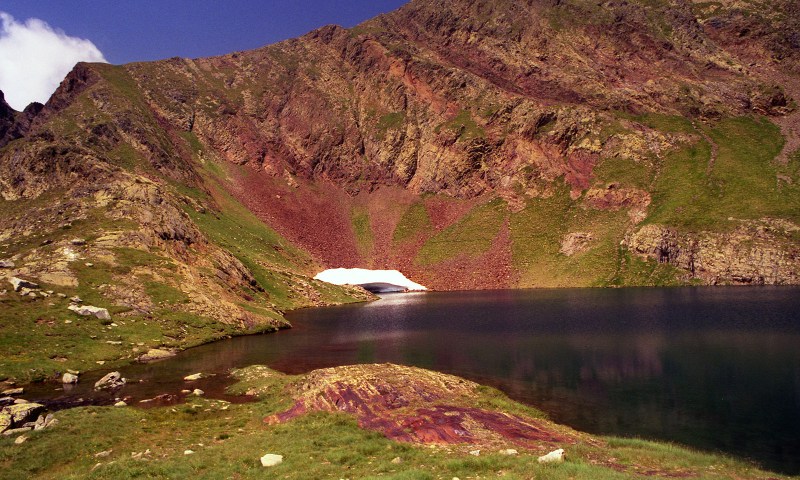
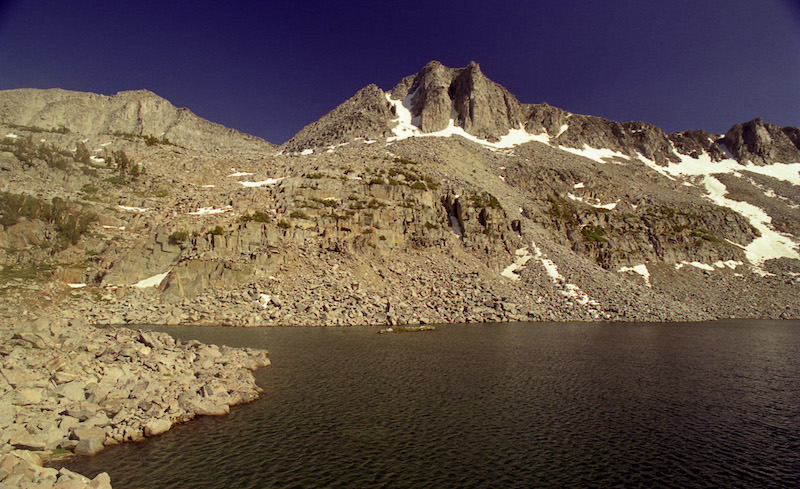
With McGee Lake, nestled below Mount Crocker and Red and White Mountain, we have reached our destination. The vegetation has receded, and being exposed like this makes us restless. After a short break and swim, we scramble on.

Bk141

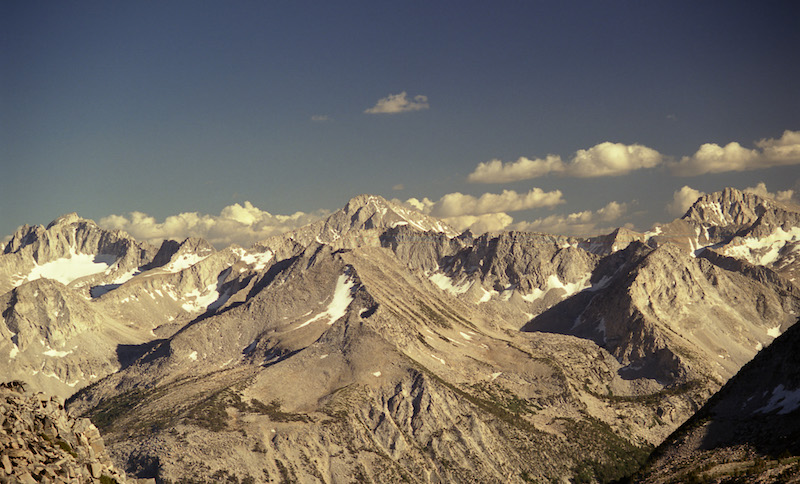
From Hopkins Pass, the view opens up into even more remote regions of the eastern Sierras. The message is clear and double edged: This is utterly beautiful, but we do not belong here. Humbled, we turn back.

Walking the Path

In Edwin Abbott’s Flatland, the struggles of a square in a 2-dimensional world to grasp the concept of a third dimension are a parable for our own struggles to grasp uncommon concepts. This is pushed to its extreme when the square tells the parable of linelanders struggling with the concept of two dimensions.

The obvious limitations of lineland make us quickly forget our own limitations.

Hamiltonstrip

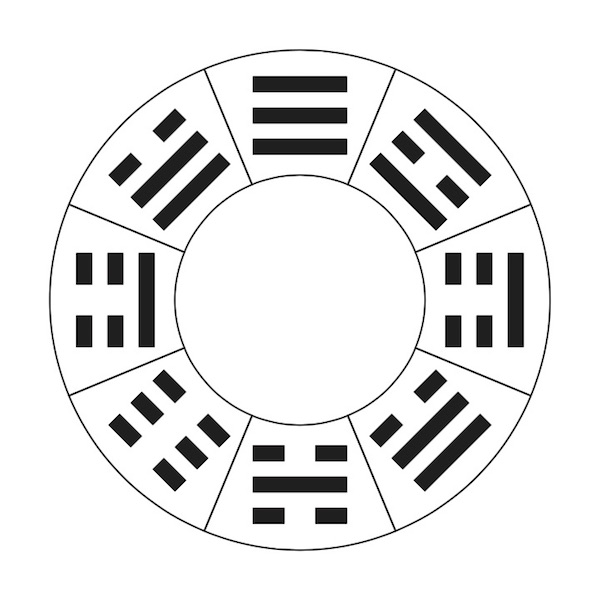
Here is a little puzzle. Cut out the eight pieces up above, and arrange them into a circle, following the Rule of Change: You can only place two pieces next to each other if they differ in just one line:

Pathrules

This not being particularly difficult, you will want to try your hands on the 16 pieces below with four lines.

Hamilton4line

These puzzles are essentially 1-dimensional and thus force us to think like linelanders. But hidden underneath are are higher dimensions.

Let’s return to the three line puzzle. Because there are three lines, each piece has only three potential neighbors it can be connected to, and we can visualize the possibilities in 2 dimensions as follows

Ichingcubeh

We recognize this as the edge graph of a 3-dimensional cube. This is not accidental: Think of the unbroken lines as zeroes, the broken lines as 1, and each entire symbol as coordinates of a point in 3-space (or 4-space, for the puzzle with four lines).
Two puzzle pieces can only be neighbors if the points differ only in one coordinate, i.e. are joined by an edge of the cube.

The puzzle asks us to find a Hamiltonian path on this cube (or hypercube), i.e. a closed path that visits each vertex just once.

Ichingsol3

We can now see a solution easily enough. But understanding the underlying structure allows us also to inductively find solutions for the general case of a puzzle with an arbitrary number of lines. For instance, the hypercube can be obtained from the cube by connecting corresponding vertices of two cubes. To find a Hamiltonian path in the hypercube, we can take two identical Hamiltonian paths in the two cube, remove a pair of corresponding edges, and connect the free vertices by edges that connect the two cubes.

Inductivehamilton
You can now even go ahead and make a puzzle for the complete set of 64 symbols of the I Ching, and find a path
through all of them.

Dreams

This is as far as I can go back with pictures from Paris. I had their been earlier, briefly, but without camera. This one excursion, in the spring 1990, is special, though, for many reasons. One of them is that, usually, when I shot film with an SLR, the rule of thump was that 2-3 of the 36 images were keepers.

Pa1 1

This weekend was different, because I had only brought a single roll of 24 images, and not my SLR, but just the little Olympus XA pocket camera that I still have sitting around somewhere. I guess the light and rain of early spring helped.

Pa1 2

Another reason is that these were inspiring days, spent with thoughts about here and elsewhere, which has become a theme in my life.

Pa1 3

A time to reflect on oneself

Pa1 6

and each other, and on time running by,

Pa1 8

and at night, at sleep, während die Ordner der Welt geschäftig sind.

Pa1 12

La Condition Humaine

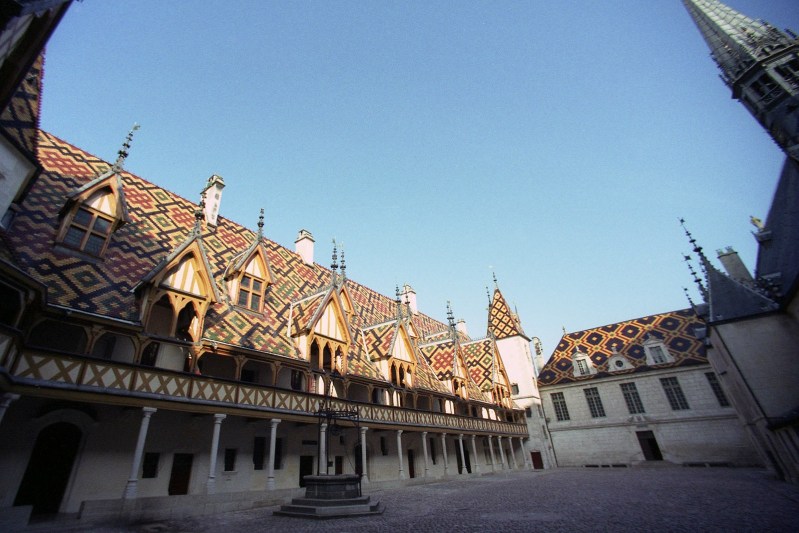
In 1992, I visited Lyons to talk some math. On the way back home I wanted to explore Burgundy, and asked for advice. I was sent to Emmanuel Giroux, who grew up in Burgundy, and is blind. My mastery of the french language was never satisfactory, but I understood that I had to see the hospital in Beaune. Here it is, l’Hôtel-Dieu de Beaune:

Burgundy 10

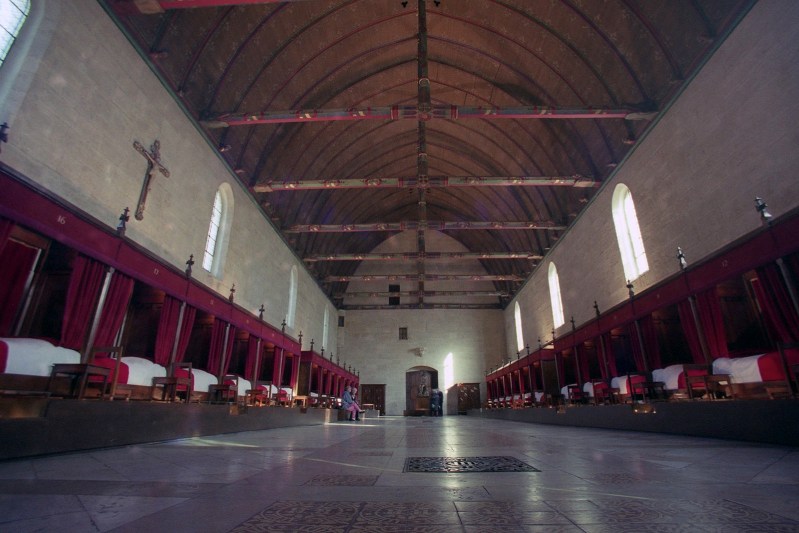
I walked around, admired the roof tiles, appreciated it as an early example of a real hospital, but didn’t quite understand why this was most essential, until, on my second walk through the halls, I noticed stairs leading downstairs into darkness.

Burgundy 9

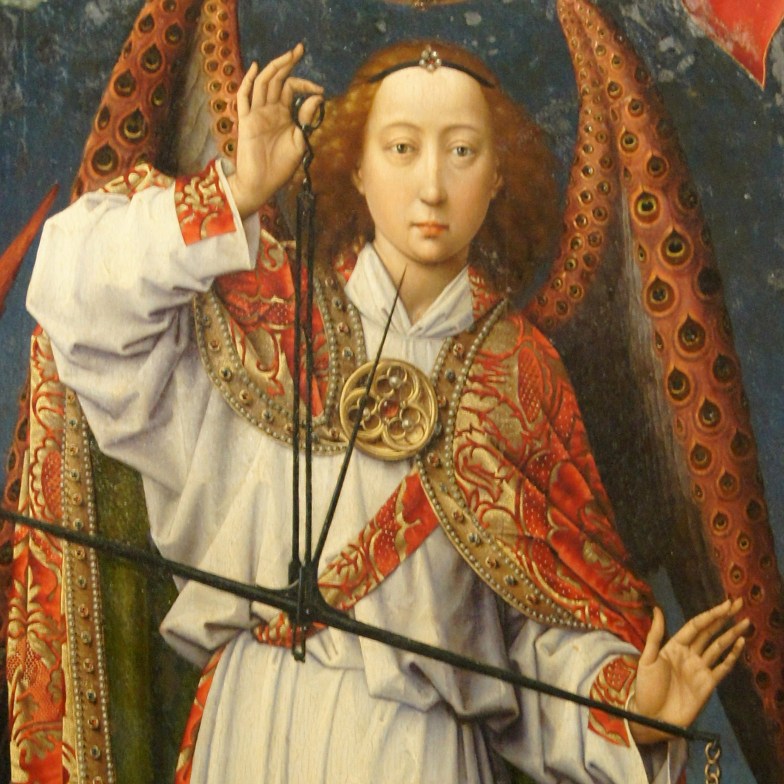
Nothing could have possibly prepared me for Rogier van der Weyden’s enormous triptych with a Last Judgment from about 1450. There is of course the usual awakening and suffering, but above all, there is the hypnotic stare of archangel Michael.

Jjugementdernier

(That I post this image here is an exception; I usually only post my own. Thanks to Wikipedia France, this one is in the public domain.)

Could it be that the artists had finally realized that cause and effect were exchanged in their famous Last Judgments:
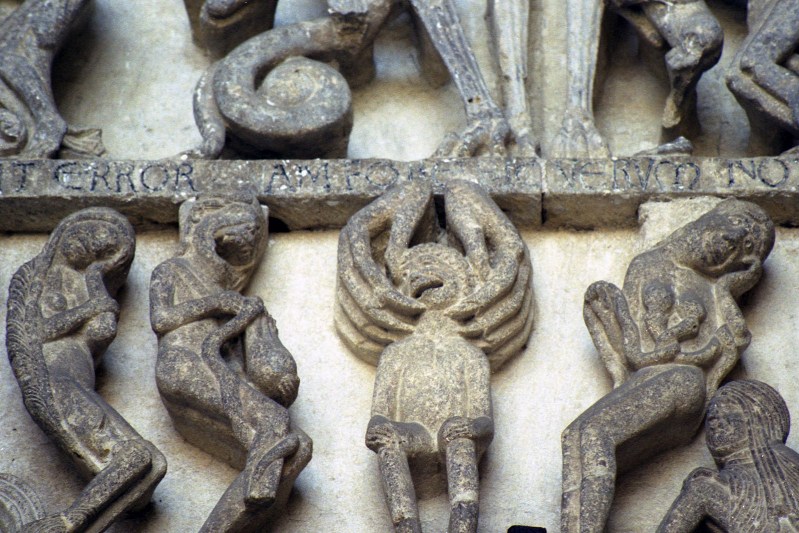
The imagined atrocities they depicted were not distant punishments for a life wasted in sin and inflicted by a superior power, as suggested by Gislebertus’ nighmarish version from the 12th century in the nearby Cathedral of Saint Lazare at Autun.

Burgundy 8

Michael’s intense presence tells us that all this is happening right now and here: it is us who are committing those atrocities ourselves, and the weighing of our corrupted souls has always been under way.

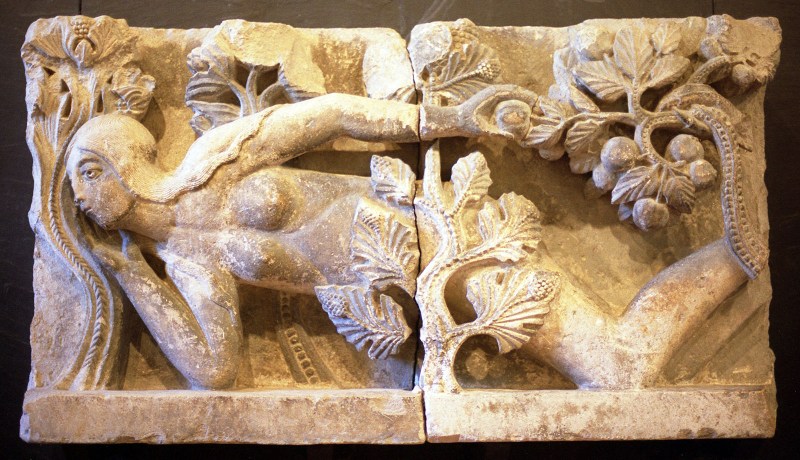
It might well be that the human race can’t exist without sin. Gislebertus knew that we have choices, though. The first European nude since the Fall of Rome must have raised some eyebrows.

Burgundy 4

Le Ventre de Paris

The Belly of Paris must always have been a place worth visiting. After the food market was dismantled, Les Halles became a gigantic shopping center. I have not seen it since the new construction began a few years ago.

Paris 27

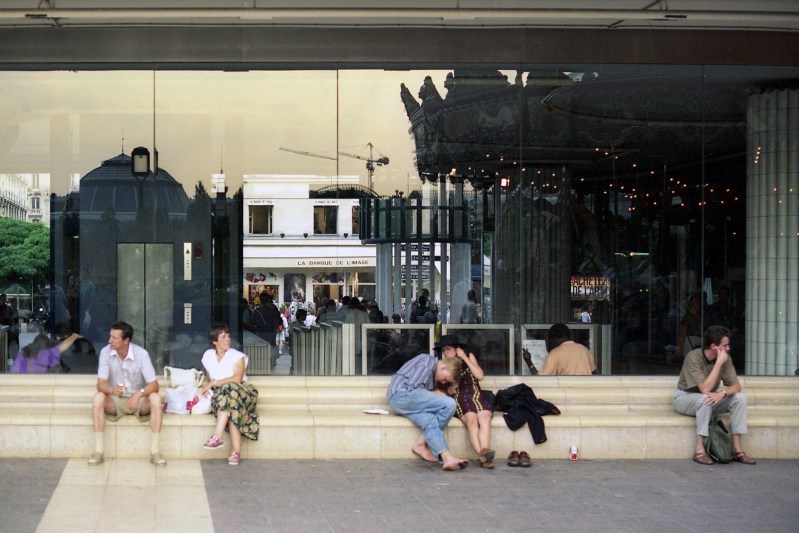
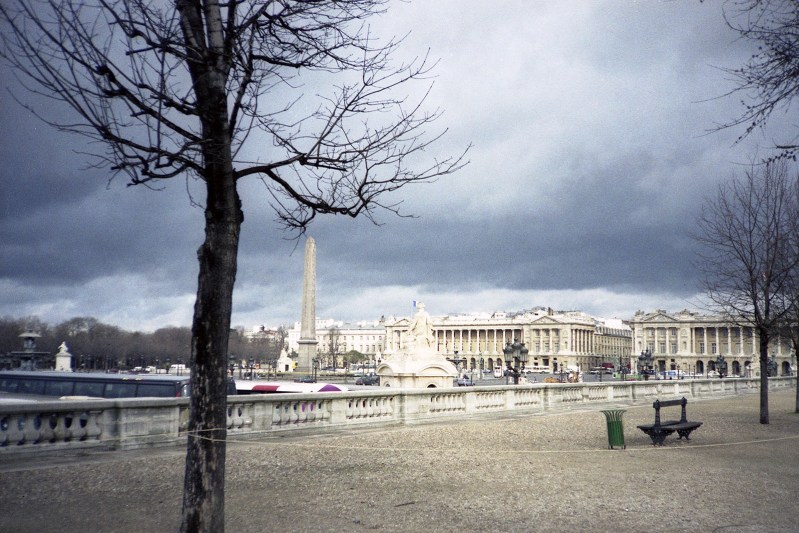
In any case, the area is a place worth visiting without wallet. At some places, we cannot tell anymore whether we are inside or outside.
Paris 29

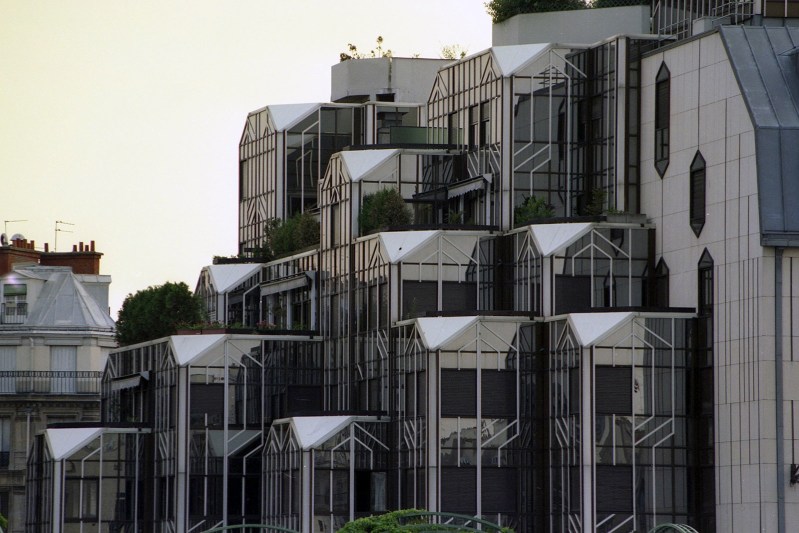
Architecture permeates everything, even the layout of the boutiques. The lady was not pleased with me taking the picture and called security. And this was in 1991.

Paris 31

Long passageways in almost black and white made me think of Alain Resnais.

Paris 26

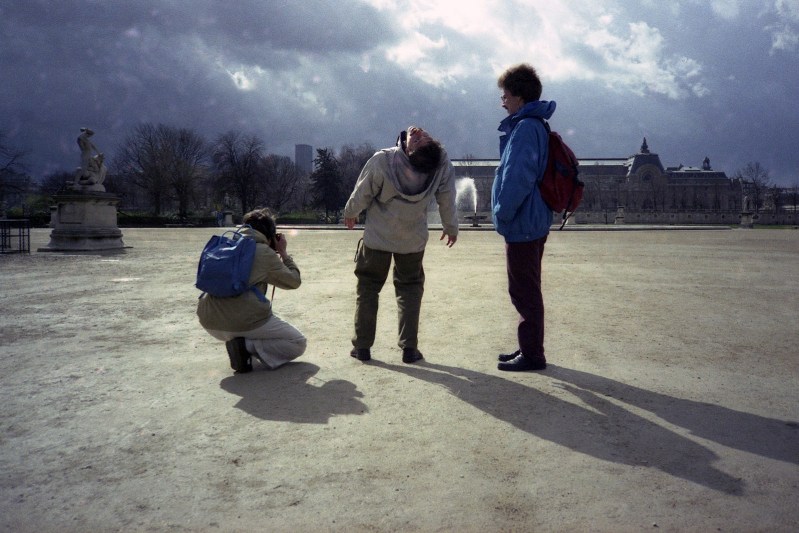
Escaped, one wonders if Henri de Miller’s sculpture L’Écoute in front of the nearby church of St Eustace ever gets a quiet moment.
Paris 28