Polysticks (Polyforms II)

One of my favorite polyforms are polysticks on a hexagonal grid. These critters consist of connected collections of grid edges.
I stipulate that whenever two edges of a polystick meet, we add a a joint to the figure. This is in order to avoid indecent intermingling of legs as shown by the two polysticks in the figure below. Blush. The properly decorated green polystick can only watch in dismay.
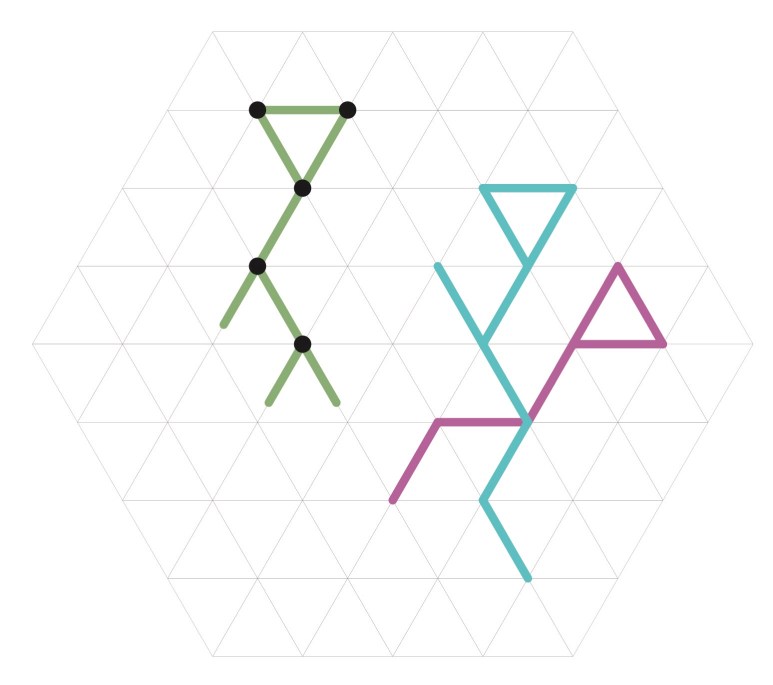
Example 01

We want to use the polysticks as puzzle pieces, and we want to keep things simple. So here are all four hexagonal polysticks with three legs and just one joint. I like to call them triffids.
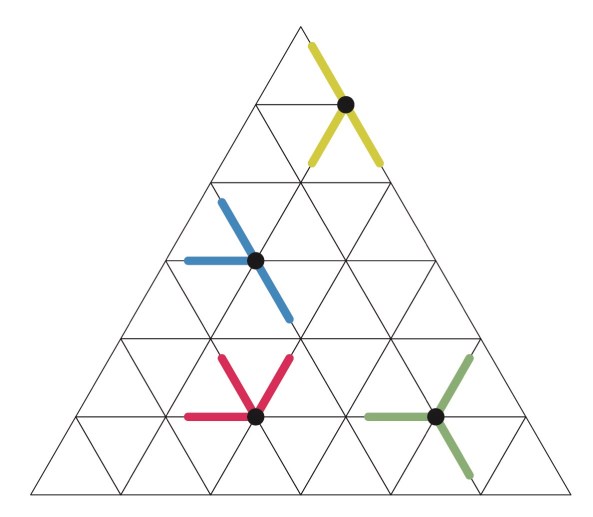
FourTriffids 01

Two of them are symmetric by reflection, so I leave it up to you to count them as one or two. We can us three of them to tile a small triangle easily like so:
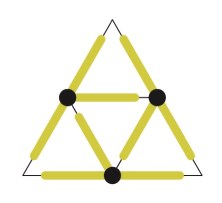
Mini triangle 01

By tiling I mean that we want to cover all the edges of the given shape, do not allow that two polysticks share a leg or joint (what a thought!), and do not require all vertices to be covered. We could do so, limiting the possibilities dramatically.

Below are two more examples. First a larger triangle, tiled using three kinds of triffids.
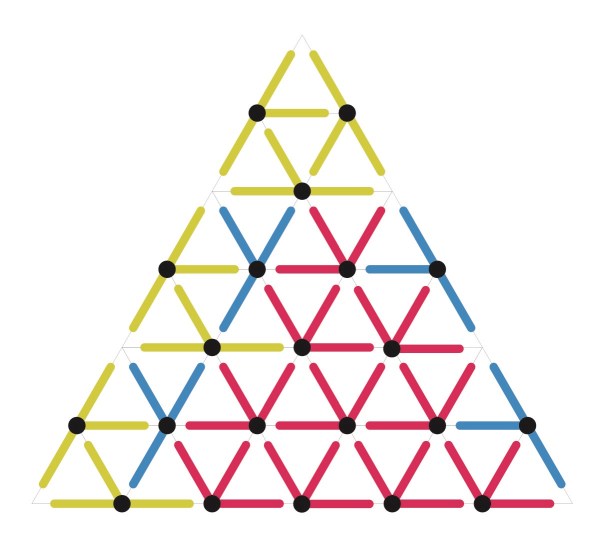
Triangletile 01

I have not found a way to tile this triangle (or a larger one) with just one kind of triffid. And here is a hexagon that uese all four triffids to be tiled:
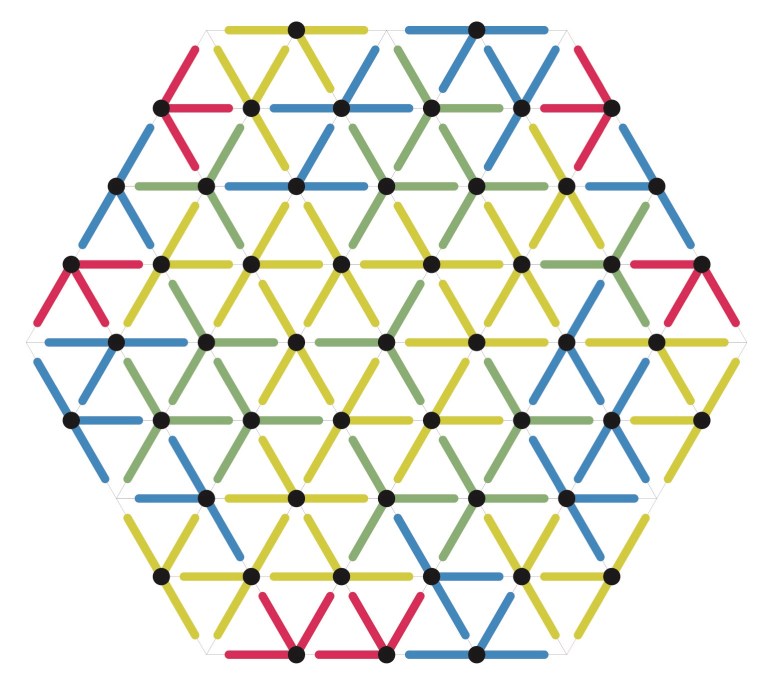
Hexatile 01

Now go and make your own. If you want to use triffids, make sure that the number of edges of your shape is divisible by 3.
Secret Passage (Utah)

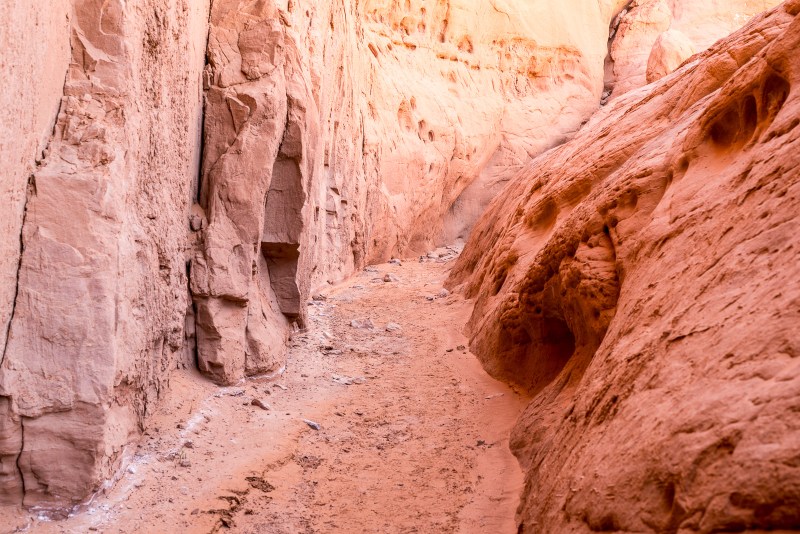
Continuing the exploration of special places in Kodachrome State Park, here is the Secret Passage, on a optional side loop of the Panorama Trail.

DSC 1852

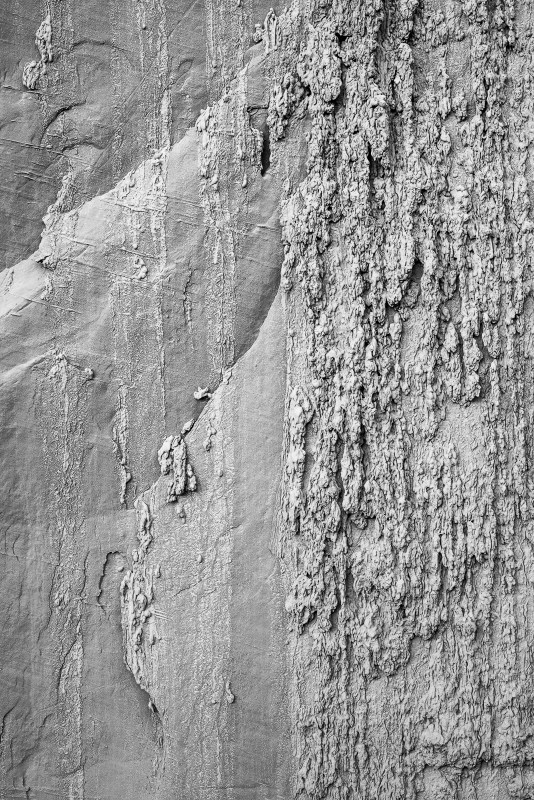
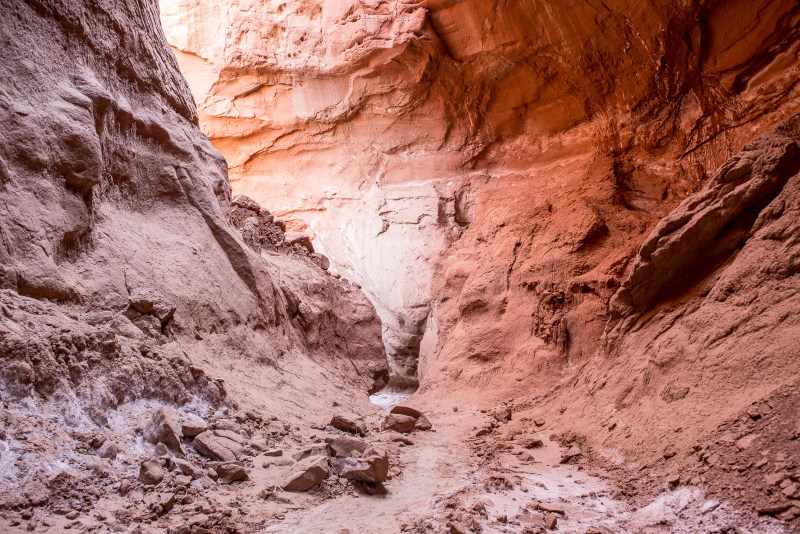
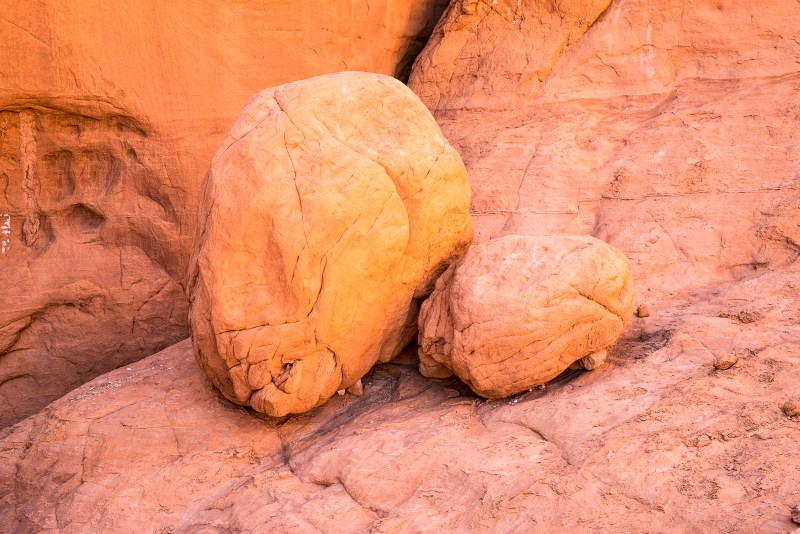
It is bordered by a tall vertical wall on one side, a sloping climbable rock on the other, and leads nowhere, symbolized by the two meaningless boulders.

DSC 1846

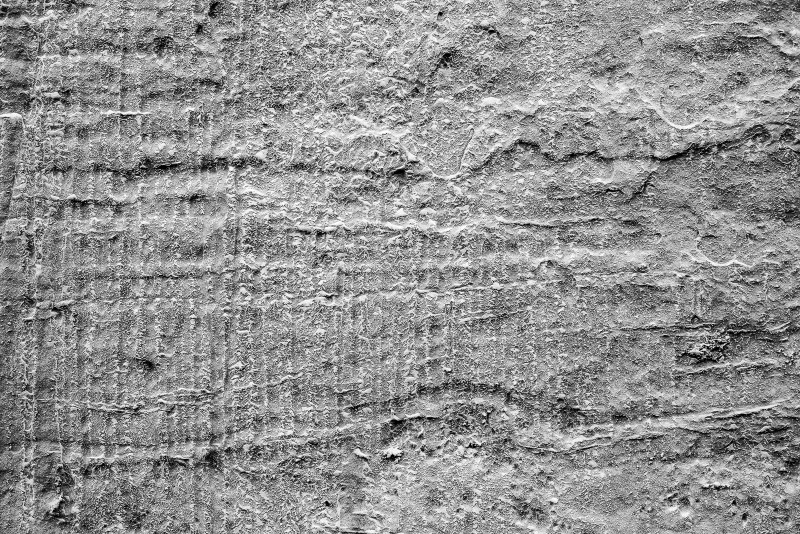
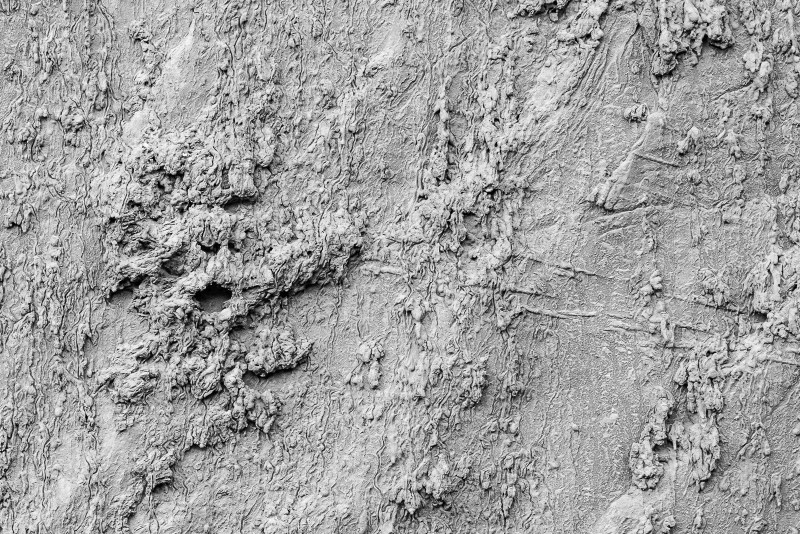
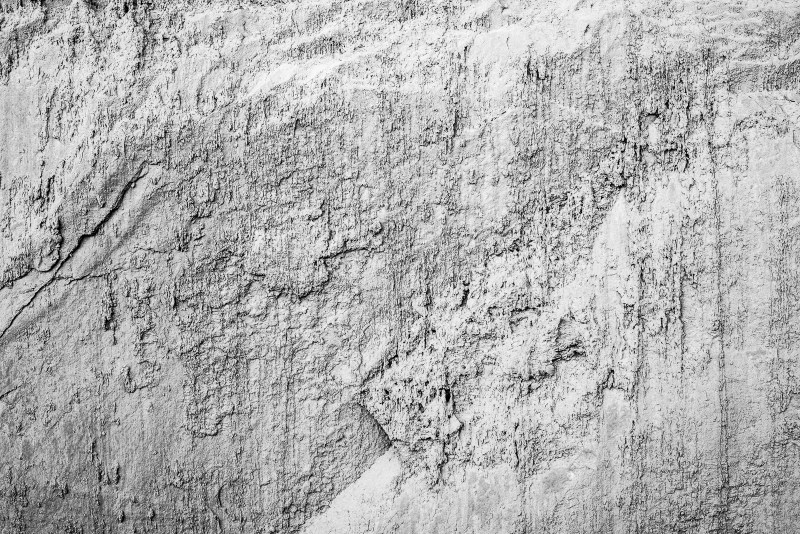
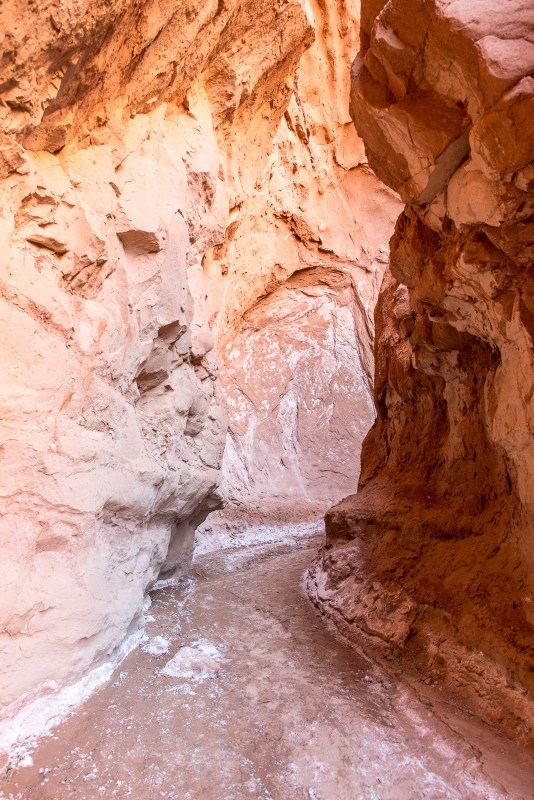
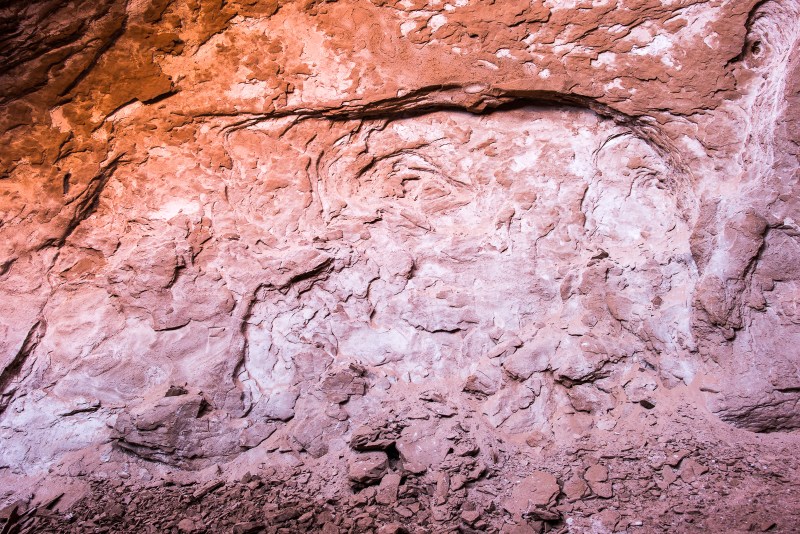
So what is special about this place? The texture of the vertical wall is so rich of detail and variation that I just stood there for a while, staring.

DSC 1856

Of course everything is mindnumpingly red.

DSC 1850

This reminded me of an exhibition of large format abstract paintings by Emil Schumacher that left me unimpressed until I discovered their textural richness.

DSC 1851

In both cases, the fractal-like richness of detail seems to provide a non-spatial third dimension to the otherwise mostly flat wall.

DSC 1839

The Projective Plane

DSC 0091

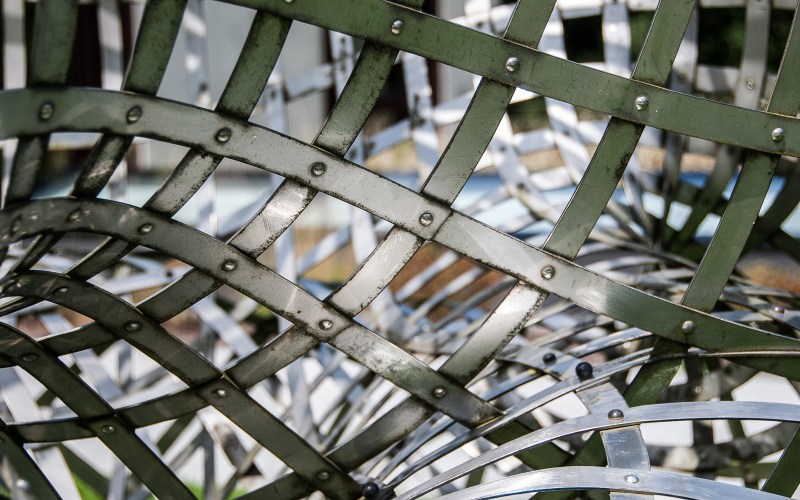
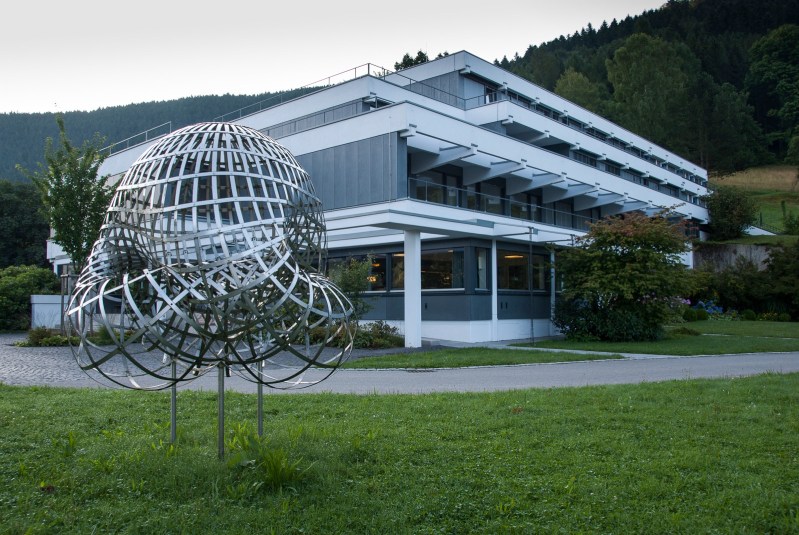
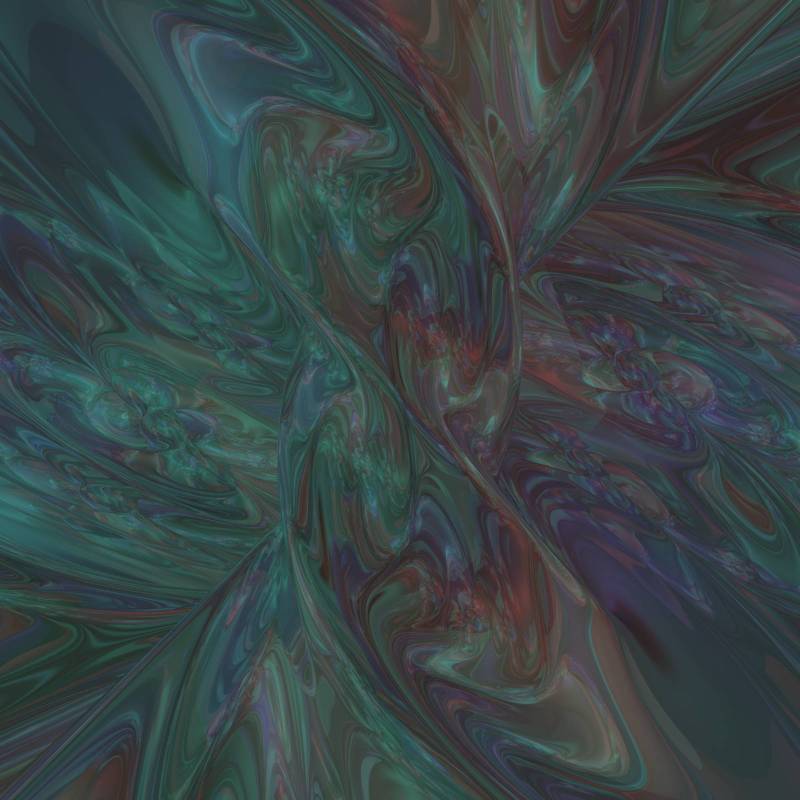
This image (a variation of which I used for many years as a desktop background) is a close-up of the large sculpture below that can be seen at the Mathematical Research Institute in Oberwolfach.

DSC 0107

It is a model of the projective plane, a construct that simultaneously extends the Euclidean plane and describes the set of lines through a fixed point in space.
The simplest way to make your own model is via the tetrahemihexahedron,

Tetrahemi3

a polyhedron that seems to take every other triangle from the octahedron and twelve right isosceles triangles to close the gaps left by the removed four equilateral triangles. That, however, is not the only way to look at it. These right isosceles triangles fit together to form three squares that intersect at the center of the former octahedron, in what is called a triple point.

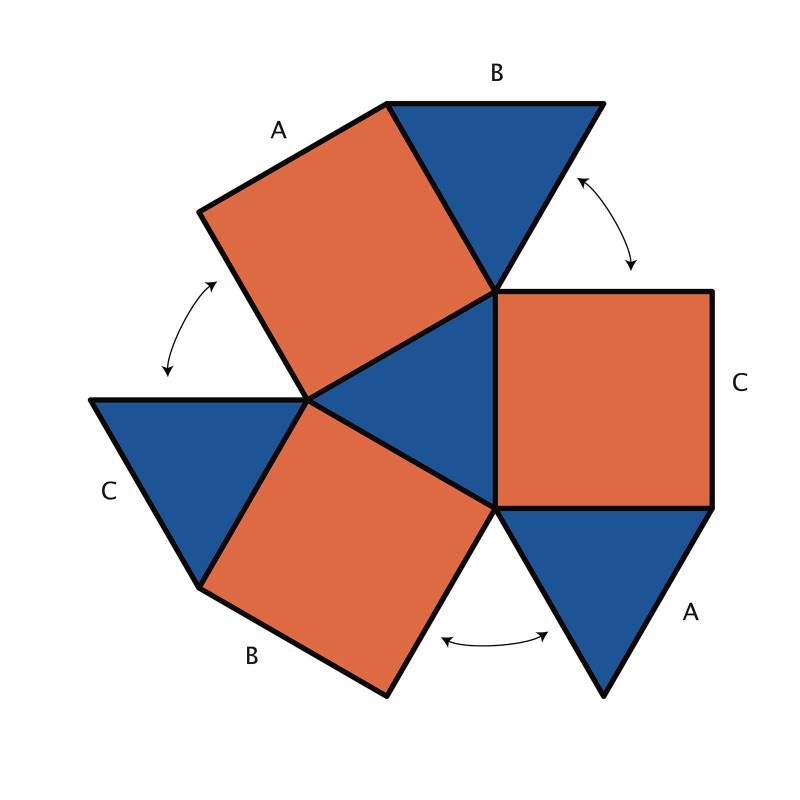
So we truly have a polyhedron with four equilateral triangles and three squares as faces which can be unfolded like so

Tetrahemiflat

where arrows and equal letters indicate to glue. From this flattened version we recognize a (topological disk) with opposite points identified, which is yet another abstract model of the projective plane. The tetrahemihexahedron suffers not only under the triple point at the center, but also under six pinch point singularities at the vertices. Maybe it was this model that made Hilbert think that an immersion of the projective plane into Euclidean space was impossible, and having his student Werner Boy work on a proof. Instead, Boy came up in 1901 with an ingenious construction of such an immersion, which has an elegant connection to minimal surfaces.

Kusner

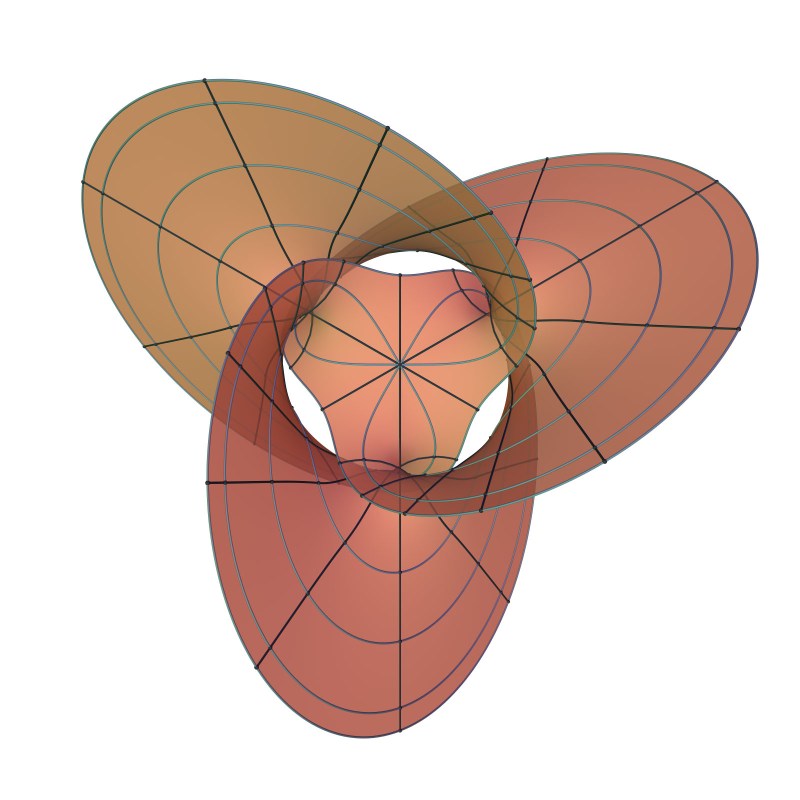
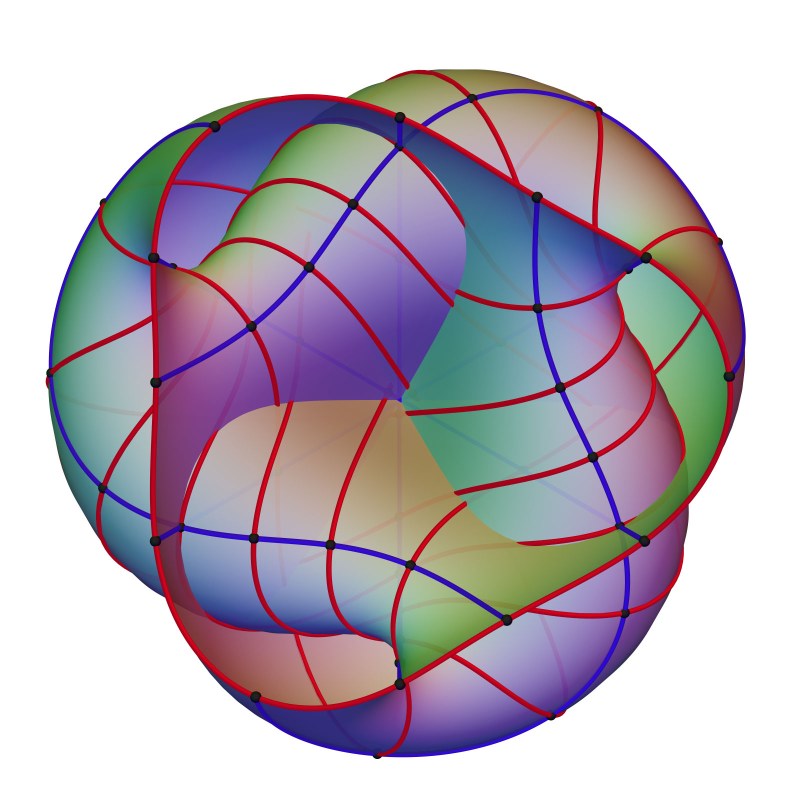
Robert Kusner constructed a minimal immersion of the thrice punctured projective plane into space, with three planar ends, that you can see above. Applying an inversion, as suggested by Robert Bryant, produces images that are very close to what Boy had in mind.

Bryant kusner

This explicit parametrization served as the basis for the model in Oberwolfach.

Cool Cave (Utah)

This year was the fourth time that I spent Spring Break in Utah, and it has become a mixture of revisiting familiar places and exploring new ones. One of the new discoveries is the Kodachrome State Park, a detour for people traveling Highway 12, much less overwhelming than nearby Bryce National Park, but in a very positive way. I met just two other hikers on the 10 mile Panorama Trail. The landscape is serene and has many spots that feel special. Let’s begin with the most remote of them, the Cool Cave.

DSC 1900

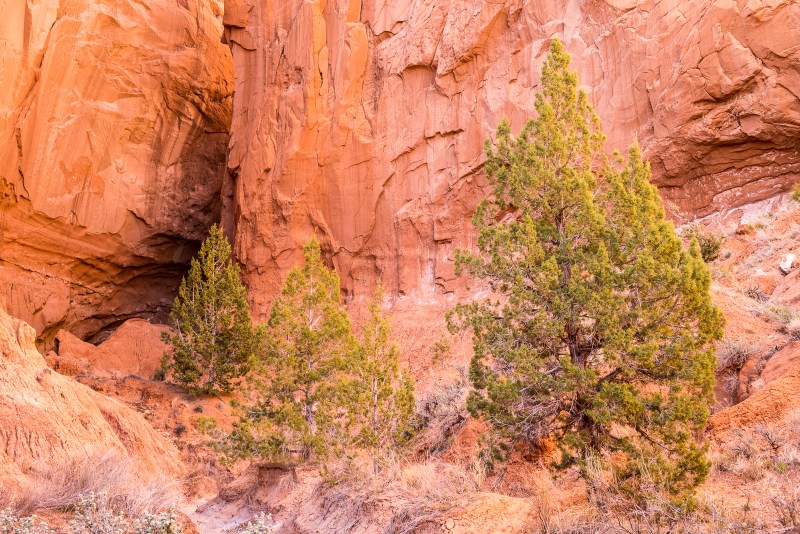
The pine trees guard the narrow entrance and the color palette suddenly becomes monochrome.

DSC 1941

Inside, there is just one open space. One hears the wind and clicks from small rocks falling down. Apparently, sometimes the rocks can be larger, too.

DSC 1916

The simplicity of this description is deceiving.

DSC 1919

The view back to the cave entrance, for instance, could be the work of an artist. The tonality is miraculously supporting the depth of the image, and the interplay between light and rock offers ample material for contemplation.

DSC 1936

Bianchi and Hopf (Annuli V)

When you take a torus in Euclidean space, it will always have points of positive curvature and points of negative curvature, but the average of the curvature will be 0.

This limitation of Euclidean space disappears in the 3-sphere. Luigi Bianchi more or less completely classified all flat tori in the 3-sphere in the late 19th century, paving the way to global differential geometry.

HopfTorus

Simple examples can be constructed using the Hopf fibration: If you take the preimage of a simple closed curve in the 2-sphere under the Hopf fibration, you obtain a torus in the 3-sphere that is intrinsically flat.

When you start with a circle in the 2-sphere, the result will be a torus of revolution (or a Dupin cyclide), which corresponds to a rectangular torus. If you start with more general curves like the spherical cycloids that I have used here, you will get tori that appear twisted.
This is because these tori will correspond to non-rectangular tori, as can be verified using an elegant formula due to Ulrich Pinkall. The side view below gives access to the warped core of these tori.

HopfTorusSide
The image below shows the view from somebody standing inside such a Hopf torus, with an almost perfect mirror as a surface, and four differently colored light sources. This comes pretty close to my ideal of abstract 3-dimensional art. If you know what you are looking at, you can discern the same warped core as up above, and its reflections on the warped outer parts of the torus.

HopfTorusInside

Wesseling at Night

Wesseling is a scenic industrial area about half way between Bonn and Cologne.

Wesseling 1

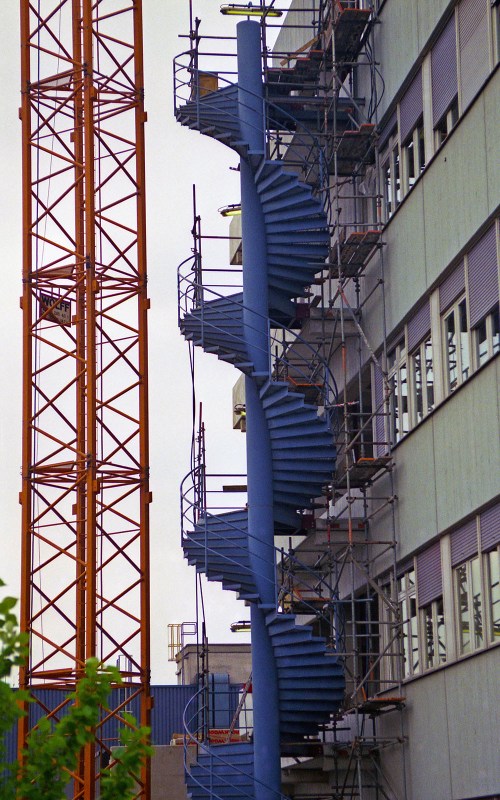
The mostly functional architecture and perpetual construction is rarely as amusing as in the picture above. The time to be there is at night, when the architecture of metal and concrete is replaced by a much more fundamental architecture of light and shadow.

Wesseling 5

In the nearby harbor, large cranes appear to be asleep. Are they dreaming of electric sheep, too?

Wesseling 3b

And then there are the relics from the past, like this barely recognizable wind mill.

Wesseling 6

With increasing darkness, the film grain takes over. Is this how Georges Seurat would have painted this? I wish.

Wesseling 4

Spherical Cycloids

The cycloids generalize nicely to curves on the sphere. They can be physically generated by letting one movable cone roll on a fixed cone, keeping their tips together, and tracing the motion of a point in the plane of the base of the rolling cone. Like so:

Sphericalcycloidcones

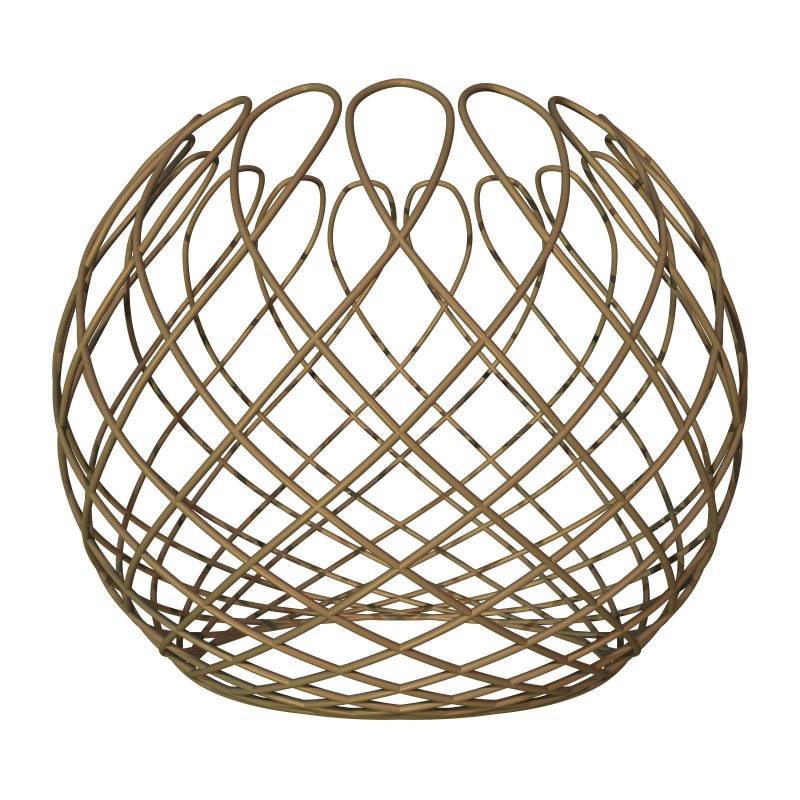
Varying the shapes of the cones will gives differently shaped cycloids, most of which will not close. When they do, they have a tremendously appeal (to me) as 3-dimensional designs, like this tent frame

Sphericalcycloiddesign1

or this candle holder:

Sphericalcycloiddesign2

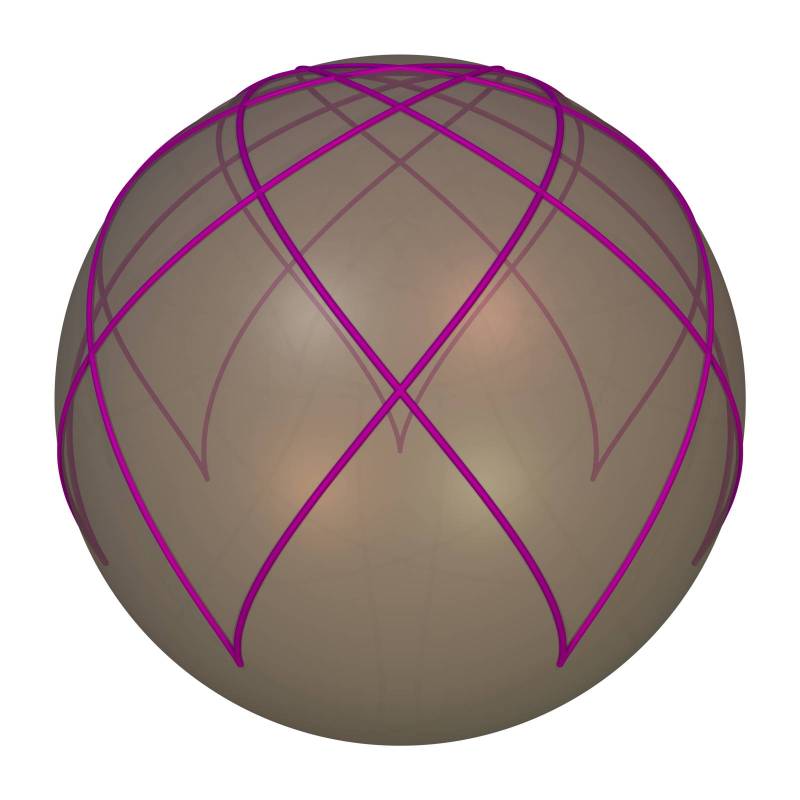
In a future post I will use the following curves for another construction. Each is without self-intersection

Sphericalcycloiddesign4

and together they form a nice cage that from the side has an organic appearance.

I’d be interested to learn how such objects could be manufactured, say as pieces of jewelry. How does one bend metal tubes accurately?

The images are created using explicit formulas for the cycloids, but rendering approximations of spherical sweeps about cubic splines in PoVRay.

The Woman in the Dunes

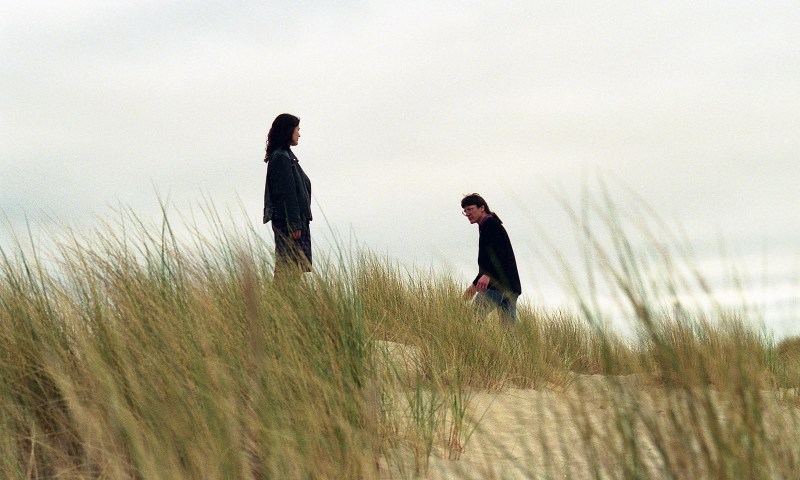
While living in Bonn, I often went to the local art house cinema, the Brotfabrik (bread factory), not knowing what to expect. I was often rewarded with surprises, but few were as impressionable as watching The Woman in the Dunes by Hiroshi Teshigahara.

Oregon 1a

The next morning I went to a bookstore (yes, it’s that long ago) and bought Kobo Abe’s book with the same title. The book, while still worth reading, pales compared to the film, which is still sticking with me, in particular when I visit dunes

Oregon 5a

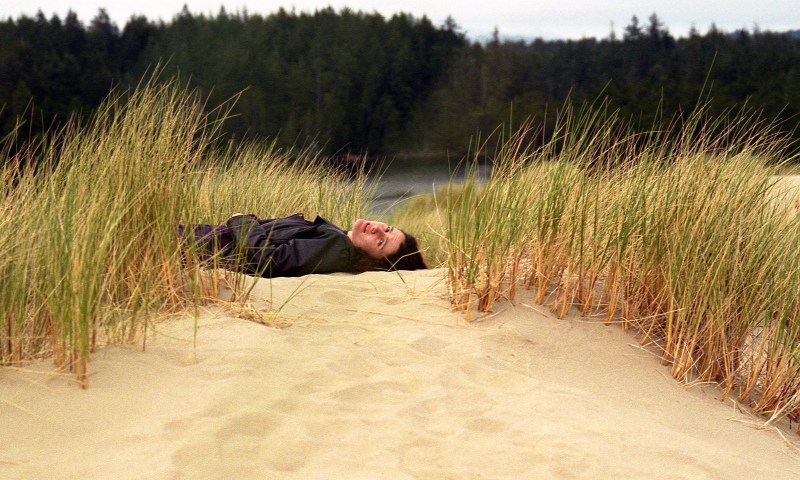
The pictures here are from Oregon in 1994, when I visited Christine and Tom.

Oregon 6a

I paid them back their hospitality by taking these pictures.

Oregon 2a

And no, we did not try to reenact the film. But the intensity of the landscape almost too easily distills the personality of the visitor.

Oregon 7a

If I ever feel like emotional cleansing, I will walk the Oregon Dune Trail.

Oregon 4a

What to Keep

DSC 0986

I have often been trying to capture personal time in this blog through old and new photographs. What you see above, is a recent (like 20 minutes ago) photo of an old toy of mine. I received this early edition of Spirograph when I was maybe 9 years old. You can now purchase a 50th anniversary edition (without the tasty pins …).

This is something that I (and my daughter) have used intermittently over all these years, and it has acquired a meaning for me way beyond its mere presence. Already back then I cherished it so much that I kept the products in the box. So this is, well, an ancient artifact:

DSC 0989

The lavishly illustrated instruction manual promised perfection that I never achieved. Too often one of the wheels started sliding instead of just rolling, or the pins didn’t quite hold. What counts, however, is the process. We are, truly, not interested in the ideal, the mathematical perfect curve, but in the process of getting there.

The curves that one can make with Spirograph are called Cycloids. You can get them abstractly by tracing a point on a wheel that is rolling along a curve. In its simplest form, you roll a circle along a line,

Cycloidline 01

and you learn that these curves can be found on the icy Saturn moon Europa, or as geodesics in the upper half plane when using the Riemannian metric 1/y ds (which is not quite the hyperbolic metric, of course). The ancient ones used them to model planetary orbits when popular belief pinned man into the center of the universe.

As my early Spirograph experiments show, the results make nice designs. Using contemporary software like Mathematica allows you to create these to perfection, you think? Unfortunately, plotting the true cycloids will result in images that are either inaccurate (not enough anchor points) or difficult to manipulate in Adobe Illustrator (too many anchor points). So, to make this:-:,

Cycloiddesign 01

I replaced the cycloidal arcs between intersections by cubic Bezier splines that have the same curvature as the cycloids at their end points. Again, this was just to find satisfaction in the process to approximate the ideal.

Double Exposures

The Sieg is a tributary of the Rhine northeast of Bonn. The word Sieg means victory in German, but (wikipedia tells me) the name of the stream derives from the celtic word sikkere (fast stream), as does the name of the French Seine via the related Sequana. This must be flattering for the Sieg.

Bonn 5

A slightly elevated dam next to it gives the opportunity to extended bike rides. I have written before about the area here, and I am revisiting the place now, as I revisited it often in the 1990s.

Bonn 20

The dam also provides an excellent perspective on the trees

Bonn 10

or the power line masts.

Bonn 7

The picture above was made using a now obsolete technique, the double exposure. I used to experiment with it quite a bit,
but gave up on it when doing this became more or less trivial in Photoshop. It is disappointing to see how the creative possibilities of multiple exposures have become reduced to automatized photo stacking with the goal to increase the dynamic range or depth of field.

Bonn 15