Death of Proof (The Pleasures of Failure I)

Die Wahrheit ist dem Menschen zumutbar.

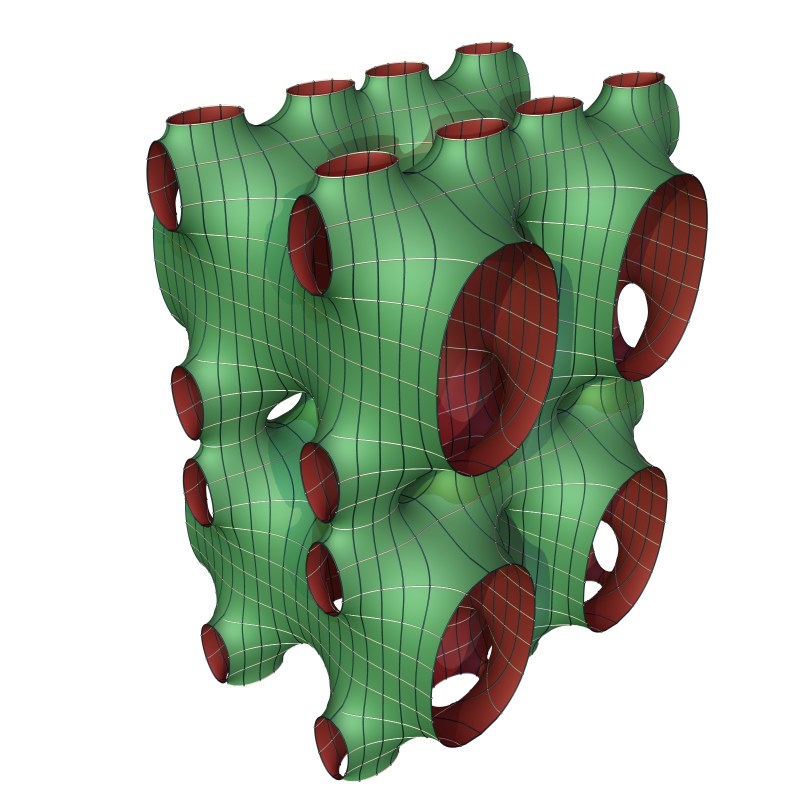
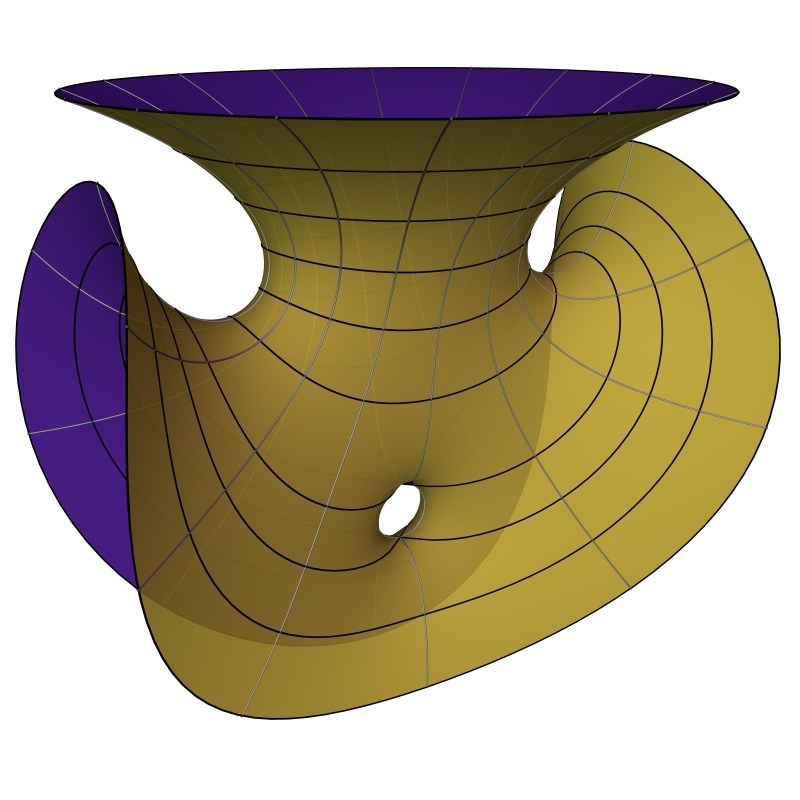
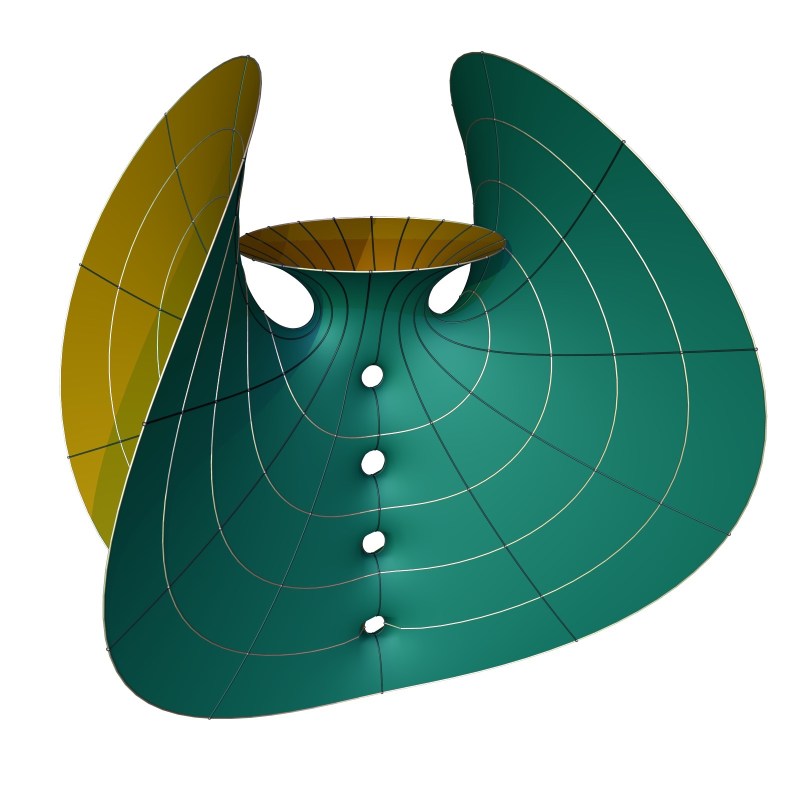
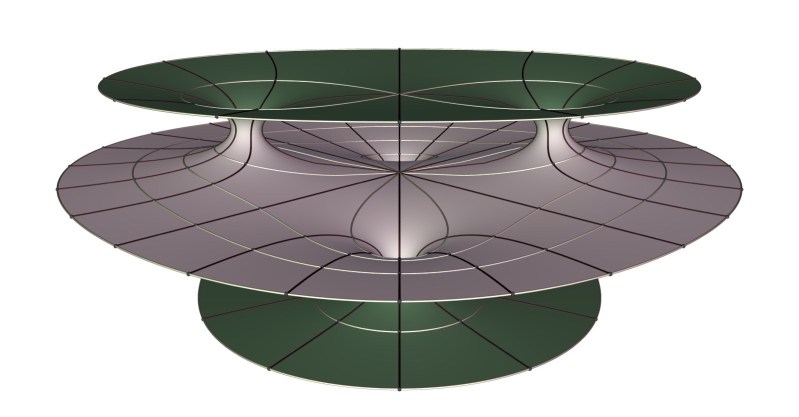
Occasionally, after confronting students with evidence of fact (Euler Polyhedron Theorem is a great example), I ask them whether they want to see a proof or prefer to accept the statement as a miracle. The overwhelming majority is always happy with the miracle. Such are the times. Below is such an evidence of fact: A minimal surface with 3 ends and of genus 2.
 

Almost

Should we doubt its existence? In 1993, John Horgan published an article in Scientific American questioning whether proofs were about to become obsolete, in times where shear length and difficulty made validation next to impossible, and numerical experiments supplied by computers could be an acceptable substitute. For many reasons, large parts of the mathematical community were outraged.
Notquite

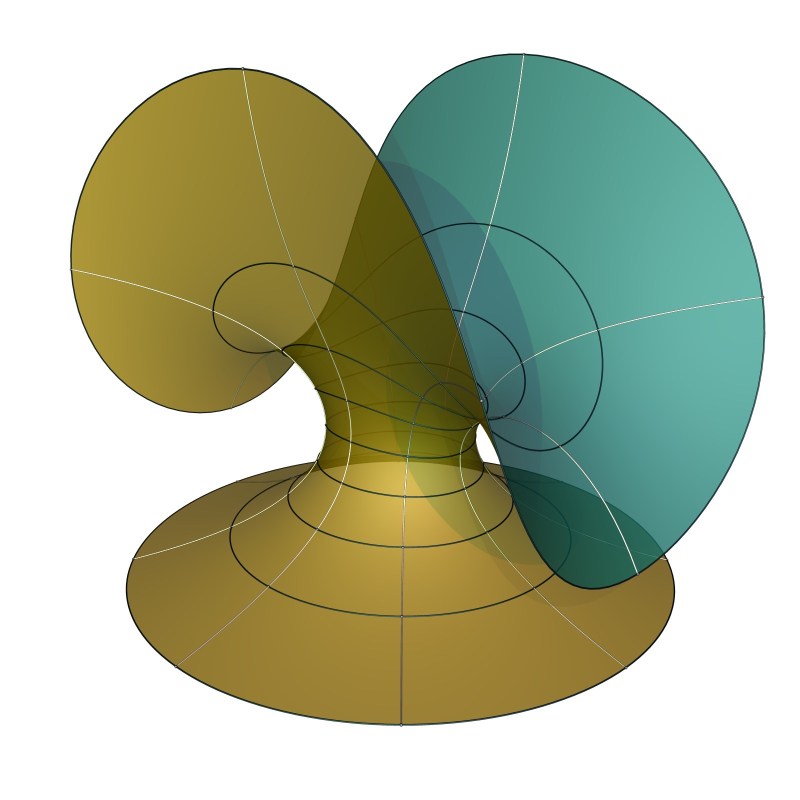
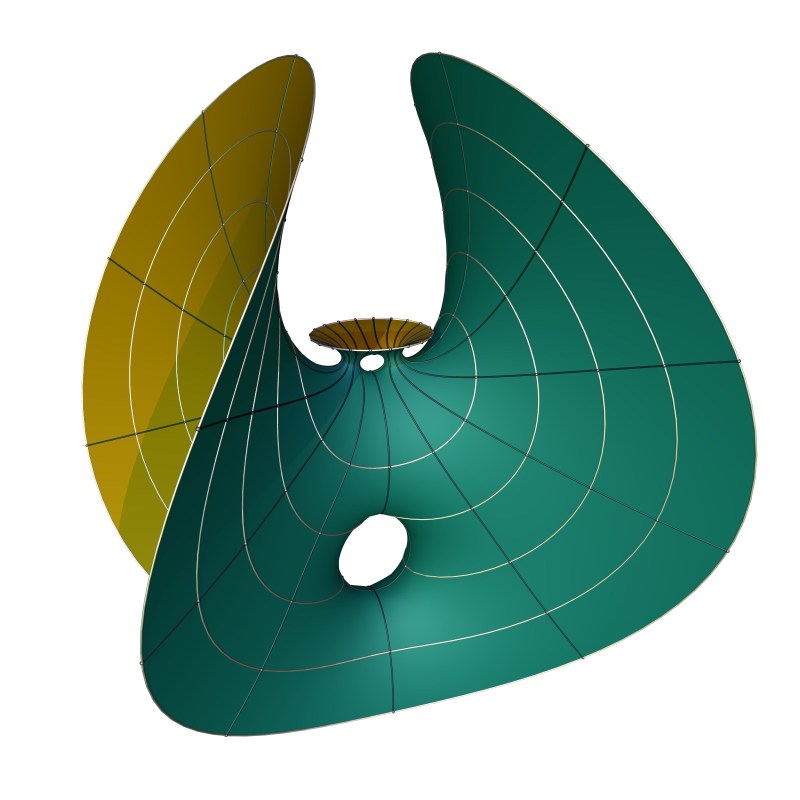
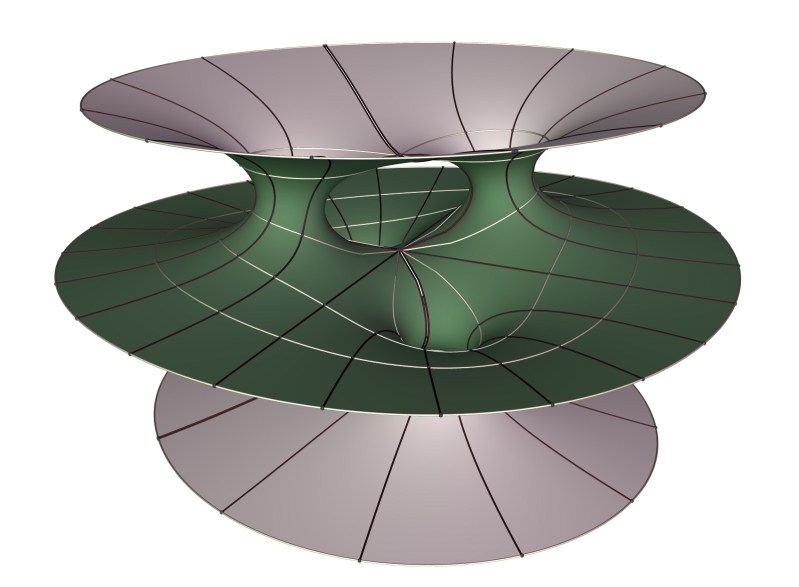
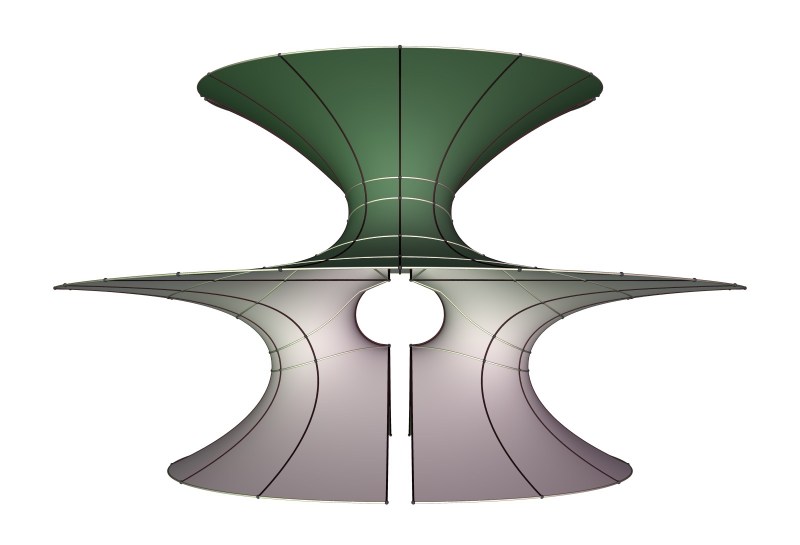
Above is another example of that surface, for a different parameter value, but something seems off. There appears to be a little crack. Maybe I didn’t  compute accurately enough? Changing the parameter a bit more widens the gap.

Fail

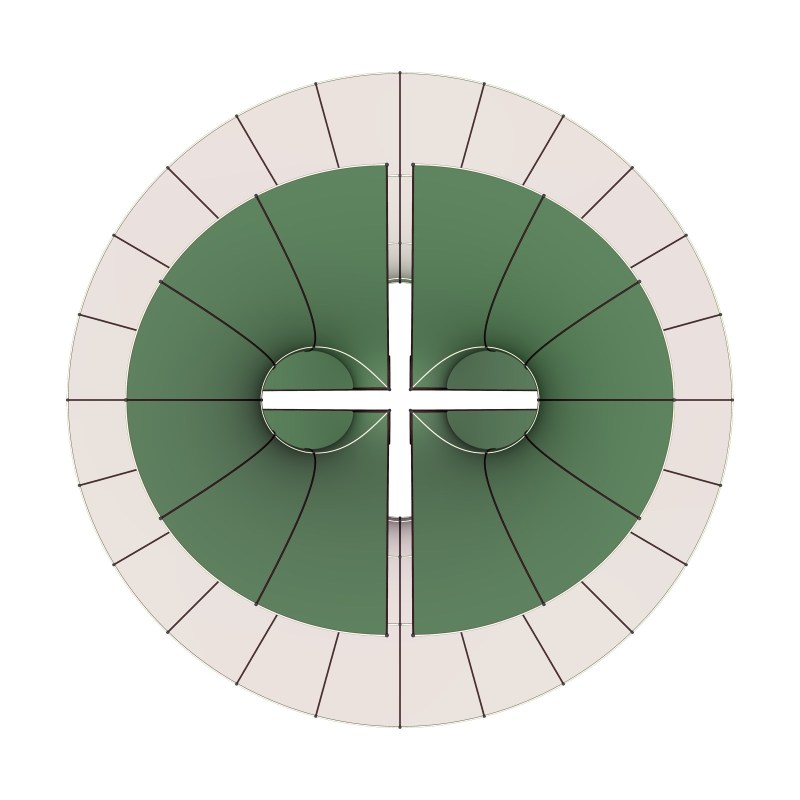
The question whether this surface does actually exist hinges on the possibility to truly close that gap, for at least one parameter value. It appears that we have done so in the top image. But the parameter value there is 1.01, pretty close to 1, where the surface will clearly break down. A more accurate computation shows that there still is a gap at 1.01, which we can’t see, or don’t want to see. But maybe 1.001 will do?
Side

David Hoffman and Hermann Karcher analyzed this surface in 1993, the same year as Horgan’s article, and it became known as the Horgan surface. One can indeed prove that the gap cannot be closed, so, despite all the evidence, this minimal surface does not exist.
Top

Mantis Babies (Butterfly Obsession II)

PICT0059

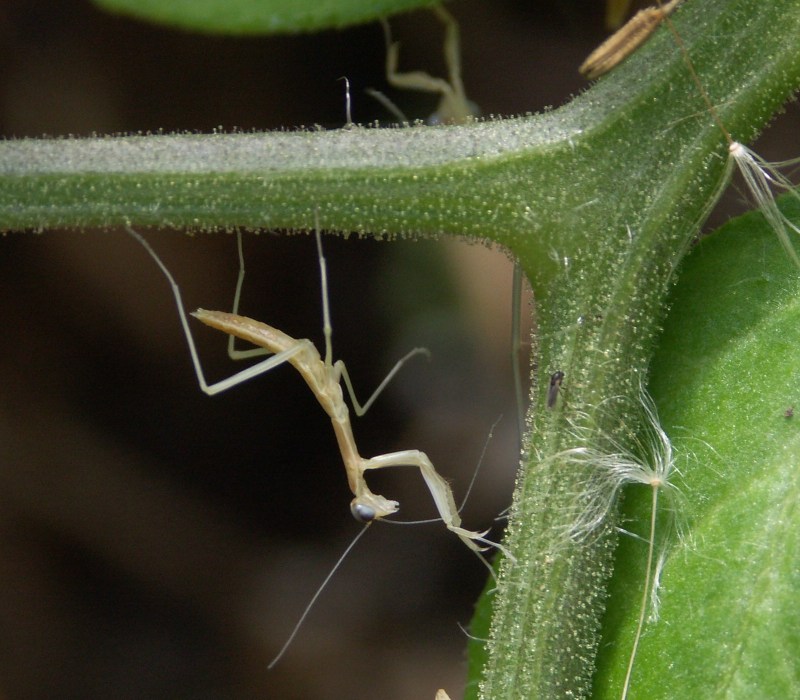
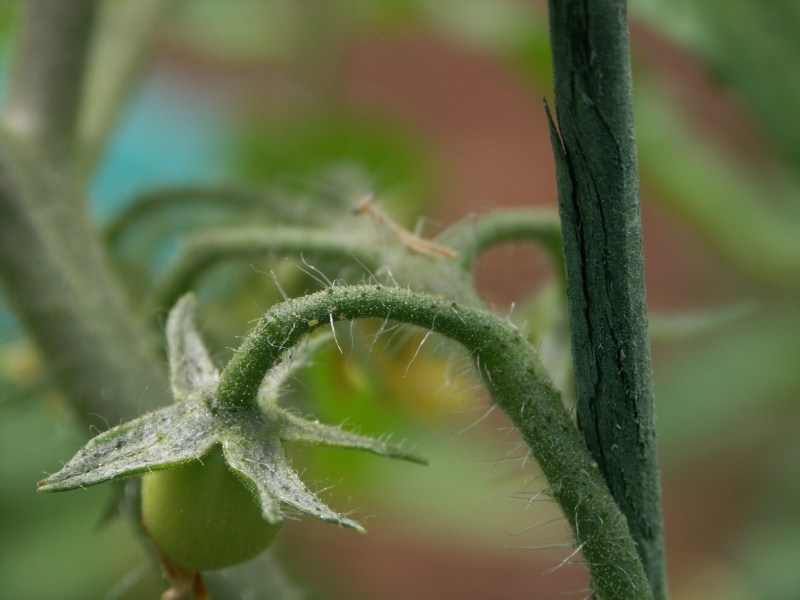
This is a tomato plant. You can call it misfocus of the cheap digital camera I grabbed quickly, or well-staged dramatic suspense, because, as you will have noticed, there is something in the background.

PICT0046

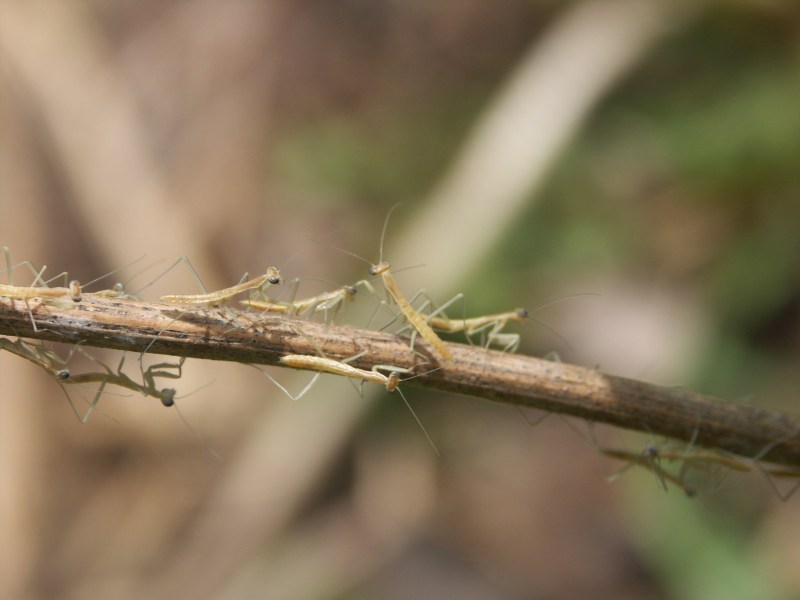
A few minutes earlier my daughter had spotted an egg case out of which cute little monsters were emerging.

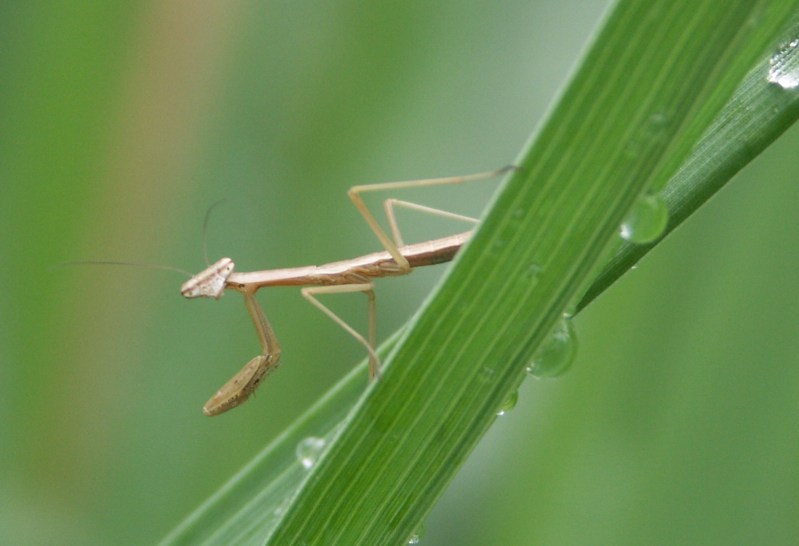
Praying mantises are fascinating. It seems so easy to say: Oh, that’s not one of our species. But then, why do we project aggressiveness into everything they do – hunting posture, sex life, the way they look?

PICT0121

One thing clearly distinguishes them from us: They are ready for life seconds after birth.

PICT0057

Whatever you think, that tomato plant was free of all other insects a few minutes later.

Three Planes

When you take two non-parallel planes, they will intersect in a line. The singly periodic Scherk surfaces are the only minimal way to “desingularize” this, in the sense that they are the only known minimal surfaces asymptotic to these two planes. To show this is one of the many famous open problems about minimal surfaces.

Scherk6sym

The situation gets vastly more complicated with three planes. Nobody has yet succeeded in constructing a minimal surface that is asymptotic to the three coordinate planes. That is another open problem. A case where we do know something is that of three (or more) vertical planes. Martin Traizet has shown in 1994 that in case the planes are reasonably general one can wiggle them a little bit and desingularize them by gluing in singly periodic Scherk surfaces. The concrete and very symmetric example above was known before that.


Otherscherk

The only requirement on the Scherk surfaces is that they have the same translational period and share a horizontal reflectional symmetry plane to ground them. But nothing prevents us from shifting one of the Scherk surfaces by a half-period, like up above. To make the image, I assumed another reflectional symmetry at a vertical plane (roughly parallel to the screen). This still left me with a 1-parameter family, whose existence is truly only guaranteed near the limit that looks like three Scherk surfaces (with one of them shifted). But nothing keeps us from looking at the other surfaces in this family.

Middle

Above I have turned it around so that one can appreciate the handles better. What emerges becomes clear when one pushed the parameter further:

Costa

A singly periodic Costa surface! There is a similar one constructed by Bastista and Martín where the Costa-necks are rotated by 45 degrees. It then loses its reflectional symmetries but gains straight lines.

Monarchs (Butterfly Obsession I)

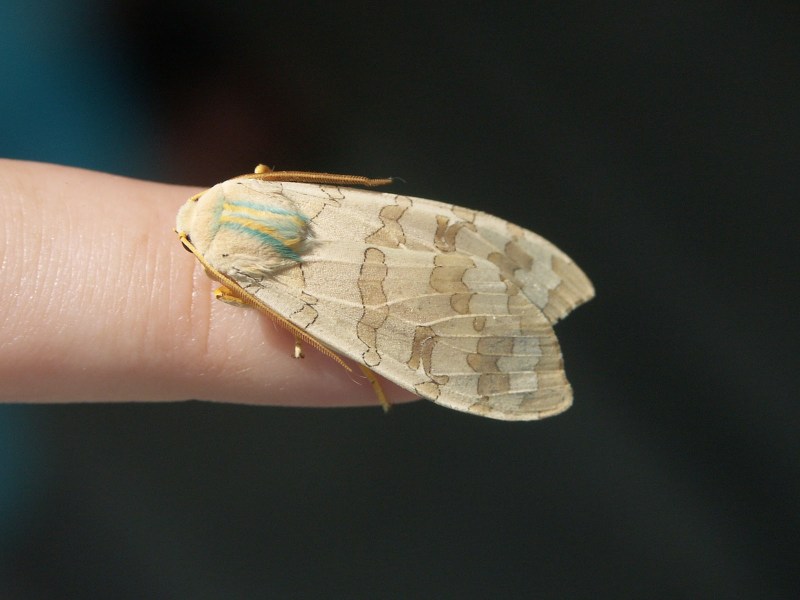
Among the more pleasant creatures who thrive in the current heat and humidity are the butterflies. My daughter’s obsession with them started when she was five, with a little moth.Moth

It then took off in Michigan that summer, where the rustic campground offered plenty opportunity to look for cute little critters in all the unspeakable places.

Monarch pillar

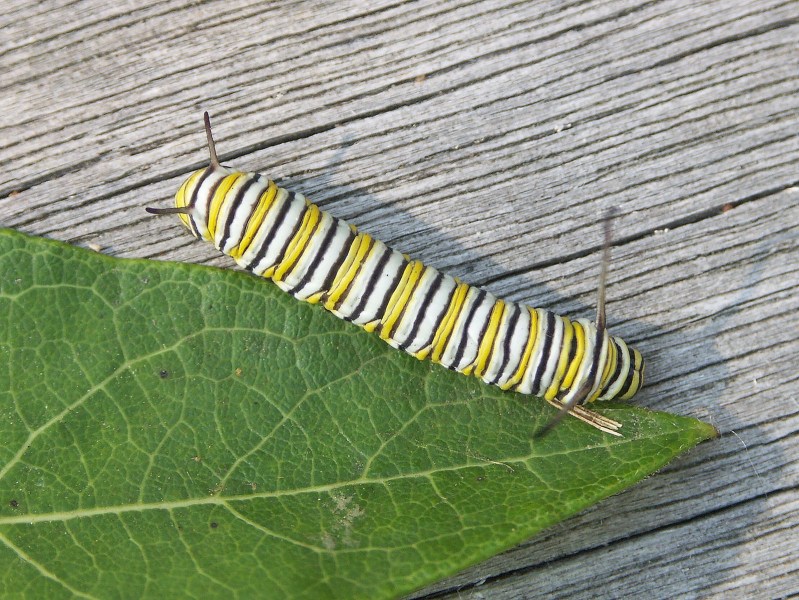
It takes no time to figure out that the thing to do is to collect the caterpillars, feed them and watch them molt.

The tricky part is to find the right host plants for your caterpillar collection. So we focussed on monarchs and de-leaved all the milkweed plants in the neighborhood. Monarch trio


You put them in a box, and a stick on top of that box instead of a lid when the caterpillars get fat and restless.

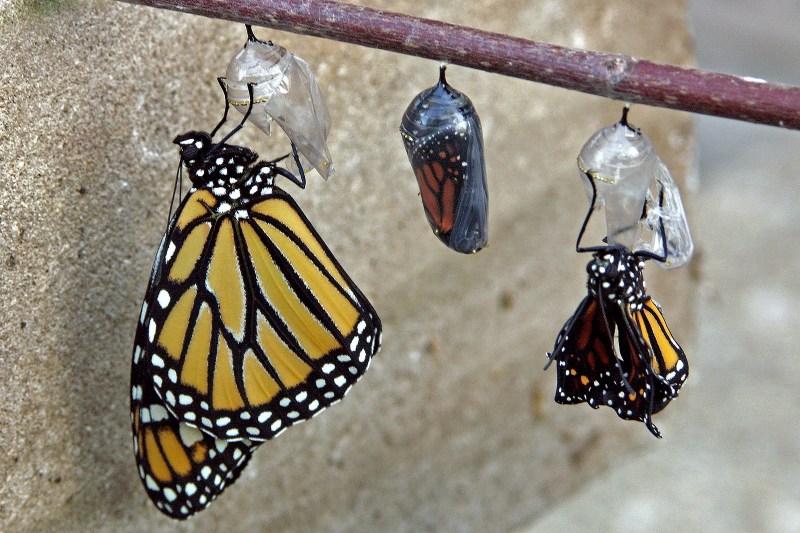
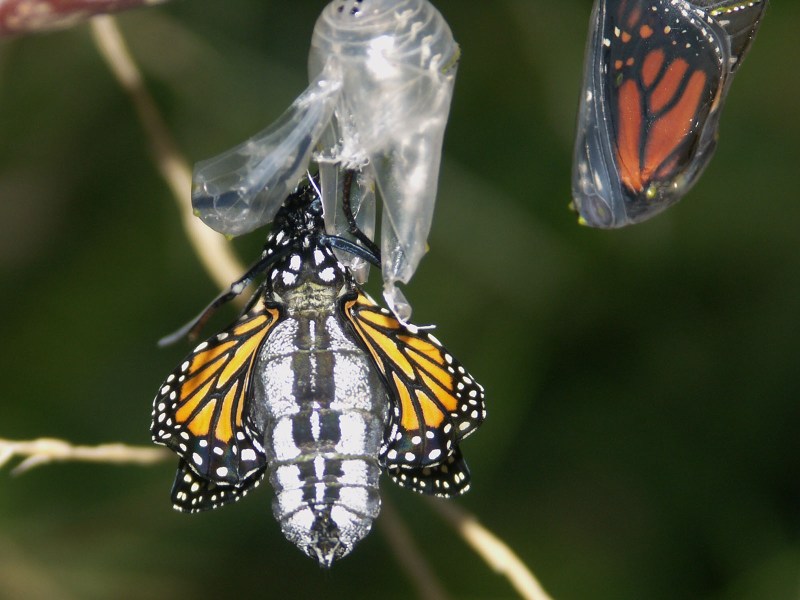
If you are lucky, you get several of them lining up on the stick, and then you can see them molting one by one. The act of getting out of the cocoon is pretty dramatic.

Molting

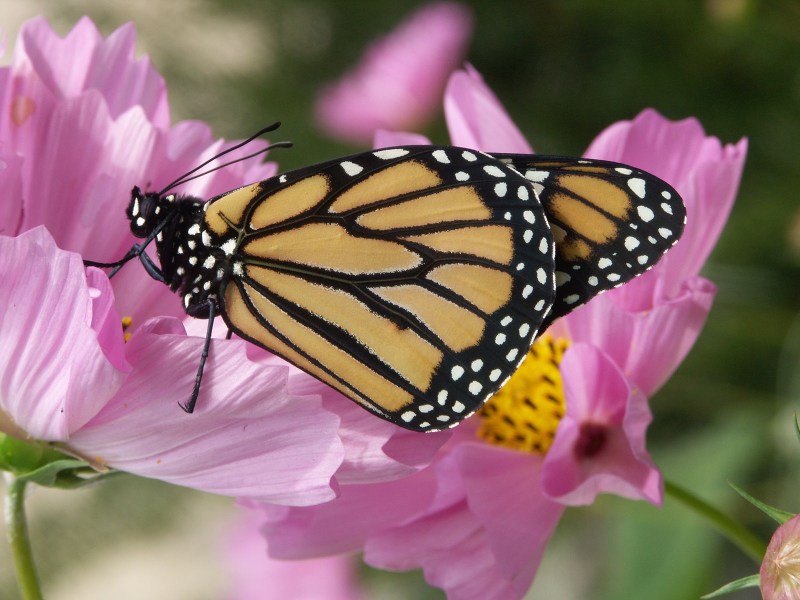
When the wings are pumped up, be sure to have the food ready.

Monarch 

Closing the Gaps

In 1982, Chi Cheng Chen and Fritz Gackstatter published a paper that described the surface below.
Cg 1

Like some of the classical examples of minimal surfaces, this surface is complete and has finite total curvature. A famous theorem of Osserman from 1964 asserts that any such surface can be defined on a punctured Riemann surface. In the classical examples, this had always been a sphere, but here we have a torus with one puncture.  There were some earlier examples, but this one, while not embedded, was surprisingly simple. From far away, it looks just like the Enneper surface.Cg 1 no

How does one make such an example? One problem is illustrated above: While Osserman’s theorem also guarantees that the derivative of a conformal parametrization has a meromorphic extension to the compact surface, the integration of these so-called Weierstrass data might leave gaps.

Flat 01

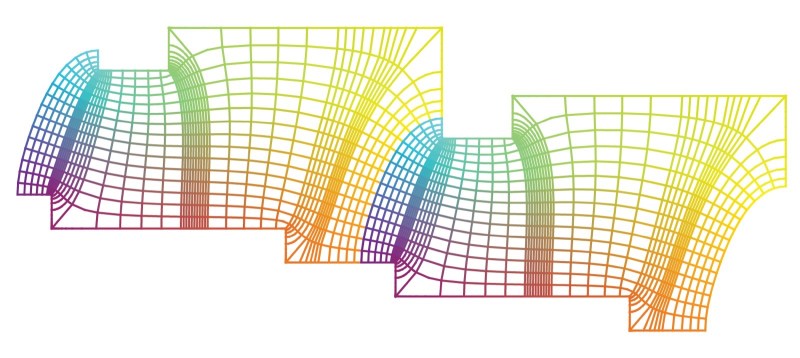
To close the gap, we use the help of symmetries: Two vertical planes cut the surface into four congruent pieces, each represented by the upper half plane. The Weierstrass forms \phi_1 and  \phi_2 then turn out to be Schwarz-Christoffel integrands. The corresponding integrals map the upper half plane to (infinite) Euclidean polygons, shown above. The left extends to cover a bit more than a quarter plane, the right a bit less than a three quarter plane.Torus 01

Incidentally, we can see the torus by fitting four copies of the right polygon together. We obtain the plane with a square missing. Identifying opposite edges of the missing square creates a torus with one puncture.

Now the condition that makes the gaps disappear is just that the two polygons fit together, which can be achieved by scaling. It’s really that simple. Similarly one can have more symmetric versions by just changing the angles in the polygons. Below is an example with sevenfold symmetry.

Cg 1 7

Mimosa Tea

DSC0882

We have four Mimosa trees in the garden. They have been busy blooming for a while, and the fragrant flowers are a wonder to look at.

DSC 9671

I couldn’t resist to harvest some of them and turn them into tea.DSC 9685Half a dozen in a cup turn instantly pale green when infused with boiling water.DSC 9699
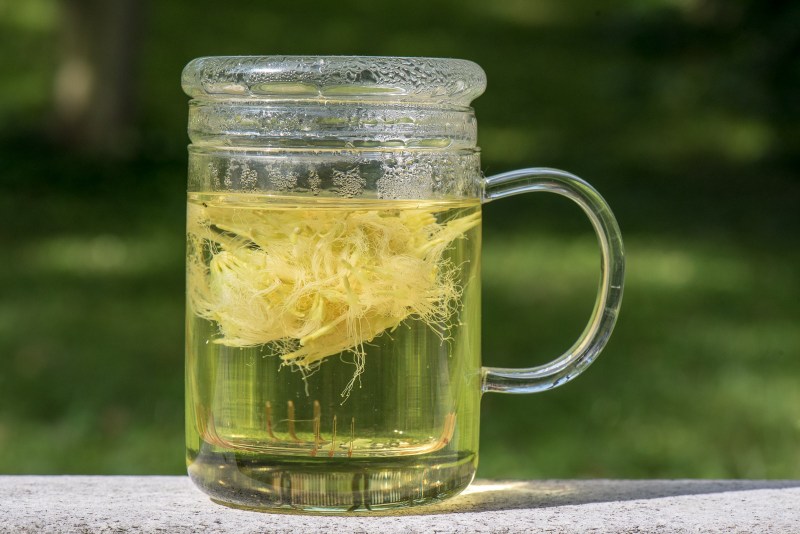
The cup is still bright green, and the typical mimosa scent is overpowered by a herbal note that is not really unpleasant but distracting. What did turn out more spectacular was to use some of the flowers for pressing and scanning.Mimosa003 2

The colors became stronger after a day under heavy books.

Mimosa003 3


The Naming of Things

Studying minimal surfaces has become a bit like hunting for rare new species of plants or animals. Having a newly discovered specimen named after a person might be considered an honor to some, but a confusion to others, because it typically says more about the name giver than the actual specimen.

Asingle

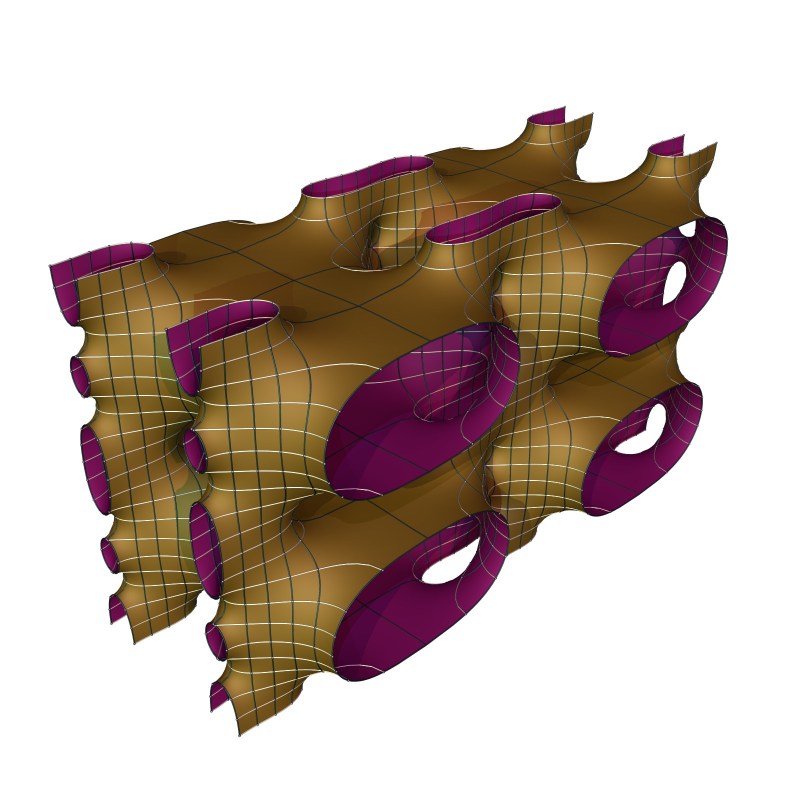
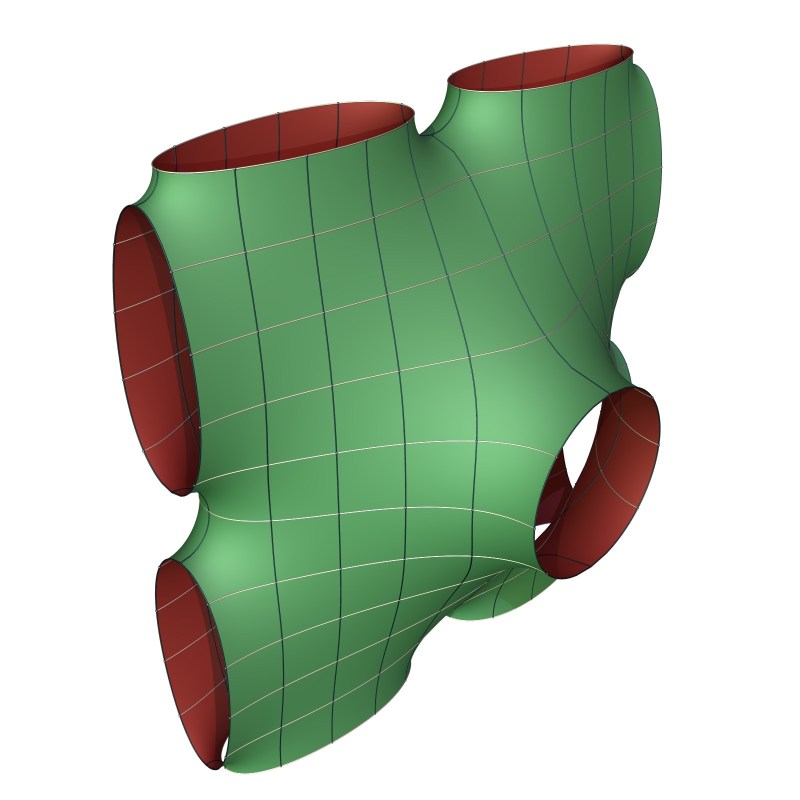
Let’s, for instance, consider the minimal surface above, which is part of a triply periodic surface. It has genus 5 (after identifying opposite sides by translations), and no name yet. In my book it comes with the code name (1,0|1,1). To explain this code, look at how the symmetry planes cut the piece above into eight pieces, and look just at the fron-top-left. There are, on the piece, four points where the surface normal is vertical: Two of them are on the left side, with normal pointing up and down, and two more in the middle of the picture above with normal pointing up at both points. So the 1 stands for up, the 0 for down, and the vertical bar separates the two boundary components.A phi1 01

You can see this also in the frieze pattern associated to this surface via the Weierstrass representation. The uppr contour repeats left-left-right-right turns, while the bottom just alternates left-right-left-right. Replace left by 1, right by 0, to get 110011001100… and 1010101010…, respectively, and take only the first two digits of each sequence, to get the name code. Below is a larger copy of a deformed version with the same code.

Acopies

That seemed a clever thing to do, because there are at least four more such codes for genus 5 surfaces (one of them has been named Schoen’s Unnamed Surface 12 before…). Unfortunately, codes can be deceiving, because there is also this surface:

Bsingle

It follows the same up/down pattern of the surface normal and hence gets the same code, but the top edge bends differently. Neither the frieze pattern

B phi1 01

nor larger chunks of deformed versionsBcopies

allow to codify the difference. The mystery can be resolved by looking at what are called the divisors of the Gauss map, and use Abel’s theorem to distinguish them. But not today anymore.

Leadville (Colorado V)

DSC 8845

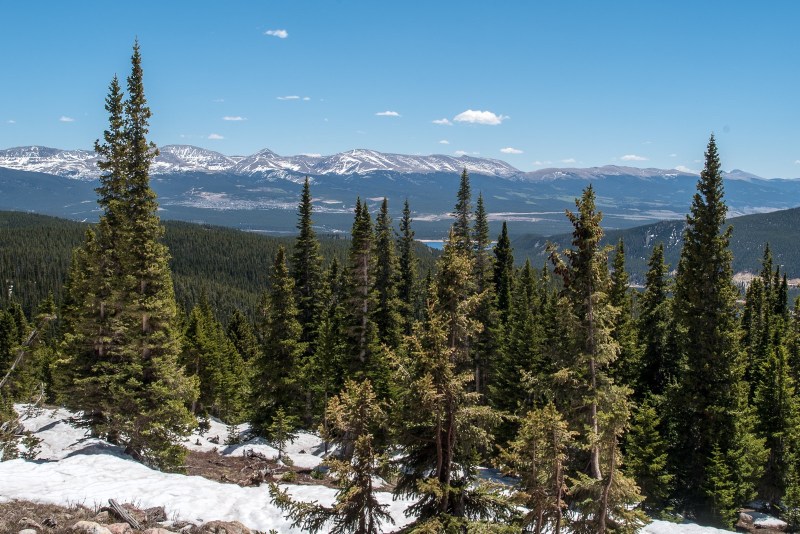
That little town you can maybe make out to the left and behind the lake up above is Leadville. At just over 10,000 feet, it is the highest incorporated city in the US, and used to be a bustling mining town, as the name hints at.

DSC 8856

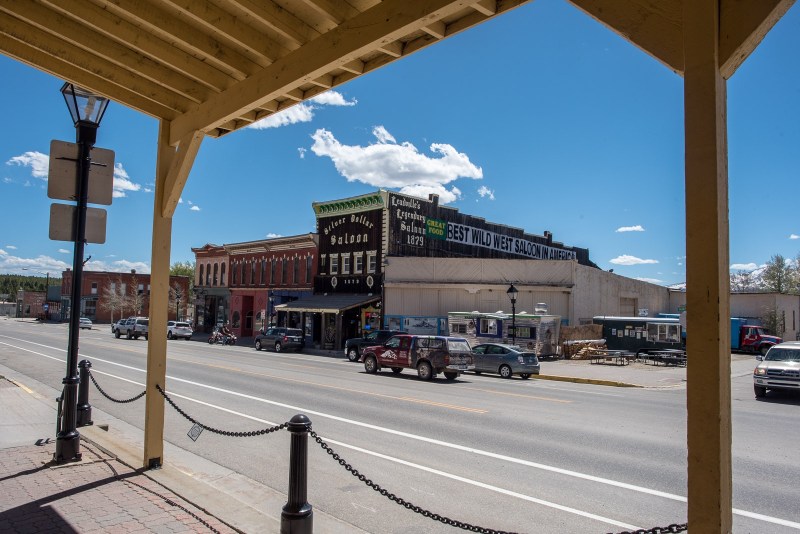
There are attempts to cash in on the town’s history, like in charming Jerome.

DSC 8864

But while the drive-through city center is well kept eye-candy, the mining area tells another story.

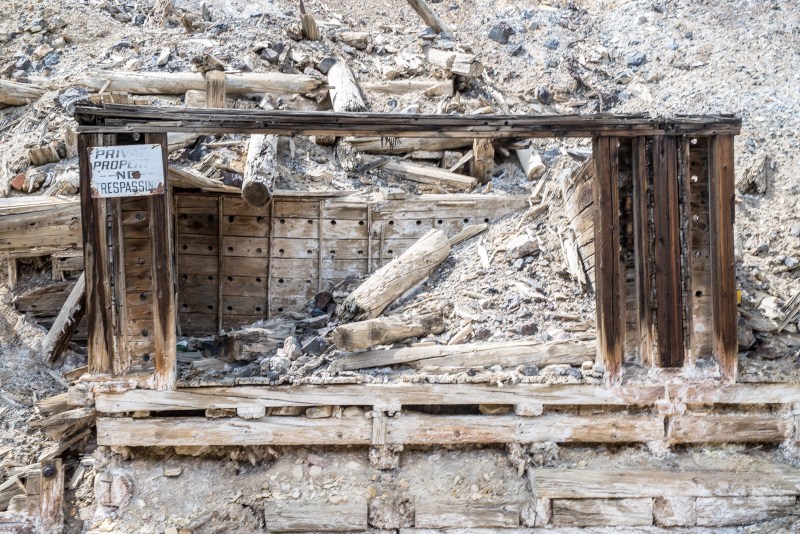
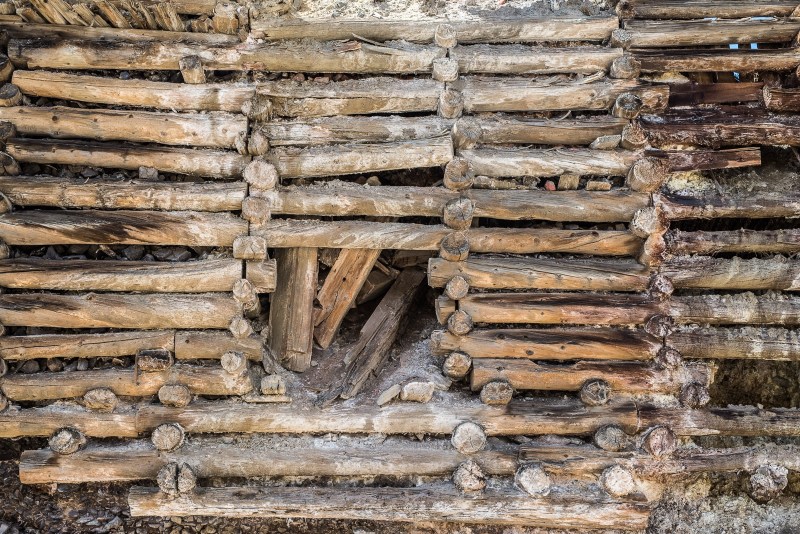
DSC 8873

It doesn’t take long until things fall apart beyond repair…, but fortunately, sometimes they do this in style.

DSC 8880

The aesthetic appeal is enormous, maybe because a true relic conveys a stronger message than a fake facade. 


The Angel Surfaces

One of the toy examples that illustrates how easy it is to make minimal surfaces defined on punctured spheres is the wavy catenoid. In its simplest form it fuses a catenoid and an Enneper end together, like so:


WavyCatenoid

I learned from Shoichi Fujimori that one can add a handle to these:G=1

This would make a beautiful mincing knife… Numerically, it was easy to add more handles:

G=4

I dubbed them angel surfaces, partially because of their appearance, partially because while we think they exist, we don’t have a proof. 

They are interesting for two reasons: First, they are extreme cases of two-ended finite total curvature surfaces: The degree of the Gauss map of such surfaces must be at least g+2, where g is the genus of the surface. Here, we have equality.

Secondly, they come in 1-parameter families, providing us with an interesting deformation between Enneper surfaces of higher genus.G=2

Above is a genus 2 example close to the Chen-Gackstatter surface. Below is a genus 2 example close to a genus 2 Enneper surface, first described by Nedir do Espírito-Santo.Espiro Santo

In other words, we get a deformation from a genus 1 to a genus 2 surface.

Green is a Difficult Color (Treescapes III / Colorado IV)

Getting to higher elevation in late spring is a problem in Colorado, not so much because of snow, but because of the streams with hip deep and ice cold water that one has to crossDSC 8735

After a while one resigns into not reaching that peak or lake, and finds consolation in the contemplation of the trees on the other side of the stream.

DSC 8737

I have written twice about treescapes: First about the fall at Red River Gorge State Park in Kentucky, and then about the winter in Brown County State Park. So now it is time for a spring version.

DSC 8739

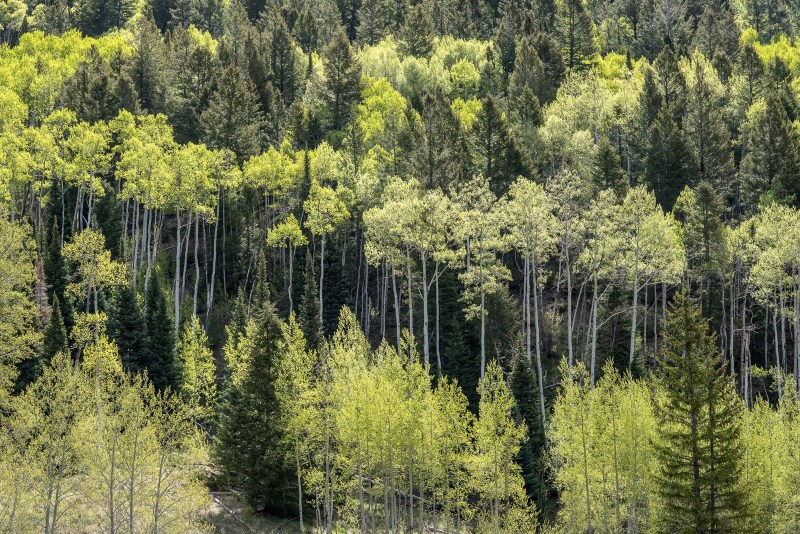
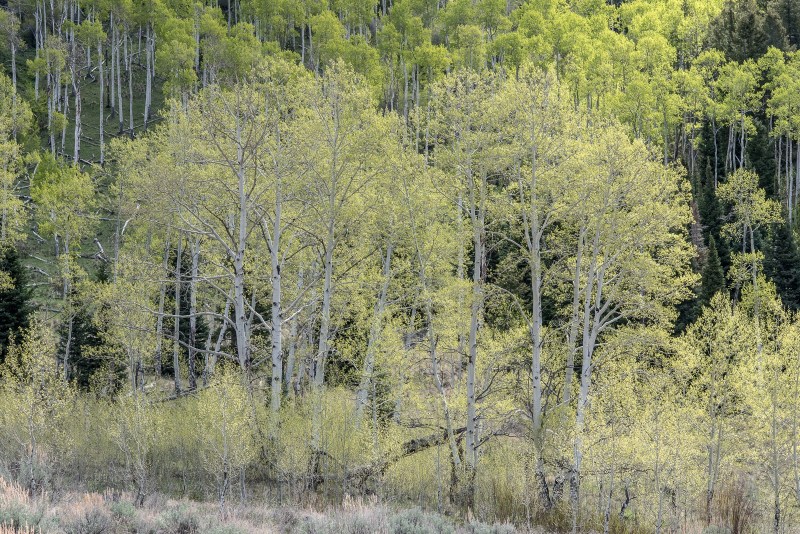
Green is a difficult color. When I make 2-colored surface images, I usually have a hard time picking a second color that complements any sort of green nicely. On the other hand, I find the natural shades of green in these landscapes positively overwhelming. My theory is that green goes well only with more green, or shades of gray.

DSC 8781

These images are from an attempt to reach the Flat Tops Wilderness. There will be another time.