Berlin 12-19-2016

Berlin has changed a lot since I grew up there, in the western part of the then divided city. Here are some pictures I took in 1991, already only a visitor, after the Wall.

1991 619

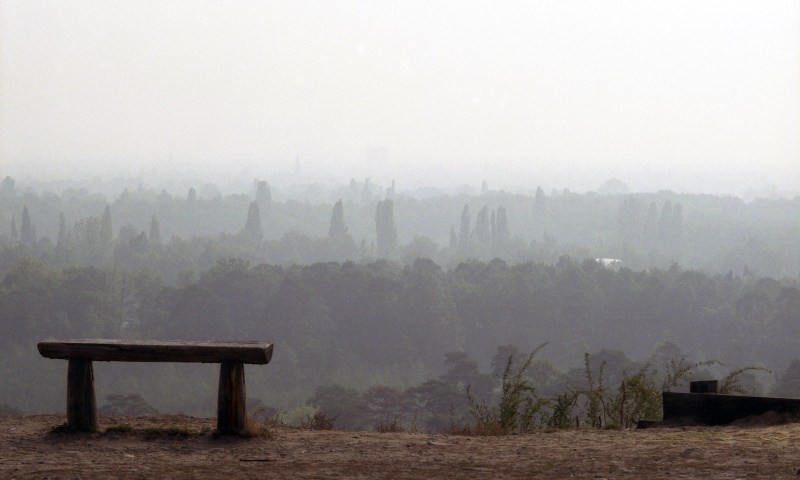
The first one is a view from the Teufelsberg, the Devil’s Mountain, an artificial hill made from the rubble after the Second World War. This is one way to get rid of ruins.

1991 564

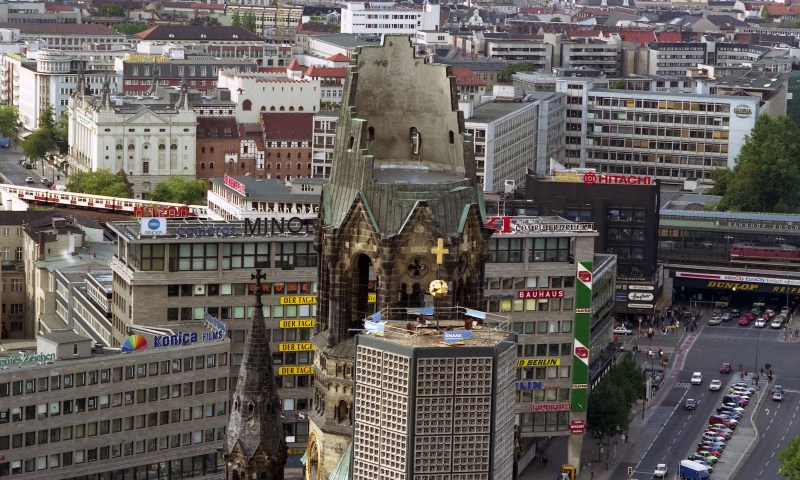
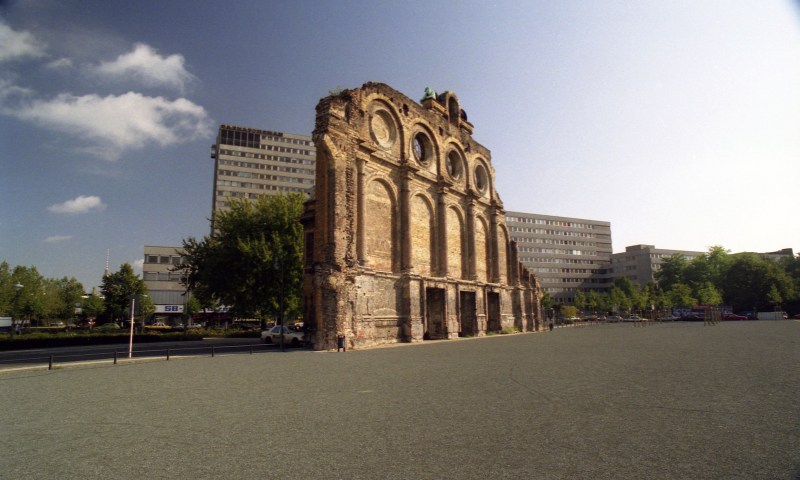
I like to revisit places, and therefore I like it when ruins are being kept. This one, the ruin of the the Anhalter Bahnhof, close to the Wall, used to be surrounded by unused land. It is one of the key places in Wim Wender’s film Wings of Desire. Another most important place in the film is yet another ruin, the Gedächtniskirche below. I took the picture from the top of the Europa Center, closed to visitors now, maybe because of the film.

1991 584

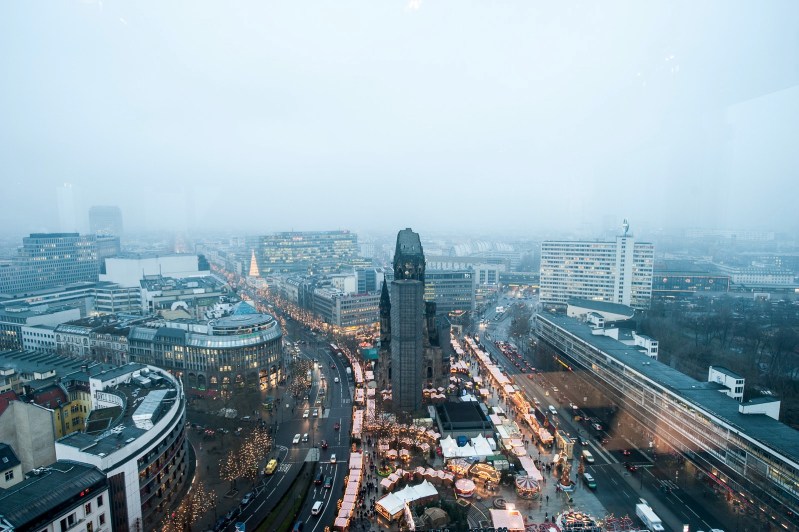
These are all summer pictures. In December 2008, 8 years ago almost to the day, I tried to capture this view again. You can see the traditional Christmas Market at the foot of the two churches.

DSC 3853 2

It is a good thing that we cannot see into the future.

DSC0180

In Memoriam, 12-19-2016.

The Zone

In his film Stalker, Andrei Tarkovsky transforms the mysterious zones from Arkady and Boris Strugatzky’s book Roadside Picnic into a spiritual personal experience for the visitor.

DSC 7337

I like that concept of a place that is off the map where we can go and dream or contemplate.

DSC 7334

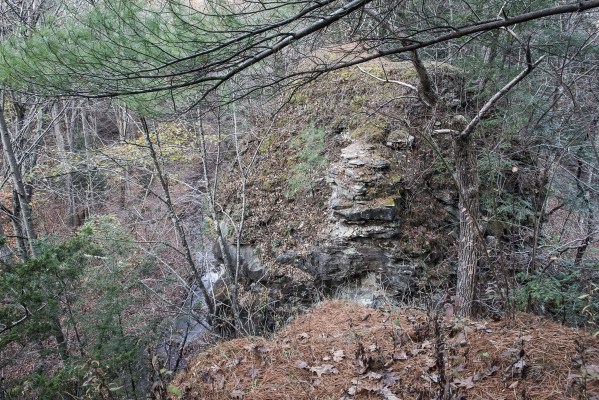
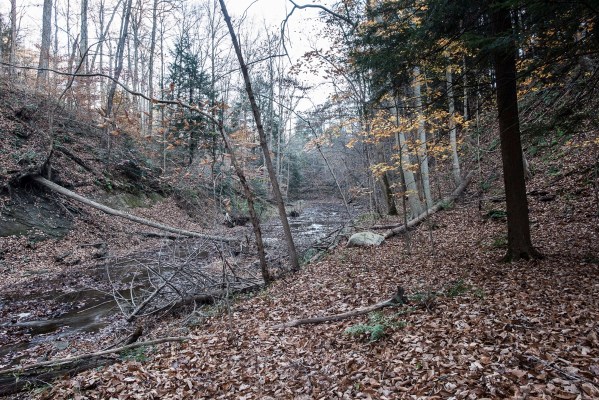
Fortunately, it is possible in Indiana’s slightly boring landscape to just step off the path and end up in one’s own little zone.

DSC 7340

Granted, there will be no alien artifacts to collect, and no wishes fulfilled. But that was never the true purpose of Tarkovsky’s zone. Instead, a zone allows undisturbed introspection.

DSC 7365

Sadly, these undisturbed space become harder to find, and maybe we have to move the zones into a virtual space. When the space limit on this blog runs out, I might call my next blog The Zone.

DSC 7369

2-3-6

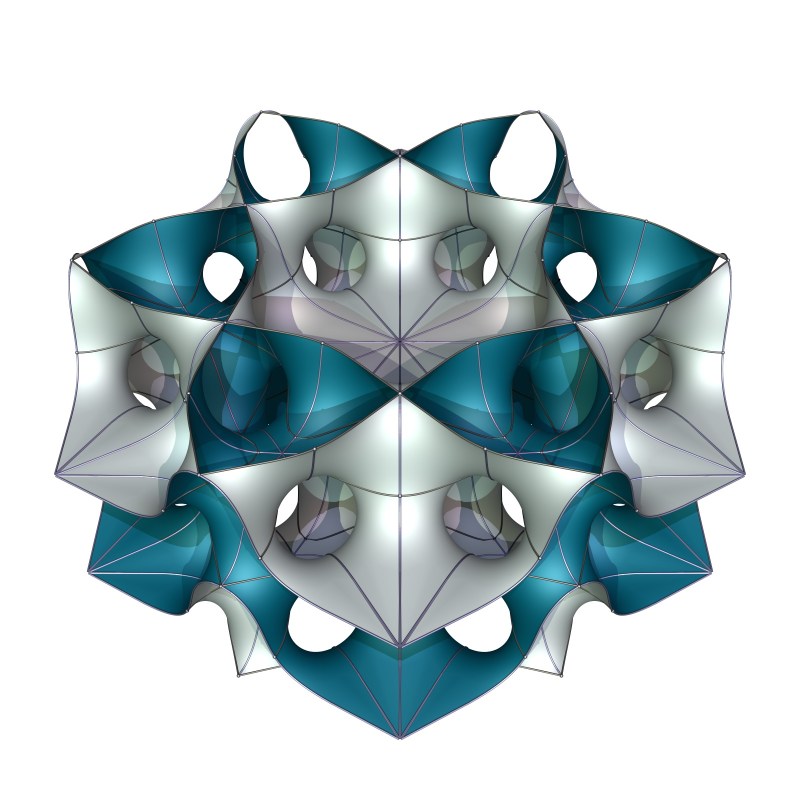
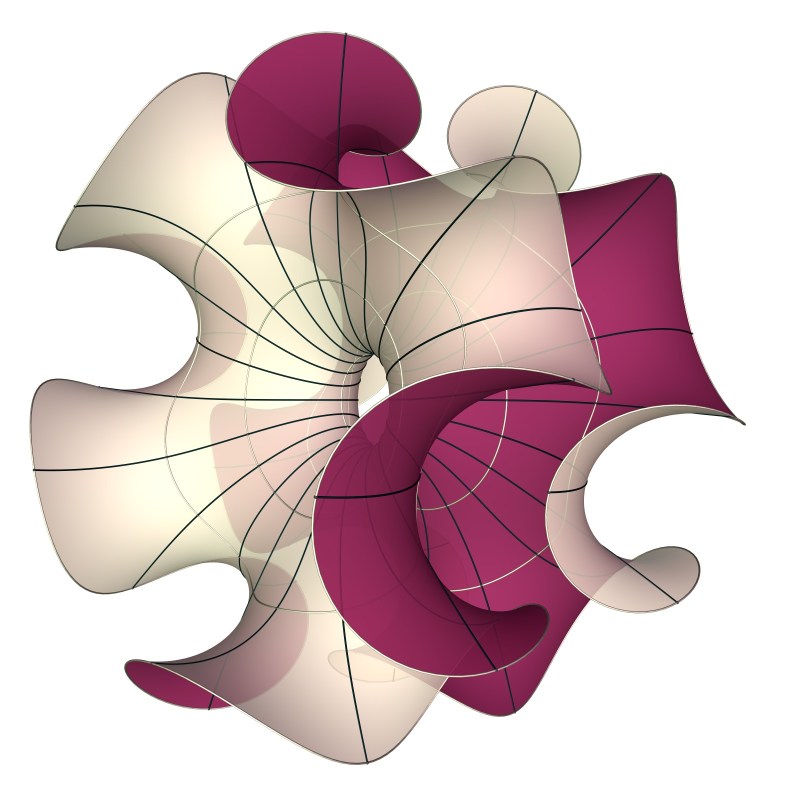
I like it when apparently simple things evolve all by themselves into complex objects. Like watching cactus seeds grow into cacti. That was a distraction, but I do like it. Below is a left over piece of mathematics that would have fit nicely into a paper I wrote with Shoichi about triply periodic minimal surfaces.

M236

It is, evidently, quite complicated. To unravel it, here is a smaller portion of it, its seed, so to speek.

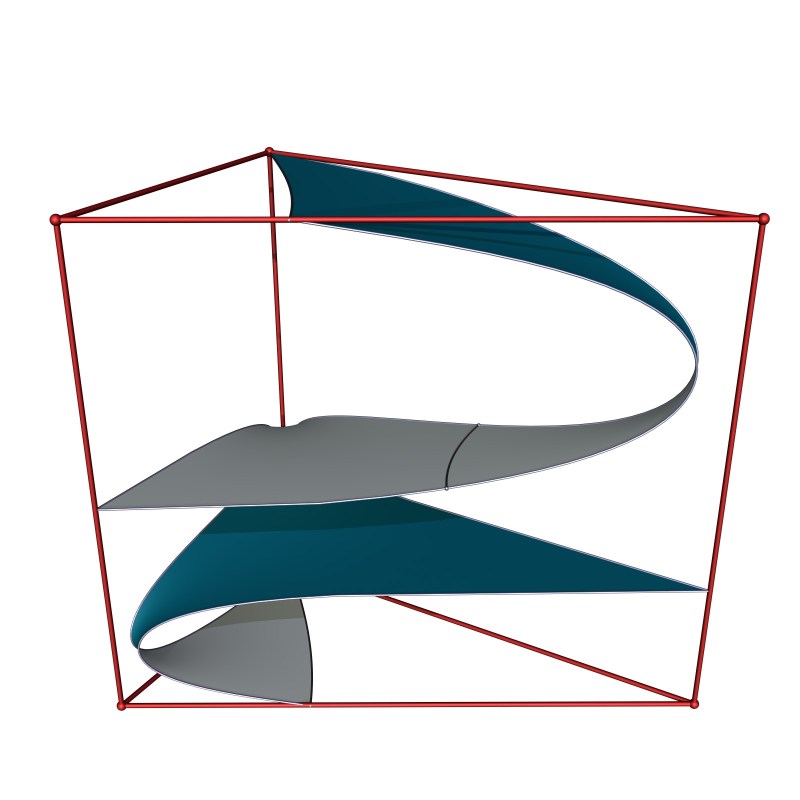
Prism

That is a minimal surface inside a prism over a 2-3-6 triangle (which has a right angle, a 30 degree angle, and a 60 degree angle).
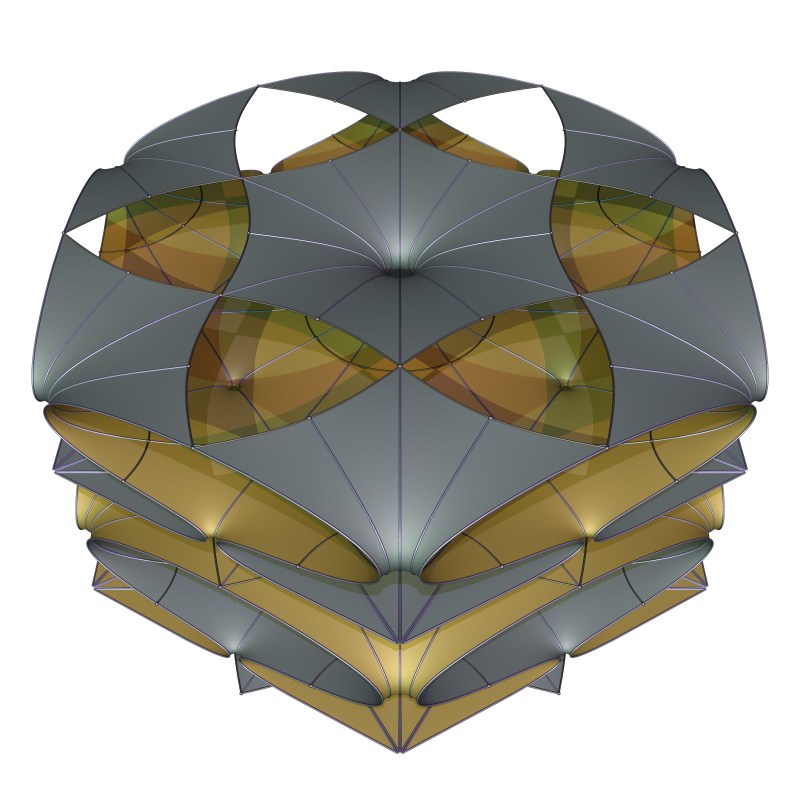
The curves in the vertical faces of the prism are symmetry curves of the surface, and reflecting at these faces of the prism extends the surface. The two curves in the bottom and top face of the prism are not symmetry curves, but when you place two prisms on top of each other (by translation), the curves will fit. The pattern the curves make on the prism determines the surface almost completely, there is just one degree of freedom. Here is another, equally pretty, version, using a different parameter.

M236b

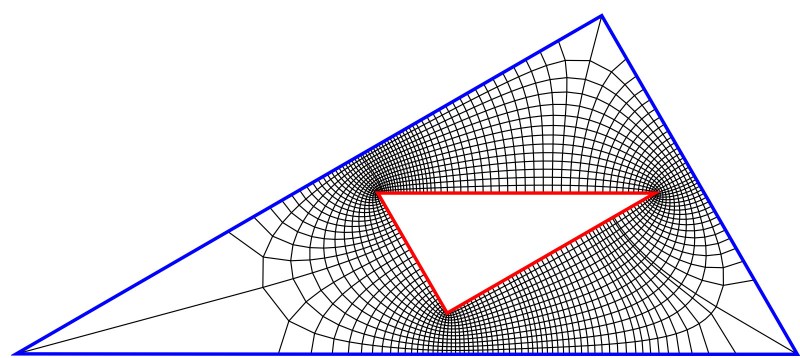
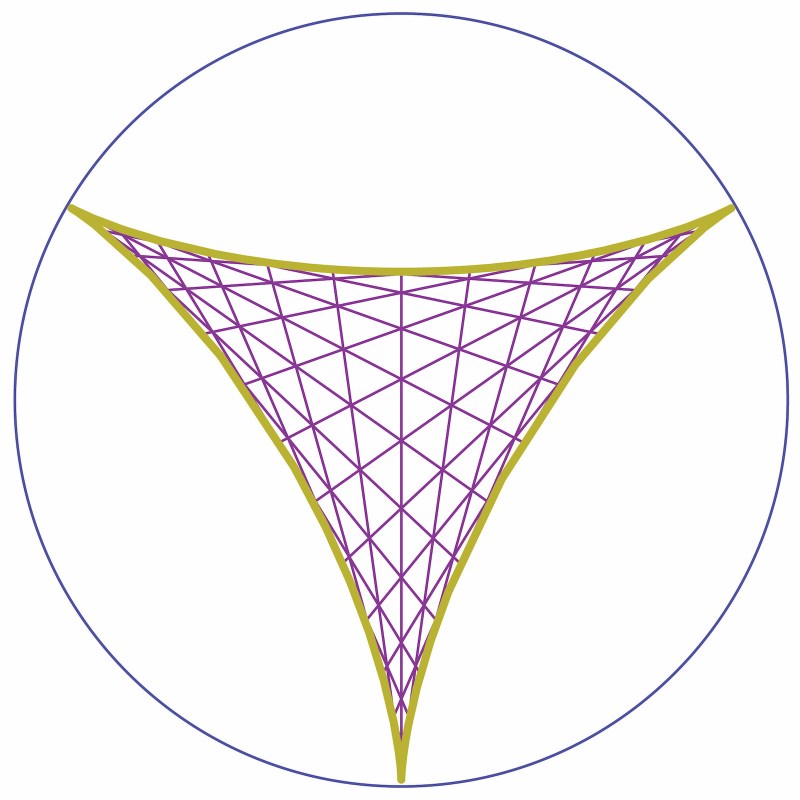
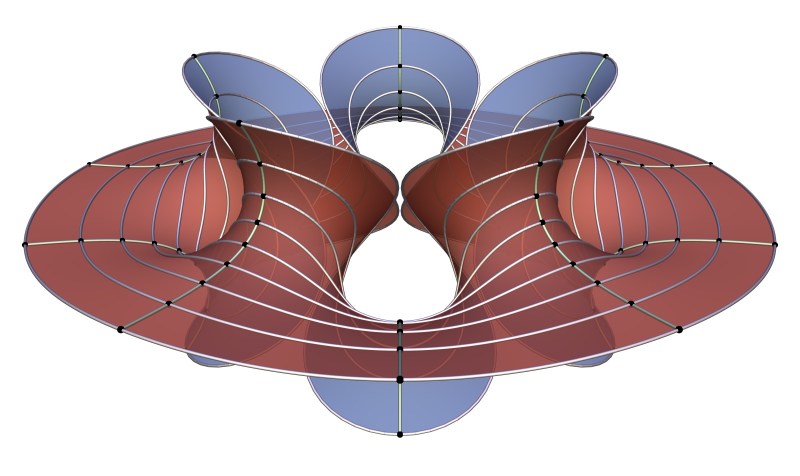
Another way to seed these surfaces is through conformal geometry. Below is the conformal image of a circular annulus onto a polygonal annulus bounded by two nested 2-3-6 triangles. The parameter lines are images of radii and concentric circles, respectively. This map is the main ingredient in the Weierstrass representation of all these surfaces. Simple, isn’t it?

Tri

Arrows (From the Pillowbook IV)

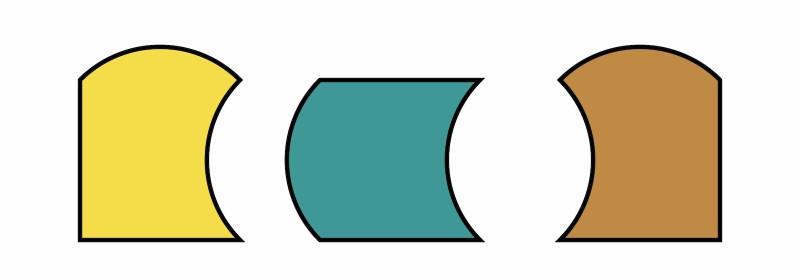
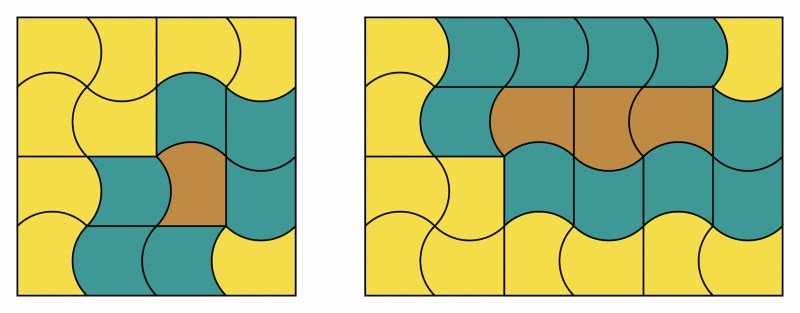
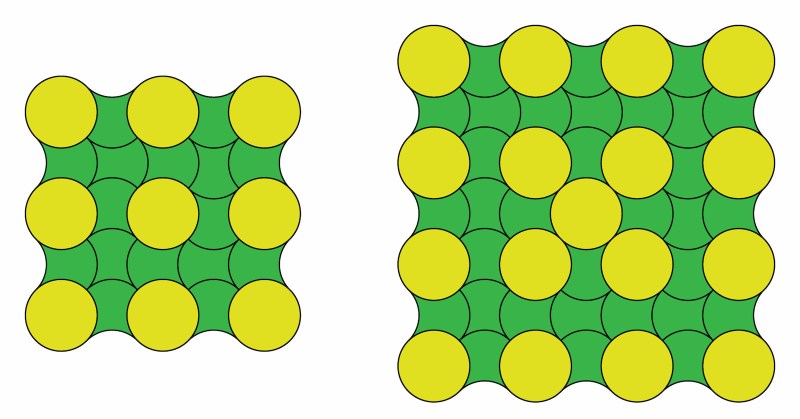
So far, we have looked only at pillows with concave and convex edges. Today, we begin also to allow straight edges. To keep it simple, let’s look at the three different pillows that have two straight edges, one concave, and one convex edge. Here they are. I call them the arrow pillows.

Arrows 01

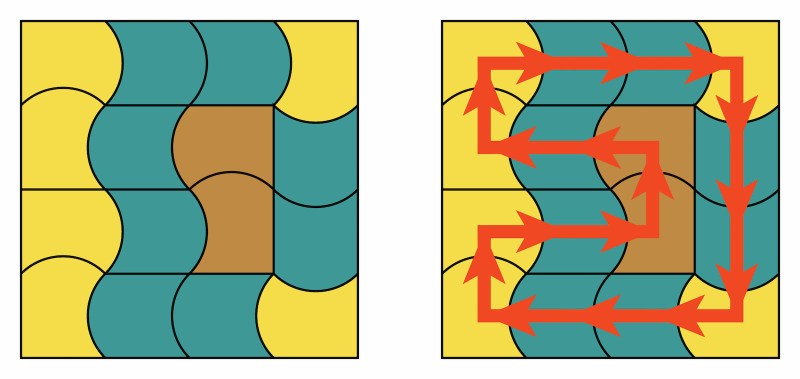
Because they have straight edges, we can finally tile rectangles that have straight edges, too, like so:

Sq4x4 01

There are a few immediate questions: Is this always possible? Can we say something about the number of arrows of each type we need? The key to the answers is indicated in the right image. The convex edge of one arrow pillow (the predecessor) fits snugly into the concave edge of a second arrow pillow (the successor), thus providing us with a recipe to move from one pillow to a neighbor. If we have a tiling of a rectangle just by arrow pillows, this sequence of consecutive successors must form a closed cycle. Therefore, the entire rectangle will be covered by possibly several such closed cycles, so we have what is called a Hamiltonian circuit. Readers of my blog have seen these before.

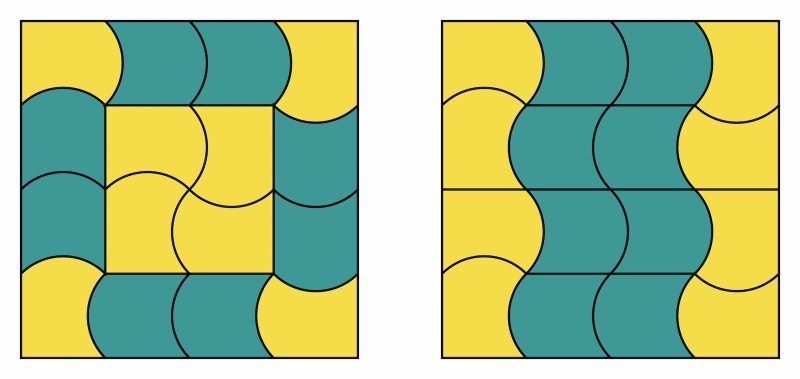
Vice versa, given any Hamiltonian circuit and a direction for each component, we can lay out the arrow pillows along each path to obtain a tiling. Below are two more examples with two components each that use only right and straight arrow pillows.

Sq4x4b 01

Can you tile a 5×5 square with arrow pillows? If you checkerboard color the rectangle black and white, any path alternates between black and white squares, so a closed path will cover the same number of white and black squares. Thus in particular Hamiltonian circuits must have an even length on rectangles.

Let’s look at a single closed cycle, and let’s assume we follow it clockwise. Then there must be four more right turns than left turns. We have seen examples with no left turn arrow pillow, and with two left turns. Below are examples with just one and just three left turns.

Arrow13 01

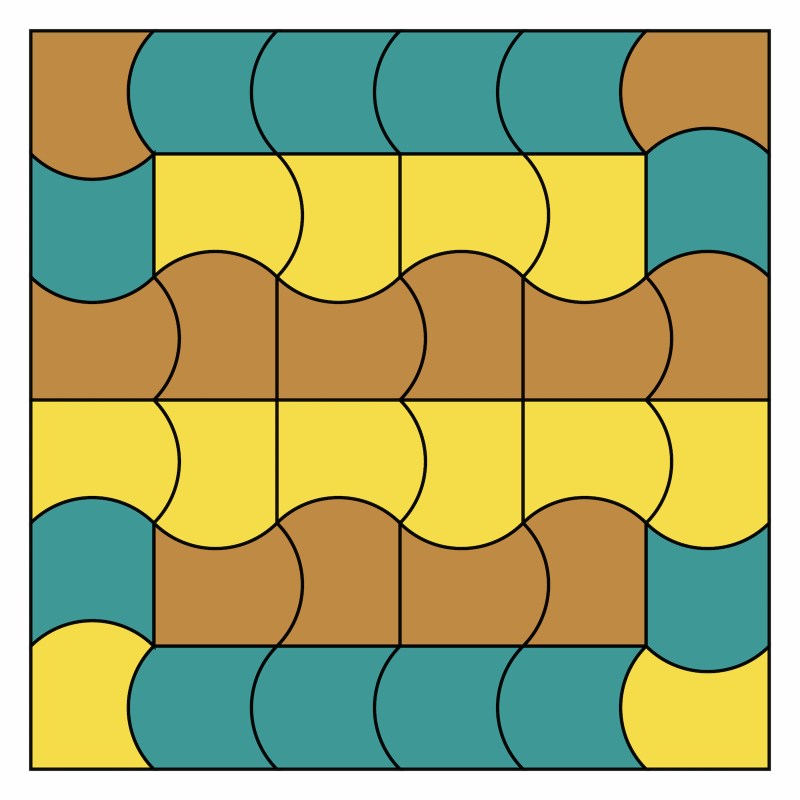
These little insights not only help to show that some tiling is impossible, they also give hints to design tilings. For instance, suppose you want to tile a square using the same number of straight, right, and left arrow pillows. Then the smallest square for which this could work is the 6×6 square. We also see that we need an even number of cycles in our Hamiltonian circuit in order to balance the left and right arrow pillows. The simple solution below uses two mirror symmetric tilings of 3×6 rectangles.

Sq6x6balance 01

Just Two (From the Pillowbook III)

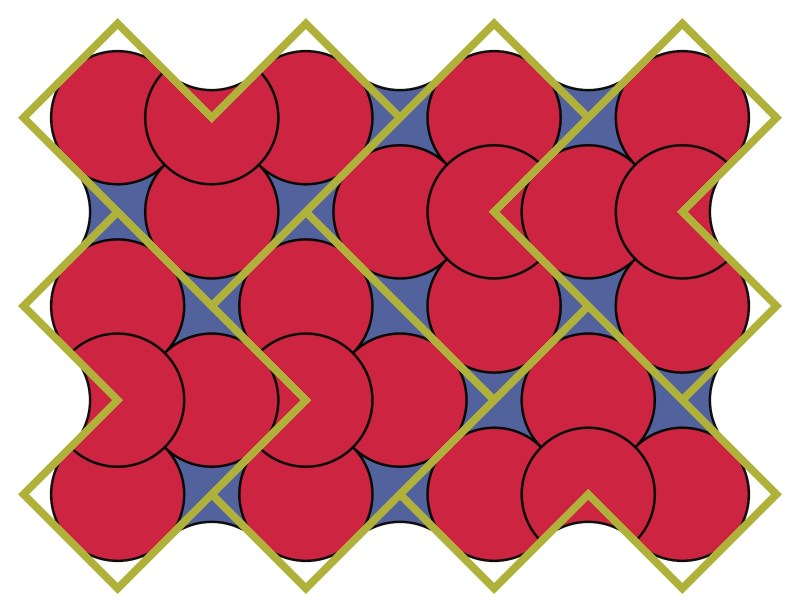
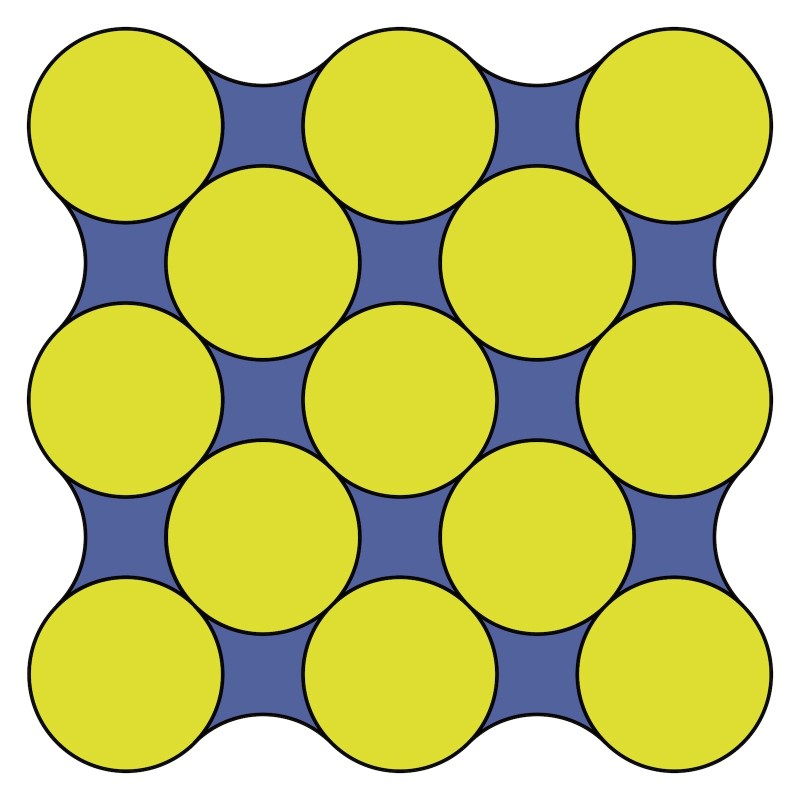
A while ago we learned how to tile curvy 3×3 squares with pillows. Most of the possible tilings need at least three different kinds of pillows. The only way to tile a curvy 3×3 square was using the Blue and Yellow. This changes when we look at tilings of larger curvy rectangles. For instance, below is a tiling of a 5×7 rectangle with Red and Blue:

Rb 7x5 rag

I have overlaid the curvy rectangle with a 3×4 ragged rectangle, tiled by L-trominoes. Each L-tromino is replaced with a cluster of 3 Reds, and the T-junctions of the L-tromino tiling are filled with Blues. As we have seen that every ragged rectangle whose area is divisible by 3 can be tiled with L-trominos. This gives plenty of examples. In fact, every
tiling of a curvy rectangle with just Blue and Red comes from an L-tromino tiling of a ragged rectangle.

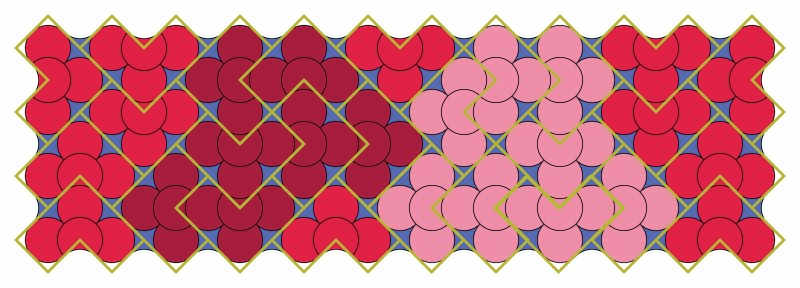
To see this, one can look at the possible ways a red pillow can be surrounded by blue and red pillows, and one almost finds that each red pillow belongs to a unique L-tromino. There is one exception that causes a little bit of headache that leads to circular clusters as in the example below (dark red and pink).

Rb 4x12 rag

But one can show anyway that such clusters can be tiled (in multiple ways) with L-trominoes.

Another challenge is to find a curvy square that can be tiled with just Blue and Red. That this is impossible follows from the deficit formula: We need to have the area r+b to be a square and r-2b =2 for r Reds and b Blues. But this implies that -1 is a square modulo 3, which is false.

Tiled squares are possible with other two color combinations. The example of a tiling of curvy 5×5 square tiled by Yellow and Green is deceivingly simple. The next case of the 7×7 square below is more complicated. Can you find a pattern?

Gyex 01

The only really simple case is tilings by Yellow and Blue. All curvy rectangles can be tiled, and in only just one way.

By 5x5

A mean little exercise is to ask somebody to tile any curvy rectangle with Green and Red. There is no solution, because the deficit formula tells us that r-g=2, but r+g needs to be odd, because curvy rectangles have odd area.

There are a few more color combinations to consider. For instance using either orange or purple pillows together with a second color is impossible. By the deficit formula, this would require to be either a single yellow pillow or precisely two red pillows. For purple this means that there would be a line of purple pillows through the rectangle. But such lines always end at one concave and one convex segment, which can’t be. For orange this would require al least two orange corner pillows, which also doesn’t work.

Ceva’s Theorem, the Deltoid and the Design of Underwear

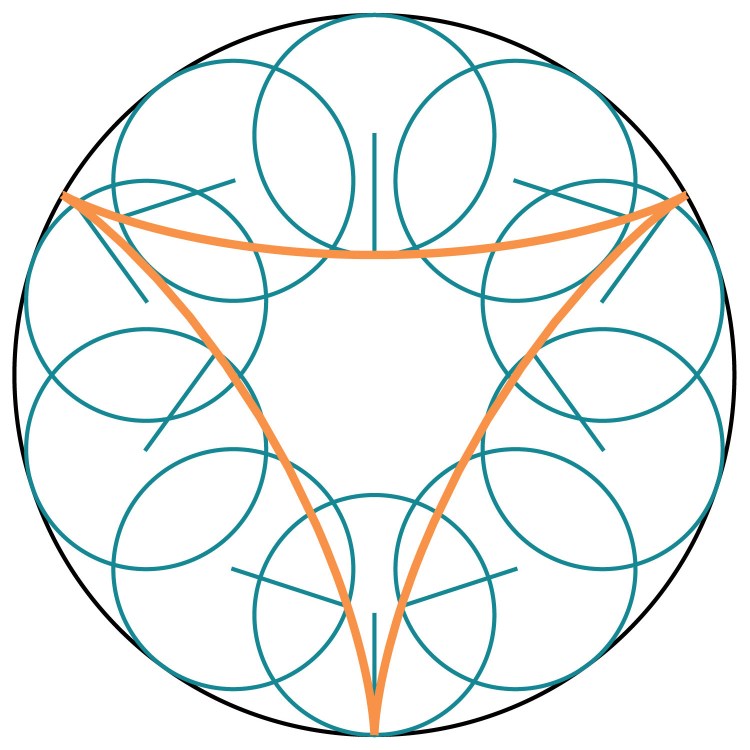
The deltoid is an intriguing curve. You start with a blackish circle of radius 3, within which rolls a bluish circle of radius 1, and a point on its perimeter traces out an orangish curve ⎯ the deltoid.

Deltoiddef 01

One of its remarkable features is that if you draw the tangent-secants, i.e. the line segments that touch the deltoid at one point and foot on the two other sides of the deltoid, you get segments of always the same length 4, no matter where you start. This means that you can rotate a segment of length 4 within the deltoid by 360 degrees. The deltoid being smaller then a circle of radius 2, this almost immediately triggers the Kakeya problem: How much area do you need to rotate a segment by 360 degrees? The surprising answer is that you can make the area as small as you like. The deltoid won’t like it. But it opens up all kinds of design possibilities…

Deltoiddiams 01

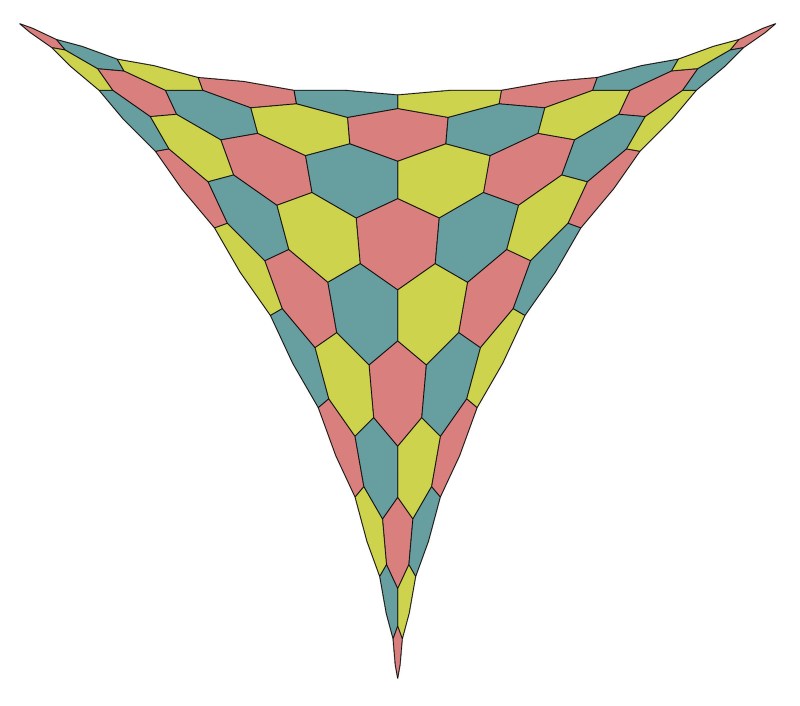
Somewhat surprisingly, in the image above, these famous secant-tangents meet at triple intersections. Lines don’t do that, generally. In this case, this allows for a seductive design, tiling the curvy deltoid triangle with hexagons. Whenever there is a tiling by hexagons around, there is usually a hexagonal torus and a group structure around the corner. Let’s unravel that.

Deltoid dessous 01

This situation also reminds us of the theorems high school students have  (still!!!)  to suffer through about lines in a triangle that happen meet at a single point. Well. One of the more intriguing facts here is Ceva’s theorem that tells us precisely when three lines through the vertices will meet at a single point.

Stereoceva 01

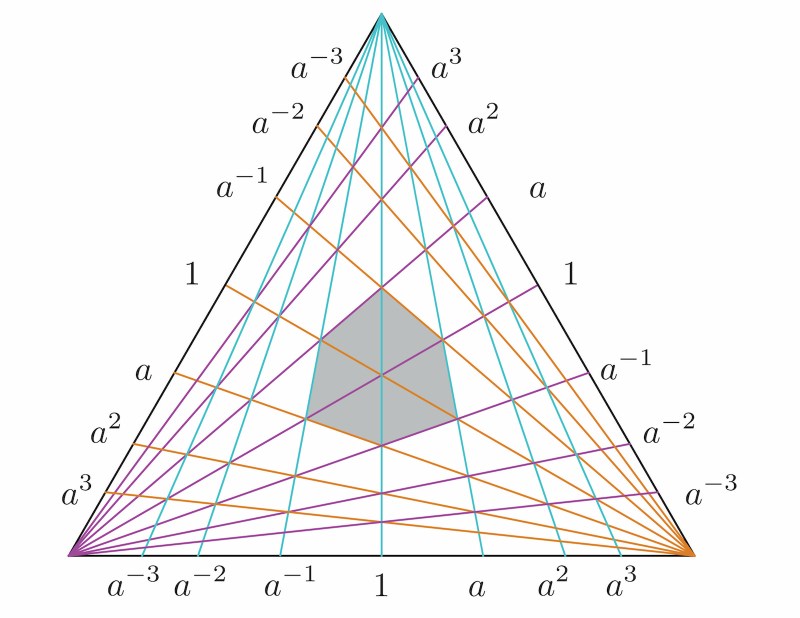
Think about it like this: A perspective drawing of a single cube projecting along one of its diagonals will give us a (gray) hexagon. It requires 3 vanishing points (chosen arbitrarily) where opposite sides of the hexagon will intersect. I have picked them at the corners of an equilateral triangle, but everything will work for other body types, too…

Parallel edges of the cube have to meet at these vanishing points, which determines the drawing. If you project several cubes of a cubical lattice simultaneously, you will get an image like the one above.

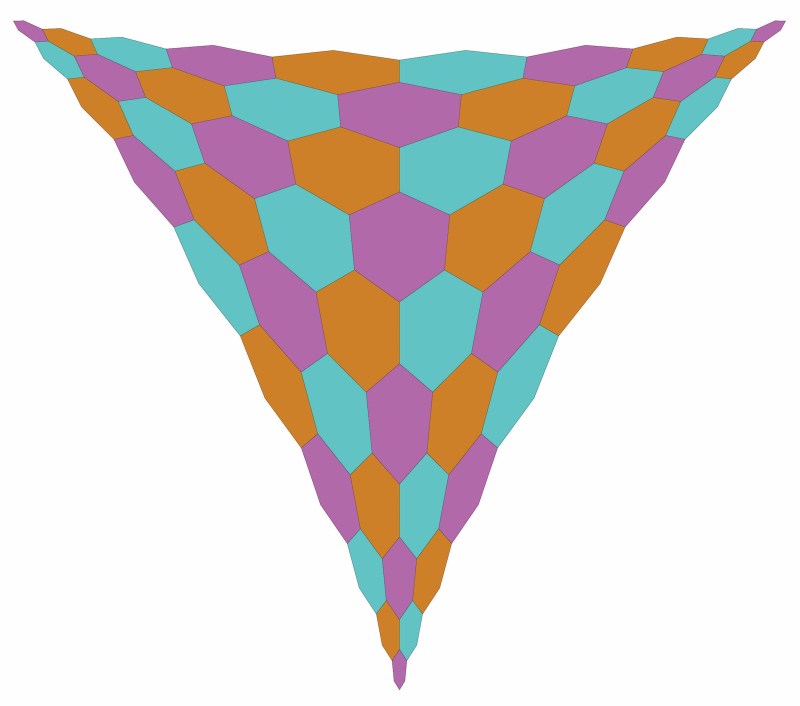
As expected for projections of cubes, three lines meet at a point. Ceva’s theorem states that this is the case if and only if these lines divide the triangle edges in proportions whose product equals 1. Check it out! The points along the edges are already labeled with a proportion depending on an arbitrary parameter a. Turning this around, one can create a tiling of a triangle by hexagons using a geometric progression of proportions. So the group here is on each edge of the triangle the multiplicative group of positive real numbers, interpreted as proportions.

Ceva dessous 01

The analogue of Ceva’s theorem for the deltoid states that the sum of the angles (using the angle of the rotating circle as a parameter) for the points where three tangent-secant touch the deltoid adds up to 360 degrees if and only if the three tangent-secant meet at a single point. So, in a sense, the deltoid is the additive version of the good old (multiplicative) triangle.

Let’s just hope the pretty designs help to cover up all the math underneath…

Revolution (Enneper 2)

Another special feature of Enneper’s surface is that it is intrinsically rotationally symmetric. This means that if you had a marble version of it, and a paper copy (made of curved paper, that is) sitting on top of it, you could rotate the paper copy smoothly by 360 degrees just by bending the paper, but without tearing or stretching. Amusingly, there is no truly rotational symmetric in Euclidean space that is isometric to Enneper’s surface.

Enneper5
Enneper’s surface shares this surprising feature with a few other minimal surfaces, like the one with five ear lobes instead of just two above. By the way, that the lobes touch is an artistic choice. The surface extends indefinitely, intersecting itself, which has led to its partial demise. There are also intrinsically rotationally symmetric minimal surfaces with two ends, like the plane and catenoid, or the more amusing one below with a planar end and an Enneper style end at the center.

PlanarEnneper5

This rotational symmetry gets lost when you stack two equal Enneper surface on top of each other, like so:

Doubleenneper7

In mathematics, when you give up something, you typically can gain something else. In this case, you gain flexibility. You can change the distance between the two wiggly Enneper ends and bring them so close together that cleaning in between becomes impossible. The version below would make an interesting wheel. Use at your own risk.

Wheel

Transcendence (Loxodromes I)

The art of map making took a giant leap in 1569, when Mercator created his first world map. Precise navigation had become an important problem. Seafarers not only had no GPS, they didn’t even have accurate clocks that would allow them to determine their longitude. One of the few reliable tools was, sadly, the compass. Therefore, a safe way to travel was to head in a direction of constant bearing, like say 20 degrees west of North.
Loxodrome

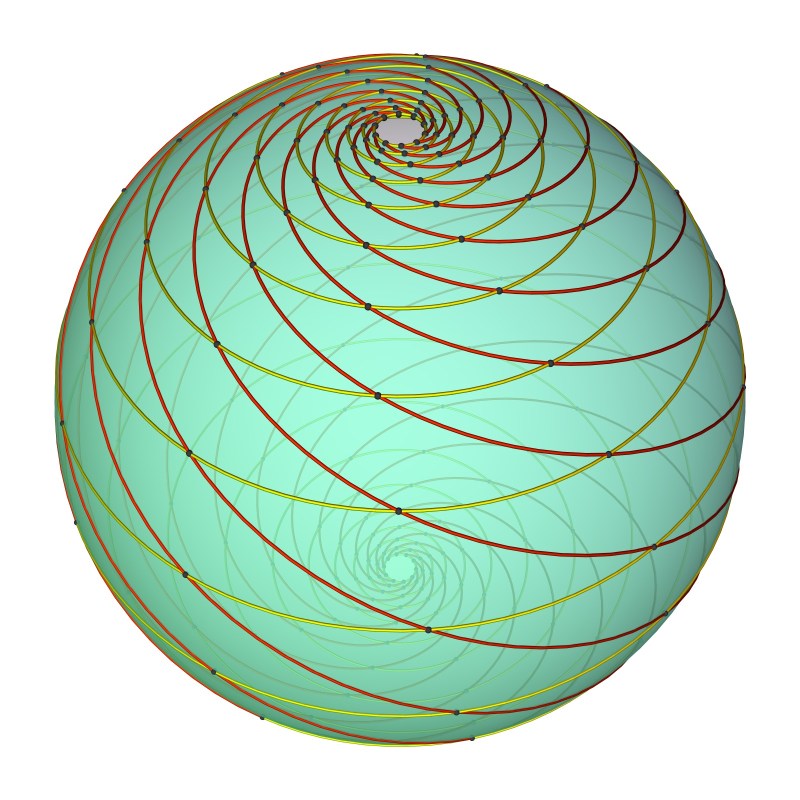
The problem, then, is: If you do that, where do you end up? On a sphere, the curves that make constant angle with the meridians, are called loxodromes. Mercator’s accomplishment was to find a map of the earth where all these loxodromes become straight lines. So, when you wanted to travel from A to B, you just had to find A and B on Mercator’s map, and measure the angle that the line through A and B makes with a longitude.
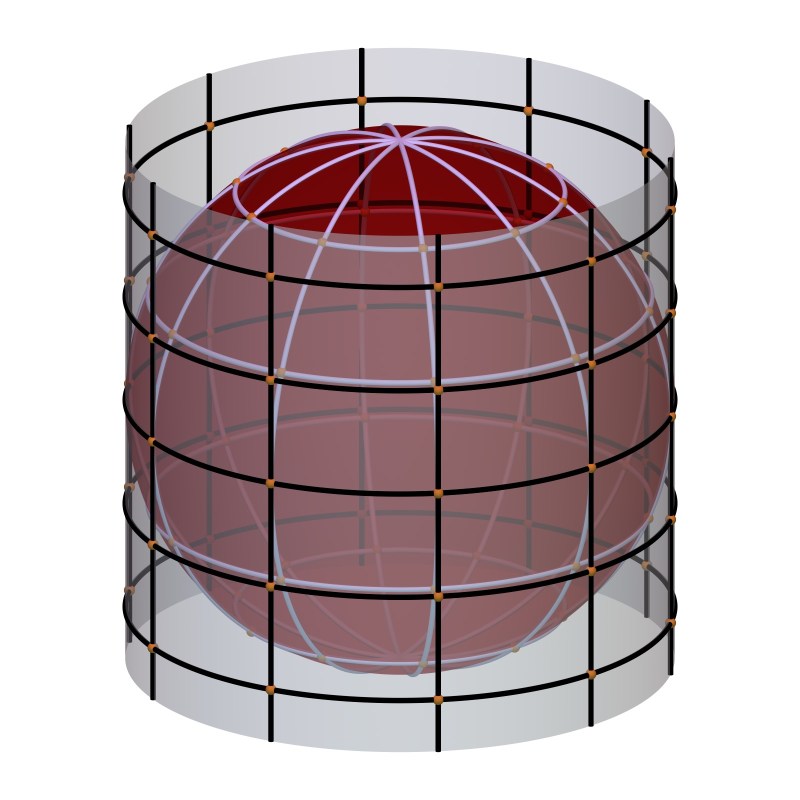
Cylinderprojection

This is equivalent to finding a map projection that preserves angles and where all longitudes are vertical lines. The Greeks (and maybe civilizations before) knew the cylindrical projection which is totally amazing because it preserves area, but it does not preserve angles.
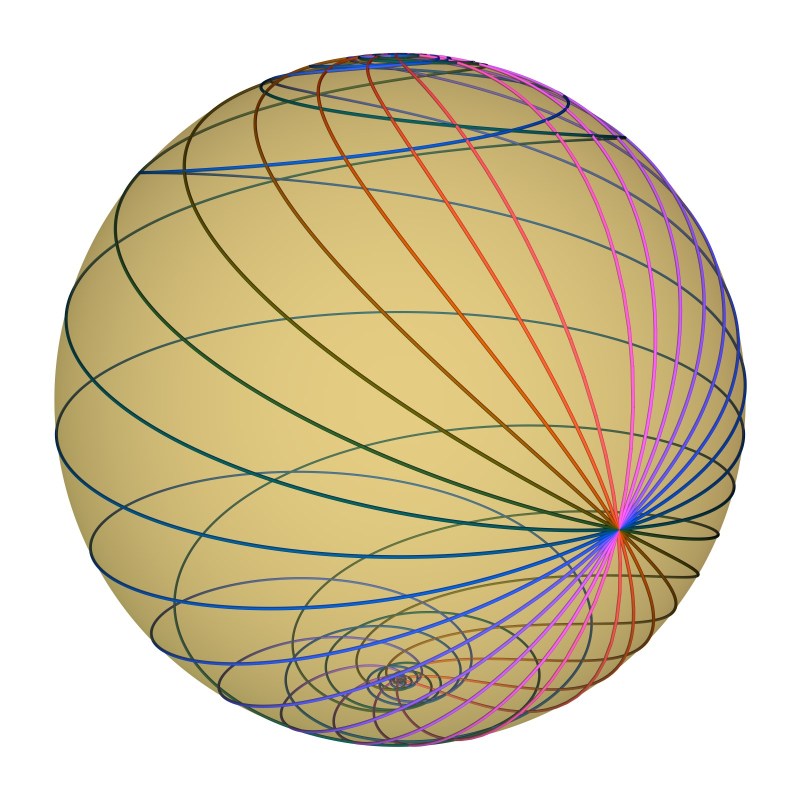
Loxodrome2

In fact, when you draw the loxodromes centered at a point on the equator on the rectangular map, you get curves that are clearly not straight (which is ok).
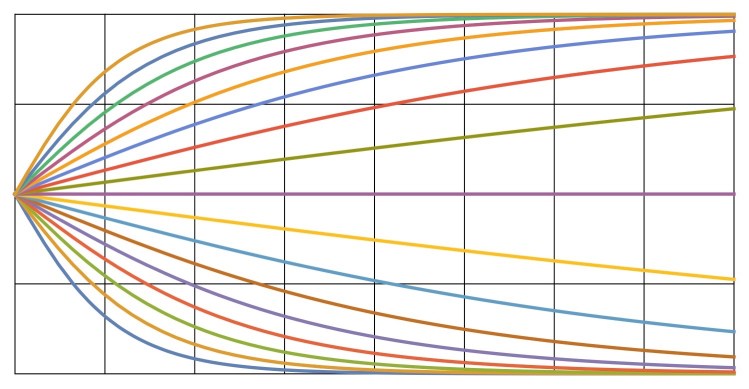
Loxorectangle

Nobody knows how Mercator came up with his map. It is believed that he just stretched the cylindrical projection so that the loxodromes became straight. But we don’t really know, and the reason is that the tools from calculus that are necessary to really construct this miraculous map were only developed centuries later.
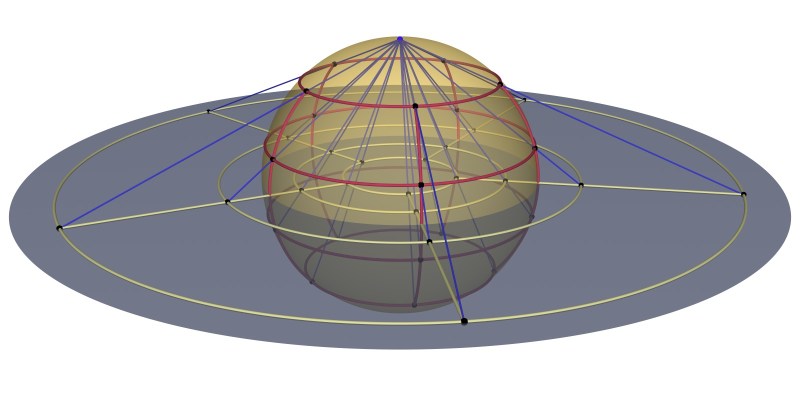
Stereographic

There is another projection of the sphere, the stereographic projection, that was known to the Greeks. They at least knew that circles on the sphere would be mapped to circles or lines in the plane. It also preserves angles, which the Greeks could have known, because it is rather elementary. Apparently the first written proof is due to Edmond Halley in 1695 (using calculus).
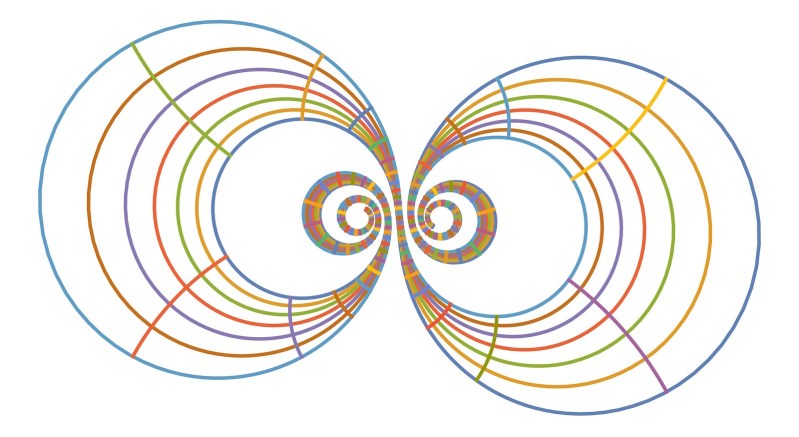
Bispiral

The stereographic projection maps the loxodromes to logarithmic spirals (up above we use the loxodromes that connect west pole with east pole, for prettiness and later use). While the Greeks did study a few transcendental curves, the logarithmic spiral is first discussed by René Descartes in 1638 (in precisely the context of finding curves that intersect radii at constant angles), and a little later by the Bernoulli brothers, with analysis emerging.
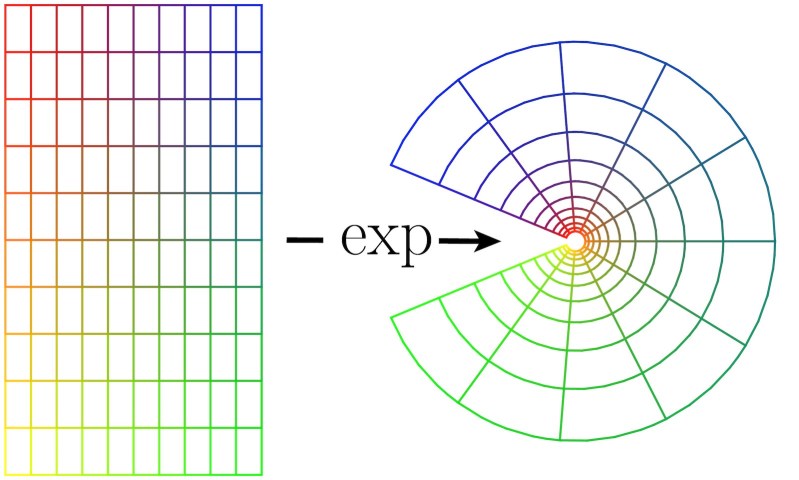
Exprectangle3 01

Therefore it no surprise that the link between Mercator’s map and the stereographic projection is the (complex) exponential function (or logarithm). Today we know that it is angle preserving as one of the key features of complex analytic functions, but I don’t know who first realized this for the complex exponential function or the logarithm. Certainly Leonhard Euler deserves credit here. I doubt if it was earlier than the 18th century, even though the foundations were set by Mercator (possibly only by approximation) and Descartes centuries earlier. It is astonishing how long it takes to develop insights we now consider to be fundamental.
The Underneath

The Underneath is the title of a book by Kathi Appelt that I and my daughter really enjoyed reading. It has, however, nothing to do with this post but its compelling title.

DSC 3264

What would the world look like if we were as little as we righteously should be: Suppose we were bug-sized, waiting for food or to be eaten in a forest of may apples. What would we know of the larger world?

DSC 3149

Above us the strange smelling flowers, and below the decaying leaves from last fall? Tough choice.

DSC 3221

Or, imposing and obviously hungry giants. Would they eat us, too?

DSC 3492

Maybe there is a protective cave behind that tall waterfall?

DSC 3485

One of the good things of being little is that even small rocks like these become impossible to lift.


Welchen der Steine du hebst …

Red Planet (Kodachrome State Park III)

When using film, we always joked that Fuji’s films leaned towards intense greens, while Kodak favored strong reds. I wouldn’t call it a tint. I even heard the theory that Americans had a special gene that suppressed a sensitivity towards red colors.

In any case, this is about Kodachrome State Park (again), and its glorious reddishness.

DSC 1820

This is of course a joke, I could have tinted all the images green and called moved everything to Fujichrome State Park. What is important, though, is the overwhelmingly monochrome landscape. While painters always have complete freedom over their color palette, the (nature) photographer can exert control only within limits. What do you do when a nice rocky landscape is ruined with green weeds? This does not happen on Kodachrome Planet, so almost any view allows undistracted contemplation. Be it the sun scorched earth above, or the enormous canyons below:

DSC 1875

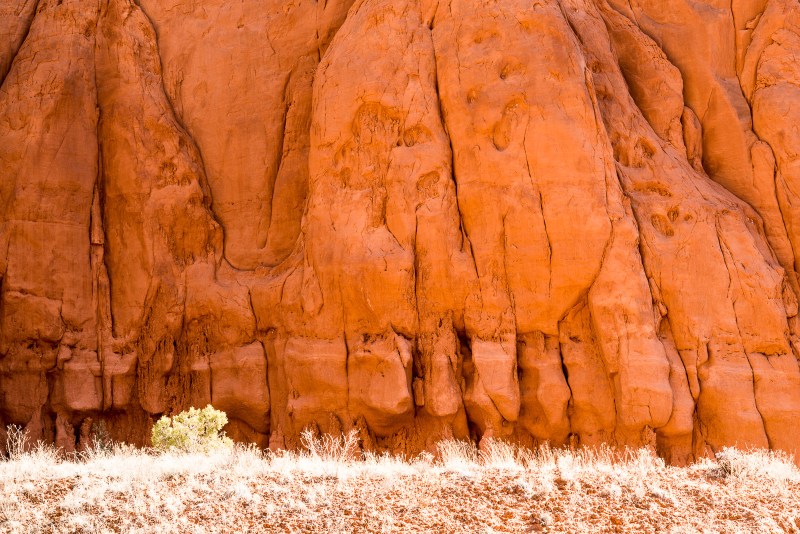
Clay sculptures grow on the cliffs, unsure about wha shape they want to take,
DSC 1946

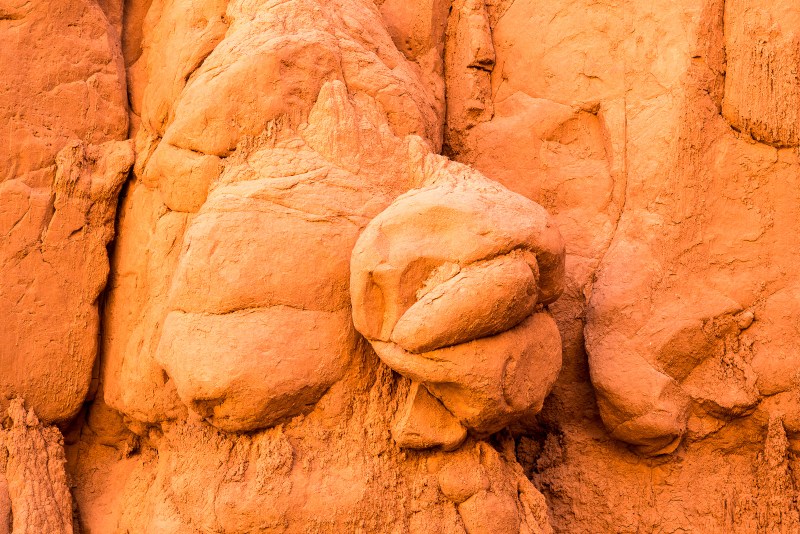
and rocks in intimate embrace wait for us to leave. Was this once just one rock that split, or are these two rocks that time has shaped like this?

DSC 1971

Oh yes, there is some greenery. It reminds us that we are only tolerated, too.

DSC 1956