Le Bateau Ivre (Loxodromes II)

A good way to embarrass oneself is to go to a book store in a foreign country whose language one is not fluent in, and buy a book. I did this multiple times, at least in France, Spain, and the UK.

I typically tried to get by without saying a single word as not to reveal my complete incompetence, but the punishment for that can be unexpected. During one of my first visits to Paris, I went and bought the Bibliothèque de la Pléiade edition of Arthur Rimbaud.

The catch was that the very pretty cashier tried to initiate a conversation by smiling at me and saying “Ah, J’aime Rimbaud”.
I blushed, payed, and made my way out. Embarrassing.

But it brings us to the topic, Rimbaud’s Drunken Boat.
Concept

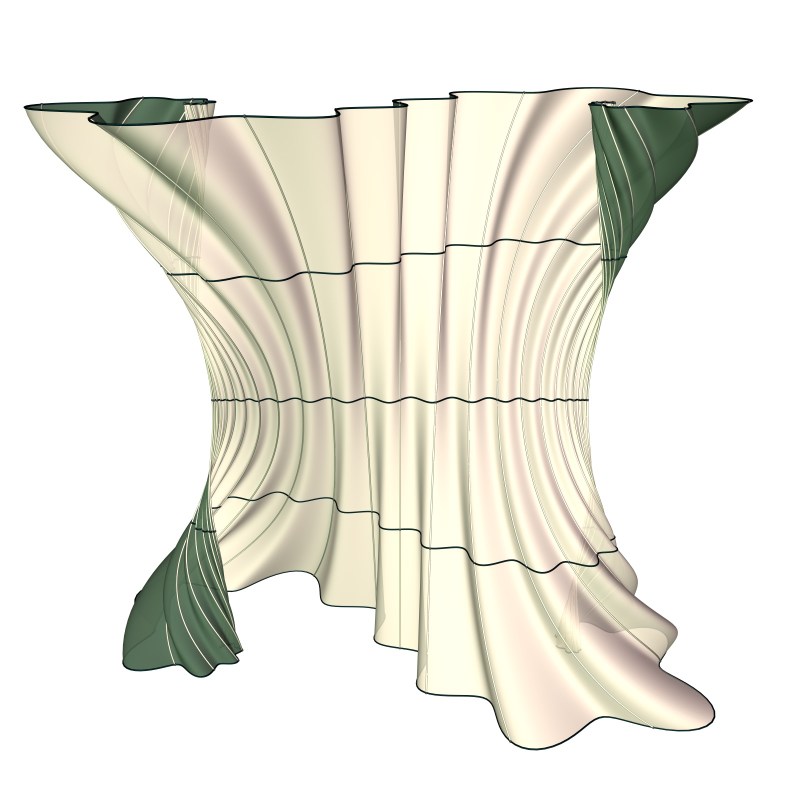
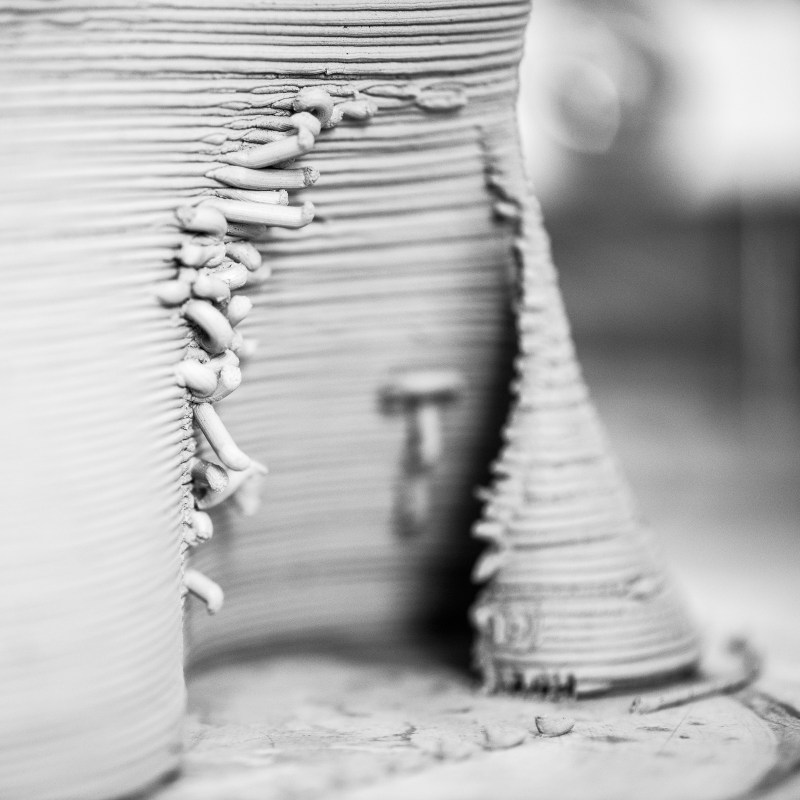
The image is this, and it does not look like a drunken boat. What we start with are the loxodromes I have talked about before. They are the curves a sober boat would trace out on the sphere when heading in a fixed compass direction. Laying down one of these loxodromic double spirals as a base using Malcolm’s clay printer looks like this:
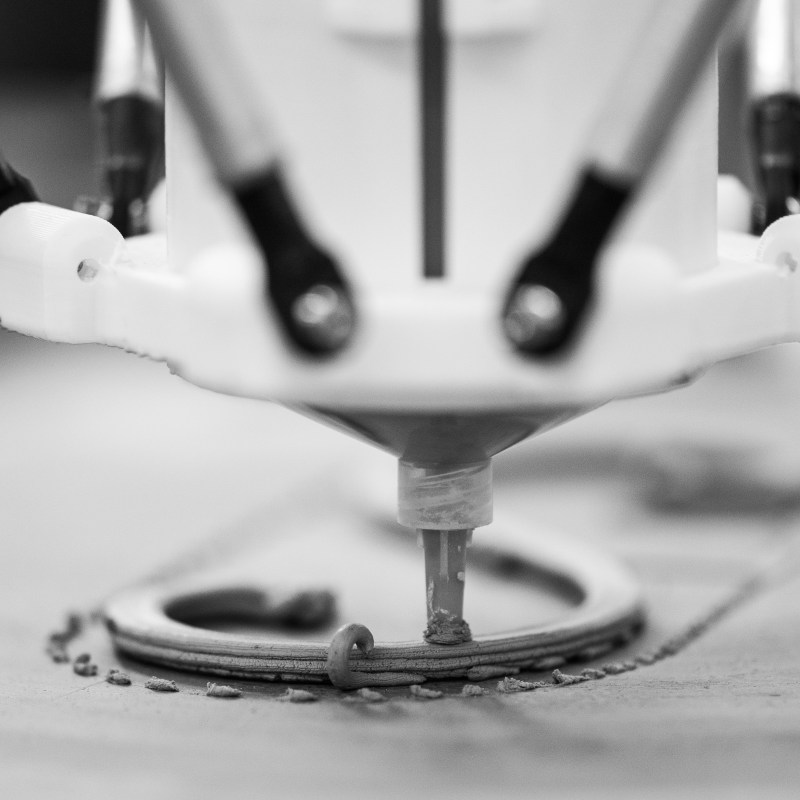
DSC 3912

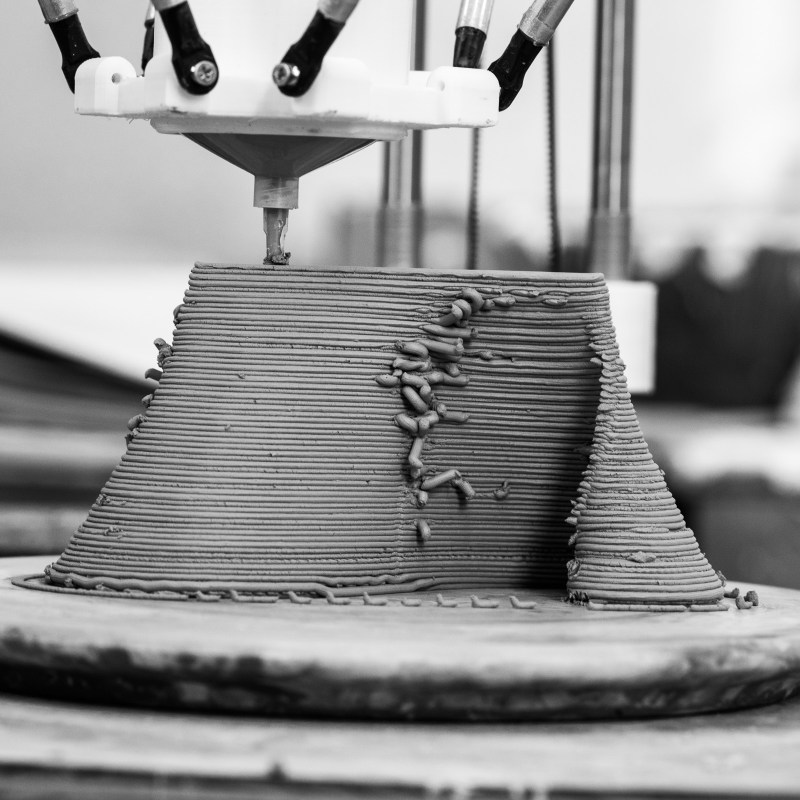
Then, moving up, we deform the loxodrome that represents say North-North-West slowly into North-West and then West, which corresponds to a meridian, and therefore a straight line in suitable stereographic projection.
DSC 3927

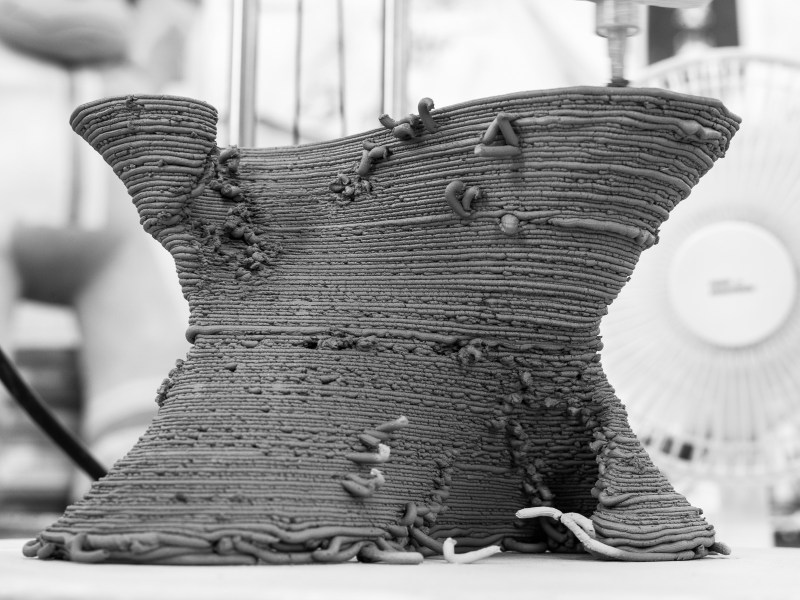
Then, even higher up on the sculpture, we change course to South-West and thus reverse the direction of the spirals.
DSC 3754

This was our first rough prototype. The next step will be to make this larger, cleaner, and slightly drunken, so that the loxodromes swerve left and right.
DSC 3932

We’ll see shortly where we get…
Praising the Underrated (Enneper I)

In 1760 Joseph Lagrange writes, after establishing the minimal surface equation of a graph and observing that planar graphs do indeed satisfy his equation, that “la solution générale doit ètre telle, que le périmètre de la surface puisse ètre détermine a volonté” — the general solution ought to be such that the perimeter of the surface can be prescribed arbitrarily.

For a hundred years, little progress was made to support Lagrange’s optimism. Few examples of minimal surfaces were found, and most of them with considerable effort. Then it the second half of the 18th century, it took the combined efforts of Pierre Ossian Bonnet, Karl Theodor Wilhelm Weierstraß, Alfred Enneper, and Hermann Amandus Schwarz to unravel a connection between complex analysis and minimal surfaces that would become the Weierstrass representation and revolutionize the theory.

EnneperStandard

One piece in this story is Enneper’s minimal surface. Enneper was not so much after minimal surfaces but after examples of surfaces where all curvature lines are planar. This was immensely popular back then, and the long and technical papers are mostly forgotten.

Planarcurvature

Above is an attempt to visualize the planes that intersect the Enneper surface in its curvature lines.

Enneperruled
Visually easier to digest are the ruled surfaces that are generated by the surface normals along the curvature lines, because here the ruled surfaces and the Enneper surface meet orthogonally. While not planar, they are still flat, and invite therefore a paper model construction (that one can do for the curvature liens of any surface):

EnneperModel

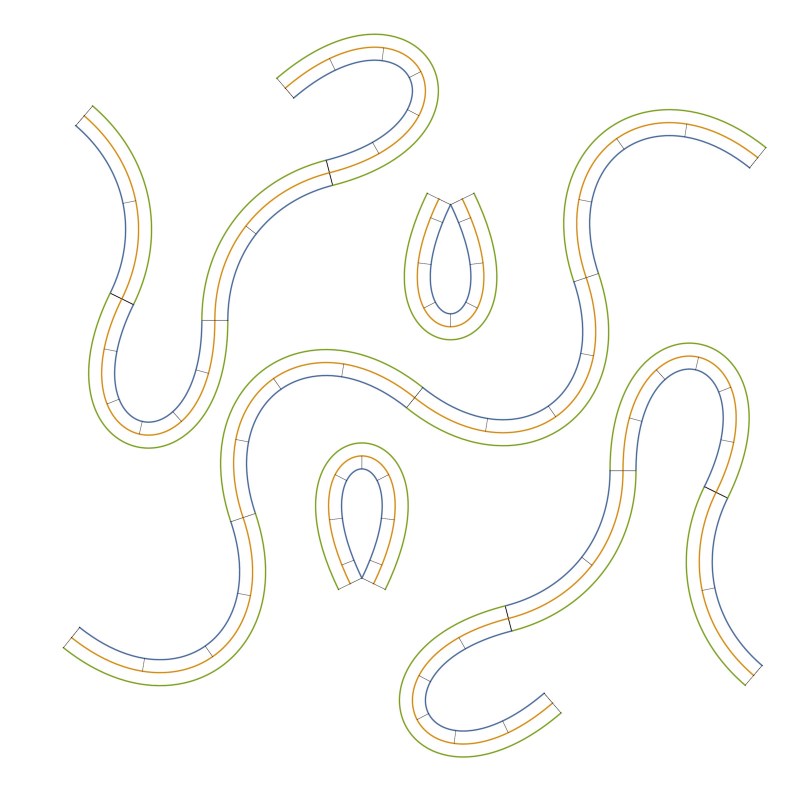
Print and cut out the five snakes. The orange centers are the curvature lines. Also cut all segments that go half through a snake, and fold along all segments that go all the way through a snake, by about 90 degrees, always in the same way. Then assemble by sliding the snakes into each other along the cuts, like so:

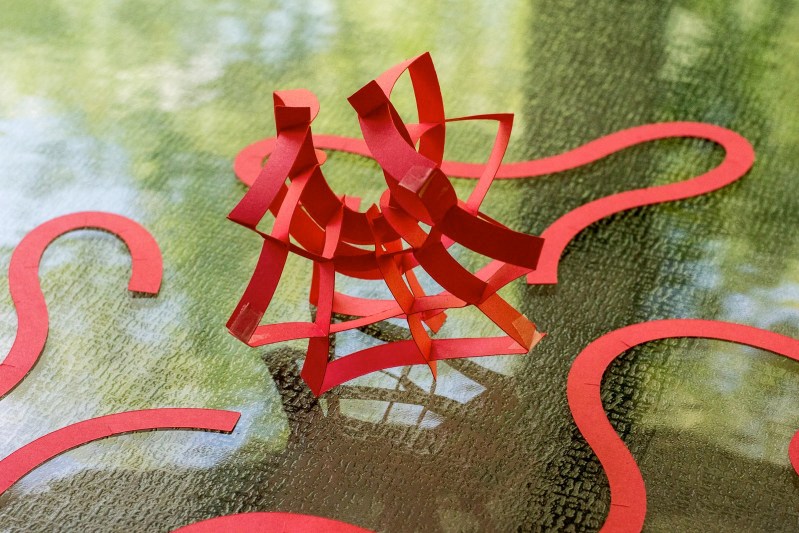
DSC 0999

The three long snakes close up in space and need some tape to help them with that. Here is a retraced version of the same model which might help.

Enneper2

Demon

Much more than playing games I like to invent games. In one of my other lives when I had more time, I then used to write a computer program for my Atari ST that could play the game better then me. This usually took three days: On day one, I would teach the program play, on day two, I would create a user interface, and on day three, implement a strategy.

Demon1

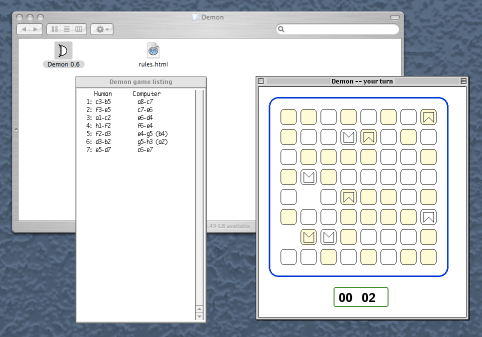
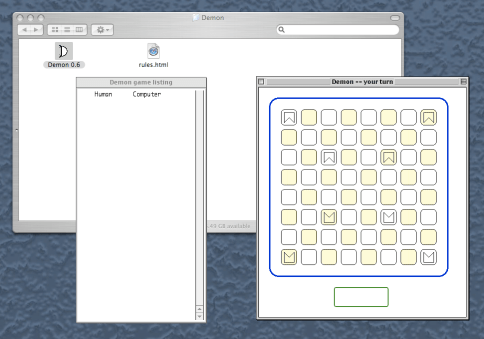
My favorite creation back then from 1987 was Demon, that I liked so much that I ported it to a PPC Mac. Because I still have a 10 year old G4 PowerBook that can run Classic, I can still play this game, but its days are counted. I have misplaced the source code, and don’t see myself to port it from MacOS 9 to MacOS X (or anything else). Maybe in a later life.

The rules are simple:

Demon is played on a 8×8 board on which initially lie 64 tiles. These tiles are white on one side and yellow on the other. They are placed on the board such that it looks like a chessboard.

Each player owns 4 knights which are put on the fields a1, c3, f3, h1 (first player) and a8, c6, f6, h8 (second player) in chess notation. In the screen shot above, the knights are represented by stylized (??) crowns.

These knights move the same way as knights in chess, but only from a white to a yellow tile or vice versa. The tile from which the knight has just moved away is turned over and hence changes color.

Demon2

Usually the players take turns, and each player moves only one of their own knights.

If a move creates a 2×2 square of unoccupied tiles that all have the same color (outlined below), the moving player must remove one unoccupied tile of his or her choosing from the board. This empty field can not be entered anymore. The players collect the tiles they remove for scoring.

Demon5

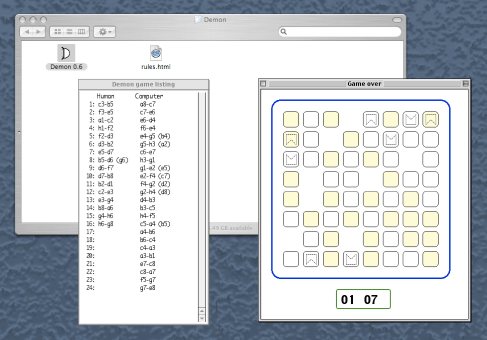
If a player is not able to move, he or she has to skip a turn. The game is over if both player cannot move anymore or one of them dies.

The player who has collected the most tiles wins the game.

The first version on the Atari ST used a simple alpha-beta strategy, which I still could beat on the highest level (with some effort). For the Mac version, I added tree pruning. This and the faster hardware made the game essentially unbeatable for me.

In about the same time period, chess programs advanced from being beatable by mediocre amateurs (like me) to being able to beat the chess world champion. Still, I would not have expected to see Go being played at a champion level, let alone beat the world champion.

The Hyperbolic Paraboloid (Scrolls III)

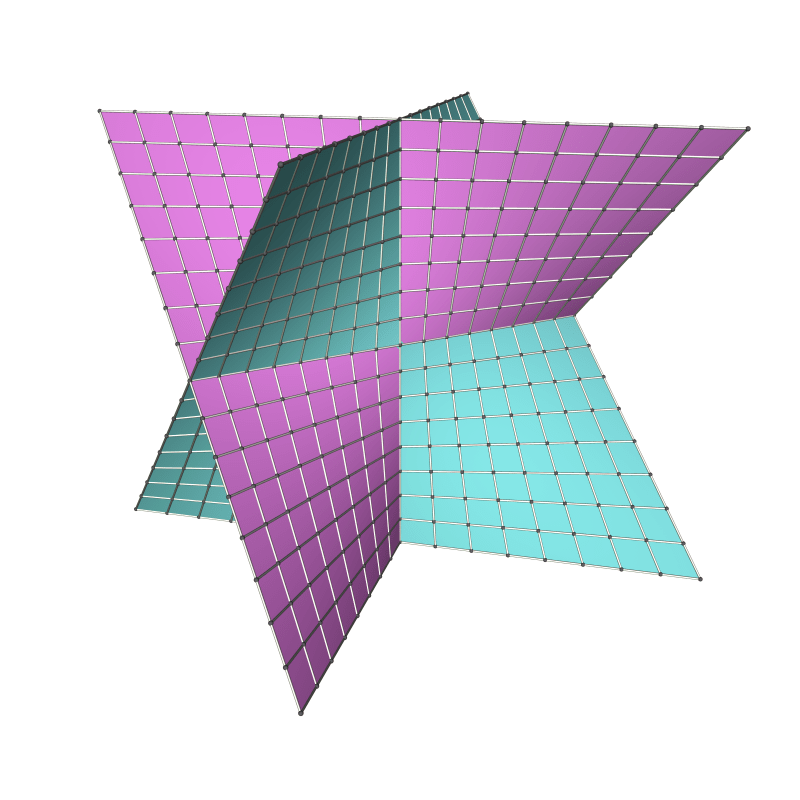
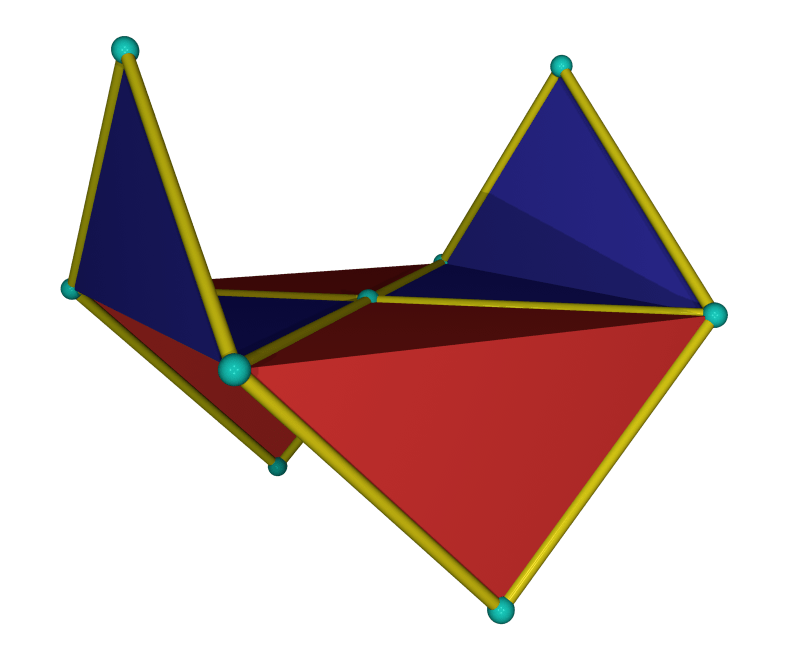
If you build a wire frame into the shape of four consecutive edges of a regular tetrahedron, dip it into soap water, and carefully pull it out again, you get a piece of the Diamond surface. If you cheat and just span wires between corresponding points of opposite edges, you get a doubly ruled surface, the hyperbolic paraboloid. Here is one such surface, together with a mirror image. The eight corners coincide now with the eight corners of a cube.

StellaOctanguloid 1

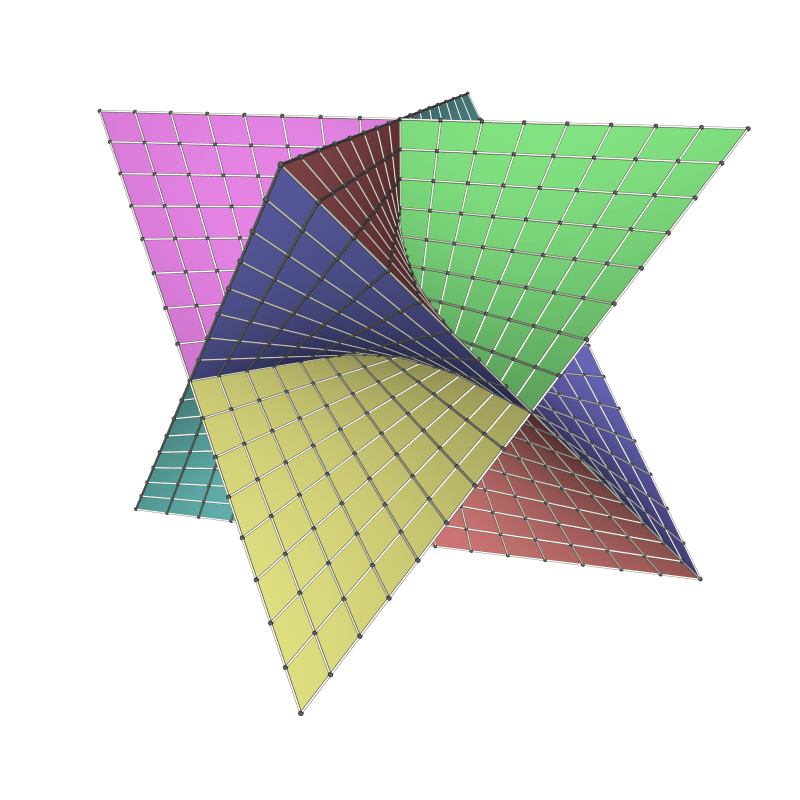
As a digression, we can fit a total of six such paraboloids into the same cube, creating a curved version of Kepler’s Stella Octangula.

StellaOctanguloid

But let’s return to paper making. The home recipes include the usage of a mold, which is a wireframe that is used to get the right amount of paper pulp into shape and, most importantly, dry. For flat paper one can just use a flat wire frame, like a window mesh screen, which is purchasable. The hope is that, using modest force, such a screen can be stretched into tetrahedral shape. We’ll work on that later.

For the moment let’s delight in previewing how the paper would bend.

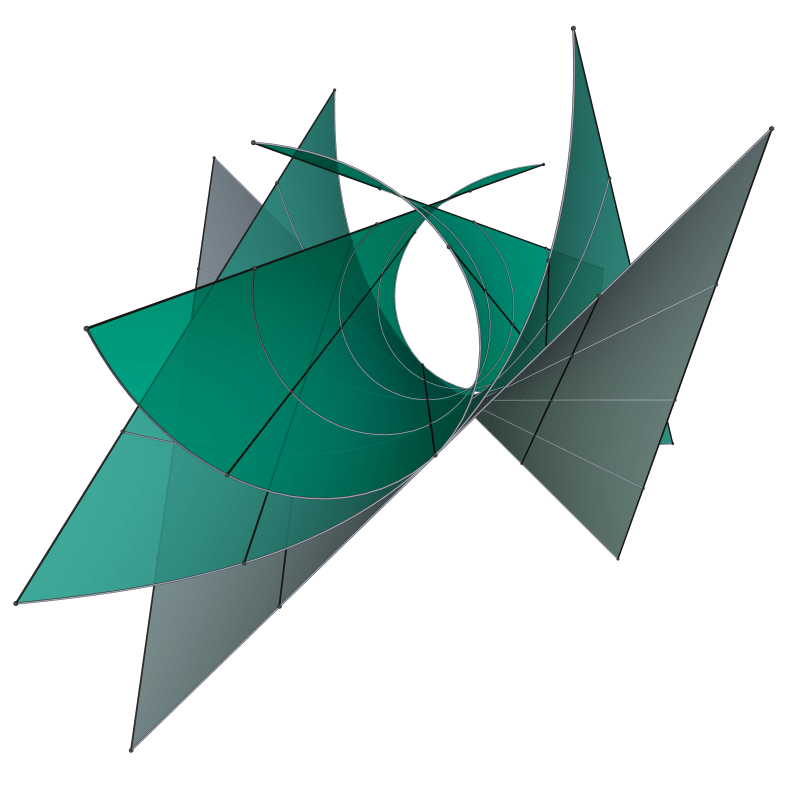
Mathematica a

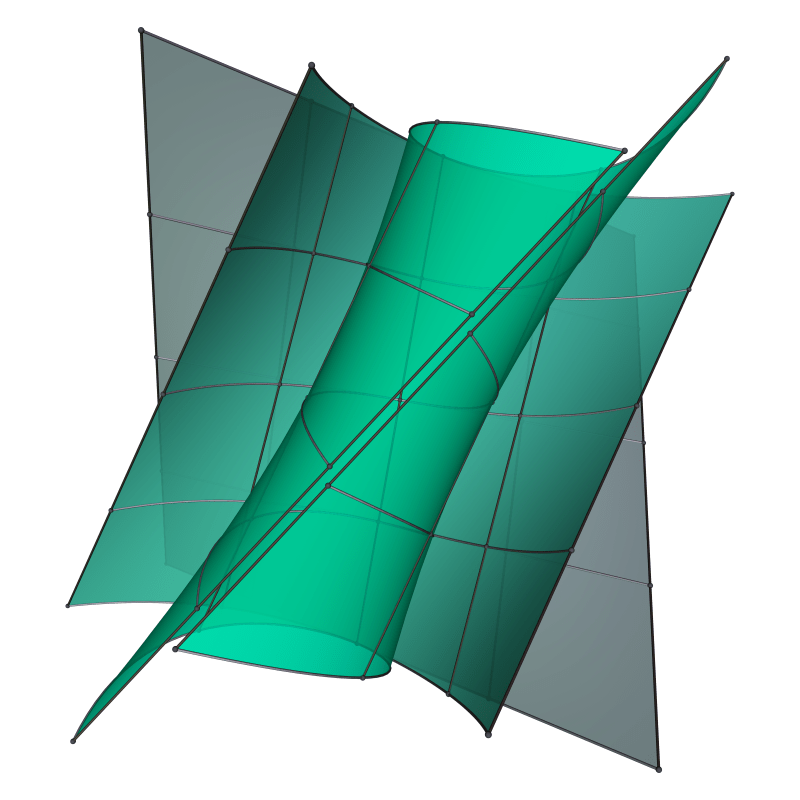
Up above you can see three sheets. The darker bottom one is the actual hyperbolic paraboloid, while the two lighter and greener ones are bent versions that are still attached to each other along the middle straight line that is pointing towards us. This will be our spine. Here is a top view:

Mathematica b

The Other Helicoid (Scrolls I)

I have been thinking for a while to make a book out of curved paper, and my new year resolution for 2016 is to make this happen.

Usually, a book consists of a few rectangular pieces of paper that are attached to each other along one side of the rectangles to form the spine of the book. The fact that we can turn a page nicely uses the fact that flat sheets of paper can be bent into cylindrical or conical shapes without the need to bend the spine as well. A good choice of a shape for curved paper that behaves similarly is that of a ruled surface or scroll. The latter name is not in common use anymore, but I like it better.

HyperboloidalScroll0

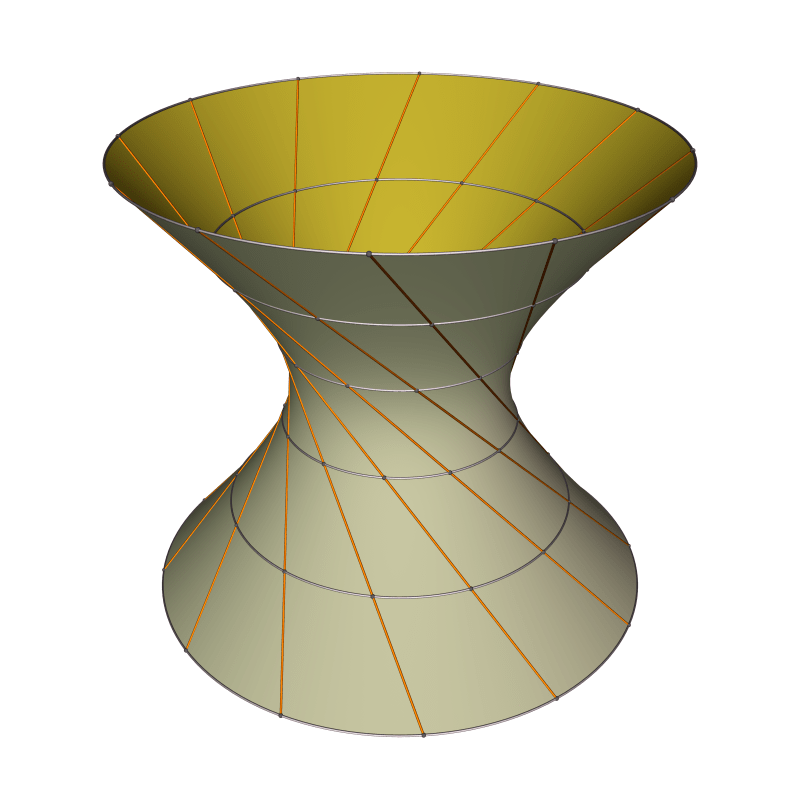
For instance, we could take paper in the shape of a hyperboloid of revolution. This consists of a family of generators (the orange straight lines) that are attached to a directrix (the waist circle, for instance). We will now cut open this hyperboloid along one of the generators and bend it a little along all generators simultaneously, thus making them more horizontal.

HyperboloidalScroll2

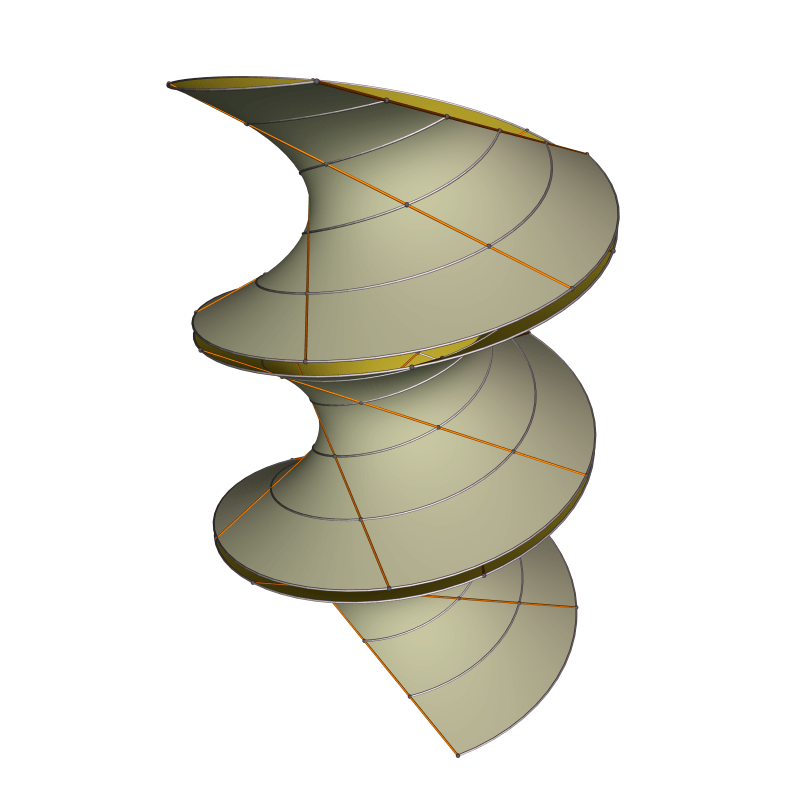
We can bend further, making the generators truly horizontal. This gets us to the other helicoid:

HyperboloidalScroll

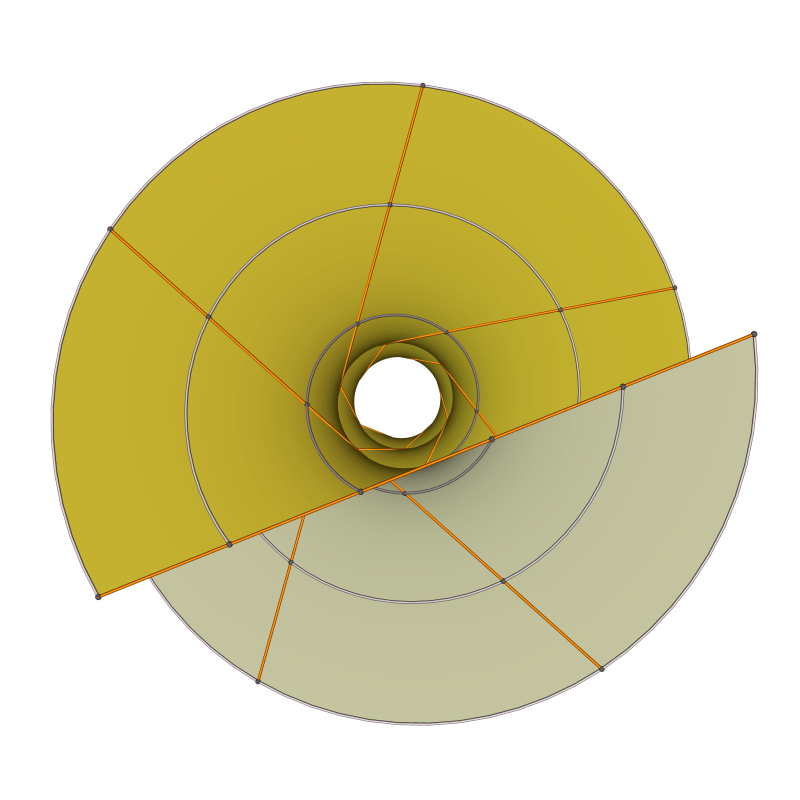
That it is not the standard helicoid that you get by lifting and rotating a horizontal straight line along a vertical axis becomes evident in the top view.

HyperboloidalScroll top

Cross sections of this helicoid with vertical planes are graphs of the reciprocal of the sine function, in case you have wondered.
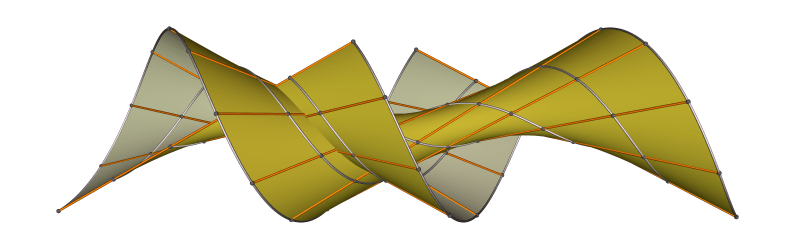
We can deform further, arriving at more scroll like images.

HyperboloidalScroll3

Here the idealized paper is slicing through itself, which looks interesting, but will, like most ideals, require some trimming in reality.

Grain

The Konica 3200 was one of the fastest color negative films ever made. ISO 3200 might sound lame these days when sensors are advertised with speeds reaching into the millions, but back in the 1990s, this was a revelation and gave ample opportunity to experiment.

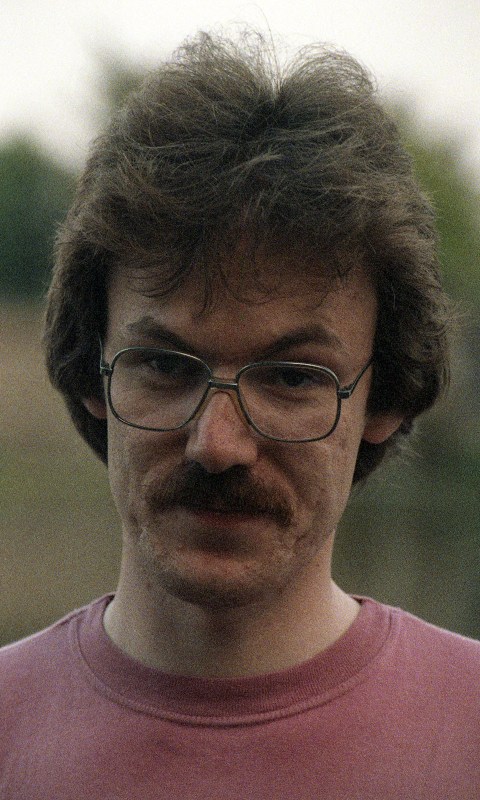
Michel

Of course, we were talking about grain, while today it is called noise.

Melanie

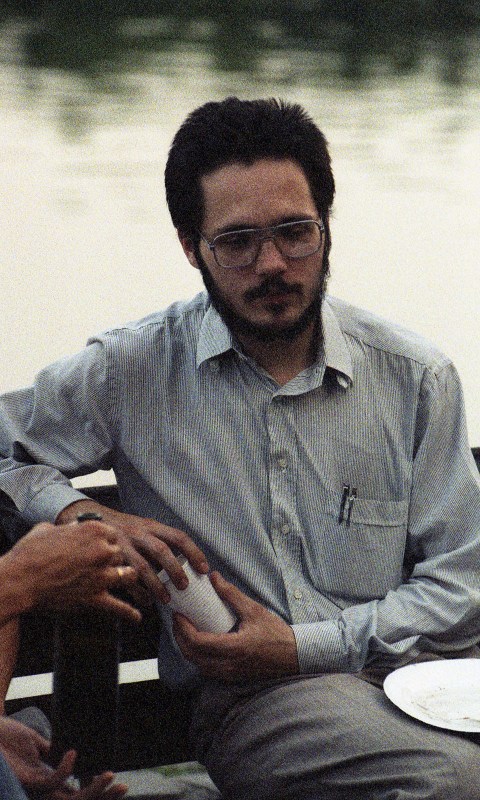
One of the unconventional uses of these high speed films was to take portraits at parties when it was getting dark and the usually shy victims were getting relaxed and more tolerant towards photographic intrusion.

Moritz

I am normally hesitant to post pictures of friends because these are, well, private in the sense that they are not of general interest.

Laura

But friendships become memories

Martin

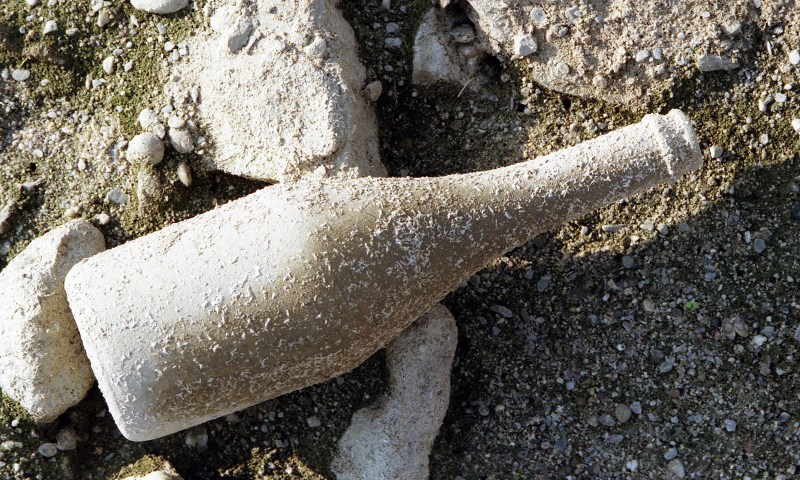
and posts like these messages in a bottle, to be lost or to be found.

Bottle

Slidables

A while ago I tried to start a blog about games and puzzles, which failed, mainly due to time constraints.
I will recycle some of the posts here.

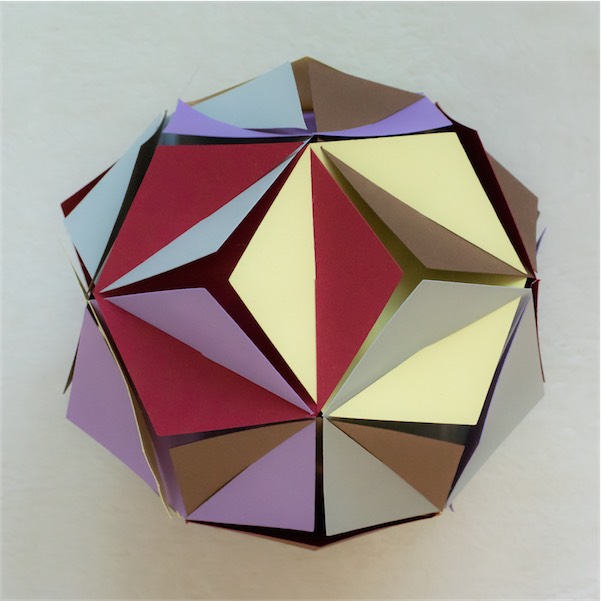
Here are a few crafts of varying difficulty that you can do just with card stock and scissors. The idea is always the same: Use several copies of a simple shape with slits to build paper sculptures. They all make nice holiday ornaments.

Triangles

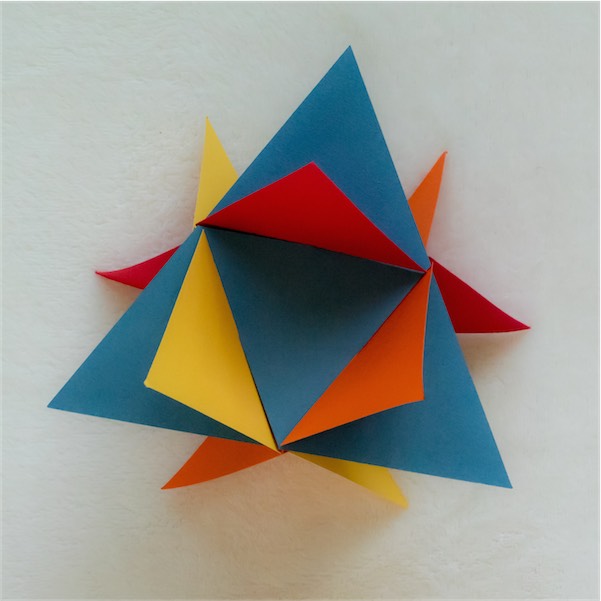
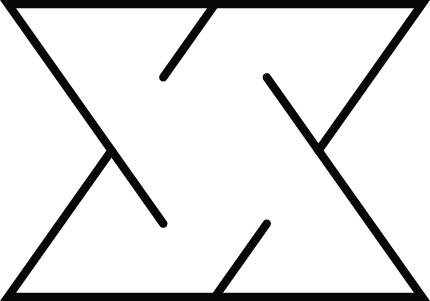
The simplest such shape is an equilateral triangle that has been slit as shown below.

Triangle

Using four such triangles, you can build the following star.

Folds 2

With eight triangles and a bit more patience, you get the following shape, which is Kepler’s Stella Octangula, a stellation of the octahedron, or the compound of two tetrahedra.

Folds 6

I like to curl the tips of the triangles to make them look like flower petals.

You can of course also build other objects.

Pentagonal Stars

Folds 1

Using 12 copies of the slit pentagrams below, one can build Kepler’s Small Stellated Dodecahedron.

Pentagram

This requires a bit patience. Start with one pentagram, and insert five pentagrams successively in all of its slits, thereby also linking the inserted pentagrams together as well. Then insert another five pentagrams into neighboring pairs of the first ring of pentagrams, again linking the pentagrams from the new ring together. Finally, insert the twelfth pentagram into the free slits of the pentagrams from the second ring.

The last steps require some heavy bending of the pentagrams, and careful adjustment at the end.

Triangles and Squares

Folds 7

Using properly slit triangles and squares, one can build a stellation of the cuboctahedron.

Trisquare

The slits in the squares and triangles must have the same length.

This is a bit easier than the previous example. During assembly, the model falls easily apart, but it is quite sturdy when done.

Irregular Hexagons

Folds 4

Twenty of the regular hexagons below can be used to create one of the stellations of the Icosahedron, the Small Triambic Icosahedron.

Icosahedron

Escher’s Solid

Folds 3

This is the first stellation of the rhombic dodecahedron, also called Escher’s Solid. It tiles space. You need 12 of the non-convex hexagons below.

Escher

A simpler version is a stellation of a rhomboid, using 6 hexagons.

Folds 5

Final Comments

The strategy to design these models is to look for regular polyhedral shapes with few kinds of faces that intersect in a relatively simple way. Then, each intersection of two faces leads to slits on both faces half way along the intersection, so that the two faces can be slid into each other.

There are of course limits to this, but I am sure there are many more models one can assemble.

Grain (Polyforms I)

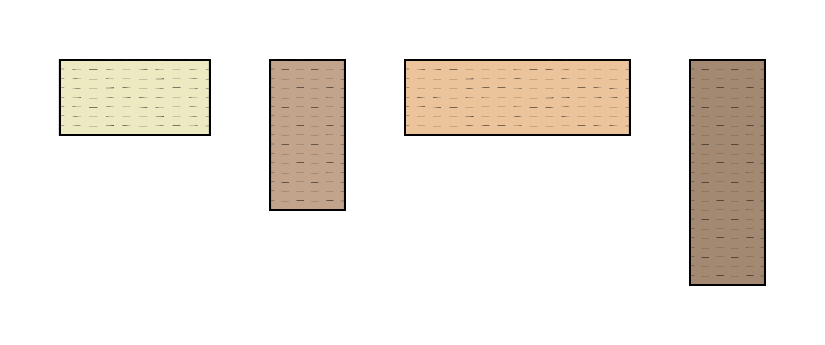
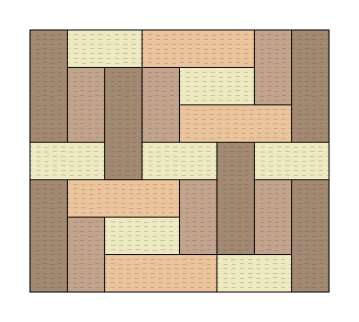
Go and purchase four types of wood, in different colors, with distinctive grain. Cut it into four different sizes, 2×1, 1×2, 3×1, and 1×3 inches long and tall, of the same thickness, and so that pieces of the same wood type all have the same dimensions and orientation of the grain. Here is my humble illustration of what will look much more beautiful in reality:

Tiles 01

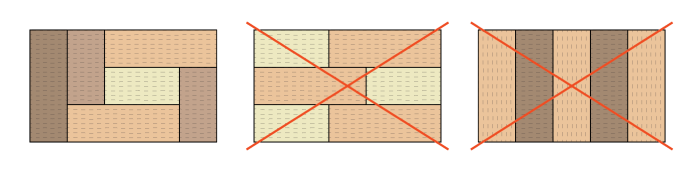
These are grained dominoes and polyominoes, a special case of more general grained polyominoes. In puzzles with polyominoes, you are typically tasked with tiling a certain shape with certain types of polyominoes. The presence of grain allows for variations of the rules. For instance, guided by esthetically considerations, we might demand that the grain needs to be horizontal, and that no two tiles of equal type touch along an edge or part of an edge.

Rules 01

Here, for instance, only the first tiling of the 5×3 rectangle follows the rules: The second has two tiles of the same kind meeting at a part of their edge, while the third does not preserve the grain.

8x7sol 01

Now for the puzzles: Above is one of the four different ways to tile the 8×7 rectangle, not counting symmetries. At this point, solving such puzzles involves mainly trial and error. The divide-and-conquer strategy that works for the ungrained case, namely using small, already tiled, rectangles to tile larger rectangles, does not work here, because lining up tiled rectangles will usually violate the rules.

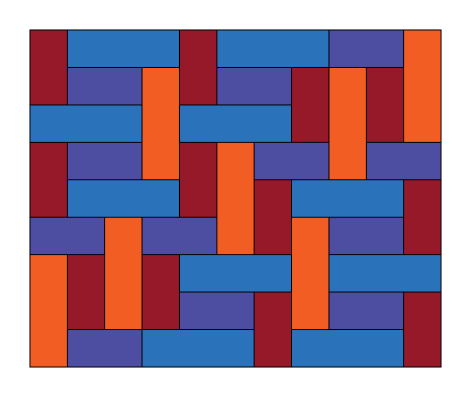
Bands 01

There is, however, some interesting structure emerging, that one can see better in a coloring that distinguishes more clearly between horizontal and vertical tiles. In the solution of the 11×9 rectangle (one of two), one can see bands of horizontal (blue) tiles and of vertical (red) tiles that extend from the top to the bottom edge.

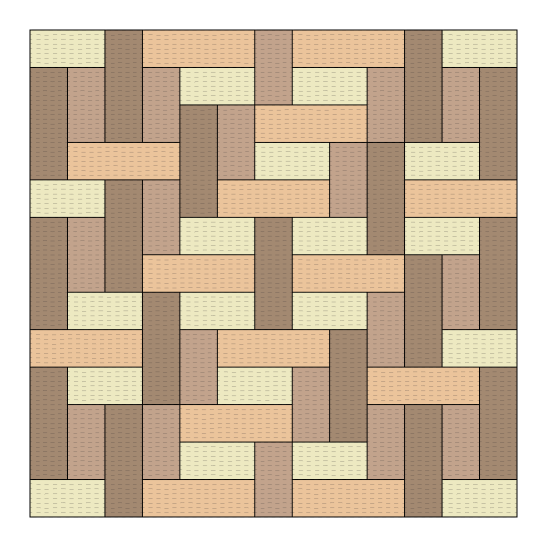
Finally, below is the only solution for tiling the 13×13 square, ignoring symmetries of course:

13x13sol 01

The Gyroids (Algorithmic Geometry III)

Bisquare
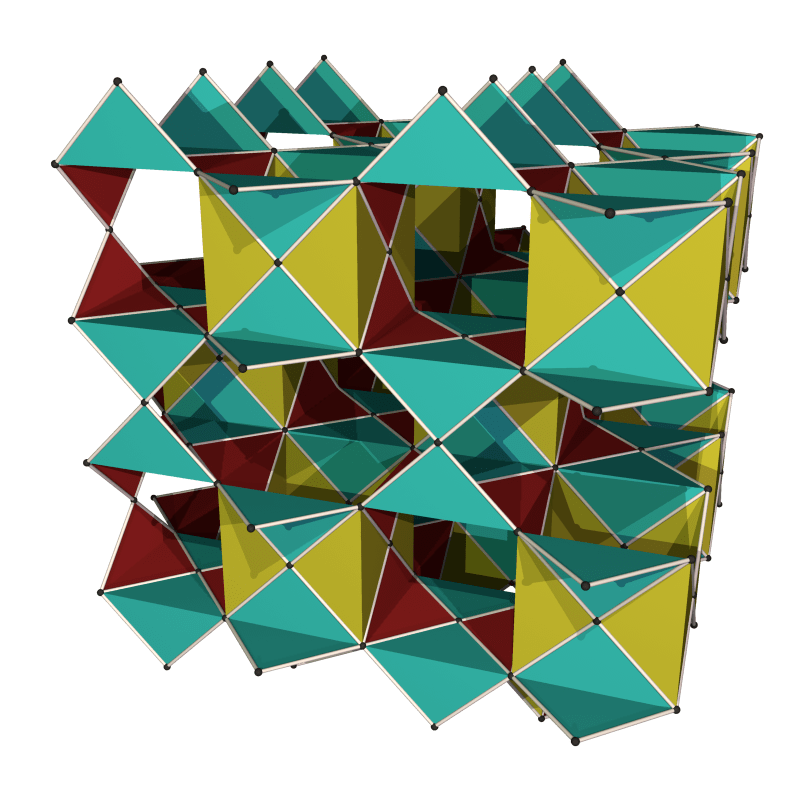
When we use squares bent by 90 degrees about one diagonal and extend by the rotate-about-edges rule, we get Petrie’s triply periodic skew polyhedron {4,6|4} which has six squares about each vertex. The two tunnel systems it divides space into are another crude approximation of the primitive surface of Schwarz.

Cubeblock

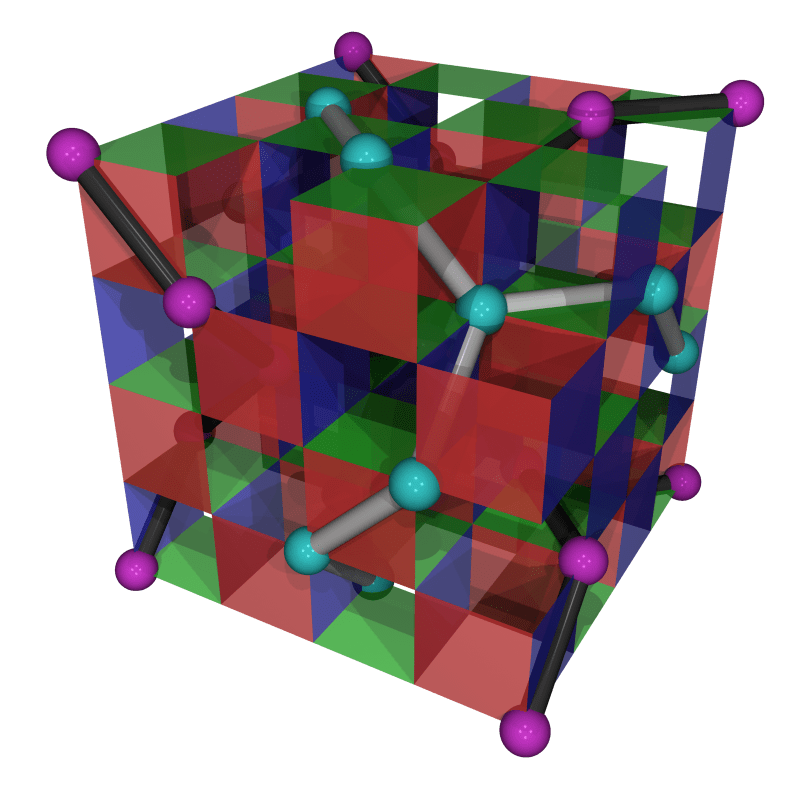
Coxeter observed that this polyhedron can be used to construct Laves’ remarkable chiral triply periodic graph as follows. Choose any diagonal of any of the squares of {4,6|4}. Take an end point of the diagonal, adjacent to which are six squares. Look at the six diagonals of the squares that share the end point as a vertex, and take every other of them, starting with the already chosen diagonal. Keep extending the emerging graph like this.

Laves

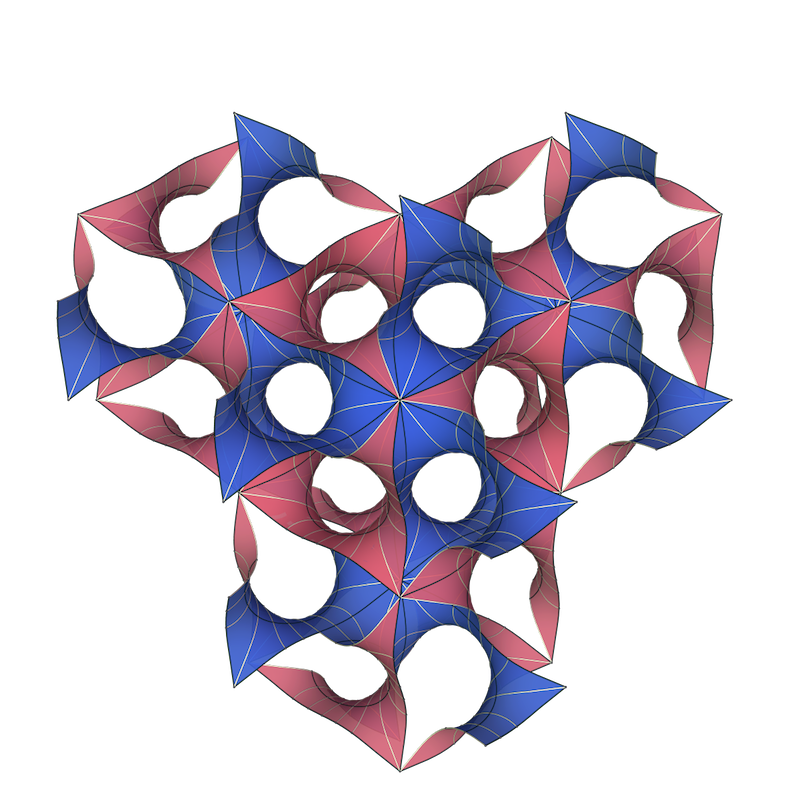
You obtain the 3-valent Laves graph. At each vertex, the edges meet 120 degree angles. It turns out a mirror symmetric copy fits onto the {4,6|4} without intersections. These two graphs are the skeletons of the two components of the Gyroid, a triply periodic minimal surface discovered by Alan Schoen. You can read all about the discovery at his Geometry Garret.

Mingyroid

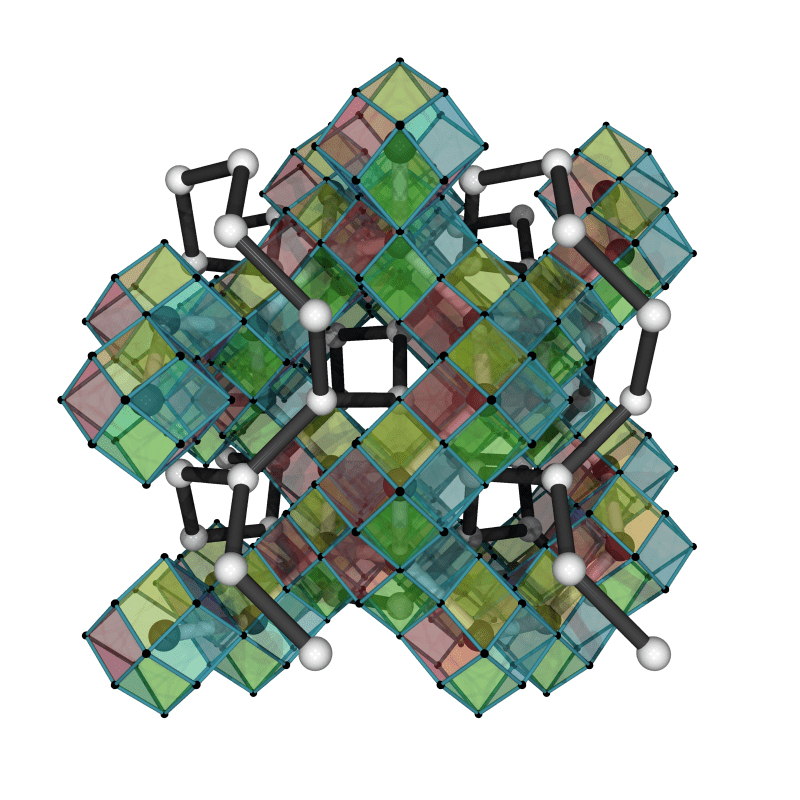
The Laves graph also lies on the dual skeleton of the tiling of space of rhombic dodecahedra. That means that you can get a solid neighborhood of the Laves graph consisting of rhombic dodecahedra:

Rhombic

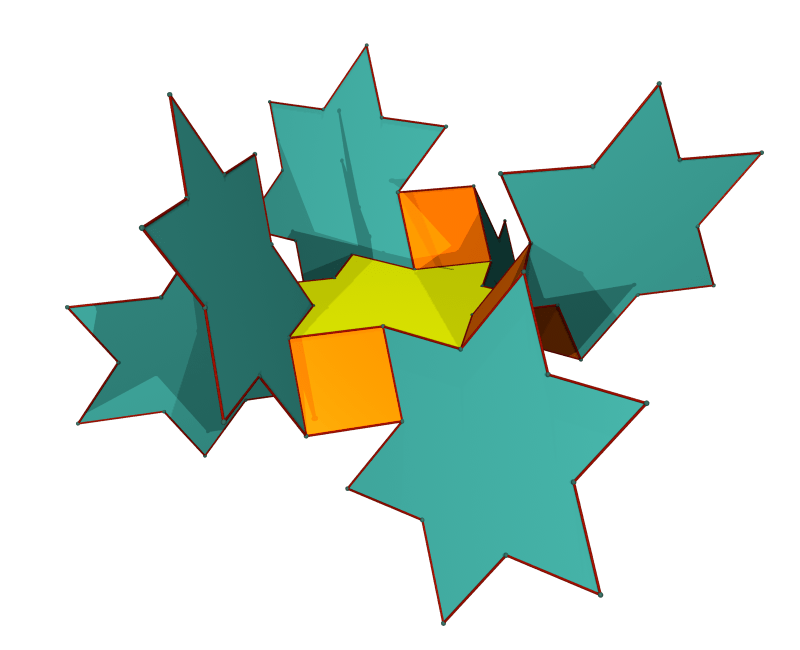
This can be done both for the Laves graph and its mirror still leaving a gap in which one can fit the gyroid. Alan Schoen also discovered a uniform polyhedral approximation of the gyroid, consisting of squares and star hexagons. To build it, take a star, attach a square to every other edge, bending the squares alternatingly up and down. Then attach six more stars to the free edges of the first star, fitting them to one free edge of one of the squares each:

Polygyroid

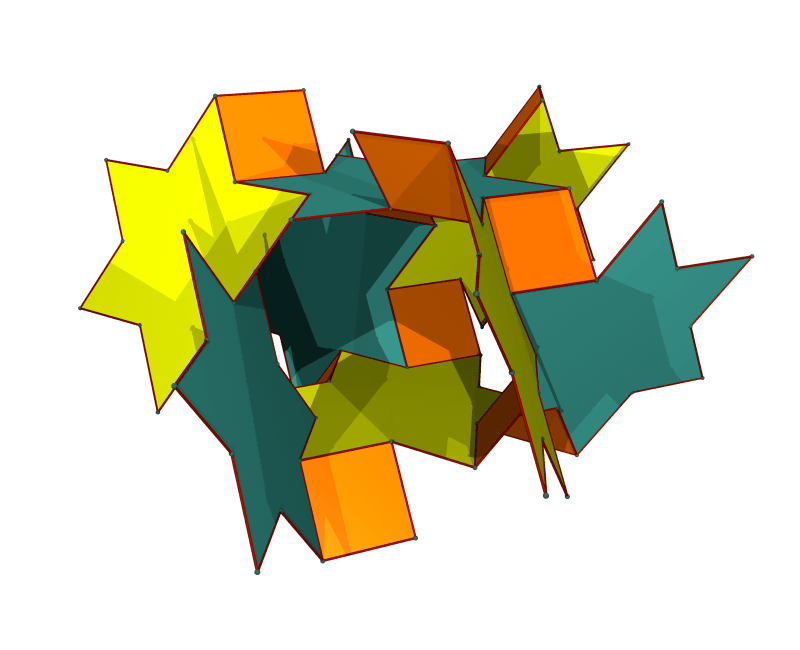
Two copies of this piece (without the downward pointing stars and and squares) make a translational fundamental piece of the uniform gyroid.

Polygyroid2

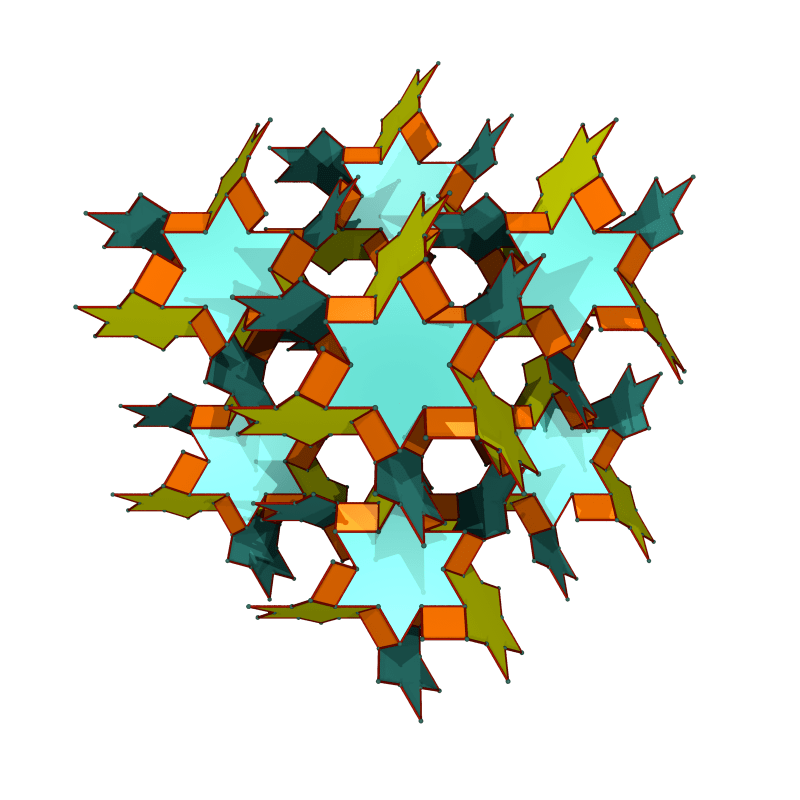
Images of larger portions are hard to parse, but it makes a wonderful model.

Polygyroid3

Pflaumenmus

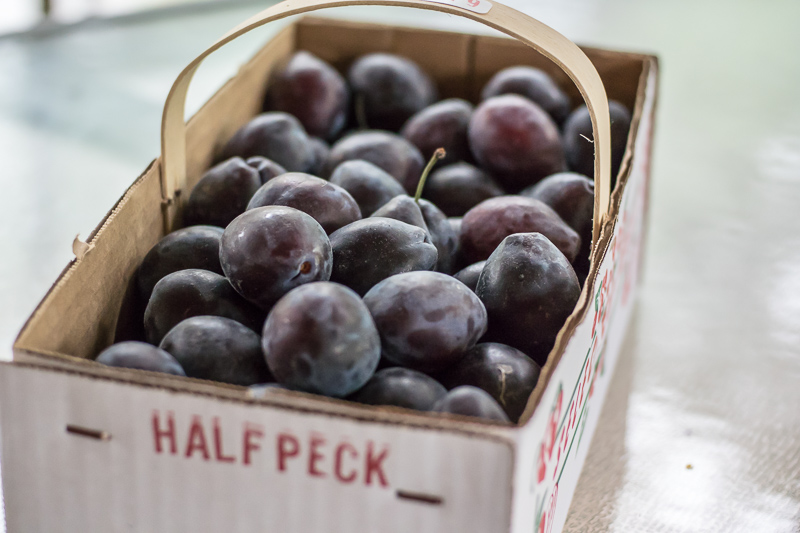
While many fruits and berries are being cultivated or stored so that you can buy them “fresh” year round, some are either too delicate or not popular enough for this treatment. So you have to get them when they are ripe, and find your own means of preservation.

DSC 9502

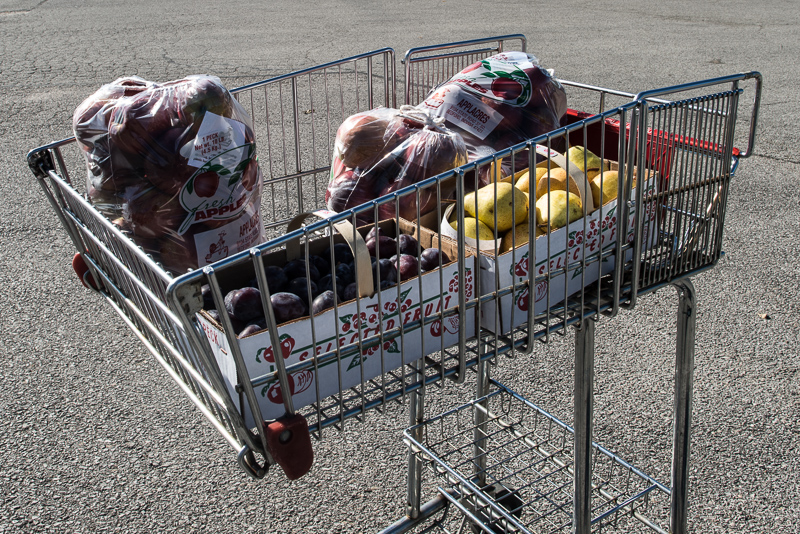
Plums are one such example. My own plum trees lose what little they produce to the greediness of the birds well before they are ready for human consumption, so I have to resort to local stores.

DSC 0858

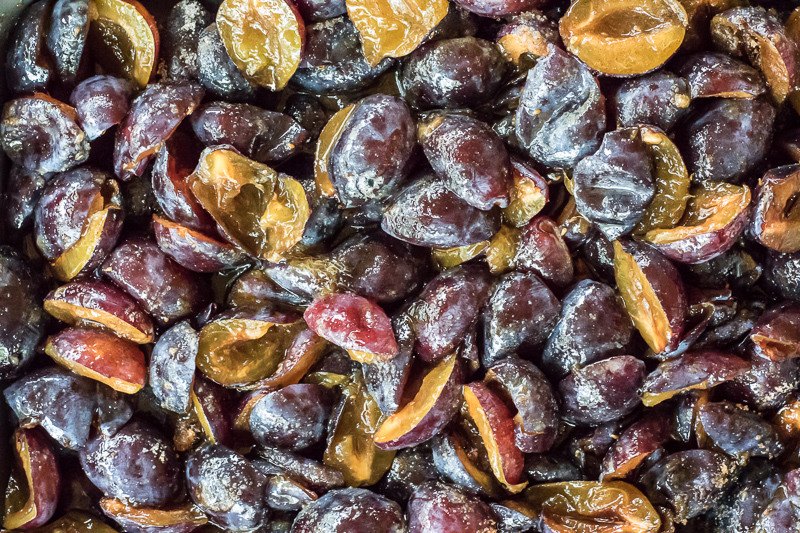
Plums are also interesting, because the American style plum butter is a far cry from what this fruit deserves. Plums are too juicy for the standard ways of jam making. To produce a real mus, they need to be stoned, mixed with sugar (1 cup for 3 pounds), and spices (try cardamom and clover!).

DSC 0862

Let this sit for at least two ours and discard the juice (or dink it, if you like sweet treats).
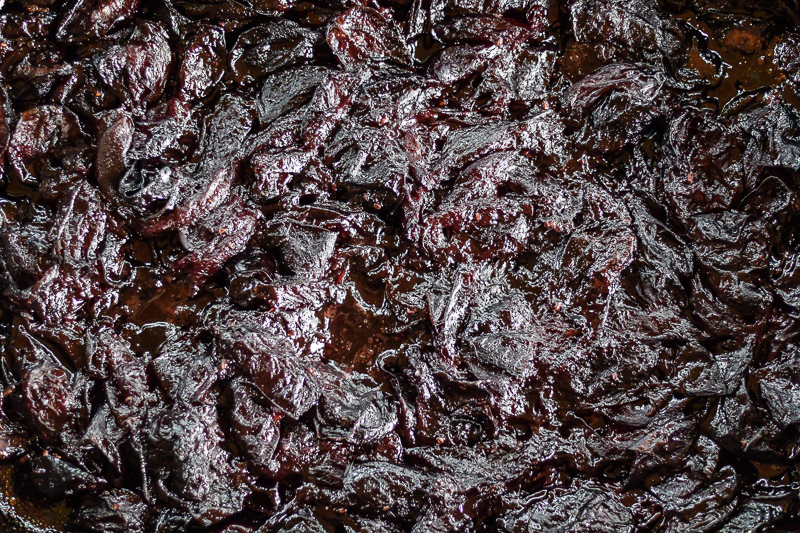
Then put this into a baking dish and bake for at least two hours at 350 degrees Fahrenheit, stirring occasionally. Leave the oven door open for the first 30 minutes to get rid of even more liquid. You want the result to be really gooey. Be warned: 3 pounds of plums make less than a cup of mus.

DSC 0873

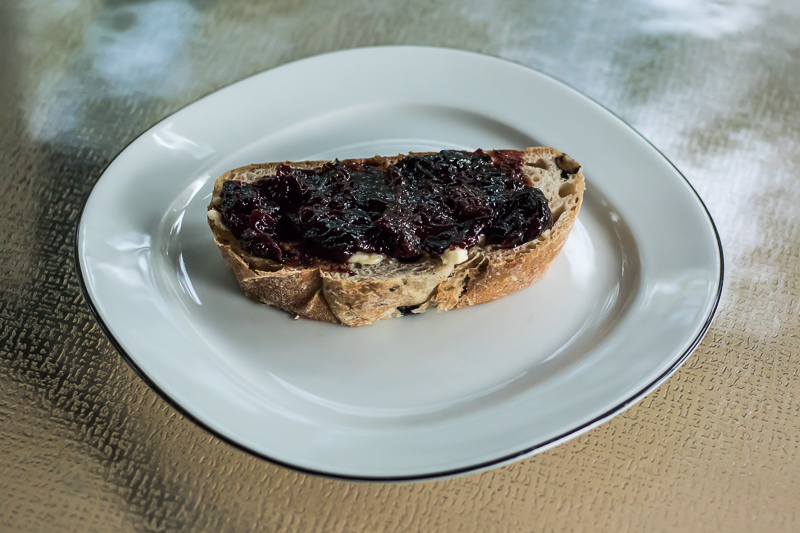
Now all that is needed is good bread.

DSC 0874