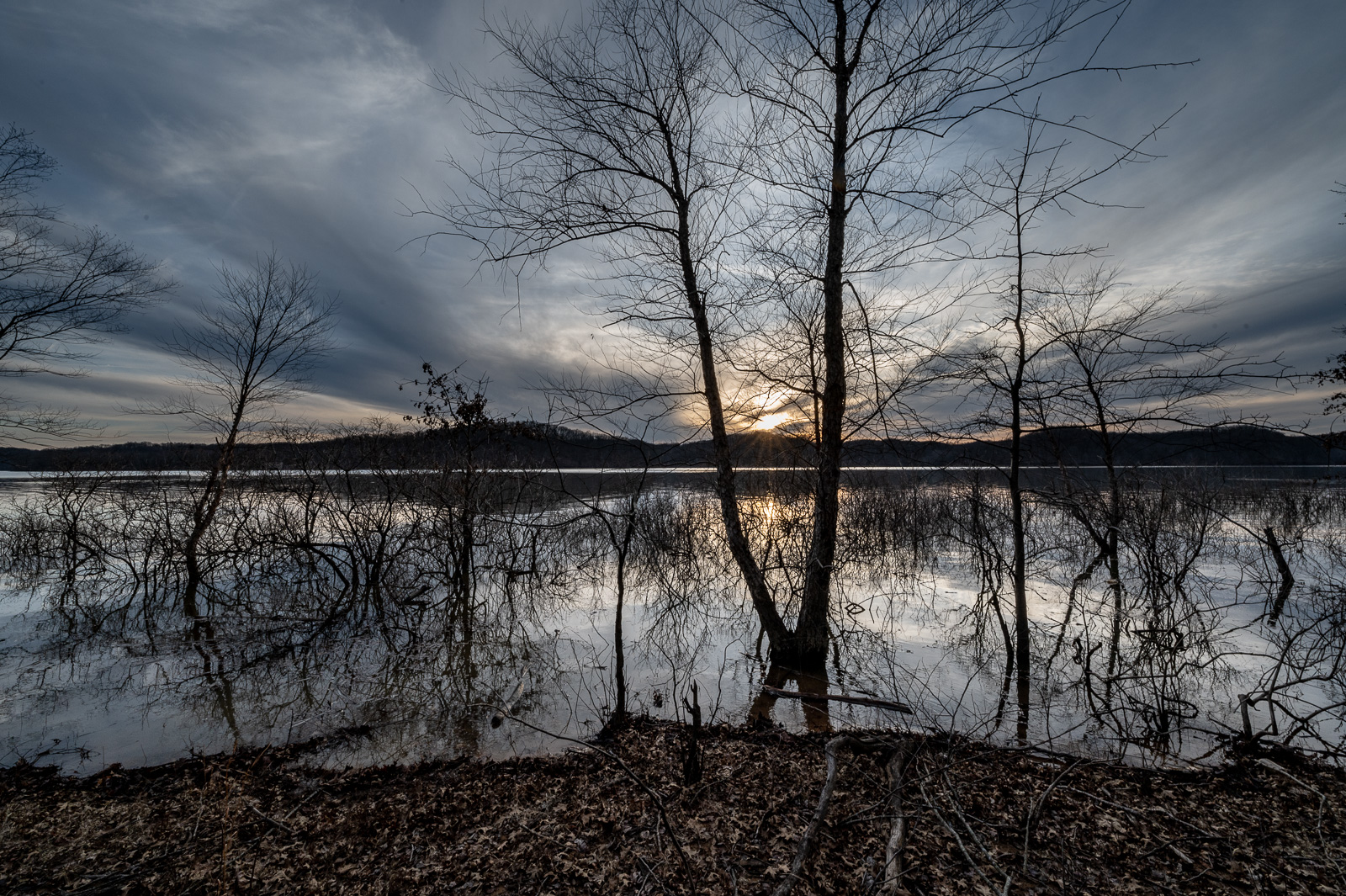
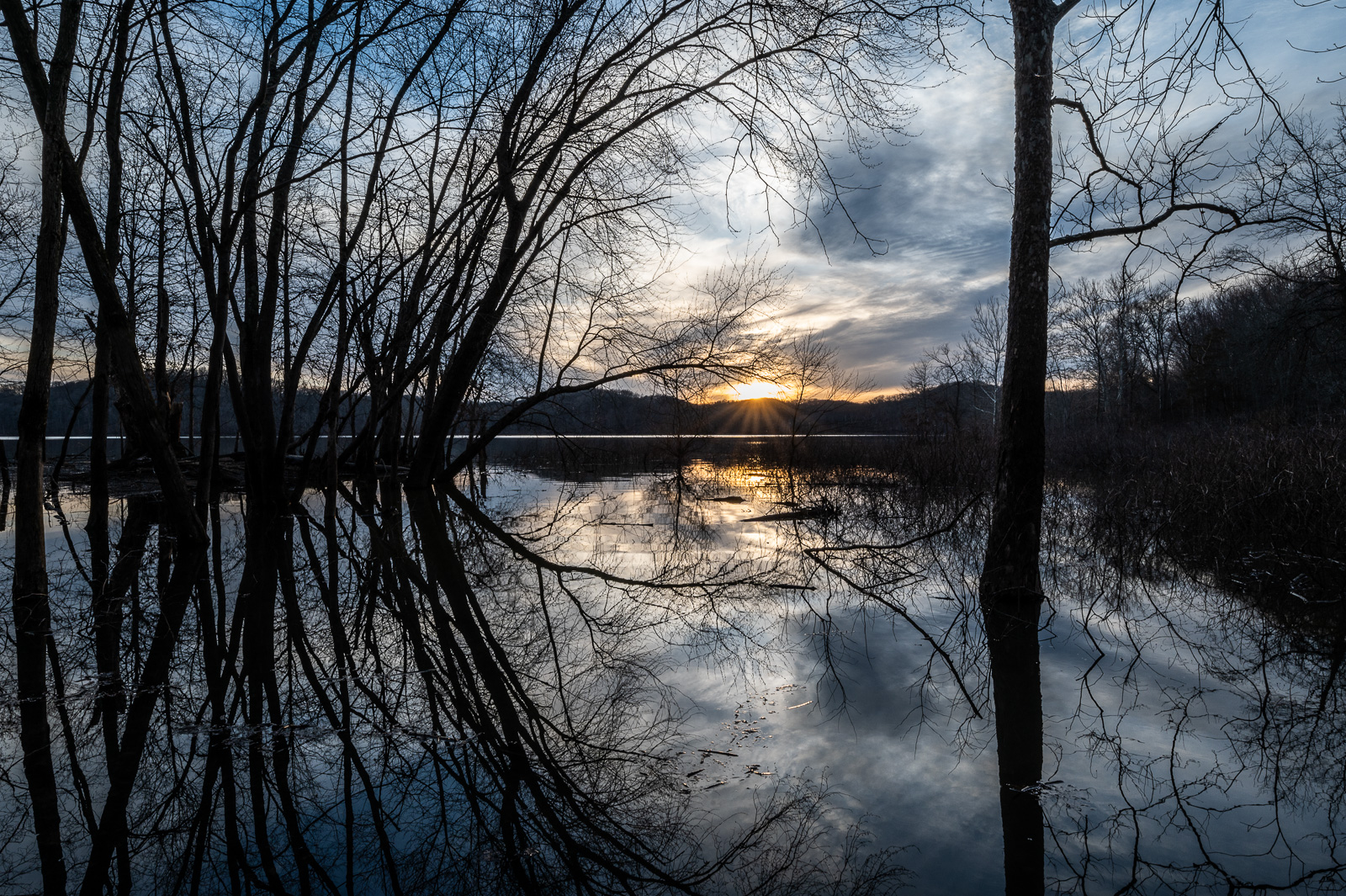
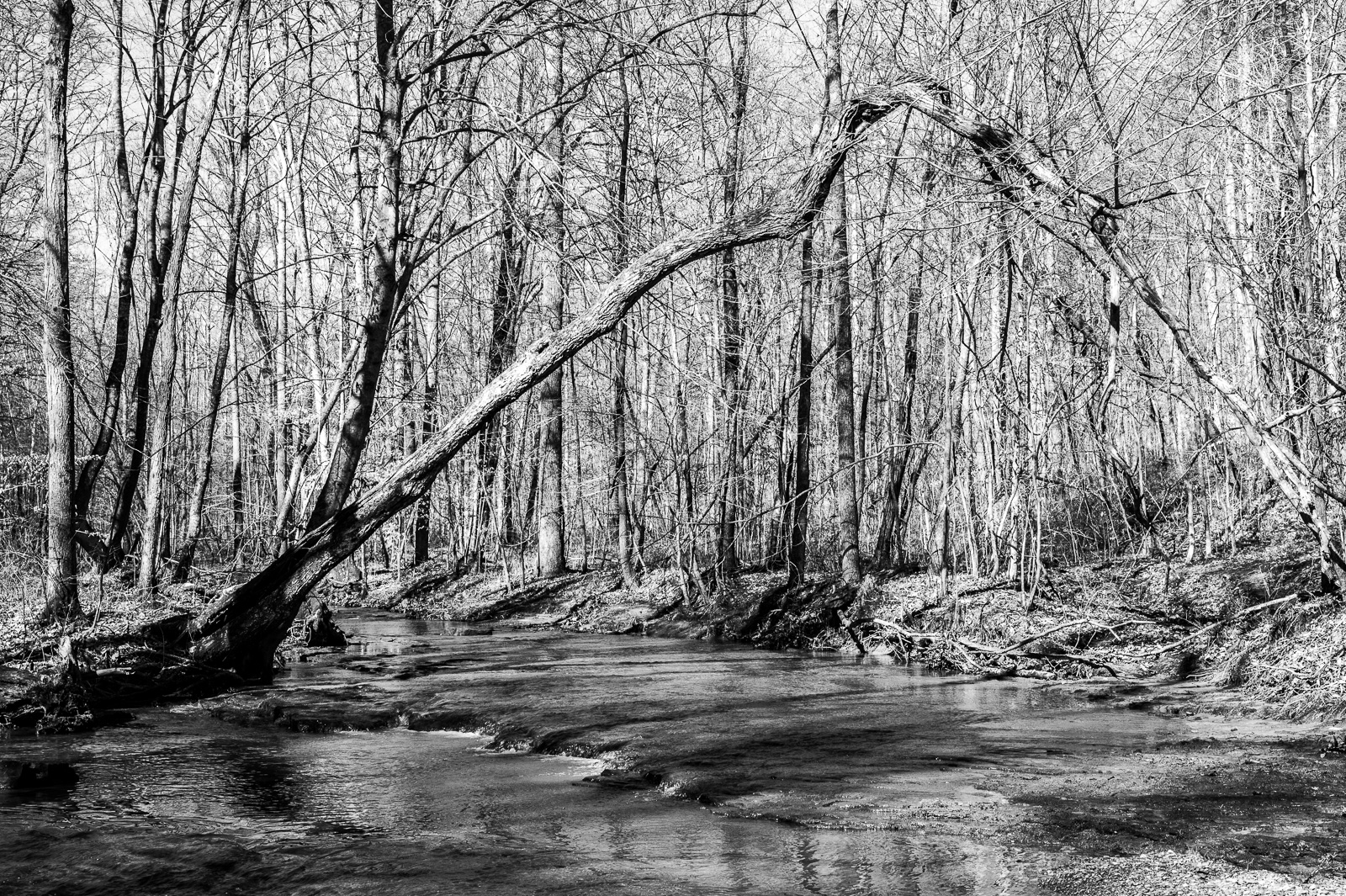
The end of winter marks the time when I started to walk the Pate Hollow trail on an almost daily basis, to stay physically fit and mentally sane.
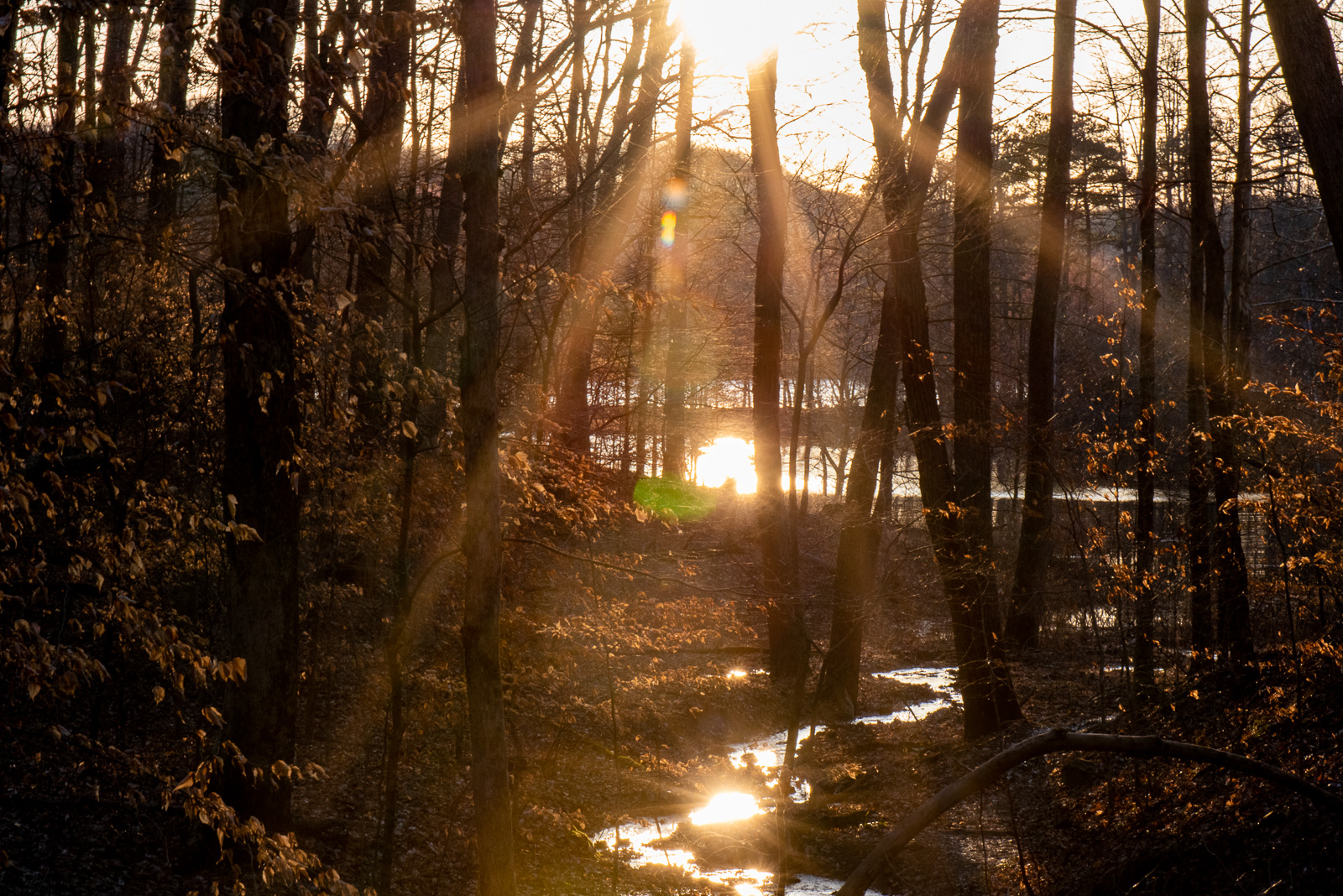
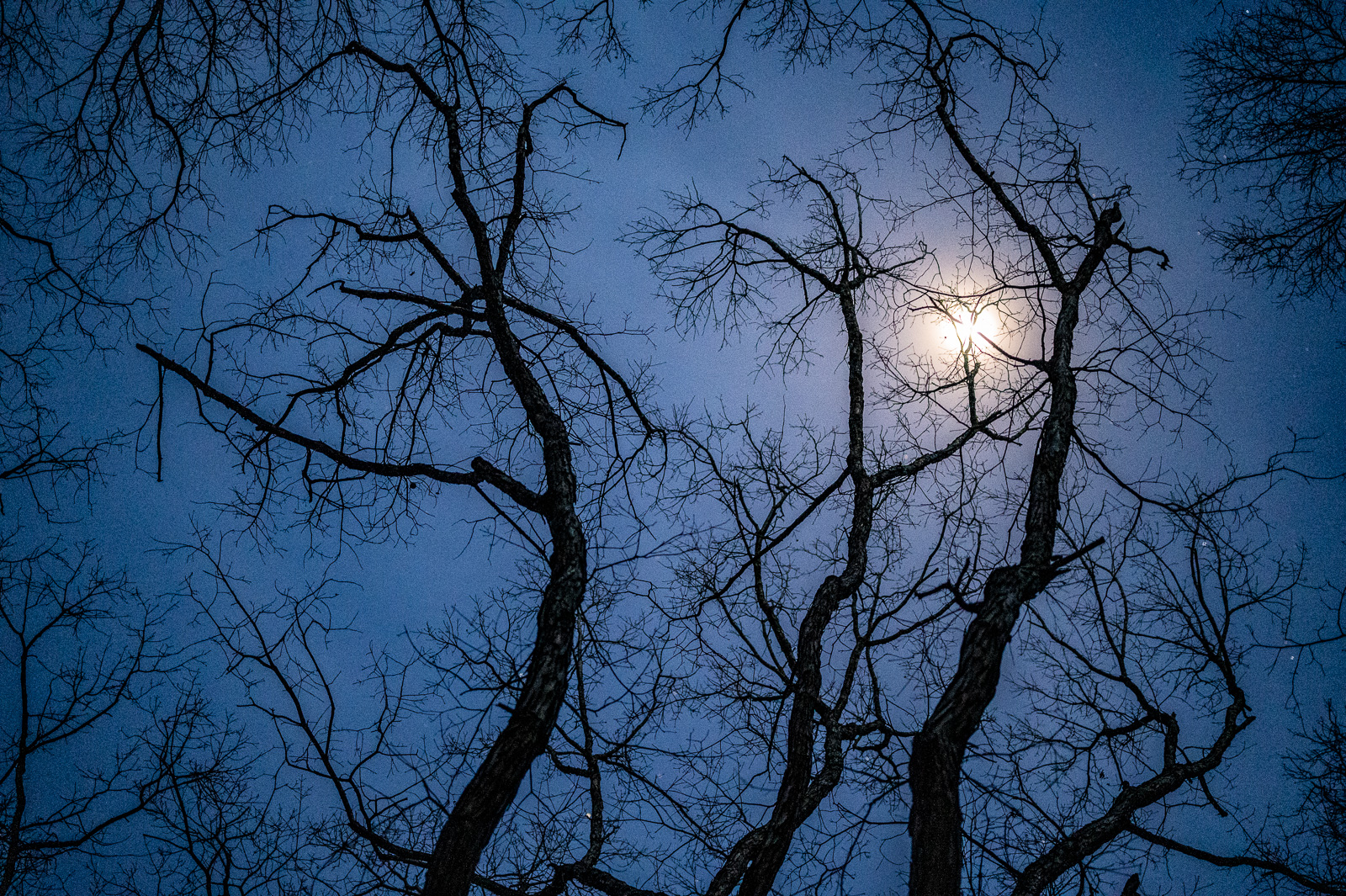
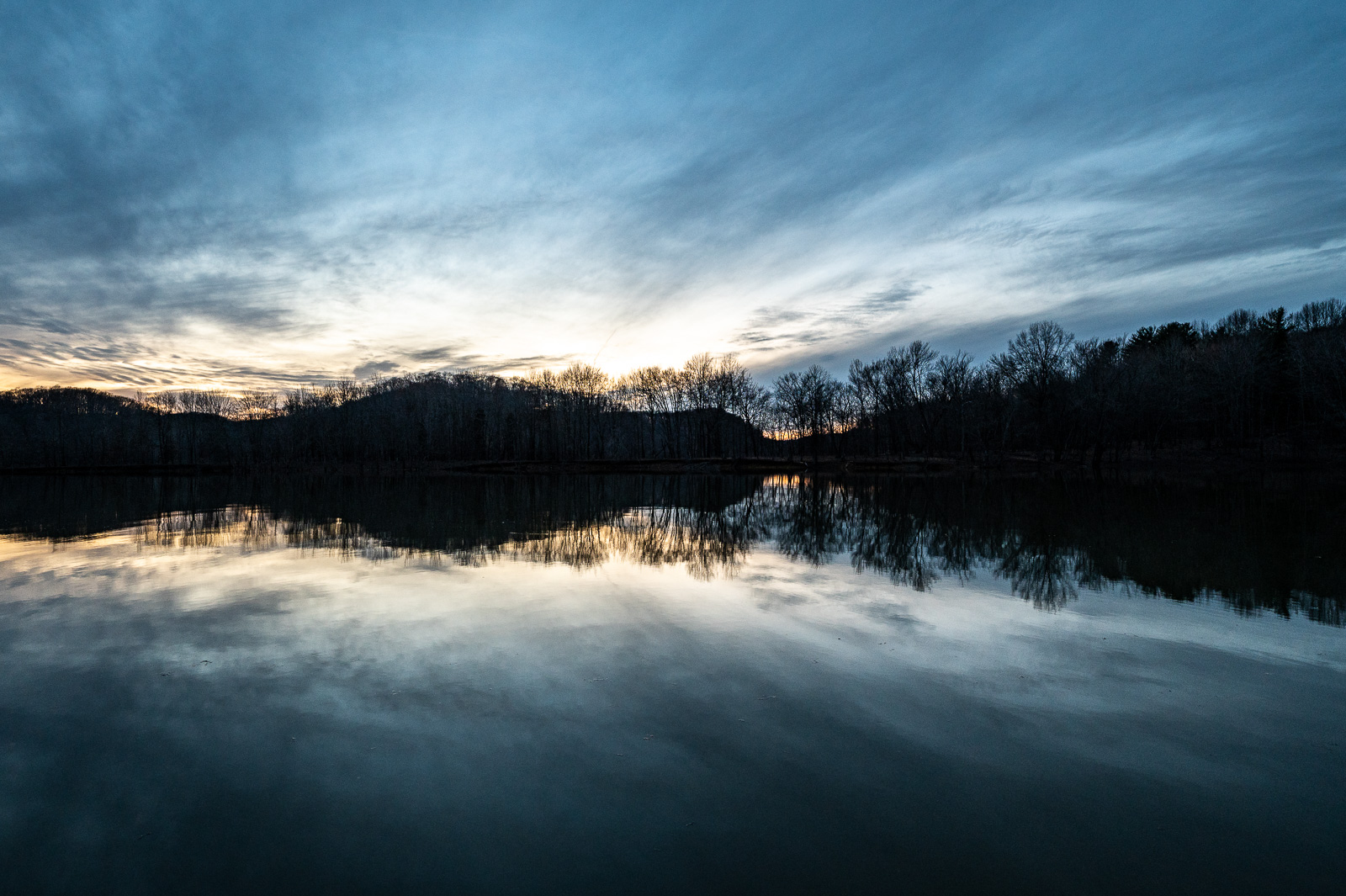
I know this trail like a close friend, in every mood and season. I mostly walked in the early morning hours, but lately I enjoyed the late evenings, after sunset, using a flashlight for the last half an hour.
The light at dawn has a different quality than at dusk, it has a certain tiredness to it that I can’t explain, but which feels good, like being tired after having persisted, through a day, or through a year.
There is also a certain urgency to this hour, to complete the circle before the time is up.
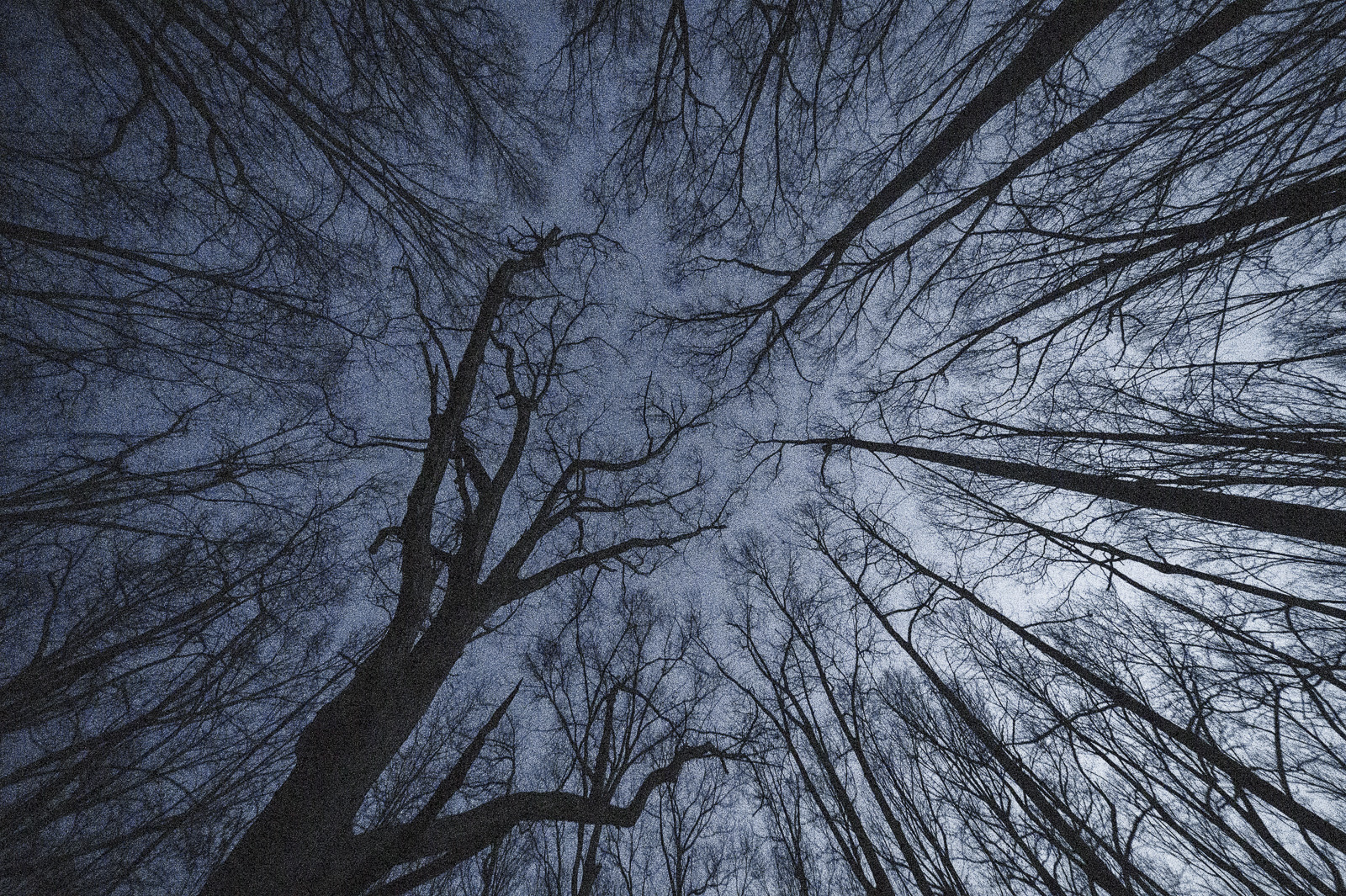
Darkness enables intimacy — maybe because it forces us to focus harder, maybe because the visible is so close by.
A year has passed. I will treasure every minute spent with a good friend.
Aide-moi maintenant, air noir et frais, cristal
noir. Les légères feuilles bougent à peine,
comme pensées d'enfants endormis. Je traverse
la distance transparente, et c'est le temps
même qui marche ainsi dans ce jardin,
comme il marche plus haut de toit en toit, d'étoile
en étoile, c'est la nuit même qui passe.
Je fais ces quelques pas avant de remonter
là où je ne sais plus ce qui m'attend, compagne
tendre ou détournée, servantes si dociles
de nos rêves ou vieux visage suppliant...
la lumière du jour, en se retirant
                                                                      – comme un voile
tombe et reste un instant visible autour
des beaux pieds nus –
                                                   découvre la femme d'ébène
et de cristal, la grande femme de soie noire
dont les regards brillent encore pour moi
de tous ses yeux peut-être éteints depuis longtemps.
La lumière du jour s'est retirée, elle révéle,
à mesure que le temps passe et que j'avance
en ce jardin, conduit par le temps,
                                                                     autre chose
– au-delà de la belle sans relâche poursuivie,
de la reine du bal où nul ne fut jamais convié,
avec ses fermoirs d'or qui n'agrafent plus nulle robe –
autre chose de plus caché, mais de plus proche...
Ombres calmes, buissons tremblant à peine, et les couleurs,
elles aussi, ferment les yeux. L'obscurité
lave la terre.
                      C'est comme si l'immense
porte peinte du jour avait tourné
sur ses gonds invisibles, et je sors dans la nuit,
je sors enfin, je passe, et le temps passe
aussi la porte sur mes pas.
                                                               Le noir n'est plus ce mur
encrassé par la suie du jour éteint,
je le franchis, c'est l'air limpide, taciturne,
j'avance enfin parmi les feuilles apaisées,
je puis enfin faire ces quelques pas, léger
comme l'ombre de l'air,
l'aiguille du temps brille et court dans la soie noire,
mais je n'ai plus de mètre dans les mains,
rien que de la fraîcheur, une fraîcheur obscure
dont on recueille le parfum rapide avant le jour.

(Chose brève, le temps de quelques pas dehors,
mais plus étrange encore que les mages et les dieux.)
Philippe Jaccottet June 30, 1925 – February 24, 2021
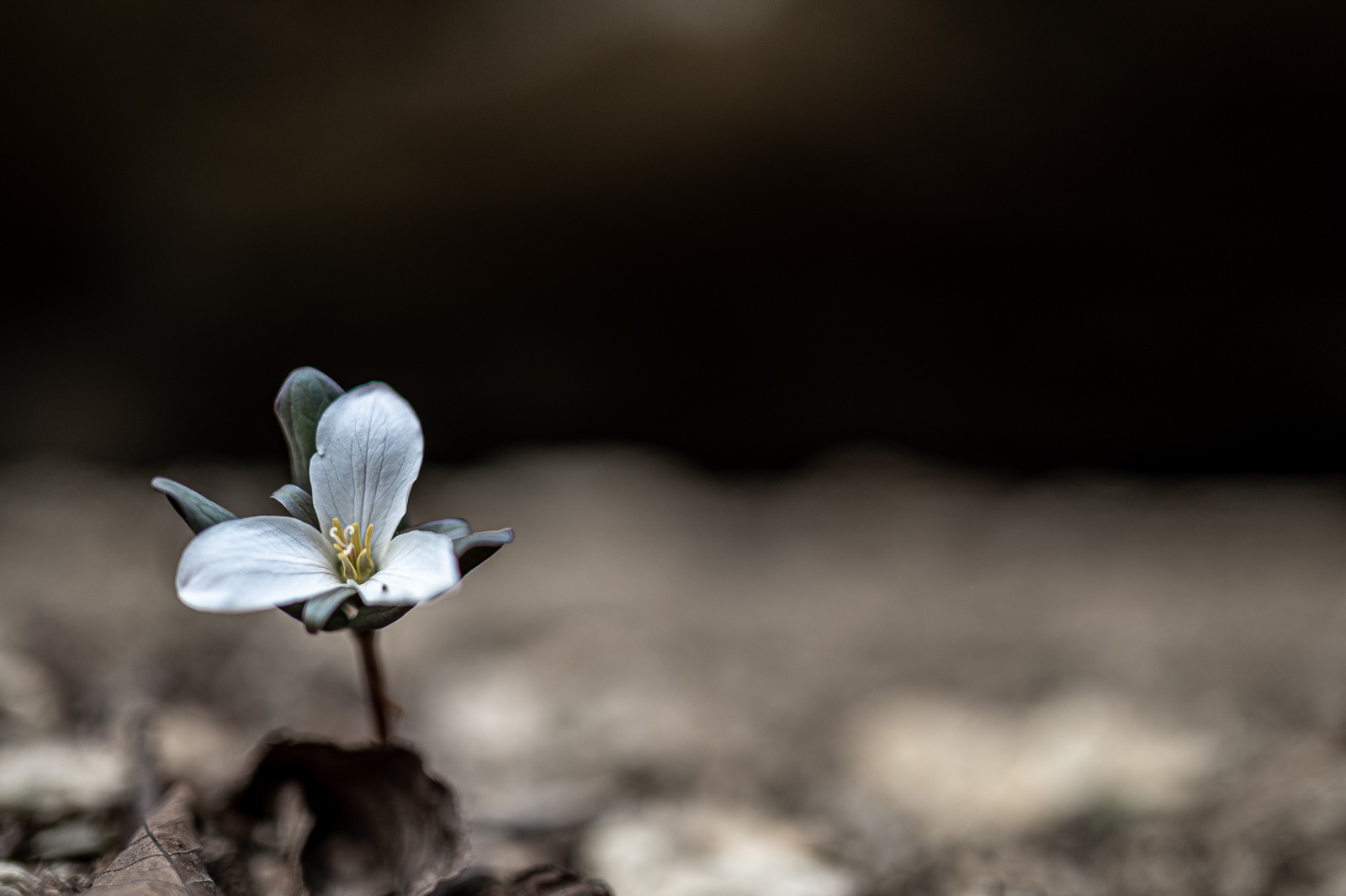
The last seven images of my seventh post of the Yellow Birch Ravine return to color.
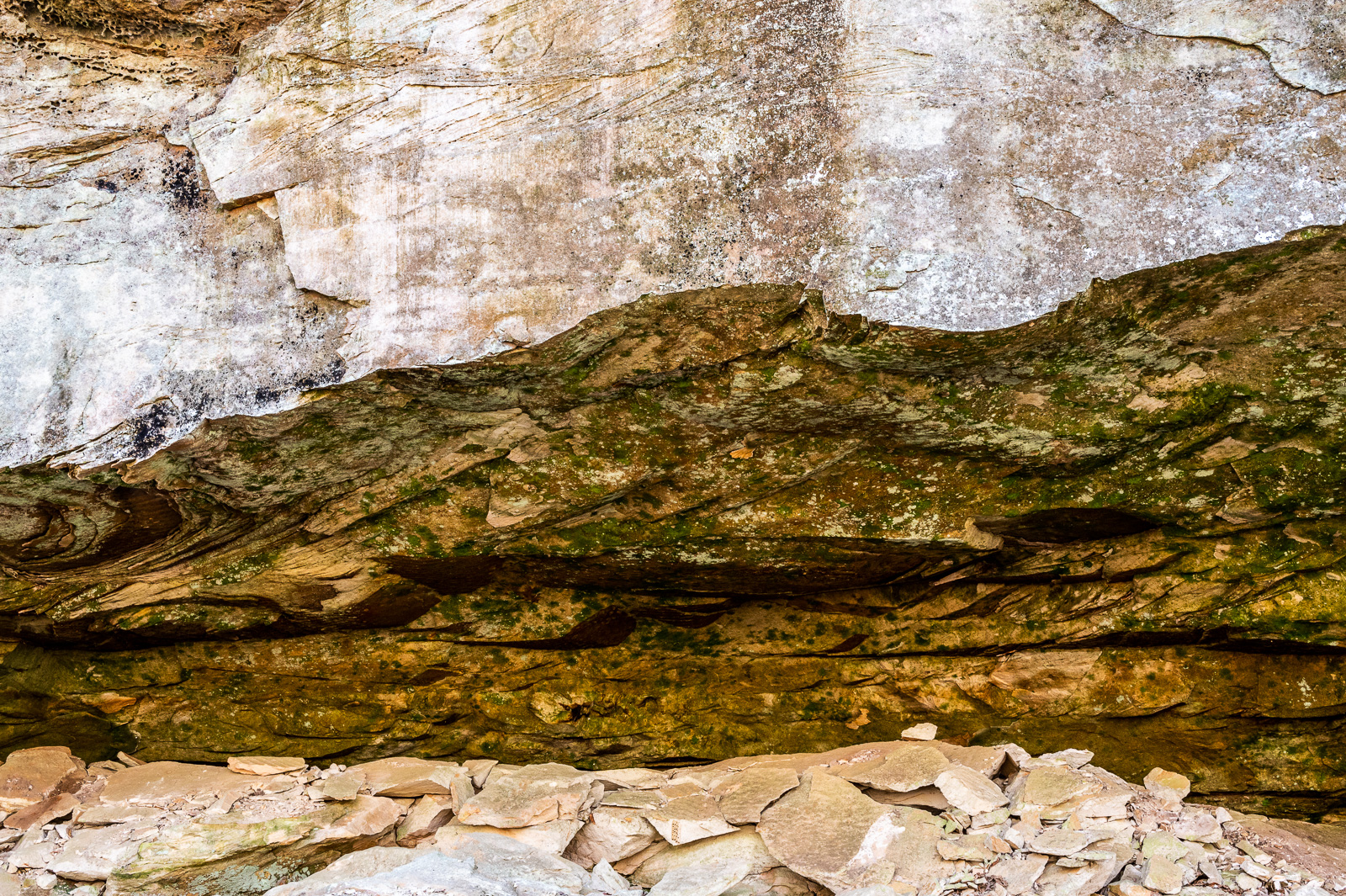
Unlike the glacial limestone canyons of the more northern parts of Indiana, the rocks here are made of sandstone, providing perfect traction for hiking.
We also get lots of overhangs and recess caves because of this, so I am tempted to call this place Little Utah.
Unlike the better known and much more visited places, the rocks here are (mostly) in pristine condition.
Just imagine someone would walk up to you and carve their name deep into your skin with a sharp knife.
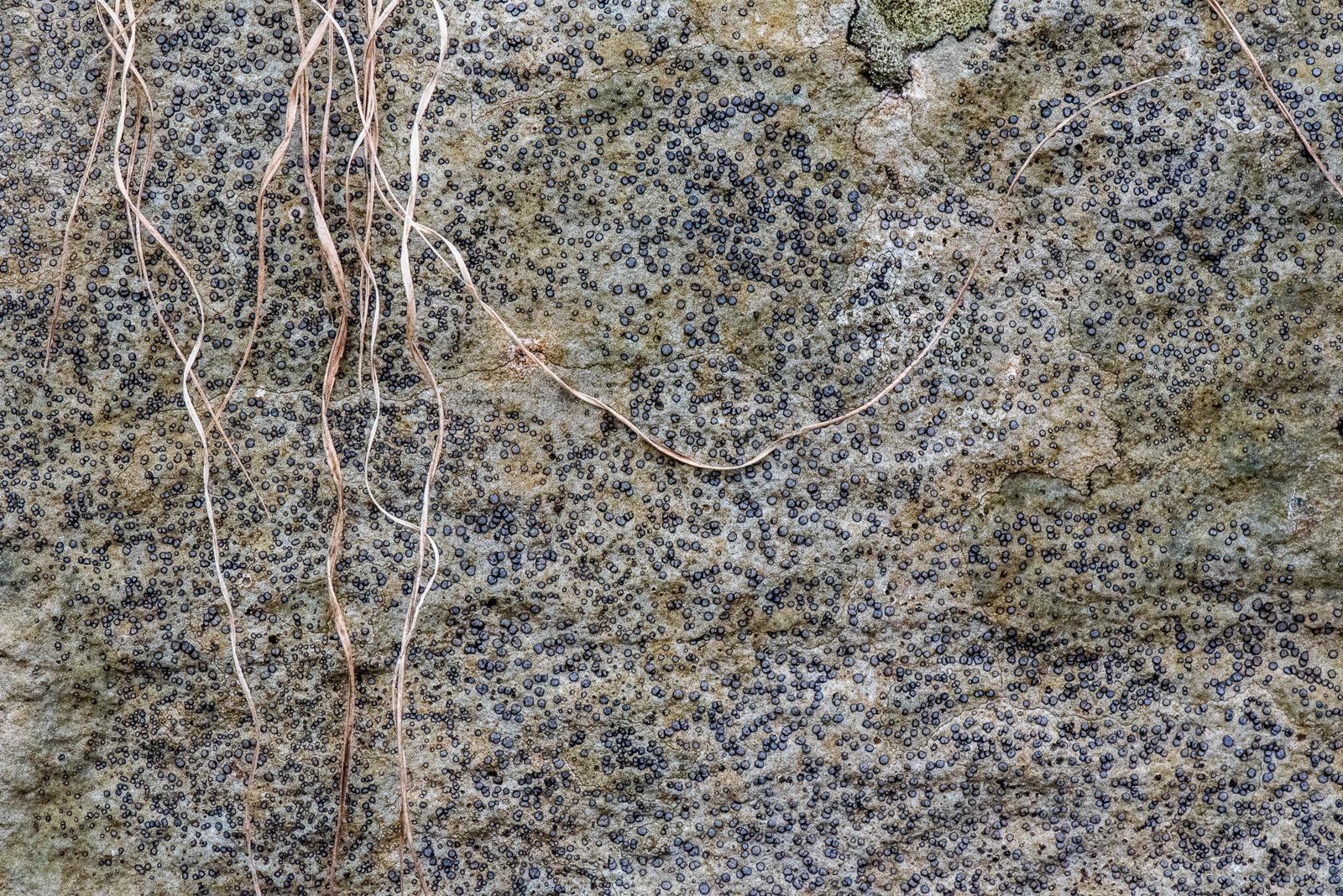
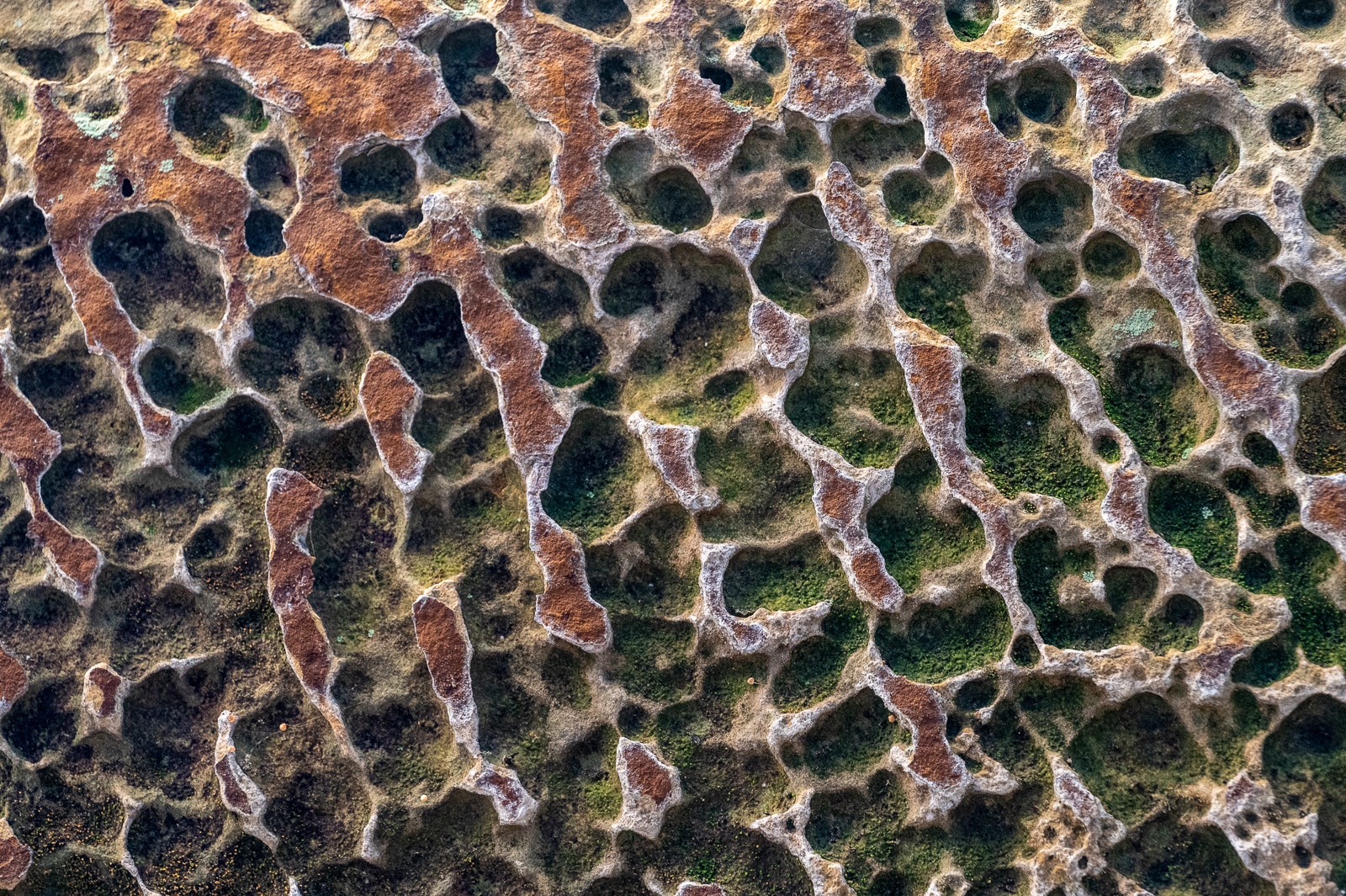
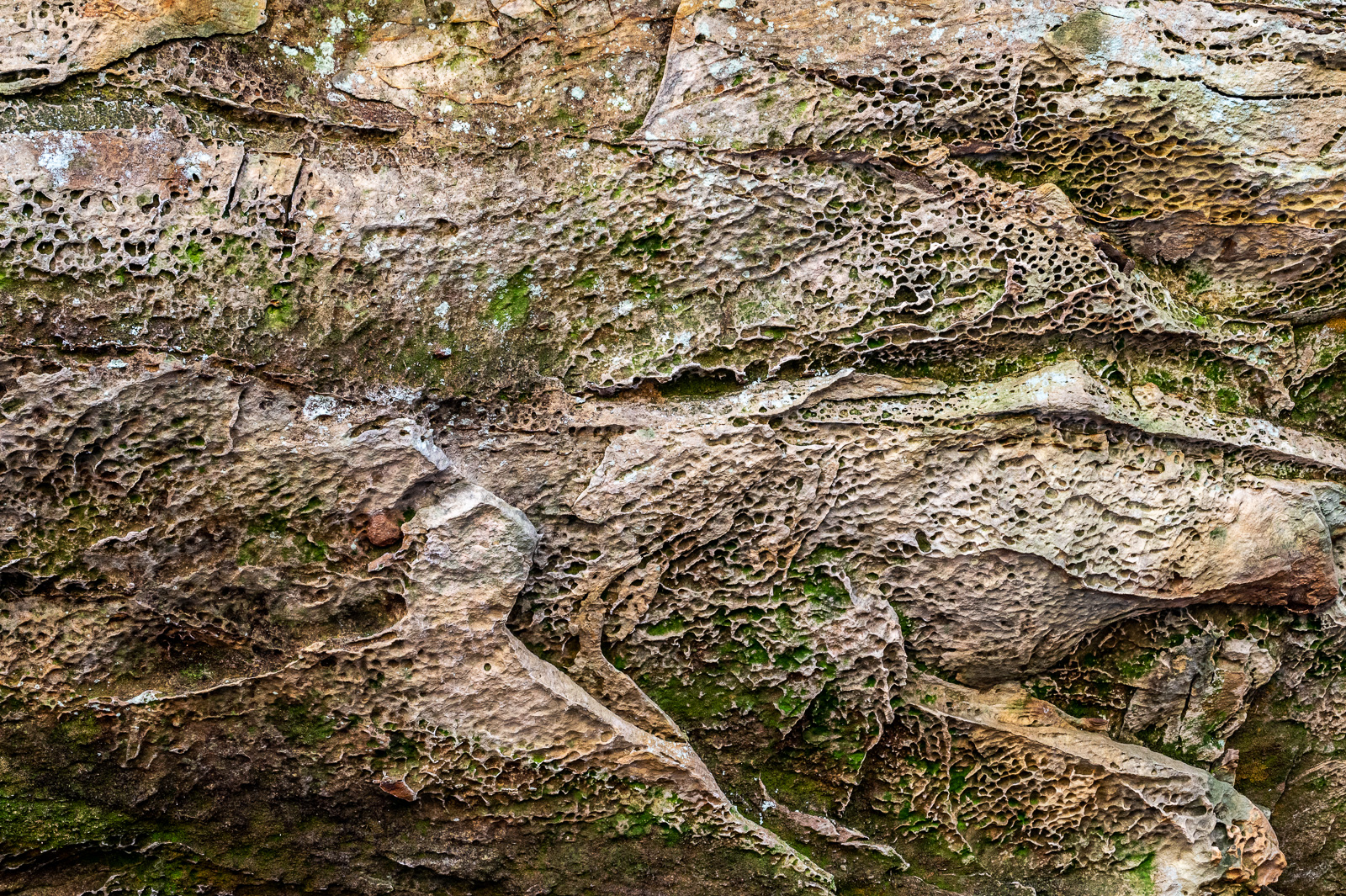
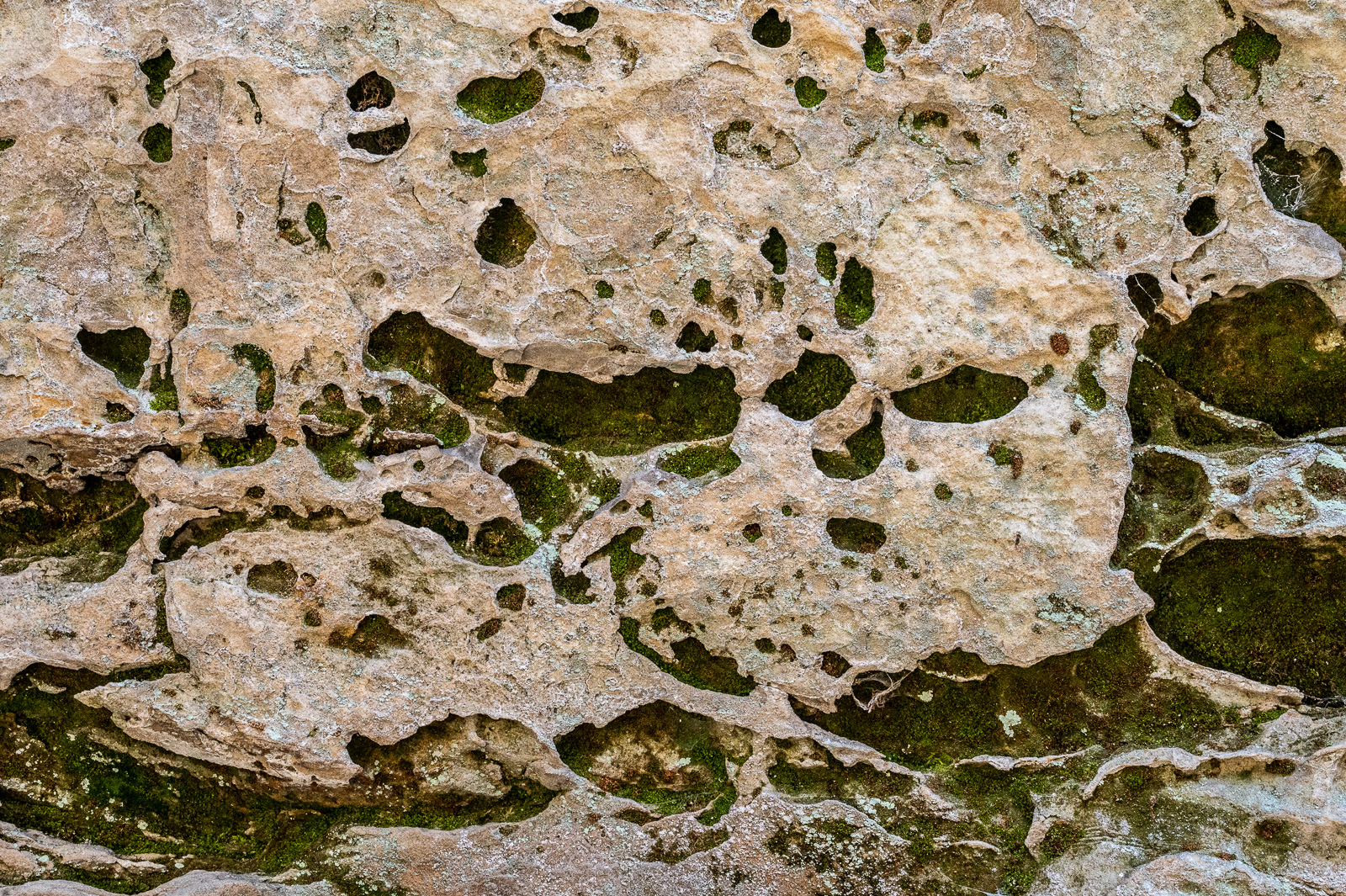
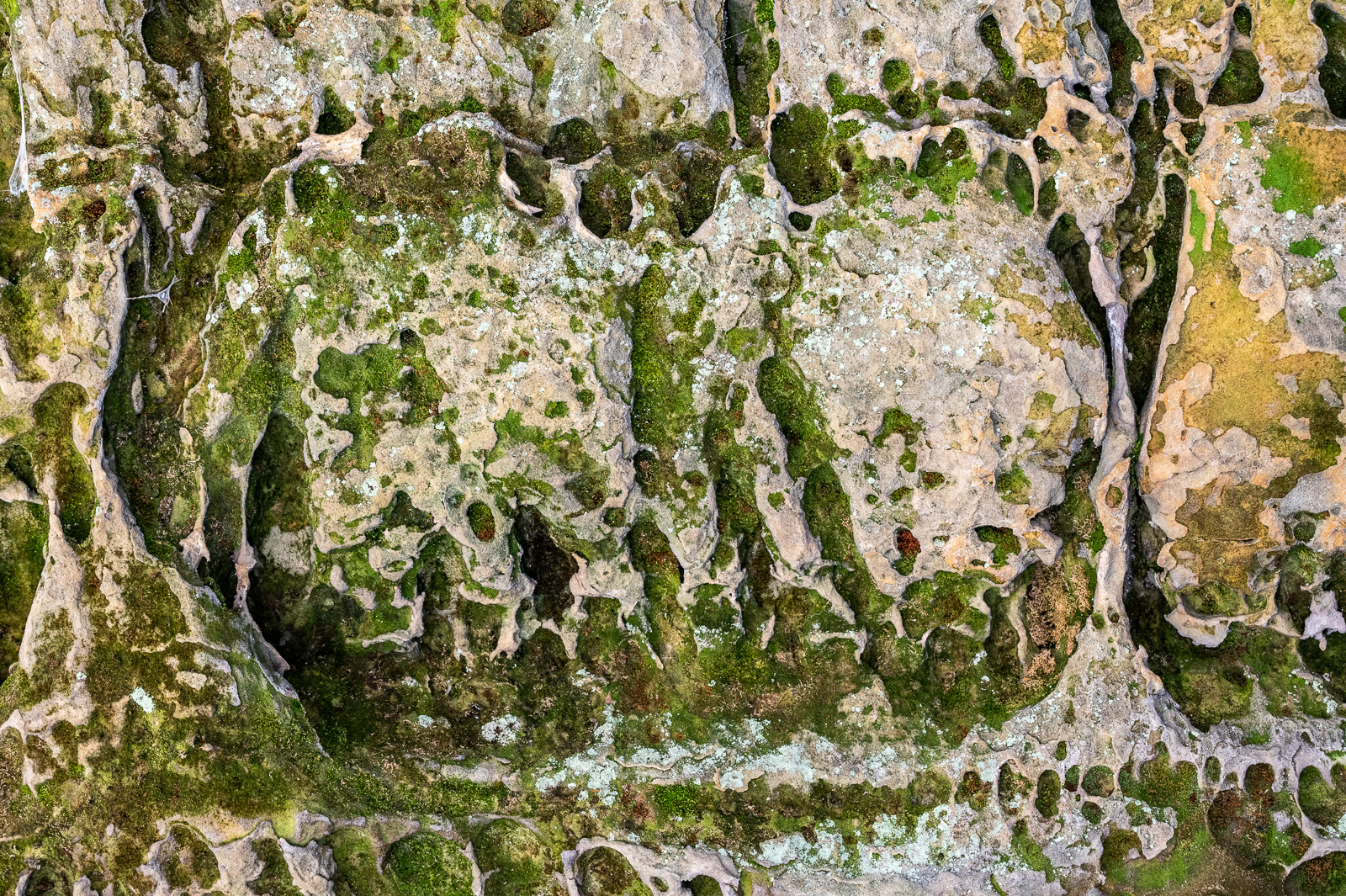
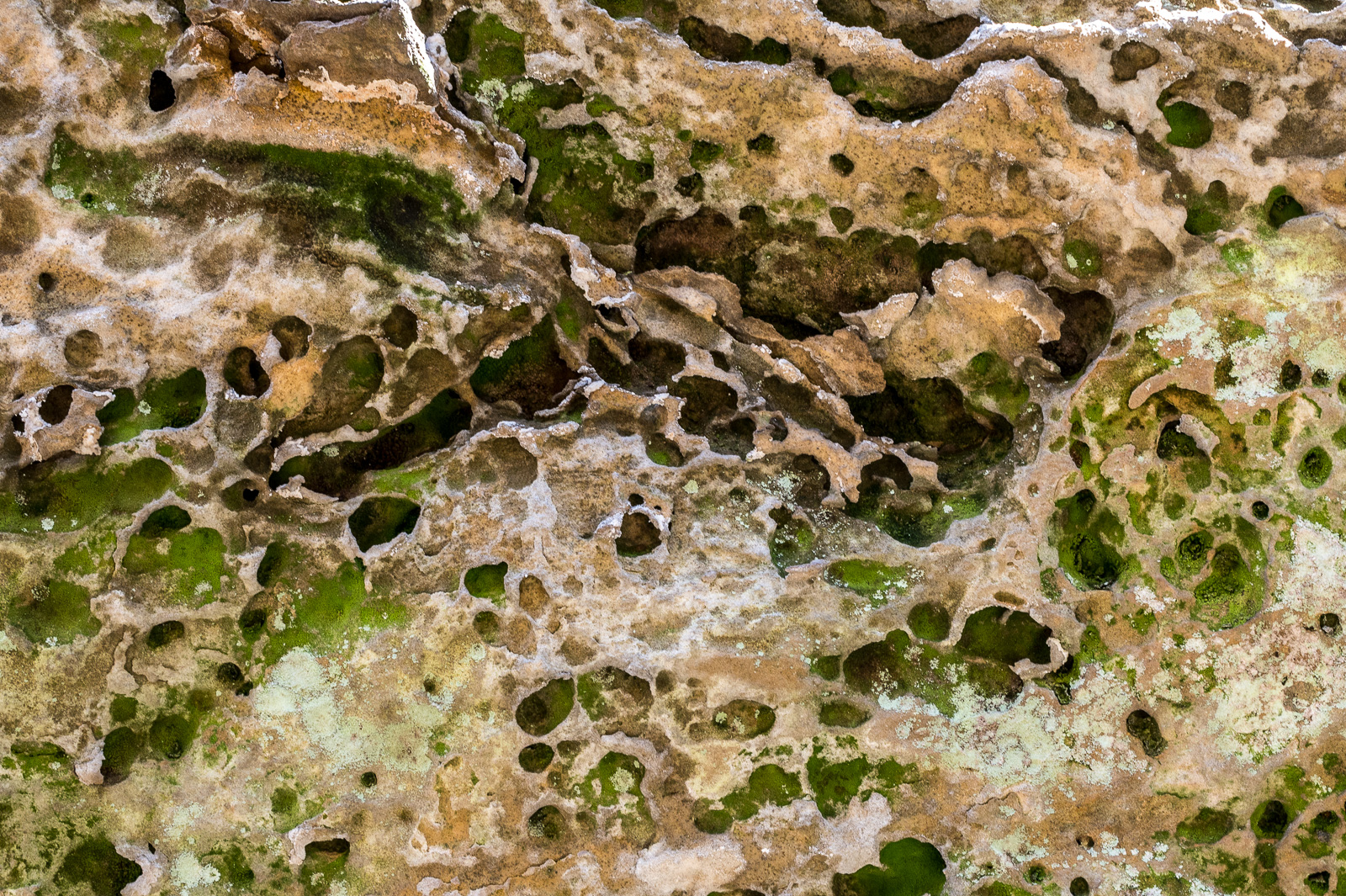
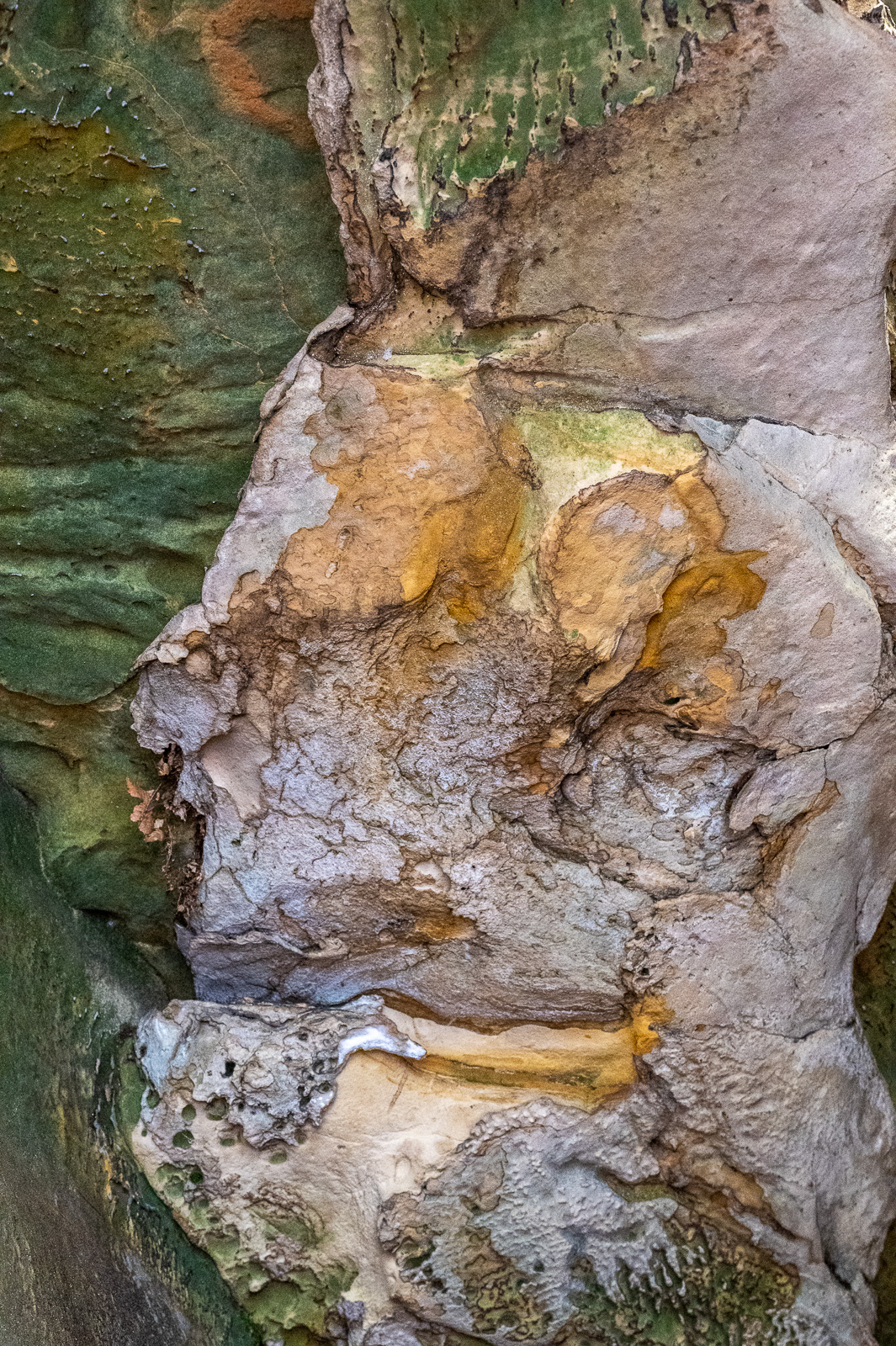
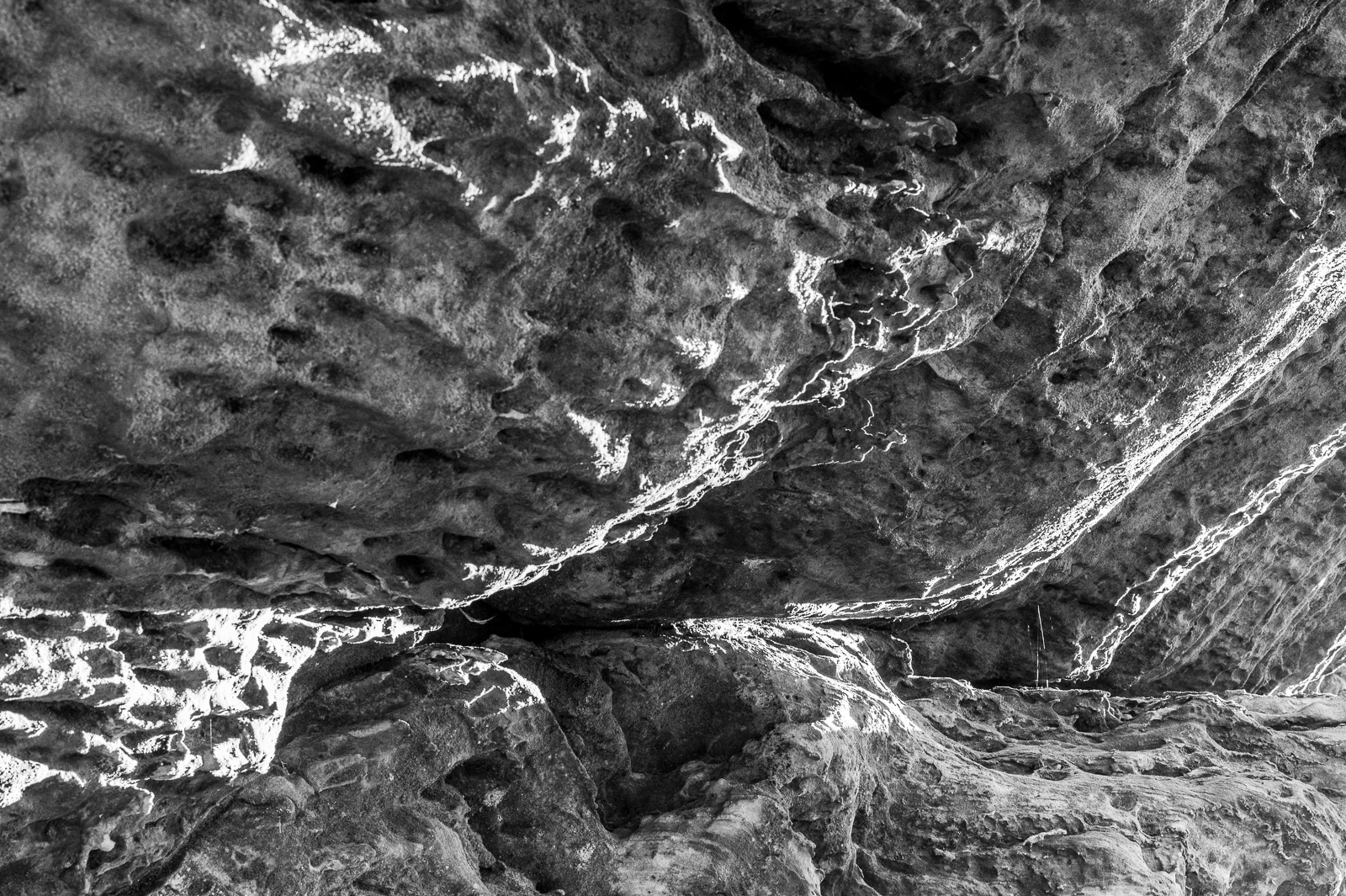
Some of the patterns do look organic, don’t they? Whom would we wake up?
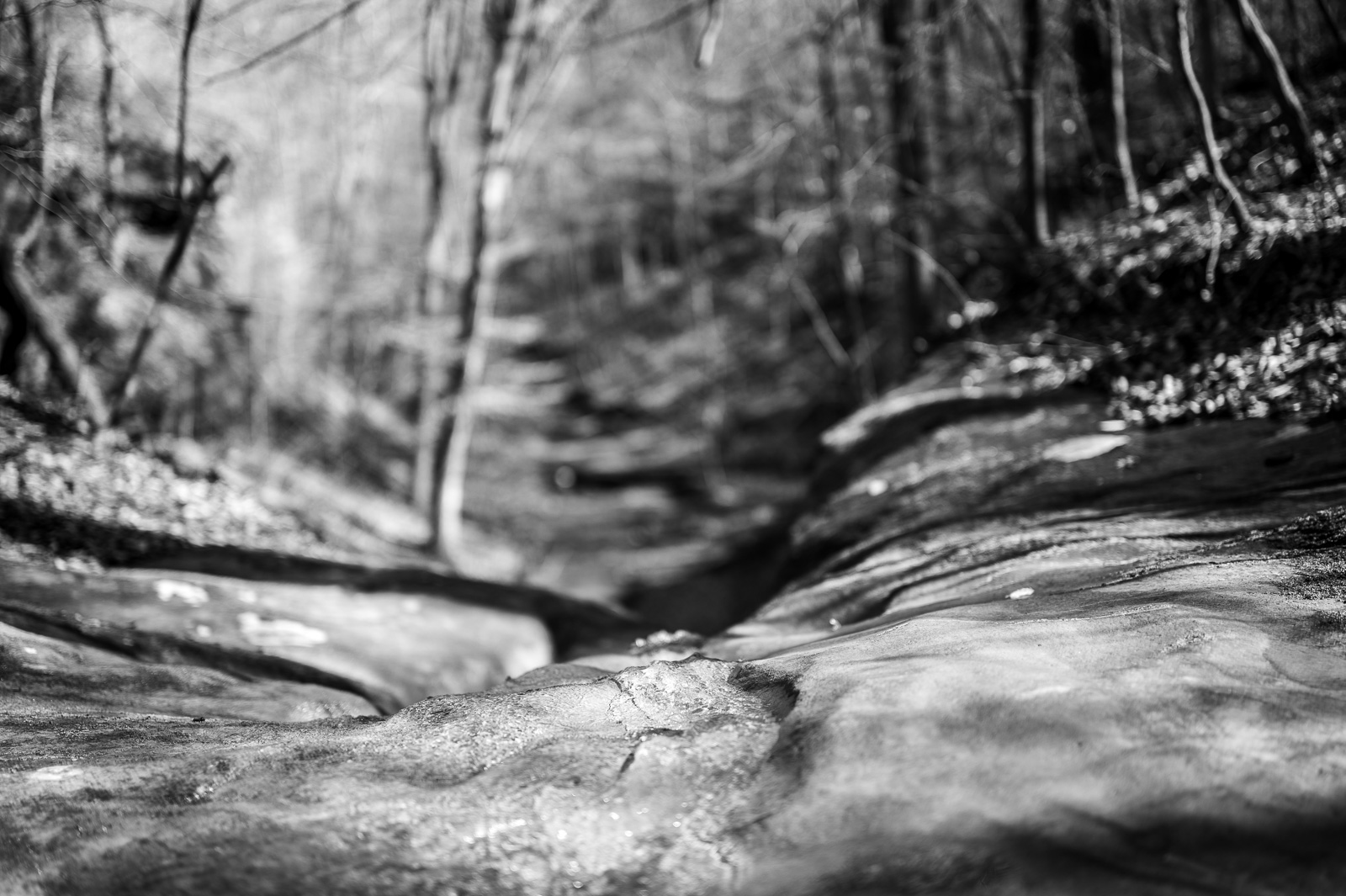
After crossing Trestle Road, the second half of the Yellow Birch Ravine Nature preserve follows a gentle wonderfully turquoise nameless stream into three box canyons.
I followed the obvious path that leads up to the ledge. I am not sure why people go there. The water has to come from somewhere, there is no need to check.
One does get impressive views down, and one can go all the way around on top of the mesa like ravines, but the real attractions reside deep inside the canyons.
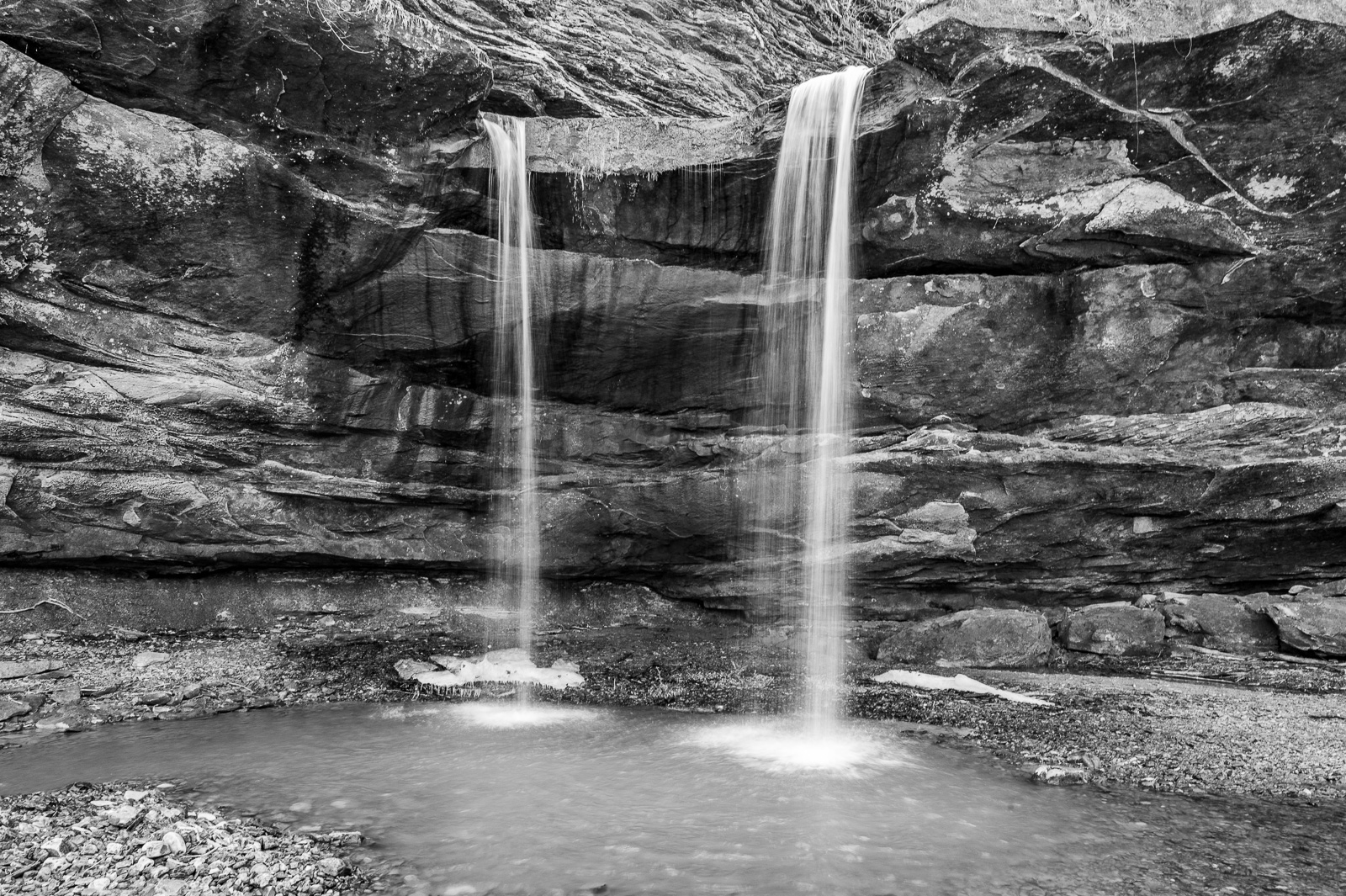
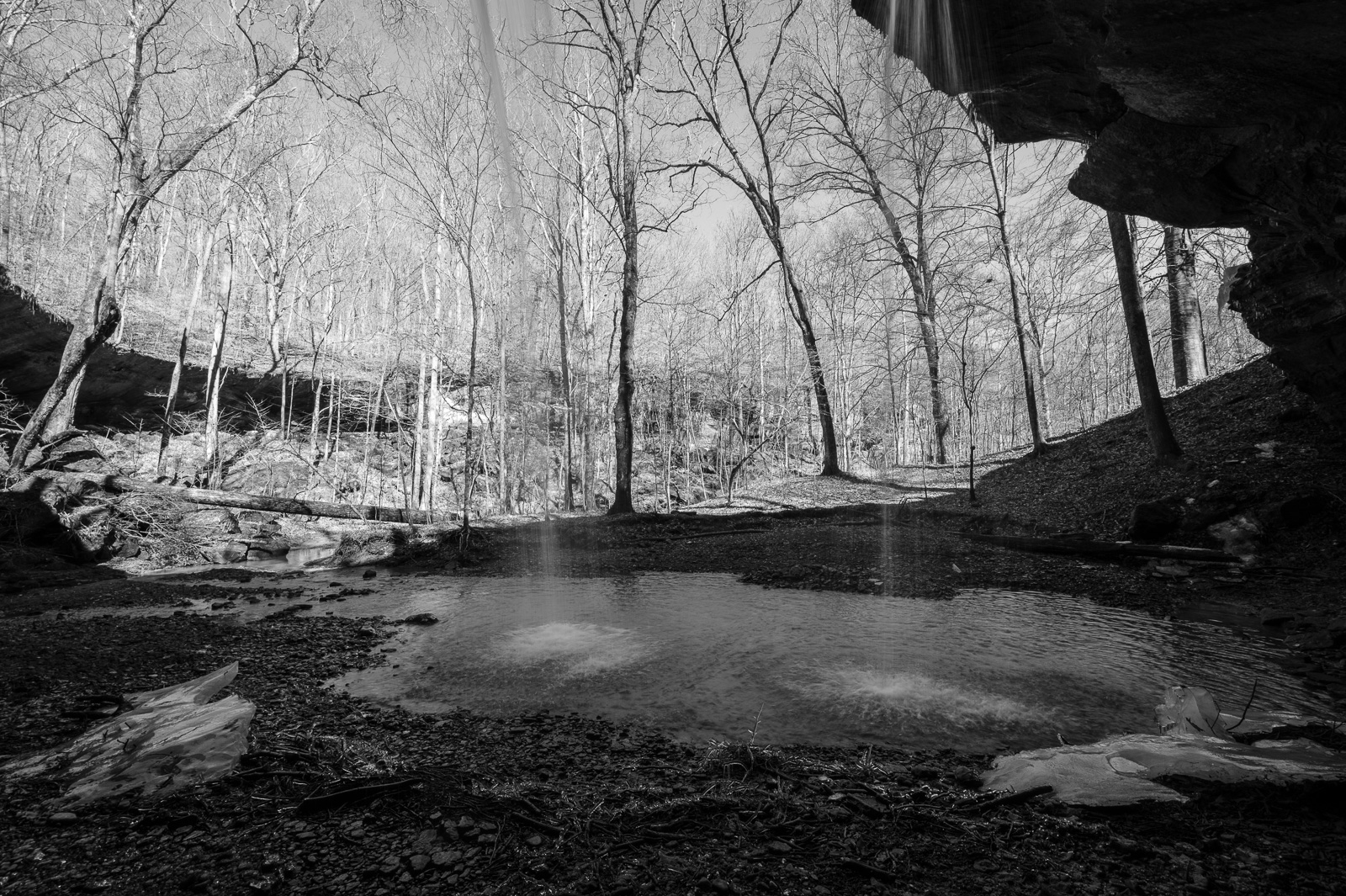
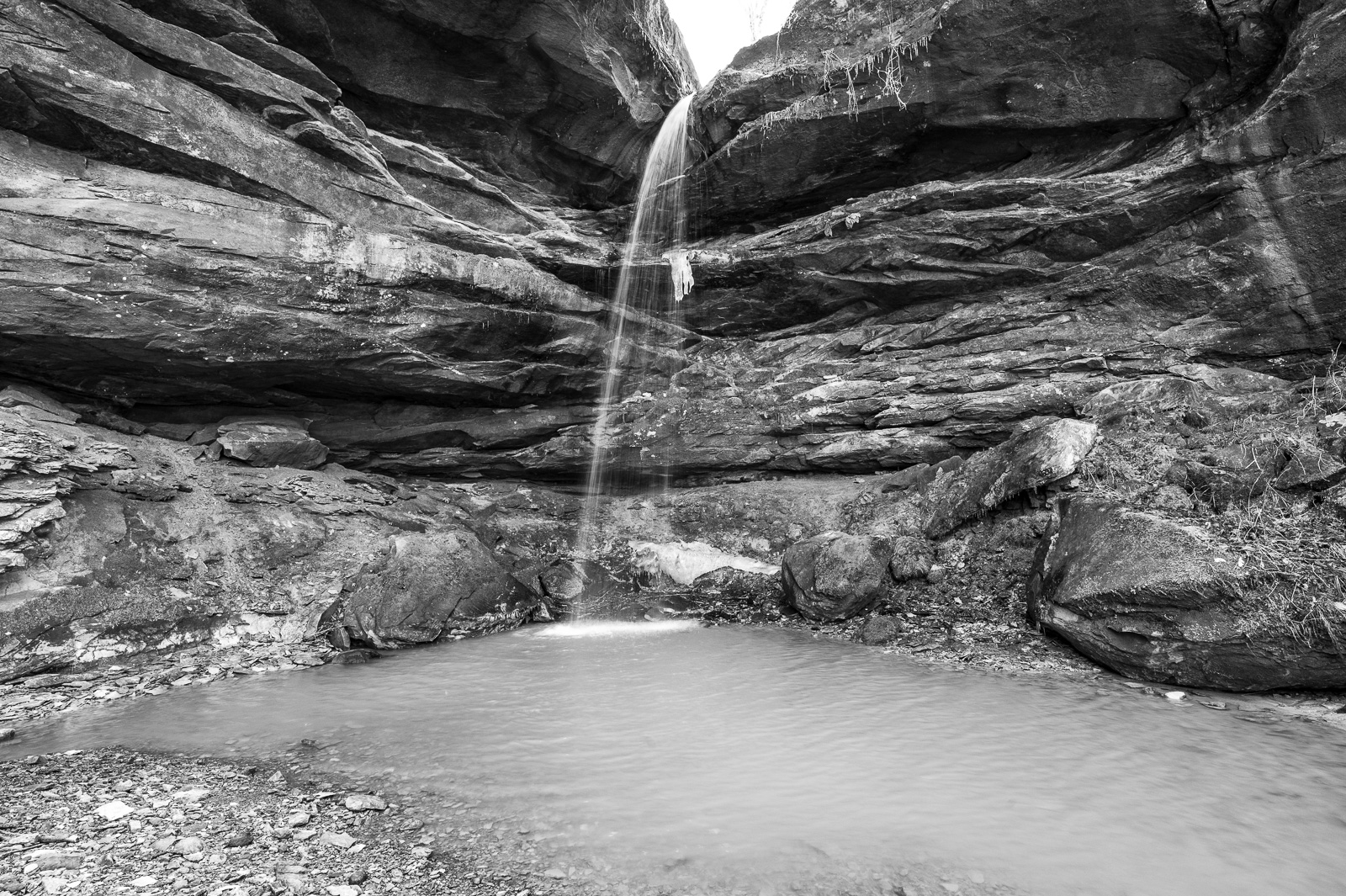
These twin falls were the highlight for me –– even waterfalls like company.
Another obsession we humans have is that we always want to get behind things.
Below is the last one, the same as in the second picture of today’s post.
Before we have a closer look at what’s in the second canyon, let’s pause for a day and enjoy the last bits of ice in this state.
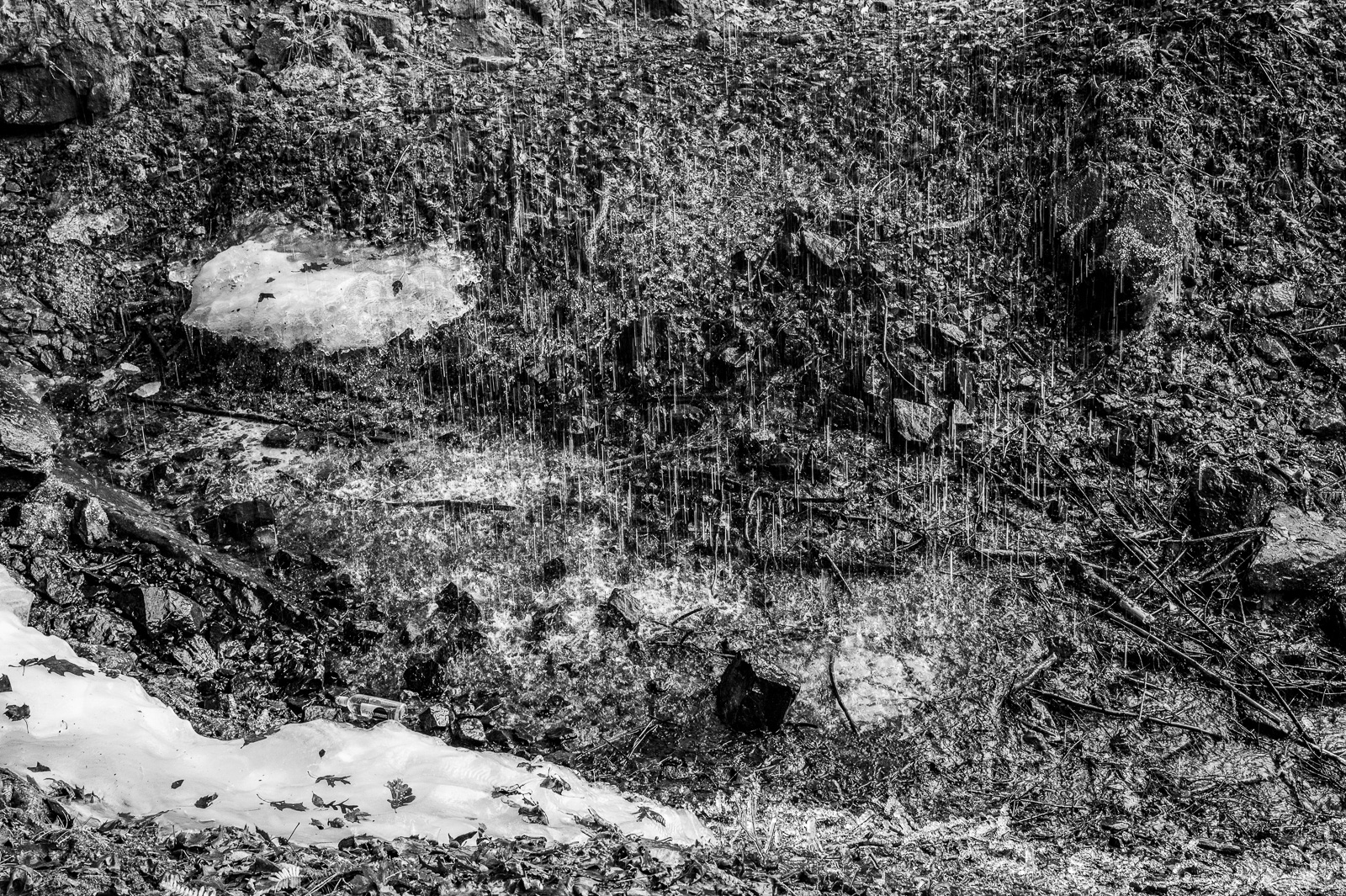
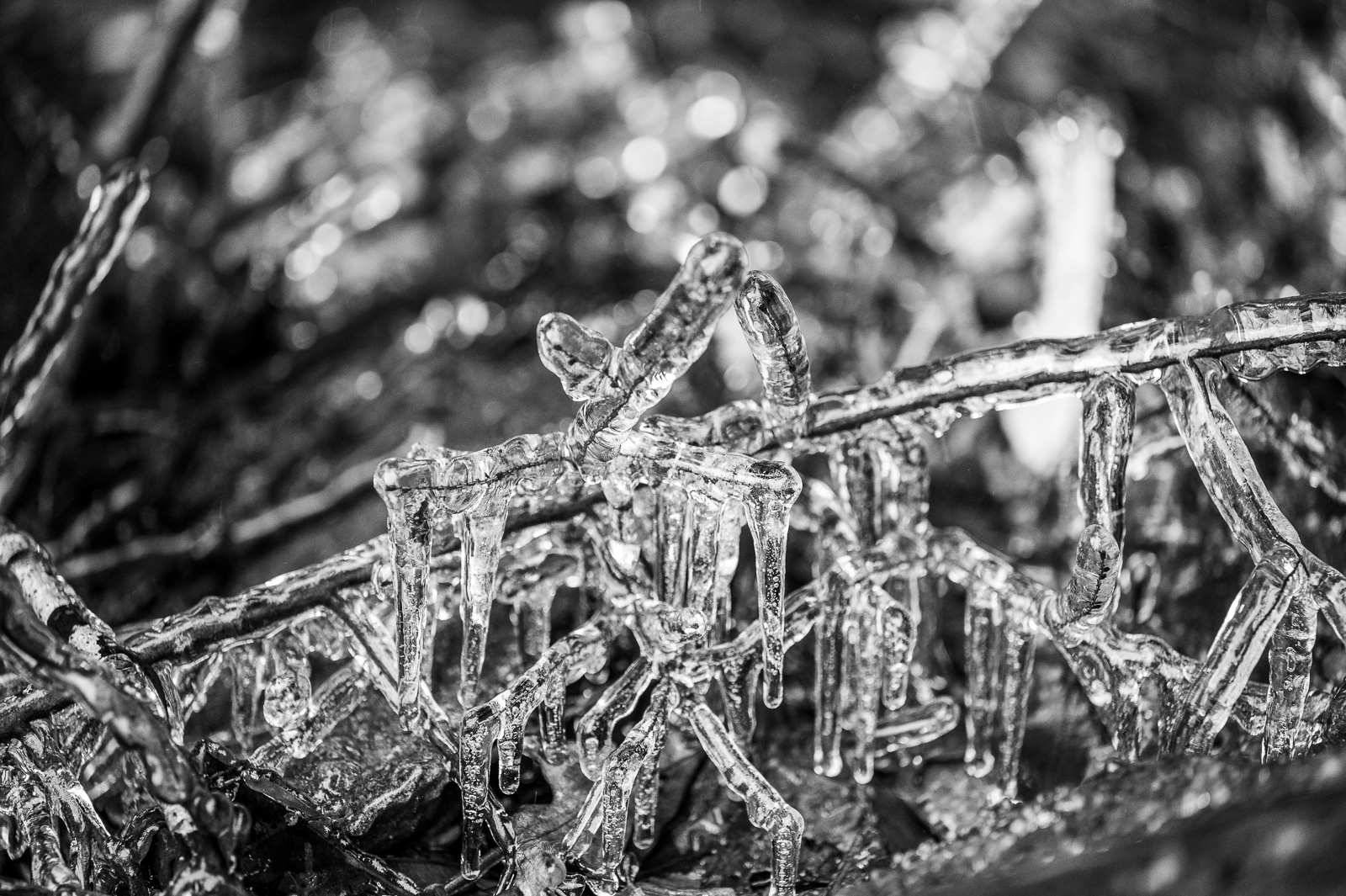
Protected by overhanging cliffs, these miniature ice formations were created by dripping water that froze over night, coating twigs and branches that didn’t get away in time.
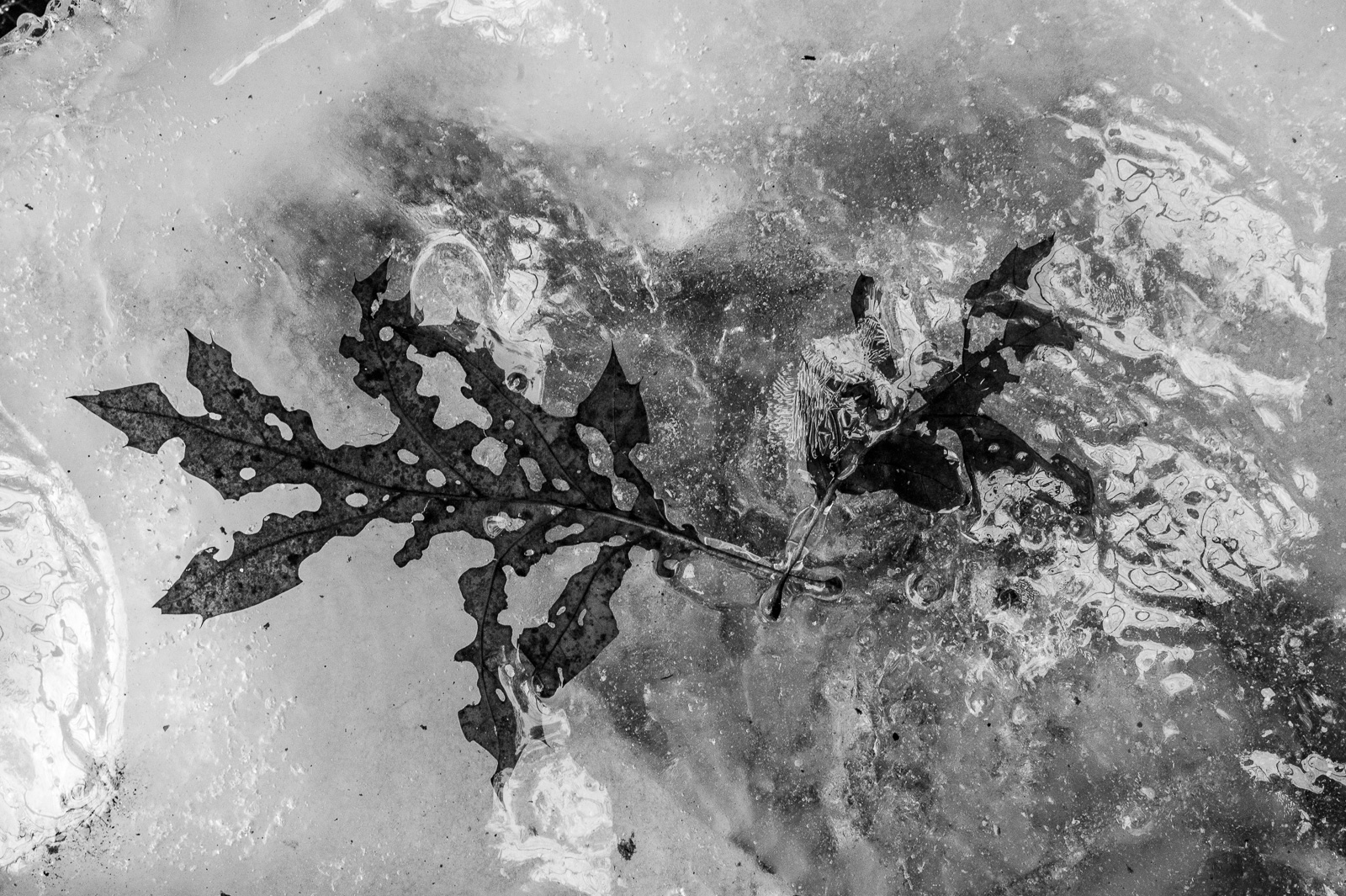
Or here are two unhappy leaves that were captured before the could peacefully decay:
The waves of flowing water over a thin layer of ice create pretty refraction patterns, too. This would look much better in color…
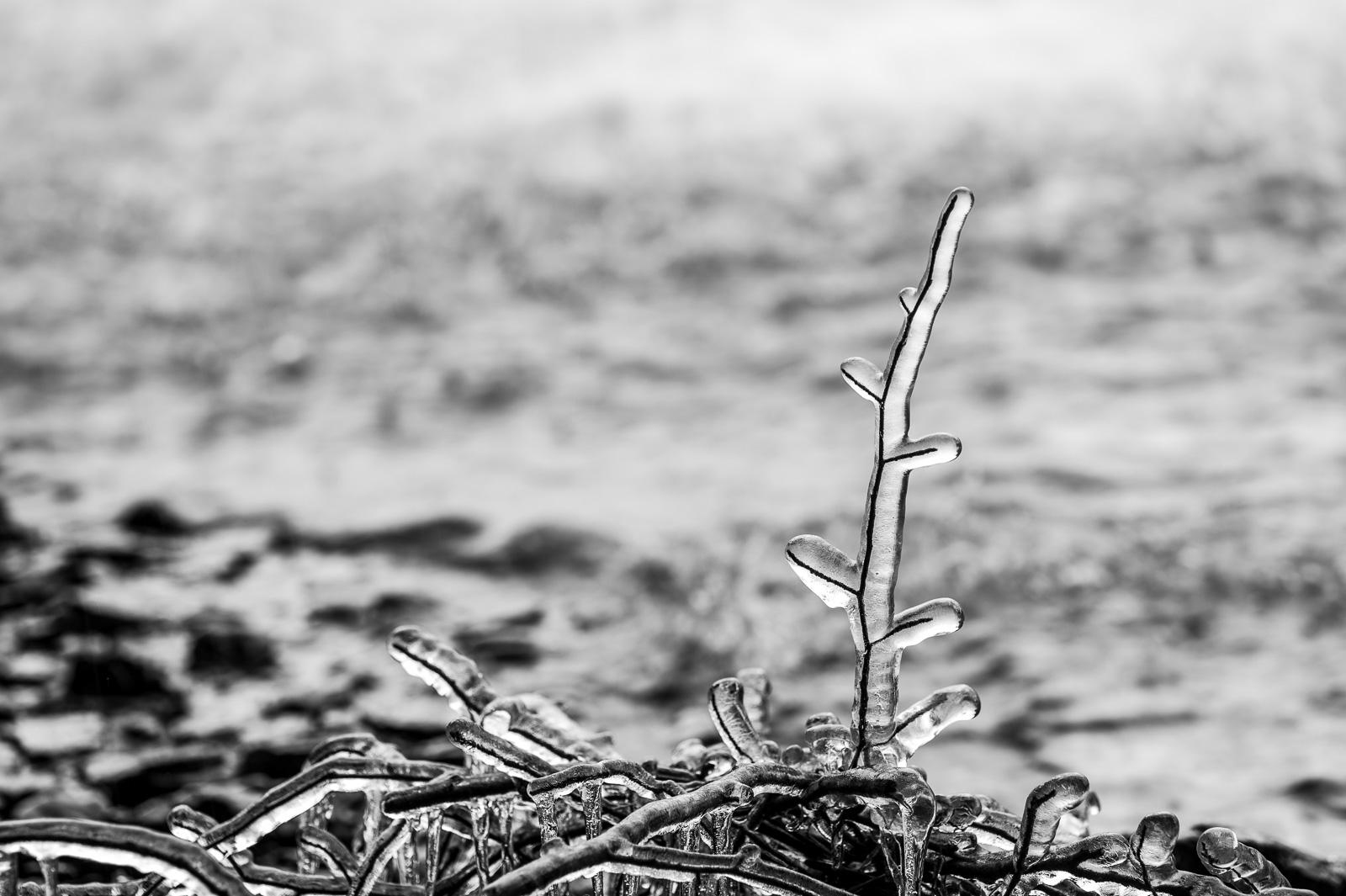
I would have liked to see all this when there was a foot of snow on the ground. But I might have ended up like that poor little tree below.
By now, all this icy beauty will be gone, making room for color, and growth.
To get to the second box canyon, we could retrace our steps, but we can also hang on to the cliffs and find our way along them.
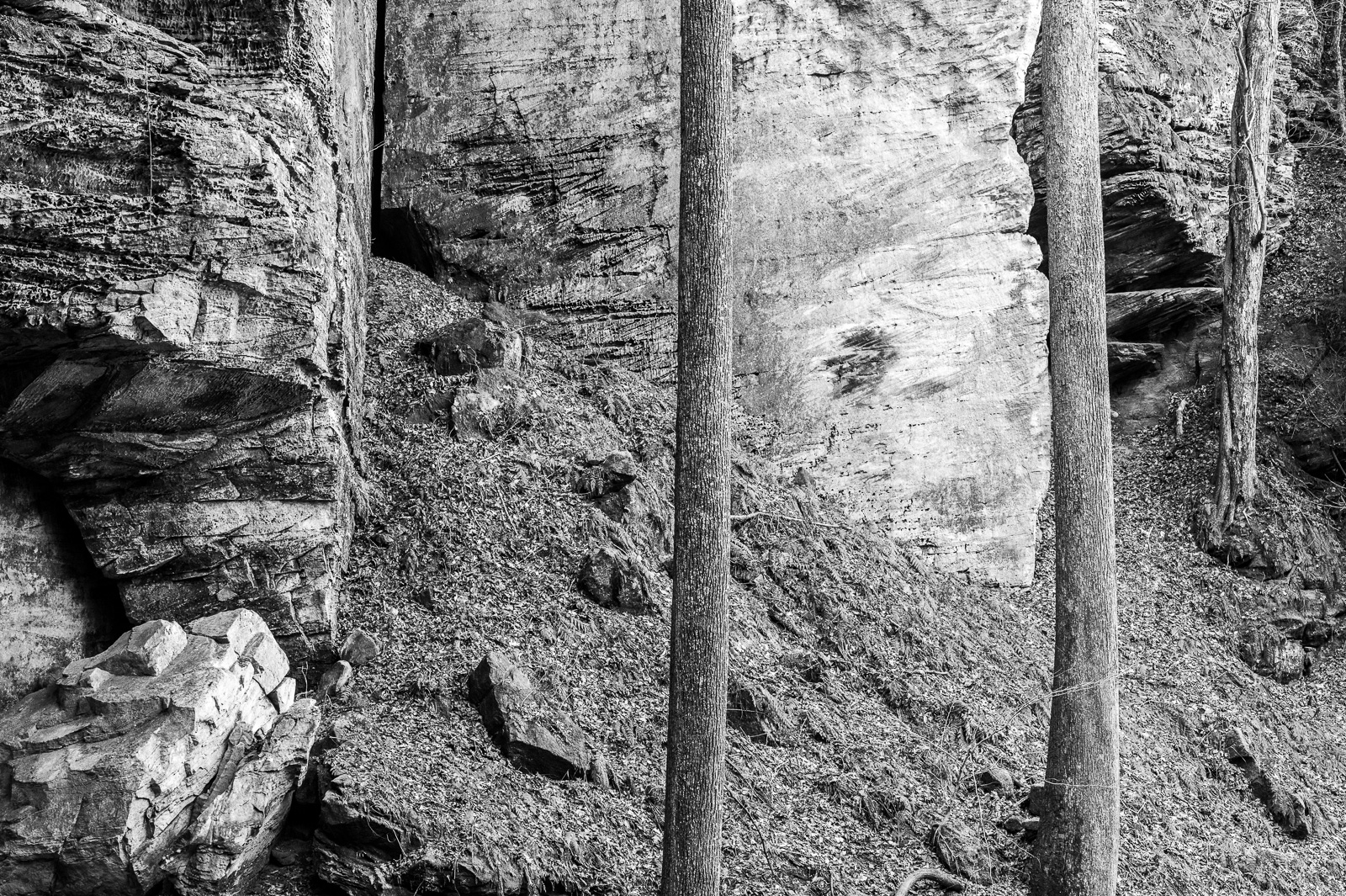
We are not talking about a single cliff — the entire area is fortified with vertical walls and overhanging cliffs. Who needs a shell like this?
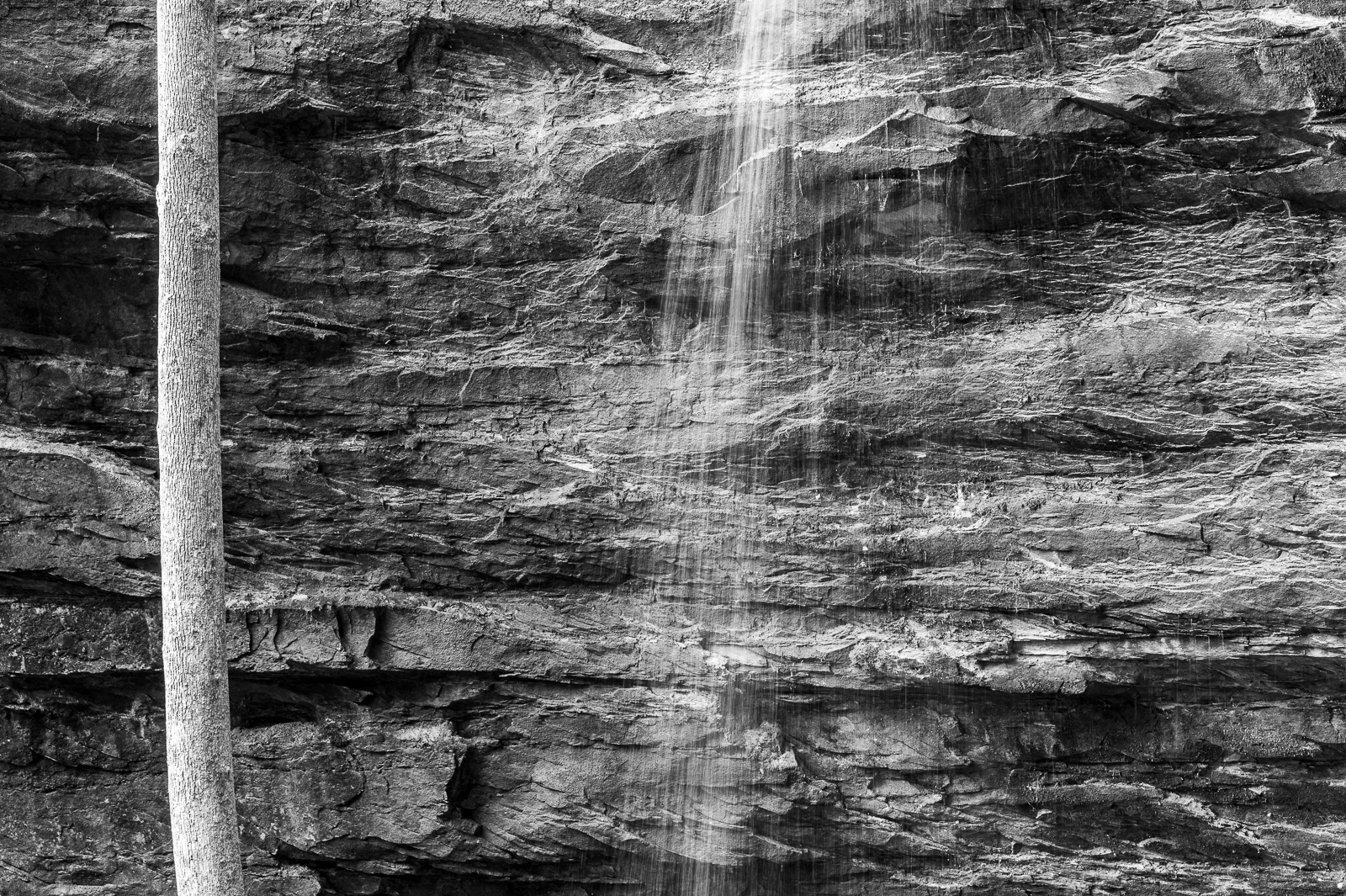
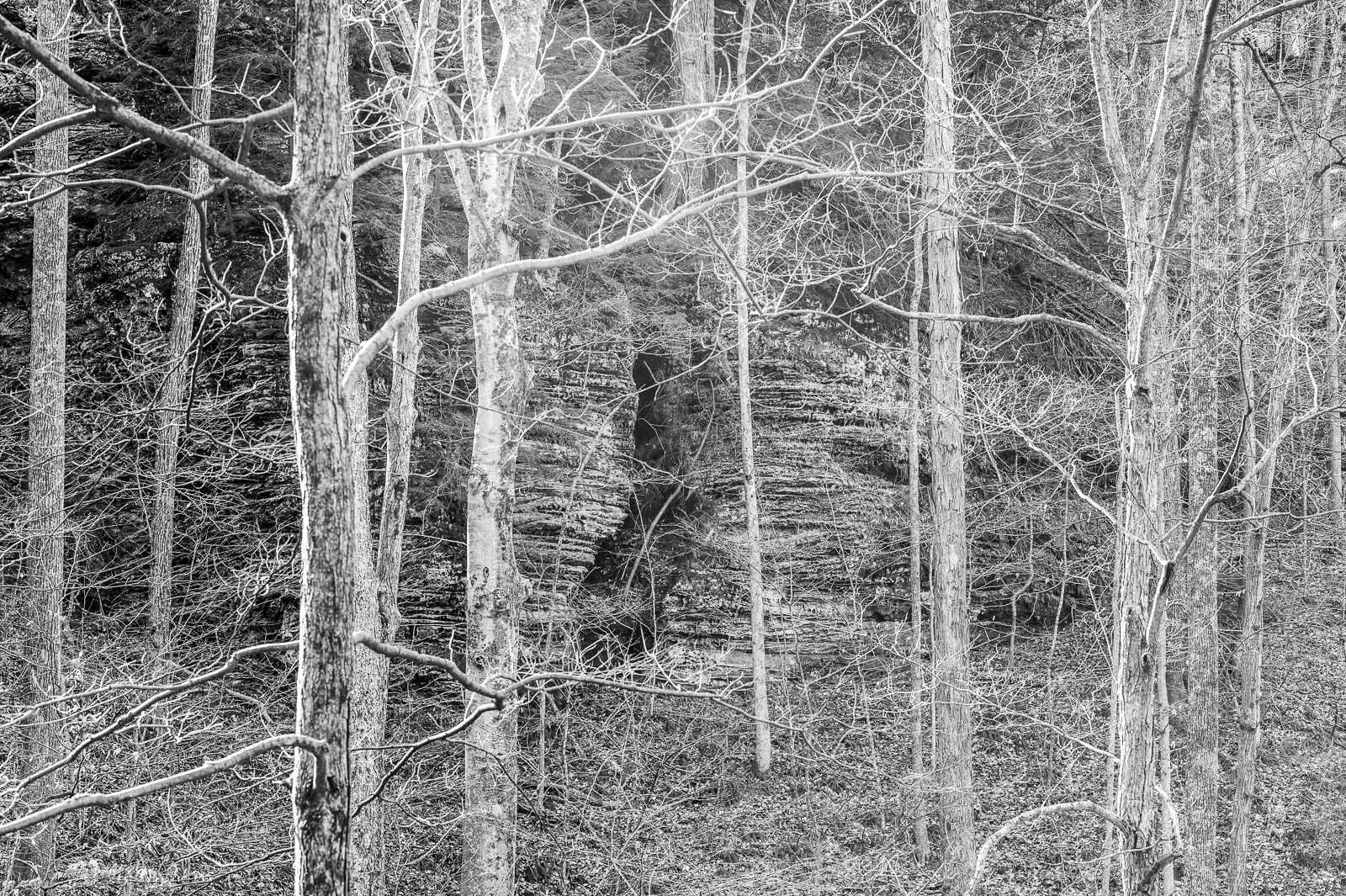
There is a strange geometric esthetics in these pictures, as if rock faces and trees align — for what?
These questions have no meaning here.
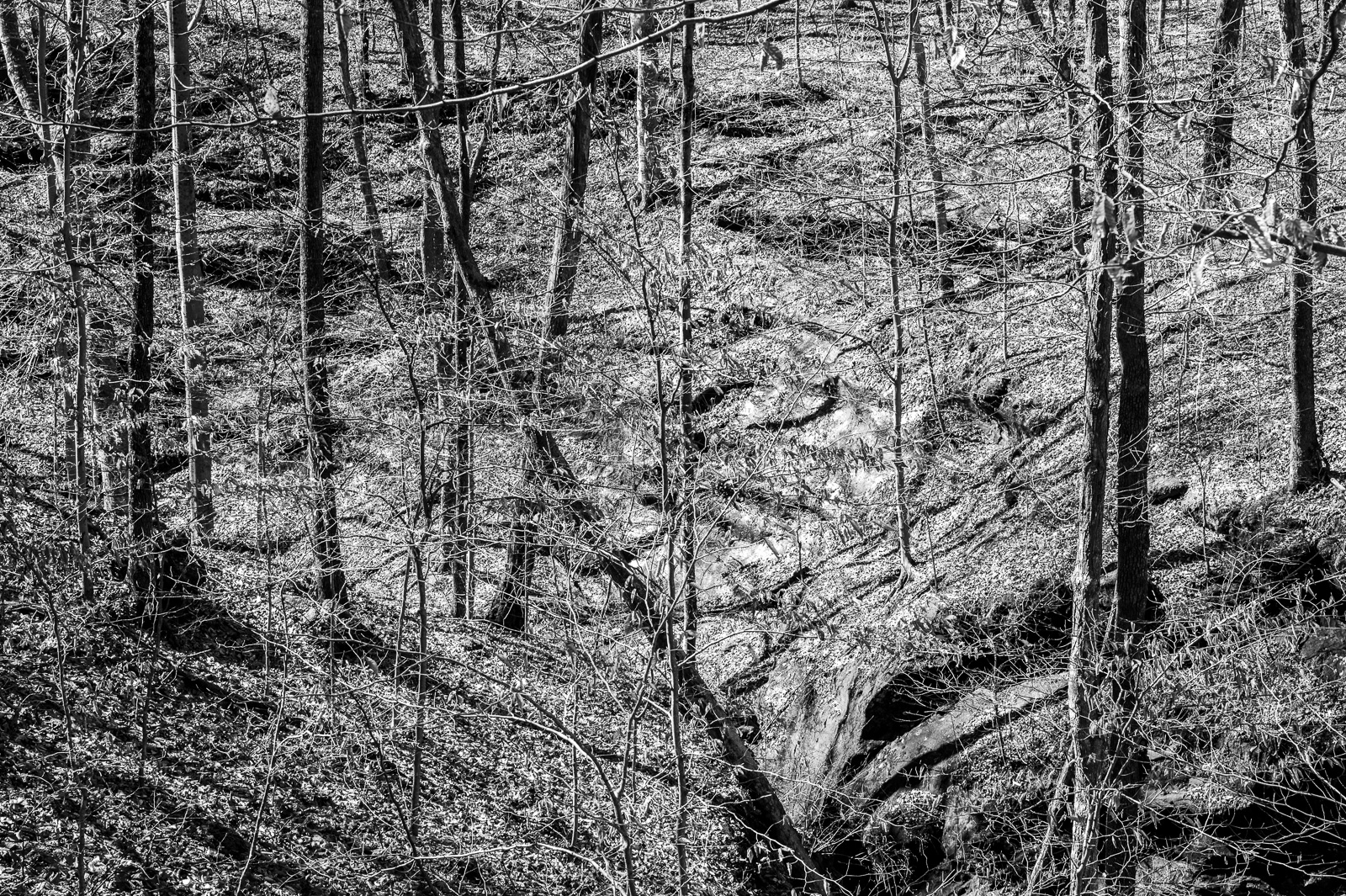
The walls dominate everything, there seems to be neither sky nor solid ground. Still — there is water coming from above, and the trees must have roots somewhere. Life exists, despite the walls, thanks to the walls.
The sheer existence overwhelms — no purpose beyond this is necessary.
We have arrived. We will need to look and see what awaits us here.












 The Inner Frame