Choice and Fate

Jigsaw puzzles are terrible. They tap into our subconscious desire to complete tasks even if they are pointless, the reusability is minimal, and they offer next to nothing for the creative or just inquisitive mind.

Tile

When in one of my former lives I needed a creative activity for young children that would encourage them to view themselves as part of a group, I designed the anti-puzzle above. It consists of only one piece, which is blank. Each child would receive a large printout of the tile, cut it out, decorate it with something personal, and put it on the wall.

Sample

There is no difficulty putting the pieces together. Everything fits, and you cannot make mistakes. The only choices that are left are the designs of the individual pieces, and the place on the wall. I can imagine grownups could use these for brainstorming, post-it style.
Snowtiles

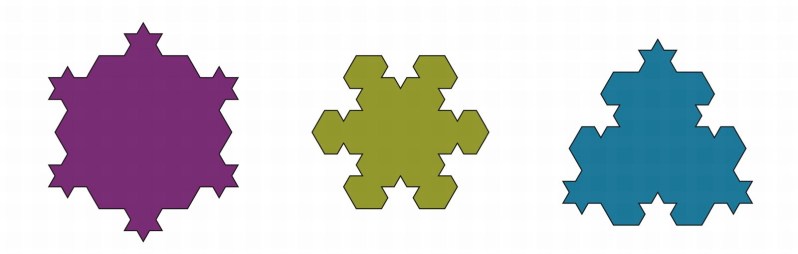
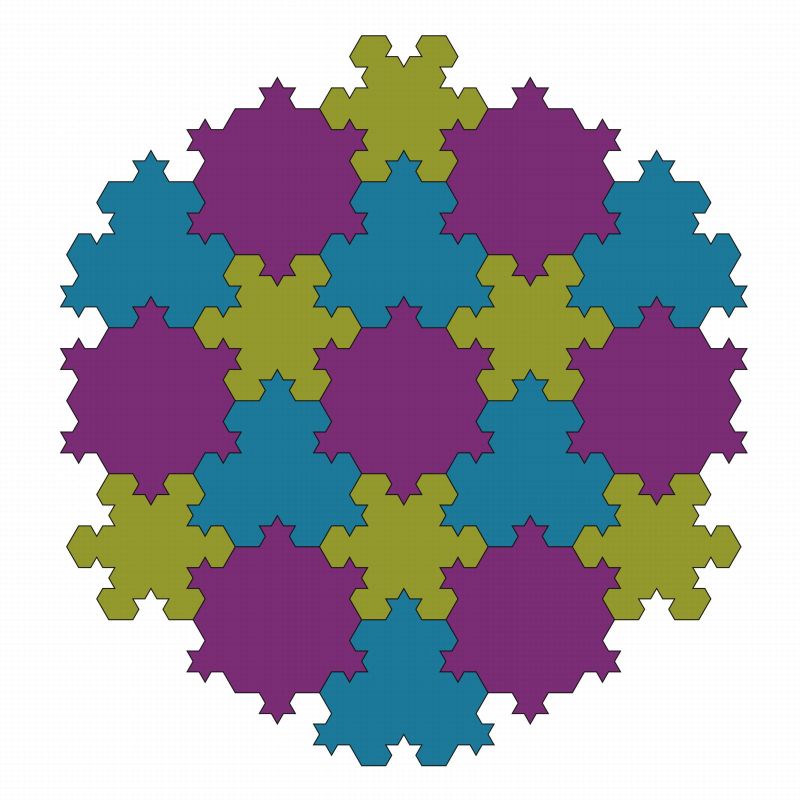
In a later part of that life, I recycled the idea for older children. Here, there are three different snowflake shaped jigsaw pieces (which I had cut out in large numbers and many colors using a die cutter). This turned out to be surprisingly difficult, because the pieces appear to allow you some choices. However, if you want to fill larger regions without gaps, it will always look like this:
Snowflaketiles

The hexagonal lattice is something our squared brains have a hard time to adjust to, apparently. Still, choices can be made by selecting the colors and shape of the design.

Snowflake

Dissonance

That my father taught music in high school influenced the development of my musical taste to a large degree. My initial resistance to classical music resulted in the common appreciation of popular music, of which I still approve groups like The Cure and Alan Parson’s Project but disapprove others which I (in shame) will not mention.
This attitude shifted after an organ recital that featured a piece by Olivier Messiaen.
 

cologne-3.jpg

I secretly searched my father’s vast vinyl record collection, and was delighted to find only one record, namely the Visions de l’Amen, played wonderfully by Yvonne Loriod and Messiaen himself.

This was the beginning of an attraction to contemporary music. I grew up listening innumerable times to an hour long piece called Computerimprovisationen auf dem Hybrid 5 that I had recorded from public radio using my father’s reel to reel tape recorder. I would love to get hold of a recording of that piece, but alas the internet is not almighty, and I have not been able to track it down.

After I moved to Bonn I kept exploring. I still think the main entrance to contemporary music are Bartok’s six string quartets: If you are able to thoroughly enjoy these, you are ready for everything else.

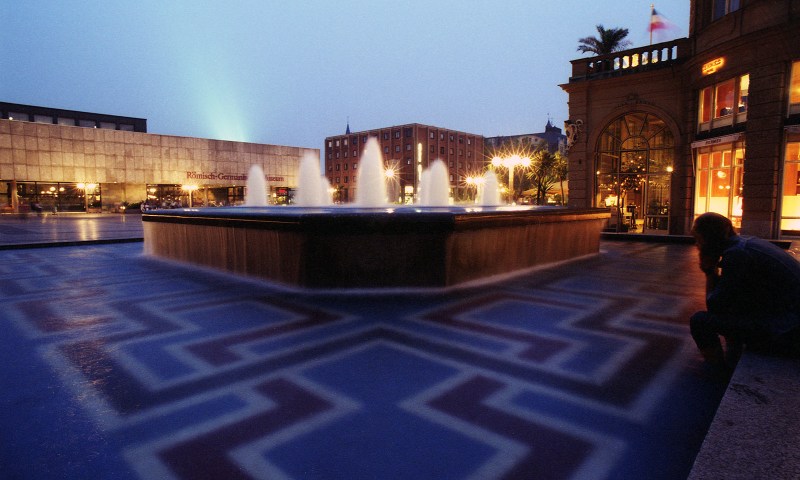
The Bonn-Cologne area was well suited for developing taste. The Cologne Philharmonie, which is underneath the fountain in the picture below, offered

Cologne 1

not only the standard classical fare, but also frequent concerts by composers that were not only alive but in fact present. This gave authenticity and a sense of being in presence of the creative act, which I find stimulating.

What makes me post this? A news report, that in that same place, in March 2016, a cembalo recital by Mahan Esfahani that featured besides the Bach family also Steve Reich, was cut short by an unruly audience that apparently could neither deal with Reich’s 50 year old Piano Phase nor with the ethnicity of the performer.

Cologne 2

Cologne has something to offer for every taste. Why offend others?

Minimal Surfaces, At Their Limit

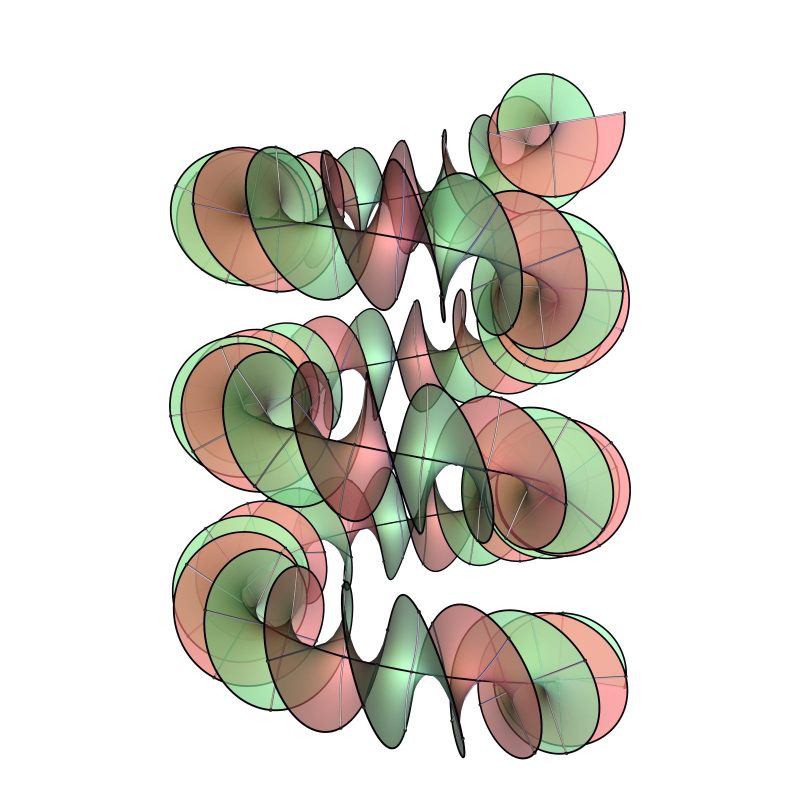
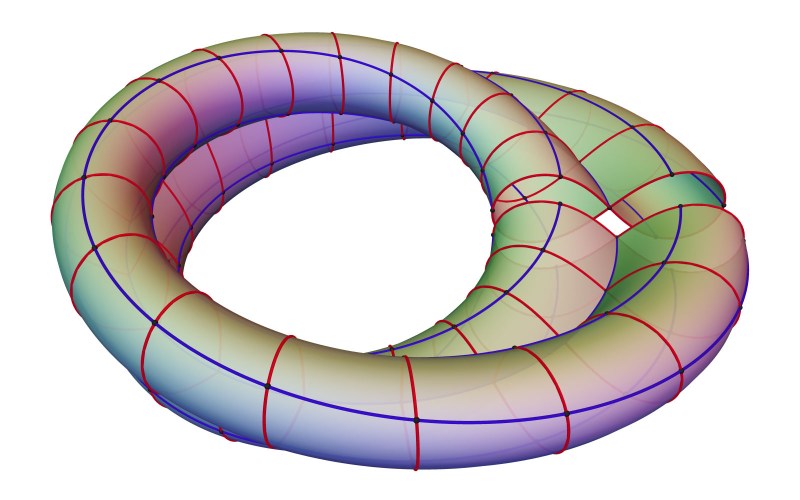
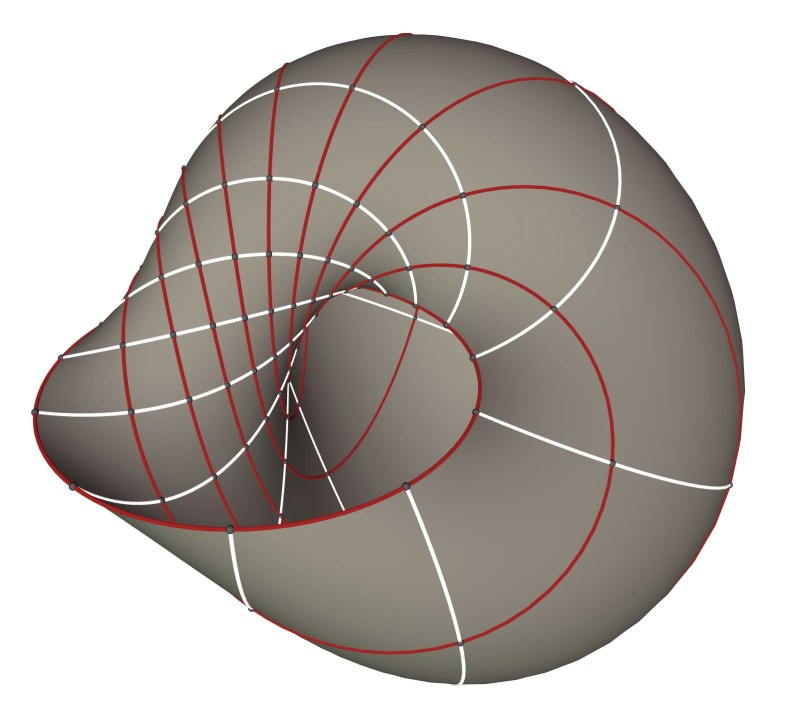
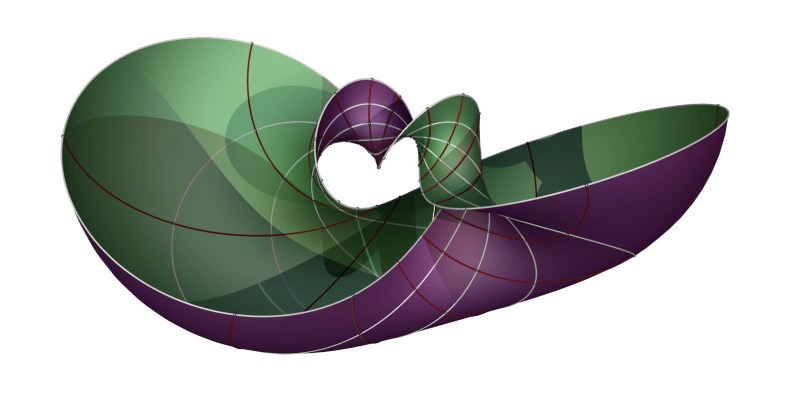
The minimal surfaces in the post about Möbius strips were made using a formula by Emmanuel Gabriel Björling, a Swedish Mathematician from the 19th century. For a given curve in space, this formula allows you to write down a parametrization for a minimal surface that not only contains the given curve, but is also tangent to the curve in any way you wish to prescribe. For instance, the multiple times twisted Möbius strips all contain a circle, and touch the circle by spinning around it more or less often.

Helix

This formula works not only for circles but also for other curves, like the helix above. The difficulty is that in most cases, the equations are so complicated that they become meaningless. There are some pretty exceptions, like this knotted minimal strip:

Knots

In the search for interesting and simple curves where Björling’s formula gives manageable results, the multiply twisted minimal strips are particularly useful. We saw that the surfaces in their associate family are also closed strips, but their core curves are not just circles anymore. Using these as new core curves can be used to compute surprisingly simple formulas for surfaces like this one:

DoubleMobius3 15

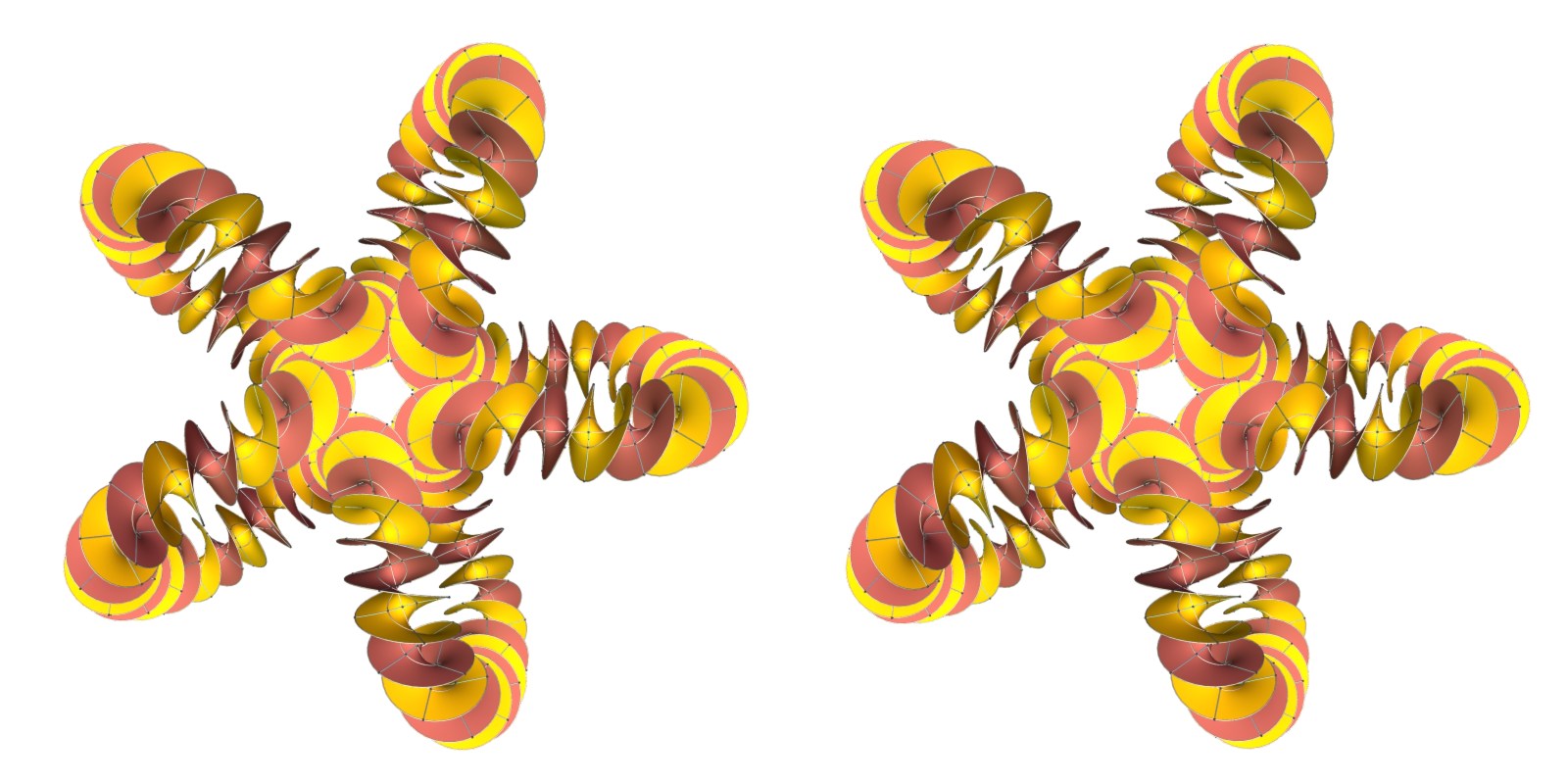
This can get quite complicated. Try to view this stereo pair cross-eyed or with a stereo viewer.

Bjorling stereo

These shapes appear to contradict what we think should be a minimal surfaces. But that’s what we do: Seek what goes against the convention.

La terre qui penche

In Carole Martinez’ extraordinary novel La terre qui penche we encounter the Middle Ages through the eyes of adolescent Blanche (and her mysterious and timeless alter ego, the Old Soul). Nature has not been conquered yet: Imagination and poetry instead of science are the primary means of comprehension.

DSC 0633

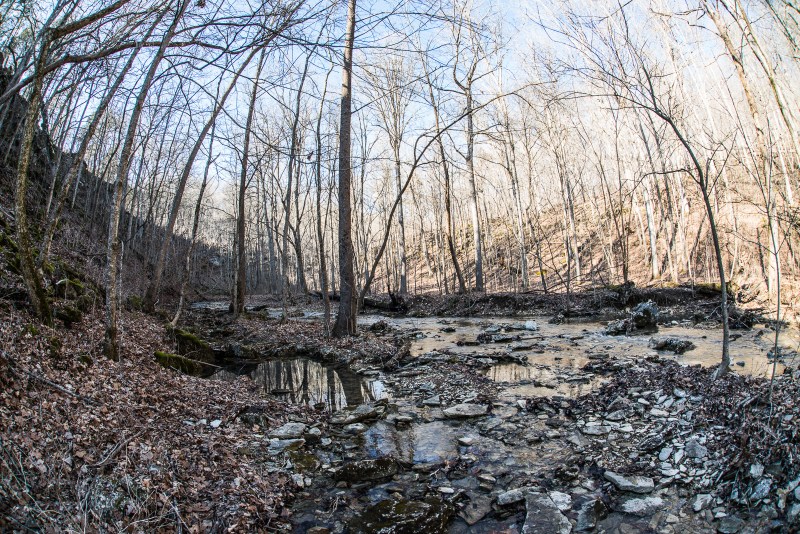
Southern Indiana’s landscape is hard to capture, because it is full of ruthless vegetation, and the harsh sun provides unwanted contrast. I usually resort to taking pictures of carefully selected views before or just at sunrise. This works well, but doesn’t capture how it really looks like.

DSC 0637

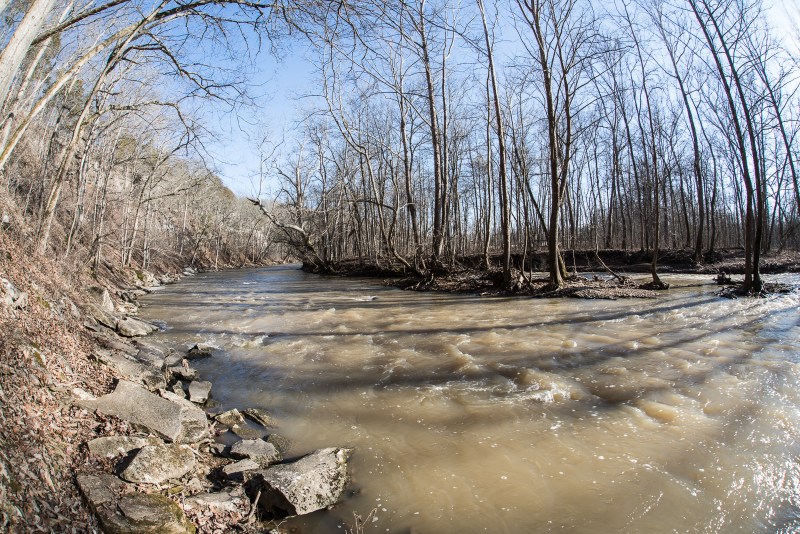
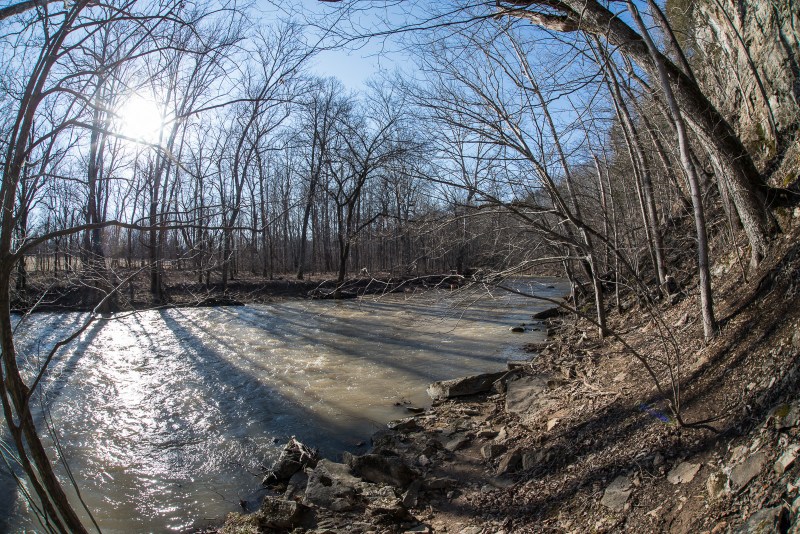
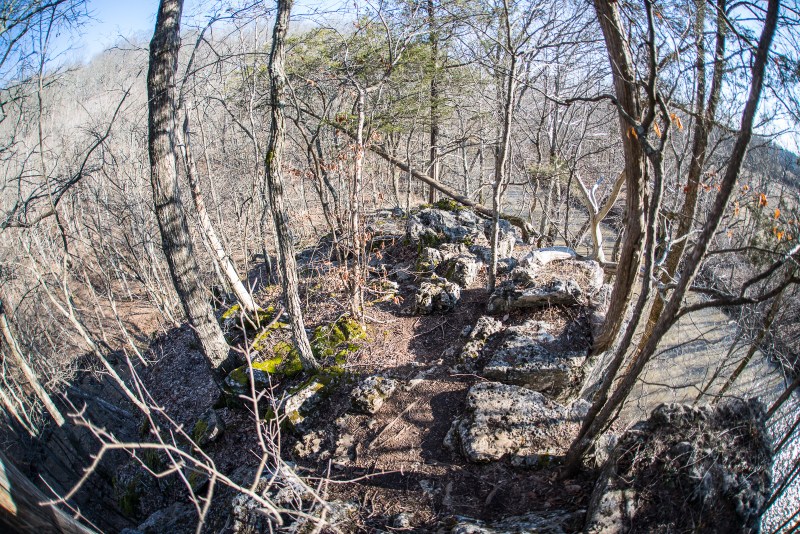
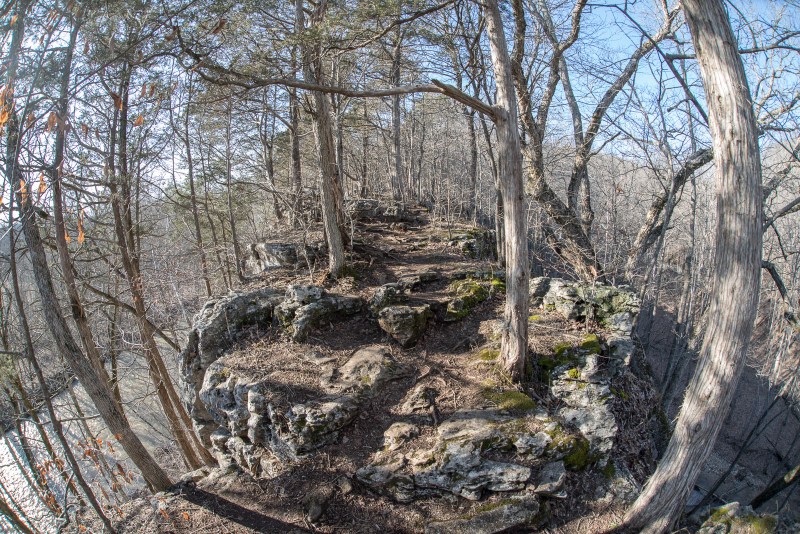
So I decided to go all the way to the other extreme, using a 15mm fisheye lens. We truly have the world tilting now, and this is how it feels like between the creek and the bluff at Cedar Bluffs Nature Preserve.

DSC 0644

Depending how one uses the fisheye, the effect can be more or less intrusive. One can have a peaceful valley that is a bit too curved, or a disorienting view down the bluff.

DSC 0653

I will need to revisit these images when I am less under the impression of La terre qui penche.

DSC 0659

Möbius and Friends (Scrolls V)

I am sure we all have cut a Möbius strip in half, and been irritated by not getting two pieces but instead a doubly twisted strip.

Moebiuscut

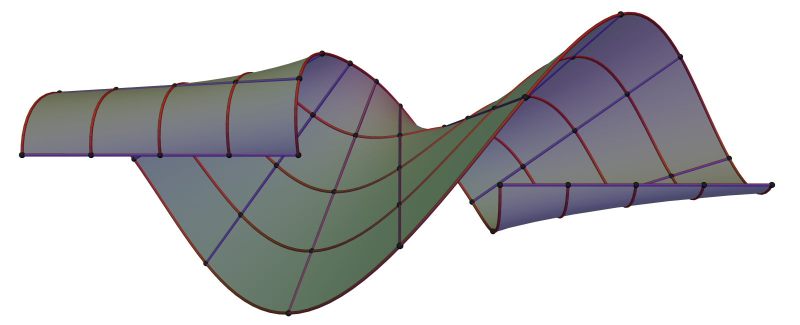
The quickest way to parametrize a Möbius strip is as a ruled surface, letting line segments rotate by 180 degrees while moving them around the same circle where we usually cut. This raises the tantalizing question whether we could possible make a book whose pages are Möbius strips. For the moment I don’t know, I haven’t been able to find many explicit bendings of the ruled Möbius strip, except for its Doppelgänger:

MobiusDual0

This, however, is not a closed band but instead continues on periodically. There is a version of the Möbius strip as a minimal surface that also has a circle as a core curve.

Mobius12

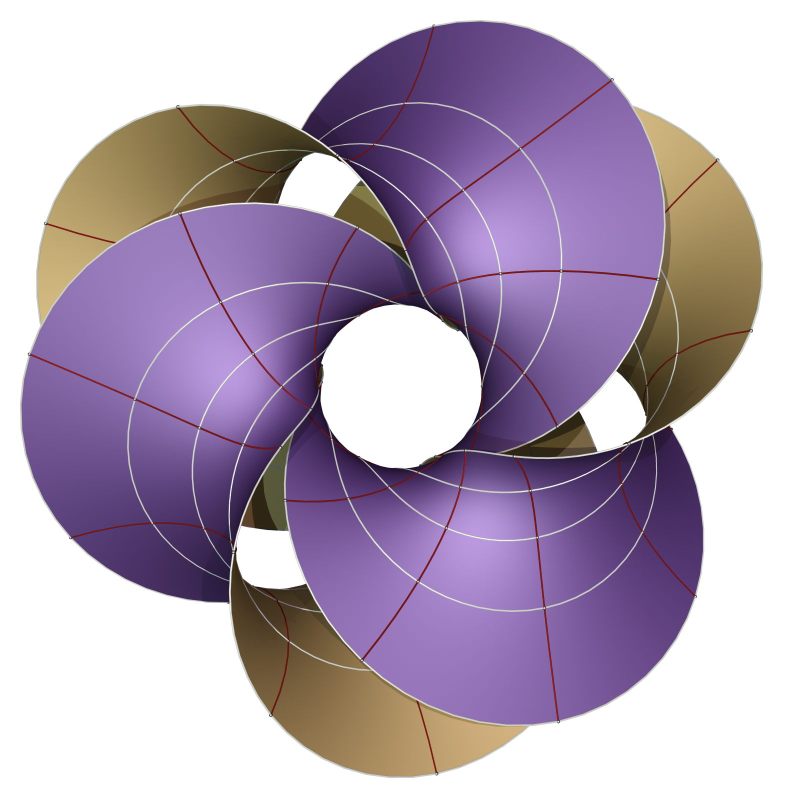
As with ruled surfaces, you can twist these minimal surfaces more or less often around the circle. Here for instance is the triply twisted version.

Mobius32

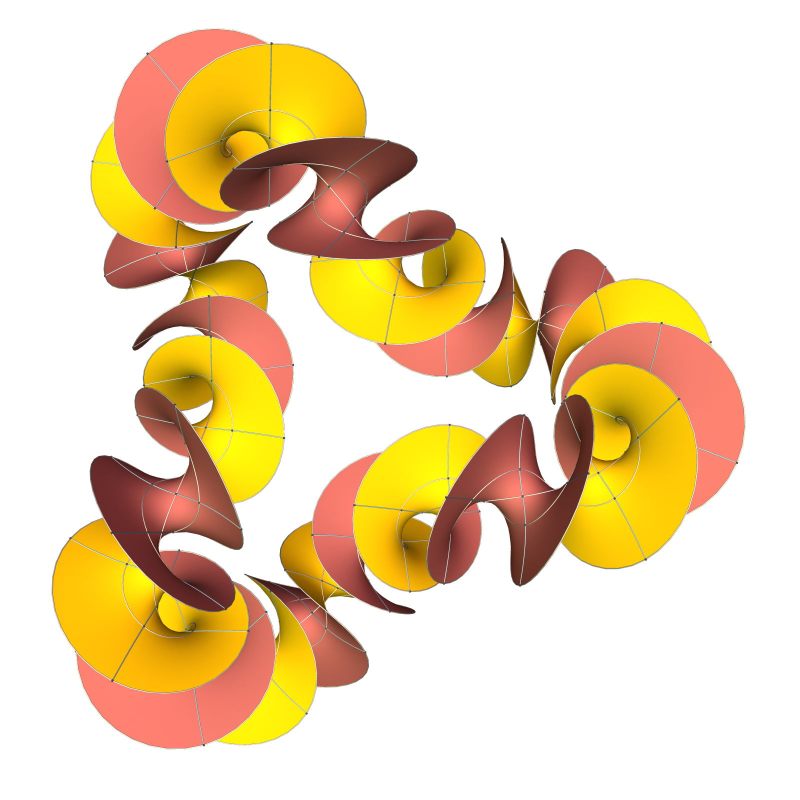
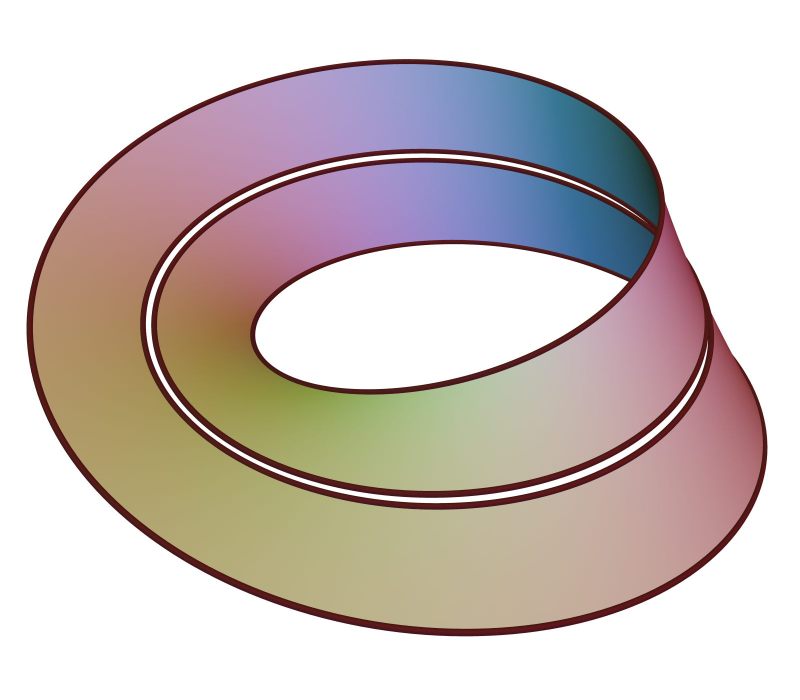
All these minimal surfaces can be bent in their associate family. They stay minimal, and, surprisingly, also closed bands (after two turns), except for the case of a doubly twisted band. The conjugate of the triply twisted band looks like this.

Mobius32conj

Of course three is never enough, so here is the 40 fold twisted version. Amazingly enough, all these surfaces have explicit formulas.

Mobius20b

This would be another possibility for a book project: One long twisted sheet of paper, bent into disk like pages…

Methuselah Trail

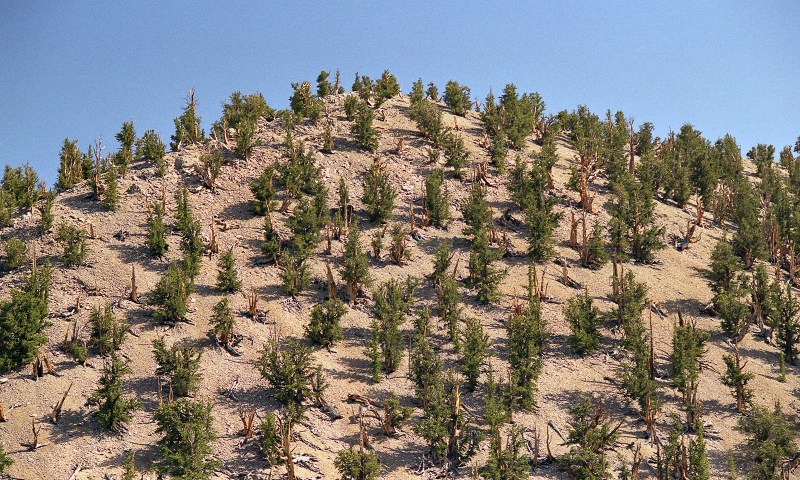
The White Mountain area in the eastern Sierras is home to the Great Basin Bristlecone Pines. The arid climate and high altitude limits the growth periods of the pines to a mere two weeks per year.

Bristle2

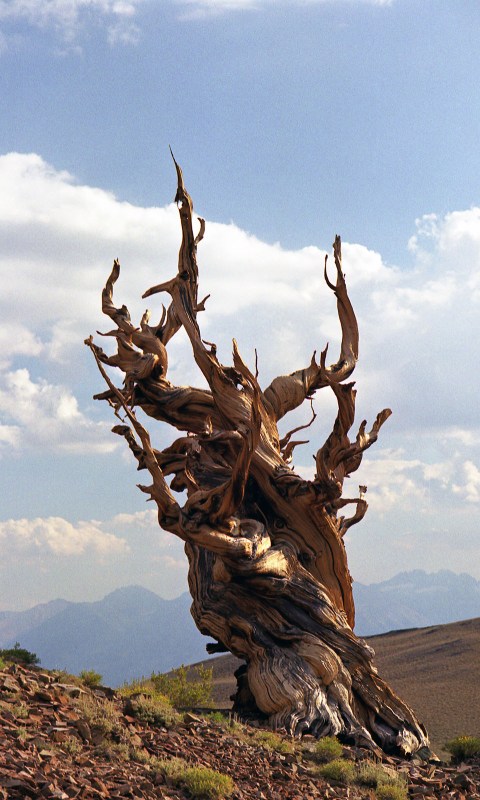
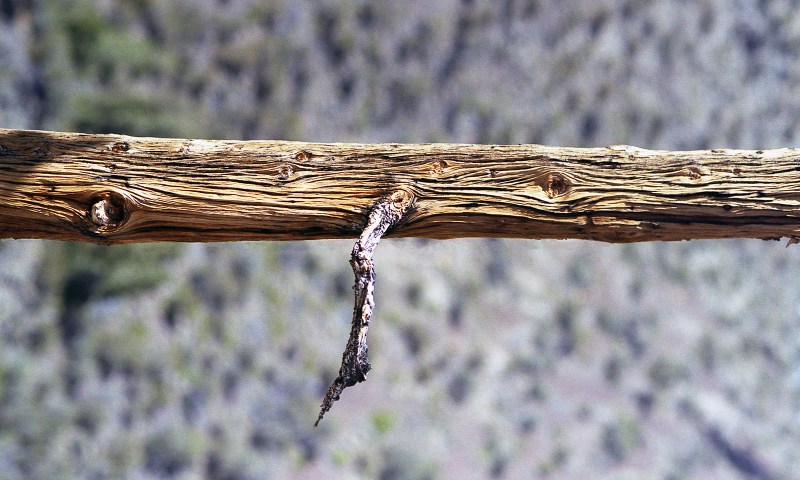
So they grow slowly, and get very old. Some of them are over 4,000 years old, making them the oldest trees on the planet.

Bristle7

We humans don’t think in these time spans. We occasionally consider the next year, and rarely the next decade.

Bristle6

The age of the cathedral builders is gone, who knew they would not live to see their work finished.
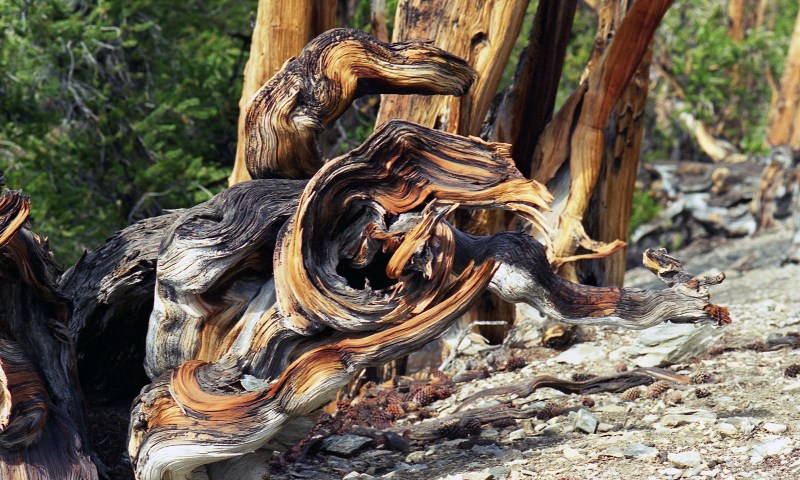
What would we do with so much time? Would we plan ahead and mold the future, or would we just keep adapting and contorting?

Bristle3

Maybe we should develop a better sense of being content with what we have.

Bristle5

The Anti-Cone and its Doppelgänger (Scrolls IV)

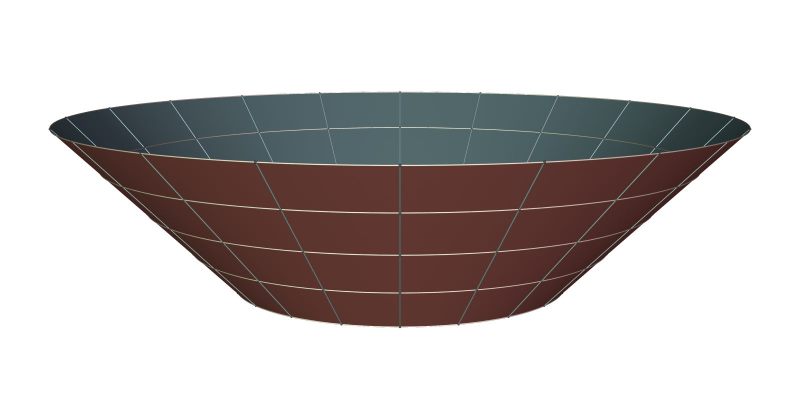
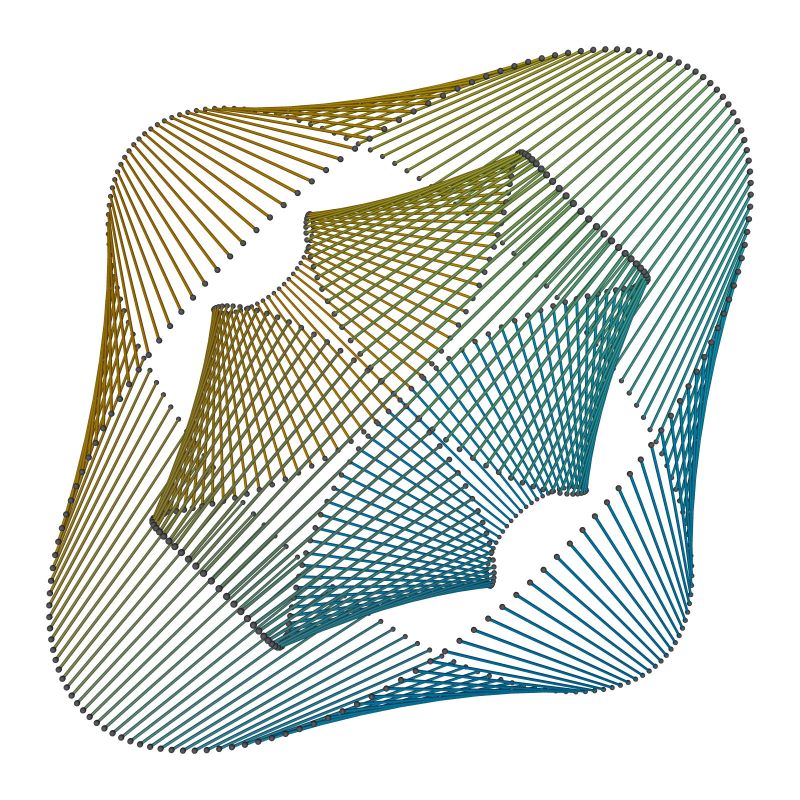
The literature has not many interesting examples of ruled surfaces in Euclidean space besides cylinders, cones, hyperboloids, and the helicoid. Let’s fix that. A cone, or more precisely a frustum (latin for piece), can be described by following a horizontal circle (as a directrix) counterclockwise and rotating the generators also counterclockwise, horizontally pointing in the same direction as the point on the directrix, and with a fixed vertical component.

Cone

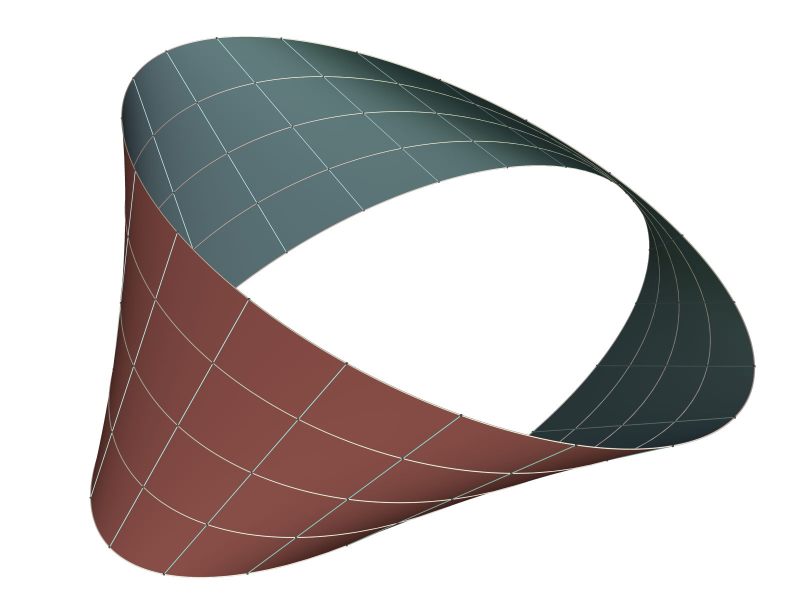
The result is a flat surface and thus not interesting for making a curved book. But we can also follow the circle and let the generators rotate the other way. I will call the resulting surface an anti-cone. It is certainly not flat anymore.

Anticone

Take for a ruled surface all of its generators (the straight lines) and shift them so that they pass through the origin.
Their intersections with a sphere centered at the origin is called the spherical indicatrix of the ruled surface.

In this case, the spherical indicatrix is a pair of horizontal circles, both for cone and anti-cone, but differently orientated.

An old theorem about ruled surfaces states that you can deform any ruled surface by changing its spherical indicatrix pretty much arbitrarily. It turns out that there are typically two different solutions to do this, even if we trace the indicatrix in the same direction.

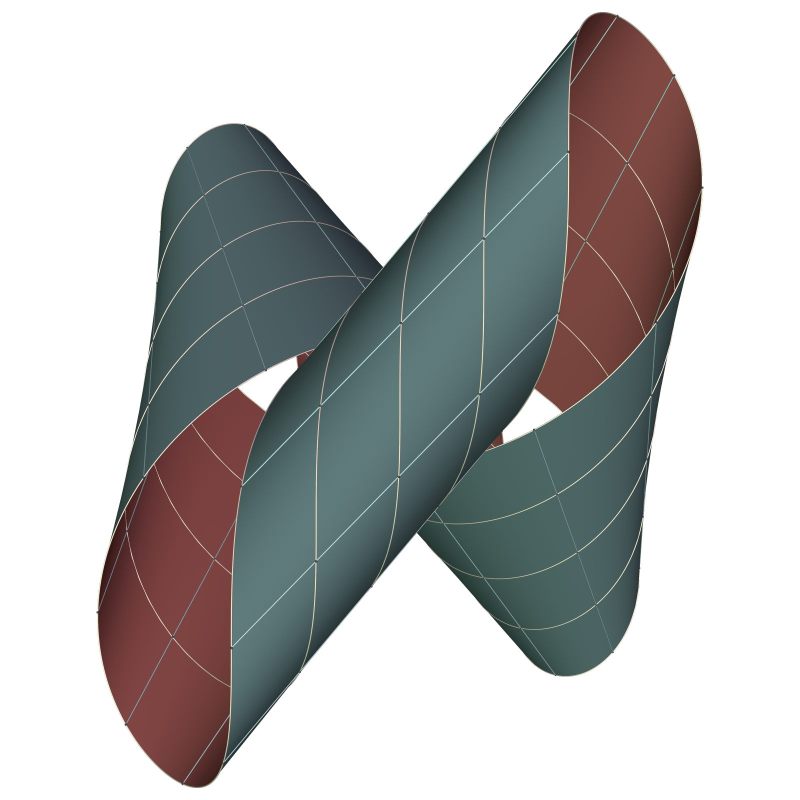
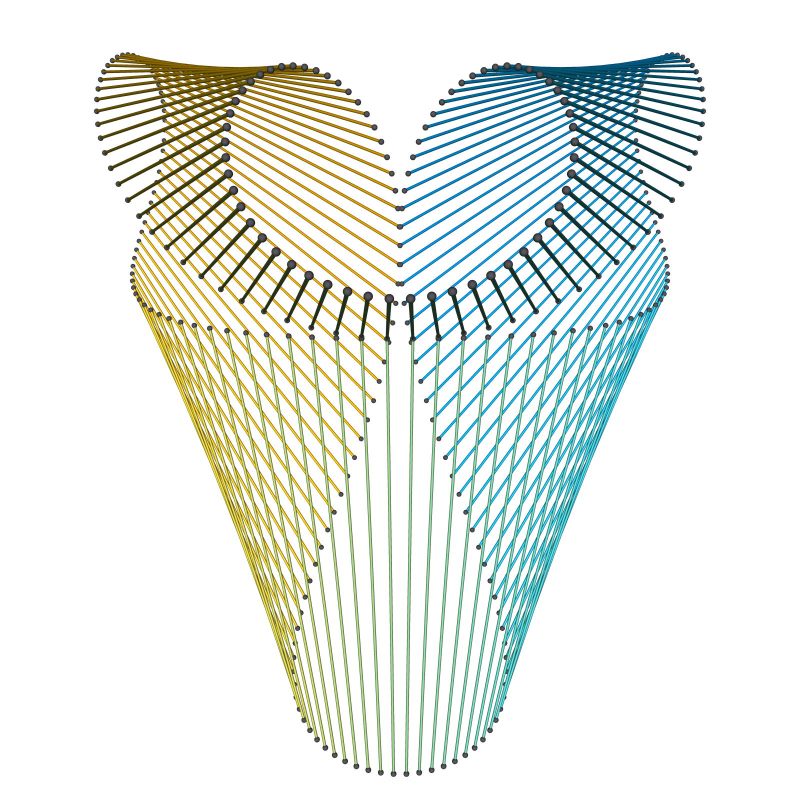
In other words, for a given ruled surface, there is a second ruled surface along a different directrix but with pairwise parallel generators. Let’s call this the doppelgänger of the ruled surface. For the anti-cone, it looks like this:

Anticonedual

One can visualize the relationship between the two surfaces by putting them together and coloring corresponding (i.e. parallel) lines with the same color.

Anticone3

If we had paper ribbons shaped this way, we could bend one into the other.

Here is another image of the generators of the anti-cone doppelgänger. Giving up on clarity can increase the esthetical appeal when we add ambiguity.

Anticone1

Ahr Valley (Wine Biking II)

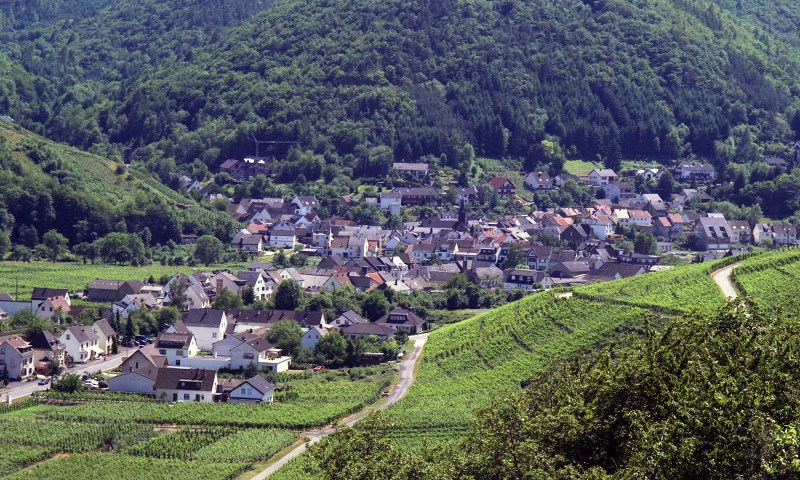
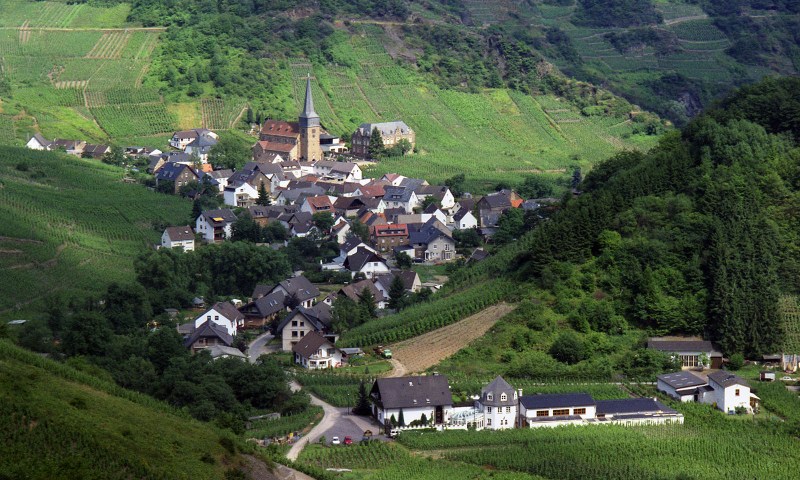
The Ahr valley is about 90 minutes away from Bonn by bike. This valley marks the northern end of the Eifel, a volcanic low mountain range in northern Germany.

Ahr4

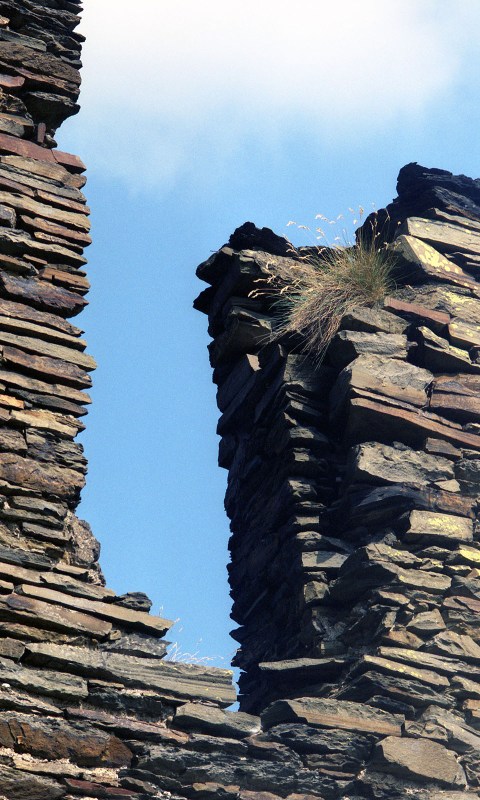
The microclimate and terroir (slate) makes it suitable for growing wine. For many years, tradition and local demand resulted in largely unremarkable sweet Pinot Noirs.

Ahr1

When I came back from California and felt I needed to cultivate my acquired habits also at home, I went on bike rides to the few wine makers who dared to go against the tradition. My favorite was Weingut Kreuzberg, run by a friendly family. The two sons were happy to sell me one or two bottles of their Dernauer Pfarrwingert Auslese, to be carried home by bike.

Ahr2

One day there was excitement: They just had won a price in Berlin for their illegally planted and harvested Cabernet Sauvignon. German wine laws are quite German, indeed. Each region is supposed to grow only their allowed varieties of grapes, and exceptions need a special permission. The Kreuzbergs didn’t get permission, because the wine association didn’t believe that Cabernet would grow in this climate.

Ahr3

The punishment was cynical: The Kreuzbergs had to rip out their Cabernet plants, because they were planted without permission, but were allowed to replant them, because they had proven that Cabernet could actually grow there.

Things have changed since. More quality wines are being produced at the Ahr (among them Cabernet Sauvignon), and the little known wines made by the Kreuzbergs are now sold out faster than it takes to get from Bonn to the Ahr (by bike).

What am I doing here? Applauding the break with traditions and simultaneously lamenting their loss? Silly me.

Lawson’s Klein Bottle (Annuli IV)

Lawson bottle b
This is what it might look like if you got stuck inside a highly reflective Klein Bottle. Wait – Klein Bottles don’t have an inside.
From the outside they can look like this:

Kleinbottle

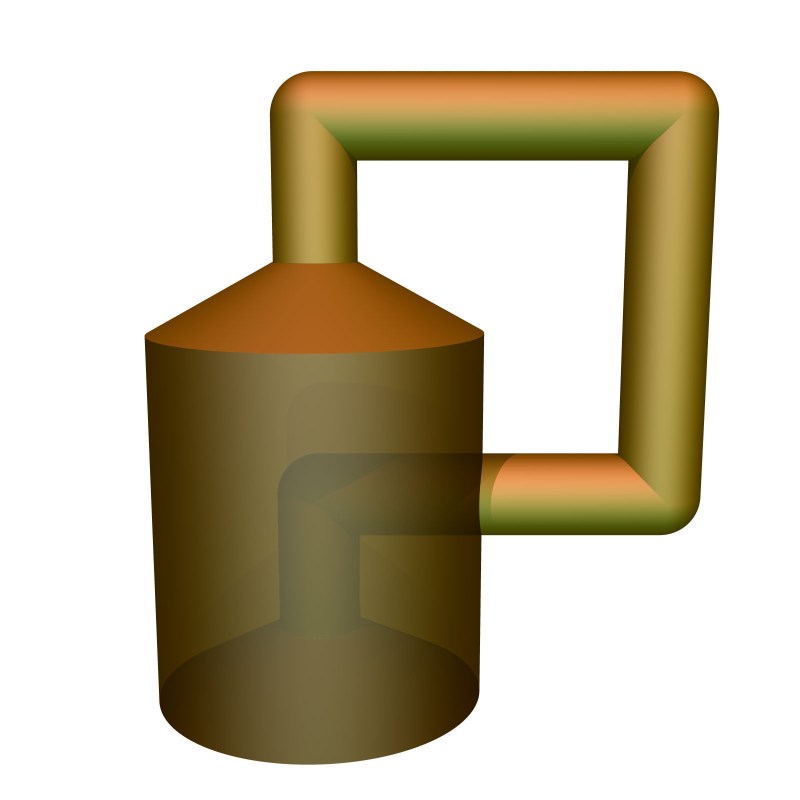
Crawling through into the pipe at the bottom gets you from outside to inside. This is spooky, and responsible for this odd behavior is a Möbius strip. There are other versions of the Klein Bottle. Here is the figure eight version, obtained by rotating a figure 8 bout the vertical axis, and giving thereby the 8 a half twist.

Figureeightbottle

Note that in both versions, the bottle cuts itself along a circular closed curve. That the two versions above are really quite different can be seen by looking at the bottles near these circles. In the first case, it looks like an annulus intersected with a cylinder, while in the second case we see two intersecting Möbius strips. The latter description helps to understand the geometry of the next version better.

Lawson 2b

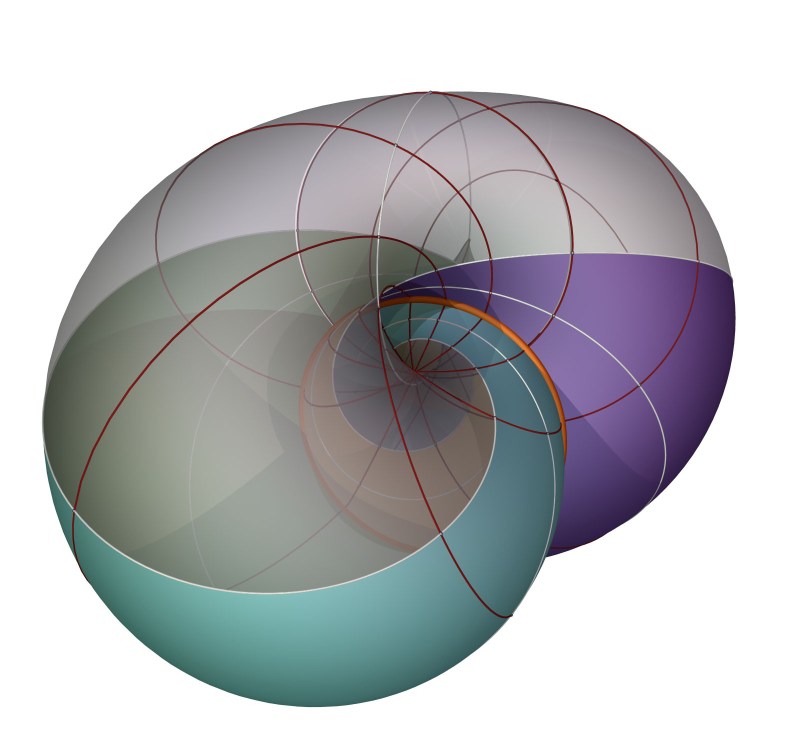
As we know, a Möbius strip has just one boundary curve. The image above shows a Möbius strip where the boundary curve is a perfectly round circle. Taking a second copy of this Möbius strip and attaching it to the first along the boundary circles produces the stereographic projection of Lawson’s Klein Bottle, a minimal surface in the 3-dimensional sphere.

Lawson 7

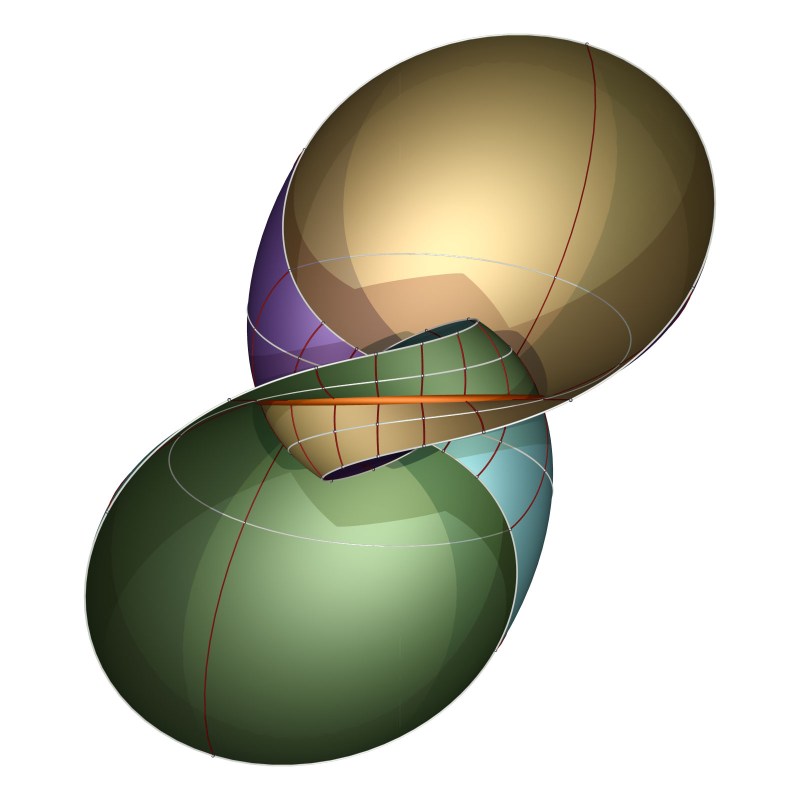
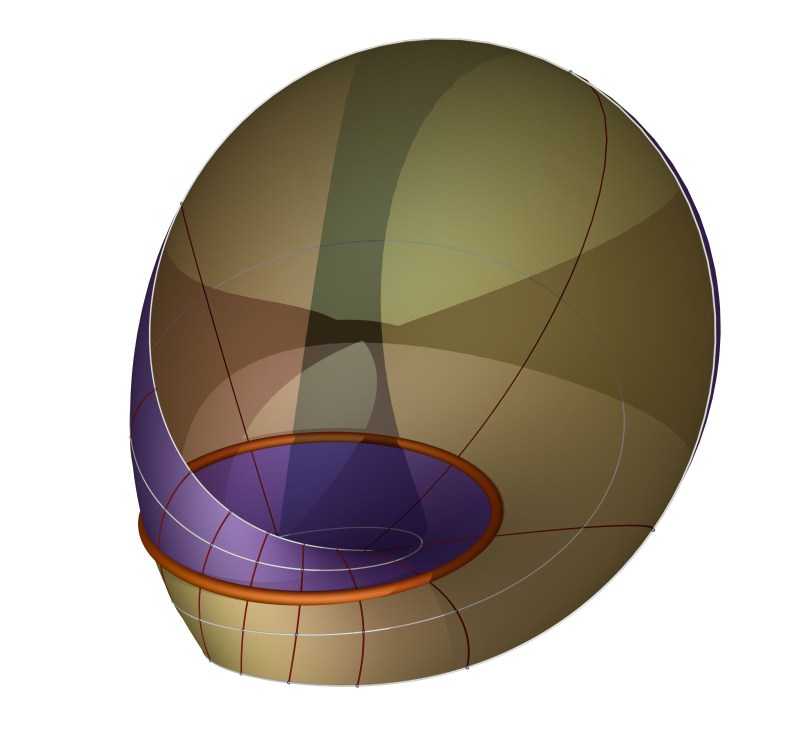
This is really complicated, so let’s look at the anatomy of this beast. The top translucent part, when turned around and after a paint job, reveals himself as a doubly twisted cylinder.

Lawson 4

The other (bottom) part is still rather complicated. It consists of two pieces of the Klein Bottle that intersect along the orange circle.

Lawson 6

One of them without its distracting sibling is once again a Möbius strip.

Lawson 5

So Lawson’s Klein bottle is anatomically just a union of two intersecting Möbius strips and a doubly twisted cylinder.

Patterned Ice

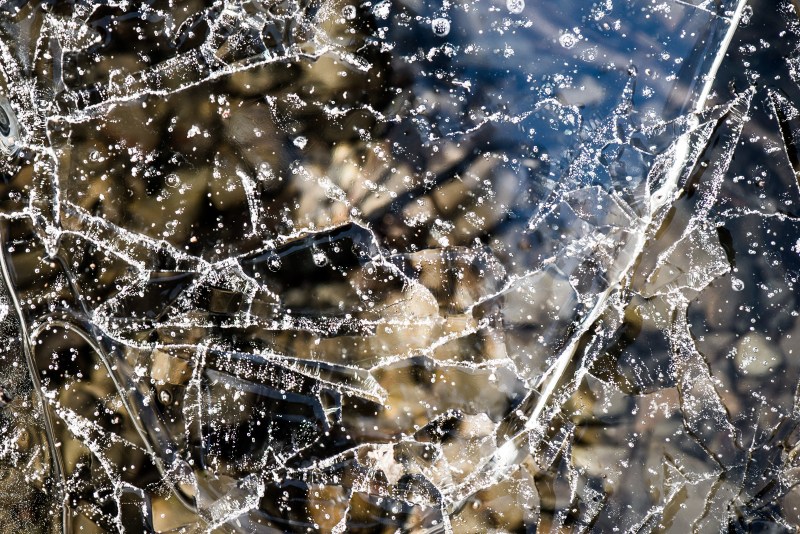
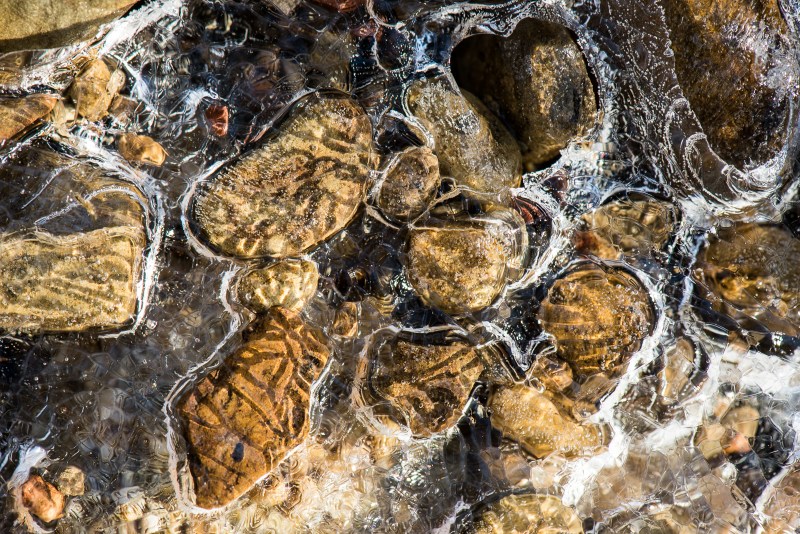
A side effect of having the temperatures vary between 10 and 60 degrees Fahrenheit within days is that one can admire interesting ice formations while hiking in pleasantly warm weather.

DSC 0428

What we see here are thin layers of ice over shallow running water, in some of the little creeks that flow through Yellowwood State Forest.

DSC 0463

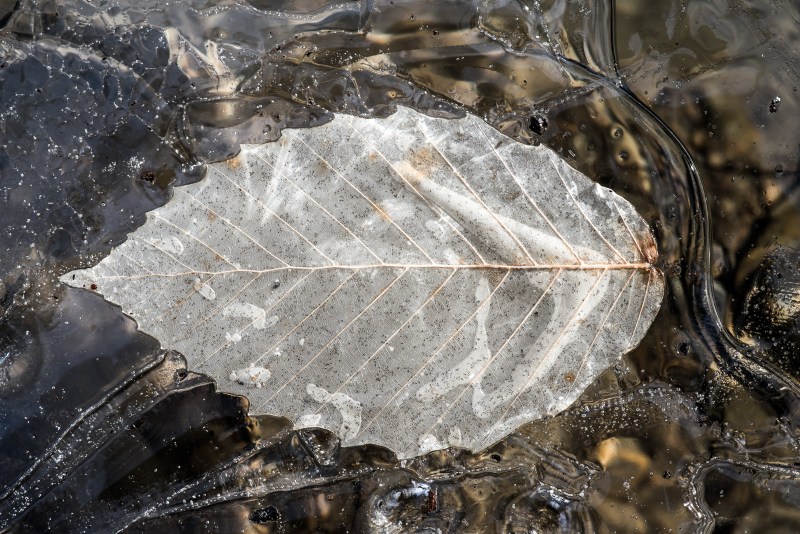
Rocks make for quicker thawing, and the hickory leaves from last fall adapt by becoming translucent.

DSC 0468

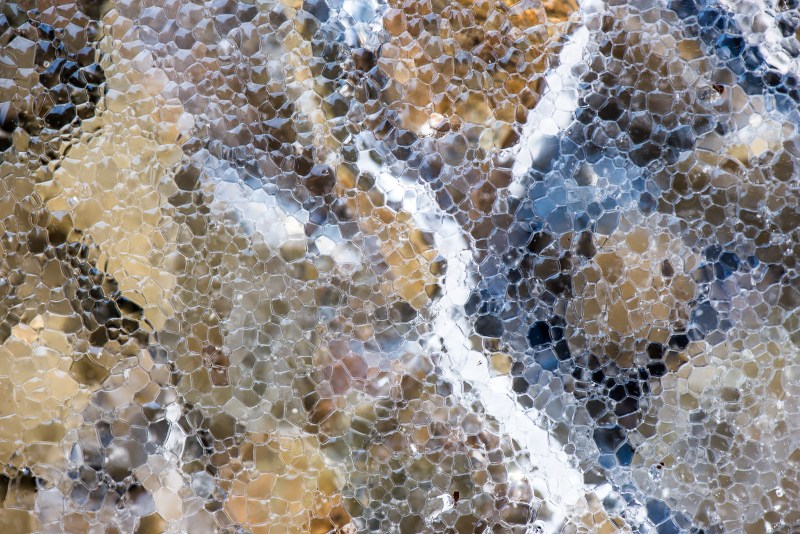
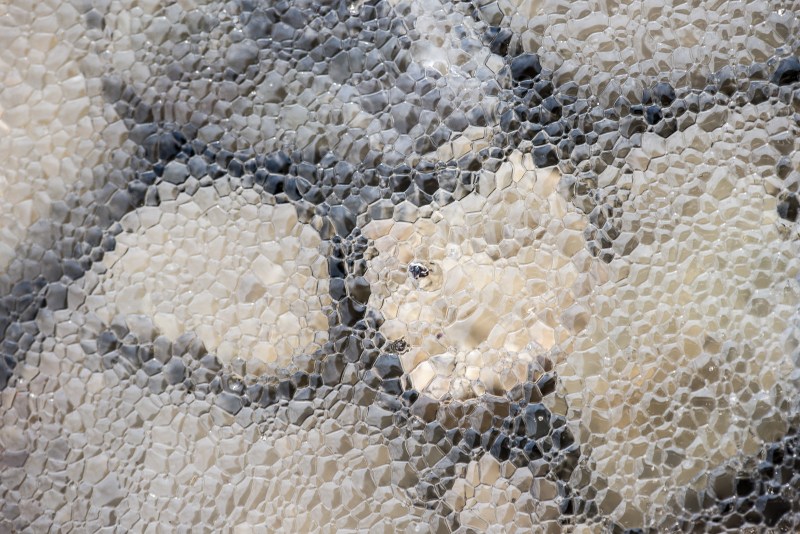
Near hexagonal patterns like this one occur often in nature when homogeneous material breaks under uniform pressure. It’s the first time I have seen this with ice, and I would love to see how it forms in a time lapse movie.

DSC 0484

Another one, at a different location.

DSC 0485