Revolution (Enneper 2)

Another special feature of Enneper’s surface is that it is intrinsically rotationally symmetric. This means that if you had a marble version of it, and a paper copy (made of curved paper, that is) sitting on top of it, you could rotate the paper copy smoothly by 360 degrees just by bending the paper, but without tearing or stretching. Amusingly, there is no truly rotational symmetric in Euclidean space that is isometric to Enneper’s surface.

Enneper5
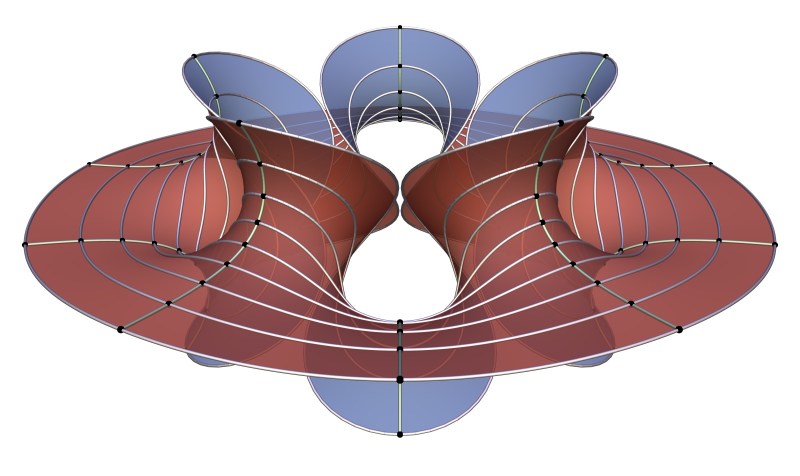
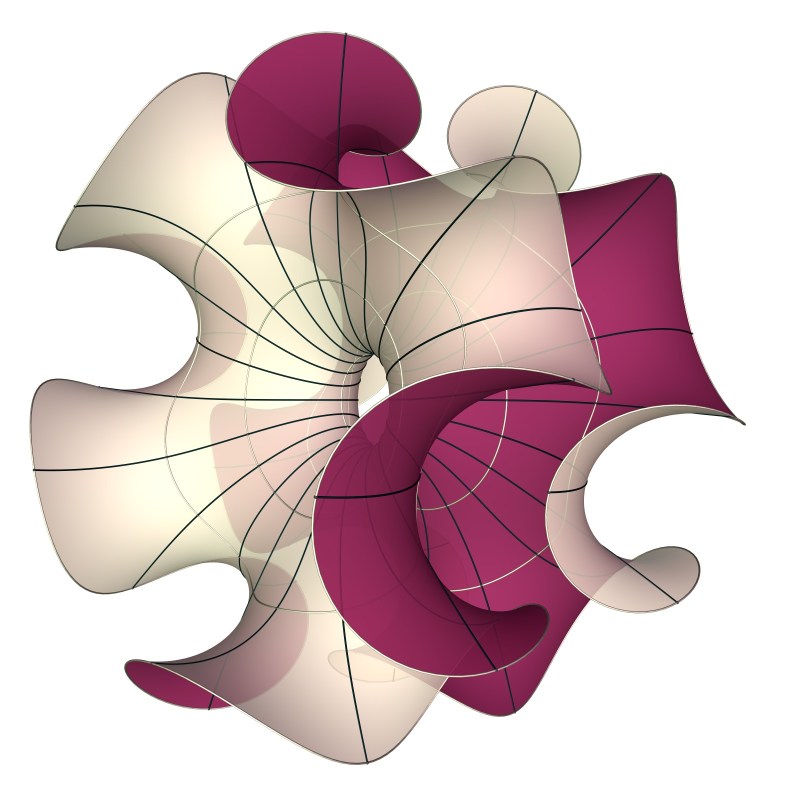
Enneper’s surface shares this surprising feature with a few other minimal surfaces, like the one with five ear lobes instead of just two above. By the way, that the lobes touch is an artistic choice. The surface extends indefinitely, intersecting itself, which has led to its partial demise. There are also intrinsically rotationally symmetric minimal surfaces with two ends, like the plane and catenoid, or the more amusing one below with a planar end and an Enneper style end at the center.

PlanarEnneper5

This rotational symmetry gets lost when you stack two equal Enneper surface on top of each other, like so:

Doubleenneper7

In mathematics, when you give up something, you typically can gain something else. In this case, you gain flexibility. You can change the distance between the two wiggly Enneper ends and bring them so close together that cleaning in between becomes impossible. The version below would make an interesting wheel. Use at your own risk.

Wheel

Bending but not Breaking

DSC 1414 2 2

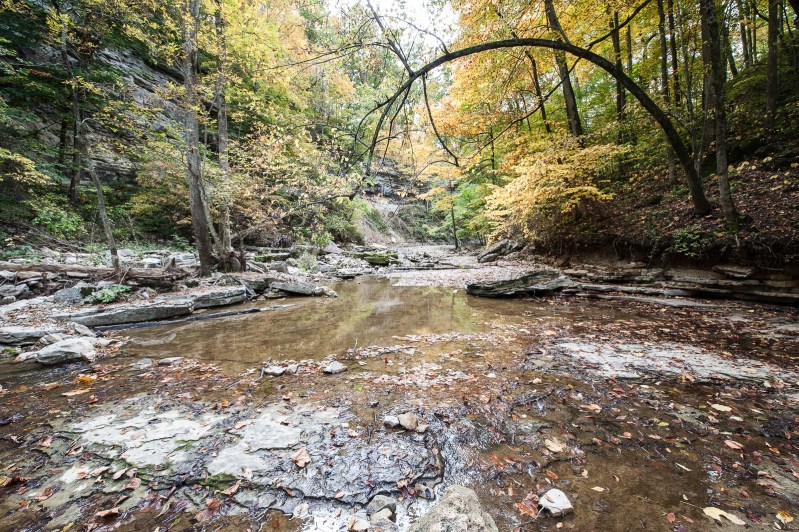
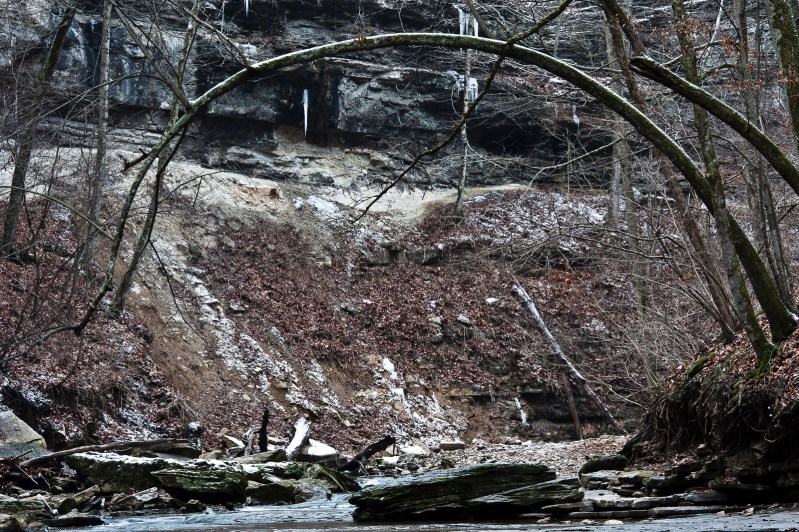
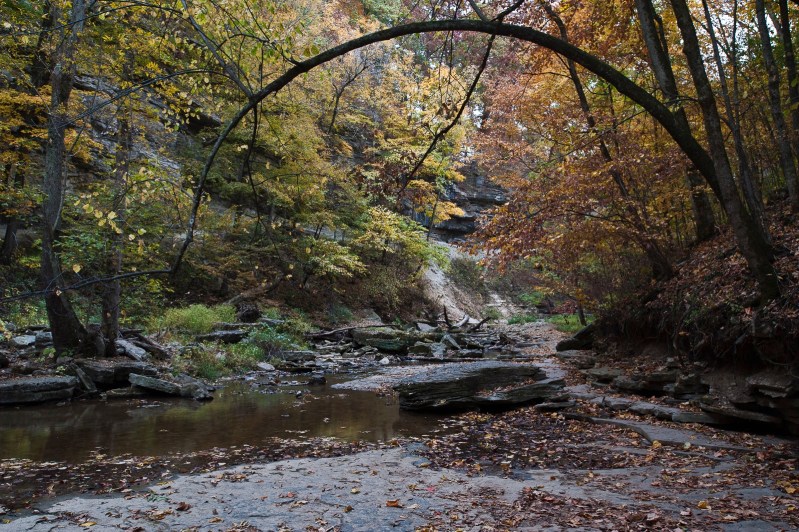
When I first saw this nicely bent tree in McCormick’s Creek State Park in the fall of 2008, I did not expect to see it again.

DSC7716

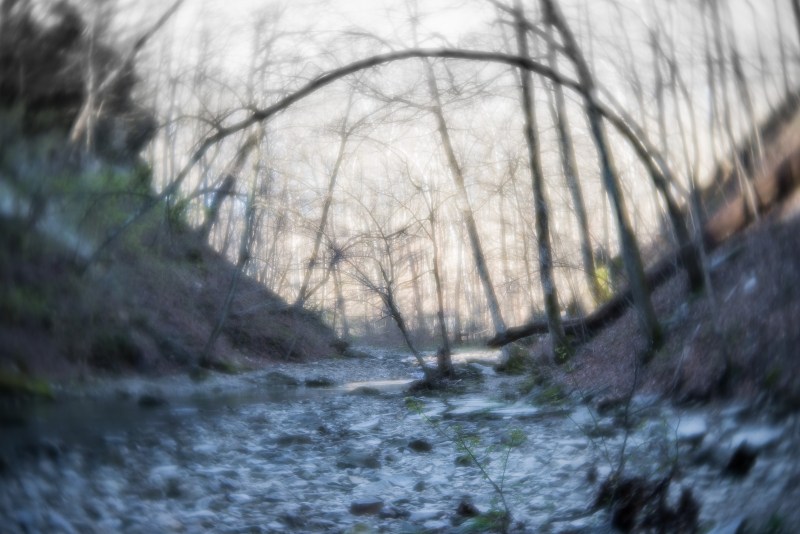
Arch like trees have become something like an archetype for me, or rather, as I am not so fond of C.G. Jung, a pattern, as in pattern language. They serve the (purely symbolic, of course) dual purpose of creating a connection between two sides and signaling a passage through, and all this under the apparent duress of being bent to the verge of breaking. In any case, this arch was still there in winter, the next summer,

DSC 4218

and the following years.

DSC4202

Is it still there? I leave it to you to decide whether this year’s image shows he same tree again.

DSC 2900

It does not matter. Thomas Mann explains in his tetralogy Joseph und seine Brüder his concept of time: Events, or motifs for stories, or patterns, reoccur or are at least thought to reappear over and over, with no hope to trace their origin or future repurposing.

There will always be trees ready to bend, even after countless others have been broken.

DSC 2801

In Memoriam, Orlando 6-12-2016

Storm Watching (Point Reyes II)

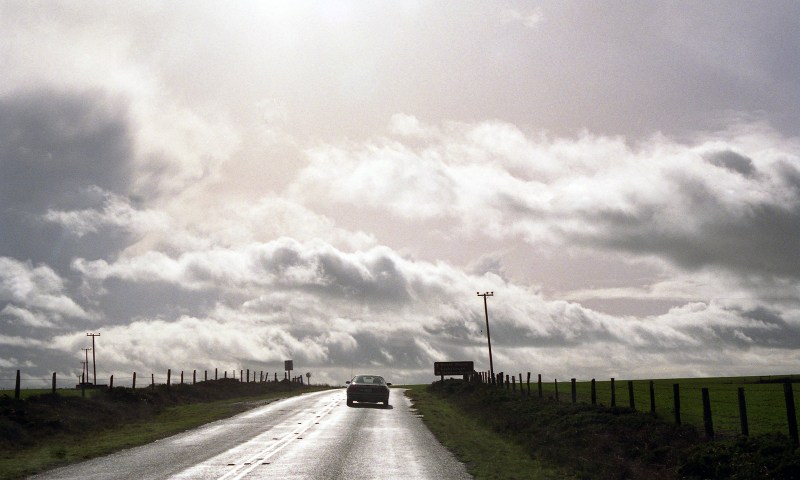
My second visit to Point Reyes National Seashore was later in 1993, when the weather forecast promised high coastal winds, and Bryce suggested to go storm watching.

Berkeley622

Above we are on our way to the Lighthouse, and below are the first storm clouds.

Berkeley631b

It got a little bit more dramatic,

Berkeley644

but we stayed dry and took pretty silhouette pictures.

Berkeley647

At the end, the colors returned.

Berkeley637

Praising the Underrated (Enneper I)

In 1760 Joseph Lagrange writes, after establishing the minimal surface equation of a graph and observing that planar graphs do indeed satisfy his equation, that “la solution générale doit ètre telle, que le périmètre de la surface puisse ètre détermine a volonté” — the general solution ought to be such that the perimeter of the surface can be prescribed arbitrarily.

For a hundred years, little progress was made to support Lagrange’s optimism. Few examples of minimal surfaces were found, and most of them with considerable effort. Then it the second half of the 18th century, it took the combined efforts of Pierre Ossian Bonnet, Karl Theodor Wilhelm Weierstraß, Alfred Enneper, and Hermann Amandus Schwarz to unravel a connection between complex analysis and minimal surfaces that would become the Weierstrass representation and revolutionize the theory.

EnneperStandard

One piece in this story is Enneper’s minimal surface. Enneper was not so much after minimal surfaces but after examples of surfaces where all curvature lines are planar. This was immensely popular back then, and the long and technical papers are mostly forgotten.

Planarcurvature

Above is an attempt to visualize the planes that intersect the Enneper surface in its curvature lines.

Enneperruled
Visually easier to digest are the ruled surfaces that are generated by the surface normals along the curvature lines, because here the ruled surfaces and the Enneper surface meet orthogonally. While not planar, they are still flat, and invite therefore a paper model construction (that one can do for the curvature liens of any surface):

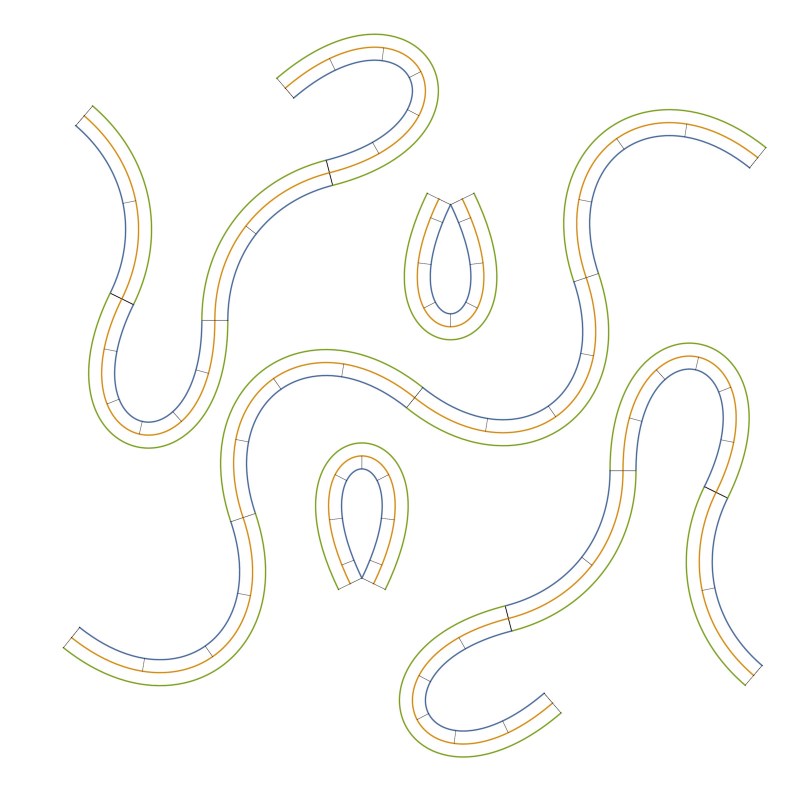
EnneperModel

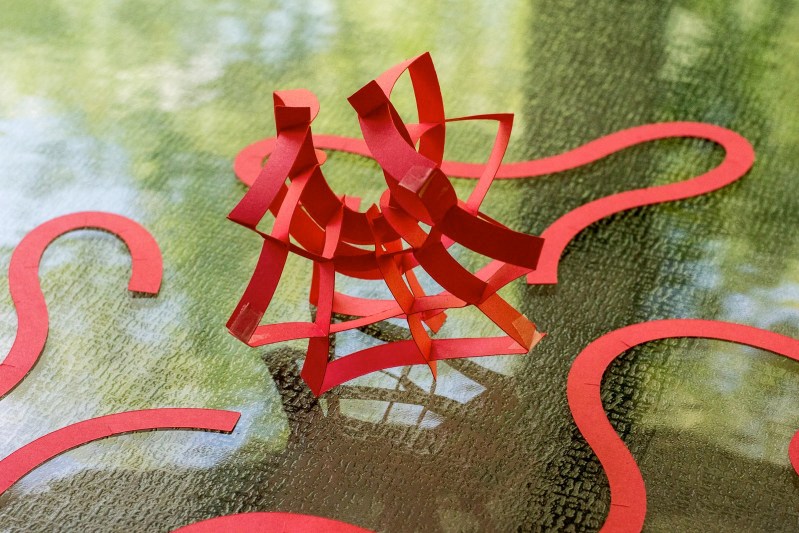
Print and cut out the five snakes. The orange centers are the curvature lines. Also cut all segments that go half through a snake, and fold along all segments that go all the way through a snake, by about 90 degrees, always in the same way. Then assemble by sliding the snakes into each other along the cuts, like so:

DSC 0999

The three long snakes close up in space and need some tape to help them with that. Here is a retraced version of the same model which might help.

Enneper2

Gourmet Trip 1993 (Point Reyes I)

My first visit to Point Reyes National Seashore was on the occasion of the CHAOS Fall Gourmet Trip 1993. The rules for these trips are simple: Dress up and bring good food.

Berkeley244

On the way to the camp site you were also supposed to help carry supplementary items like pieces of a portable hot tub.

Berkeley270

After pitching the tents and admiring each other’s costumes, more serious activities would commence.

Berkeley275

There were also opportunities to hunt for more food.

Berkeley266

Which was obviously rather tasty.

Berkeley267

Transcendence (Loxodromes I)

The art of map making took a giant leap in 1569, when Mercator created his first world map. Precise navigation had become an important problem. Seafarers not only had no GPS, they didn’t even have accurate clocks that would allow them to determine their longitude. One of the few reliable tools was, sadly, the compass. Therefore, a safe way to travel was to head in a direction of constant bearing, like say 20 degrees west of North.

Loxodrome

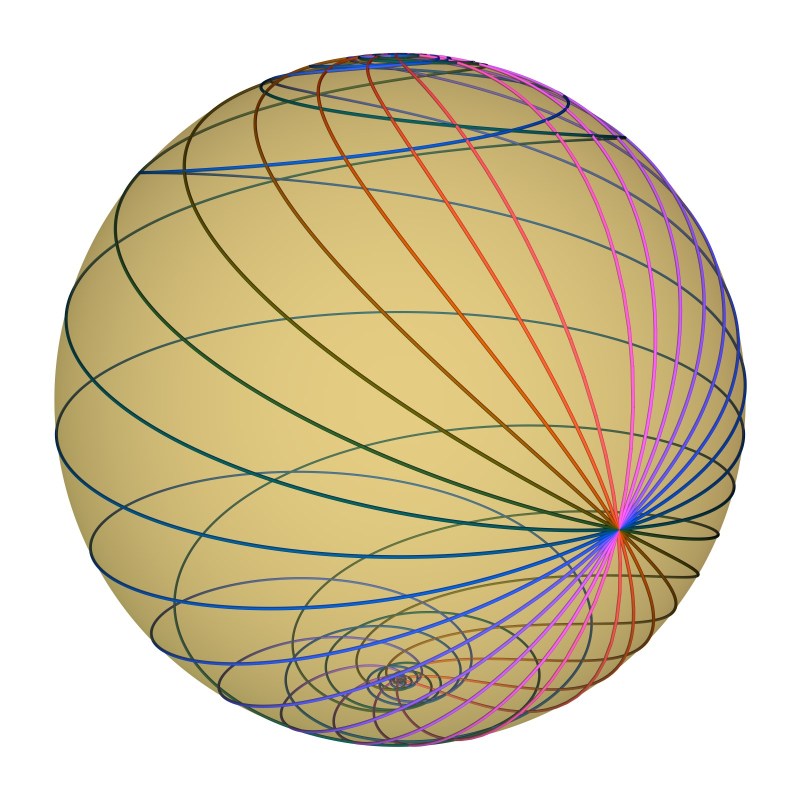
The problem, then, is: If you do that, where do you end up? On a sphere, the curves that make constant angle with the meridians, are called loxodromes. Mercator’s accomplishment was to find a map of the earth where all these loxodromes become straight lines. So, when you wanted to travel from A to B, you just had to find A and B on Mercator’s map, and measure the angle that the line through A and B makes with a longitude.

Cylinderprojection

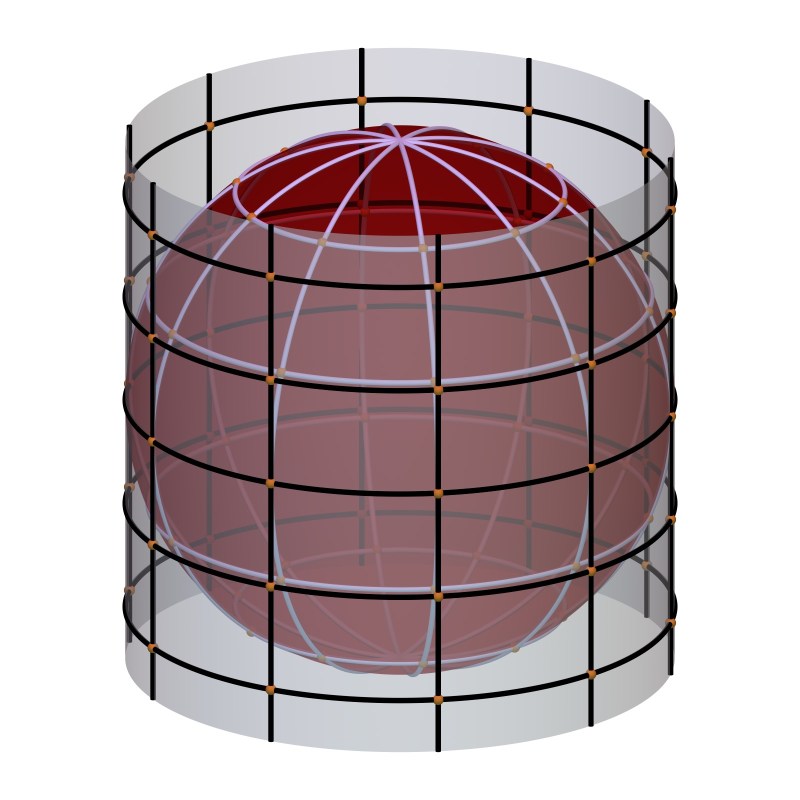
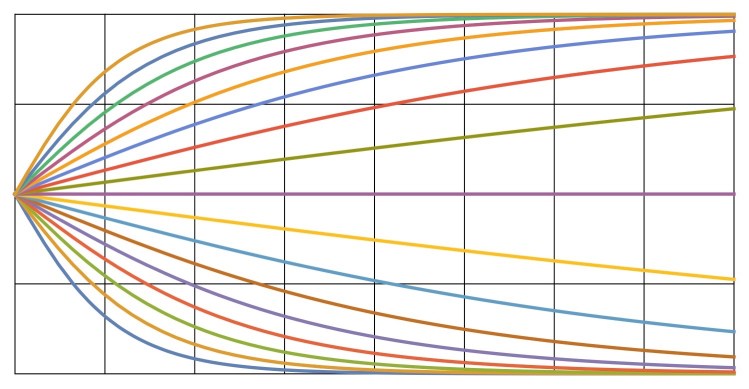
This is equivalent to finding a map projection that preserves angles and where all longitudes are vertical lines. The Greeks (and maybe civilizations before) knew the cylindrical projection which is totally amazing because it preserves area, but it does not preserve angles.

Loxodrome2

In fact, when you draw the loxodromes centered at a point on the equator on the rectangular map, you get curves that are clearly not straight (which is ok).

Loxorectangle

Nobody knows how Mercator came up with his map. It is believed that he just stretched the cylindrical projection so that the loxodromes became straight. But we don’t really know, and the reason is that the tools from calculus that are necessary to really construct this miraculous map were only developed centuries later.

Stereographic

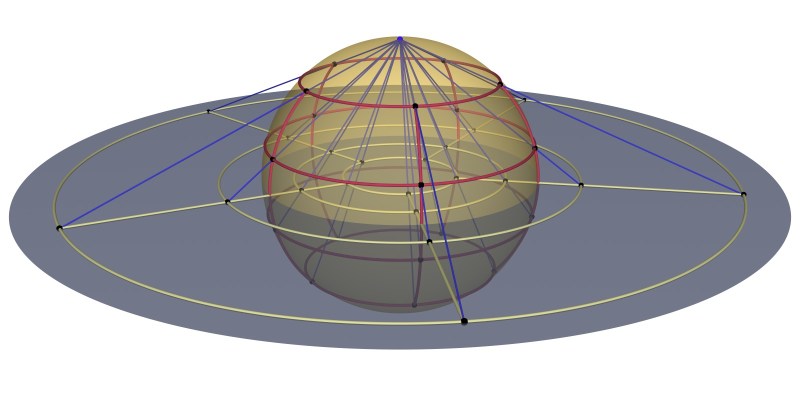
There is another projection of the sphere, the stereographic projection, that was known to the Greeks. They at least knew that circles on the sphere would be mapped to circles or lines in the plane. It also preserves angles, which the Greeks could have known, because it is rather elementary. Apparently the first written proof is due to Edmond Halley in 1695 (using calculus).

Bispiral

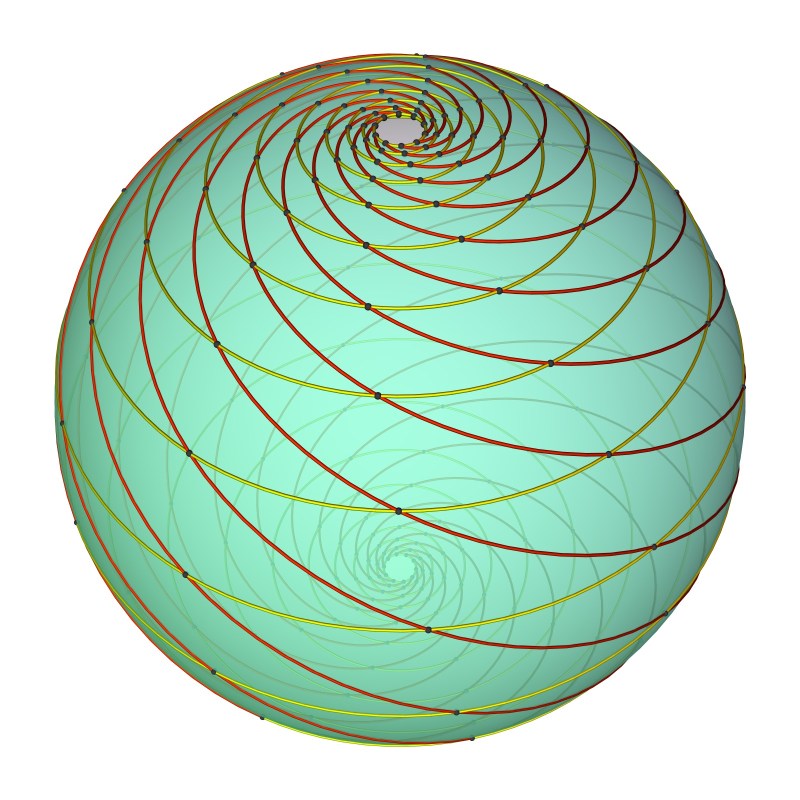
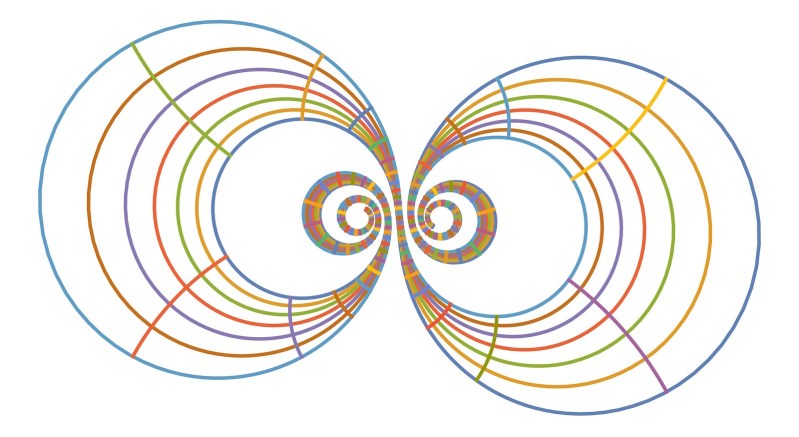
The stereographic projection maps the loxodromes to logarithmic spirals (up above we use the loxodromes that connect west pole with east pole, for prettiness and later use). While the Greeks did study a few transcendental curves, the logarithmic spiral is first discussed by René Descartes in 1638 (in precisely the context of finding curves that intersect radii at constant angles), and a little later by the Bernoulli brothers, with analysis emerging.

Exprectangle3 01

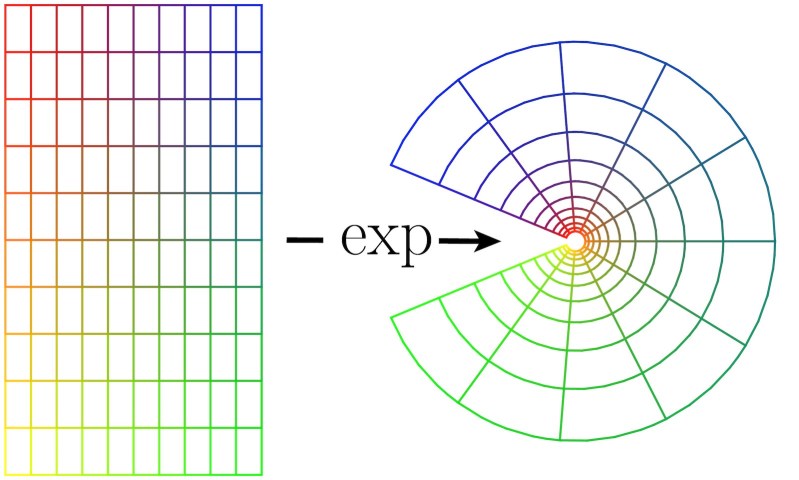
Therefore it no surprise that the link between Mercator’s map and the stereographic projection is the (complex) exponential function (or logarithm). Today we know that it is angle preserving as one of the key features of complex analytic functions, but I don’t know who first realized this for the complex exponential function or the logarithm. Certainly Leonhard Euler deserves credit here. I doubt if it was earlier than the 18th century, even though the foundations were set by Mercator (possibly only by approximation) and Descartes centuries earlier. It is astonishing how long it takes to develop insights we now consider to be fundamental.

The Canadian Rockies

The prospect of the US elections this fall makes me (like many of my US friends) think about Canada.

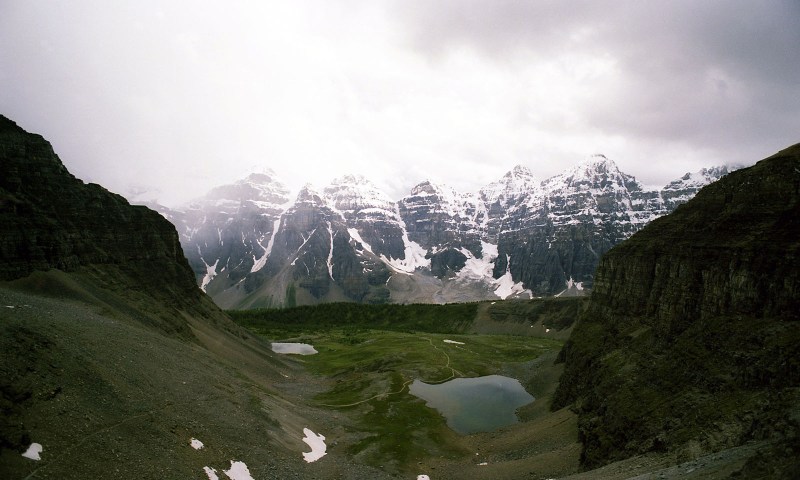
Cana096

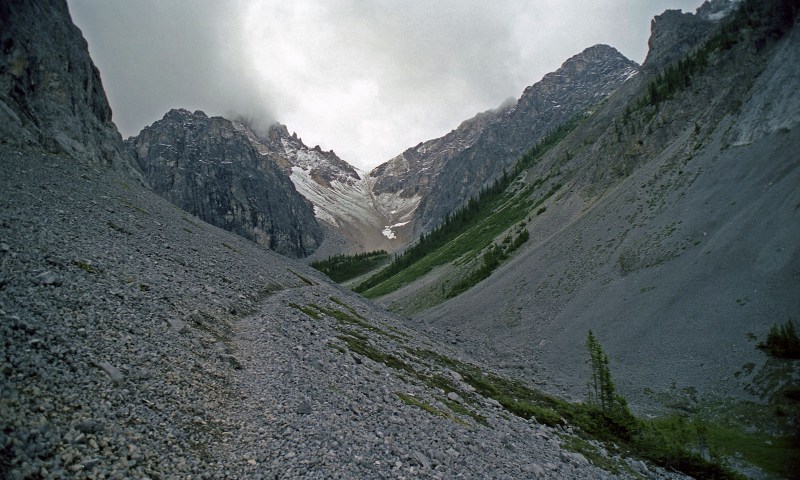
I went hiking there for two weeks with friends from California (sort of – one was from Britain, one from the US, and the third from Australia) in the summer of 1995. We hit two weeks of rain except for one day where it also hailed. Our planned week long backpacking trip needed major revisions. We tried to do overnighters on the trail, but it is not much fun to spend long nights in a tent while it rains all night (and morning).

Cana118

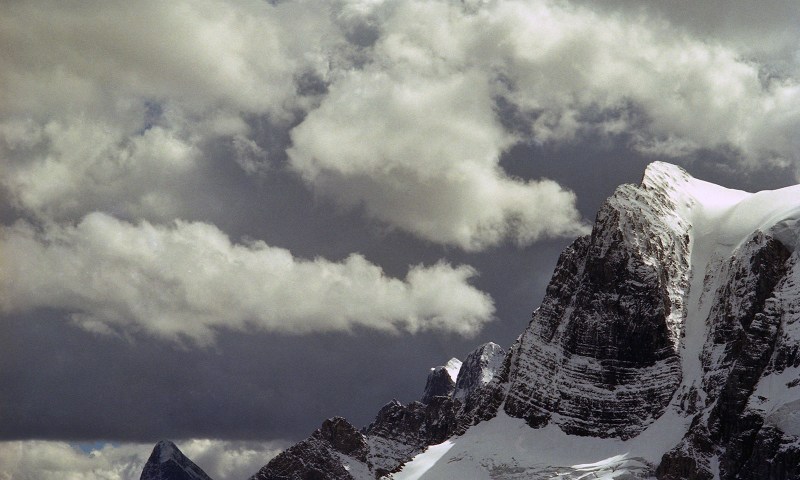
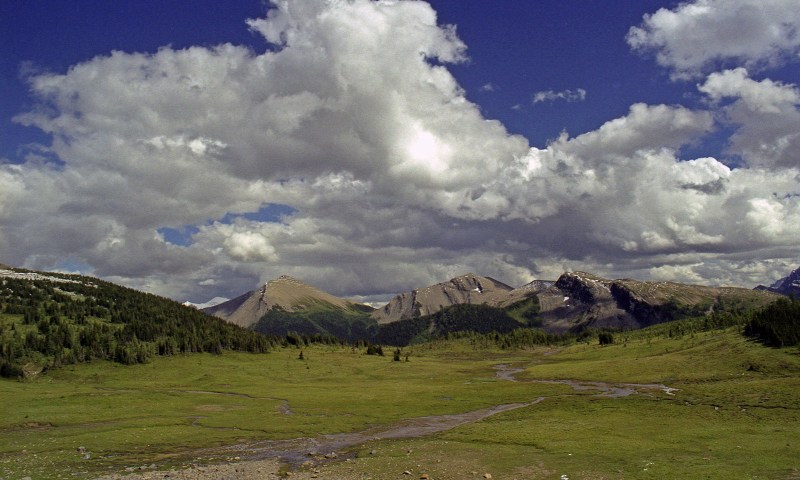
After that, we went for day hikes in the area during brief respites. Whenever the rain stopped, I got my camera out.

Cana126

At night, we mostly car camped under a tarp and spent hours discussing the problem in what positions one can move a given rectangular tarp by tying it to four given trees with ropes.

Cana131

It turned out that most of our arguments were wrong. Neither the weather nor the endless mathematical disputes had any negative impact on our friendship.

Cana190

A likely cause was the excellent Canadian wine.

Cana178

So maybe there is hope, after all. Next summer?

Cana186

Compass

Here is another game (like Demon) that utilizes the contemporary game mechanics of a game board that is being destructed during play.

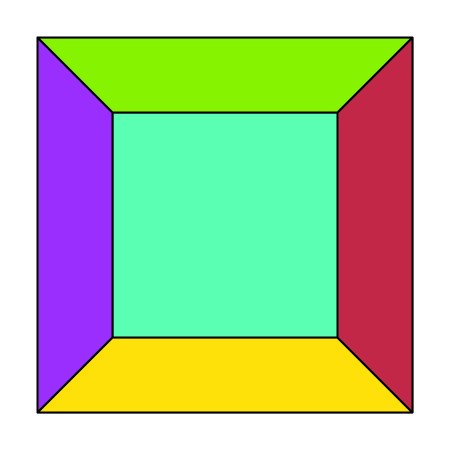
To prepare, download the pdf file and print the five pages on heavy card stock, using a color printer. Then cut out the squares. This should give you sixty playing cards like these:
Singlecard 01

They each use all of the five different colors, so there are 30 different cards, and you get each card twice, which is what you want.

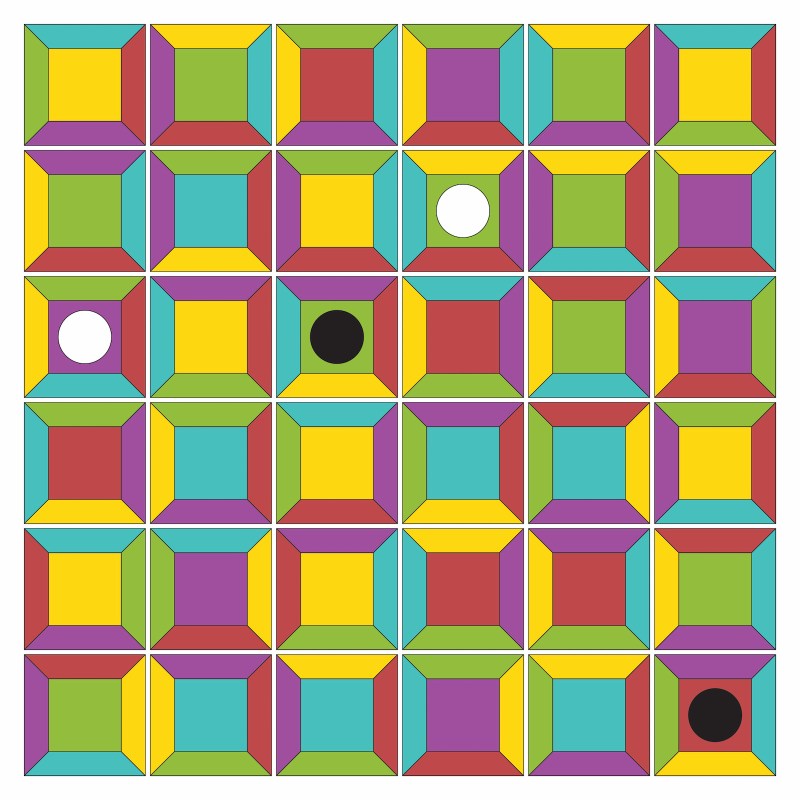
As preparation, the cards are shuffled and laid out in a 6×6 square.
The players choose colors and take two checkers in their color. Then they take turns placing their checkers in the middle square of a card. No two checkers may be on the same card at the same time. Like so:
Board1 01

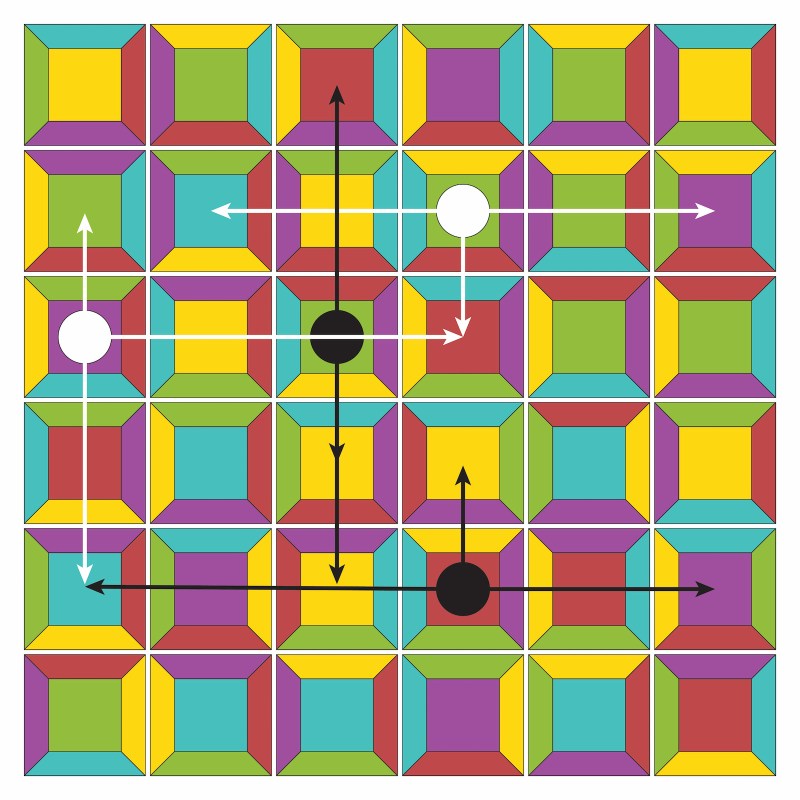
Now the players take turns moving one of their checkers. A checker can move north, east, south, or west on any unoccupied card whose middle square has the same color as the border of the card the checker is moving away through.
For instance, to determine where the left white checker can move, we pick a direction (say east), look at the color of the border of the square the checker is on in that direction (red), and locate all cards in that direction (east) whose middle square has that color (red).

The next image shows all possible moves for all four checkers. Note that the top white checker can move one but not three squares south, because the latter square is occupied.
Moves1 01

After moving a checker, the player collects the card the checker moved away from. If a player cannot move anymore, (s)he can either call the phase of the game over, or place one her/his collected cards on an empty square, in any orientation. Her/His move is then over, without moving a checker.

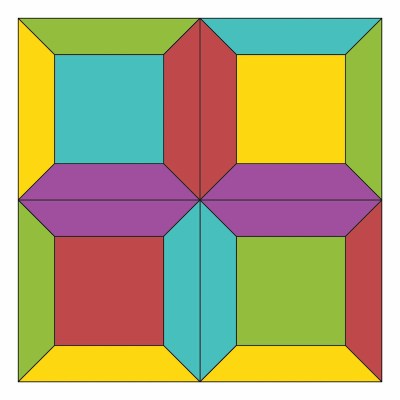
When the first phase of the game is over, the second phase begins. Here, the two players use the cards they have collected to create jewels: These are 2×2 squares where common edges have the same color:
Jewel 01

The jewels score differently, depending on the number of different colors in their shared borders.
If all are colors of the common borders are different, the jewel is worth 1 point,
if three different colors occur as shared borders, the jewel is worth 2 points, and
if three different colors occur as shared borders, the jewel is worth 3 points.

So the jewel above scores 2 points. The player with the most points wins.

The Underneath

The Underneath is the title of a book by Kathi Appelt that I and my daughter really enjoyed reading. It has, however, nothing to do with this post but its compelling title.

DSC 3264

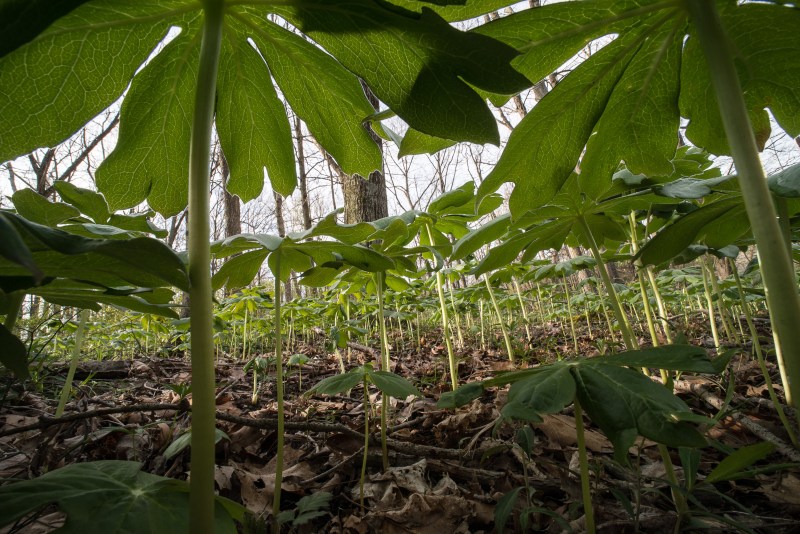
What would the world look like if we were as little as we righteously should be: Suppose we were bug-sized, waiting for food or to be eaten in a forest of may apples. What would we know of the larger world?

DSC 3149

Above us the strange smelling flowers, and below the decaying leaves from last fall? Tough choice.
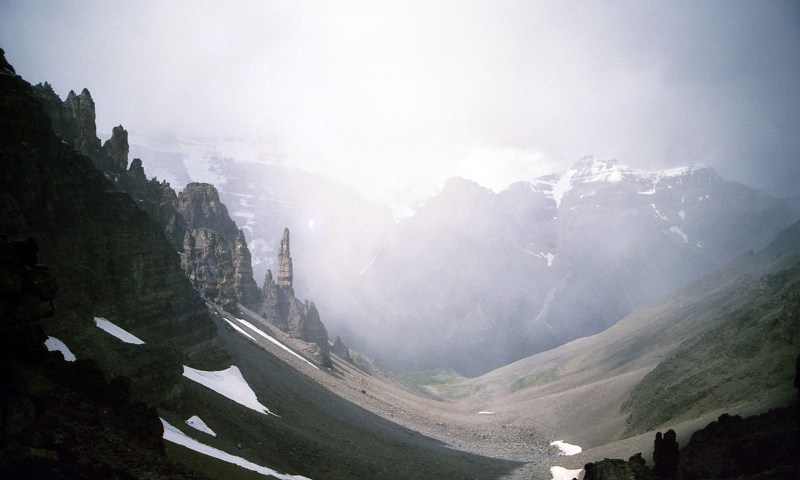
DSC 3221

Or, imposing and obviously hungry giants. Would they eat us, too?

DSC 3492

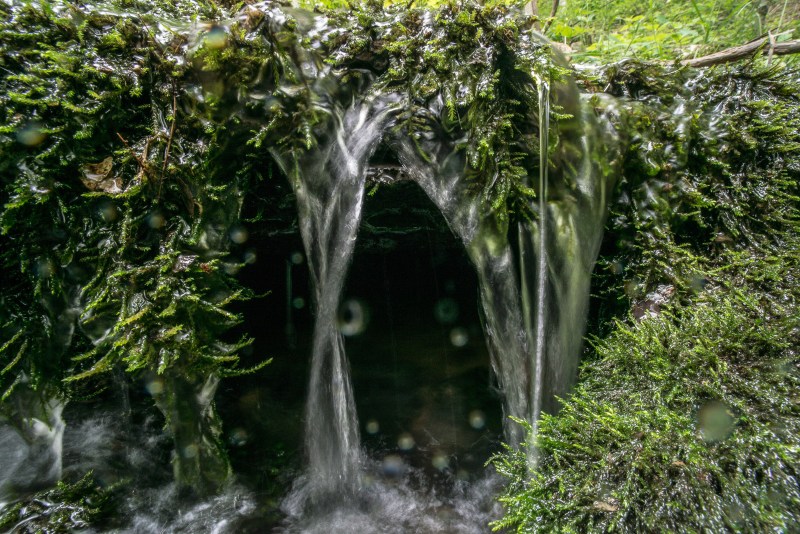
Maybe there is a protective cave behind that tall waterfall?

DSC 3485

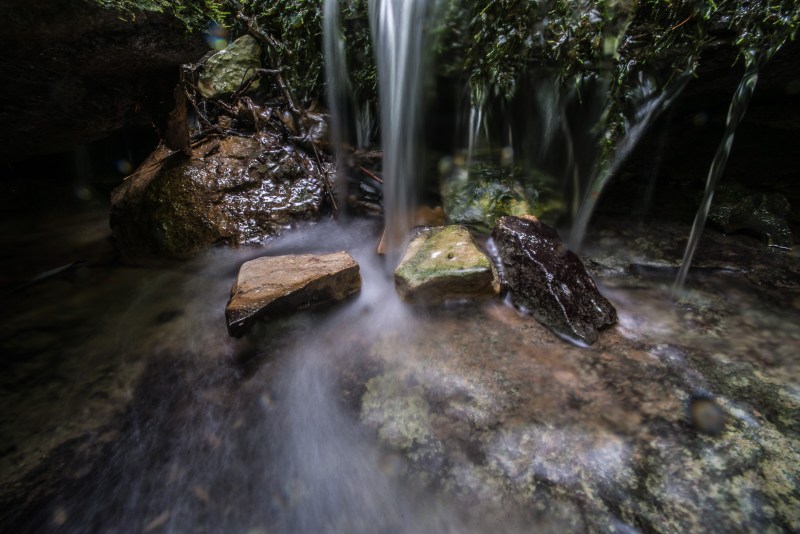
One of the good things of being little is that even small rocks like these become impossible to lift.


Welchen der Steine du hebst …