Copycat (Election Games II)

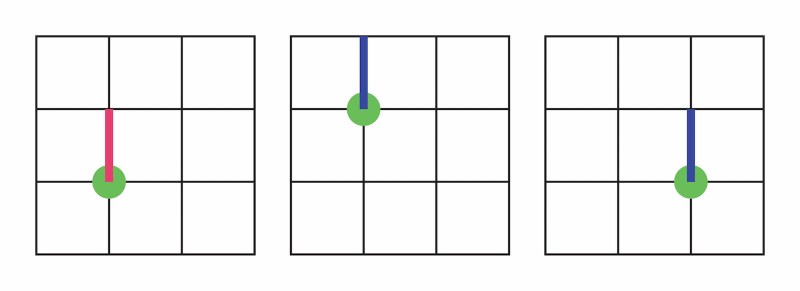
My popular series of election games continues with a paper and pencil game for any number of player. It’s called Copycat. Let’s play the multiplayer version first. Each player grabs a sheet of paper and a pen, draws a rectangular grid of agreed size (I use 4×4 below, 6×6 to 8×8 is better for actual play), and marks an agreed number (I use 1 below, two or three is much better) of intersections with a nice, fat dot.
Move1 01

One player decides to go first and announces one of the four main compass directions. Now all players have to mark a segment beginning at any one of their dots and heading that way one unit. Above, the first player (left) decided NORTH (where else?), and all players had to follow. A player who can’t follow is out.
Move2 01

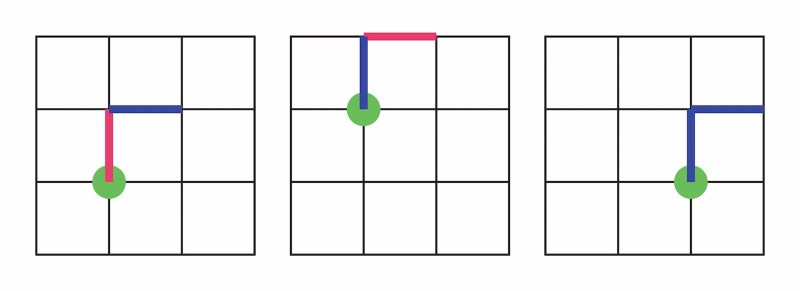
Now it’s the second player’s turn (middle), and she decides EAST. All players have to mark a segment that begins at the endpoint of any one of their paths and moves east one unit, thereby neither retracing steps, nor leaving the grid, nor ending on intersections that have already been visited by any path. The third player (right) has now only two options left (NORTH or SOUTH), and decides NORTH. This eliminates the middle player, who is out of moves.
Move3 01

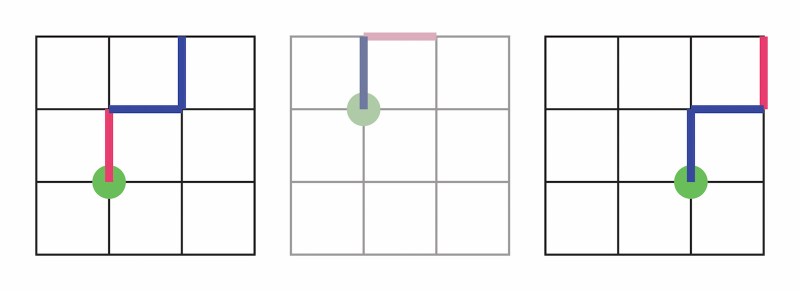
Left takes revenge and moves EAST, which is impossible for the right player. This leaves left as the winner. In an (unrealistic) cooperative play, left and right could instead have continued on for eight more moves. The game becomes more interesting when the players begin with more than one dot, because then they can choose which path they extend at each turn.

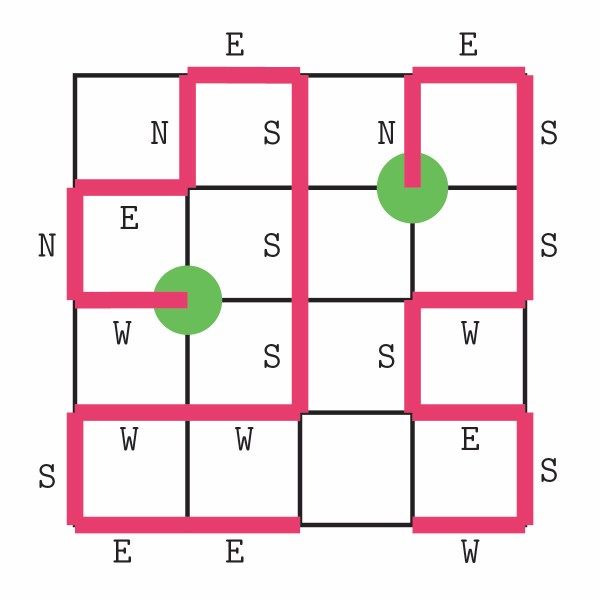
To make puzzles for single players, start with a board, place a couple of dots, and draw legal paths like so:
Puzzle 01

Record the directions along each path as a sequence of letters, namely WNENESSSWWSEE and NESSWSESW in the case above.
Randomly splice the sequences into one, for instance into WNNEENESSSSWSSWWESSEWE. Then draw a new board that just includes the dots, and hand it together with the letter sequence to your best friend. She then needs to trace non-intersecting paths, following the letters as compass directions. Her only choice at each step is which path she wants to extend. This is an excellent example of an easy to make puzzle that is ridiculously hard to solve.

There are many variations: For single players, you can use an eight sided compass die or a spinner to determine the direction at each step.

Several players can also share boards, as long as they can agree on where north is. They would then use pens in different colors and could only extend their own paths, avoiding any crossings of paths.
Just a Circle …

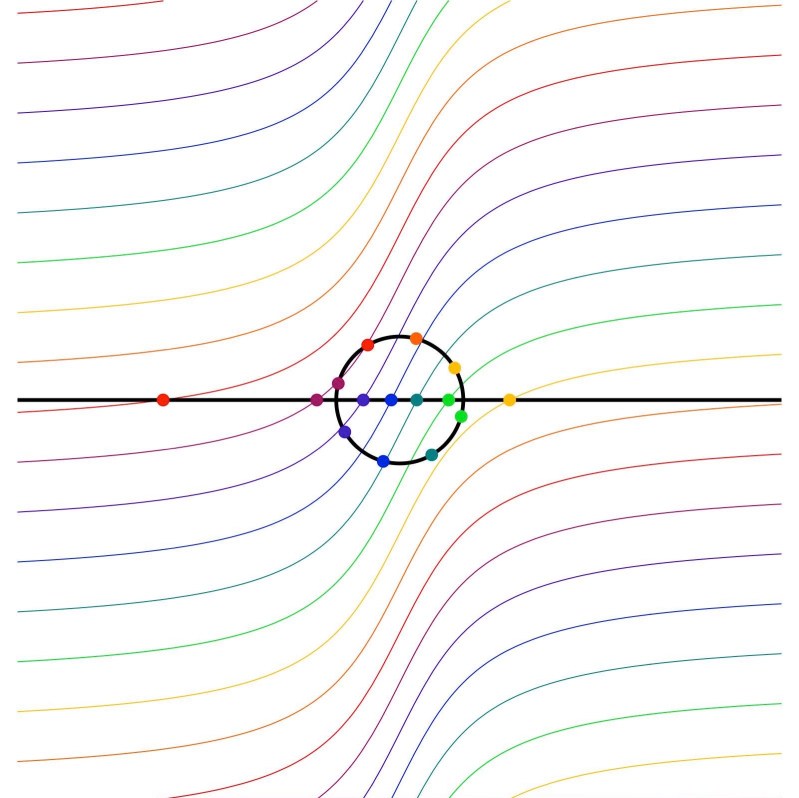
Imagine eight points, nicely spaced and colored, on a circle. Project them stereographically onto a line, keeping their color. In the image below, the projection center is at the top of the circle. You expect to get eight points on the line. One of them is hiding off the screen in the figure below.

Rotate

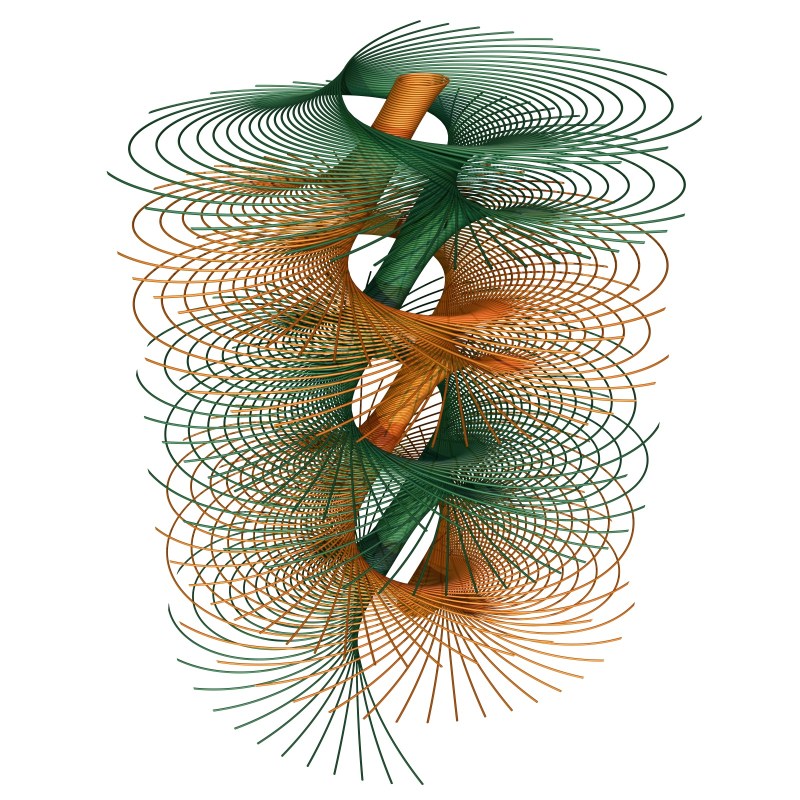
Now let’s move the points counterclockwise, with constant speed, around the circle. Their stereographic images will slide along the line. To visualize that motion, we trace the position by using the x-coordiante for the position and the y-coordinate as time. This way we get the colored curves above, each representing two full turns of the point around the circle.

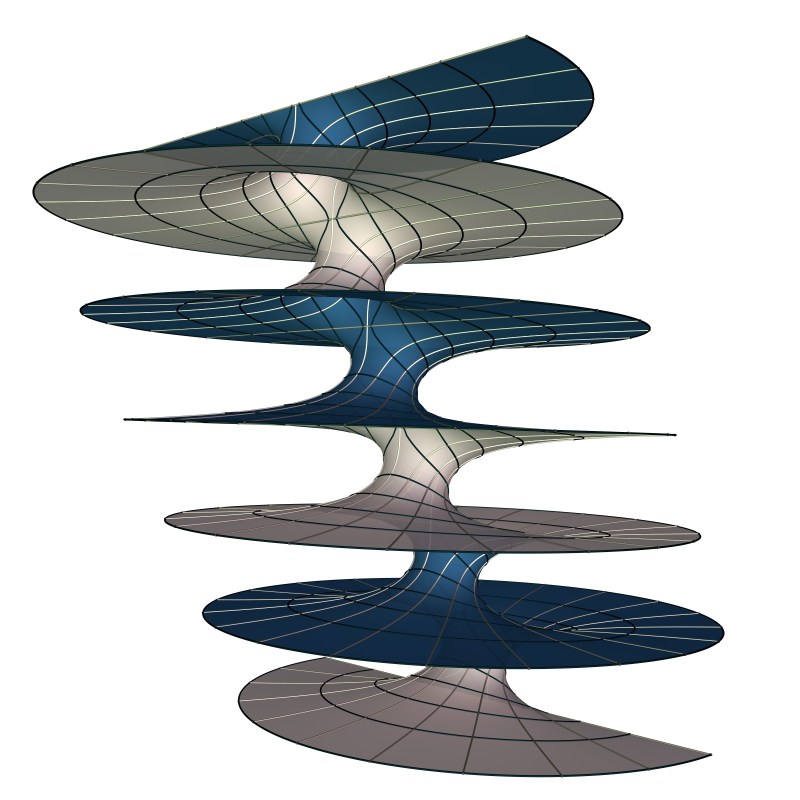
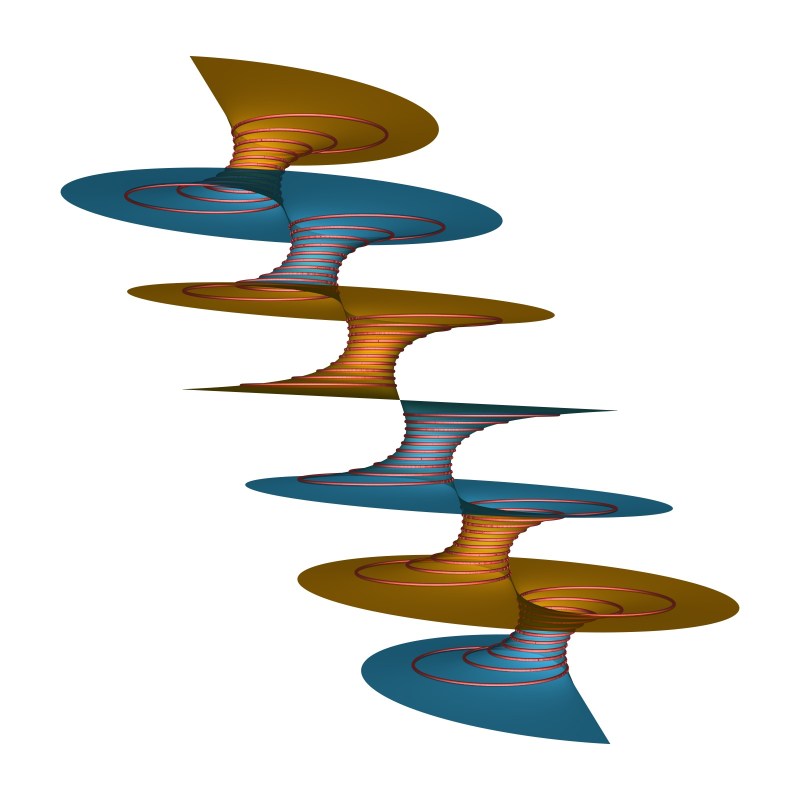
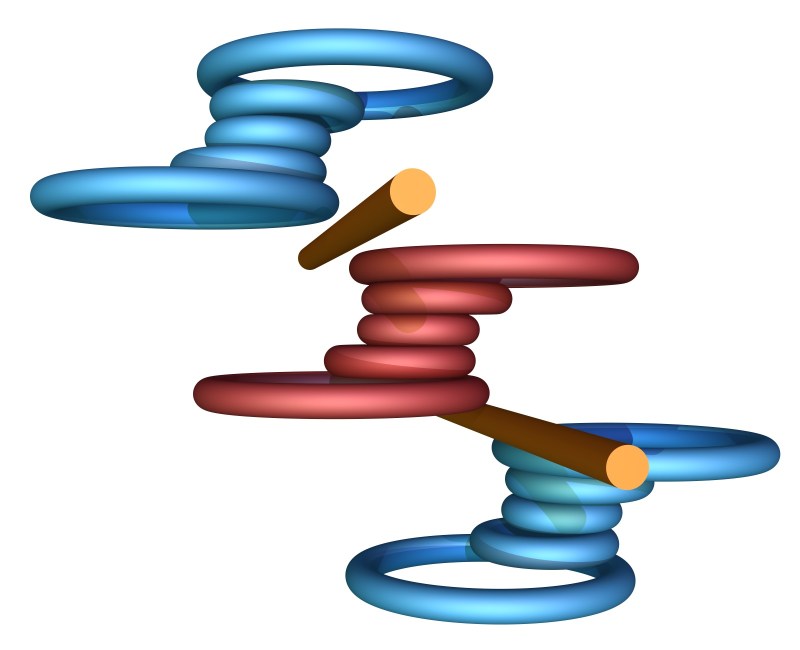
A simple rotation of an 8-gon has become quite tricky. It will get worse. Let’s place two circles (blue and red) onto a sphere, by taking the 45 degree latitudes. When we stereographically project these into the plane, we get two concentric circles. Now rotate the sphere about the y-axis. After 90 degrees, the two circles have become vertical (yellow and green), and their stereographic images are two disjoint circles. How did that happen?
Stereocircles
Let’s visualize the process the same way as before, by tracing the position of the circles using the z-coordinate for the angle of rotation.

Trails2

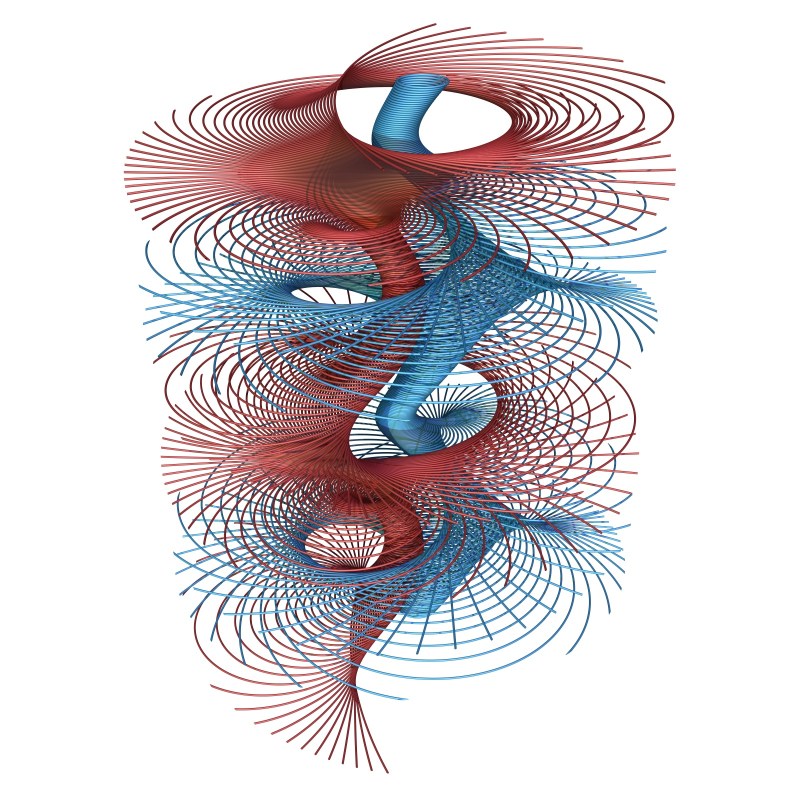
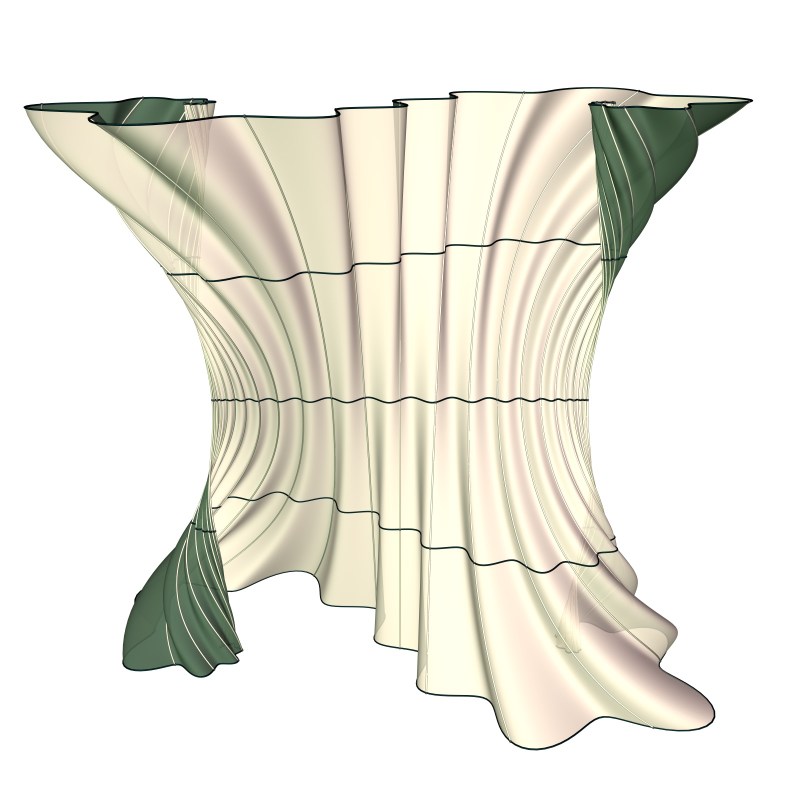
We obtain two interlocking identical surfaces, both of which have circular horizontal slices. This is reminiscent of Riemann’s minimal surface, but it is not the same surface. Riemann’s surface is several magnitudes more complicated. After all, we are only rotating a sphere.

We can make this a bit more complicated by simultaneously rotating the sphere about the z axis. In other words, we rotate the image circles about the z-axis depending on their height.

Trails2twistb

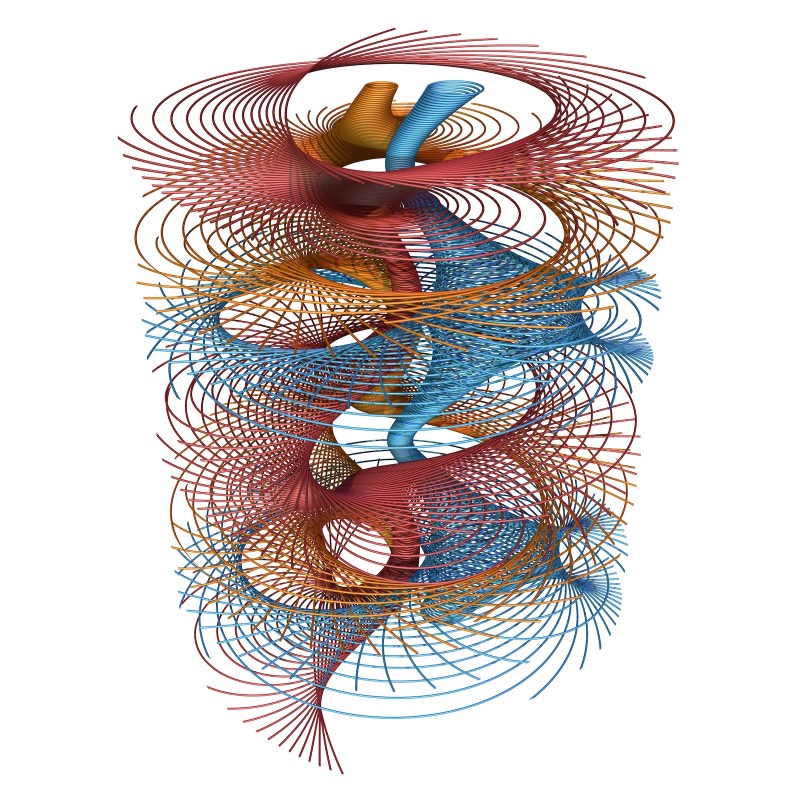
Finally, here is the same construction with three circles. This gets quite crowded.

Trails3twista

February

DSC 3971

I am one of those people who are often oblivious of their surroundings, which gives me the advantage to discover things even after years at the same place.

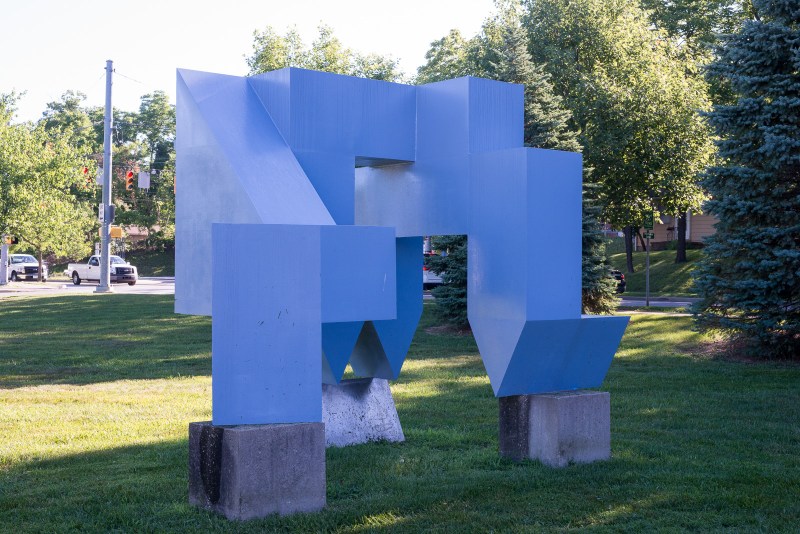
One of these things is Jerald Jacquard’s steel sculpture February, in front of the McCalla School in Bloomington.

DSC 3953

It first caught my attention through the sound it makes: Put one ear next to one of the three “legs” of the sculpture, and gently hit another part. Some ambient musician should explore this.

Jacquard4

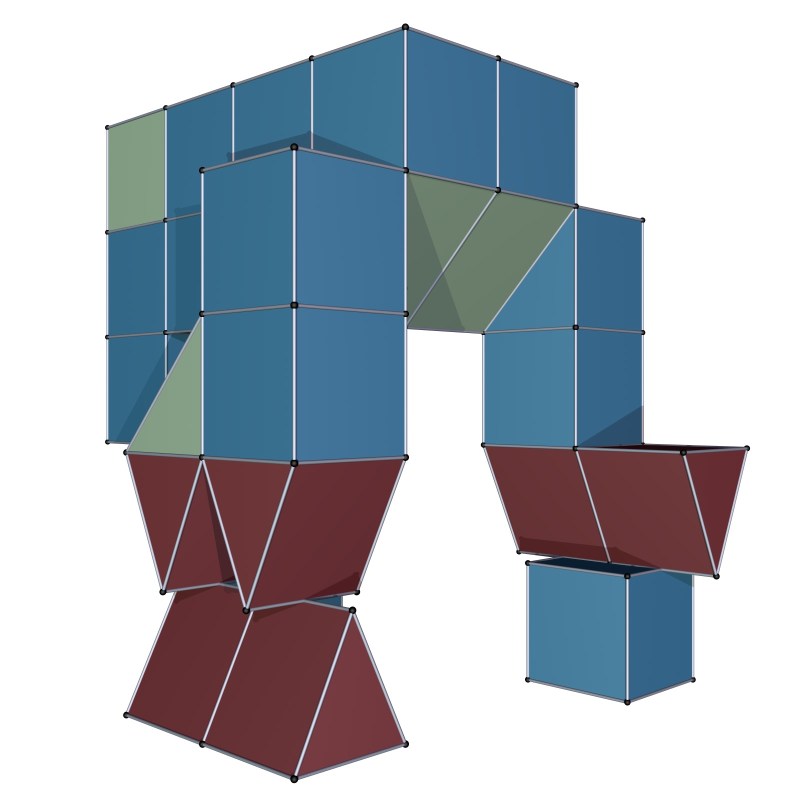
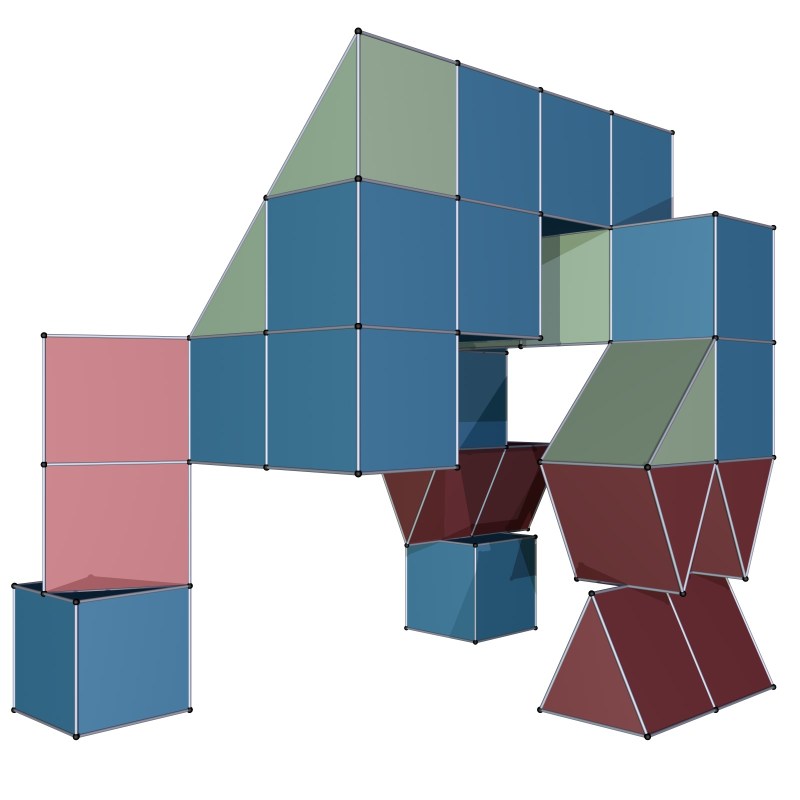
But the sculpture has more to offer. It is made of 28 blocks (one for each day of February). Each block is either a cube, or a halved cube. For halving a cube Jacquard uses two possibilities, both prisms over isosceles triangles, and both exactly half the volume of the cube. The usage of the (in my re-rendering, red) prisms is strictly limited to the lower part of the sculpture, making it to appear more open at the bottom than at the top.

Jacquard3

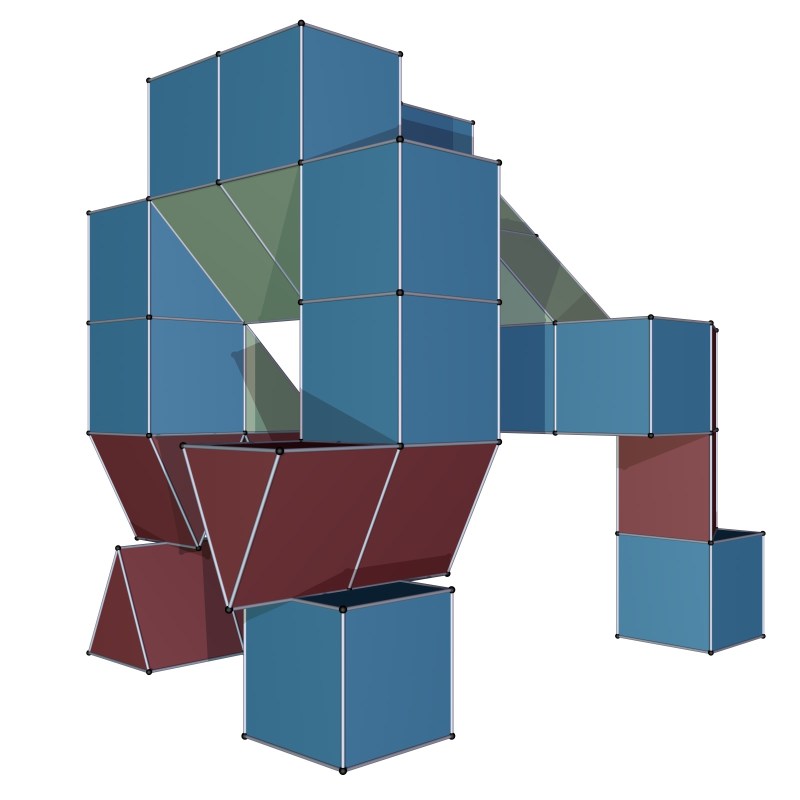
The other (green) prisms are used to create roof-like slopes. Almost all blocks are placed in a cubical grid, but there is one exception.

Jacquard

The front-bottom cube in the image above is moved to be able to support the two prisms above. Maybe, in leap years, one should add another cube?

Deceiving Simplicity (Annuli VI)

Circles

Just three months before his death on July 20, 1866 (150 years ago), Bernhard Riemann handed a few sheets of paper with formulas to Karl Hattendorff, one of his colleagues in Göttingen.
Hattendorff did better than Riemann’s house keeper who discarded the papers and notes she found.

He instead worked out the details, and published this as a posthumous paper of Riemann. It contains his work on minimal surfaces. Riemann was possibly the first person who realized that the Gauss map of a minimal surface is conformal, and that its inverse is well suited to find explicit parametrizations. He used this insight to construct the minimal surface family that bears his name, as well as a few others that were later rediscovered by Hermann Schwarz.

Riemann

Above is one of Riemann’s minimal surfaces, parametrized by the inverse of the Gauss map. This means in particular that the surface normal along the parameter lines traces out great circles on the sphere. Riemann discovered these surfaces by classifying all minimal surfaces whose intersections with horizontal planes are lines or circles. These are the catenoid, the helicoid, or Riemann’s new 1-parameter family.

Riemanncircles

The proof utilizes elliptic functions, which is not surprising: Riemann’s minimal surfaces are translation invariant, and their quotient by this translation is a torus, on which the Gauss map is a meromorphic function of degree 2. It is in fact one of the simplest elliptic functions, and one can use it to parametrize Riemann’s surfaces quite elegantly. What is not simple is the proof that these surfaces have indeed circles as horizontal slices. All arguments I know involve some more or less heavy computation. We are clearly lacking some insight here.

Simple

The longer one studies these surfaces, the more perplexing they become. There is, for instance, Max Shiffman’s theorem from 1956. It states that if a minimal cylinder has just two horizontal circular slices, all its horizontal slices are circles. The proof is elegant, magical, and still mysterious, just like Riemann’s minimal surfaces.

Inside riemann

Arbeit und Struktur

DSC 4006

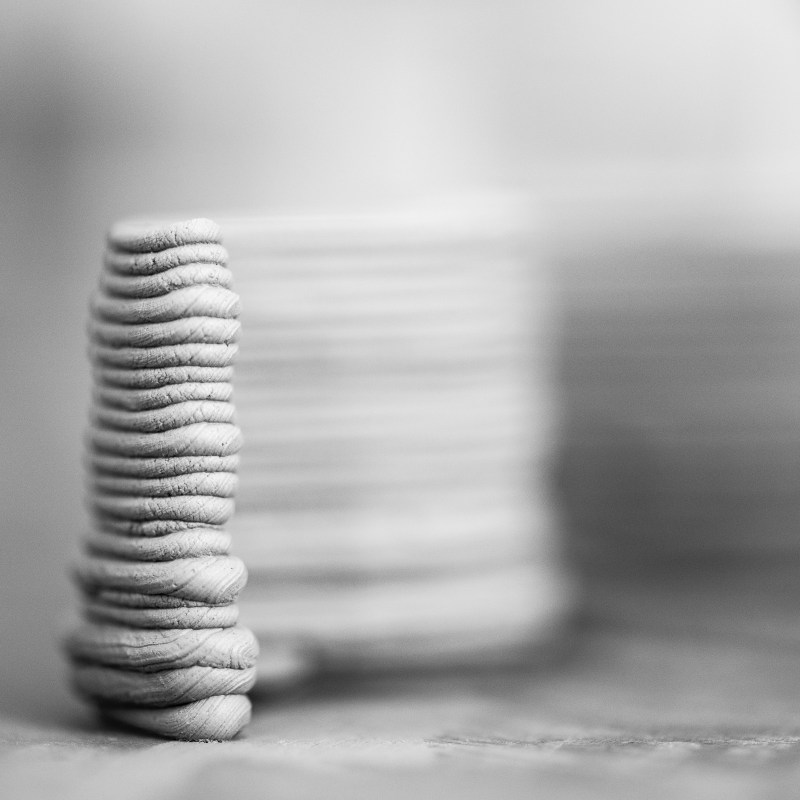
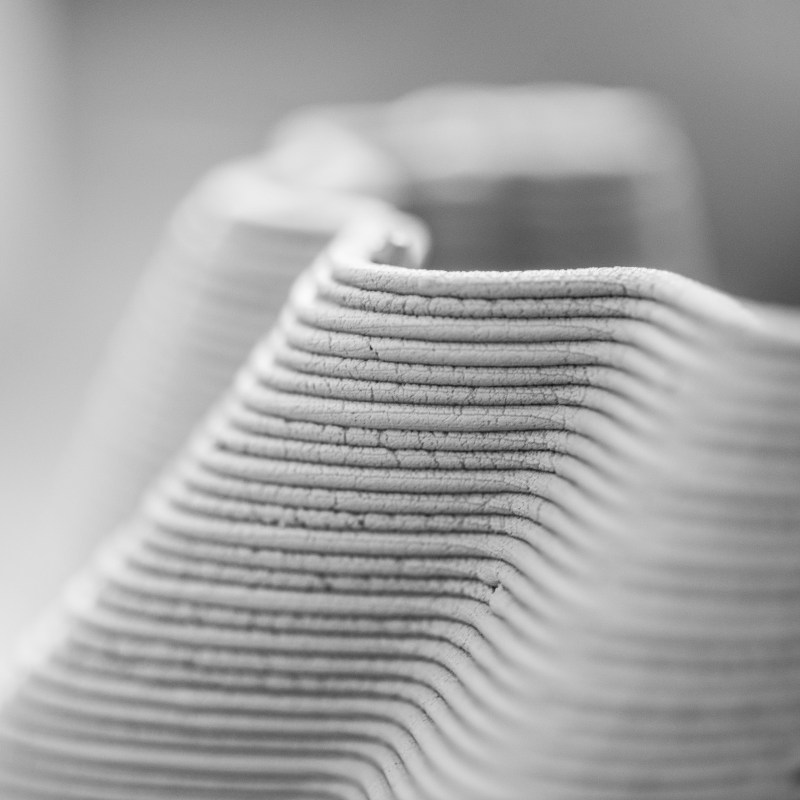
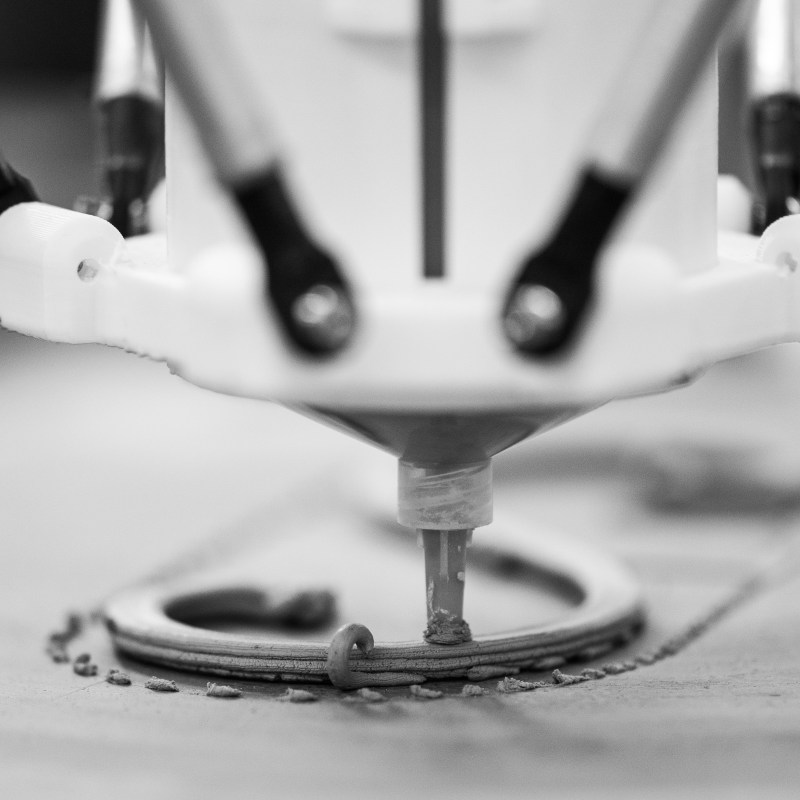
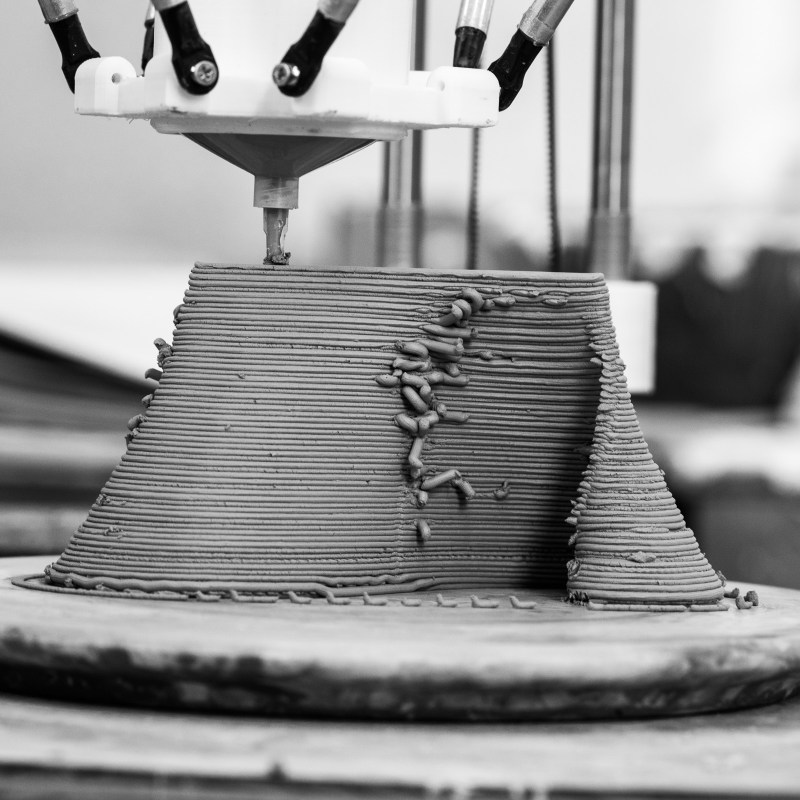
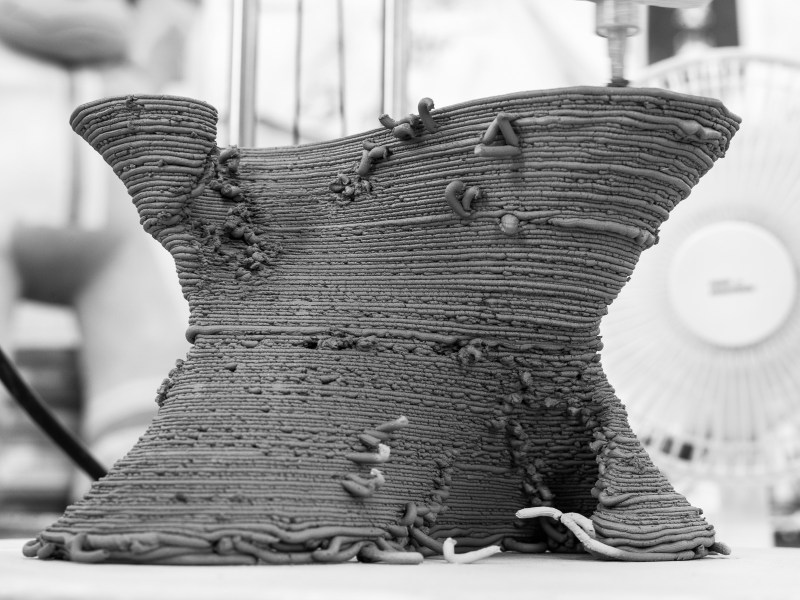
As hinted at in a previous post, I have been spending a fair amount of time this summer preparing 3D models for clay printing. I will talk about the models and the results at a later point. Today, we focus (or de-focus?) on watching the process. Printing a model takes time (say two hours for a model 20 cm in width) and requires almost permanent attention.

DSC 4140

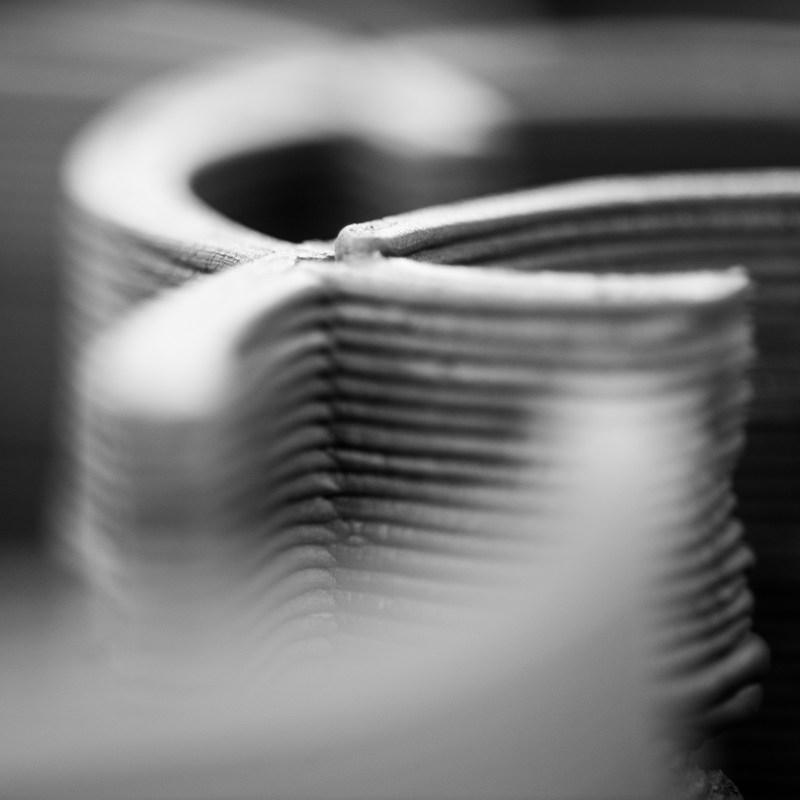
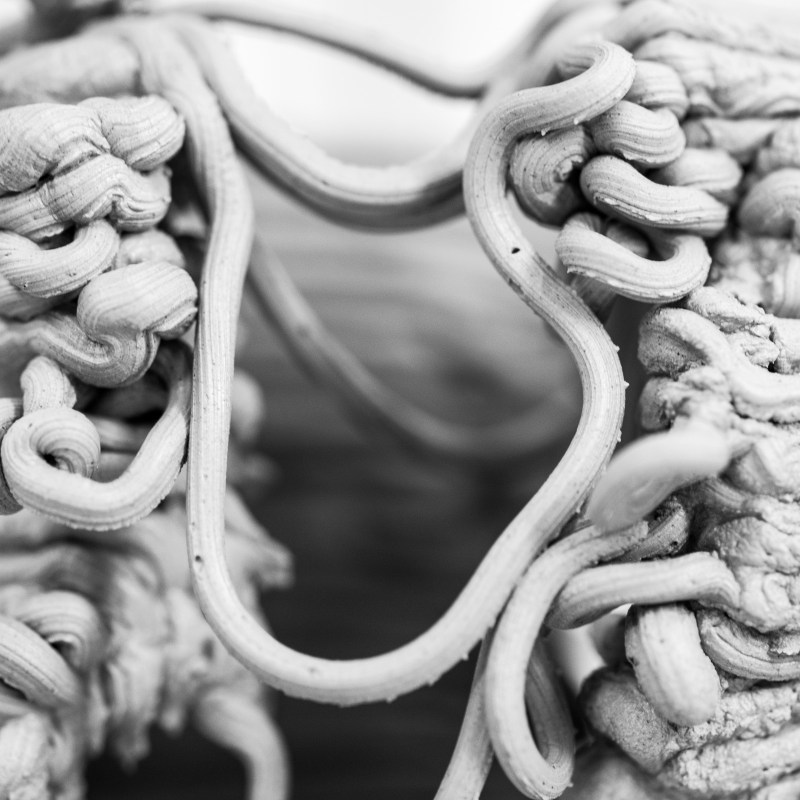
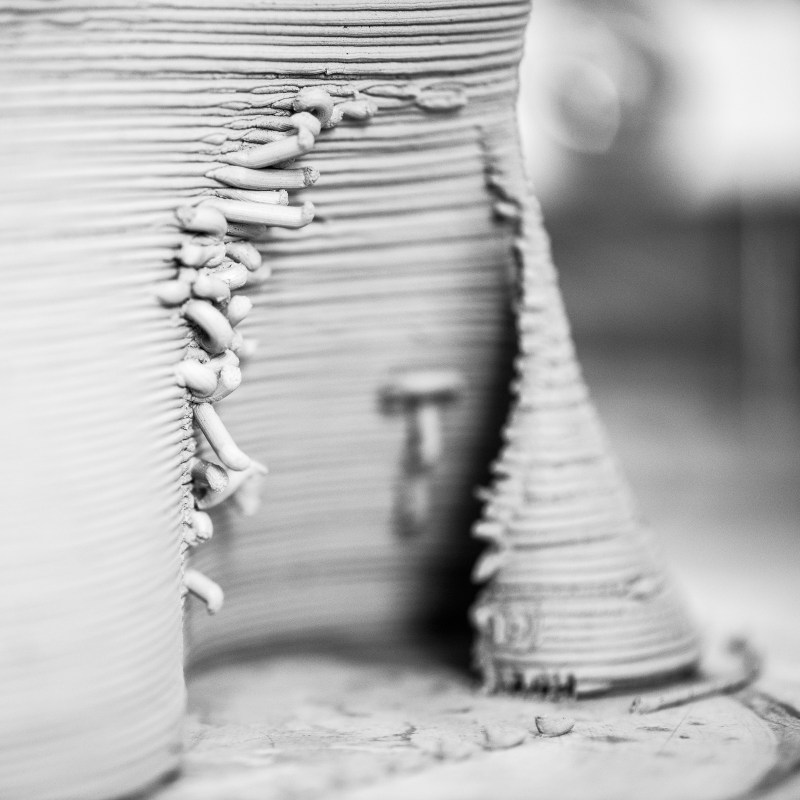
So one naturally begins to pay attention to details. The shallow focus of a macro lens not only allows to pinpoint these details, it also blurs everything else into pleasant abstraction.

DSC 4309

Color is almost irrelevant, unless one wants to bring out the gradual change of clay type from layer to layer. Everything is reduced to utter simplicity, to the extent that the all too human question for meaning is becoming meaningless.

DSC 4367

What matters is structure, and the work to be done to maintain it.

DSC 3863

Arbeit und Struktur (Work and Structure) is the title of Wolfgang Herrndorf’s Blog-Diary that he wrote in the last three years of his life.
This diary distills much of what mattered to him while facing death, and the title is a further reduction of this to just two words.

Stars and Stripes

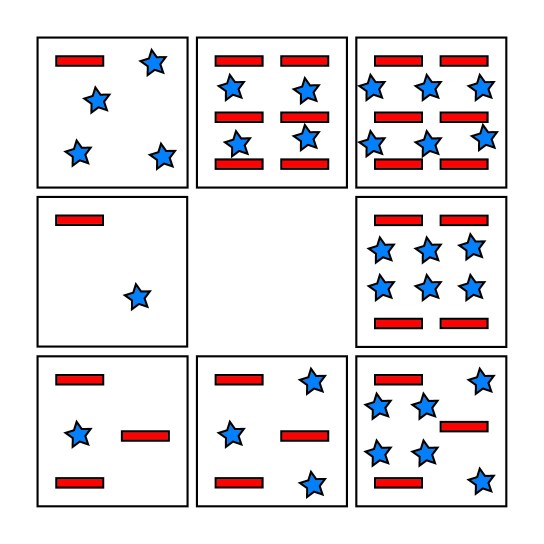
A while ago I had the idea for a card game where each card is a square representing both halves of a domino piece simultaneously. That is, each card is decorated with one to six symbols of one kind (say stars), and one to six symbols of another kind (say stripes). Cards could be placed next to each other if they followed the matching rule that requires them to have the same number of stripes or stars. Here is a chain of eight cards, all following the matching rule:

Matching 01

I liked the idea (and I am sure others must have had it before me), but I also had a hard time coming up with a game worthy of this set of cards. Recent developments triggered the much needed idea.

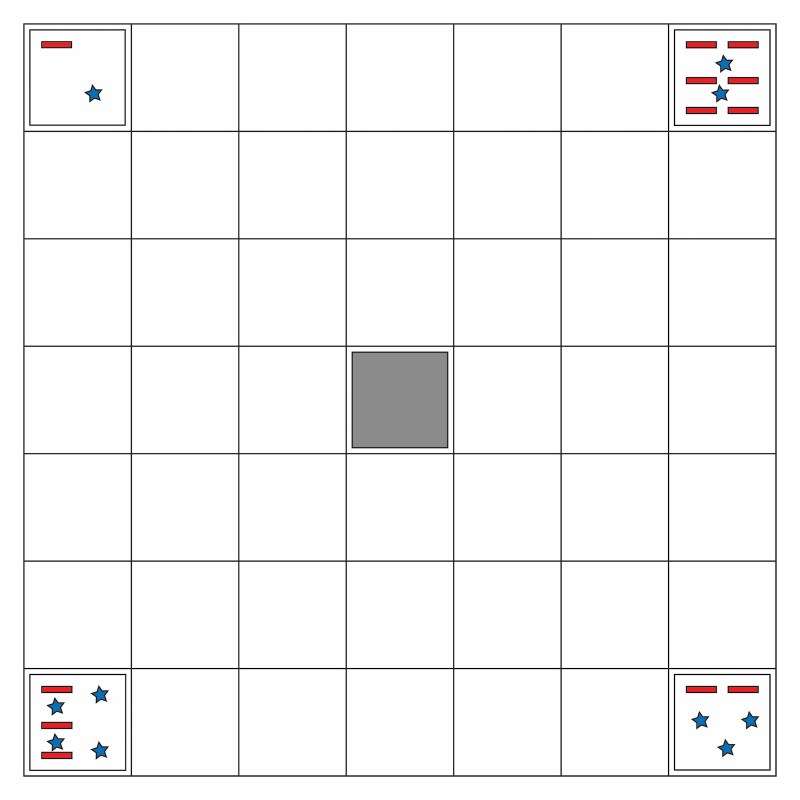
Stars and Stripes is played on a 7 x 7 board. In the initial setup, the 36 cards are shuffled. Each of the 2-4 players draws a card randomly and places it face up into the corner nearest to him or her to mark home. The middle square of the board is occupied by a special card, called the Trump. You can make and decorate it yourself as you see fit, I have kept it gray and empty. Here is how the setup could look like with four players.

Setup 01

The remaining cards are dealt out to all players. If you play with 2, 3 or 4 players, each gets 17, 11 or 8 cards.

The primary purpose of the game is to gather the largest number of followers. A follower is a card on the board that is connected to the player’s home corner through other cards, who are then followers as well.

The players take turns. At each turn, the player must perform exactly one of the following three actions:

  • Place a card from the hand on an empty square of the board that is surrounded in all 9 directions by empty squares or by the border of the board. This card is then called an independent. Placing a card like this can be used to prevent other players to expand their fellowship, or to prepare one’s own future expansion.
  • Place a card from the hand on an empty square of the board so that it borders one or more follower cards of the player, but to no follower card of another player. Cards may border independent cards and/or possibly the Trump.
    Cards must be placed following the matching rule for all neighbors with which they share an edge. This means that the placed card must have the same number of stars or the same number of stripes as each neighbor in the four directions north, east, west, or south. The matching rule is not applied for the Trump. A card placed this way will automatically become a follower of the player, as do all independents this card possibly connects to.
  • Exchange one card randomly with another player. This is done as follows: Both players spread out their cards face down, and both players select simultaneously a card from the other player.

Let’s look at an example. After a few turns, the board might look like this:

Example 01

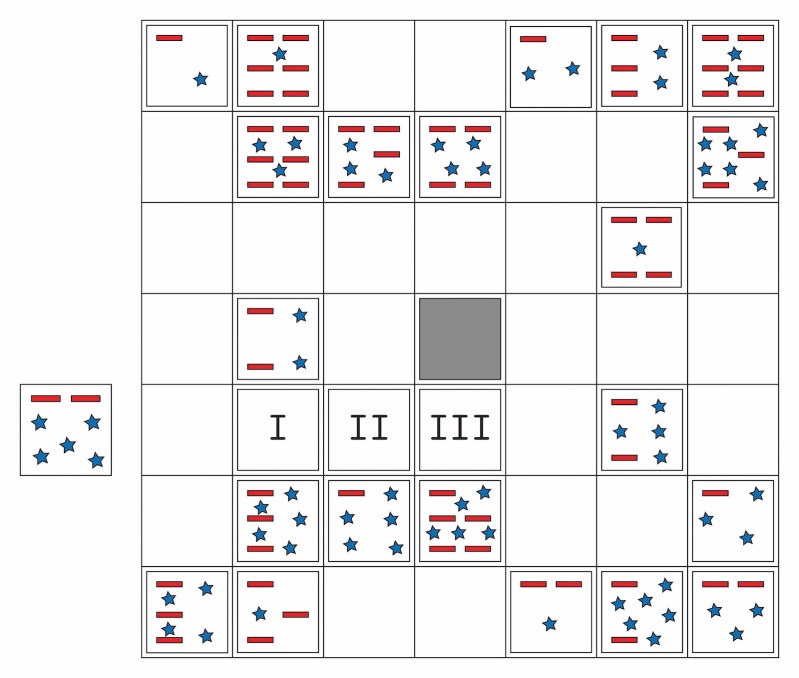
Player NW (upper left corner) has five followers, NE and SE four, and SW five. There are three independents. NE is blocked by an independent with one star and four stripes. The only way out of it is to play a card with four stripes and six stars or a card with three stripes and one star. This would also convert the independent into a follower.

Let’s suppose it is SW’s turn, and he or she would like to play the card that I placed next to the board. There are only three possible spots left for this card, marked by roman numerals.

By playing in spot I, SW will gain the independent with two stars and stripes as a follower. Playing in spot II just adds the card as a follower, and playing in spot III connects to the Trump.

Only one player can connect with the Trump, and the Trump does not count as a follower. However, by being connected to the Trump, the player is now allowed to break the matching rule:
Whenever he or she wants to place a new card, this card still must be either isolated or only border the player’s own followers and possibly independents, but the card does not need to match in the number of stars or stripes. In other words, the player connected to the Trump has it much easier to increase the number of followers.

The game ends when after a round, a player has run out of cards or no new card has been placed during that round. The winner is the player with the most followers.

For increased fun, this game can be played also on larger boards with several decks of cards.

You can download a pdf file with cards to print and cut out here.
Get it now, while the game is still legal to play.

Le Bateau Ivre (Loxodromes II)

A good way to embarrass oneself is to go to a book store in a foreign country whose language one is not fluent in, and buy a book. I did this multiple times, at least in France, Spain, and the UK.

I typically tried to get by without saying a single word as not to reveal my complete incompetence, but the punishment for that can be unexpected. During one of my first visits to Paris, I went and bought the Bibliothèque de la Pléiade edition of Arthur Rimbaud.

The catch was that the very pretty cashier tried to initiate a conversation by smiling at me and saying “Ah, J’aime Rimbaud”.
I blushed, payed, and made my way out. Embarrassing.

But it brings us to the topic, Rimbaud’s Drunken Boat.

Concept

The image is this, and it does not look like a drunken boat. What we start with are the loxodromes I have talked about before. They are the curves a sober boat would trace out on the sphere when heading in a fixed compass direction. Laying down one of these loxodromic double spirals as a base using Malcolm’s clay printer looks like this:

DSC 3912

Then, moving up, we deform the loxodrome that represents say North-North-West slowly into North-West and then West, which corresponds to a meridian, and therefore a straight line in suitable stereographic projection.

DSC 3927

Then, even higher up on the sculpture, we change course to South-West and thus reverse the direction of the spirals.

DSC 3754

This was our first rough prototype. The next step will be to make this larger, cleaner, and slightly drunken, so that the loxodromes swerve left and right.

DSC 3932

We’ll see shortly where we get…

Scherk meets Enneper

My little excursions into the history of minimal surfaces continues with a contribution of Heinrich Scherk from 1835. Making assumptions that allowed him to separate variables in the so far intractable minimal surface equation, he was able to come up with several quite explicit solutions, two of which are still of relevance today.

Scherksimple

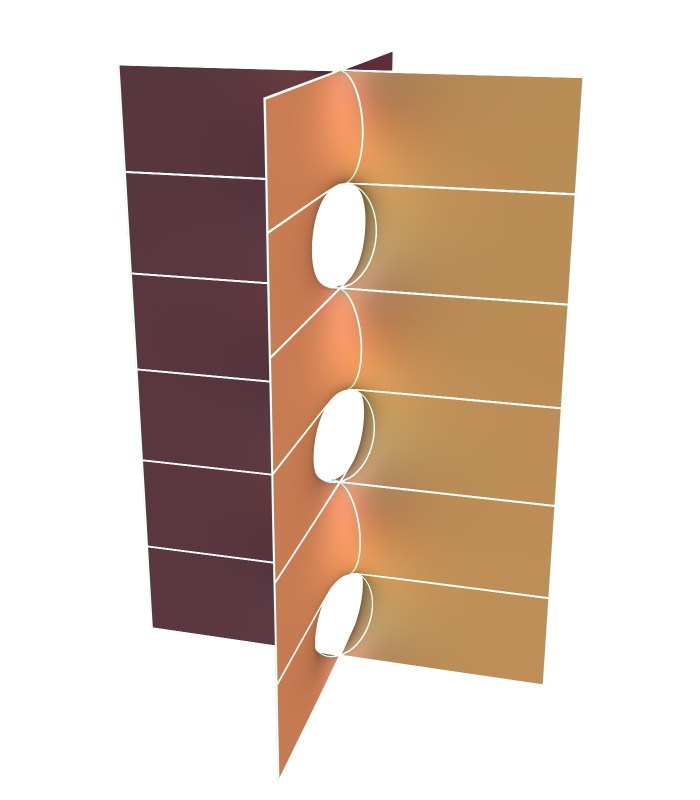
In its simplest version, the singly periodic Scherk surface looks from far away like two perpendicular planes whose line of intersection has been replaced by tunnels that alternate in direction.

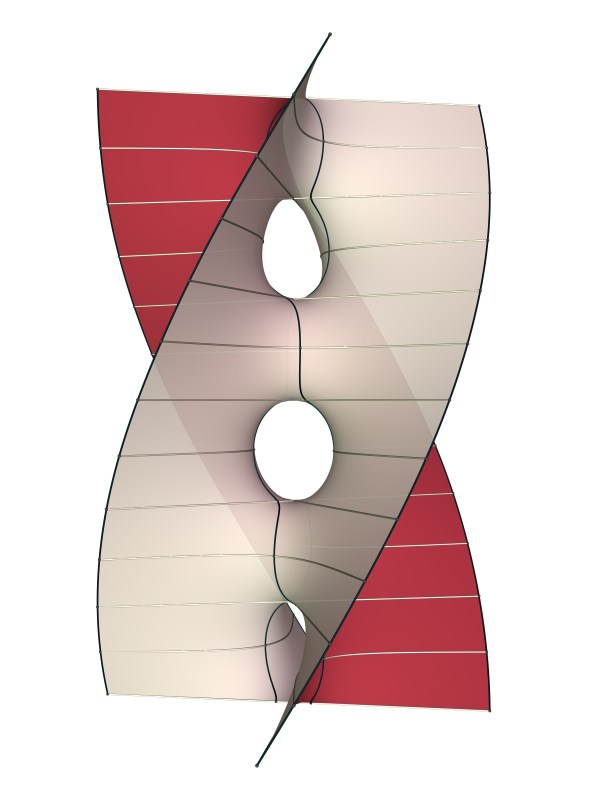
The next milestone concerning these surfaces took place 1988, over 150 years later, when Hermann Karcher constructed astonishing variations. Among others, he showed they can be had with (many) more wings

Scherk9

and even twisted:

Scherktwist

Now, can they also be wiggled? The prototype here is the translation invariant Enneper surface. It has the feature that it can be wrapped onto itself after sliding it any distance.
In other words, it is continuously intrinsically translation invariant.

TransEnneper

Hmm. I should patent this.

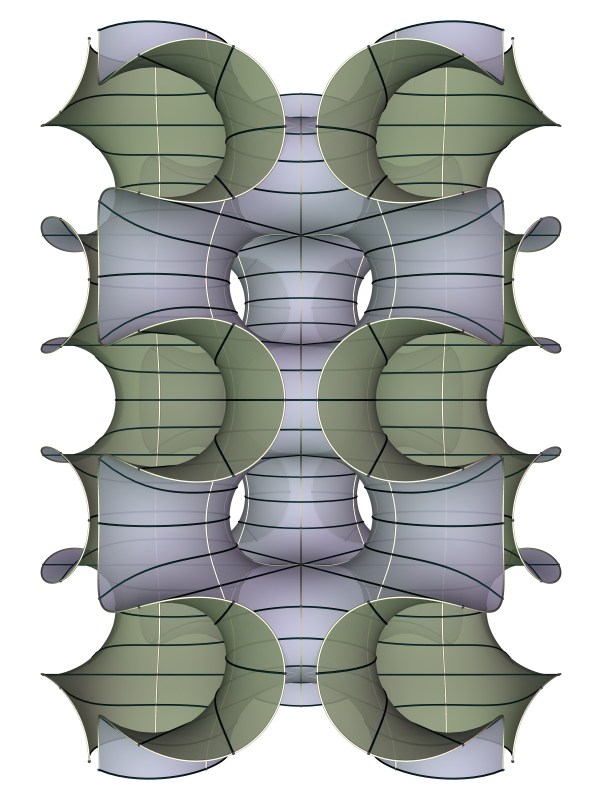
So we can switch out the boring flat Scherk wings with the wiggly Enneper wings, like so, still keeping everything minimal, pushing the notion to its limits.

Enneper scherk1

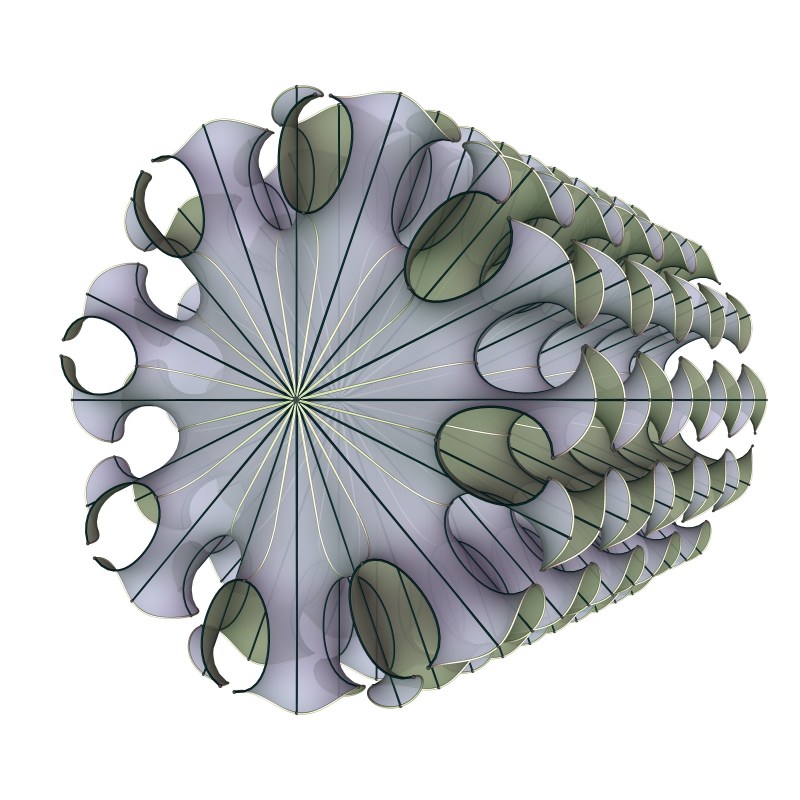
Here is a more radical version. You don’t want to run into this in the wild.

Enneper scherk2

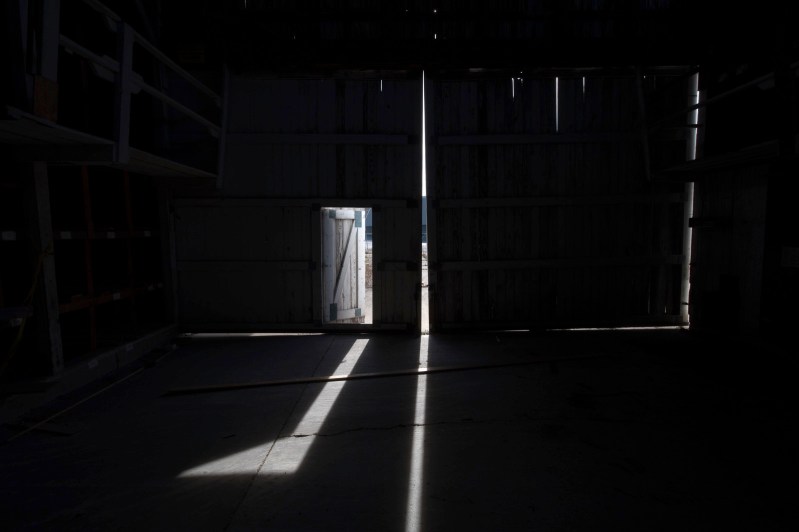
Walls

A while back I posted a few images from a nearby industrial ruin. Here are some more.

DSC6491

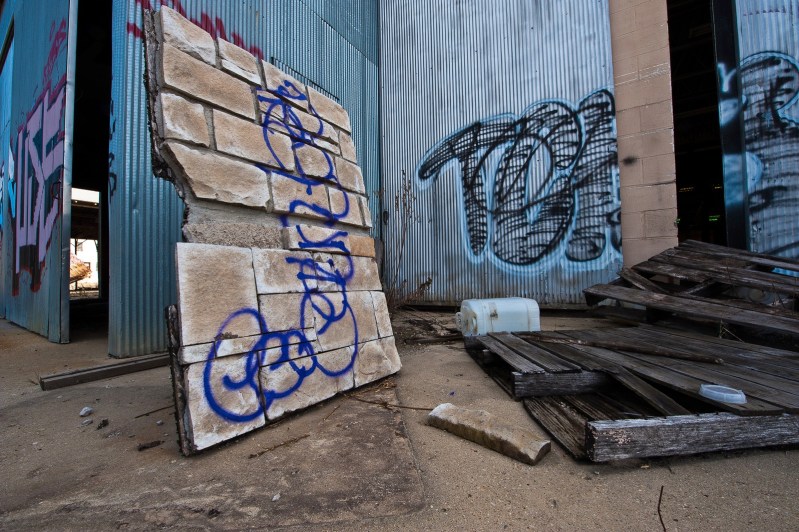
This time, the theme are walls. They are back in fashion these days, and it might help to see what inevitably happens to them.

DSC6553

The function of a wall is rarely only to separate two sides,
DSC6362

but also to be a platform for comment,

DSC6352

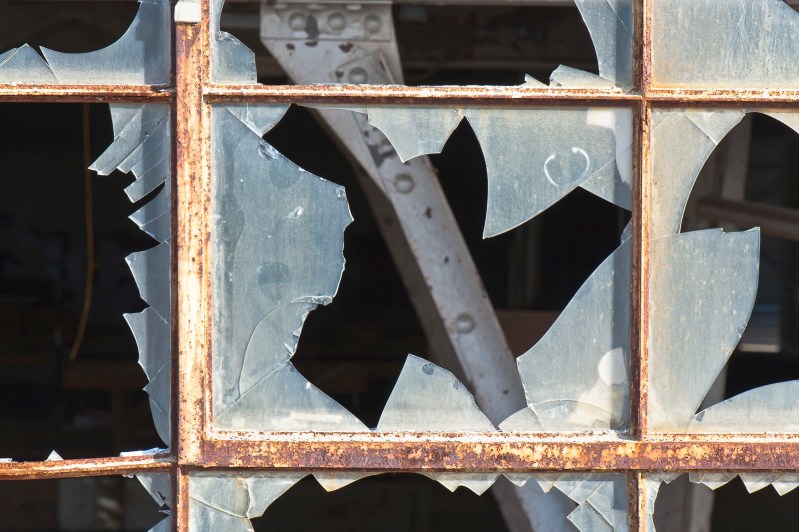
a target for subversion,

DSC6601

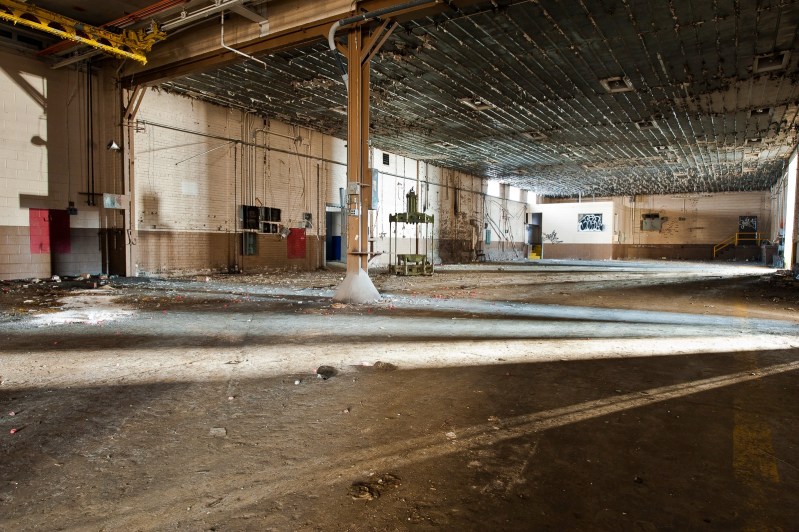
or sometimes a symbol for future obsolescence.

DSC6411

We just need to make sure that the open space is significantly better.

DSC6319

Catenoids meet Enneper (Enneper III)

Enncat2a

Sometimes, the Enneper surface will just show up. For instance, when classifying complete minimal surfaces of small total Gauss curvature, it is unavoidable. Together with the catenoid it hold the record of having only total curvature -4𝜋. Next comes -8𝜋, and for this you will encounter critters like these that have look like an Enneper surface with two catenoids poking out.

Enncat2b

There are many others, and I view them not so much as objects to be classified and put away but rather as play grounds where one can learn what design goals are compatible with the constraint of being a minimal surface.

Cat2enneper1

For instance, adding a base to the surface above is possible but pulls the two top “lobes” of Enneper and with them the two inward pointing catenoids apart:

Cat3enneper1

But still, the Enneper surface comes in handy. The k-Noids, which traditionally are minimal surfaces just with catenoidal ends, have to be well balanced: The catenoids pull and push in the direction of their axes, and get boring after a while. The Enneper surface is much stronger then any number of catenoids and will win any tug-of-war.

Cat1enn4