Deceiving Simplicity (Annuli VI)

Circles

Just three months before his death on July 20, 1866 (150 years ago), Bernhard Riemann handed a few sheets of paper with formulas to Karl Hattendorff, one of his colleagues in Göttingen.
Hattendorff did better than Riemann’s house keeper who discarded the papers and notes she found.

He instead worked out the details, and published this as a posthumous paper of Riemann. It contains his work on minimal surfaces. Riemann was possibly the first person who realized that the Gauss map of a minimal surface is conformal, and that its inverse is well suited to find explicit parametrizations. He used this insight to construct the minimal surface family that bears his name, as well as a few others that were later rediscovered by Hermann Schwarz.
Riemann

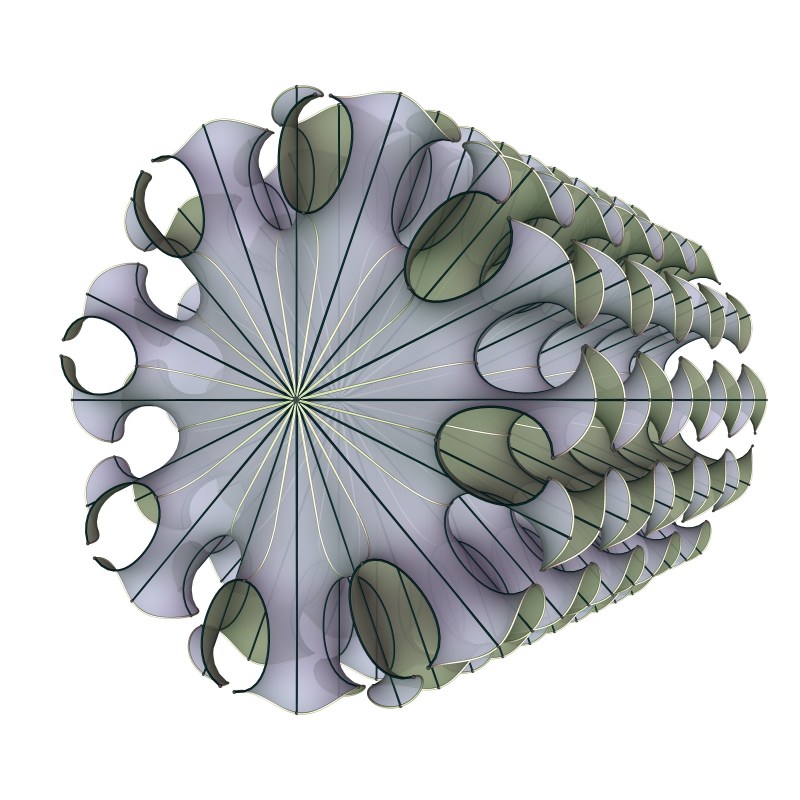
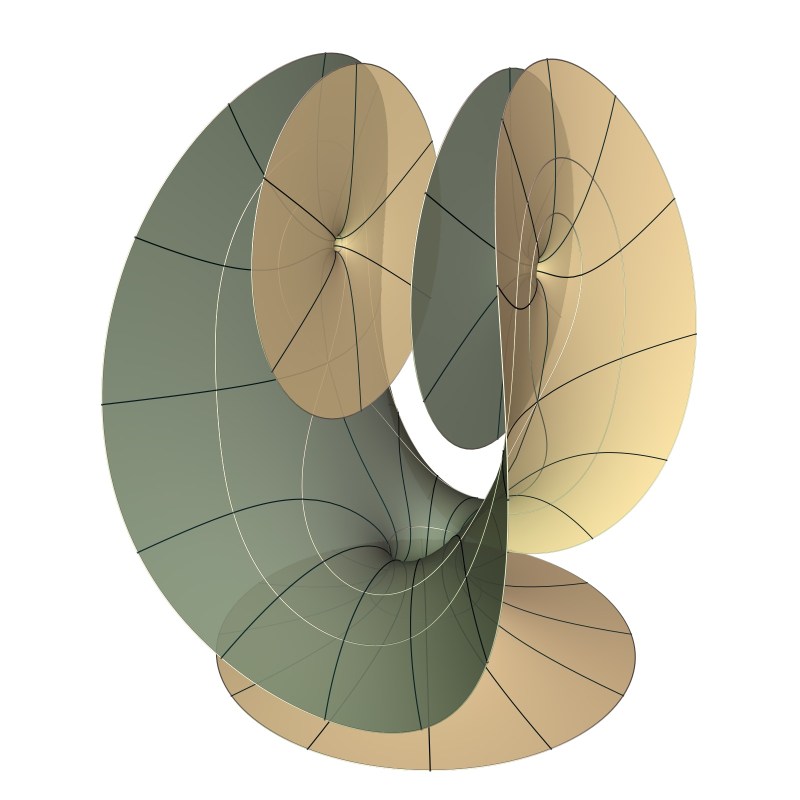
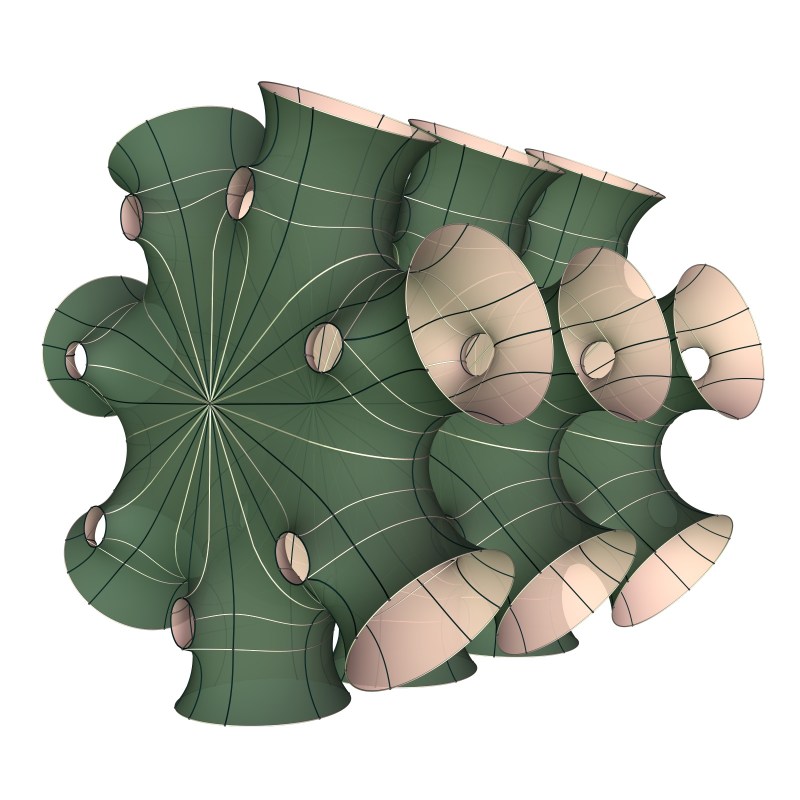
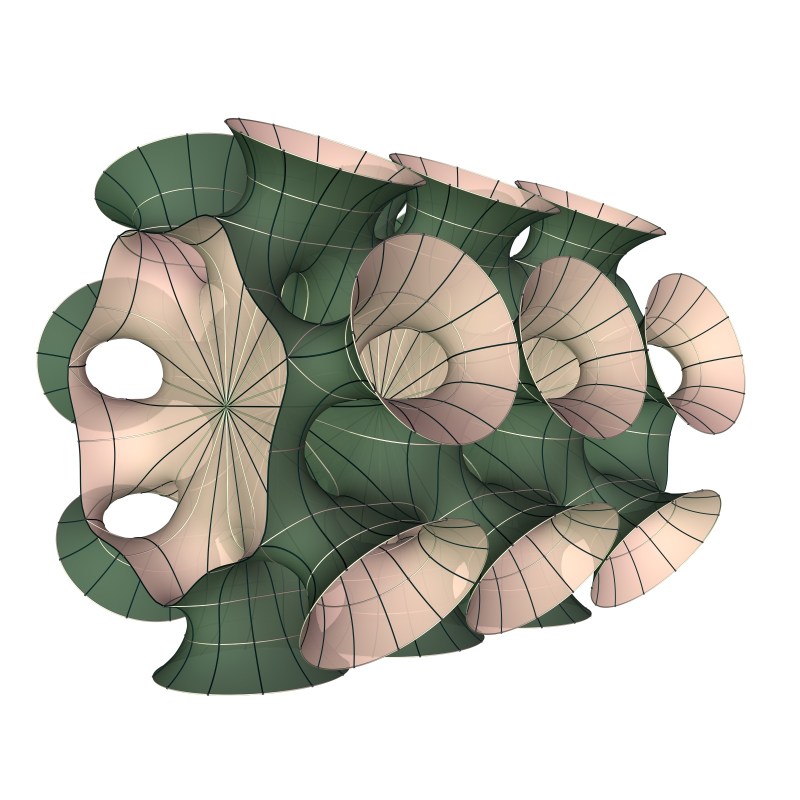
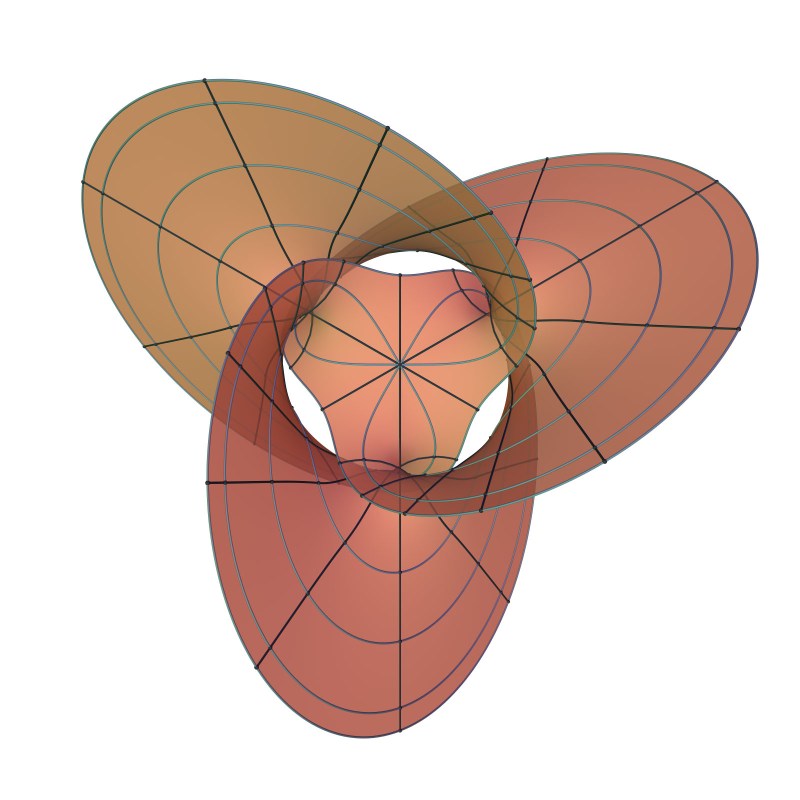
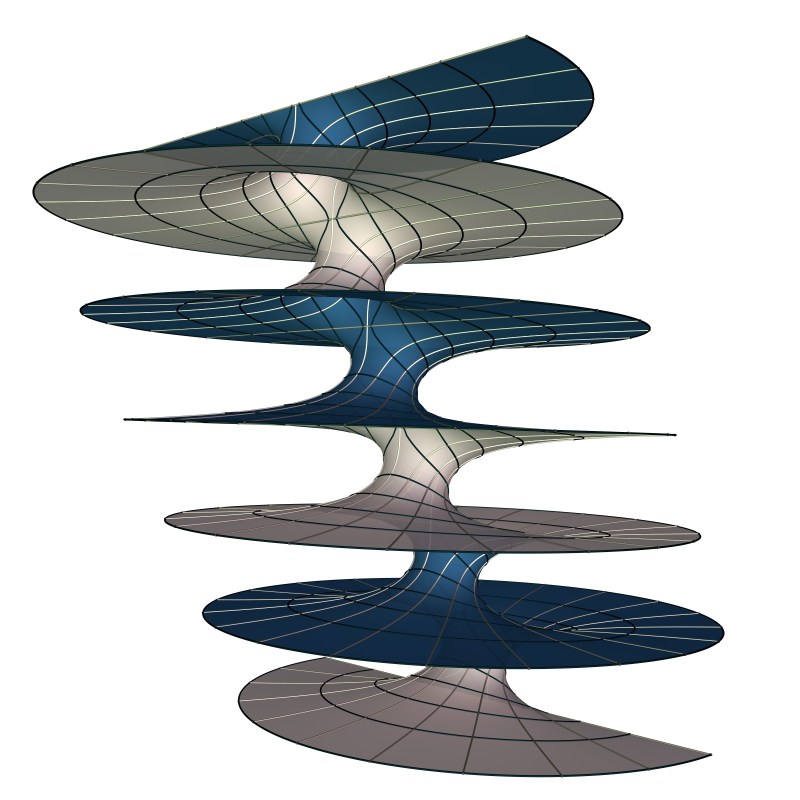
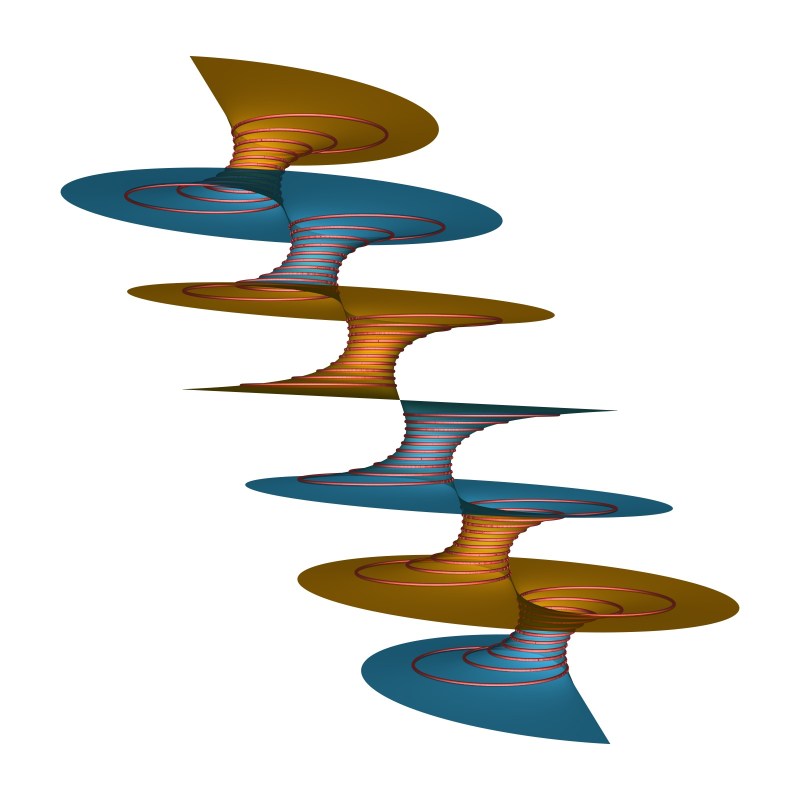
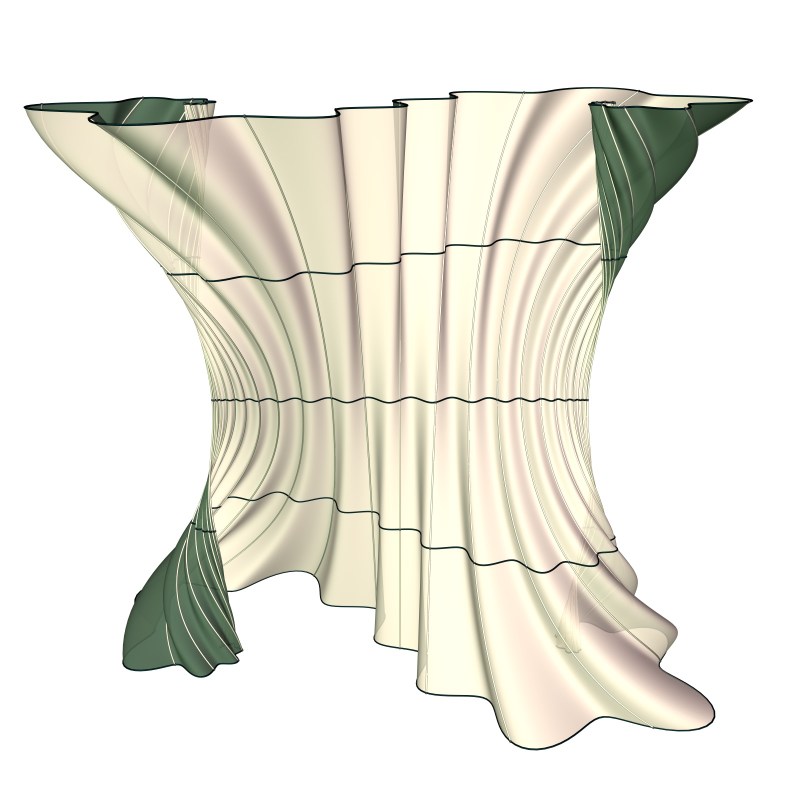
Above is one of Riemann’s minimal surfaces, parametrized by the inverse of the Gauss map. This means in particular that the surface normal along the parameter lines traces out great circles on the sphere. Riemann discovered these surfaces by classifying all minimal surfaces whose intersections with horizontal planes are lines or circles. These are the catenoid, the helicoid, or Riemann’s new 1-parameter family.
Riemanncircles

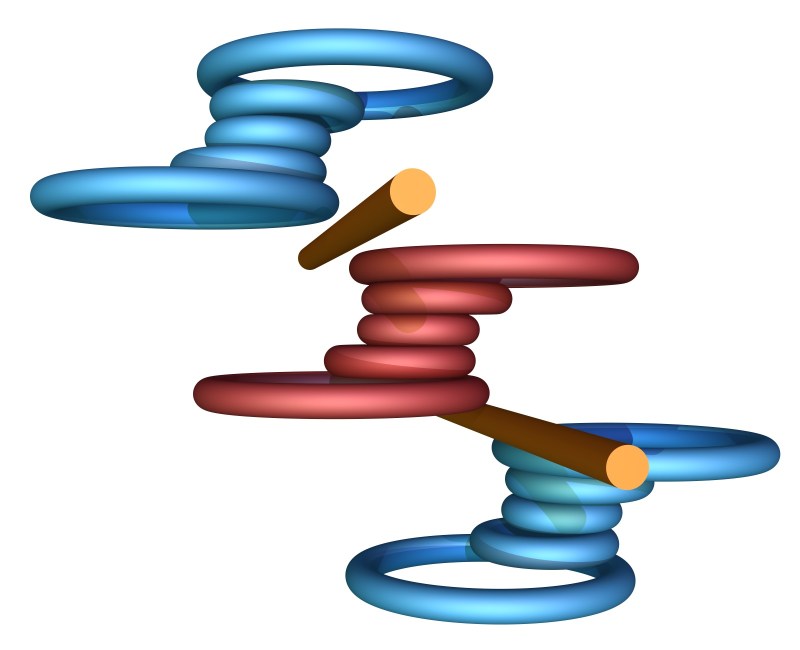
The proof utilizes elliptic functions, which is not surprising: Riemann’s minimal surfaces are translation invariant, and their quotient by this translation is a torus, on which the Gauss map is a meromorphic function of degree 2. It is in fact one of the simplest elliptic functions, and one can use it to parametrize Riemann’s surfaces quite elegantly. What is not simple is the proof that these surfaces have indeed circles as horizontal slices. All arguments I know involve some more or less heavy computation. We are clearly lacking some insight here.
Simple

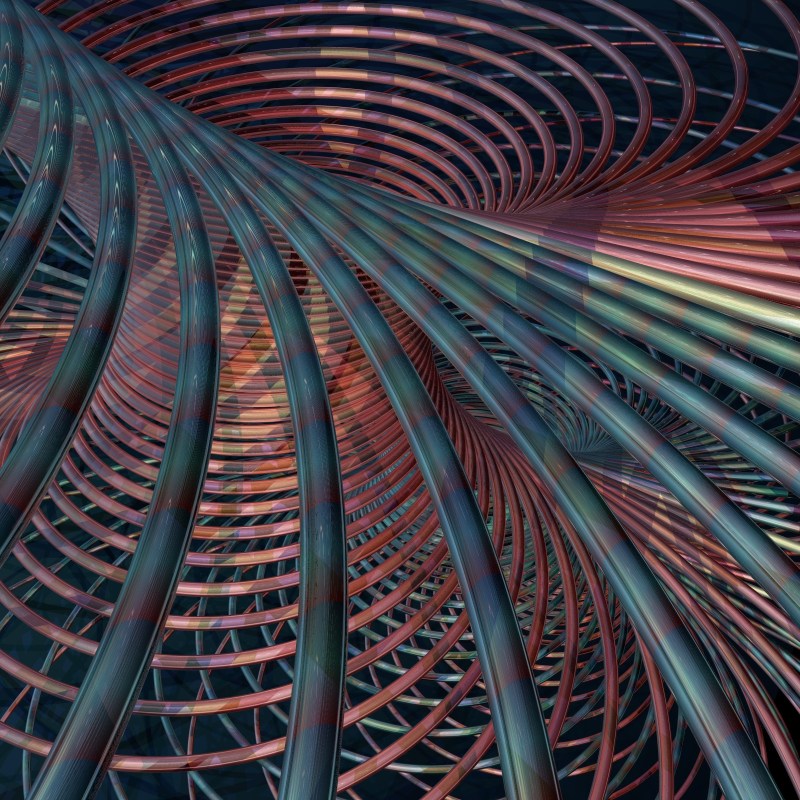
The longer one studies these surfaces, the more perplexing they become. There is, for instance, Max Shiffman’s theorem from 1956. It states that if a minimal cylinder has just two horizontal circular slices, all its horizontal slices are circles. The proof is elegant, magical, and still mysterious, just like Riemann’s minimal surfaces.
Inside riemann

Le Bateau Ivre (Loxodromes II)

A good way to embarrass oneself is to go to a book store in a foreign country whose language one is not fluent in, and buy a book. I did this multiple times, at least in France, Spain, and the UK.

I typically tried to get by without saying a single word as not to reveal my complete incompetence, but the punishment for that can be unexpected. During one of my first visits to Paris, I went and bought the Bibliothèque de la Pléiade edition of Arthur Rimbaud.

The catch was that the very pretty cashier tried to initiate a conversation by smiling at me and saying “Ah, J’aime Rimbaud”.
I blushed, payed, and made my way out. Embarrassing.

But it brings us to the topic, Rimbaud’s Drunken Boat.

Concept

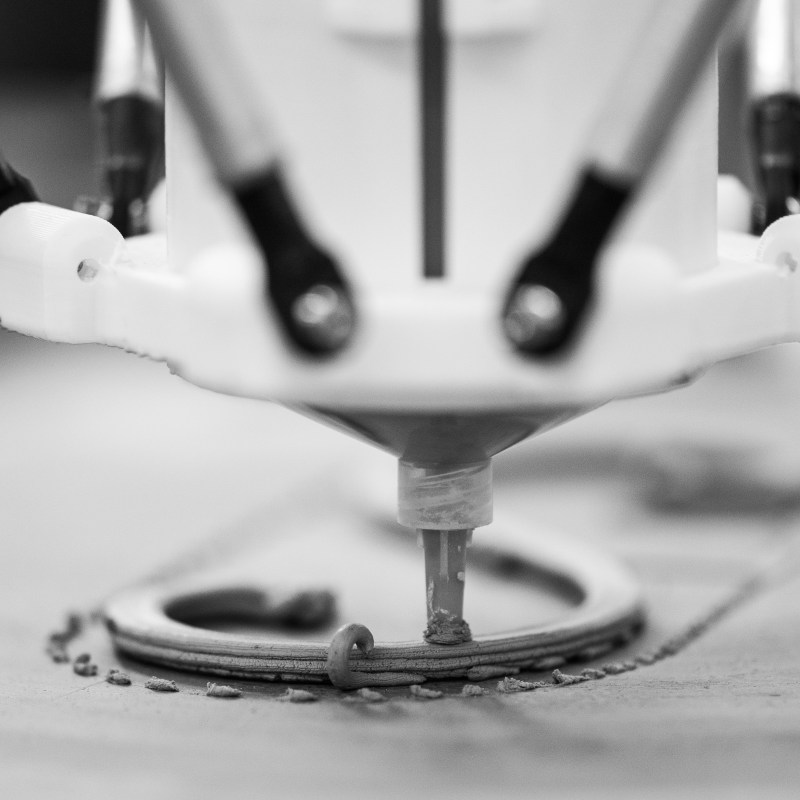
The image is this, and it does not look like a drunken boat. What we start with are the loxodromes I have talked about before. They are the curves a sober boat would trace out on the sphere when heading in a fixed compass direction. Laying down one of these loxodromic double spirals as a base using Malcolm’s clay printer looks like this:

DSC 3912

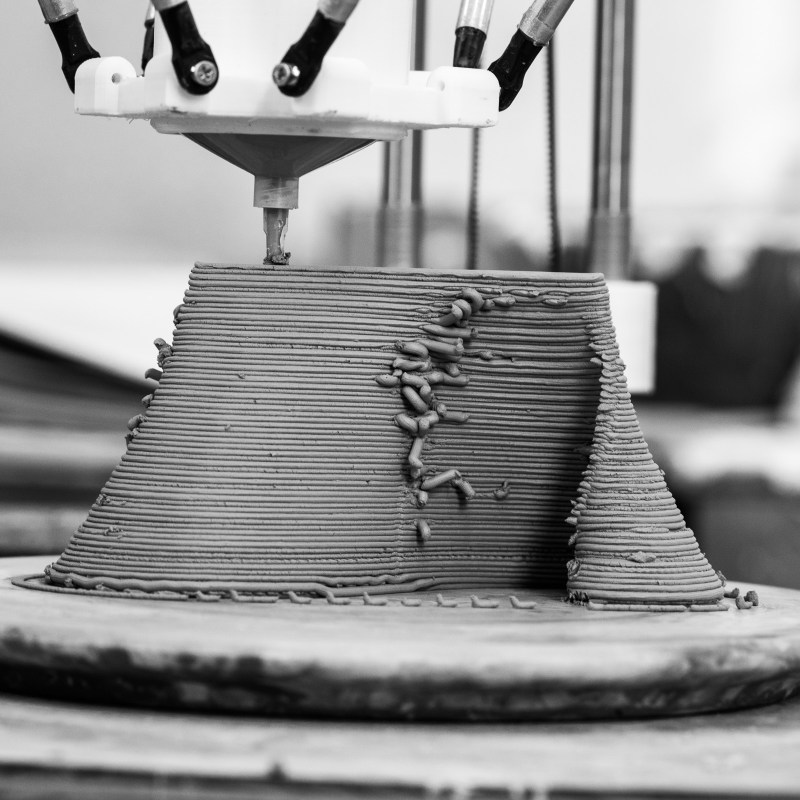
Then, moving up, we deform the loxodrome that represents say North-North-West slowly into North-West and then West, which corresponds to a meridian, and therefore a straight line in suitable stereographic projection.

DSC 3927

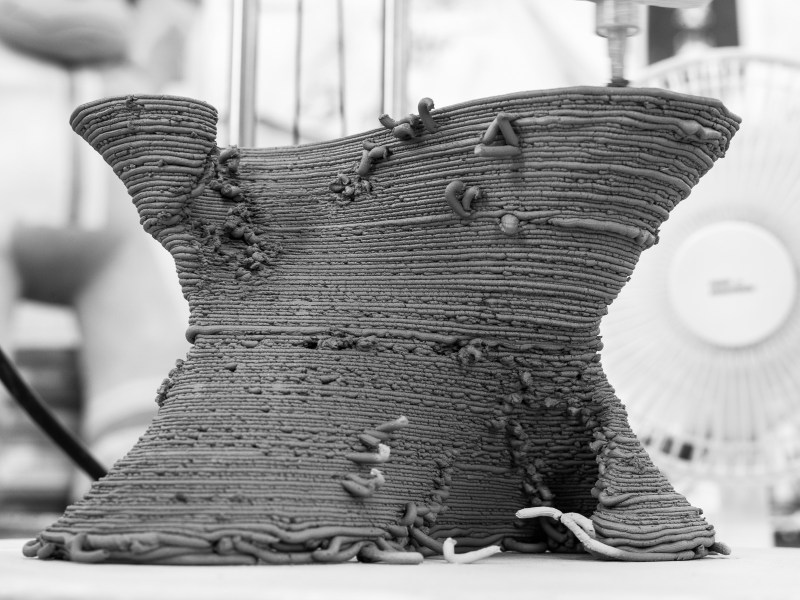
Then, even higher up on the sculpture, we change course to South-West and thus reverse the direction of the spirals.

DSC 3754

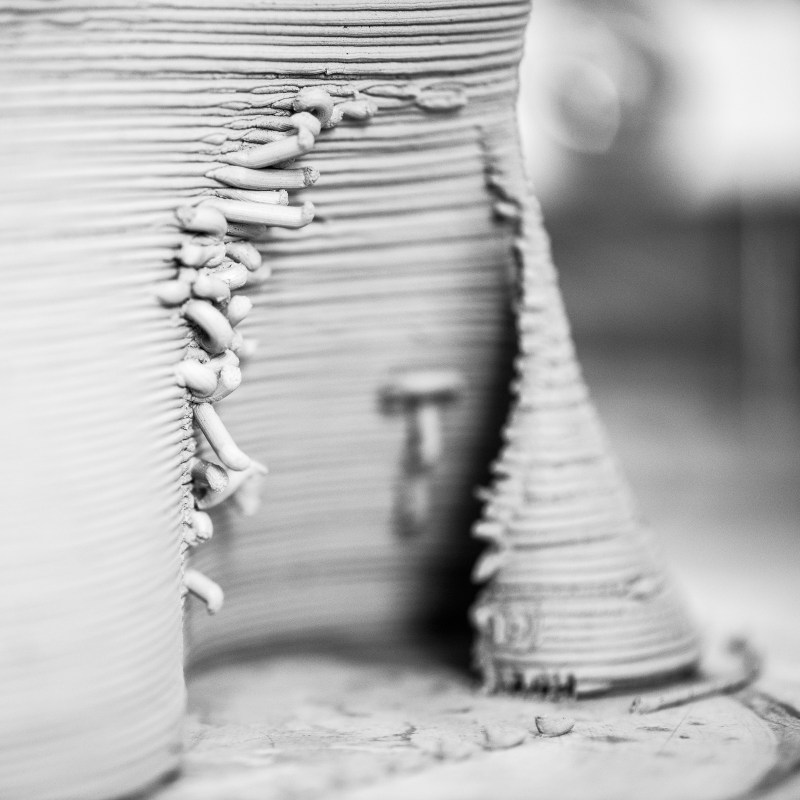
This was our first rough prototype. The next step will be to make this larger, cleaner, and slightly drunken, so that the loxodromes swerve left and right.

DSC 3932

We’ll see shortly where we get…

Scherk meets Enneper

My little excursions into the history of minimal surfaces continues with a contribution of Heinrich Scherk from 1835. Making assumptions that allowed him to separate variables in the so far intractable minimal surface equation, he was able to come up with several quite explicit solutions, two of which are still of relevance today.

Scherksimple

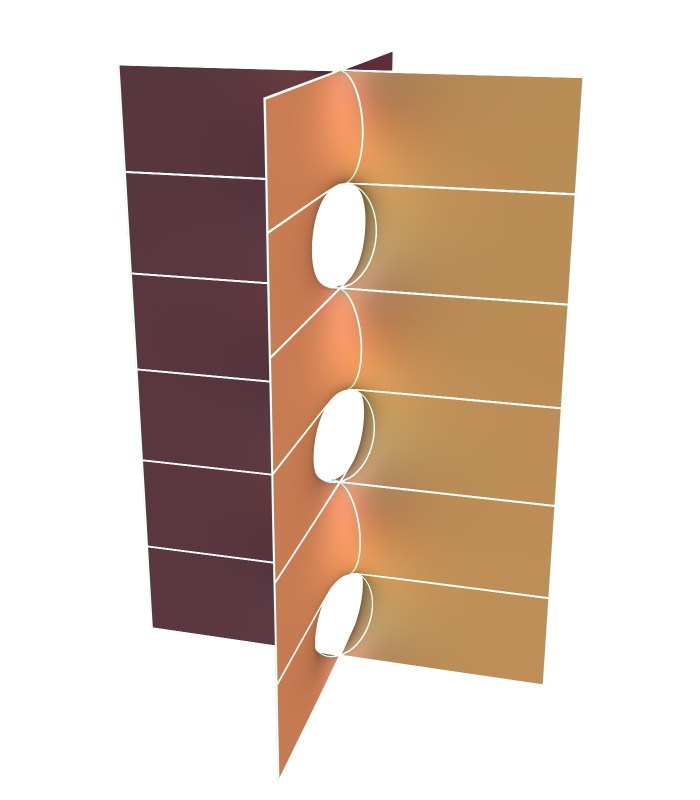
In its simplest version, the singly periodic Scherk surface looks from far away like two perpendicular planes whose line of intersection has been replaced by tunnels that alternate in direction.

The next milestone concerning these surfaces took place 1988, over 150 years later, when Hermann Karcher constructed astonishing variations. Among others, he showed they can be had with (many) more wings

Scherk9

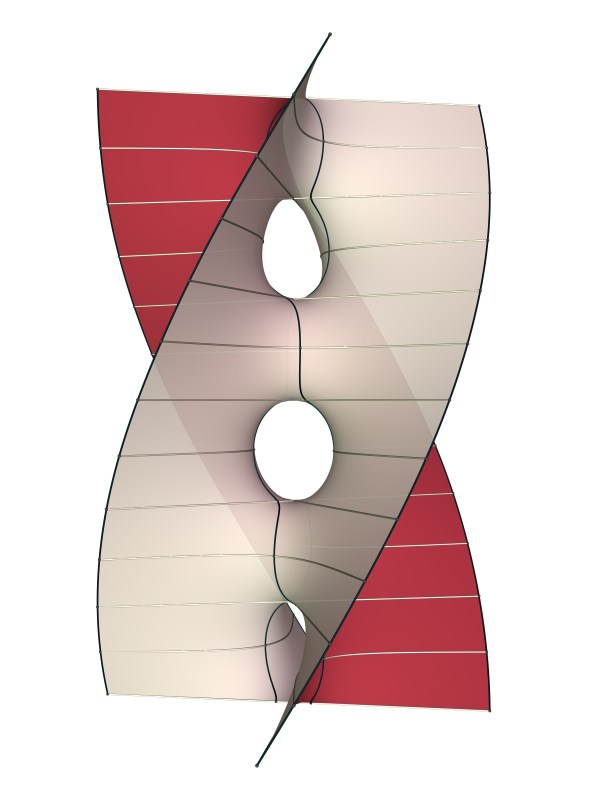
and even twisted:

Scherktwist

Now, can they also be wiggled? The prototype here is the translation invariant Enneper surface. It has the feature that it can be wrapped onto itself after sliding it any distance.
In other words, it is continuously intrinsically translation invariant.

TransEnneper

Hmm. I should patent this.

So we can switch out the boring flat Scherk wings with the wiggly Enneper wings, like so, still keeping everything minimal, pushing the notion to its limits.

Enneper scherk1

Here is a more radical version. You don’t want to run into this in the wild.

Enneper scherk2

Catenoids meet Enneper (Enneper III)

Enncat2a

Sometimes, the Enneper surface will just show up. For instance, when classifying complete minimal surfaces of small total Gauss curvature, it is unavoidable. Together with the catenoid it hold the record of having only total curvature -4𝜋. Next comes -8𝜋, and for this you will encounter critters like these that have look like an Enneper surface with two catenoids poking out.

Enncat2b

There are many others, and I view them not so much as objects to be classified and put away but rather as play grounds where one can learn what design goals are compatible with the constraint of being a minimal surface.

Cat2enneper1

For instance, adding a base to the surface above is possible but pulls the two top “lobes” of Enneper and with them the two inward pointing catenoids apart:

Cat3enneper1

But still, the Enneper surface comes in handy. The k-Noids, which traditionally are minimal surfaces just with catenoidal ends, have to be well balanced: The catenoids pull and push in the direction of their axes, and get boring after a while. The Enneper surface is much stronger then any number of catenoids and will win any tug-of-war.

Cat1enn4

Praising the Underrated (Enneper I)

In 1760 Joseph Lagrange writes, after establishing the minimal surface equation of a graph and observing that planar graphs do indeed satisfy his equation, that “la solution générale doit ètre telle, que le périmètre de la surface puisse ètre détermine a volonté” — the general solution ought to be such that the perimeter of the surface can be prescribed arbitrarily.

For a hundred years, little progress was made to support Lagrange’s optimism. Few examples of minimal surfaces were found, and most of them with considerable effort. Then it the second half of the 18th century, it took the combined efforts of Pierre Ossian Bonnet, Karl Theodor Wilhelm Weierstraß, Alfred Enneper, and Hermann Amandus Schwarz to unravel a connection between complex analysis and minimal surfaces that would become the Weierstrass representation and revolutionize the theory.

EnneperStandard

One piece in this story is Enneper’s minimal surface. Enneper was not so much after minimal surfaces but after examples of surfaces where all curvature lines are planar. This was immensely popular back then, and the long and technical papers are mostly forgotten.

Planarcurvature

Above is an attempt to visualize the planes that intersect the Enneper surface in its curvature lines.

Enneperruled
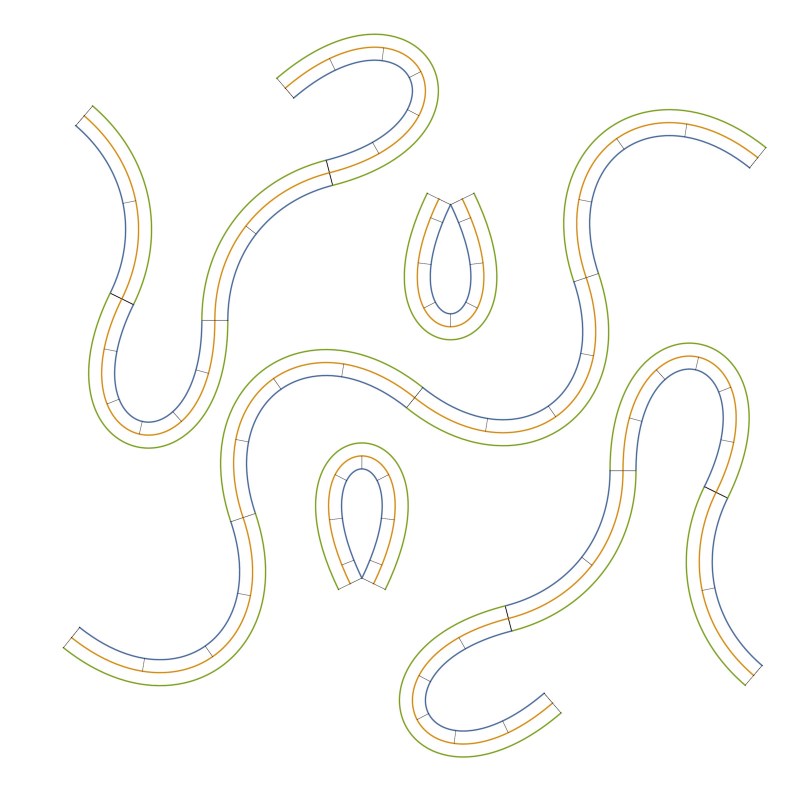
Visually easier to digest are the ruled surfaces that are generated by the surface normals along the curvature lines, because here the ruled surfaces and the Enneper surface meet orthogonally. While not planar, they are still flat, and invite therefore a paper model construction (that one can do for the curvature liens of any surface):

EnneperModel

Print and cut out the five snakes. The orange centers are the curvature lines. Also cut all segments that go half through a snake, and fold along all segments that go all the way through a snake, by about 90 degrees, always in the same way. Then assemble by sliding the snakes into each other along the cuts, like so:

DSC 0999

The three long snakes close up in space and need some tape to help them with that. Here is a retraced version of the same model which might help.

Enneper2

Periodic k-Noids (Minimal Surfaces in the Wild II)

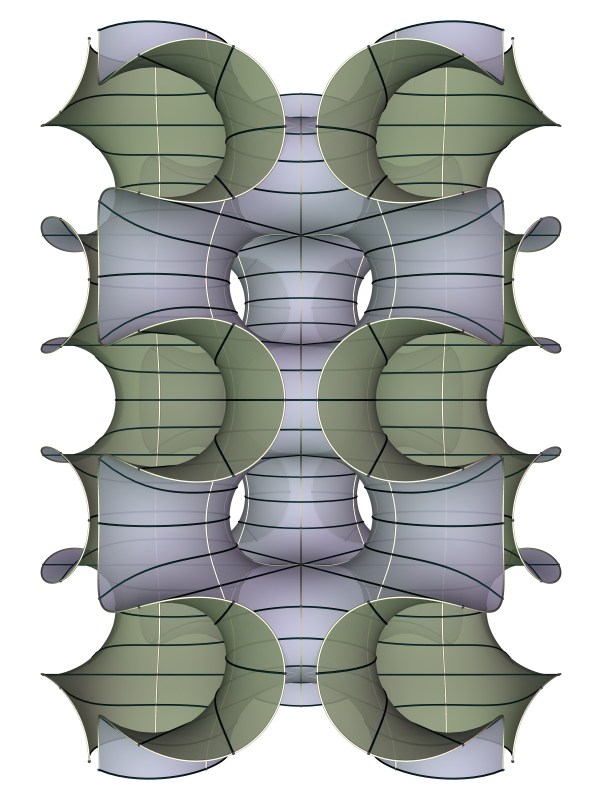
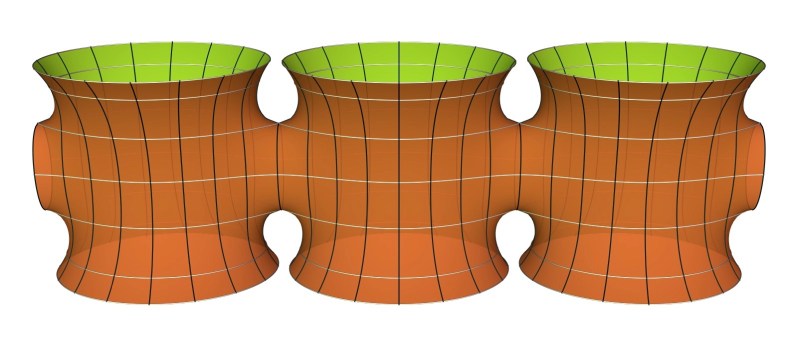
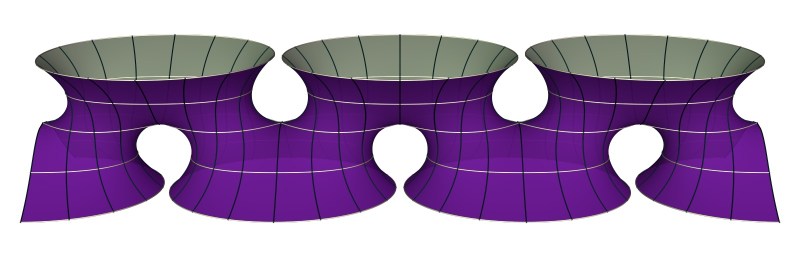
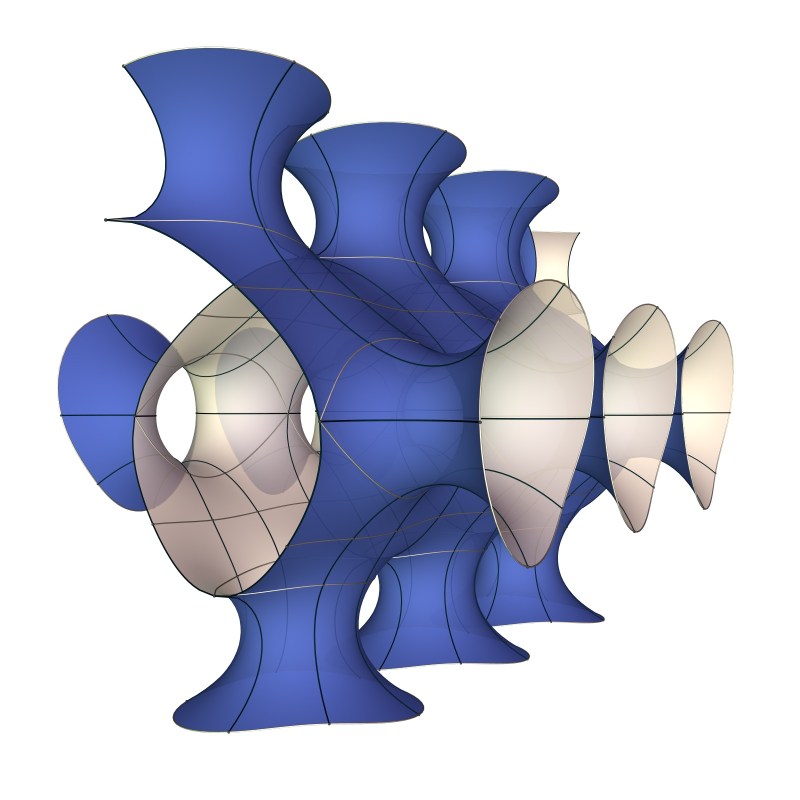
The k-Noids that Shireen built last winter will keep roaming the Swiss landscape, from May to August in Wülflingen. Maybe it is time to corral them. My suggestion is to build fences of catenoids. The most classical one looks like this:

Fence1

It is, technically, a translation invariant minimal surface that has two ends and genus 1 in the quotient. A simple generalization and an even simpler 90 degree rotation leeds to towers with catenoidal openings.

Fence2

If that isn’t safe enough, you can have them with double walls (i.e. with genus two in the quotient) like so

Fence3

or so:

Fence4

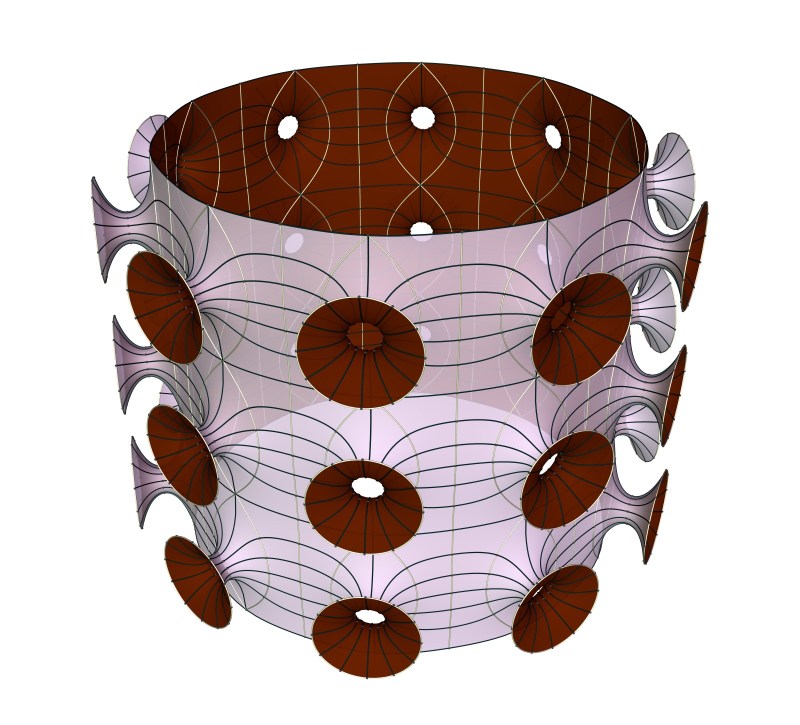
All these examples have many ends in the quotient. The surprise is that there also is the elusive Uninoid which only has one catenoidal end in the quotient, namely by a 180 degree screw motion:

Fence5

Here things get tricky. Michelle Hackman has found more complicated versions of this in her thesis. Here is a Uninoid that is invariant under a screw motion with quarter turn.

Fence6

Domino meets Towers of Hanoi

When a neighbor and colleague of mine told me he has a blog about abstract comics, that concept fascinated me to the extent that I had to make one myself. Here it is:

Comic

This, by the way, makes a nice poster. I called it Migration, and didn’t give a clue where it came from. There are very smart people who have figured it out by just looking at it, but you can’t compete, because you have already read the title of this post.

Let’s begin with the Towers of Hanoi. This puzzle is so famous that I will not explain it here, mainly because I was traumatized as a high school student when I was forced to solve the puzzle with four disks on TV, in the German TV series Die sechs Siebeng’scheiten. I just pray that no recording has survived.

Hanoimonocards

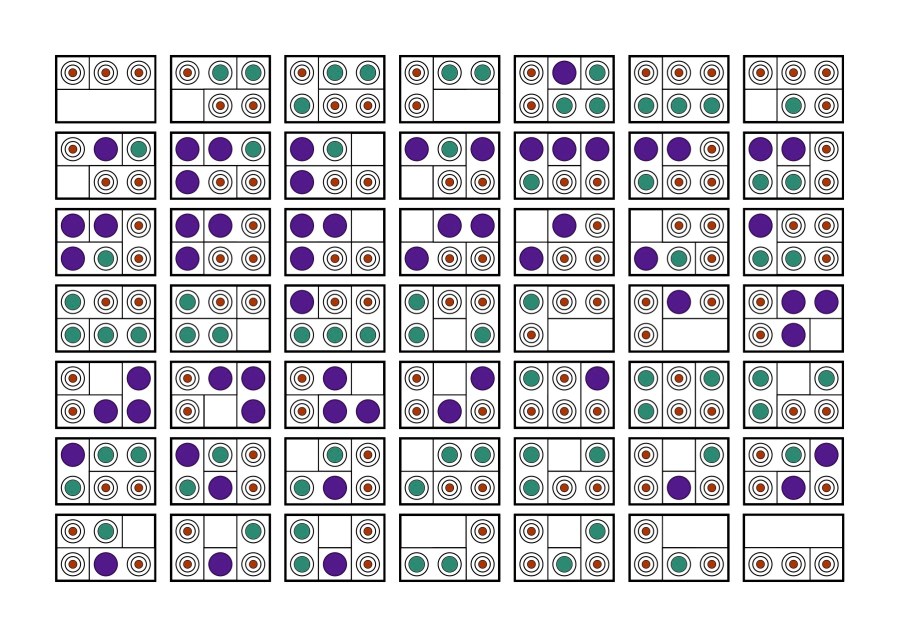
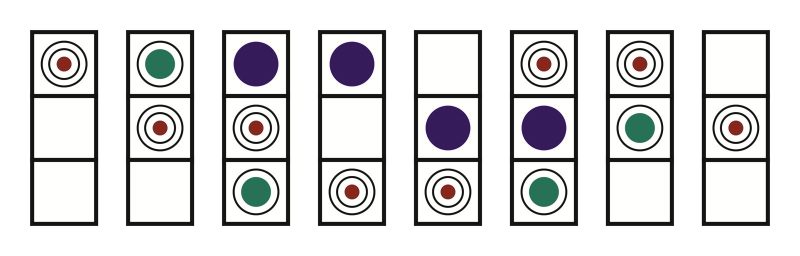
In any case, after a healthy dose of abstraction, let’s look at the Towers of Hanoi from above, and treat it as a card game.
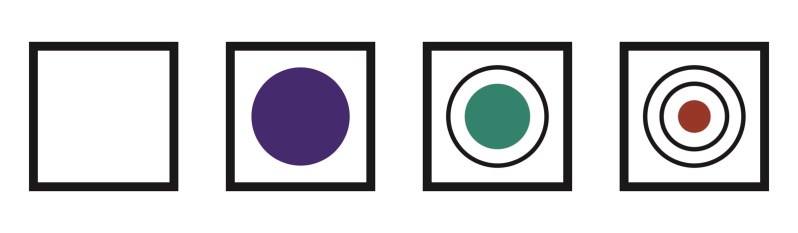
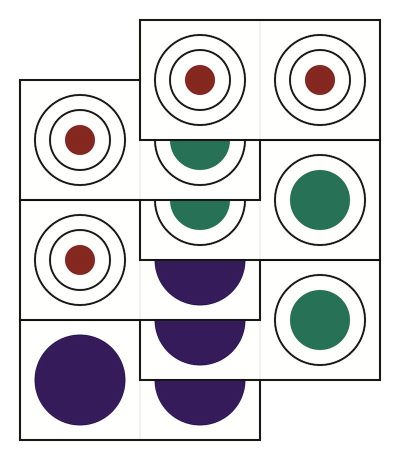
The disks are replaced with cards that have a disk symbol on it. For the three disk game, there are three different cards, showing a small, medium, or large disk. To make everything visually more appealing, we color the disks, and to emphasize size, we show empty annuli around the smaller disks, as above. Then the solution of the three disk puzzle would look like this:

Hanoi

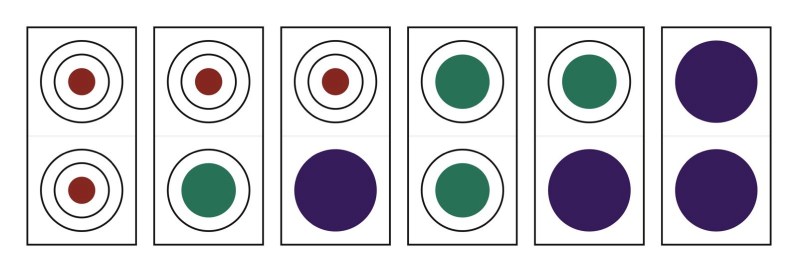
Because a card hides what is possibly underneath, a position requires context. This is one of the two ways the puzzle is mutating into a story. In the next step, we use domino shaped cards consisting of two squares instead of square cards. Here are the six hanoiomino cards:

Hanoidominocards

The puzzle is played on a 2 x 3 rectangle, with all six cards stacked like this in the top row:

Startdeck

Note that we have modified the Hanoi-rule: In the original version, a card can only be placed on an empty field or on a card with a larger disk. A hanoiomino must be placed so that each of the squares either covers an empty square or a square with a disk of at larger or equal size. This allows for more choice, which causes the second mutation of puzzle into story.

The migration story now tells how to move all the hanoiominos to the bottom row, to the same position, albeit reversed. It is the shortest solution, and unique as such, unless you want to count the backwards migration as a second solution.

Polysticks (Polyforms II)

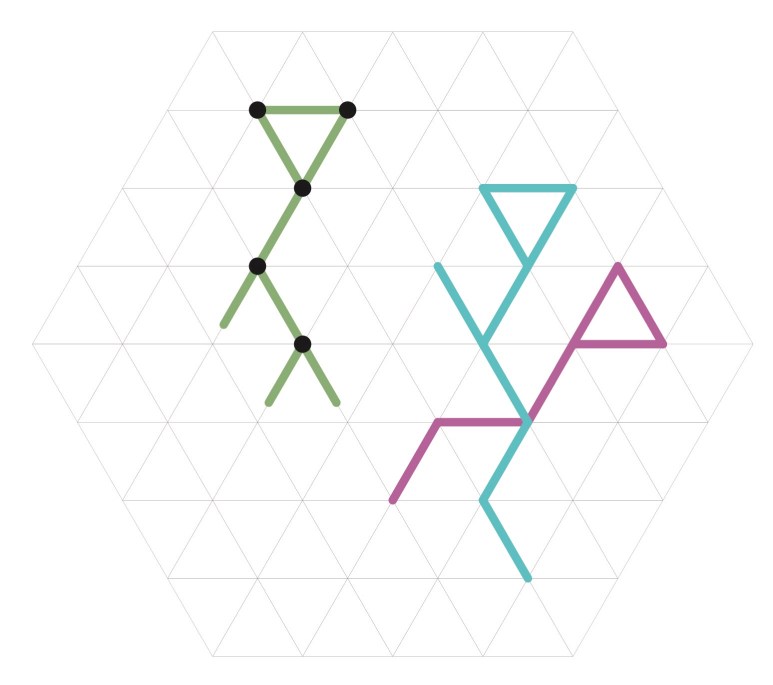
One of my favorite polyforms are polysticks on a hexagonal grid. These critters consist of connected collections of grid edges.
I stipulate that whenever two edges of a polystick meet, we add a a joint to the figure. This is in order to avoid indecent intermingling of legs as shown by the two polysticks in the figure below. Blush. The properly decorated green polystick can only watch in dismay.

Example 01

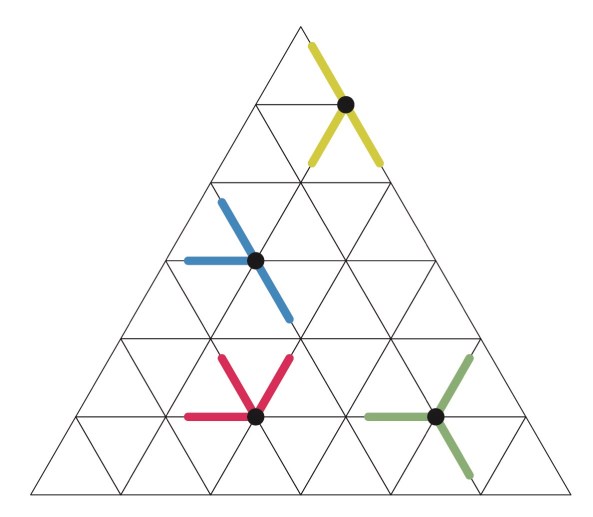
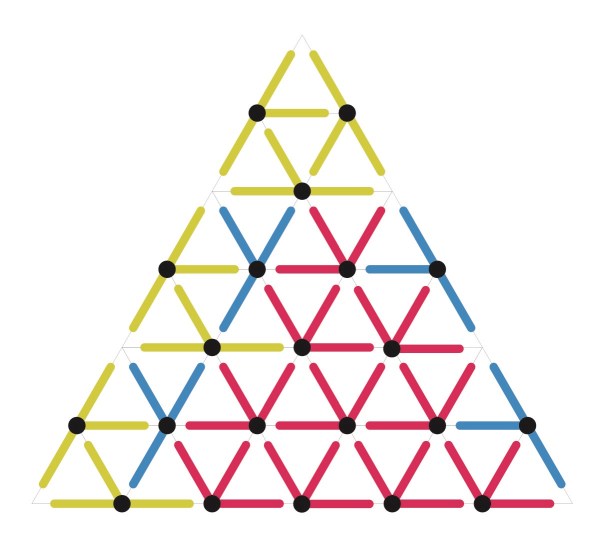
We want to use the polysticks as puzzle pieces, and we want to keep things simple. So here are all four hexagonal polysticks with three legs and just one joint. I like to call them triffids.

FourTriffids 01

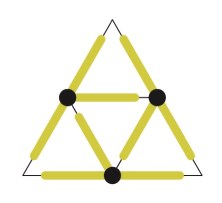
Two of them are symmetric by reflection, so I leave it up to you to count them as one or two. We can us three of them to tile a small triangle easily like so:

Mini triangle 01

By tiling I mean that we want to cover all the edges of the given shape, do not allow that two polysticks share a leg or joint (what a thought!), and do not require all vertices to be covered. We could do so, limiting the possibilities dramatically.

Below are two more examples. First a larger triangle, tiled using three kinds of triffids.

Triangletile 01

I have not found a way to tile this triangle (or a larger one) with just one kind of triffid. And here is a hexagon that uese all four triffids to be tiled:

Hexatile 01

Now go and make your own. If you want to use triffids, make sure that the number of edges of your shape is divisible by 3.

The Projective Plane

DSC 0091

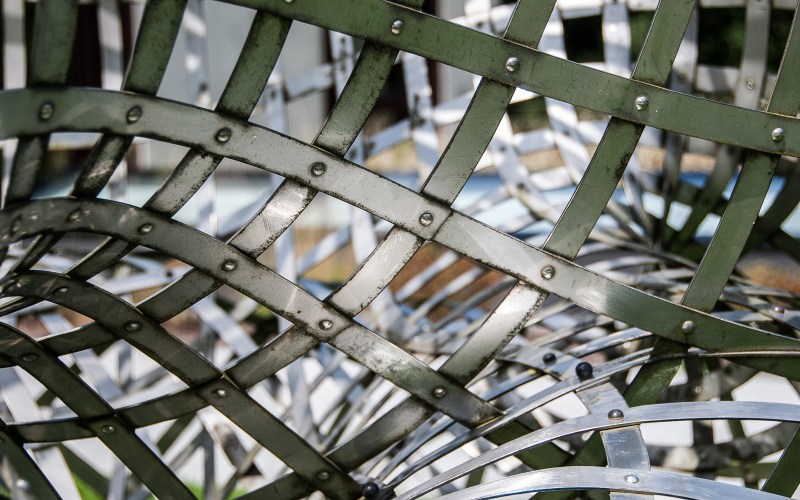
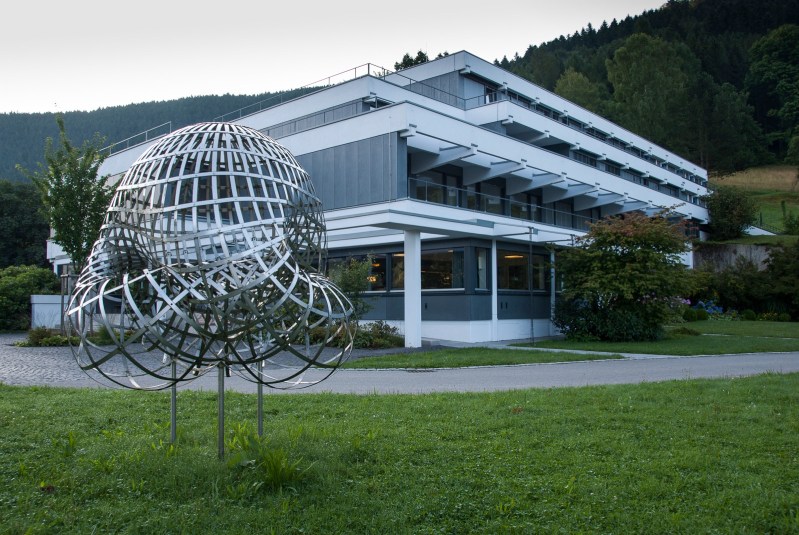
This image (a variation of which I used for many years as a desktop background) is a close-up of the large sculpture below that can be seen at the Mathematical Research Institute in Oberwolfach.

DSC 0107

It is a model of the projective plane, a construct that simultaneously extends the Euclidean plane and describes the set of lines through a fixed point in space.
The simplest way to make your own model is via the tetrahemihexahedron,

Tetrahemi3

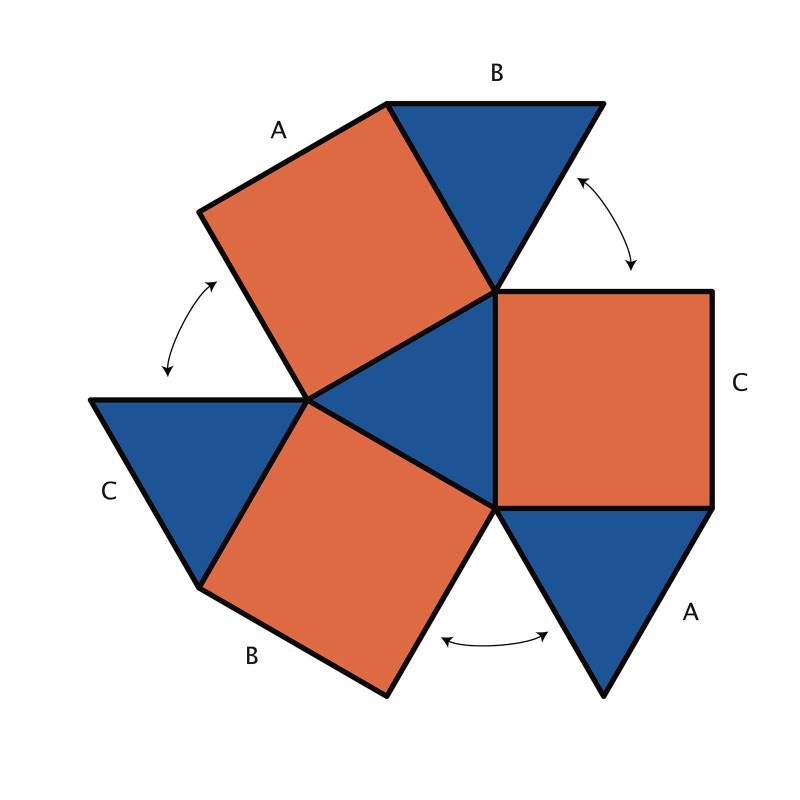
a polyhedron that seems to take every other triangle from the octahedron and twelve right isosceles triangles to close the gaps left by the removed four equilateral triangles. That, however, is not the only way to look at it. These right isosceles triangles fit together to form three squares that intersect at the center of the former octahedron, in what is called a triple point.

So we truly have a polyhedron with four equilateral triangles and three squares as faces which can be unfolded like so

Tetrahemiflat

where arrows and equal letters indicate to glue. From this flattened version we recognize a (topological disk) with opposite points identified, which is yet another abstract model of the projective plane. The tetrahemihexahedron suffers not only under the triple point at the center, but also under six pinch point singularities at the vertices. Maybe it was this model that made Hilbert think that an immersion of the projective plane into Euclidean space was impossible, and having his student Werner Boy work on a proof. Instead, Boy came up in 1901 with an ingenious construction of such an immersion, which has an elegant connection to minimal surfaces.
Kusner

Robert Kusner constructed a minimal immersion of the thrice punctured projective plane into space, with three planar ends, that you can see above. Applying an inversion, as suggested by Robert Bryant, produces images that are very close to what Boy had in mind.
Bryant kusner

This explicit parametrization served as the basis for the model in Oberwolfach.

Spherical Cycloids

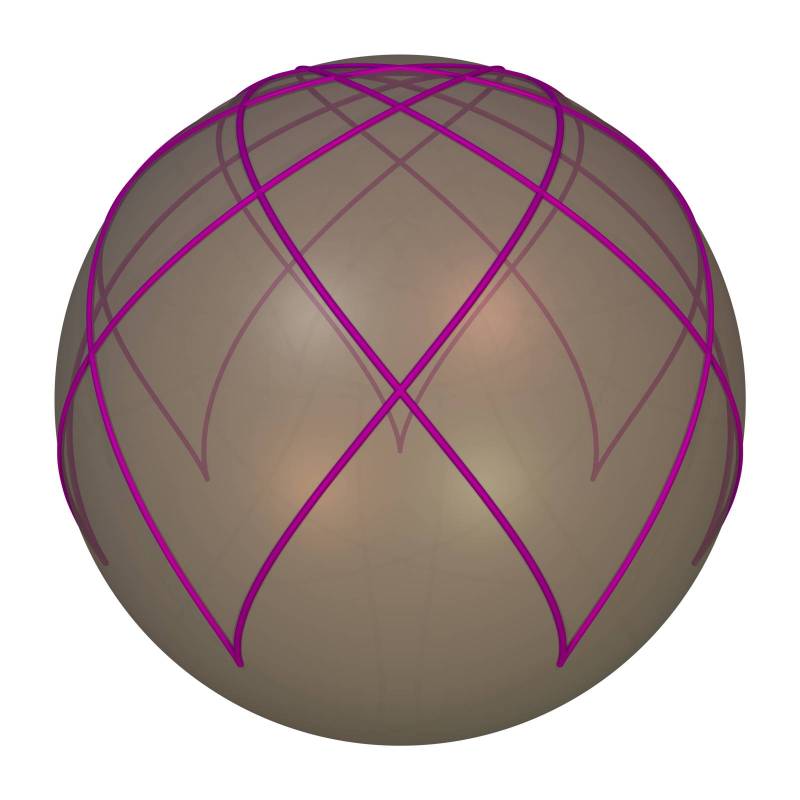
The cycloids generalize nicely to curves on the sphere. They can be physically generated by letting one movable cone roll on a fixed cone, keeping their tips together, and tracing the motion of a point in the plane of the base of the rolling cone. Like so:

Sphericalcycloidcones

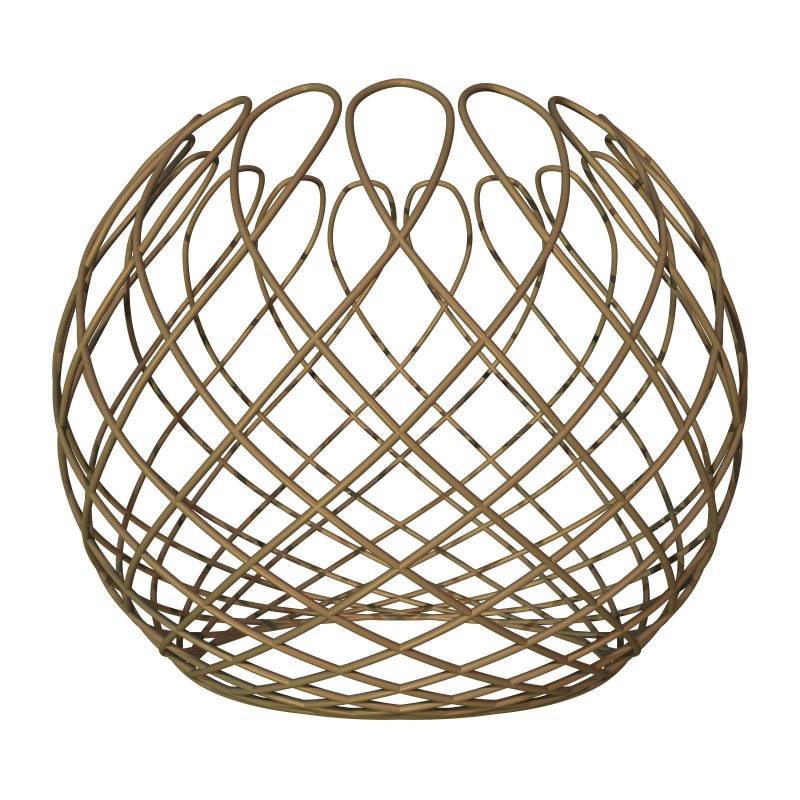
Varying the shapes of the cones will gives differently shaped cycloids, most of which will not close. When they do, they have a tremendously appeal (to me) as 3-dimensional designs, like this tent frame

Sphericalcycloiddesign1

or this candle holder:

Sphericalcycloiddesign2

In a future post I will use the following curves for another construction. Each is without self-intersection

Sphericalcycloiddesign4

and together they form a nice cage that from the side has an organic appearance.

I’d be interested to learn how such objects could be manufactured, say as pieces of jewelry. How does one bend metal tubes accurately?

The images are created using explicit formulas for the cycloids, but rendering approximations of spherical sweeps about cubic splines in PoVRay.