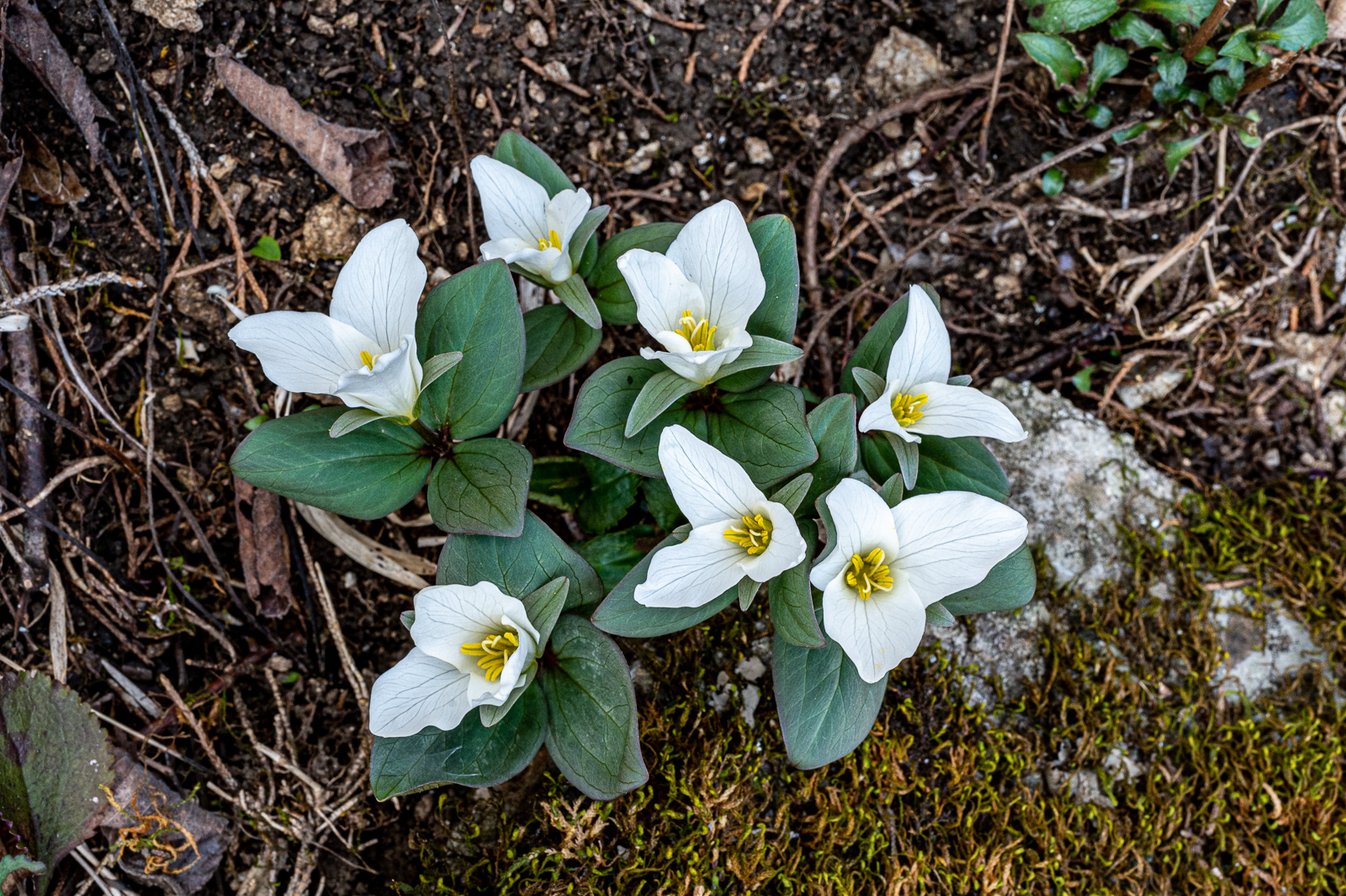
This year’s snow trilliums are a bit early.
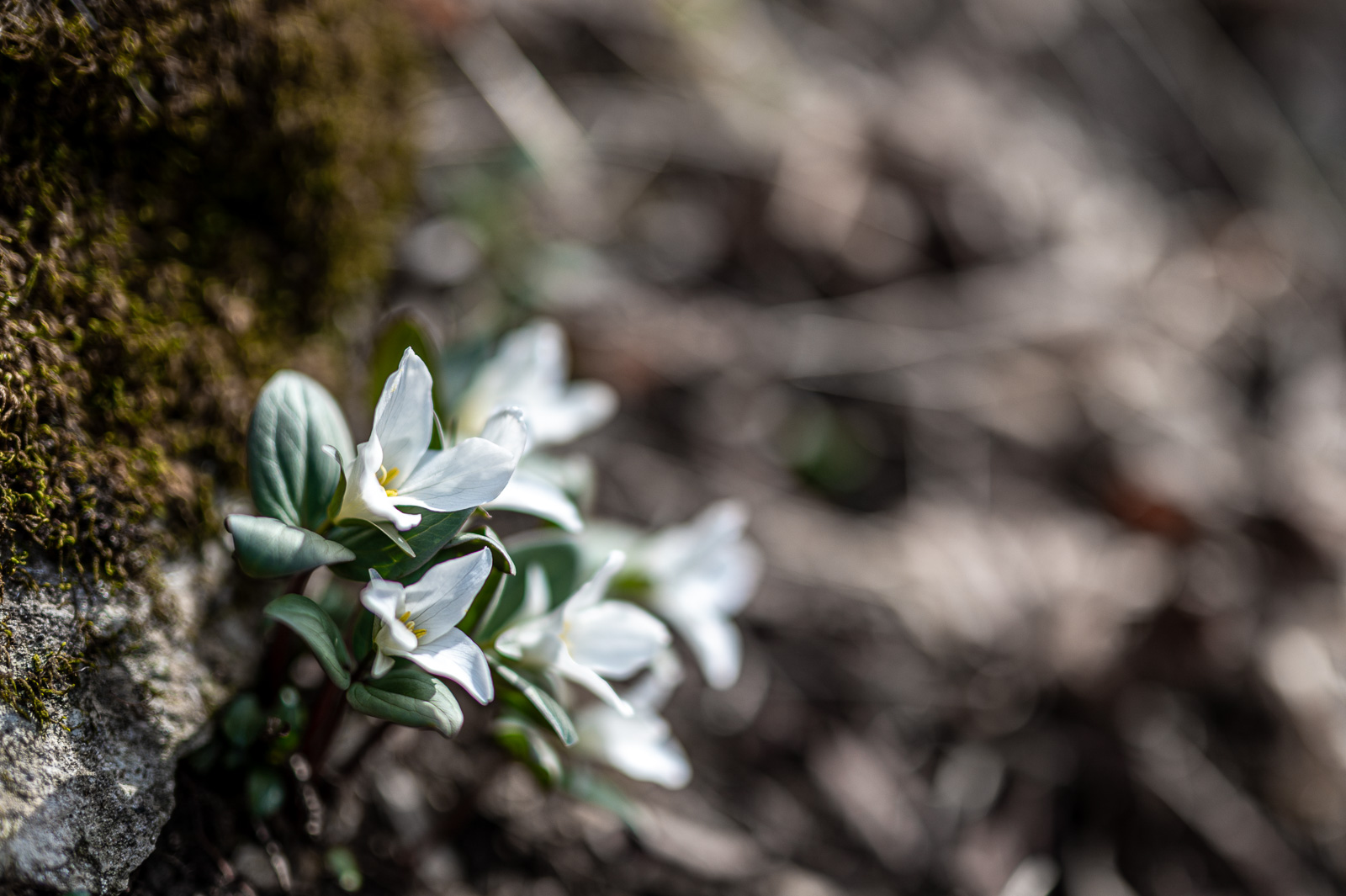
After all the snow is gone and we had (and still have) warm days, they didn’t want to wait any longer.
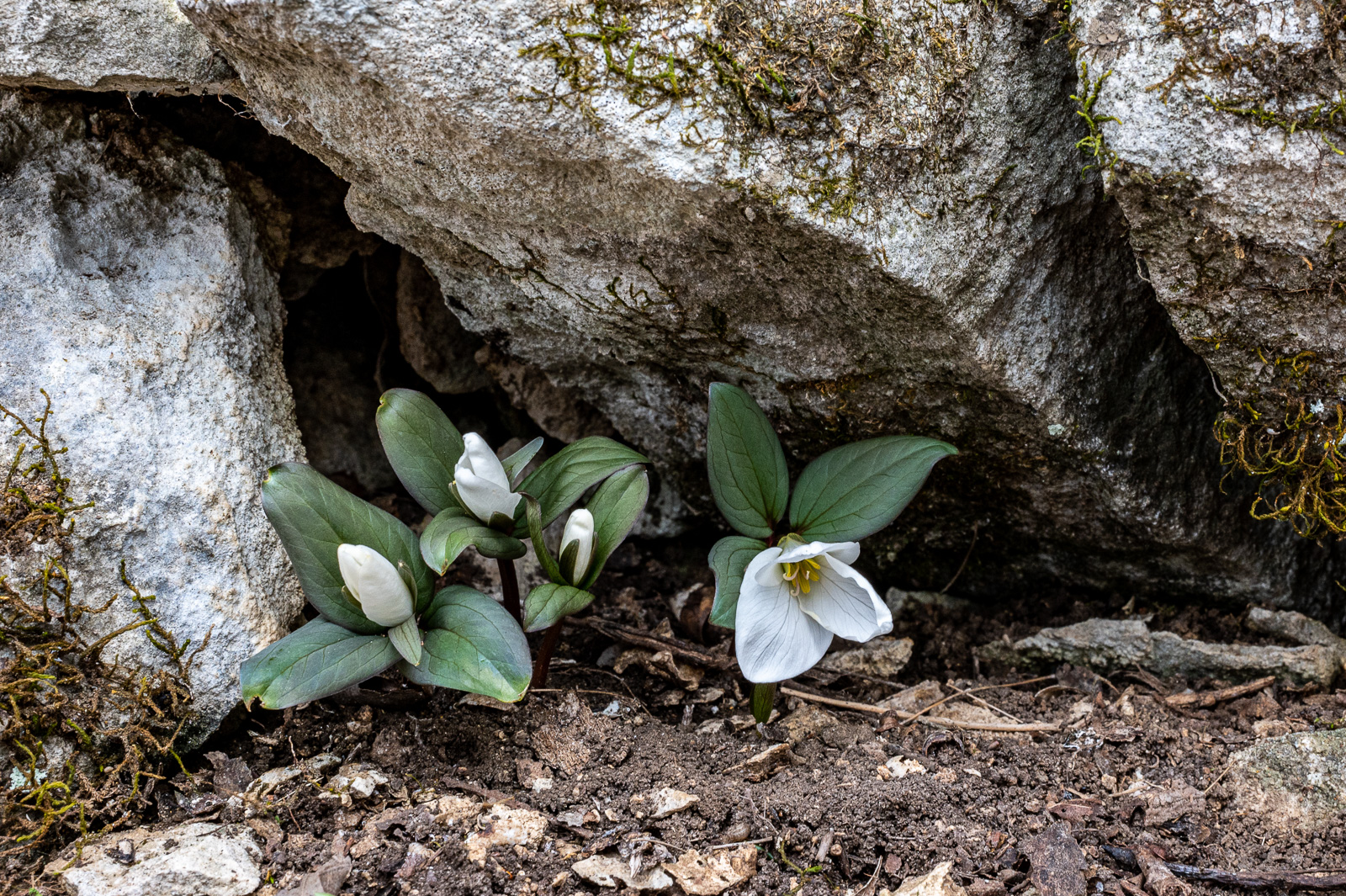
Some are still a bit cautious.
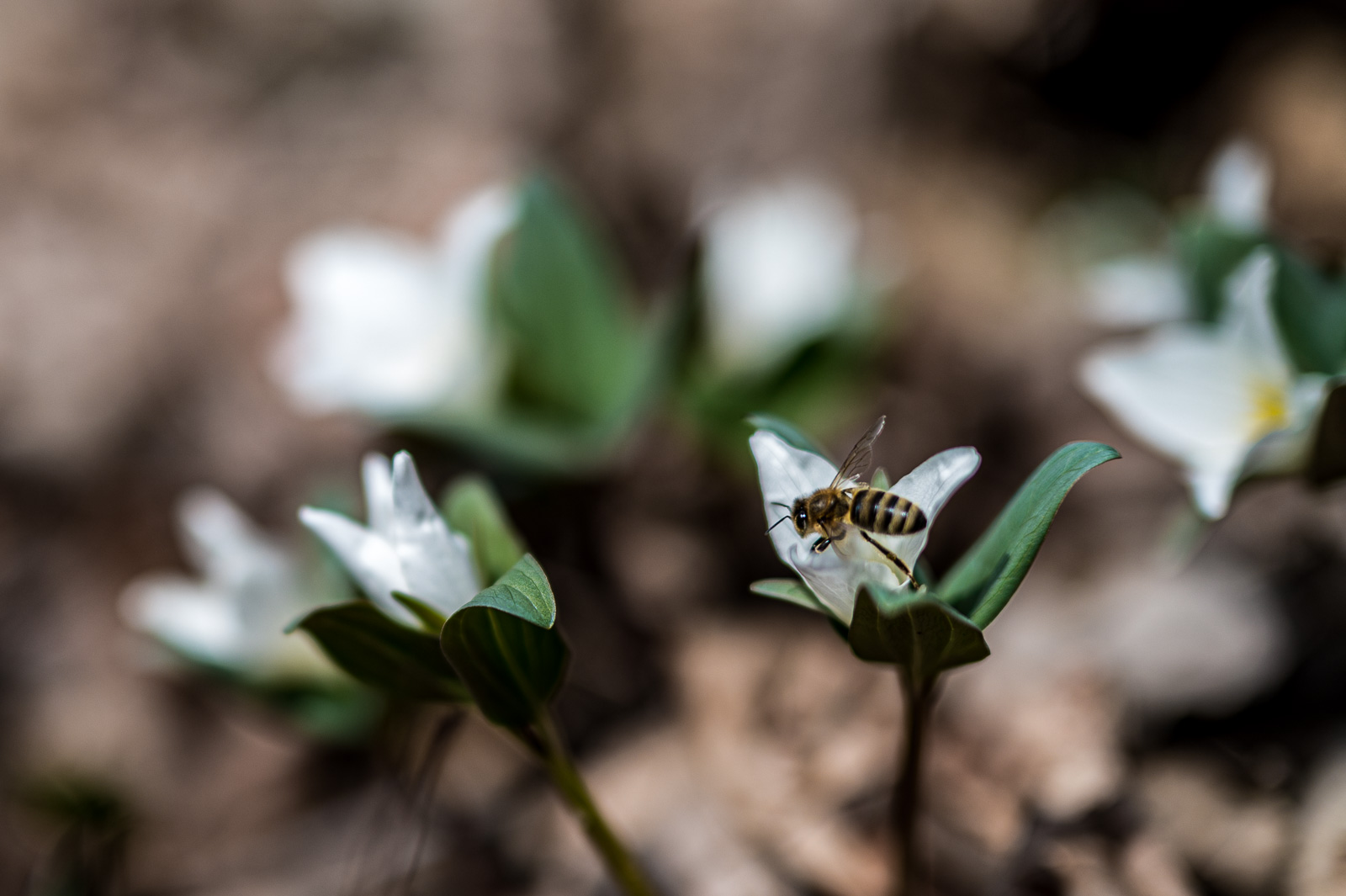
Others invite the first visitors.
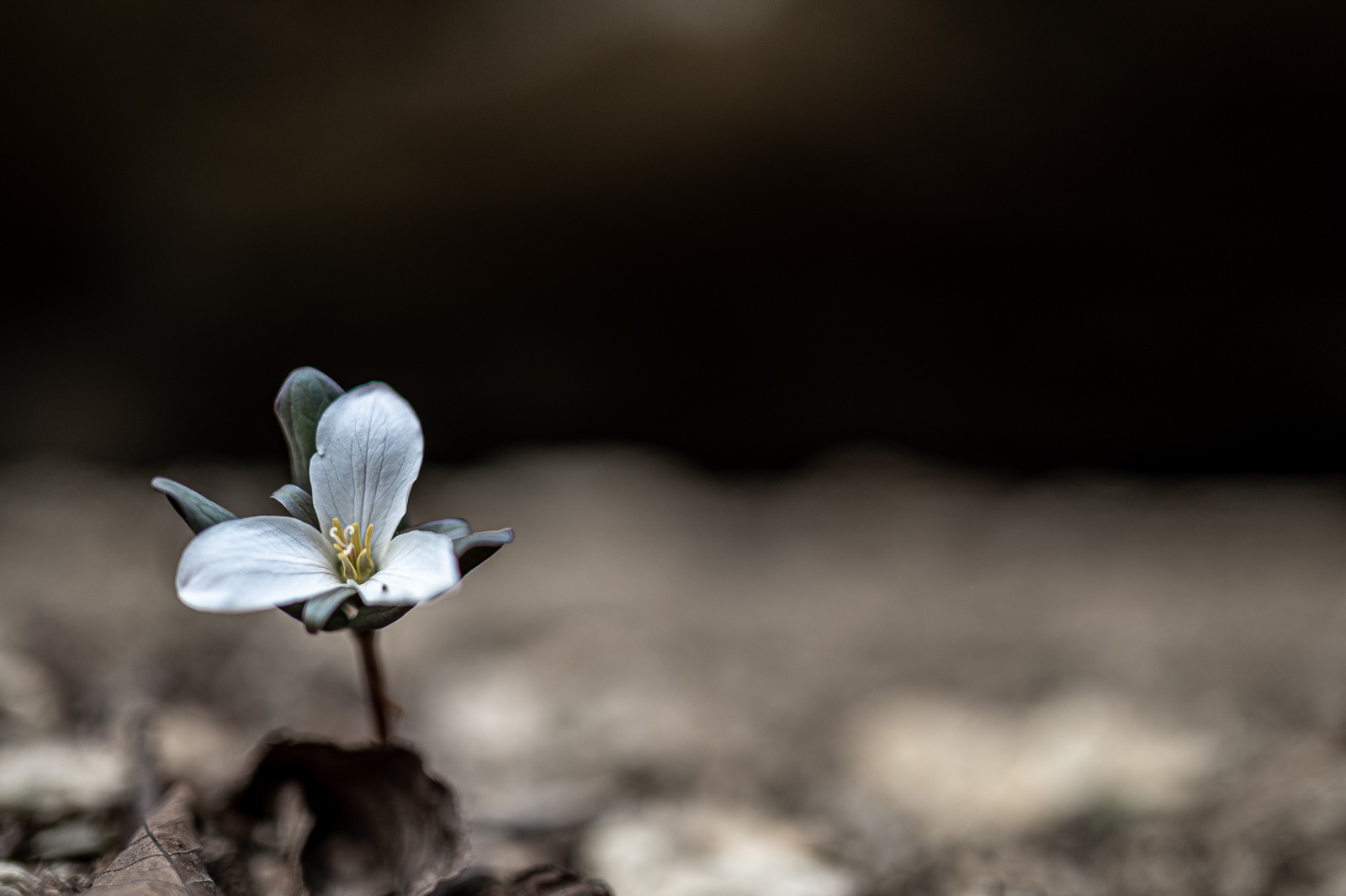
This year’s snow trilliums are a bit early.
After all the snow is gone and we had (and still have) warm days, they didn’t want to wait any longer.
Some are still a bit cautious.
Others invite the first visitors.
In Carole Martinez’ extraordinary novel La terre qui penche we encounter the Middle Ages through the eyes of adolescent Blanche (and her mysterious and timeless alter ego, the Old Soul). Nature has not been conquered yet: Imagination and poetry instead of science are the primary means of comprehension.

Southern Indiana’s landscape is hard to capture, because it is full of ruthless vegetation, and the harsh sun provides unwanted contrast. I usually resort to taking pictures of carefully selected views before or just at sunrise. This works well, but doesn’t capture how it really looks like.

So I decided to go all the way to the other extreme, using a 15mm fisheye lens. We truly have the world tilting now, and this is how it feels like between the creek and the bluff at Cedar Bluffs Nature Preserve.
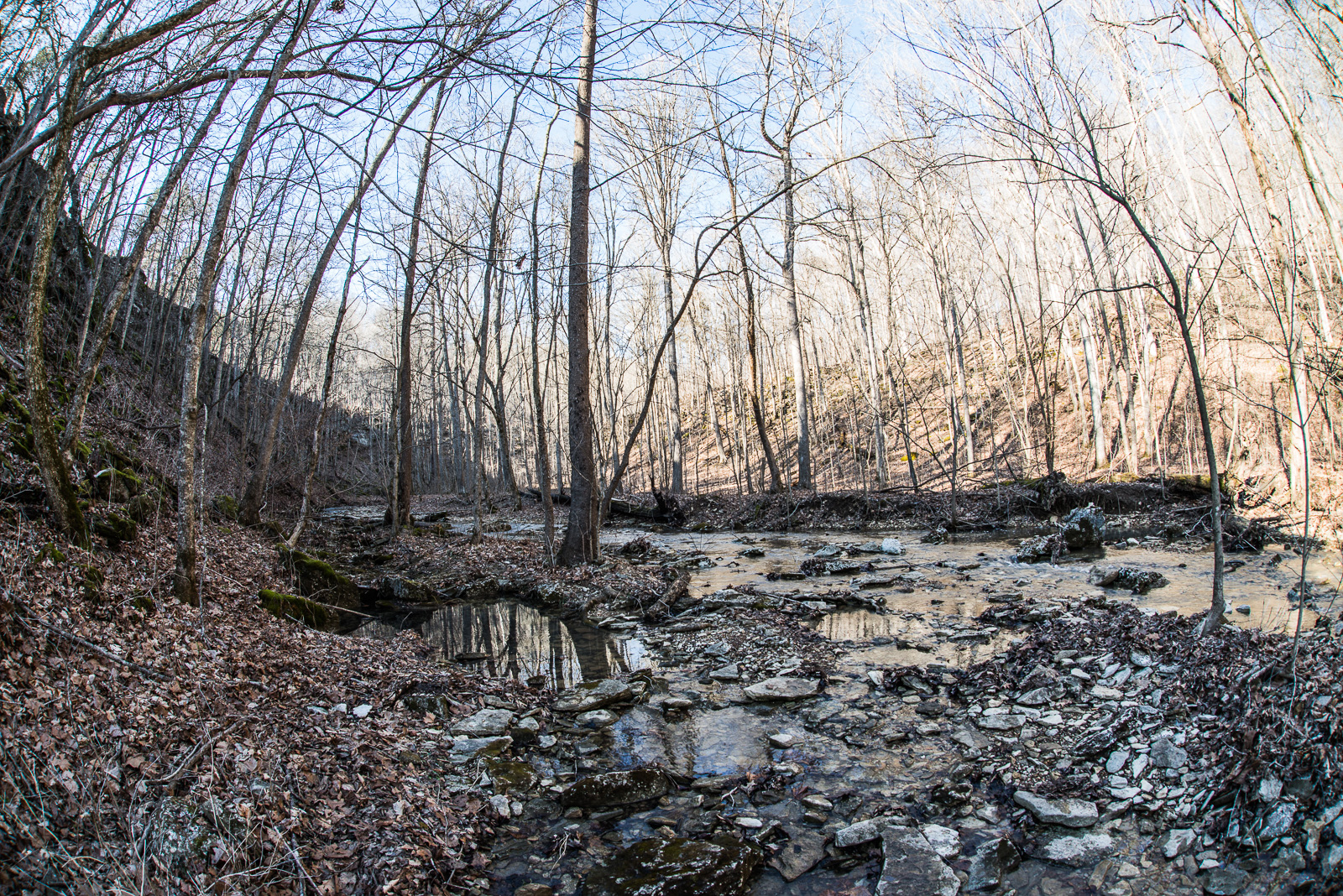
Depending how one uses the fisheye, the effect can be more or less intrusive. One can have a peaceful valley that is a bit too curved, or a disorienting view down the bluff.

I will need to revisit these images when I am less under the impression of La terre qui penche.

In the midwest, there is a fifth season between winter and spring, when everything seems to be in limbo for about a month. The temperatures rise above freezing point, but it’s not warm enough for any serious vegetation to spring up.

This is the time for the courageous, and one of them is the snow trillium. It typically blooms in early March, earlier than all other native wild flowers.

It enjoys steep limestone slopes facing south.
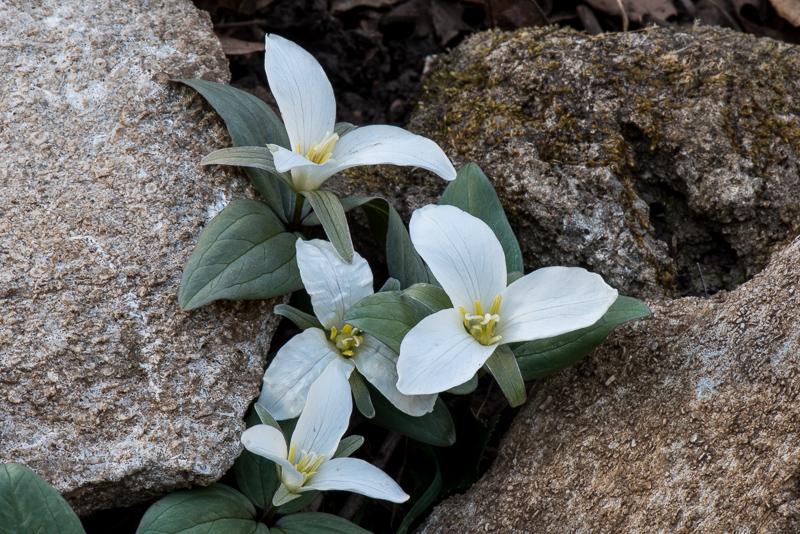
When I went looking today at one of my favorite wildflower spots, the Cedar Bluffs Nature Preserve in Indiana, it didn’t look good. Apparently one day of intermittent warming last week had lured the trilliums into growth, and they were than hit by a hopefully final wave of sub zero temperatures and snow. The result is not pretty.

Luckily, trilliums are very resilient where they like it. They will be back next year, courageous as always.
Update: The image above is not that of a dead snow trillium, but rather of a hepatica plant. More about this in a later post.
 The Inner Frame