Pillow Puzzles (From the Pillowbook V)

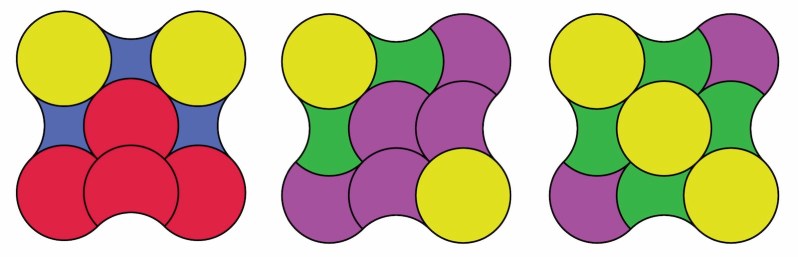
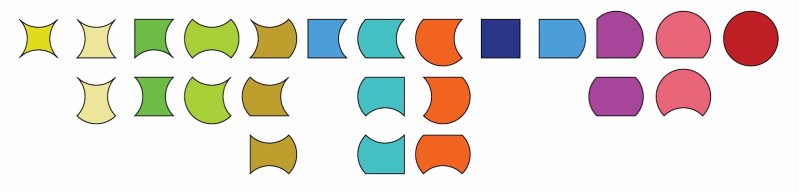
After admitting a few pillows with straight edges, there is no end to it. Here are all 24 pillows based on a square that either have a straight, concave, or convex edge. We disregard rotational copies but keep mirrors.

24pillows 01

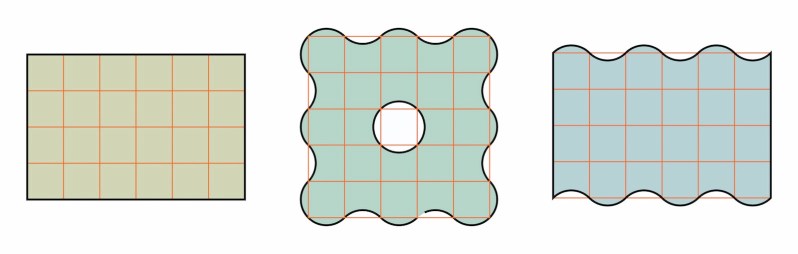
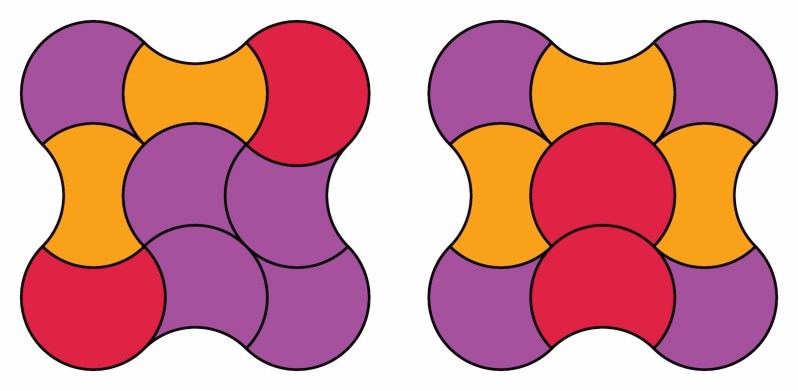
Usually, polyformists try to tile simple shapes using each polyform exactly once. The archetypical example is to tile a 6×10 rectangle with all 12 pentominoes. This is in most cases a tedious exercise that doesn’t teach you much more than backtracking. On the other hand, nothing is worse than not knowing, so here you go: Three puzzles that ask to tile the outlined region by using each of the 24 pillows exactly once.

Puzzles 01

The grid is there to help placing the pillows. These puzzles are actually not so bad. The first one for instance requires to make economic use of the pillows with straight edges. I post the solutions below, mainly because nobody would do them anyway and to prevent future waste of time.

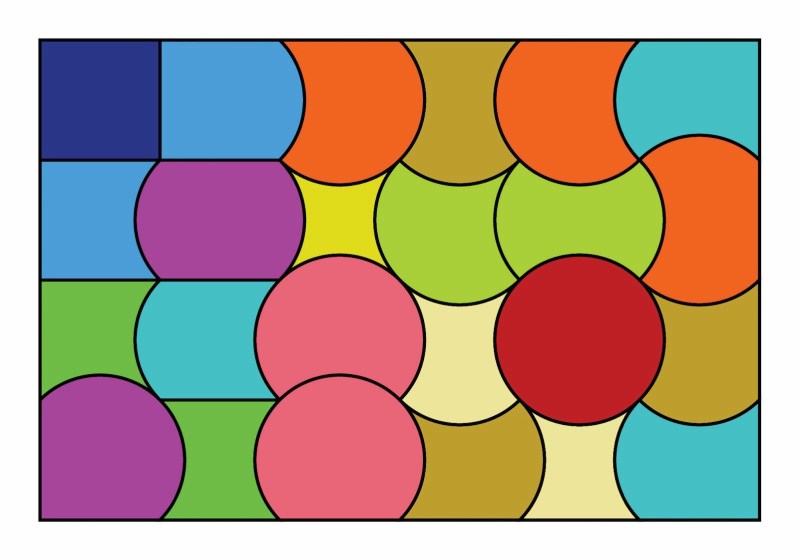
4x6 01

Note in the solution above the second column consisting entirely of pillows with parallel straight edges. I think this has to appear in any solution of this puzzle.

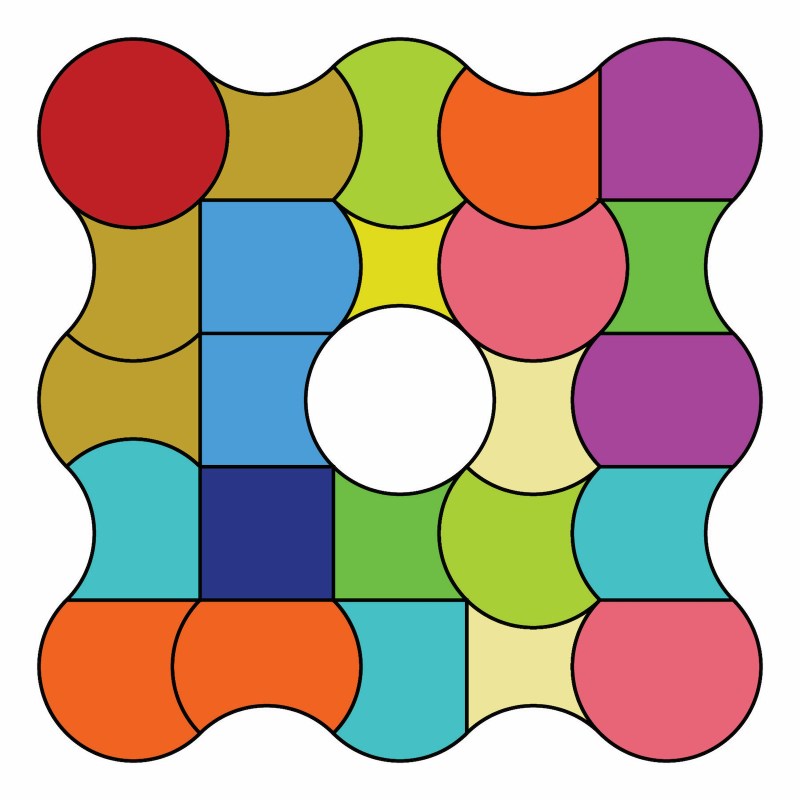
5x5 hole 01

The one above is my favorite. Unfortunately, one could go ahead and ask to find solutions of similar puzzles where the shape of the hole in the center is any of the remaining 23 pillows. No.

Wiggly 4x6 01

Cubes, Cylinders and Triangles

If you don’t have the bricks available that I used as substitutes for a rhombic dodecahedron, you can still make simple models jut using cubes: Take an ordinary cube, and choose three edges, one in each coordinate direction, and so that they don’t share a vertex. There are, up to rotations, two ways of doing so. Let’s call them blue and red. Make a few dozen of the blue cubes.

Bluecube

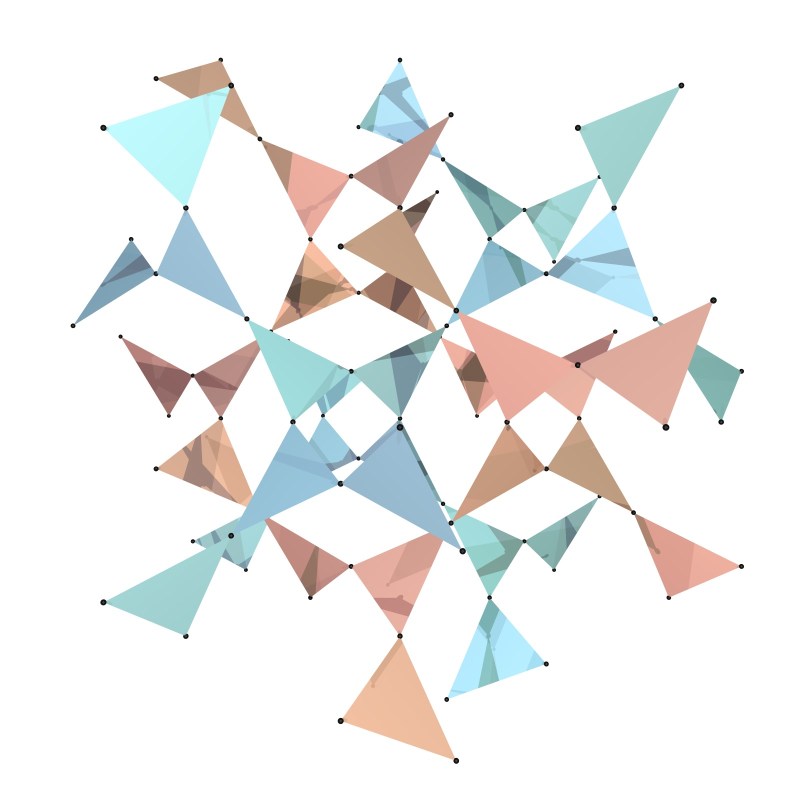
Now comes the tricky part: You are only allowed to attach two cubes so that they share one of their blue edges. This is fairly easy in zero gravity, or in your favorite computer software, like Minecraft. The structure you get this way is yet another version of the Laves graph. This looks clumsy, but it is useful for prototyping things. It also gave me the idea of a further reduction that is even harder to hold together but much more elegant: Replace each marked cube by the equilateral triangle that has its vertices at the midpoints of the marked edges.

Triangles

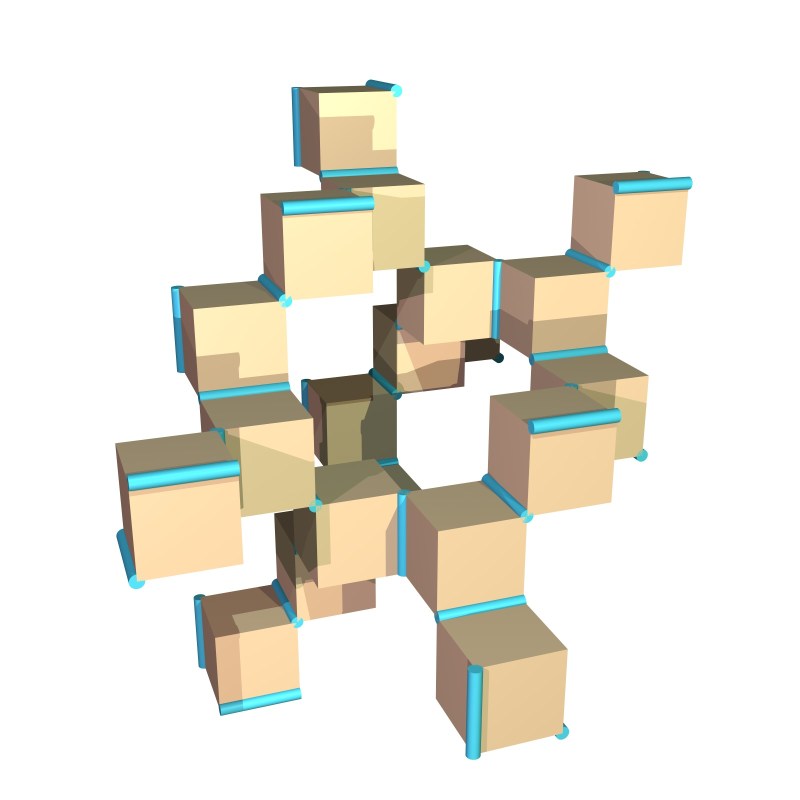
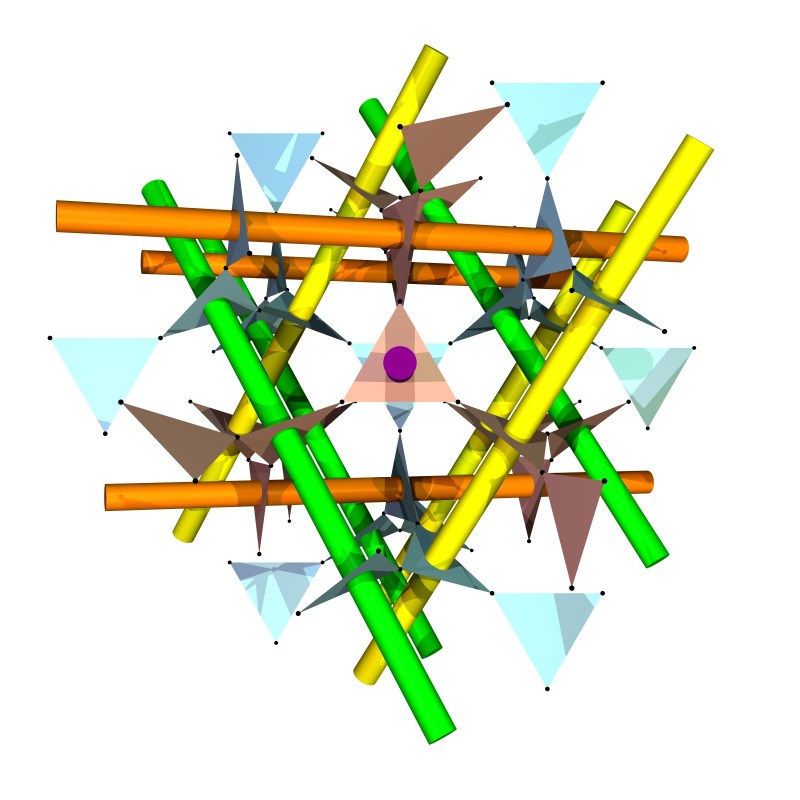
Now one even has plenty of room to show the two intertwining Laves graphs simultaneously. What one cannot see very well in the above ethereal image is that if one orthogonally pierces a cylinder through the midpoint of any triangle, the cylinder will periodically hit other triangles in the same way, without interfering with any other triangles or cylinders.

Cylinders

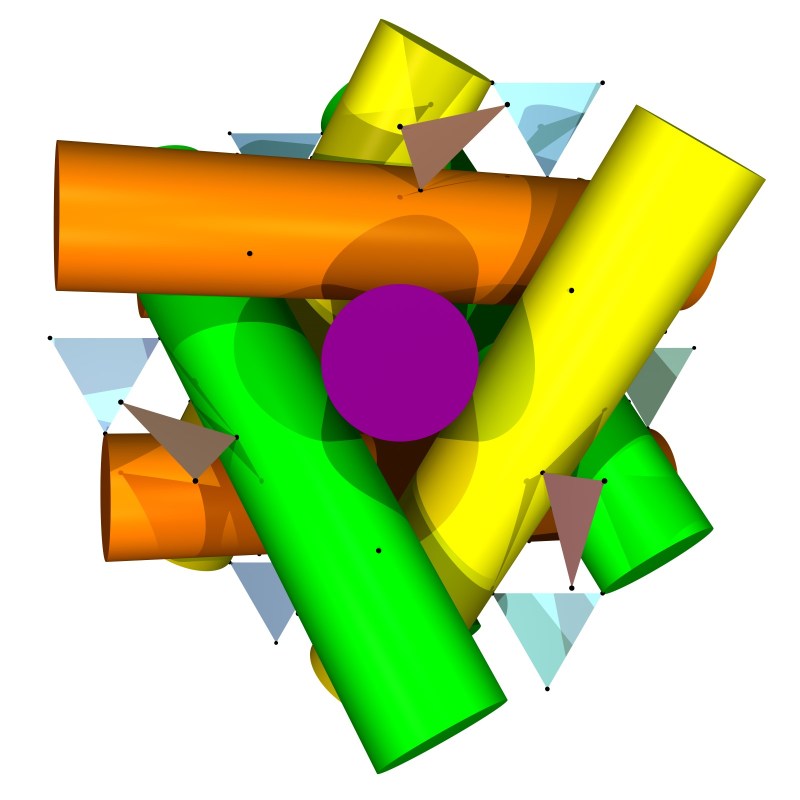
Out of the sudden, there is structure. And it gets better: Because the cylinders don’t interfere, we can make their radii so big that they reach the vertices of the triangles. This way the cylinders will touch precisely at the vertices of the triangles. This means that the cylinder packing that uses cylinders in all four directions of the diagonals of a cube can be used to construct the Laves graphs: Determine where the cylinders touch. Each of these points belongs to two equilateral triangles equitorially inscribed in the two touching cylinders. Use the triangles centers as vertices of the Laves graph, and connect them by an edge if the triangles meet at a vertex.

Cylindersbig

Another Brick in the Wall

When Apple announced in July this year they had sold 1 billion iPhones, I started wondering about another brick maker: How many blocks has Lego made? Their friendly customer service couldn’t tell me how many elements they have made in total, but the yearly production is 19 billion. Scary. Unfortunately, the shape of the standard lego brick is too limited for my needs. For a long time, I had wanted a lego brick in the shape of a rhombic dodecahedron (better would be a four dimensional lego hypercube of which the rhombic dodecahedron is a mere shadow, but let’s not be delusional). As you can see, this polyhedron tiles space as well if not better than the cube.

RhombicDodecahedronTiling

Various companies have produced shapes with more or less cleverly embedded magnets, but keeping track of the polarity on all faces of a 12 sided object is tricky. And this would be a lot of magnets. The actual problem, however, is the enormous amount of choices one has: 12 faces to attach to is just too much. I strongly believe that Lego’s success stems from the fact that they have reduced the number of possible ways how you can attach two lego pieces dramatically. No choice means dictatorship, two choices US capitalism, but more choices sounds like European liberalism or even anarchism, and we see where that leads.

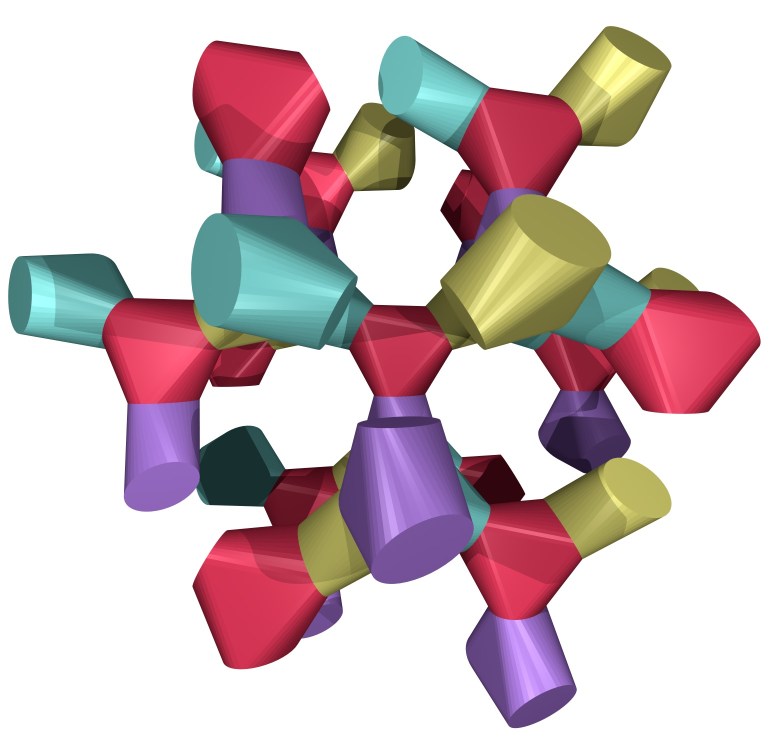
This gave me the idea to replace the complicated rhombic dodecahedron by a simple object that is less attachable. Here is the new brick.

Brick

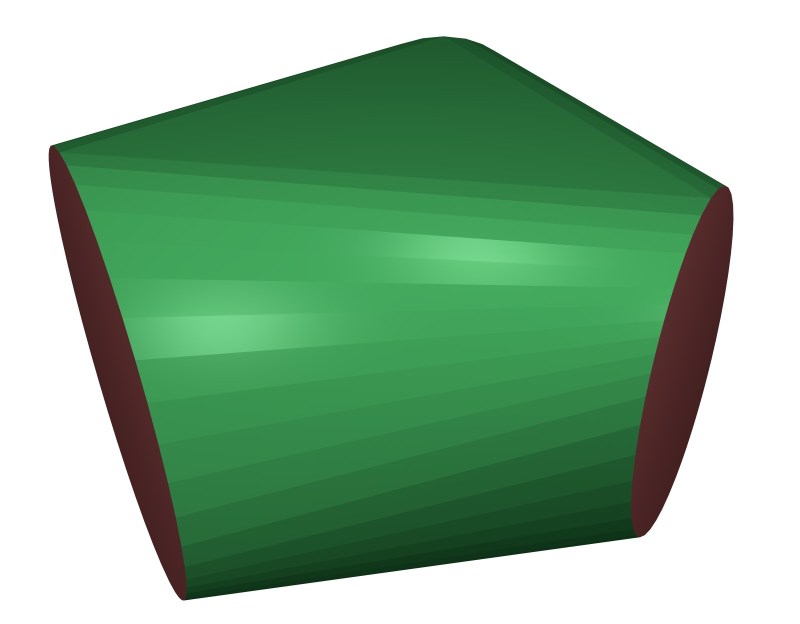
To make it, take three faces of the rhombic dodecahedron that are symmetrically positioned, and replace each of the three rhombi by its inscribed ellipse. Then take the convex hull of the ellipses. The resulting shape consists of the ellipses, two equilateral triangles in parallel planes, and three intrinsically flat mantel pieces.

You will notice that there are two versions of this brick, a left and a right handed one. This leaves just the right amount of choices.

Hexring

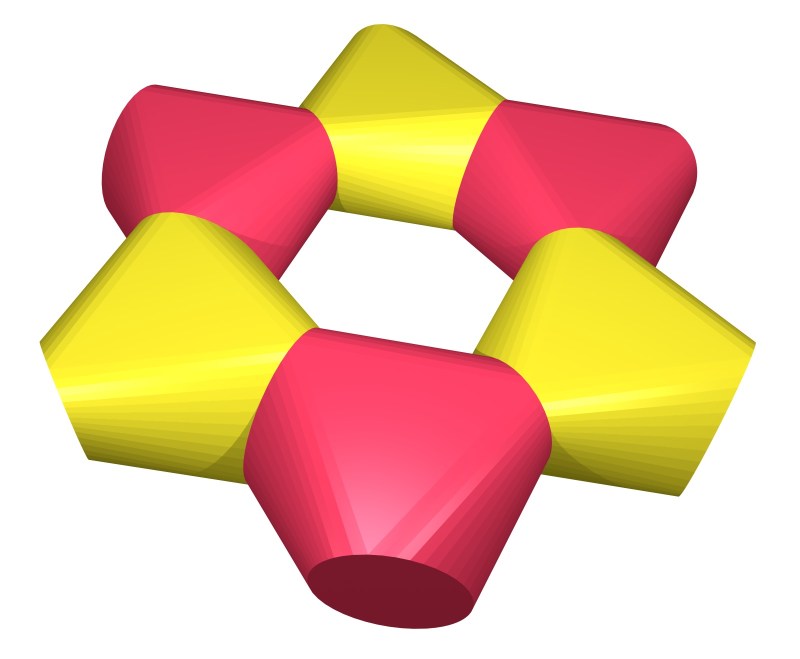
If you alternatingly attach a left to a right brick, you get a hexagonal annulus. Remember that we are still tiling space using slimmed down versions of the rhombic dodecahedron. Due to our imposed limitation of choice, nor every place can be reached anymore. The hexagonal annulus is a little simplistic. What do we get if we just use the left handed brick?

Prestar2

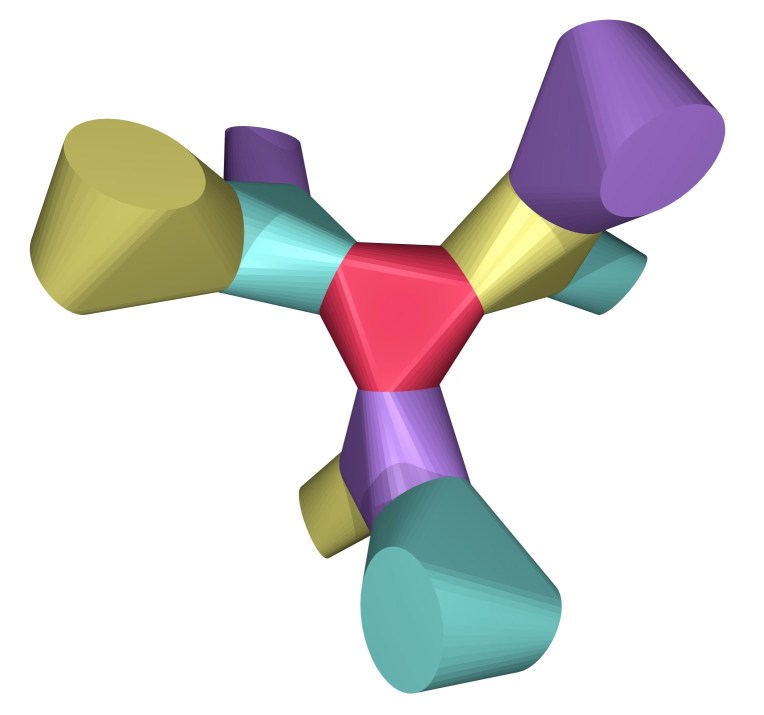
Let’s start with a red central brick, attach a brick on all three sides, and another six at the free faces of the new bricks. We notice that the bricks can occur in four different rotated positions. I have distinguished them by color. Add another 12 bricks:

Prestar

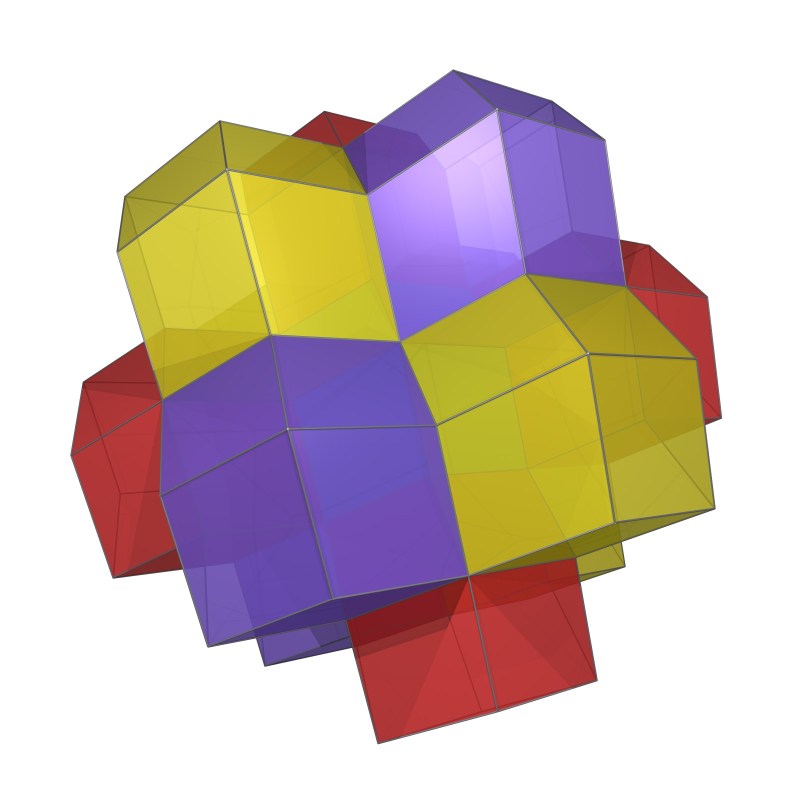
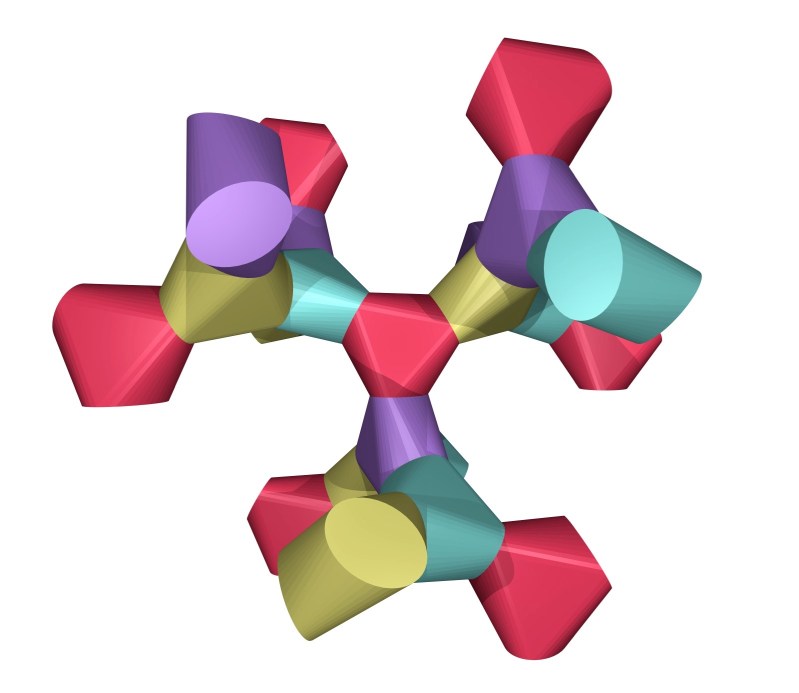
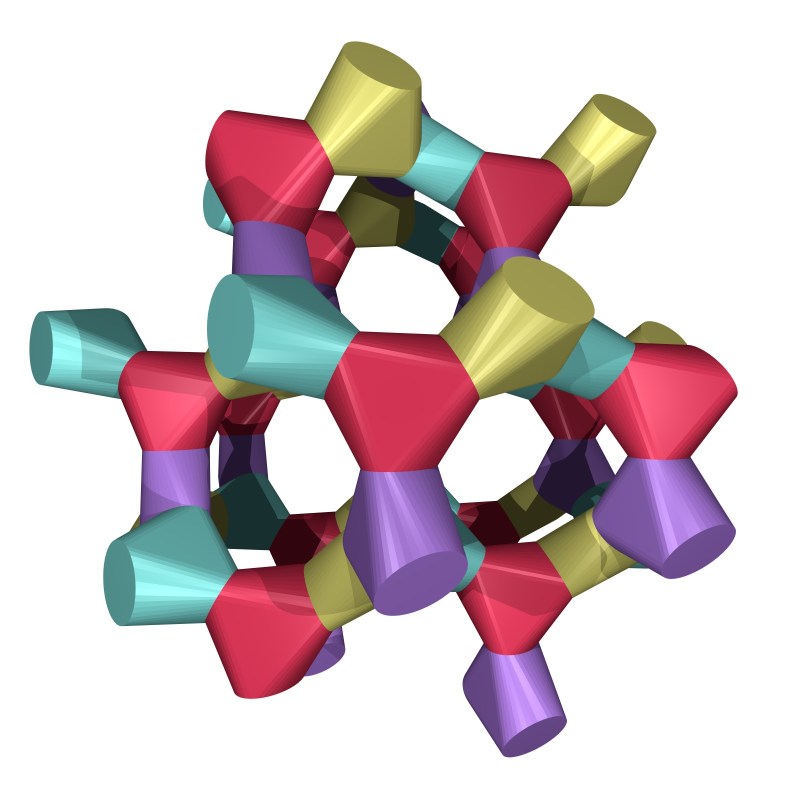
And another 24. No worry, no intersections can occur, because, I insist, we just tile a portion of space with rhombic dodecahedra.

Star

Now we see that the tree like structure we have produced so far does not persist. In the next generation, we obtain closed cycles of length 10, and we finally recognize the Laves graph.

Ball

In the very near future you will see what else one can make with these bricks.

Triangles and Squares

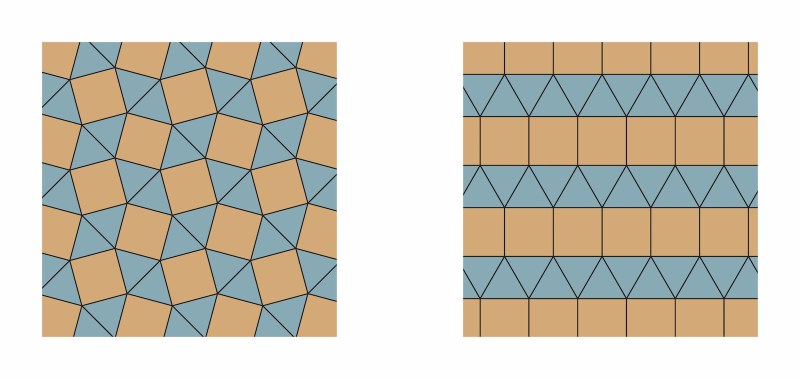
There are two Archimedean tiling using triangles and squares.

Archi34 01

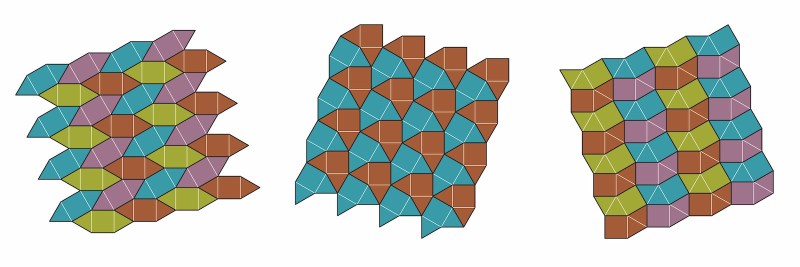
Both of them use twice as many triangles than squares. I find the first one is more interesting, maybe because it is chiral. There are still many other ways to tile the plane say periodically with just triangles and squares. There are three different ways to assemble two triangles and a square, and all of them give polyforms that can be used as a single subtile for the first Archimedean tiling:

Architile 01

Among these three polyforms I like the middle one best, maybe because it cannot be used to subtile the second Archimedean tiling. It is an amusing exercise to doodle around and find other tilings of the plane with this tile. Here, for instance, are two small turtles and a giant caterpillar, all part of a big creation.

TrisqueArt 01

I find it amusing how this simple polyform lends it self easily to organic shapes and abstract designs.

Order4 01

There are (I think) 10 ways to combine two of them into a single polyform, not counting mirror images. At least two look like cats.

Duos 01

Confusing as they look, almost all of them tile the plane. The two exceptions are shown below. It is not difficult to find an argument why these two do not tile.

Nottileduo 01

More interestingly the other eight tile, even though they look much more complicated. Typically one needs for each tile its mirror, suitably rotated. Here are two pretty examples. Homework is to find the others.

Duotileex 01

Dissect and Conquer

Many basic mathematical concepts are easy to convey to the layperson. For instance, most people are ok with numbers, distances, and right angles. An example of a concept that I found very hard to explain is that of a group action, and the related concept of a fundamental domain. Equivalence classes in general seem to be completely out of this world.

Lattice 01

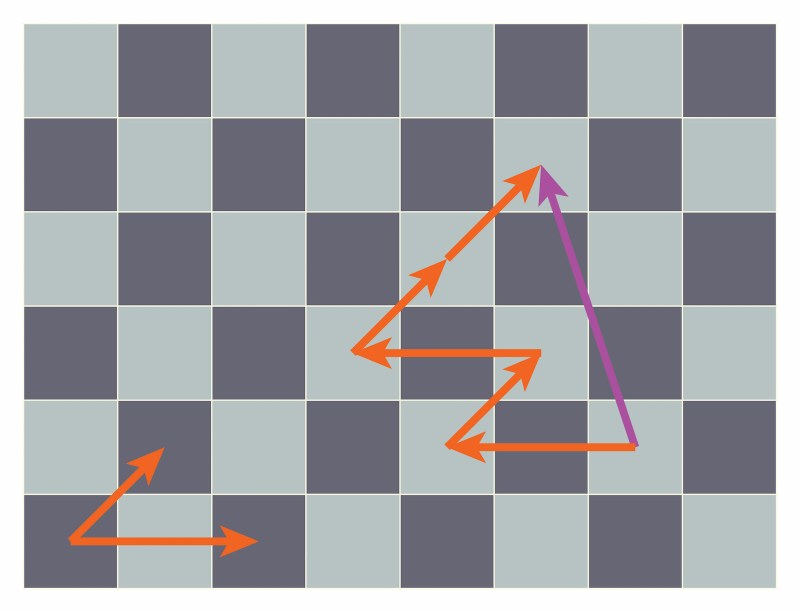
Periodic tilings give many examples. The colored square tiling above for instance is periodic with respect to a group of (color respecting) translations, all of which can be written as a combination of the two orange arrows at the bottom left, or their reversed arrows. The collection of all these translations is called the lattice of the tiling.

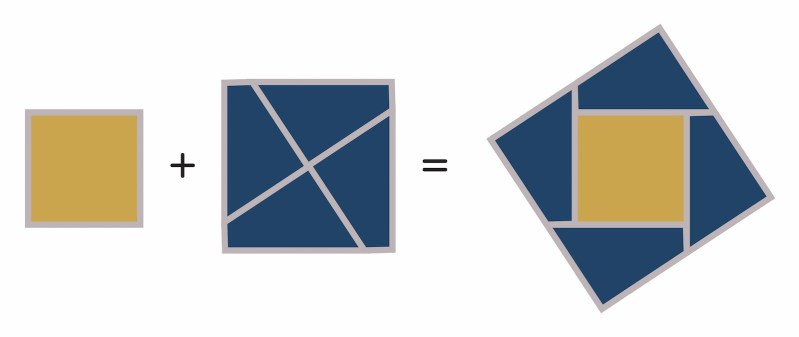
More complicated looking tilings can have simpler lattices. For instance, the tiling by the differently sized yellow and blue squares below has the same lattice as the tiling by the outlined orange squares.

2squares 01

The not so simple consequence of this simple observation is the following dissection of a large square into two smaller squares:

2squaressol 01

The reason why this works is that both the large square and the union of the two smaller squares are a fundamental domain for the common lattice of the two tilings. You can think about the orange grille as a cookie cutter, and the yellow and blue squares as periodic dough. Cutting a blue and a yellow dough square with that cutter gives you five pieces that just fill one larger square of the cutter. There are many different ways to place the cutter over the dough, and all are allowed, as long as cutter and dough have the same lattice. This means that you can translate the cutter, but not rotate.

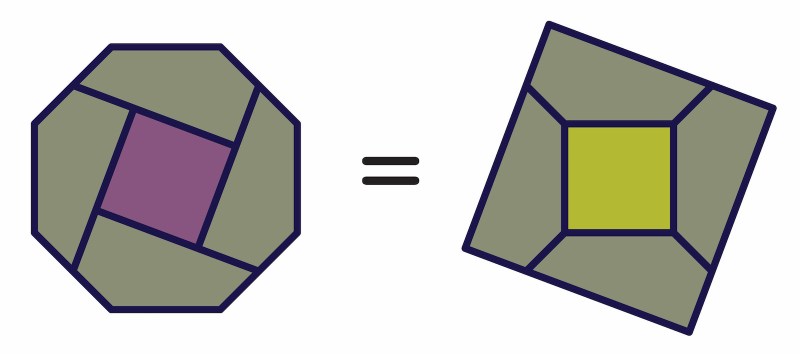
This method is well known among dissectionists. My favorite example is the dissection of a regular octagon into a square.

Octagonsol 01

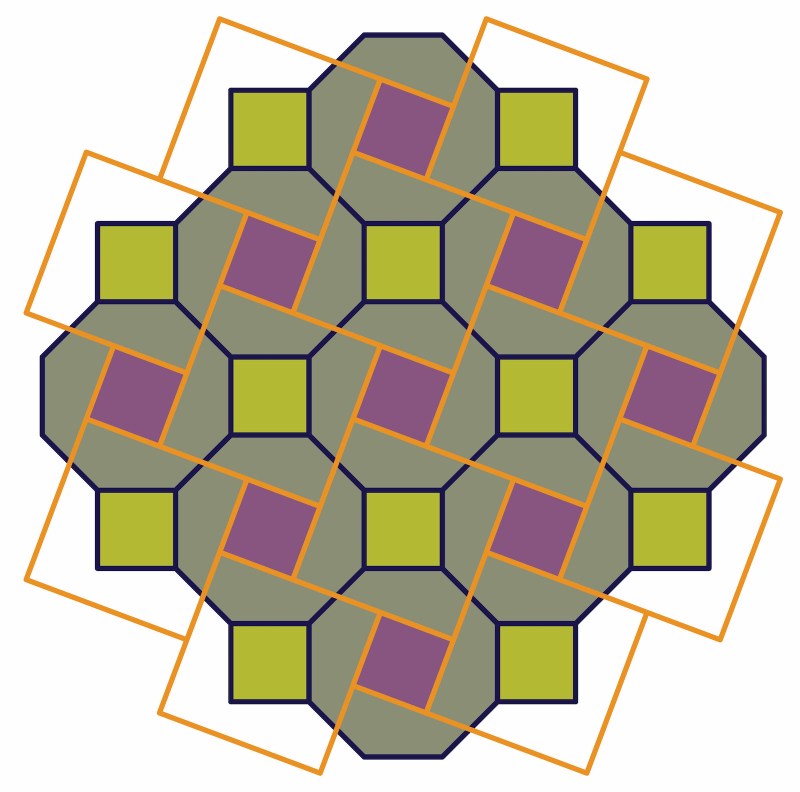
To explain how to find it, we tile the plane with octagons and yellow squares. This tiling has the same lattice as a tiling by two unequal squares, where we choose the smaller purple squares to be exactly the same size as the yellow squares.

Octagon 01

The Economy Bender

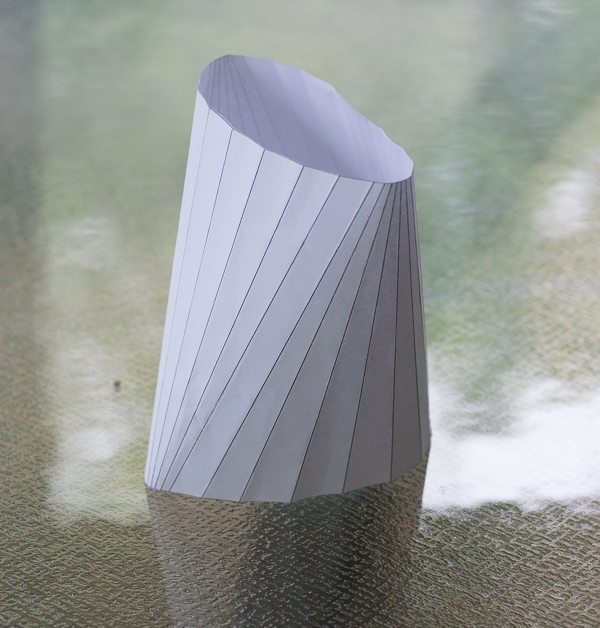
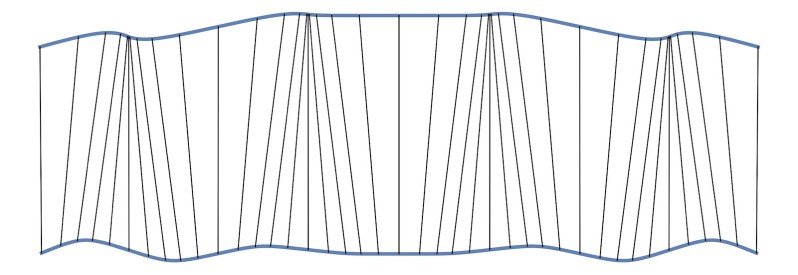
If you want to build a column that has two elliptical cross sections at the top and bottom with different major and minor axis and that can roll, you can just take the ruled surface whose lines connect points with parallel tangents on the two ellipses.

Column

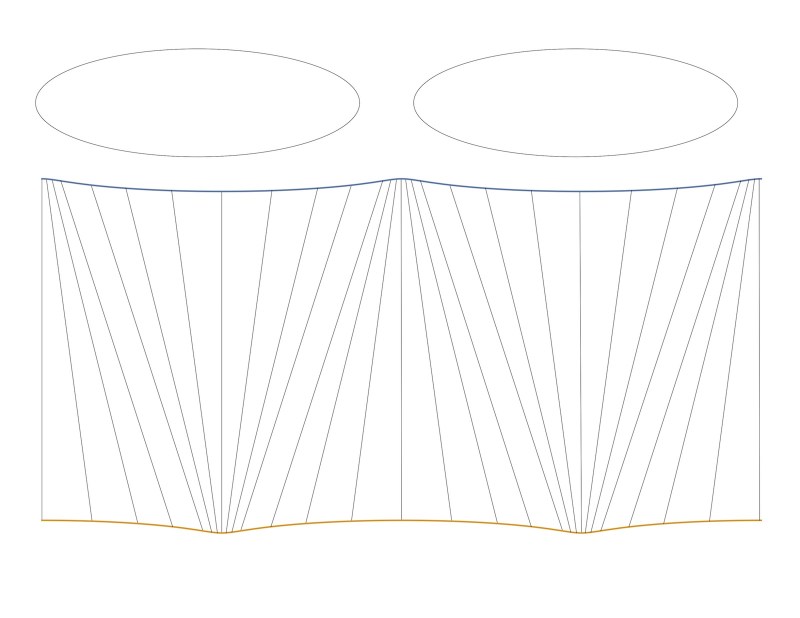
When placed horizontally on a sheet of paper, the column will touch the paper in these lines, and you can wrap the paper around the column, making evident that this is a developable (or flat) surface. You can try it out yourself with the template below.

Template
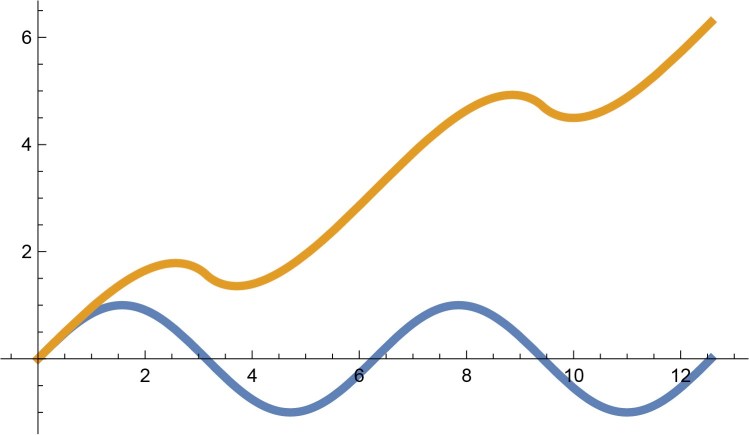
This simple trick has dramatic economic applications. Suppose you want to transform a boring, stagnating economy into a vibrant, growing economy:

Economies 01

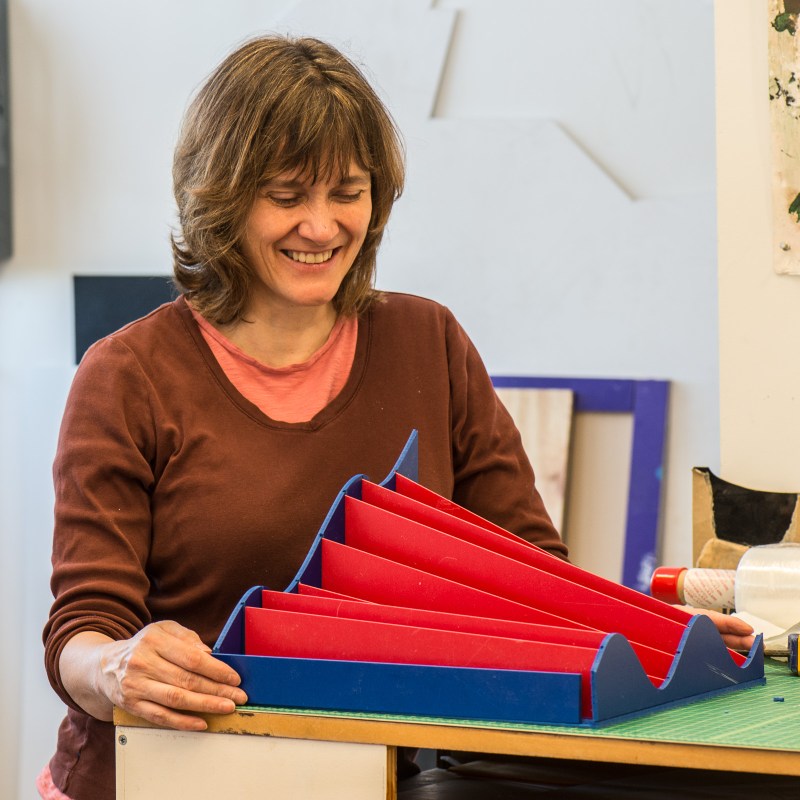
To do so, you just need to join points with parallel tangents on the two economy graphs by straight lines. Here is Martha with a wooden prototype of the Economy Bender.

DSC 3596

You can now wrap some expensive looking material over it. To explain to your CEO how you will be able to transform your failing company into a successful one, just take a printout of last year’s dire company report, put it onto the lower part of the bender next to the stagnating economy curve, and slowly move it upward towards the growing economy curve. You can do this by keeping the report tight on the surface, neither tearing not stretching it. This should convince anybody that a smooth transition into a brave new world is always possible. Here is the template:

Economy
Anybody buying it?

Ragged Rectangles (From the Pillowbook II)

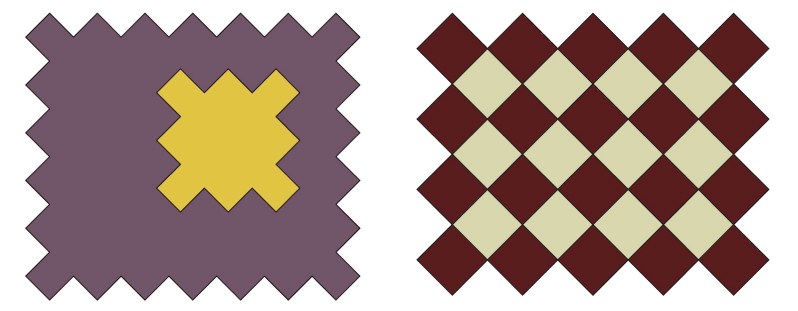
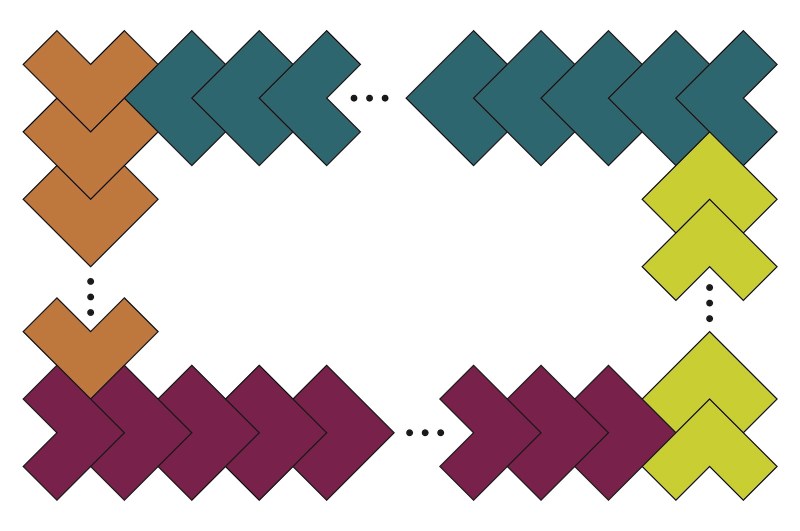
In a ragged rectangle, the sides zigzag diagonally as in the left figure below, which shows a ragged rectangle of dimensions 6⨉7, and within a ragged 3⨉3 square. Note that the boundary changes directions at every unit step. These shapes make interesting candidates for regions to be tiled with polyominoes. The example in this post illustrates nicely how the interplay between making examples and generalization leads to a miniature theory.

Raggedex 01

To tile a shape like this with polyominoes, it will help to know its area in terms of unit squares. This is easy: If you color the squares in a ragged a⨉b rectangle beige and brown, you will get a⨉b squares of one color, and (a-1)⨉(b-1) squares of the other color.

This right away shows that it is hopeless to tile a ragged rectangle with dominoes. The first really interesting case is to use L-trominoes. The area formula implies that we need one dimension of the rectangle to be divisible by 3, and the other to leave remainder 1 after division by 3. Thus the shortest edge that can occur has length 3, and the other them must have length 3n+1. The figure below shows how to tile any ragged rectangle of dimensions 3x(3n+1) with L-trominoes:

ragged3-01.jpg

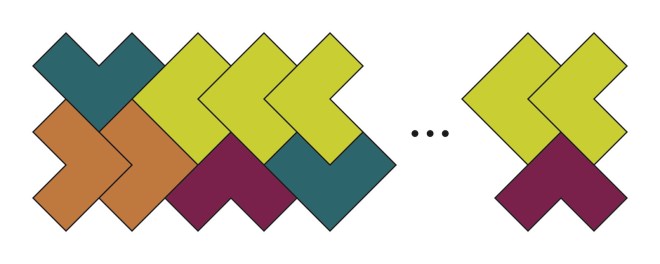
The next shortest edge possible has length 4, and then the other edge must have length 3n. Again, a few experiments lead to a general pattern which shows that any 4x(3n) ragged rectangle can be tiled with L-trominoes:

Ragged4

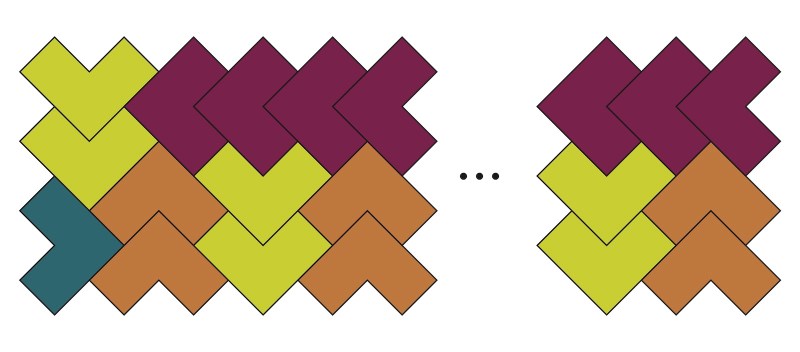
This covers the two basic kinds of thin and arbitrarily long rectangles. What about larger dimensions? If we already have a ragged rectangle tiled with L-trominoes, we can put a frame around it that is also tiled with L-trominoes:

Raggedframe

These three constructions together show that a ragged rectangle can be tiled with L-trominoes if and only if its area is divisible by 3. Next time we will see how this helps us to tile curvy rectangles with pillows.

Squares and Circles (From the Pillowbook I)

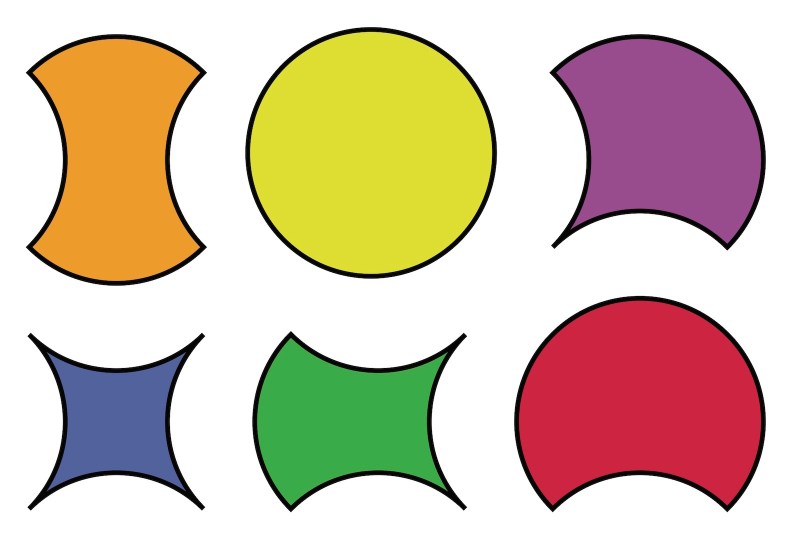
In a previous post, I have discussed triangles with curved edges and what they can tile. One can do the same with squares, only that things get more interesting, because there are six different shapes:

Curvies

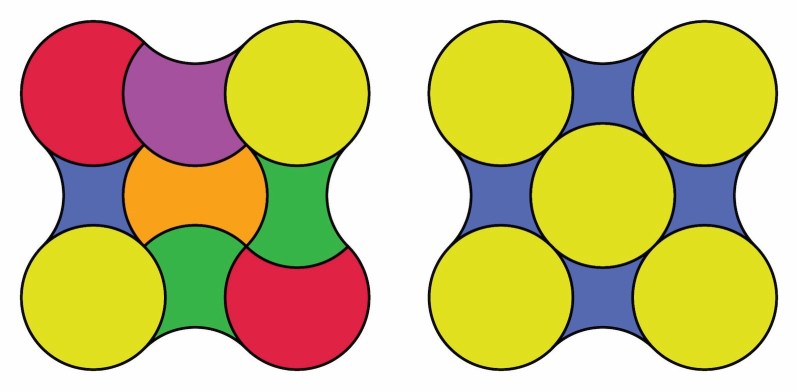
I have called them pillows, mainly because I want them as nice, big, colorful pillows. Hmm. The first problem I’d like to discuss is to tile curvy rectangles with them, like this curvy 3×3 square:

Curvysquares 01

It is pretty clear that all curvy rectangles have odd dimensions. The left example uses all six pillow types, the right only two, blue and yellow. To see what combinations of colors are possible, the following observation is useful: Each pillow has a number of edges that are convex (curve outwards) and other that are concave (curve inwards). For instance, orange and purple both have two convex and two concave edges. Yellow has just four convex edges. With that, we have a little

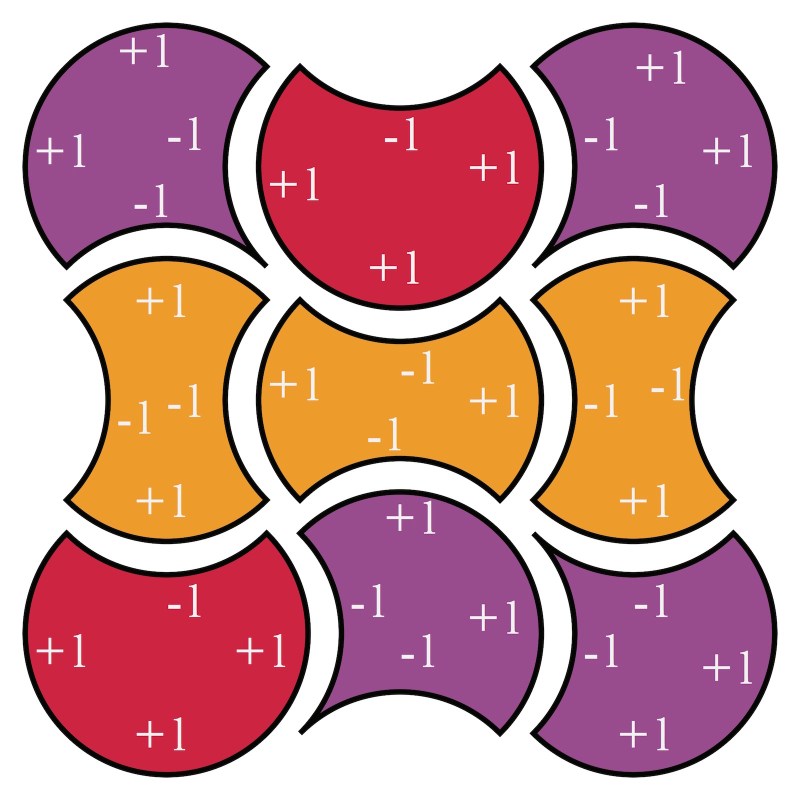
Theorem: In any curvy rectangle, there are four more convex then concave edges in all pillows together.

A picture should make this clear:

Edgecount

This helps to predict how many pillows of each color we need.
For instance, suppose we want to tile a curvy 3×3 square with y yellow, r red, and b blue pillows. We then need y+r+b=9, and, by the theorem, 4y+2r-4b =4. It’s easy to see that this forces y=2, r=4, b=3. Similarly, if we are only allowed to use yellow, purple, and green, the only possibilities are y=2, p=5, g=2 or y=3, p=2, g=4. Here they are:

Curvysquare2 01

That we found a solution in positive integers does not mean that there is a tiling that realizes this solution. For instance, suppose we want to use red, orange, and purple, then we need to have r=2, but for o and p  we can have any pair of positive integers that sum up to 7. However, only o=2, p=5 and o=3, p=4 can be realized. The solutions are not unique, here are two symmetric ones:

Curvysquare3 01

There are about a dozen little exercises like these. To be able to say something interesting about larger curvy rectangles, we will need to study ragged rectangles in a few weeks.

Just Triangles (Polyforms III)

In a former, more optimistic life, I wanted to write a book for elementary school children that would get them excited about math and proofs. This would of course go against the grain. Proofs have essentially been eliminated from all education until the beginning of graduate school. With good & evil reason: Not because they are too difficult or not important enough, but because it could possibly induce the children to come to their own conclusions.

I also was ignorant about who controls public education: Neither the students, nor their parents, nor the teachers, and not even the text book authors. It is solely those people who are making money with it.

Before I get the reputation to be yet another hopeless conspirationist, here is another message in a bottle, in multiple parts. It is once again about polyforms. I need to say what the shapes are that we are allowed to use, and what we want to do with them. In the simplest, we are using four shapes, which are deflated/inflated triangles like so:
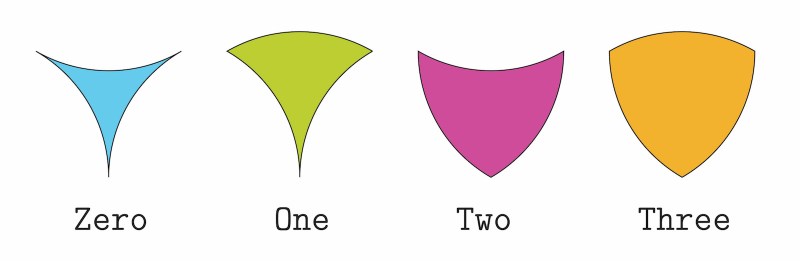
Triangles 01

They already have received names, which count the number of edges that have been inflated. We (you) are going to tile shapes like these that have no corners:
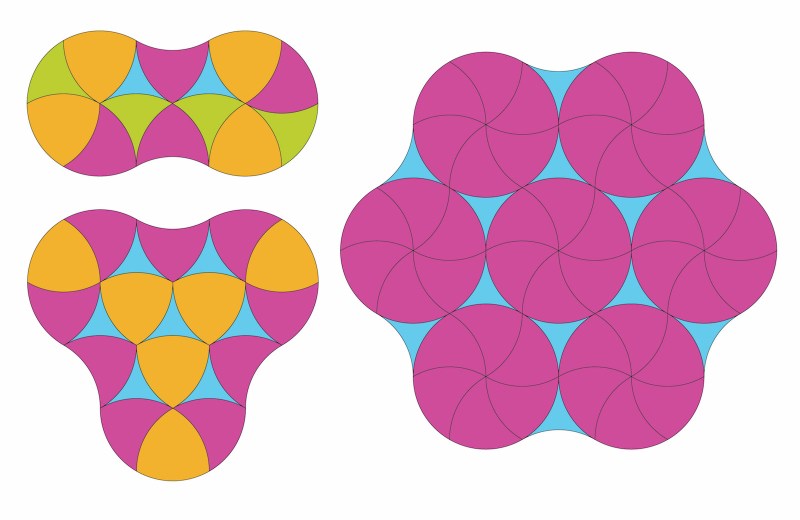
Regions 01

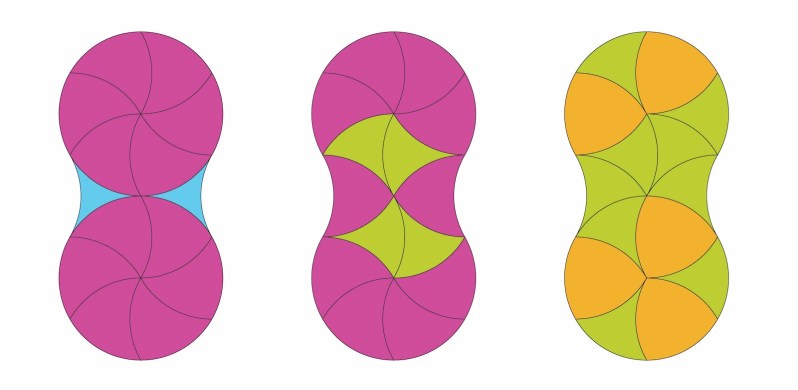
We call these circular regions, because they consist essentially of a few touching circles with a bit of filling to avoid holes or corners. The circular regions above consist of two, three, and seven circles, respectively, and they already have been tiled. We can start asking questions: What shapes without corners can you come up with? Are they all circular regions?

Then there is time for exploration: Find all ways to tile a circle (the circular region with just one circle) with the curved triangles. Find all ways to tile the bone (the circular region with just two circles) using only two different kinds of triangles:
Di bones 01

Now, upon experimenting, the number of curved triangles to be used to tile a circular region is not quite arbitrary.
The first, not so trivial, observation is that for a circular with N circles, we will need 8N-2 triangles. That is because each circle contributes 6 triangles, and for adding a circle we have to use 2 more triangles. This is not quite a proof yet, but at least an argument. There are also interesting problems when the domain is allowed to contain holes…

Circles3 01

Because the different curved triangles contribute a different amount of area each, there is a second formula.
Let’s denote by N(0), N(1), N(2), and N(3) the number of curved triangles of each type (zero, one, two, three) that appear in a tiling of a circular region with N circles. Then N(1)+2N(2)+3N(3) = 12N. This formula counts on the left hand side how many triangle edges are inflated and hence contribute extra area. On the right hand side, we count the same, using say the pattern we see in the tiling of the circular region with 7 circles in the second image above.

The two formulas together allow you to determine how many triangles of each kind you need in an N-circle region, if you are only using two different triangles.

To be continued?
Copycat (Election Games II)

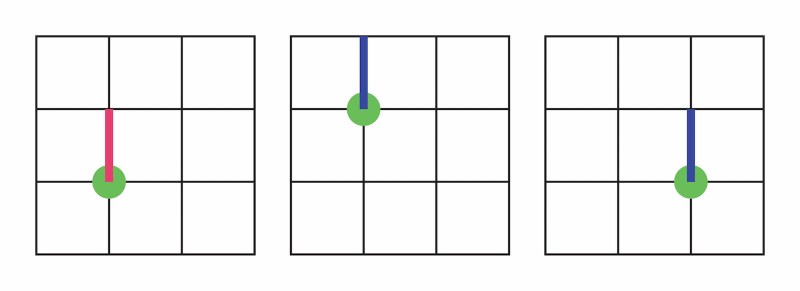
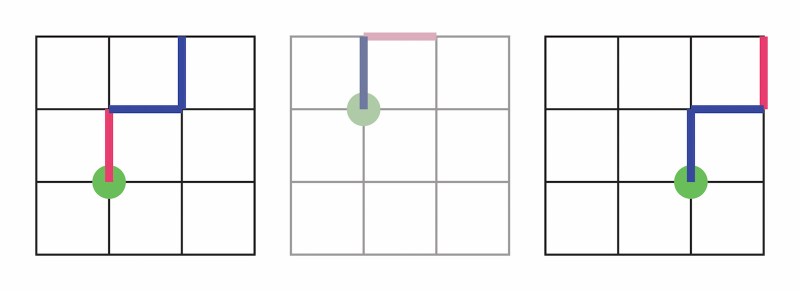
My popular series of election games continues with a paper and pencil game for any number of player. It’s called Copycat. Let’s play the multiplayer version first. Each player grabs a sheet of paper and a pen, draws a rectangular grid of agreed size (I use 4×4 below, 6×6 to 8×8 is better for actual play), and marks an agreed number (I use 1 below, two or three is much better) of intersections with a nice, fat dot.

Move1 01

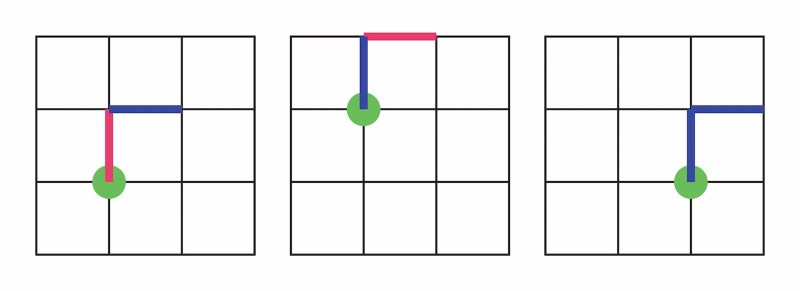
One player decides to go first and announces one of the four main compass directions. Now all players have to mark a segment beginning at any one of their dots and heading that way one unit. Above, the first player (left) decided NORTH (where else?), and all players had to follow. A player who can’t follow is out.

Move2 01

Now it’s the second player’s turn (middle), and she decides EAST. All players have to mark a segment that begins at the endpoint of any one of their paths and moves east one unit, thereby neither retracing steps, nor leaving the grid, nor ending on intersections that have already been visited by any path. The third player (right) has now only two options left (NORTH or SOUTH), and decides NORTH. This eliminates the middle player, who is out of moves.

Move3 01

Left takes revenge and moves EAST, which is impossible for the right player. This leaves left as the winner. In an (unrealistic) cooperative play, left and right could instead have continued on for eight more moves. The game becomes more interesting when the players begin with more than one dot, because then they can choose which path they extend at each turn.

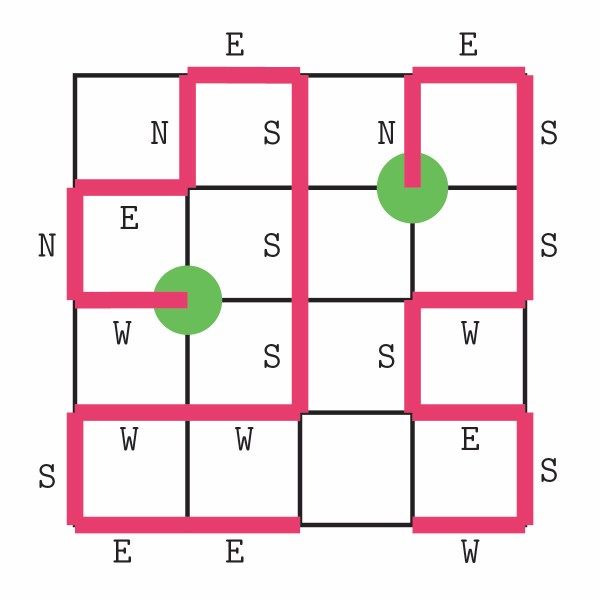
To make puzzles for single players, start with a board, place a couple of dots, and draw legal paths like so:

Puzzle 01

Record the directions along each path as a sequence of letters, namely WNENESSSWWSEE and NESSWSESW in the case above.
Randomly splice the sequences into one, for instance into WNNEENESSSSWSSWWESSEWE. Then draw a new board that just includes the dots, and hand it together with the letter sequence to your best friend. She then needs to trace non-intersecting paths, following the letters as compass directions. Her only choice at each step is which path she wants to extend. This is an excellent example of an easy to make puzzle that is ridiculously hard to solve.

There are many variations: For single players, you can use an eight sided compass die or a spinner to determine the direction at each step.

Several players can also share boards, as long as they can agree on where north is. They would then use pens in different colors and could only extend their own paths, avoiding any crossings of paths.