Polyhedra at an Exhibition

1

When in 1873 Victor Hartmann died, Modest Mussorgsky visited a memorial exhibition with his friend’s drawings. Deeply impressed, he wrote a suite for piano – Pictures at an Exhibition.
The Pictures are lost, but the music survived.

2

Around 1910, Wassili Kandinski painted the first abstract painting. Instead of depicting recognizable things from nature, he painted abstract shapes. He even developed a theory how emotions should relate to abstract colors and shapes.

3

This brought the visual arts closer to music, and it is maybe not a big surprise that Kandinsky ‘composed’ a ballet for abstract shapes, to be performed to Mussorgsky’s Pictures at an Exhibition.
Kandinsky’s ballet is lost, but the idea survived.

4

In the spring semester 2003, I taught the class Exploring Mathematical Ideas to undergraduates majors and minors at Indiana University in Bloomington, with the idea to recreate a modern version of the ballet, using computer graphics.

5

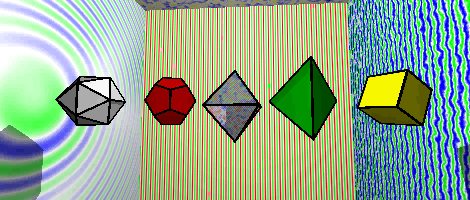
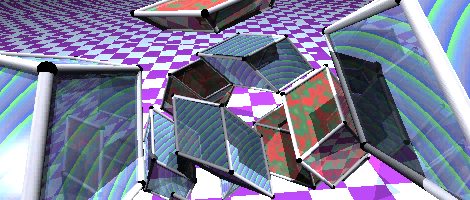
I introduced polyhedra in class early on, and used the raytracer PoVRay as an illustrational tool.

6

The students had to learn the basics of raytracing with PoVRay in the first half of the class.

7

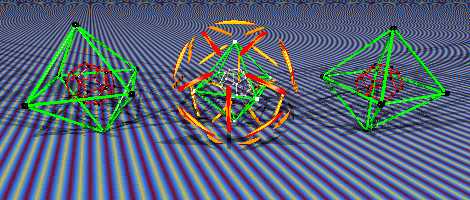
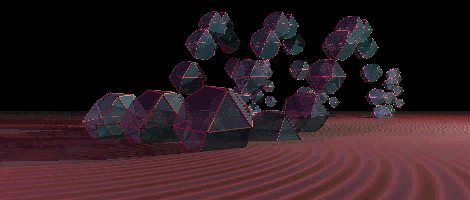
Then we assigned one piece of the music to each student, picked a few polyhedra, created 3D models (in PoVRay), designed a few scenes, and rendered keyframes.

8

Then we turned to animations: What was a constant (a color, the coordinate of a point, the size of an object) could now suddenly depend on a time parameter.

9

This proves the concept of a variable instantly useful, and shows that being able to write down formulas for functions allows to control these geometric quantities according to the design of the scene.
10

How did we synchronize? The answer is: We didn’t. I didn’t ask my students to synch the movie to the music. In fact, it is usually easier to synch the music to the movie by employing a live player, than the other way round. Some of the students tried it nevertheless and succeeded amazingly well.
11

With some more effort, one would be able to use parameters of the music (like sound amplitude) as an input for the raytracer parameters, but our project was a zero budget project, and we didn’t have the technology.

12

In particular, this would require the ability to precisely align the video track with the sound track. Our (free) software did not even generate the video tracks to the correct duration…
13

So, instead the goal was to catch the mood of the scene, and I believe this was quite successful.

14

How to overcome copyrights? Using Mussorgsky’s music from commercial production so that you can publicly show the movie and distribute it is next to impossible. While Mussorgsky’s piano score is in the public domain, neither the various orchestrations are, nor are any recordings.

15

I was lucky to find a freely downloadable version of the orchestration by Carl Simpson, recorded by the Ithaca Symphony Orchestra under Hrant Cooper. They all and the publisher gave us permission to use the music for this class, and to show the movie. This was an interesting exercise in copyright law!

16

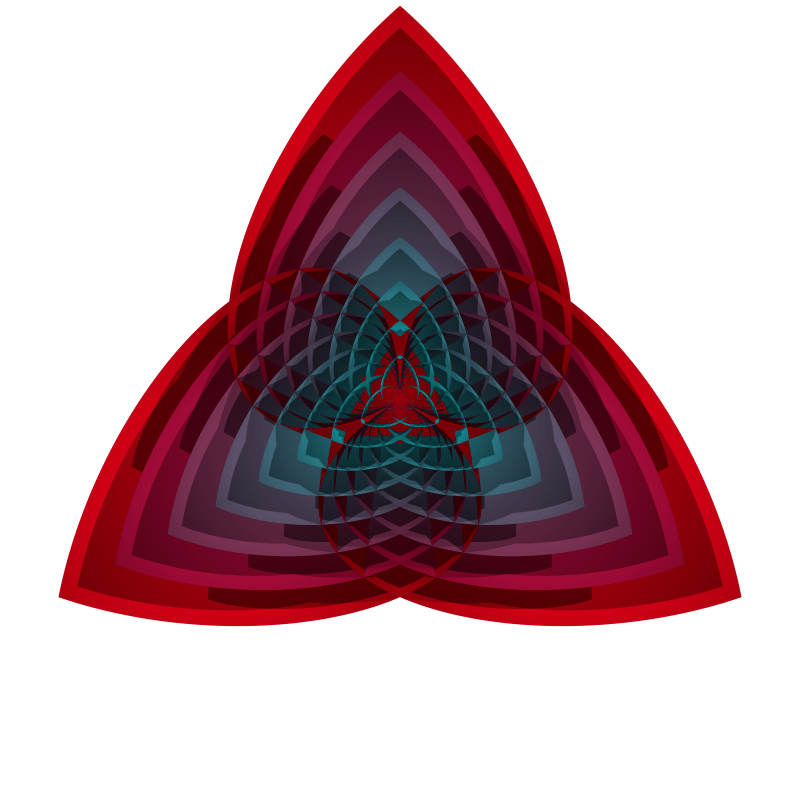
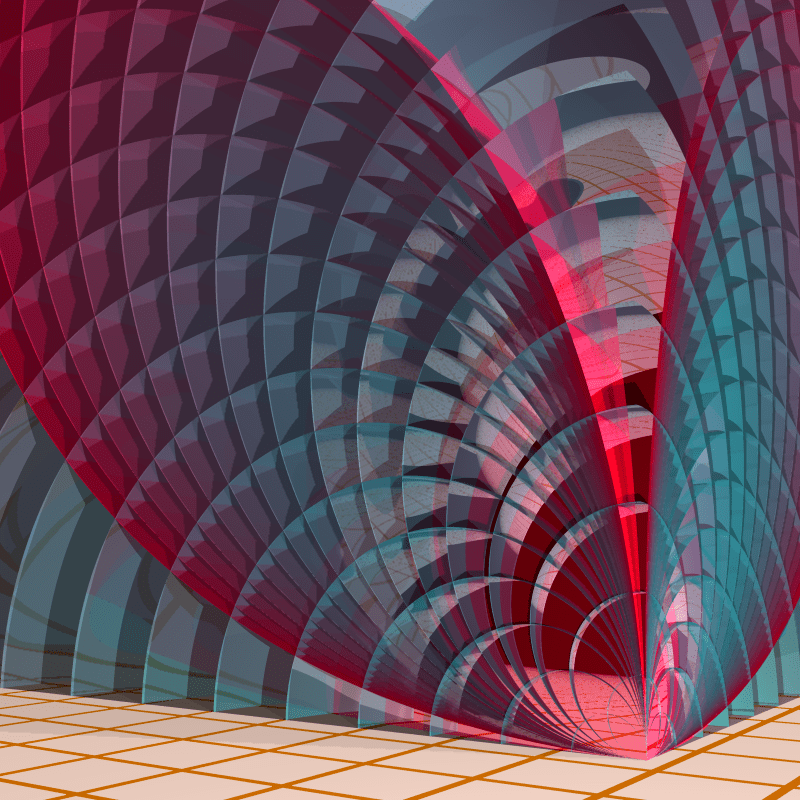
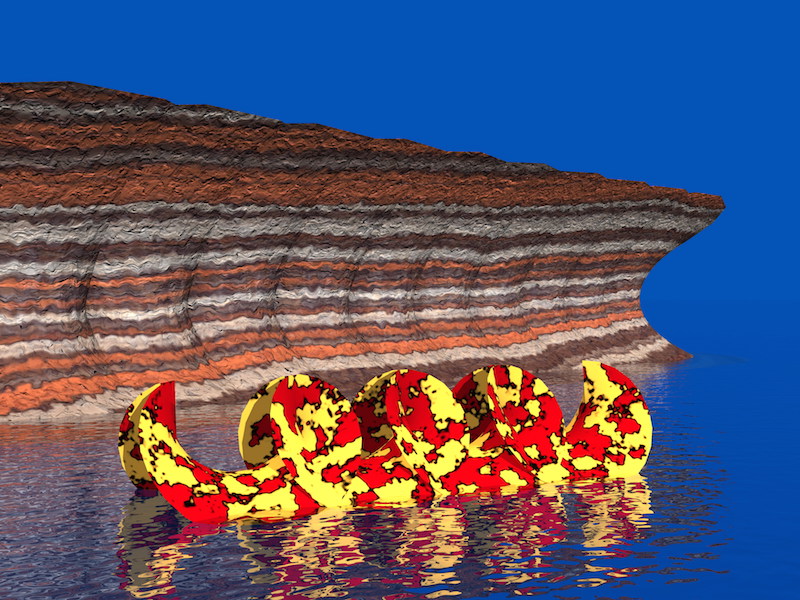
That the images on this page are so small has a reason: After a hard drive crash, the sources for the movie scenes were lost. What survives, are these images, and a low quality version of the entire 35 minute movie.
The Beauty of the Useless

Our perceived world is 3-dimensional, but even though most of us have a decently functioning stereoscopic vision, our ability to grasp the possibilities that space has to offer are quite limited. We rule space using box shaped blocks (houses). This is convenient, because it is simple and makes space accessible even computationally.

We surround ourselves with endless repetitions of familiar shapes, largely ignorant of the fact that there are many other simple ways to create and explore rather exotic shapes with an alien but compelling esthetics.

0 2 3 x2

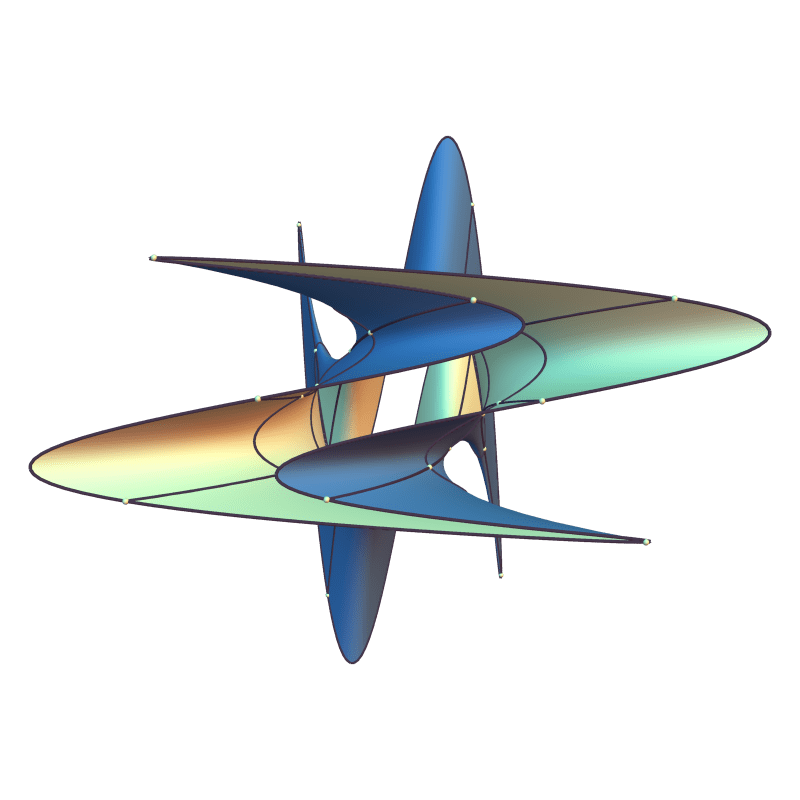
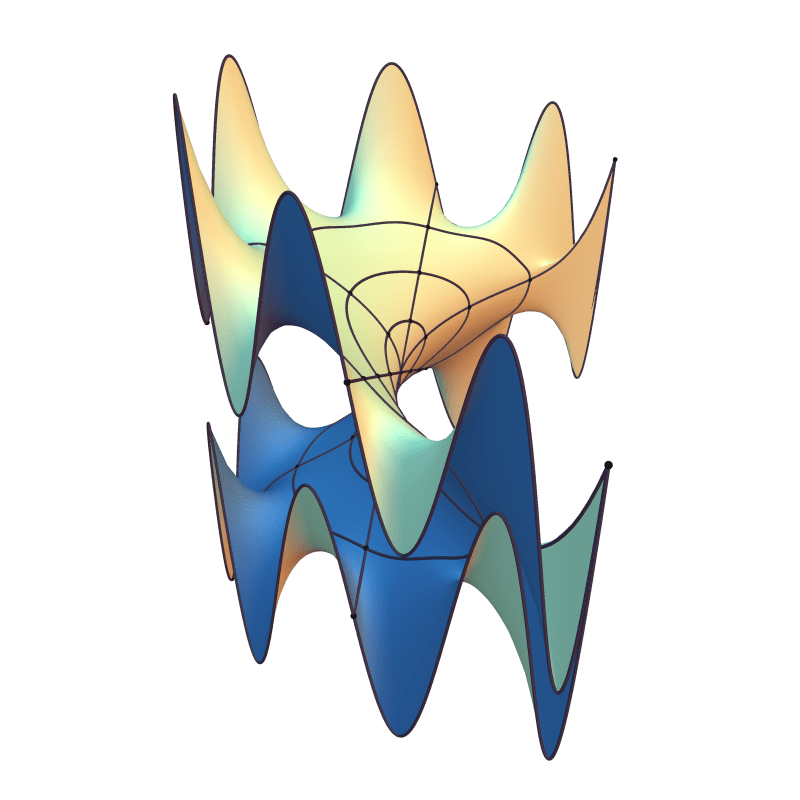
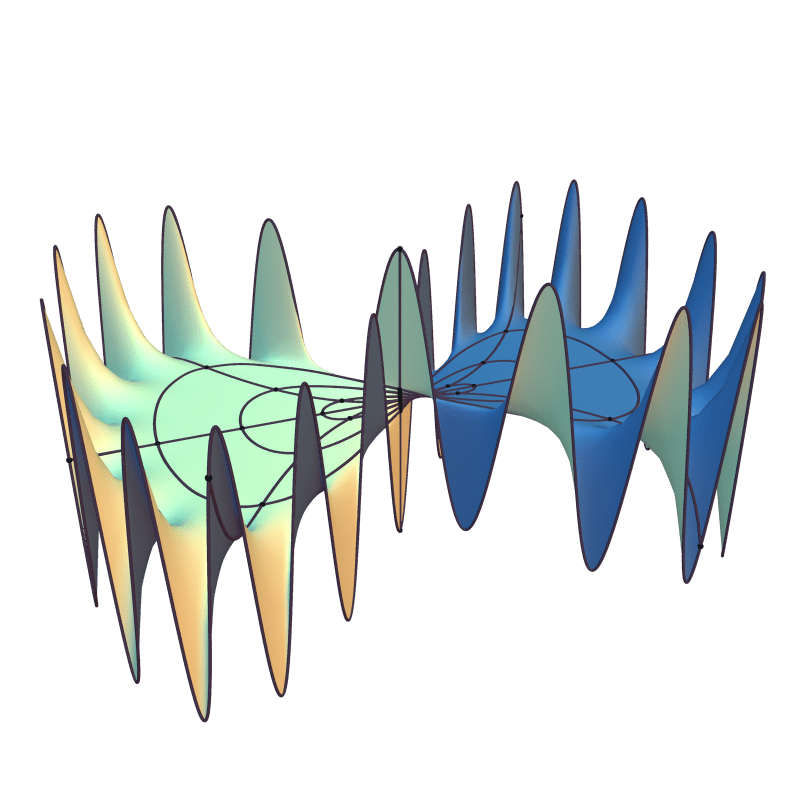
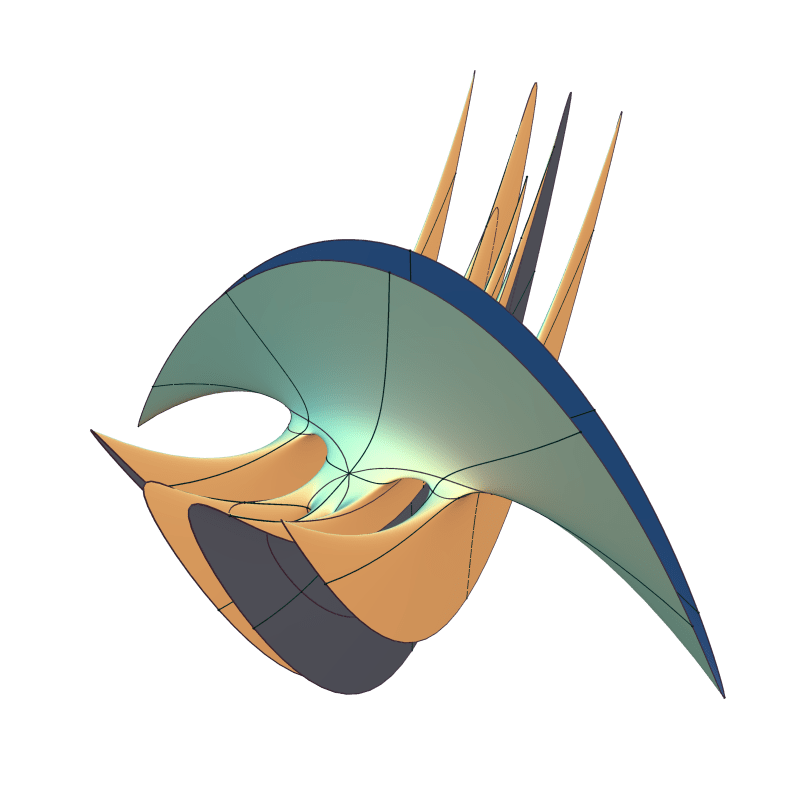
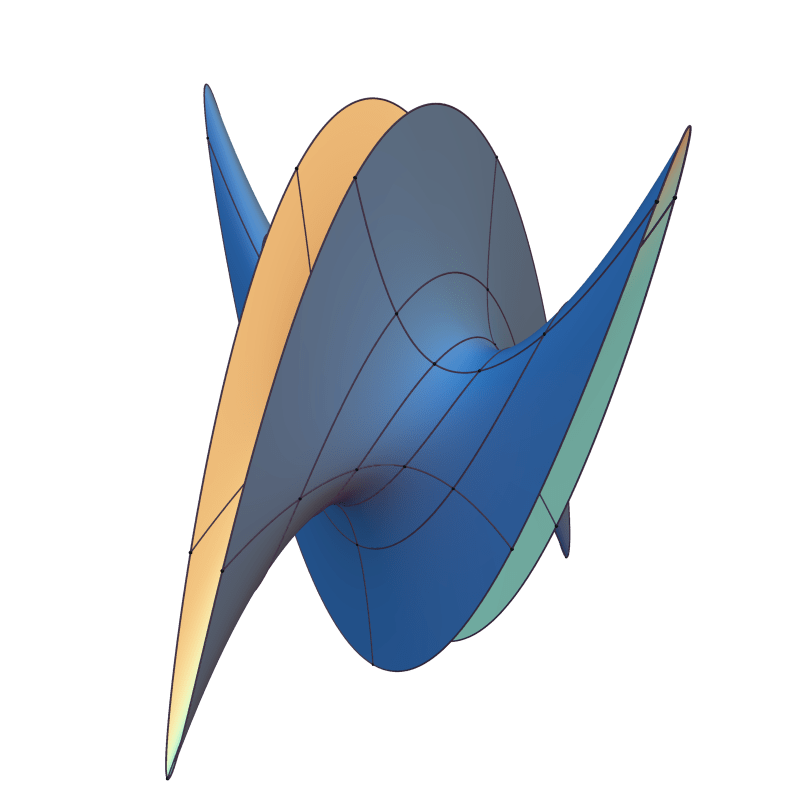
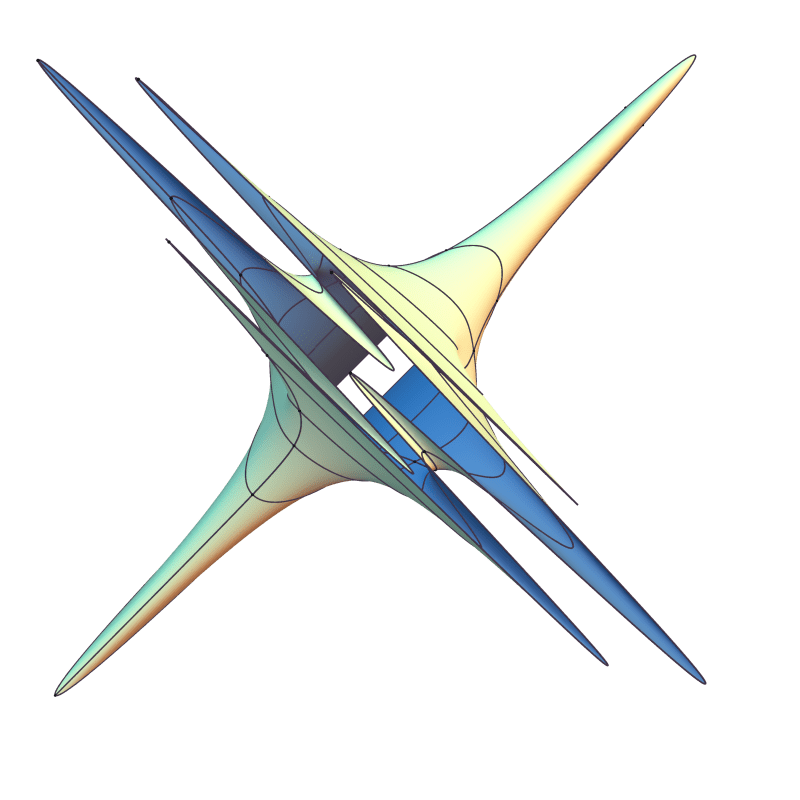
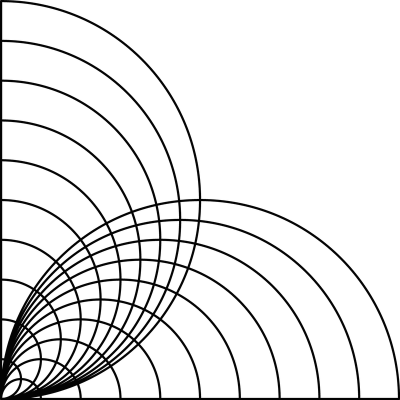
The images from this page are all produced using quite simple formulas, using what are called harmonic functions.
They are related to minimal surfaces (soap films), but much more flexible.

0 1 6 + 0 1 2

For the mathematician, the challenge is to find out how the algebraic properties of the formula are related to the geometric properties of the corresponding shape. This is largely done by experiment, to the surprise of many who don’t think Mathematics is an experimental science.
1 2 4 x2

At our fingertips we have infinite uncharted worlds to explore. We do not slaughter the natives, nor do we spend billions on super colliders or space probes.

Helicoidal13

Our discoveries are always fundamental, and useful only as a byproduct.

Helicoidal20

This sounds arrogant. In reality, it is just the belief that truly useful things have to be simple. This is our justification to explore simplicity for its own sake.

Mathematica2

Simple Beginnings (Spheres V)

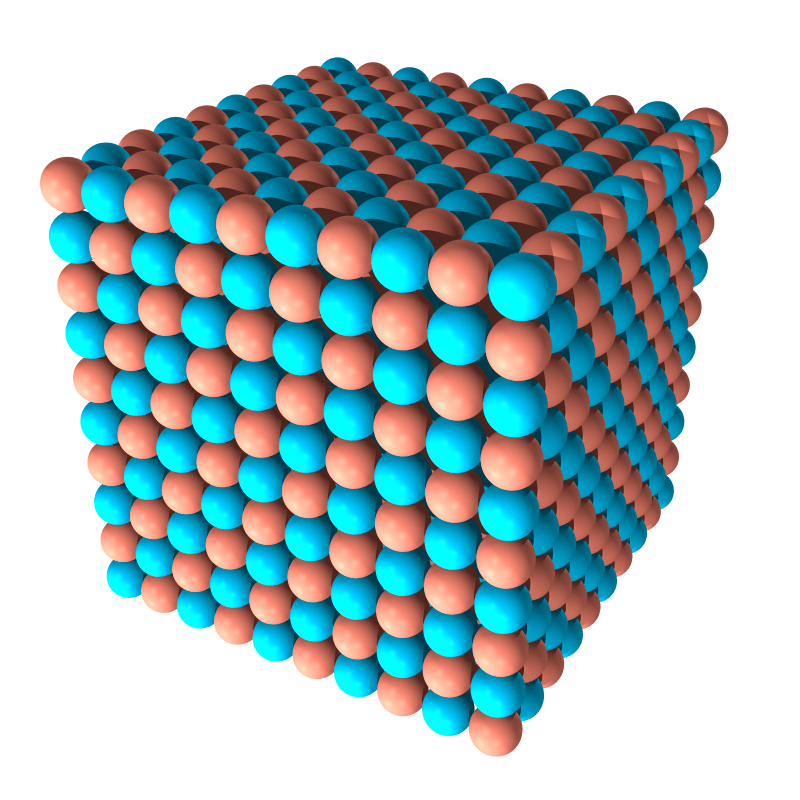
The simplest way to arrange spheres in space is to use the cubical lattice. This is the obvious generalization of the checkerboard, and it lends itself naturally to a coloring with two colors such that neighboring spheres are differently colored. While this is not the densest sphere packing, it will be pretty dark inside.

Lattice

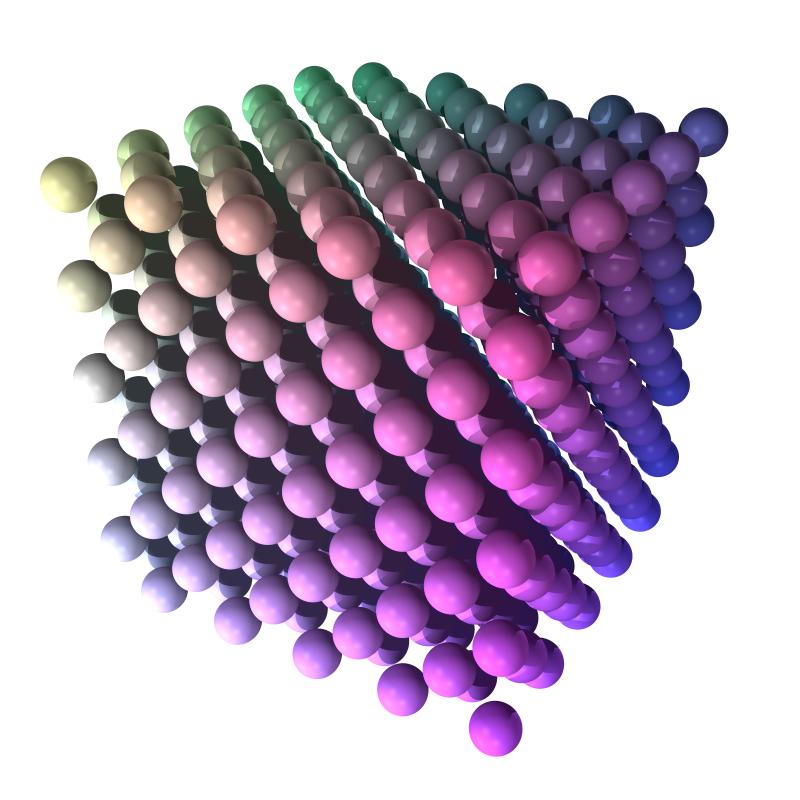
Leaving out the spheres of one color, painting the rest with most of RGB color space creates the following arrangement of spheres, and makes enough room for light to get through.

Lattice2

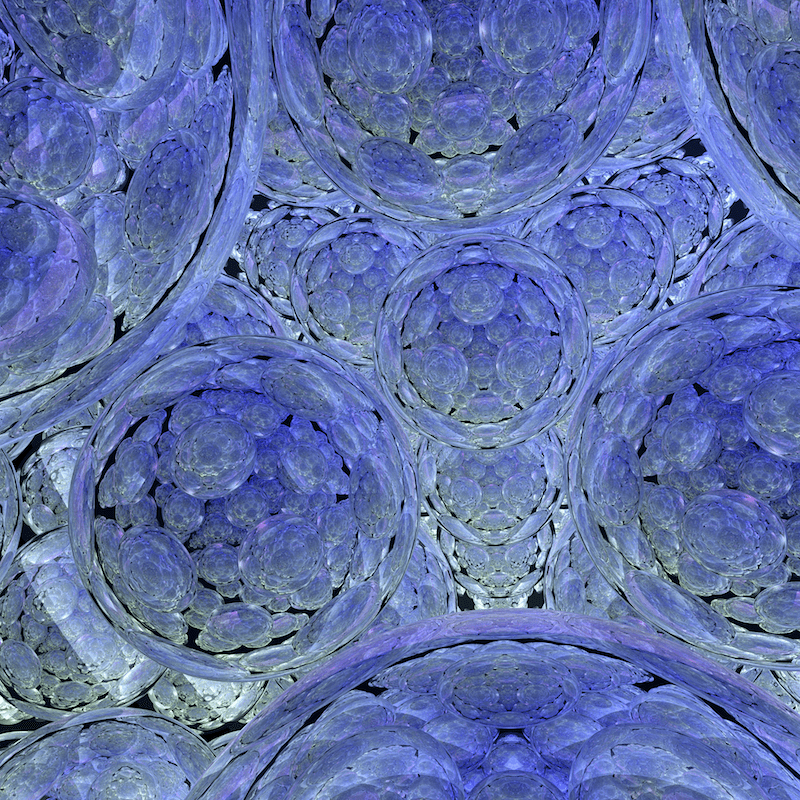
Now imagine yourself inside of it, and all spheres being reflective in addition to being colored. The formerly simplistic object becomes a dazzling fractal-like maze.

Cube small

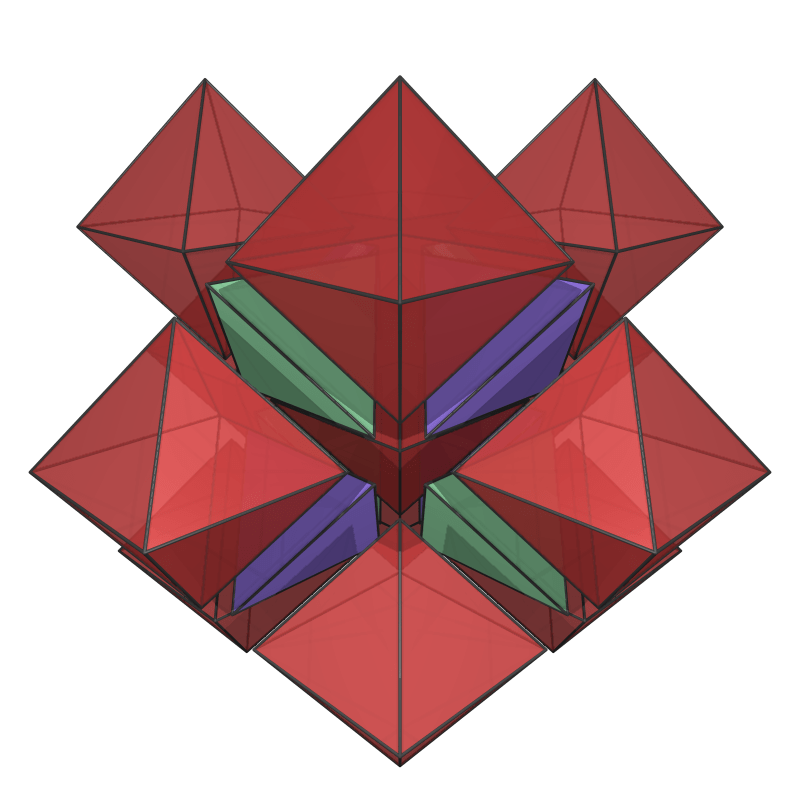
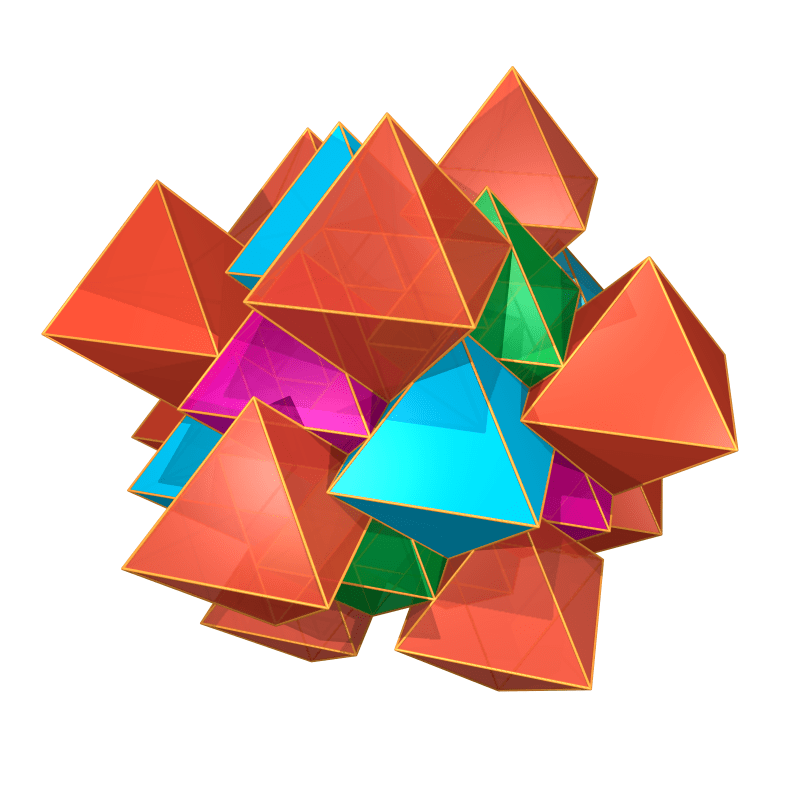
The original bicolored sphere packing is related to a packing of space by octahedra (one for each orange sphere).
Two octahedra share then at most an edge, and the gaps can be filled with regular tetrahedra of the same edge length.

Octatetra

Minkowski discovered that octahedra can be packed much more densely. The gaps can still be filled with regular tetrahedra, but their edge length is only one third of the edge length of the octahedra.

Minkowski

Expanding Your Mind (Spheres IV)

Circles can also intersect perpendicularly in a more complicated way than discussed in Spheres IV. Like so:

Circles1

This might look complicated, but is in fact just a transformed version of the easier to grasp dart disk:

Circles0

To see how these two images are related, pretend the radial lines in the second image are in fact huge circles that all intersect in the center point. Then they will also intersect in another point, which is, in the case of lines, the ominous point at infinity, but, in the case of circles, becomes just another point in the plane. This other point and the origin are the common points of one family of circles, as you can see in the first image, and the second family of circles intersects the first perpendicularly. The first image can be transformed into the second by what is called an inversion.

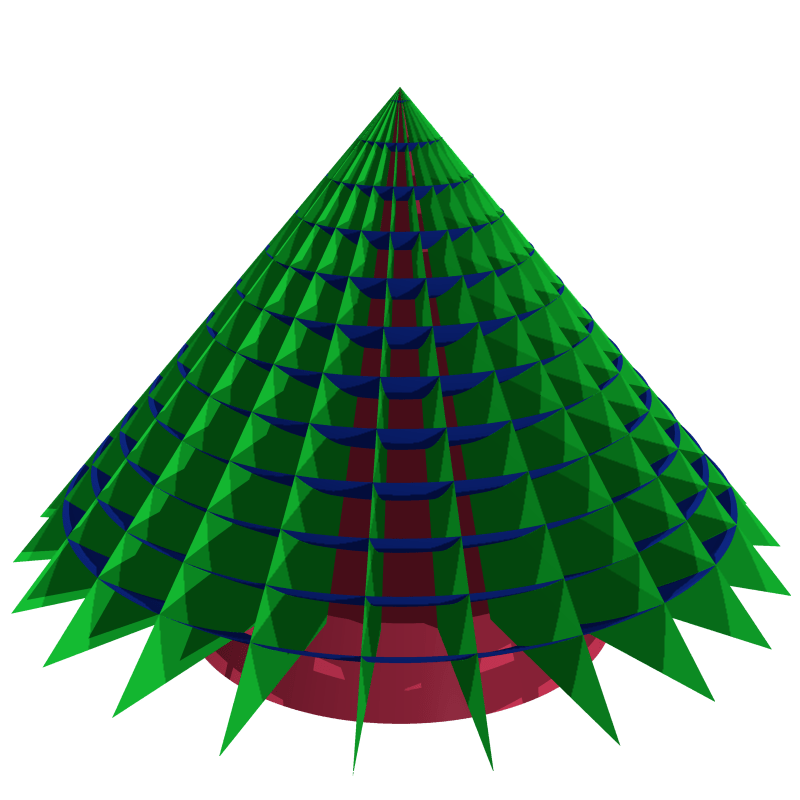
If we want to repeat this in three dimensions, it is maybe best to start with the second image, replacing the radial lines by vertical green planes, and the circles by concentric blue spheres. Then, something curious happens. Lines and circles are in some sense the same thing, and so are planes and spheres. But if we look for a third family of surfaces that intersect the planes and spheres orthogonally, we need to step outside the plane/sphere paradigm. It turns out that we need vertical red cones to cut both the blue spheres and the green planes perpendicularly:

Cone

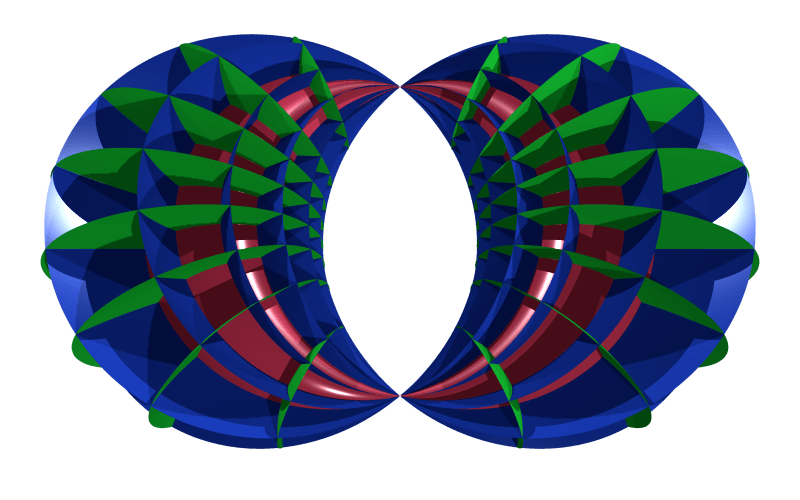
Now, coming back to the 3D version of the first image, we just need to invert the above cones, planes, spheres as to become this:

Dupin

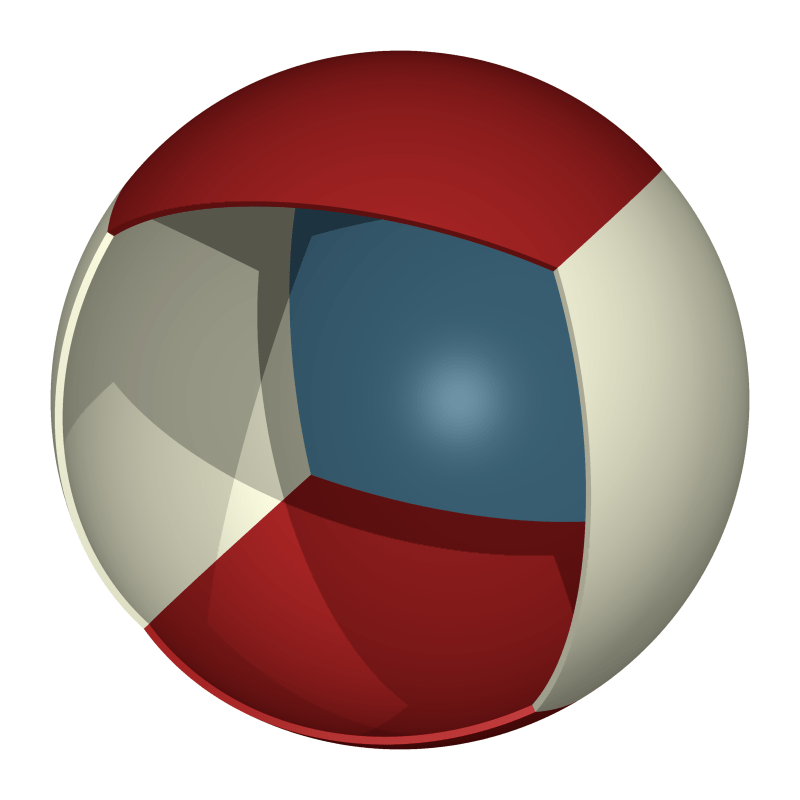
The red surface is called a cyclide. It has two cusps that correspond to the tip of the cone and the (still ominous) point at infinity.

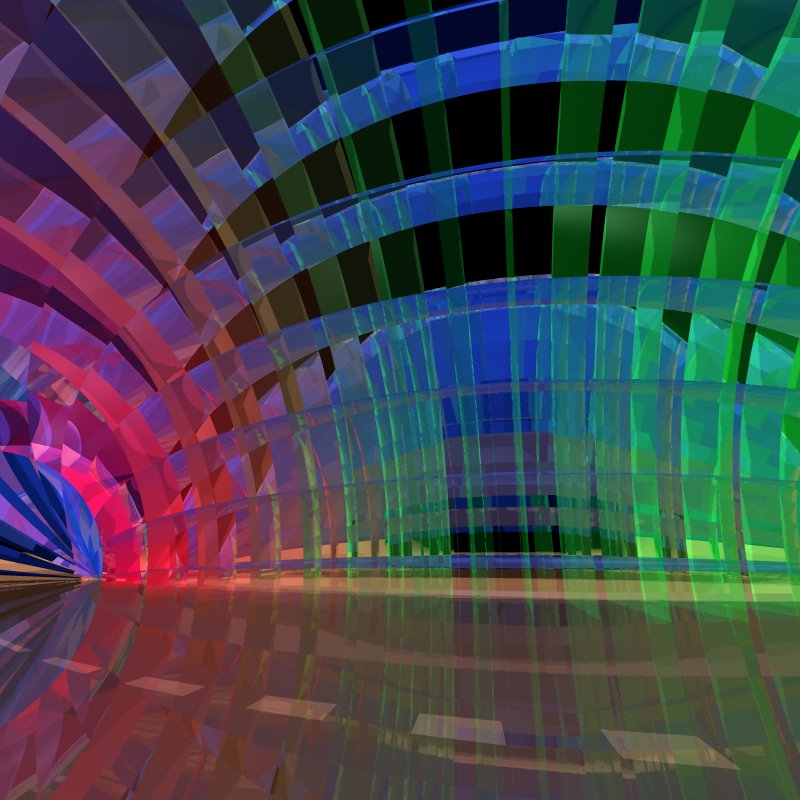
Now imagine that you are inside that cyclide, looking around…

Dupin2

Intelligent Design

Intelligent Design is the slightly provocative title of a small, overpriced book I wrote, containing black and white graphics that show simple geometric phenomena, with explanations.

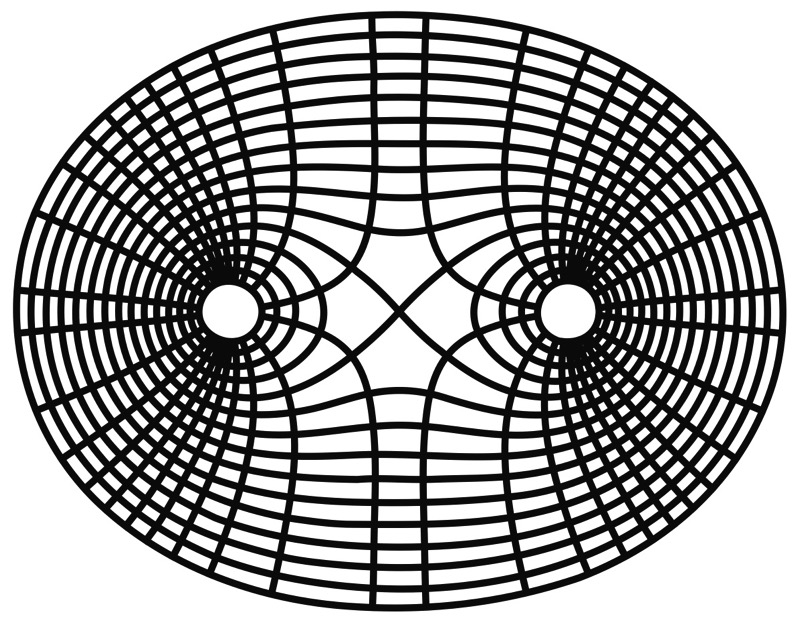
Cassini

The constraint for the design was that it had to be cut out by a die cutter. I had acquired a Silhouette Cameo which can import AutoCAD dxf files and cut these very accurately (from card stock, for instance). One can then use these cutouts as window art.

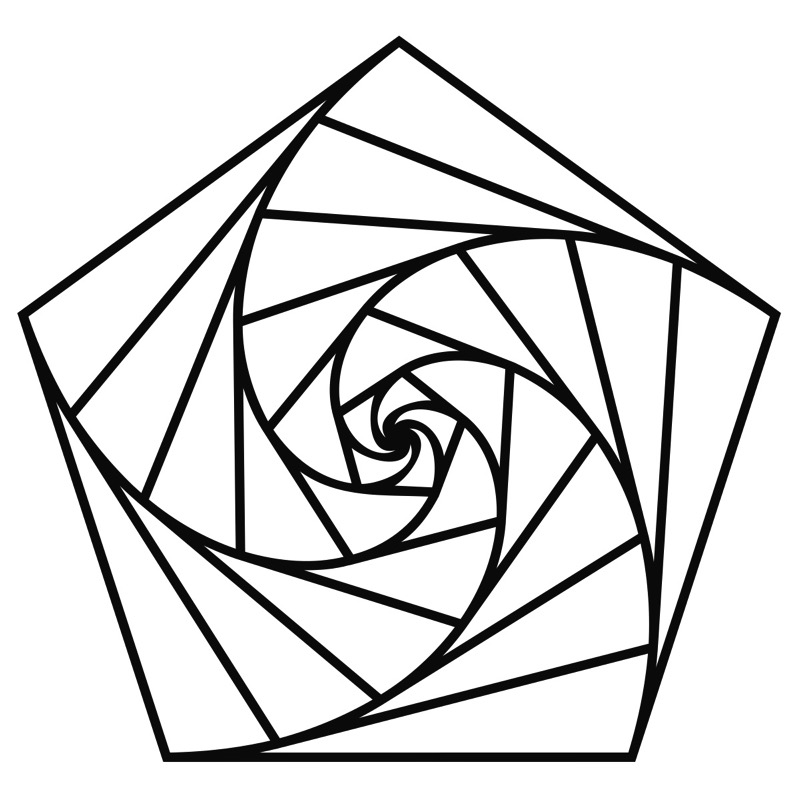
Pursuit

The process puts interesting constraints on the graphics. It needs to be connected (otherwise it will just fall apart), simple, and simultaneously intricate.

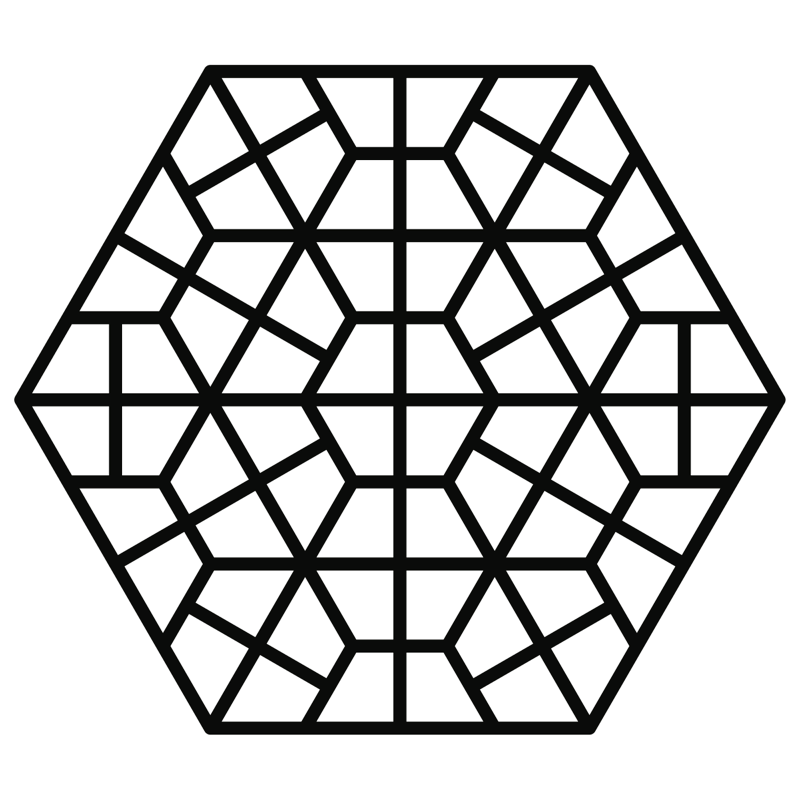
Trapez

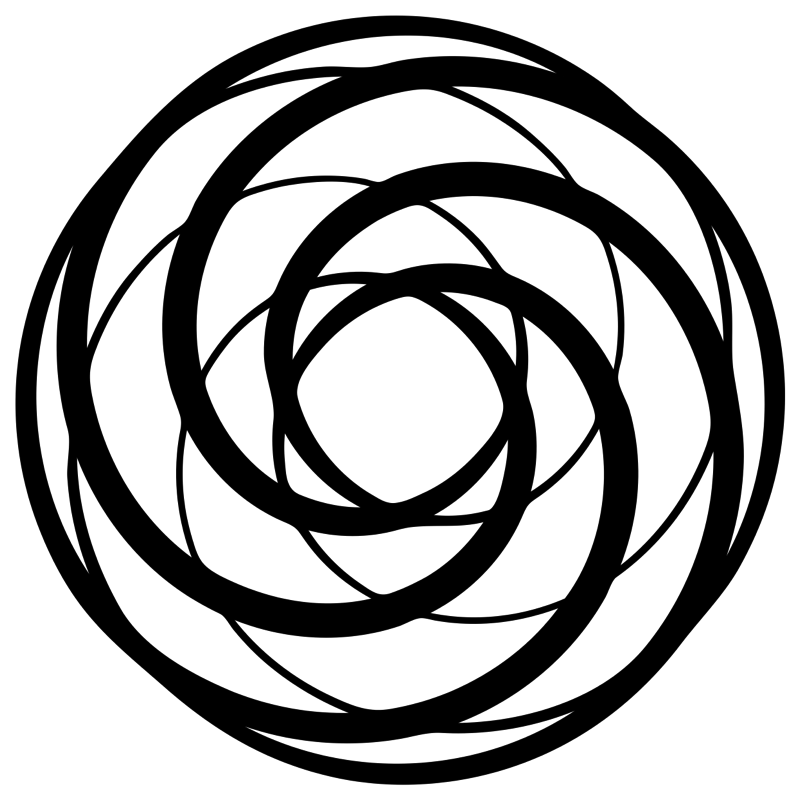
Under these constraints, one can still achieve a modest 3D effect by thickening parts that should be close to the viewer.

74knot

This is a 7-4 torus knot. Look at it from some distance.

The 600-Cell (Spheres III)

Various arrangements of touching spheres, with a fair amount of color, reflections, and light, can lead to startling views, like this one:

600cellbsmall

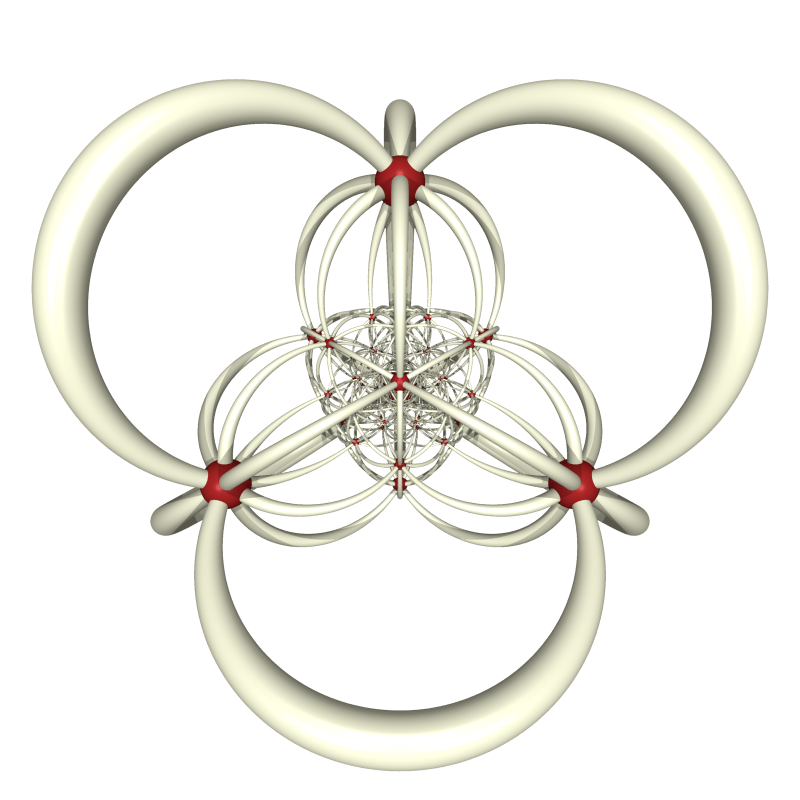
So, what are we seeing here? In short, this is the stereographic image of the 600 cell, with its vertices being represented by spheres so large that they touch in the 3-dimensional sphere.

As usual, an analogy helps. Let’s start with the ordinary cube in space. This appears to be a 3-dimensional object. We can also think of it as a tiling of the 2-dimensional sphere by spherical squares, of which one fell off here:

Cubespherical

Now, still working in the 2-sphere, place a spherical disk at each vertex of the cube with a radius so large that all the disks just touch:

Cubecaps

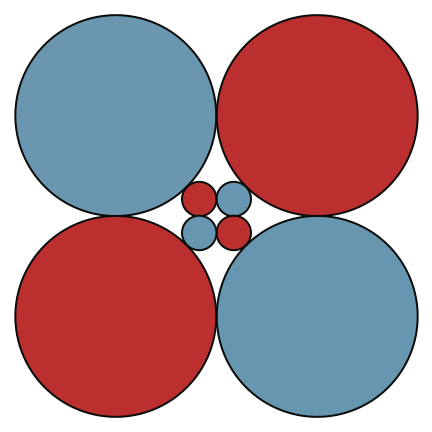
To view this in the plane instead of in the 2-sphere, we can apply a stereographic projection, and get a rather boring looking collection of eight touching disks.

Octapack2

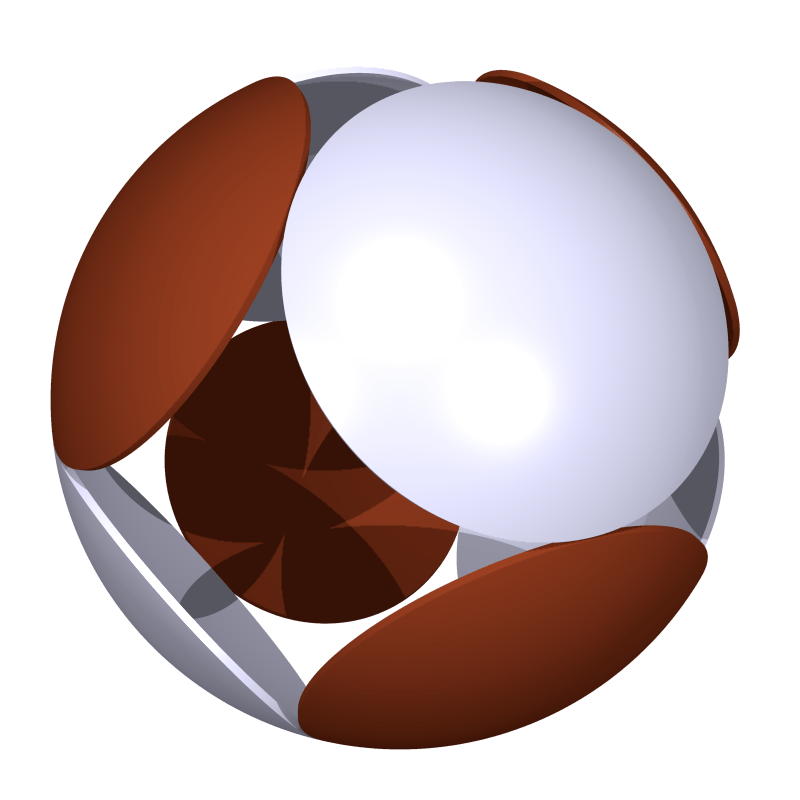
Now we repeat the same procedure in one dimension higher. The cube is one of the five platonic solids in 3-space. In 4-space, there are six regular polytopes, and one of them is the 600-cell. It consist of 600 tetrahedra that we can use to tile the 3-sphere. It also has 120 vertices. Placing a small 2-sphere at each vertex and connecting adjacent vertices by thin tori in the 3-sphere, results (after stereographic projection) in the following model.

600cellc

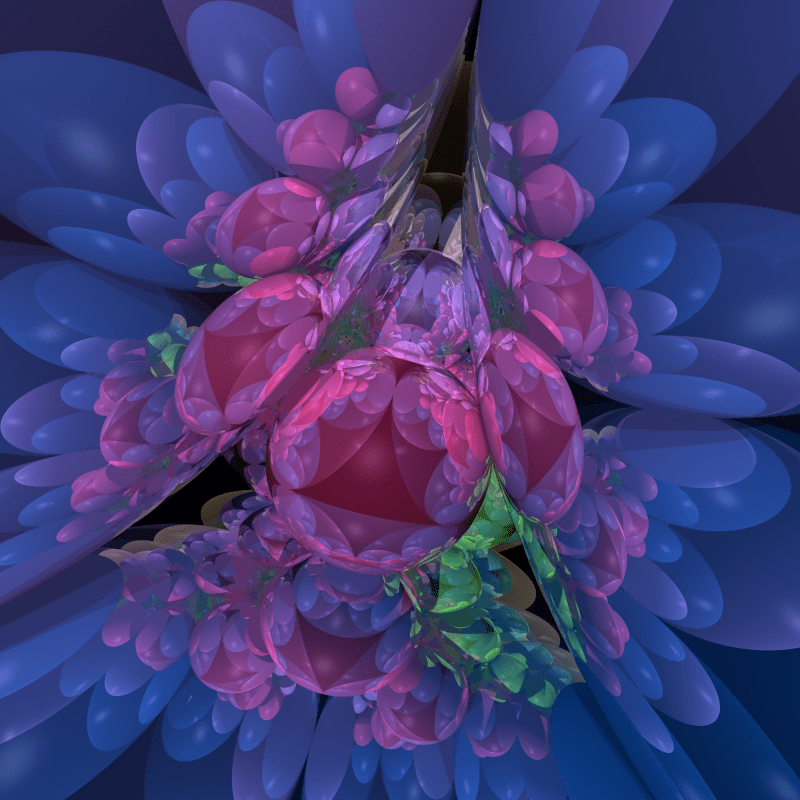
Now make the 120 spheres so large that they just touch. The first image shows a partial view of these spheres. The spheres are all reflective, and we are standing inside the 600 cell, so we see mostly reflections of (reflections of) spheres.

Japanese Gardens

IMG 2048

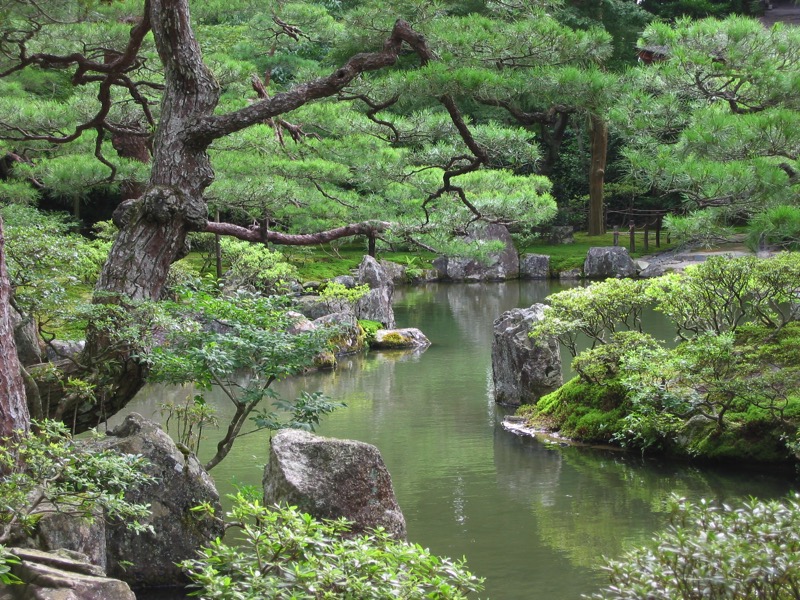
In À rebours (Against the Grain), the novel by Joris-Karl Huysmans (who features prominently in Michel Houellebecq’s timely novel Soumission), the ‘hero’ Jean des Esseintes furnishes his bedroom as to look as cheaply as possible, using the most expensive materials. In some sense, traditional Japanese gardens are trying something similar: They are designed to look as natural as possible, but simultaneously without any flaws.

IMG 2032

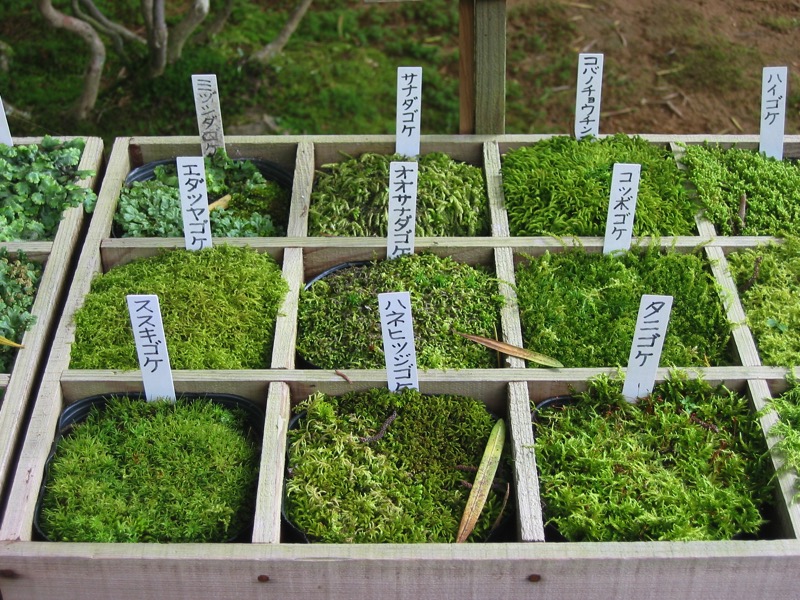
Even the mosses are selected carefully as ground covers to suit their destined location. This is a photographer’s paradise, because literally every view is perfect. No fallen branches or other imperfections spoil the view.

IMG 1971

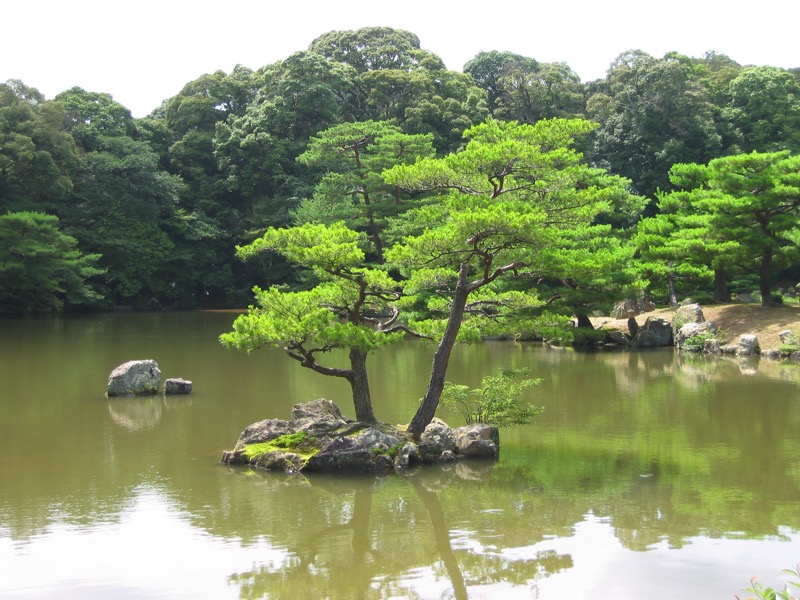
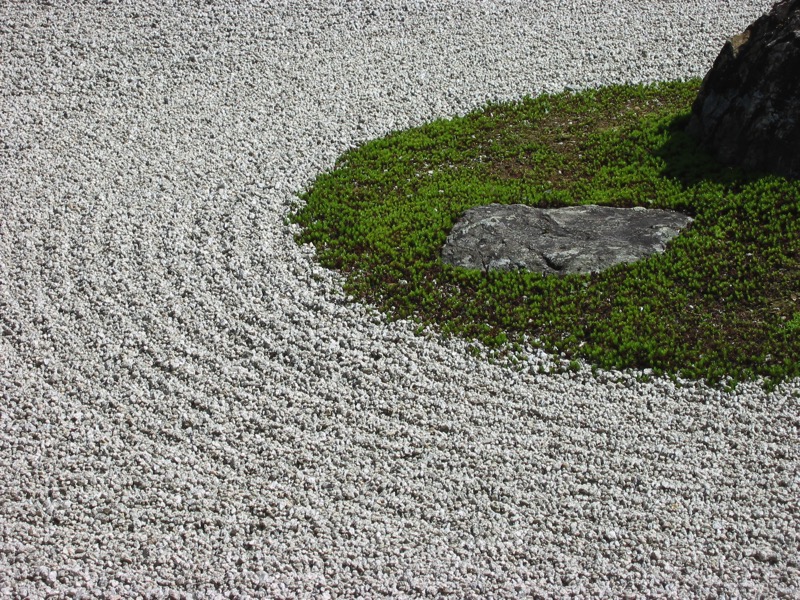
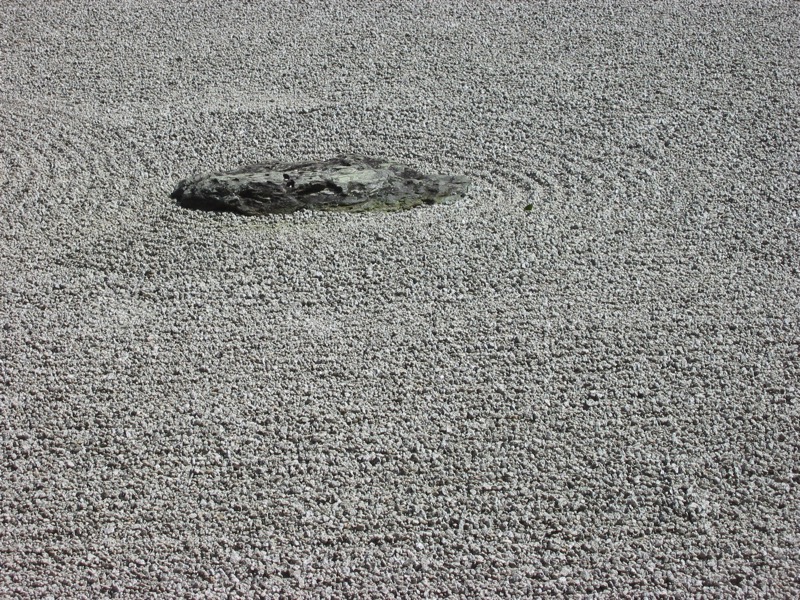
Often, these nature gardens are contrasted with rock gardens, that are minimalized abstractions of nature.

IMG 1982

The combed patterns of pebbles near islands of rocks or vegetation look like waves at first glance, but reveal a stronger sense for geometric abstraction when looked at from a greater distance. Instead of showing a physically realistic interference of wave patterns, we see a layering of shapes.

IMG 1991

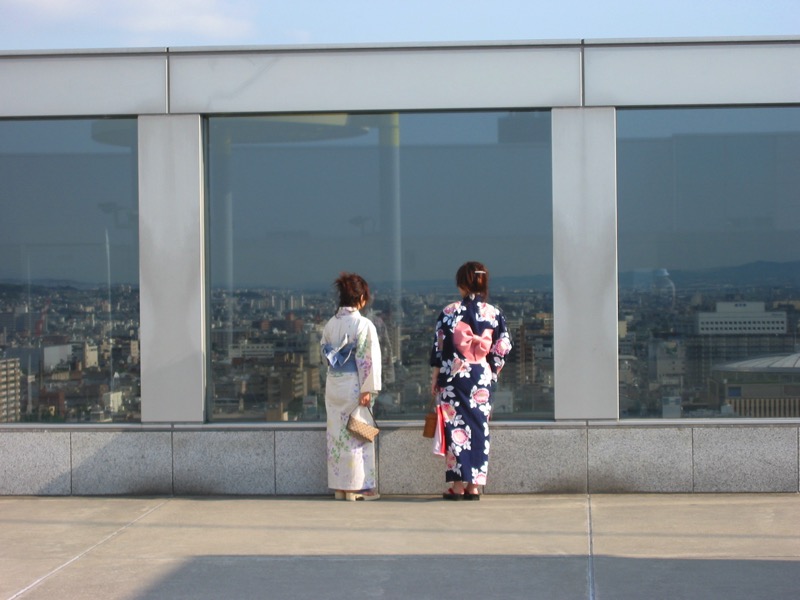
These pictures were taken when I had the chance to stay in Kyoto for two days. This is a city of great tensions between layers of a conserved past and an unknown future. What unifies it is the strong presence of contemplation one can find everywhere.

IMG 2182

Sand Art

DSC1593

The dune grass or marram grass or ammophila which can be found at the coast of Lake Michigan (for instance) is an interesting plant. It likes to watch and protect the border between the lake and the sand, protecting the latter with its extensive root systems.

DSC 1212

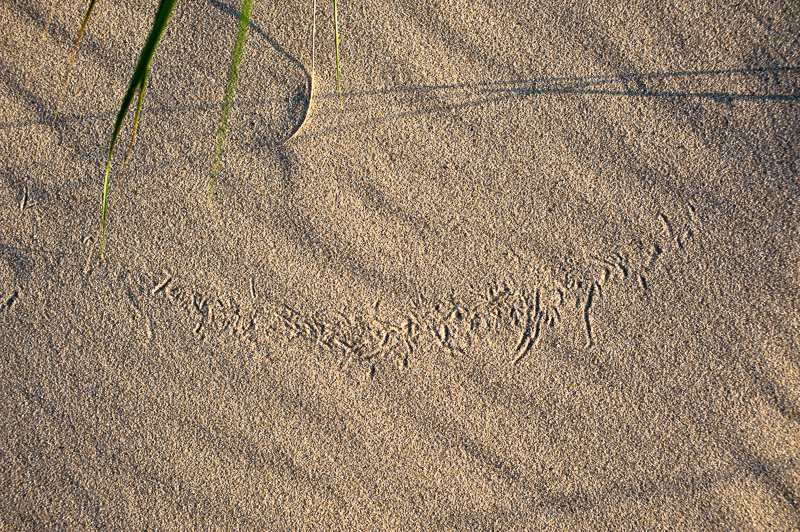
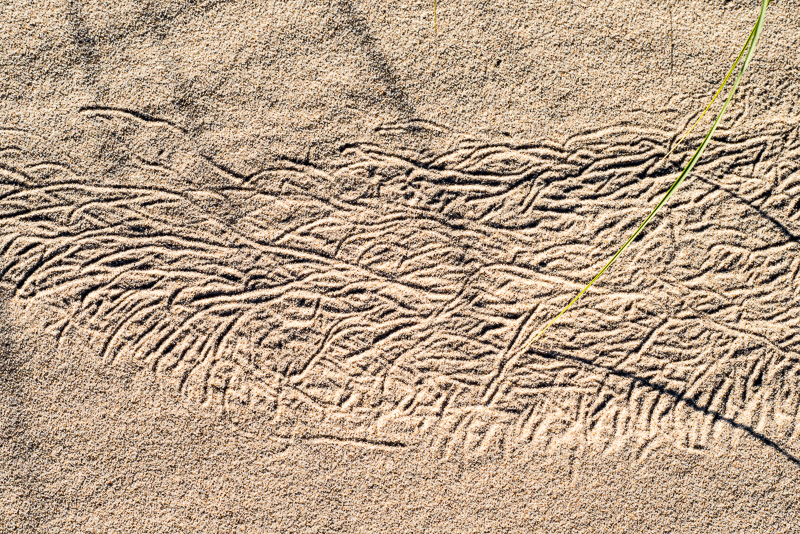
Its religion is that of the wind. Its longest stalks barely touch the ground, but when swayed by the wind, they leave traces in a indecipherable language.

DSC1598

It is precise, beautiful, and temporary.

DSC 1215

And the rain fell, and the floods came, and the winds blew, but the grass did it anyway.

DSC 1218

What human artist would dare to compete?

DSC 1261

Hermetic Geometry (Spheres II)

Objects in space can be either separate, intersecting, or touching. Spheres always intersect in circles, and the most fundamental case is when the angle of intersection is 90º.

Colorcircles

Let’s look at intersecting circles first. Somewhat surprisingly, two circles that meet at one point at a right angle also meet at the other intersection point at a right angle. This observation allows to construct two families of circles such that any two circles from both families meet at right angles. The first family consists of all circles that touch the x-axis at the origin, and the second family consist of all circles that touch the y-axis at the origin.

For what’s to come, let’s also look at these circles just in the first quadrant.

Halfcircles

The same procedure works in space with now three families of spheres. Each family consist of all those spheres that touch one of the coordinate planes at the origin. Viewing these in the first octant only and head-on, i.e. in the direction of the main space diagonal, shows patterns that disguise their origin quite well.

Triply1

Again, like in Spheres I, the alienation becomes extreme when we pretend that the objects are part of some large piece of architecture. The walls of the facade show the same pattern as the intersecting circles.

Triply2small

This way geometry becomes hermetic. Instead of explaining a theorem, the statement is disguised in pure appearance.

Bryce 3D (An Epitaph)

In 1997, the software department of our local book store sold heavily discounted copies of the Raytracing program Bryce,
because they had accidentally ordered Mac versions and were selling only Windows software. I purchased a copy, not knowing what this
would get me into.

Catalan

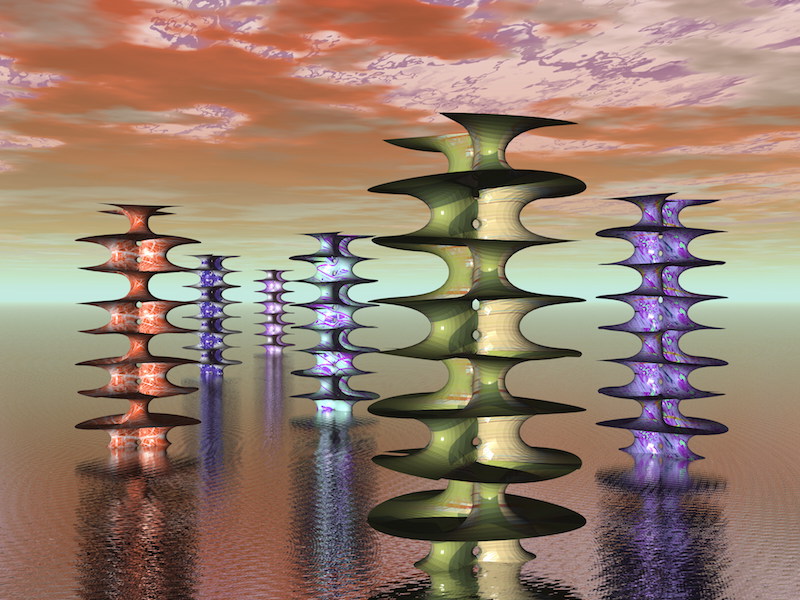
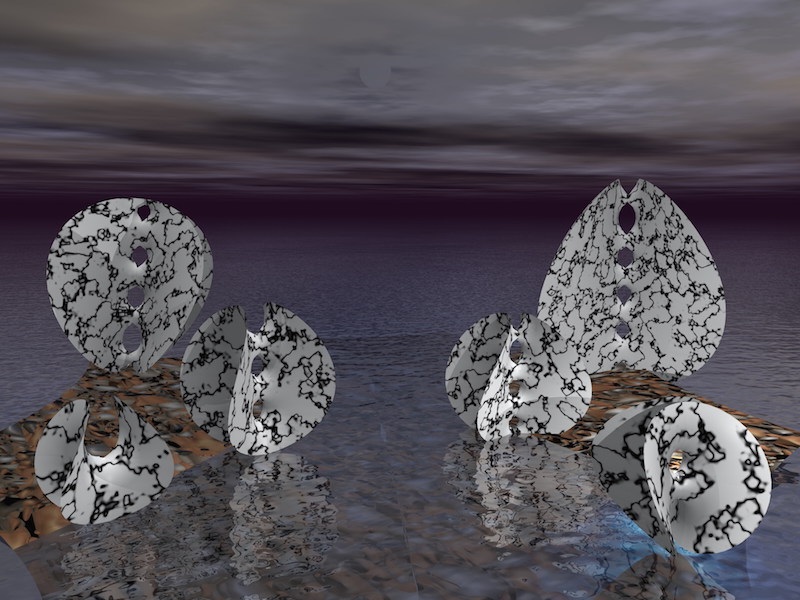
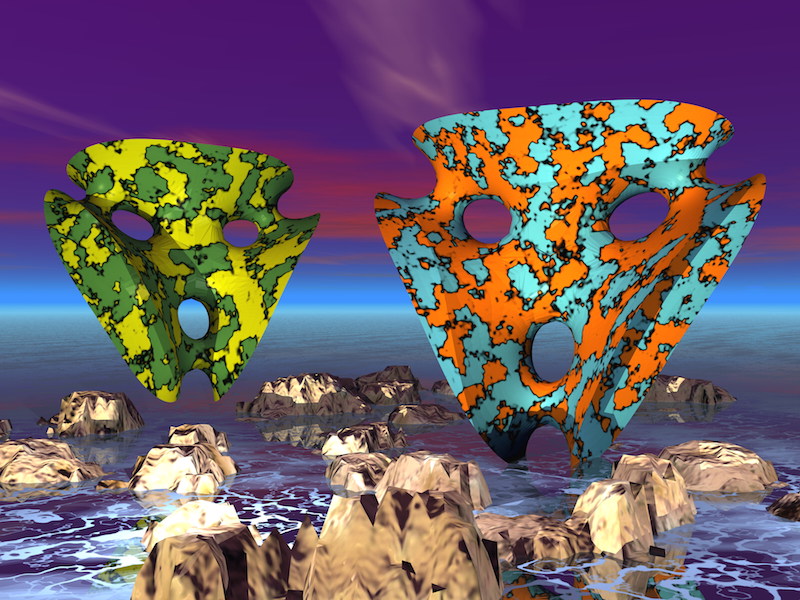
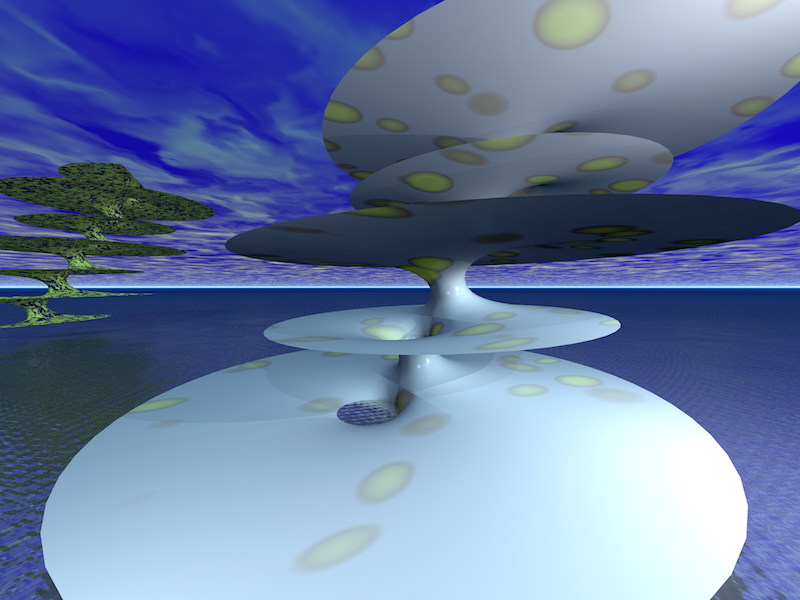
I had been making images of minimal surfaces the past year with Mathematica, and the 3D graphics of Mathematica could be first exported into Autocad DXF files, and then imported into Bryce.

Chm

Bryce is primarily a landscape renderer. The tools let you create terrains, and it comes with a sophisticated texture editor that lets you literally compose all kinds of textures for your objects.

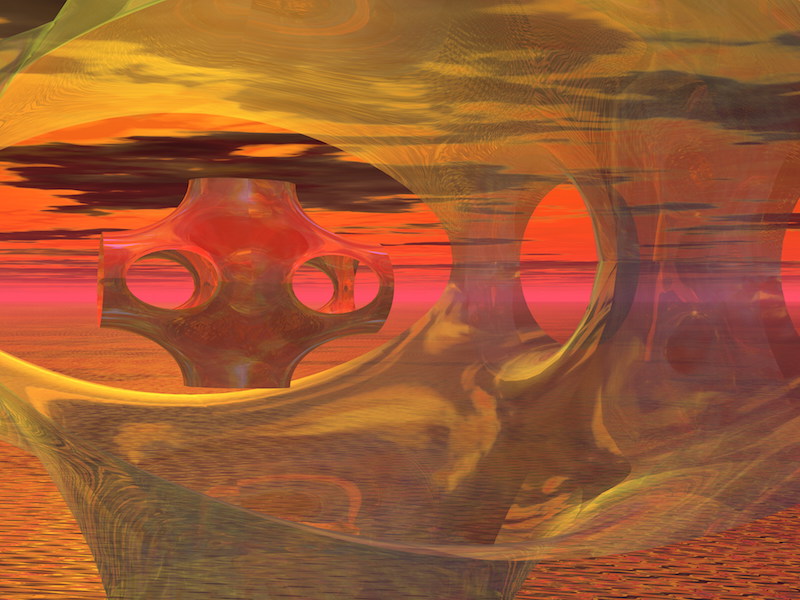
Having abstract mathematical shapes in (somewhat) familiar landscapes seems to stretch our minds just right.

Cg

In 1997, computers were slow. Most images had to be rendered over night, to get screen filling sizes. And these were screens from 1997, too.

Tortor

The user interface of Bryce (by Kai Krause and Eric Wenger) was revolutionary, and still leaves not much to be desired today. In 1999, Bryce reached its high point with a a vastly improved texture editor. Then the decline began. Fist, it was sold to Corel, and then to DAZ 3D.

Riemann

The current version is Bryce 7, and does not work with recent Mac OS X versions. In runs under OS X.6, but is quite unstable, preventing me to rerender the old files to proper sizes.

Blackhandle
This has been a lot of fun.